What Is Actuator Backdrivability?
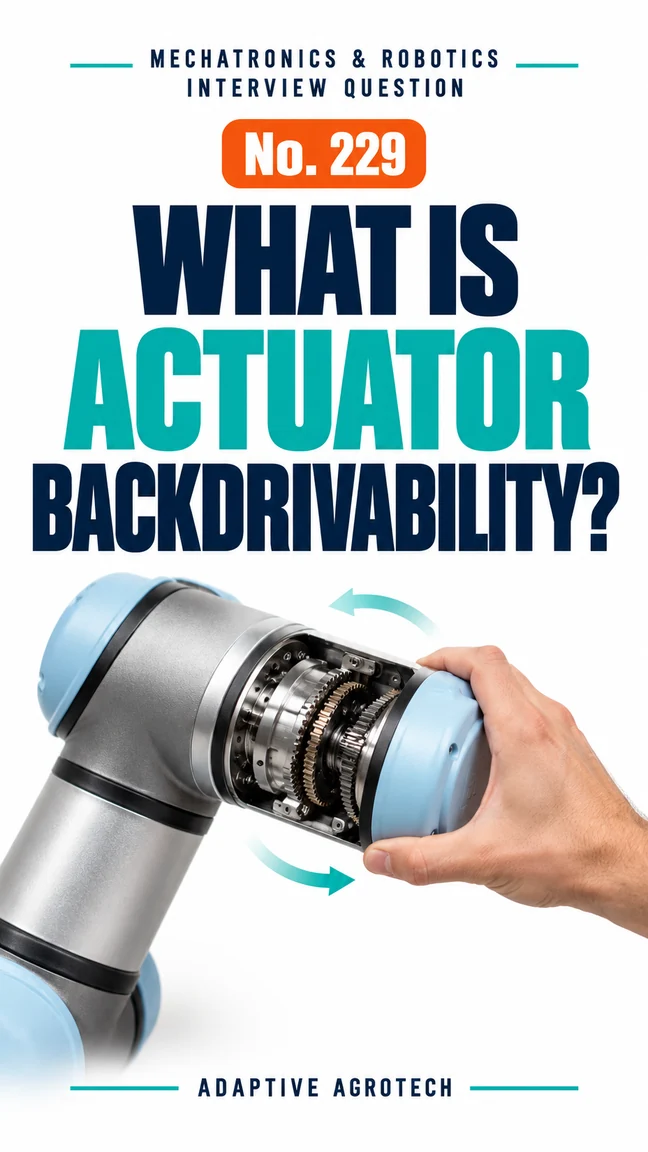
Backdrivability describes how readily an external load can move an actuator from its output side. Pushing a robot link can then turn the transmission and motor rather than meeting a locked mechanism.
The key idea
Backdrivability describes how readily an external load can move an actuator from its output side. Pushing a robot link can then turn the transmission and motor rather than meeting a locked mechanism.
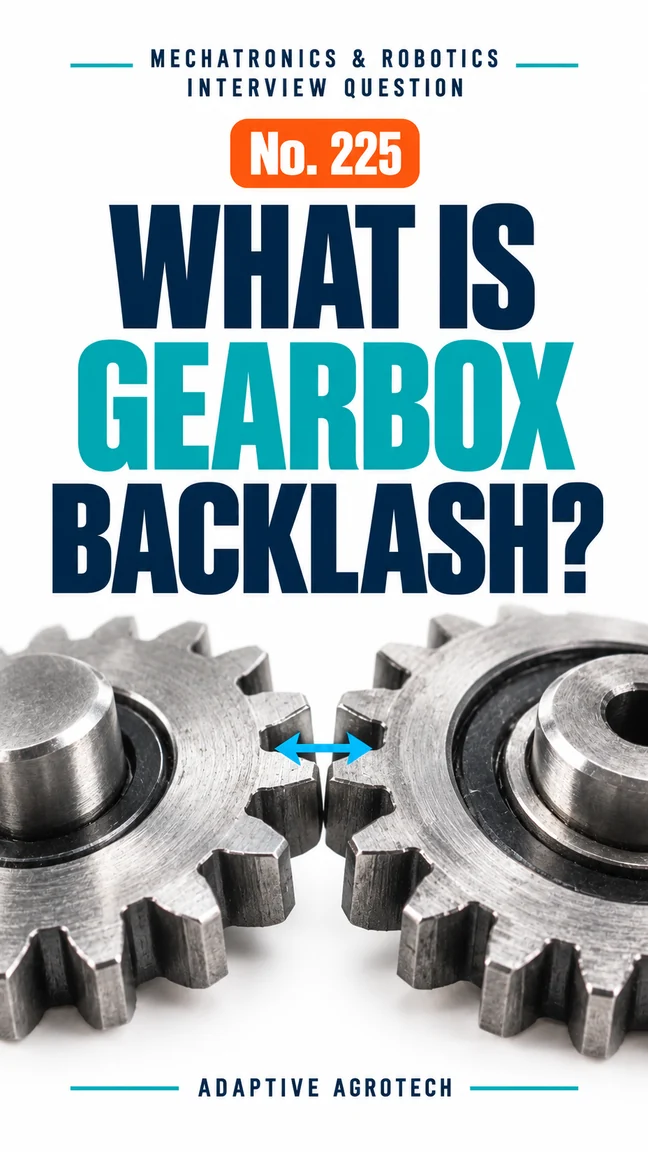
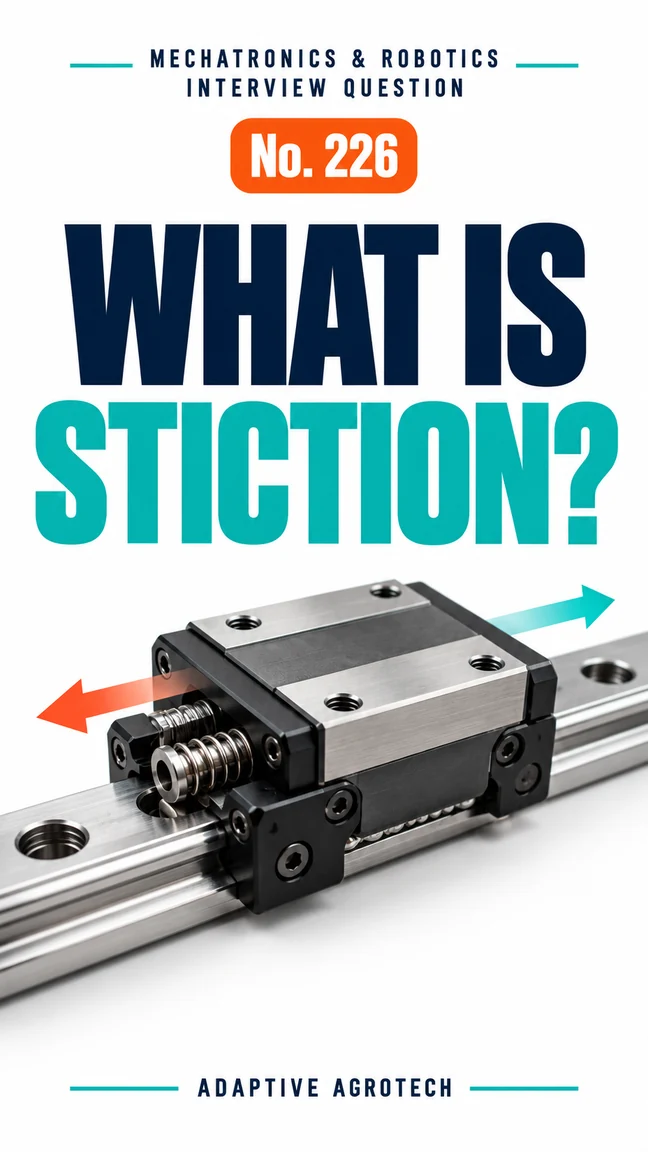
Gear ratio, friction, efficiency, motor cogging, and any brake influence the required effort. In an ideal reduction, motor inertia reflected to the output grows with the square of the ratio.
Easy backdriving can help physical interaction and force sensing. It does not automatically make a robot safe, and active control changes the response. Assess the complete drive and respect permitted output torque when testing.
What to remember
- The load drives the output, transmission, and motor
- Friction and reflected inertia affect what you feel
- Backdrivability is a property of the complete drive
Check your understanding
Why can a high reduction ratio make an actuator harder to backdrive?
Show the explanation
Besides friction and efficiency, motor inertia reflected to the output grows with the square of the ideal reduction ratio. Brakes, cogging and active control also affect resistance.