What Is a Series Elastic Actuator?
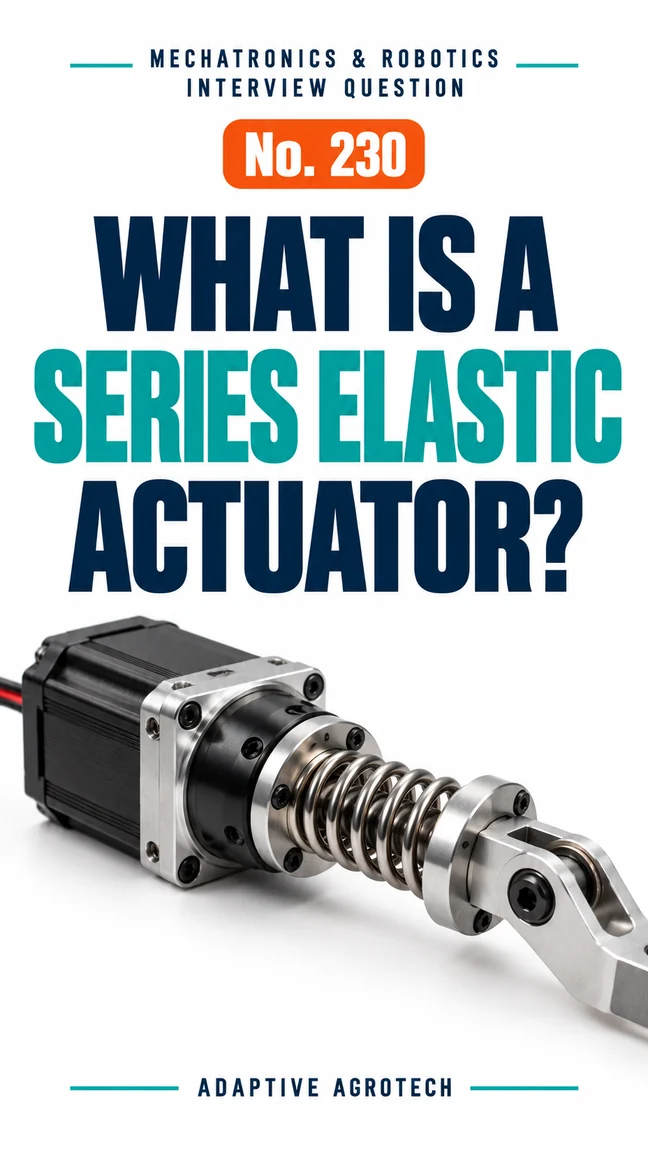
A series elastic actuator places an elastic element between the actuator transmission and its load. The spring deflects under effort, giving deliberate mechanical compliance in the force path.
The key idea
A series elastic actuator places an elastic element between the actuator transmission and its load. The spring deflects under effort, giving deliberate mechanical compliance in the force path.
Measure spring deflection and use a calibrated stiffness to estimate force or torque. For a linear spring, force equals stiffness times displacement. Feedback then adjusts the actuator to achieve the requested effort.
This can improve interaction and absorb some impact energy, but the spring also adds dynamics and limits achievable behavior. Spring stiffness, sensing, travel limits, and controller bandwidth must suit the task and load.
What to remember
- The elastic element sits in series with the load
- Linear example: F = k Δx
- Compliance helps interaction but adds dynamics
Check your understanding
How can a series elastic actuator estimate transmitted force?
Show the explanation
Measure the elastic element's deflection and apply its calibrated stiffness. For a linear spring, force equals stiffness times displacement; the added compliance also introduces dynamics and travel limits.