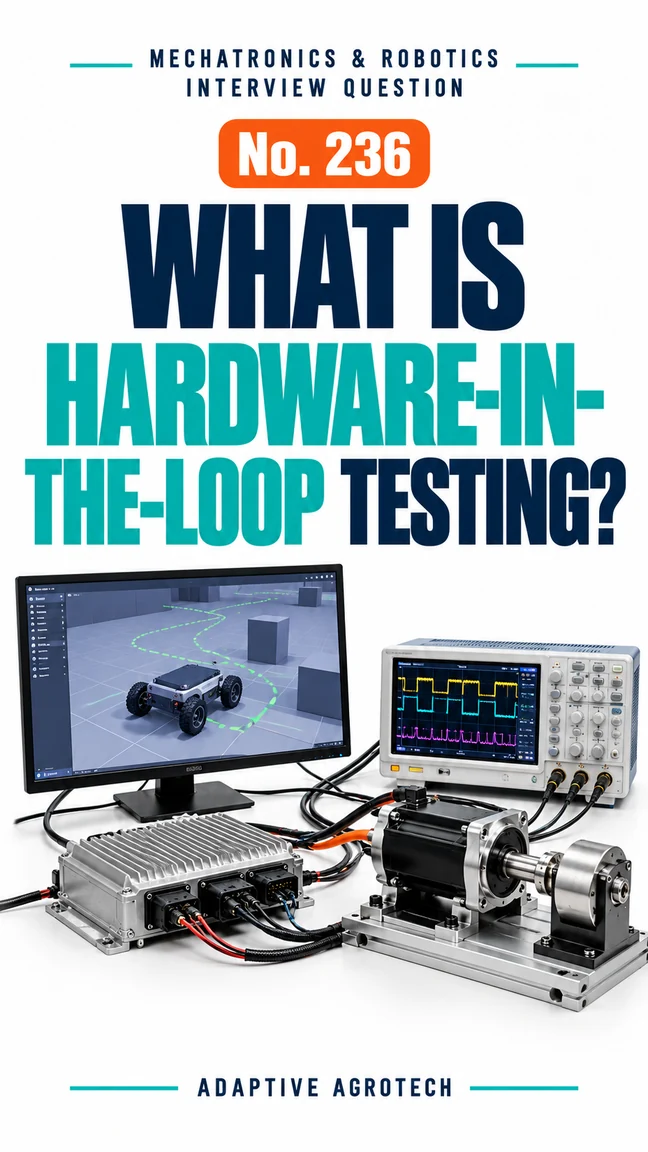
What Is Hardware-in-the-Loop Testing?
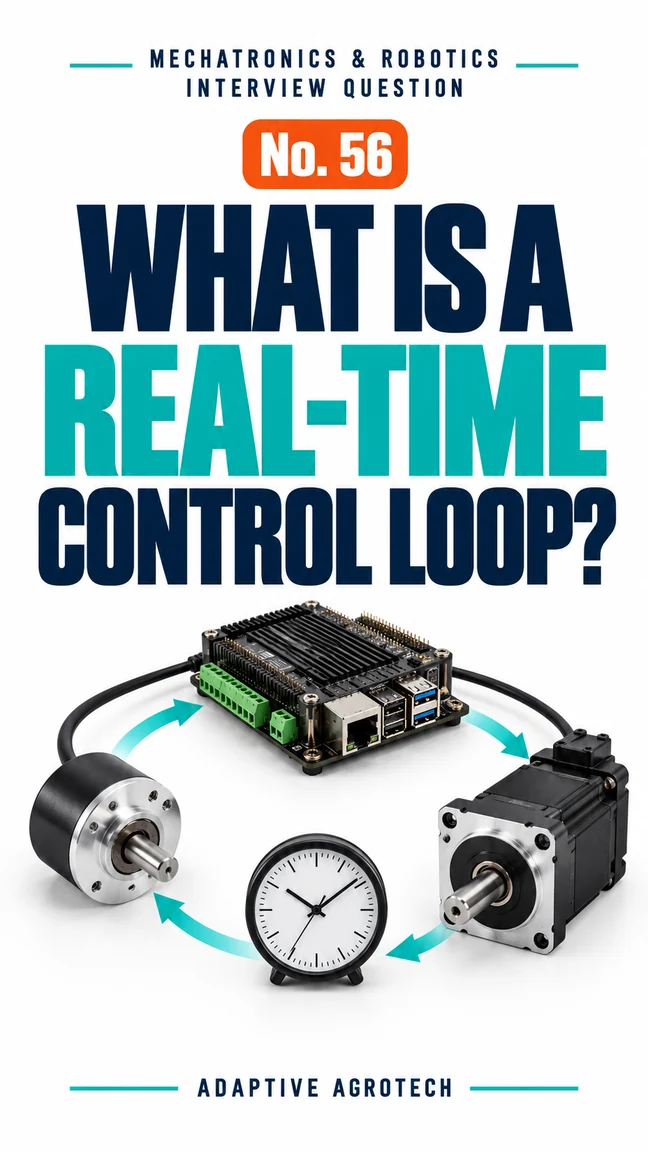
Hardware in the loop testing connects real controller hardware to a plant model running in real time. The simulator supplies sensor signals and receives actuator commands, closing the loop around the actual controller.
The key idea
Hardware in the loop testing connects real controller hardware to a plant model running in real time. The simulator supplies sensor signals and receives actuator commands, closing the loop around the actual controller.
For a robot wheel controller, the model can simulate inertia, load changes, and sensor behavior. Engineers can inject selected faults and check timing or recovery without repeatedly exposing the physical mechanism to those conditions.
The plant model must meet its real time step and reproduce the behavior relevant to the test. Passing HIL tests does not prove the complete robot works in reality. Follow with appropriate physical system validation.
What to remember
- The controller is physical; the plant is simulated
- Test controller behavior against a real time plant model
- HIL complements physical testing and depends on its model
Check your understanding
Why does passing hardware-in-the-loop testing not prove the complete physical robot works?
Show the explanation
The real controller closes its loop around a simulated plant. Conclusions depend on plant fidelity and real-time timing, so suitable physical-system validation must follow.