
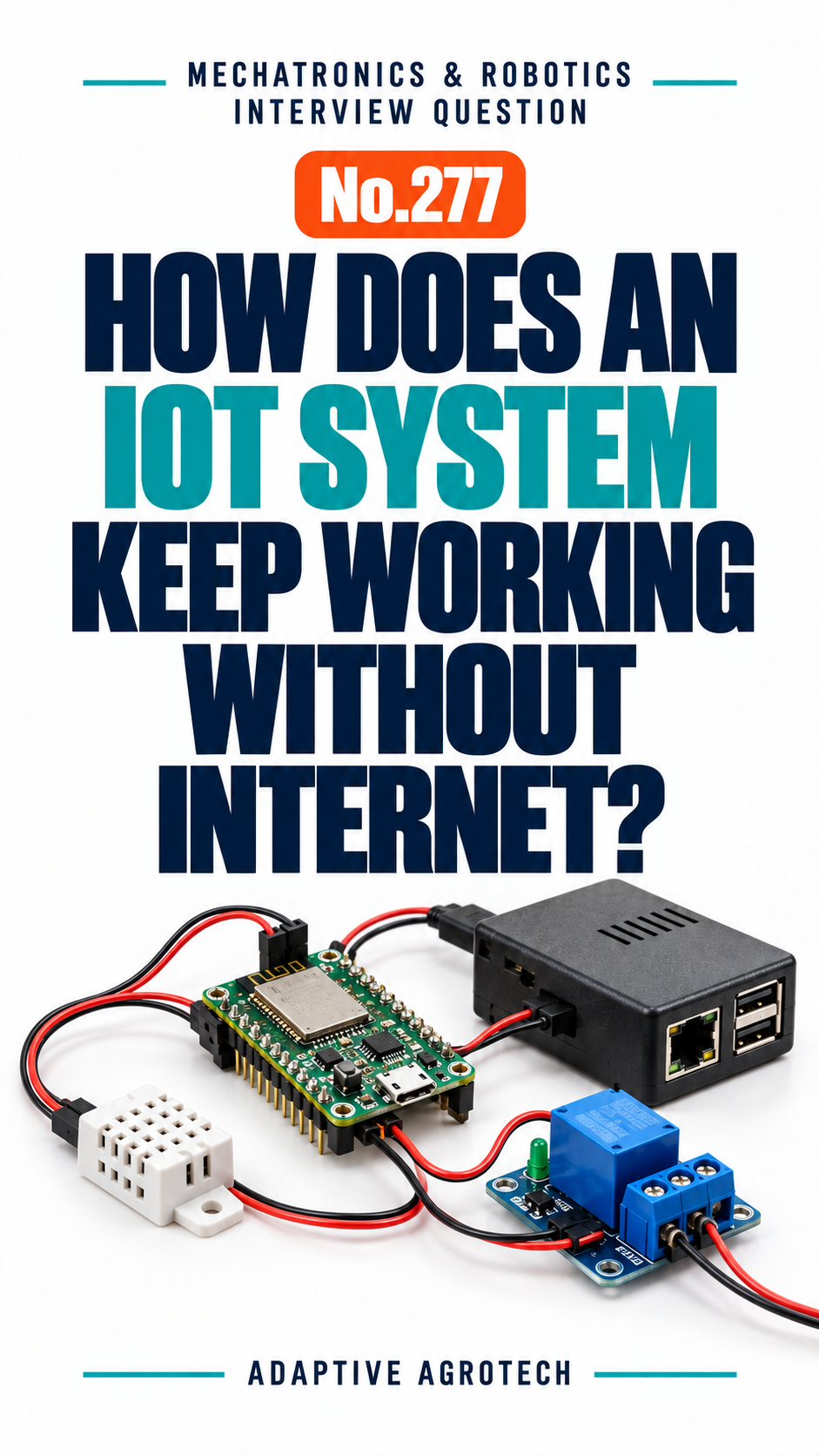
Video by Adaptive AgroTech. If the embedded player is unavailable, open the original video ↗.
Continue exploring
All interview topics →Related topics
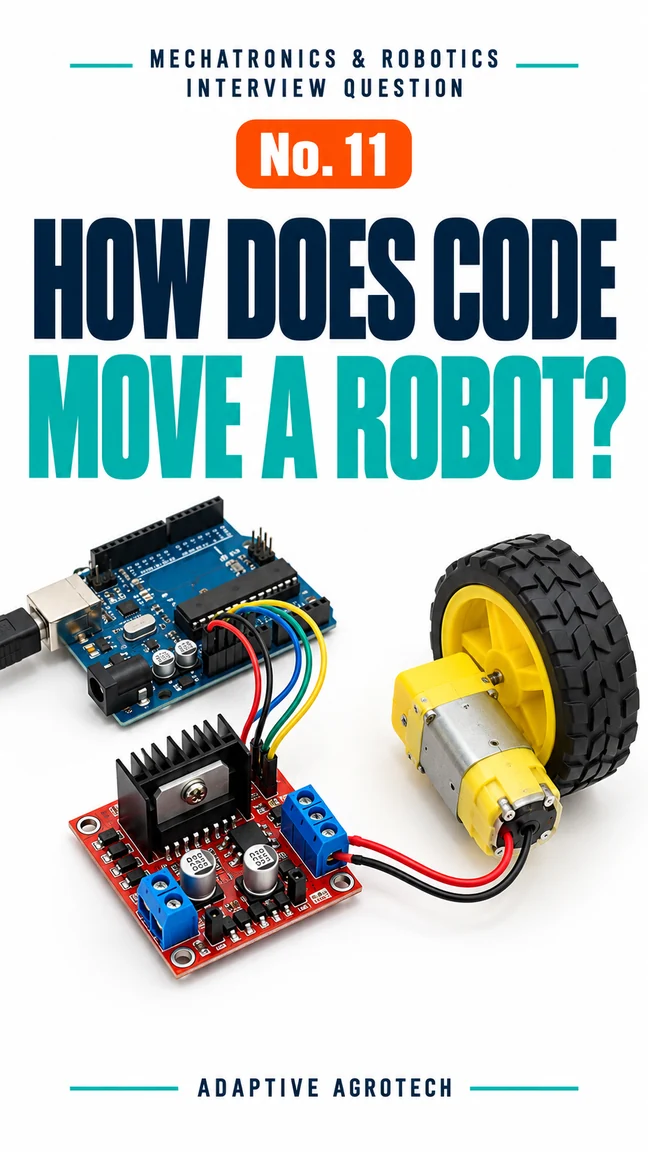
From Software Command to Wheel Movement
Wheel motion requires a complete chain from speed request to power switching and encoder feedback. The microcontroller controls the driver, while the driver delivers motor current and the loop corrects actual motion.
Watch & explore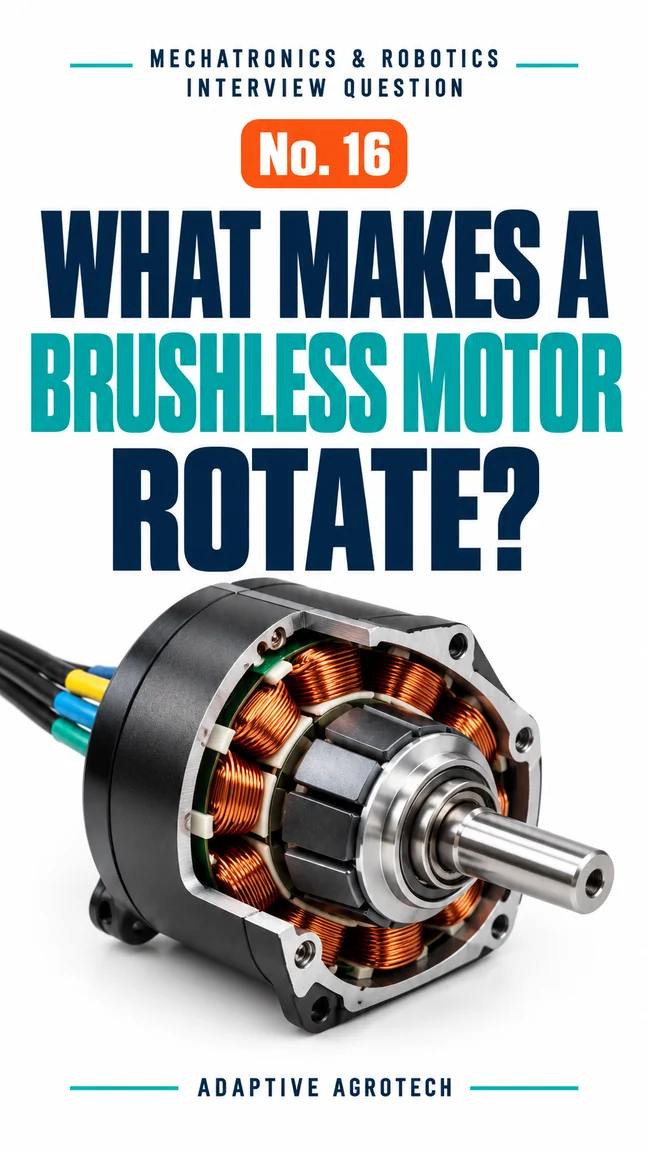
Inside a Brushless Motor: What Makes It Rotate?
Brushless motors create torque through controlled stator currents interacting with rotor magnets. Electronic commutation requires rotor information, while a separate speed-control function adjusts torque demand to track a target.
Watch & explore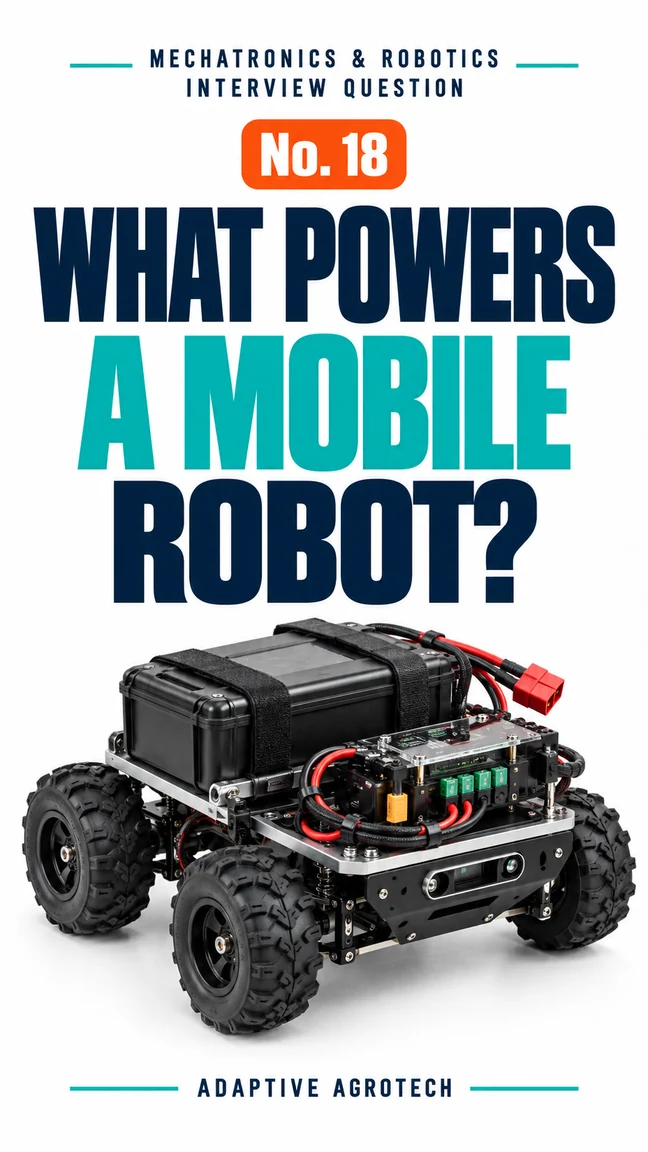
What Powers a Mobile Robot?
Reliable robot power depends on compatible voltage, usable energy, protection, and peak current. Runtime follows average demand, while motor surges and voltage drop can interrupt operation despite remaining battery capacity.
Watch & explore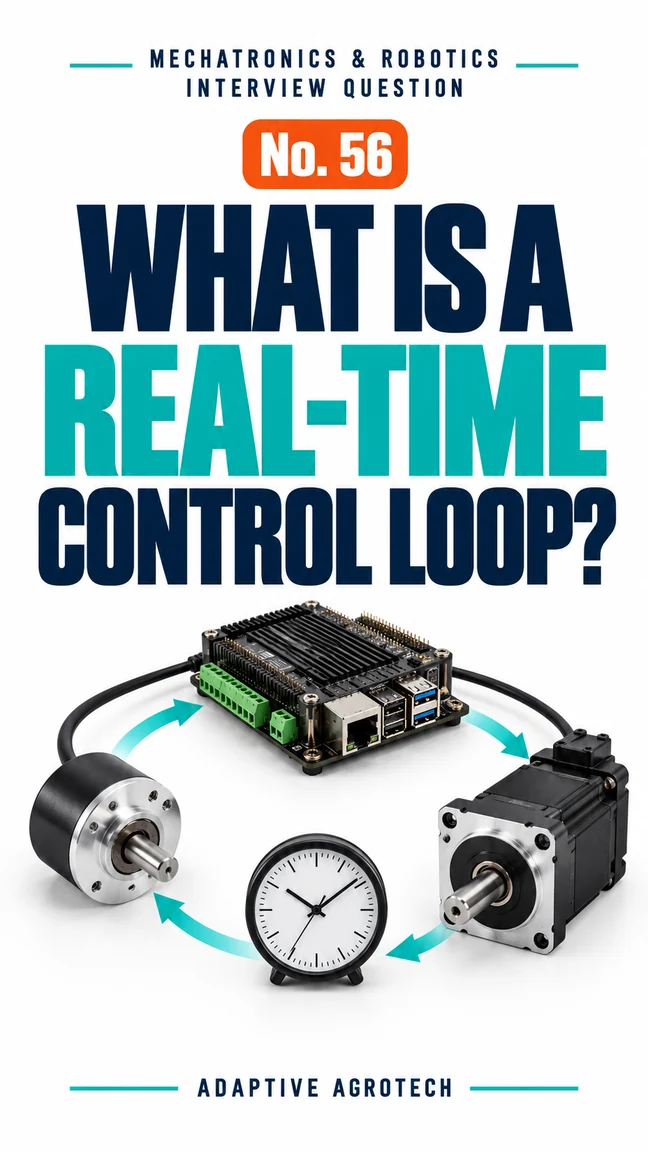
What is a Real-Time Control Loop?
Real-time control requires completion before a defined deadline rather than merely good average speed. Sensor acquisition, computation, and output share the timing budget, and worst-case delay and jitter determine whether the chain meets it.
Watch & explore