

Video by Adaptive AgroTech. If the embedded player is unavailable, open the original video ↗.
Continue exploring
All interview topics →Related topics
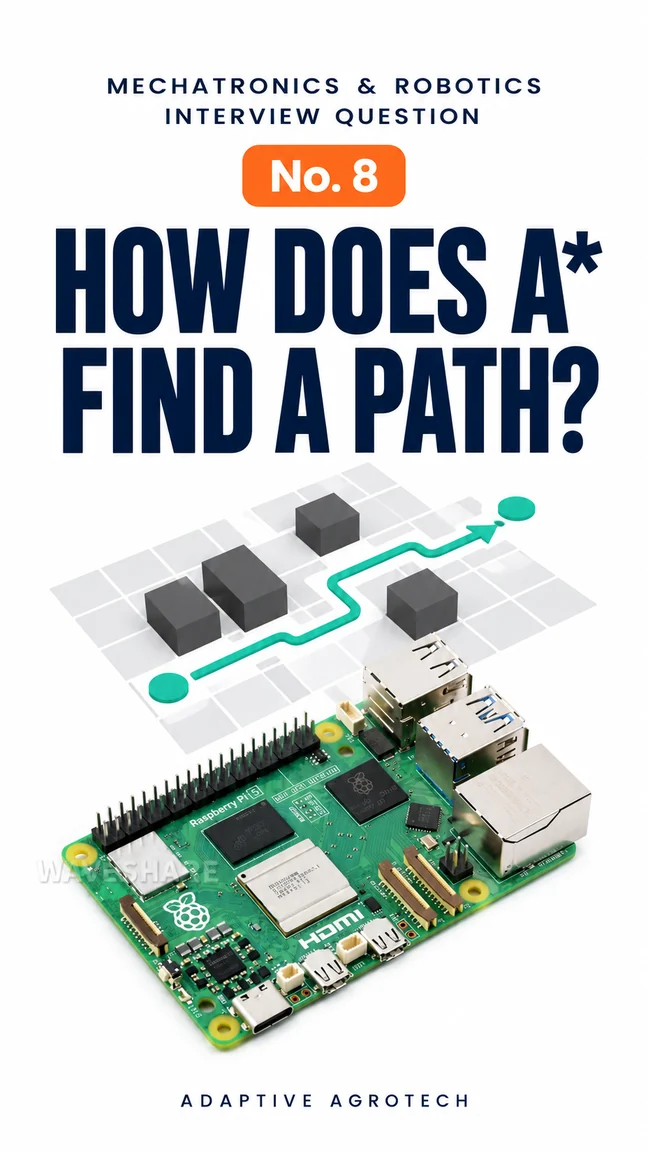
How A* Finds a Path Around Obstacles
A* searches a graph by combining traveled cost with estimated remaining cost. It reconstructs a route through parent links, while physical navigation still needs footprint clearance, control, and updated sensing.
Watch & explore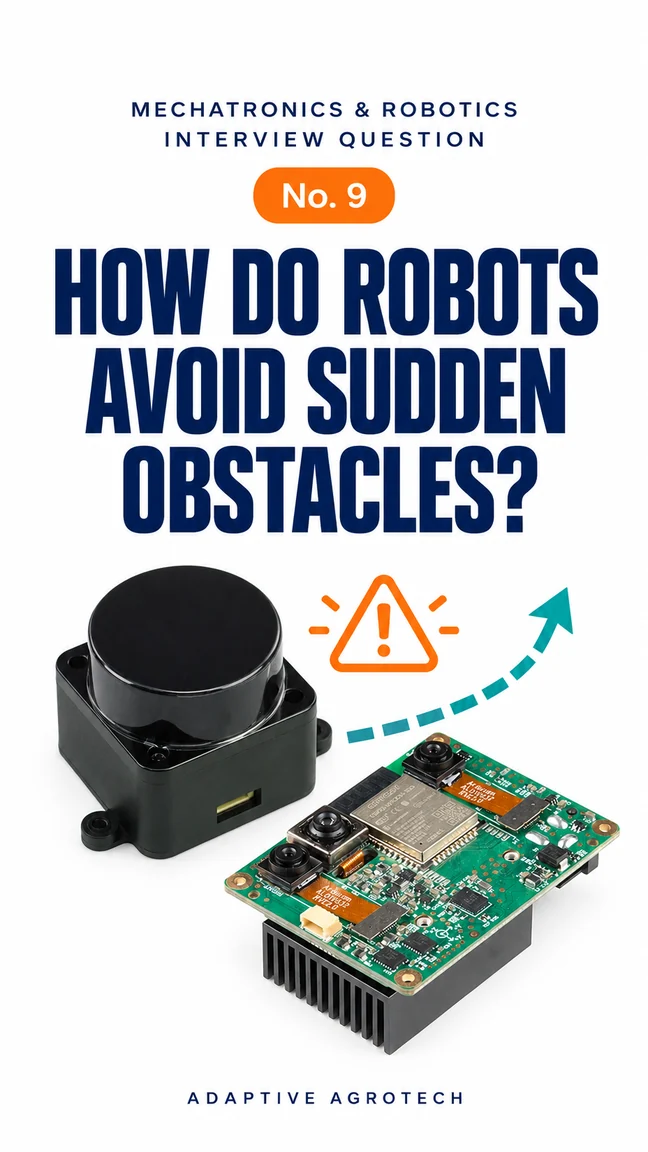
How a Robot Avoids an Obstacle That Suddenly Appears
When an obstacle appears, local planning updates the obstacle map and tests feasible short motions. Footprint collision checks and repeated sensing guide avoidance; stopping remains necessary when no acceptable motion exists.
Watch & explore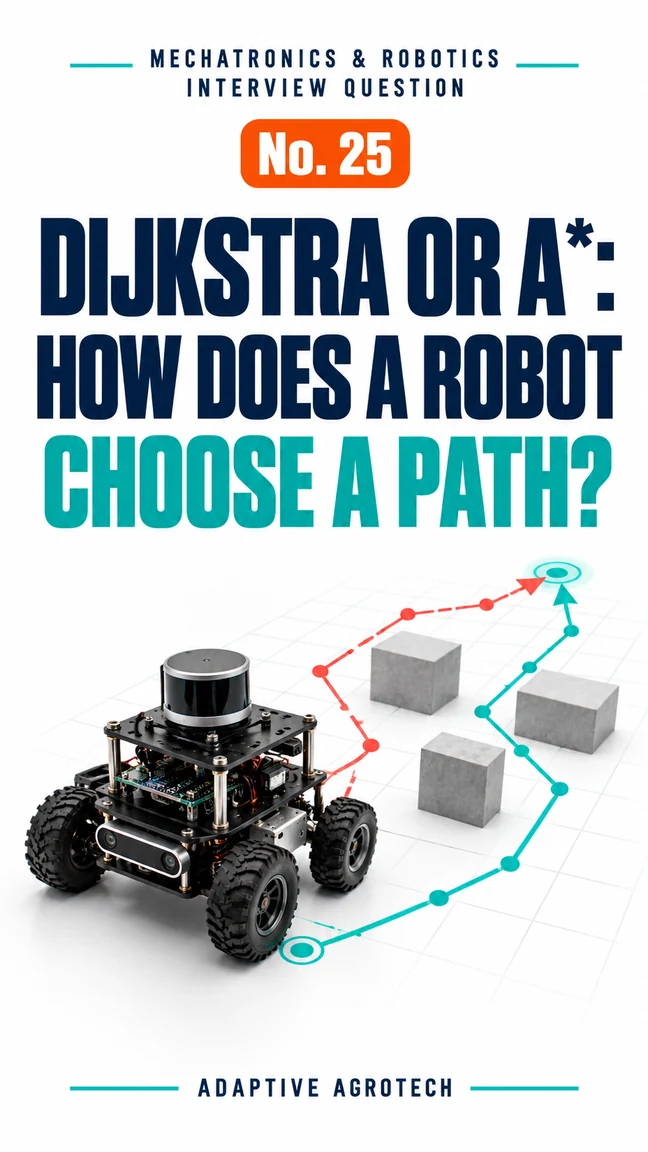
Dijkstra vs A*: How Does a Robot Choose a Path?
Dijkstra and A* search the same free-space graph with different priorities. A* adds a goal-directed heuristic that can reduce exploration, while shortest-path guarantees depend on edge costs and heuristic assumptions.
Watch & explore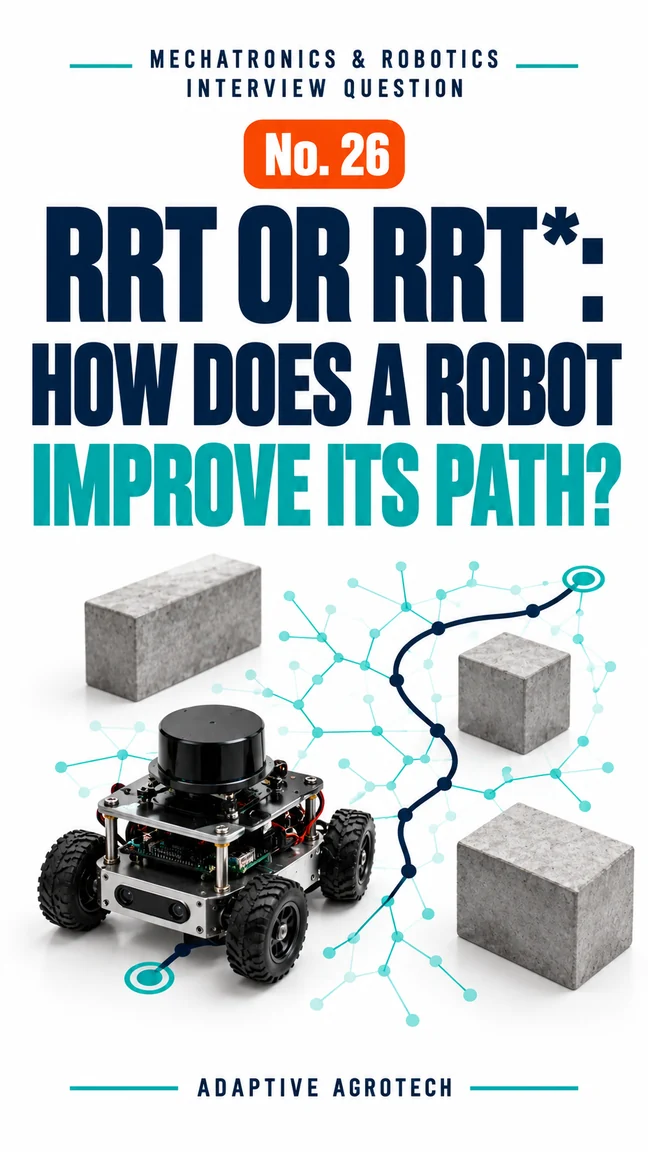
RRT vs RRT*: Finding a Path and Improving It
RRT grows a sampled configuration-space tree to find feasible paths. RRT* selects lower-cost connections and rewires the tree, improving solutions over time under assumptions without guaranteeing an optimal finite-run result.
Watch & explore