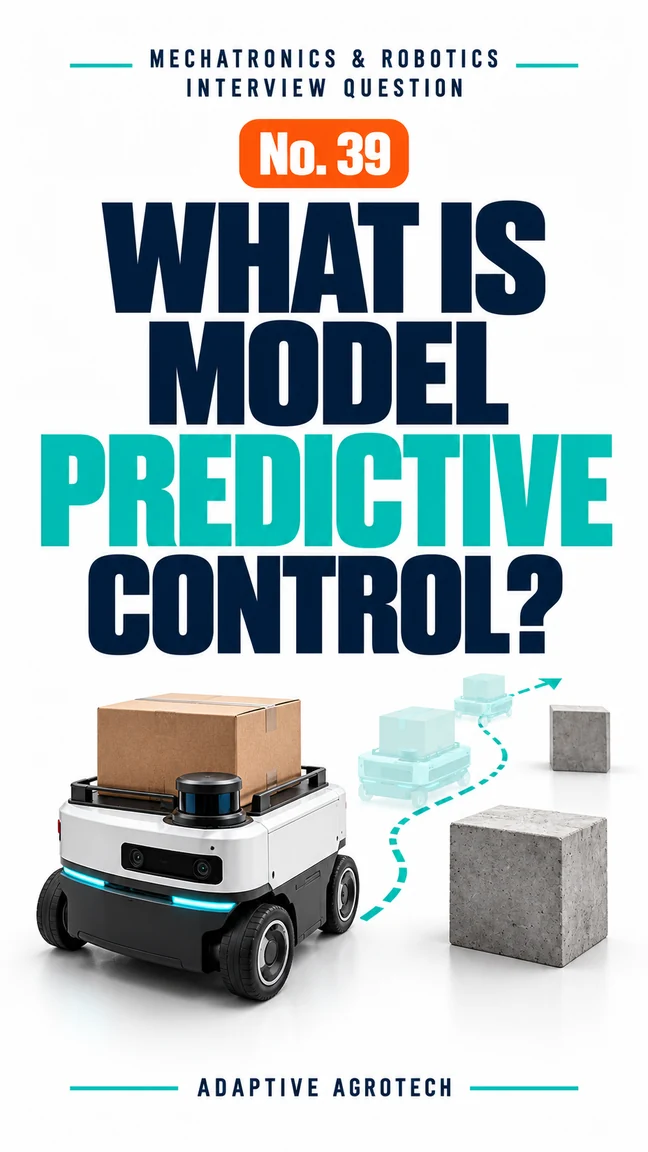
What is Model Predictive Control?
MPC optimizes a sequence of predicted control moves under included constraints, then applies the first move and repeats. New measurements refresh the plan, but prediction errors and solver deadlines limit practical performance.
The key idea
Model predictive control evaluates a sequence of future moves through a model and chooses a low-cost sequence subject to the constraints included in its formulation. A mobile robot can predict path motion, limit steering rate, and account for obstacle clearance. Only the first selected move is applied. New measurements then update the situation before another optimization, producing repeated feedback through a moving planning horizon. These opportunities depend on the model and the actual constraints supplied, rather than the name MPC alone. Prediction errors still matter, and the solver must finish before the next control deadline to keep its command useful.
What to remember
- MPC uses modeled predictions and explicit constraints.
- The first move is applied before solving again.
- The optimization must meet the control deadline.
Check your understanding
What makes MPC a repeating feedback process?
Show the explanation
It applies one move, uses new measurements, and re-solves the future sequence at each step.