Skip to content
Adaptive AgroTech NetworkUniversity of Southern Denmark · SDU Drone Center
Robotics · Mechatronics · Intelligent systems

Short videos.
Lasting understanding.

Explore one engineering idea at a time. Watch a short lesson, read the key concepts and test your understanding before your next interview, project or class.

21 topics found

Video · Key ideas · Check your understanding

Control systemsNo. 038

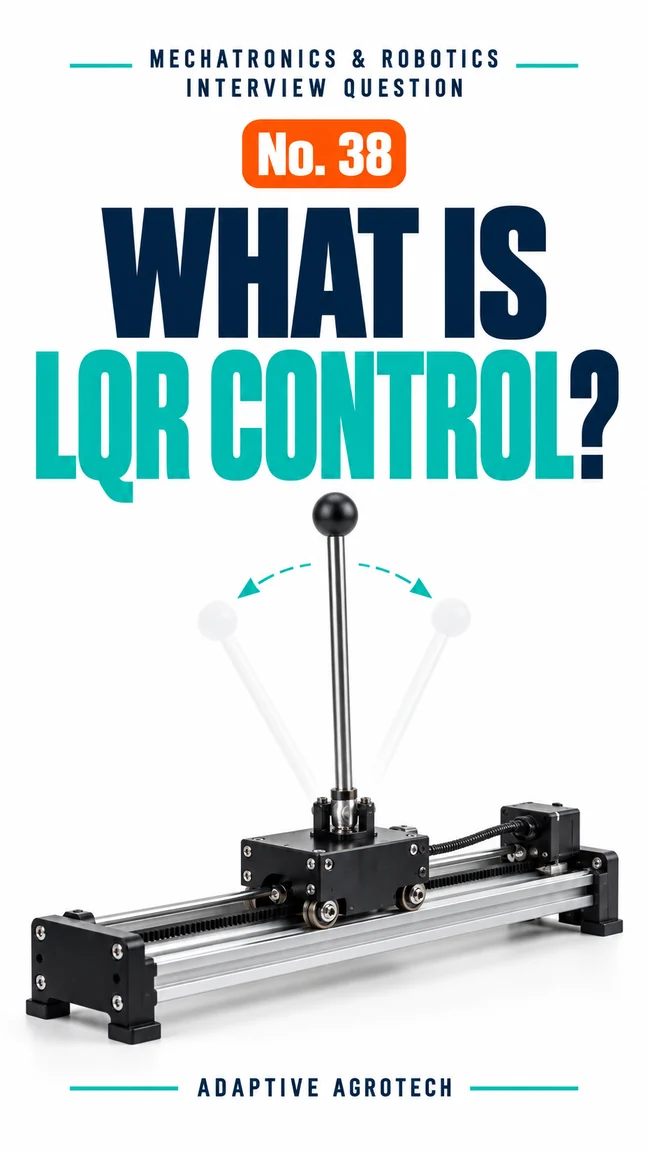
What is LQR?

LQR chooses state-feedback gains that balance state error against control effort in a linear model. Cost weights shape behavior, while the basic regulator does not impose hard actuator constraints or eliminate model error.

Watch & explore
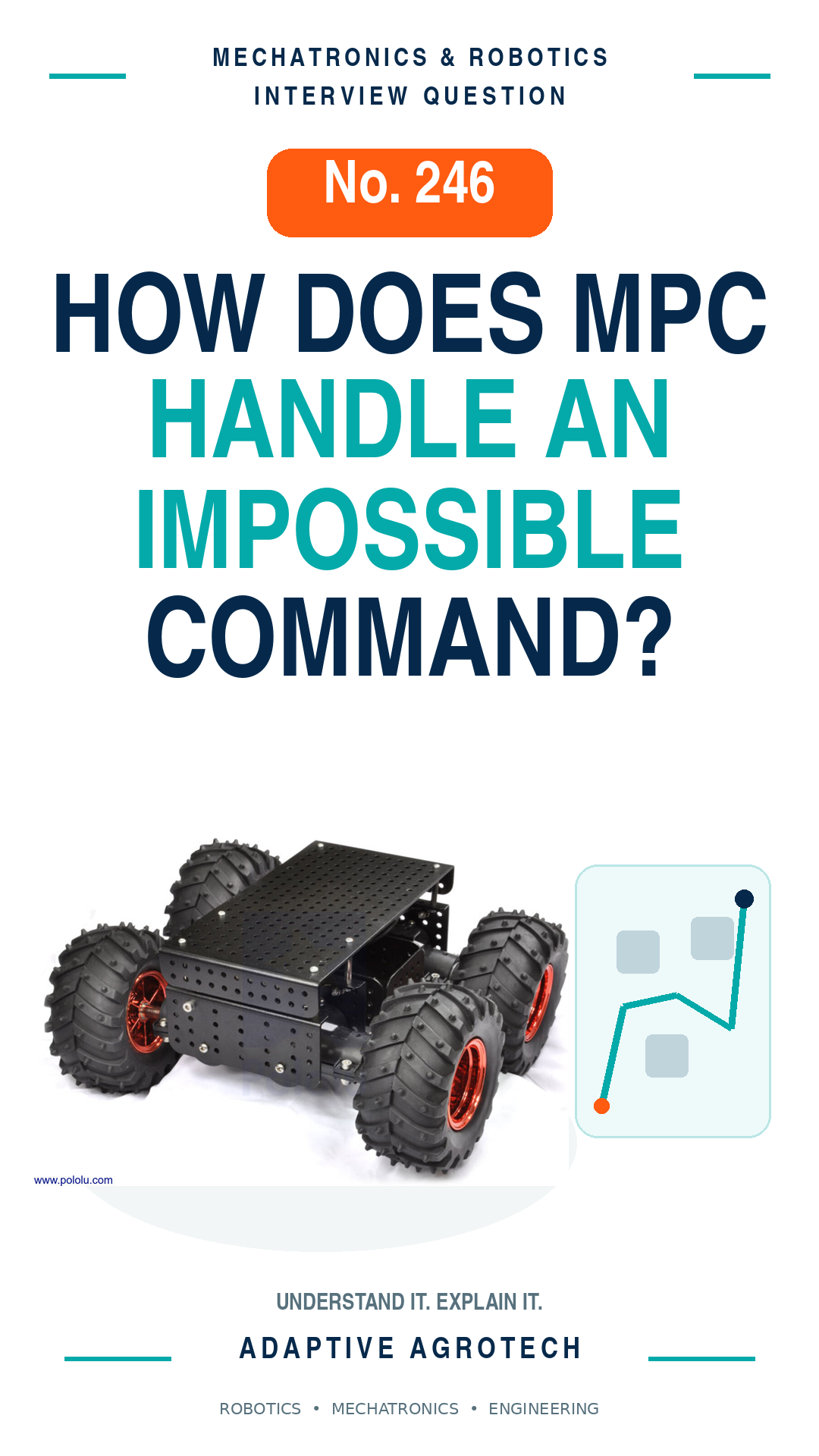
Control systemsNo. 039

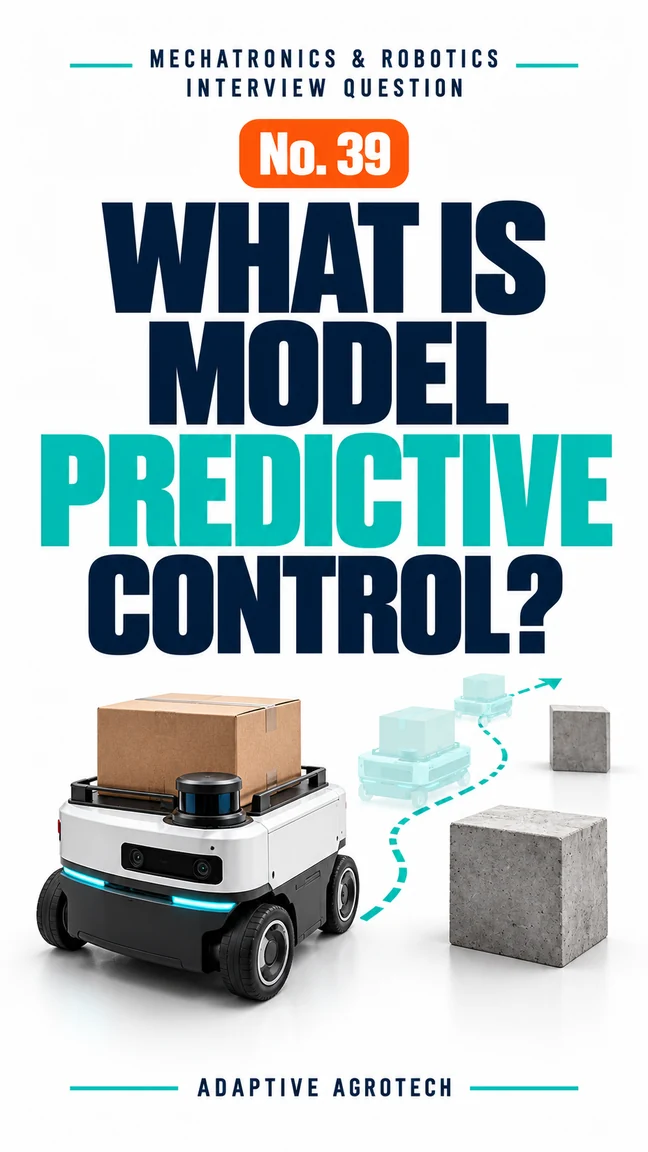
What is Model Predictive Control?

MPC optimizes a sequence of predicted control moves under included constraints, then applies the first move and repeats. New measurements refresh the plan, but prediction errors and solver deadlines limit practical performance.

Watch & explore
Control systemsNo. 047

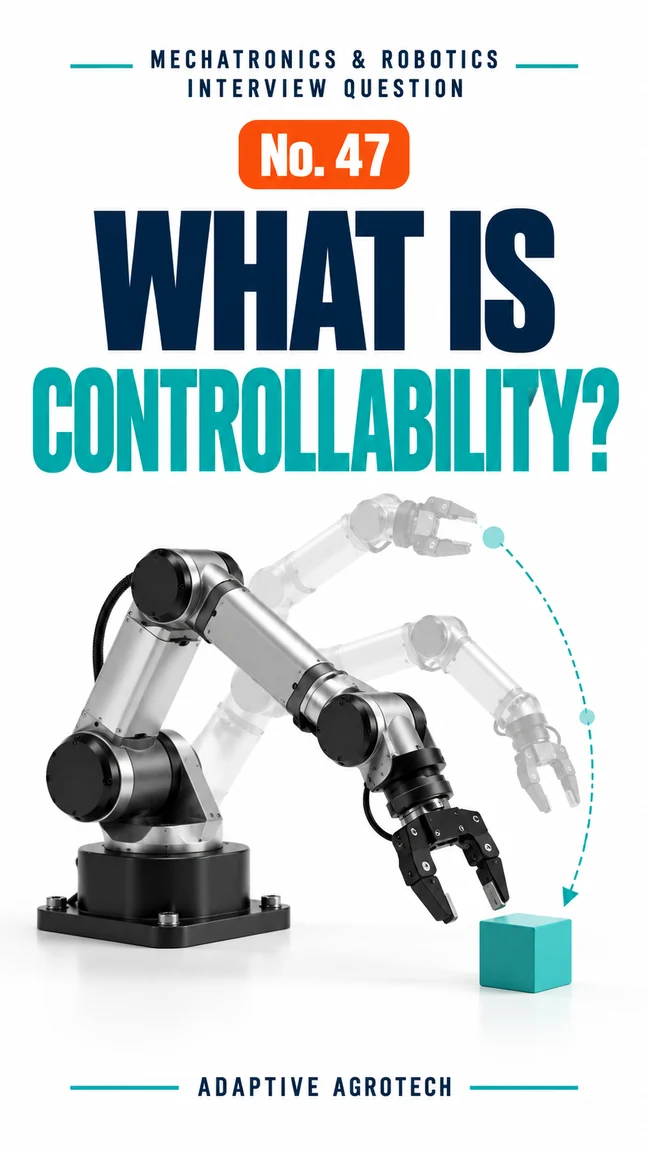
What is Controllability?

Controllability asks whether modeled inputs can move a system between arbitrary states in finite time. A full-rank linear test addresses mathematical actuation, while physical torque limits can still restrict real reachability.

Watch & explore
Computer visionNo. 068

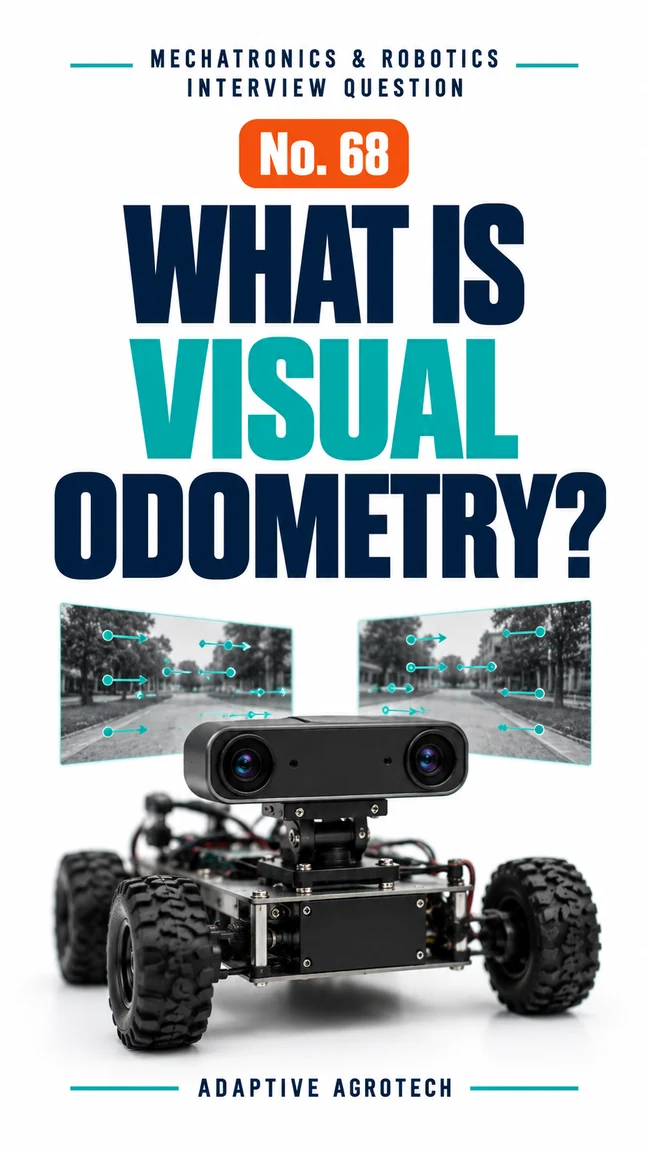
What is Visual Odometry?

Visual odometry estimates relative camera motion from image sequences. Feature or brightness changes constrain geometry, stereo provides metric depth, and monocular scale ambiguity and tracking failures limit its long-term position estimate.

Watch & explore
Localization & estimationNo. 069

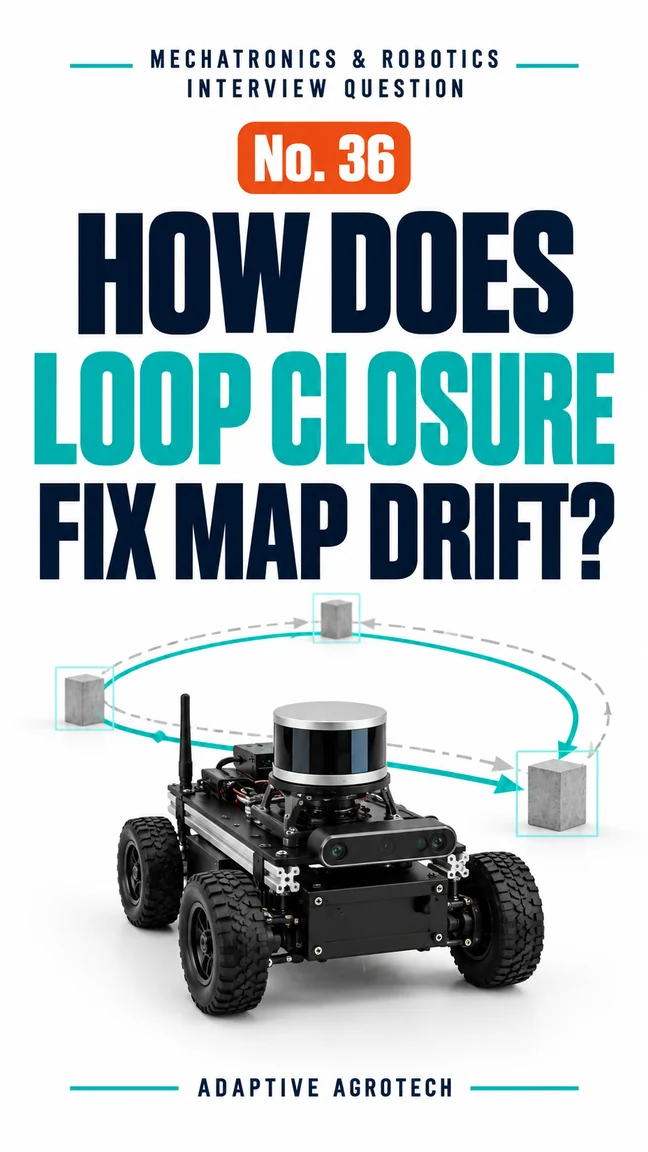
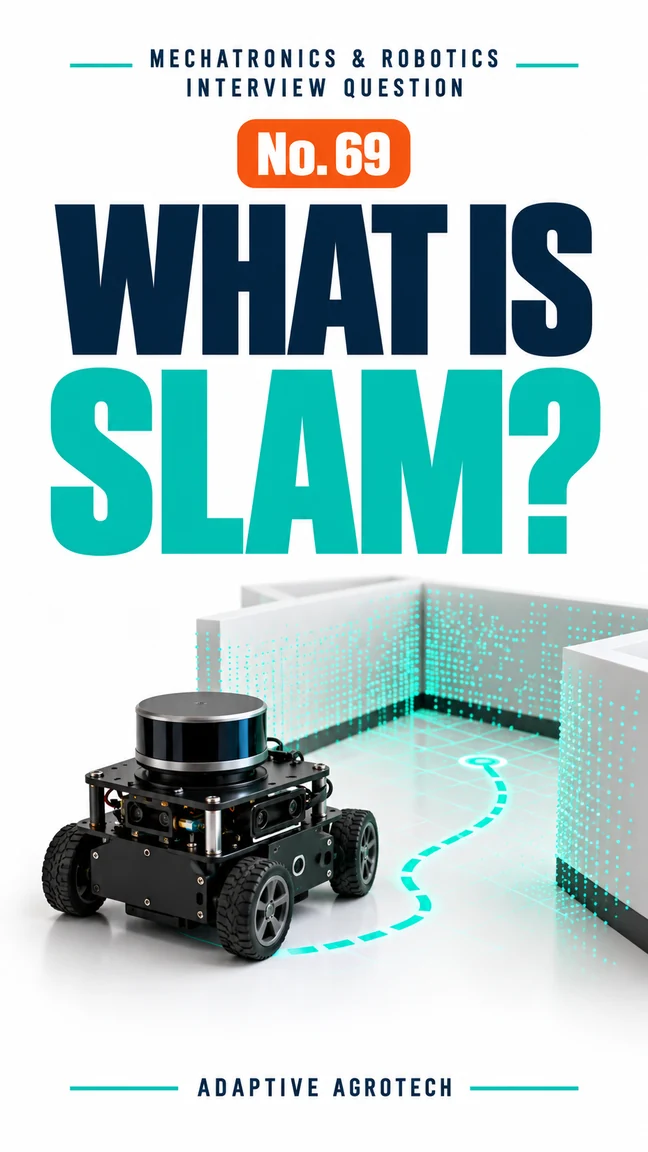
What is SLAM?

SLAM jointly estimates robot trajectory and an initially unknown map. Motion and sensor observations constrain the same model, while revisits can reduce drift and incorrect associations can damage both map and pose.

Watch & explore
Localization & estimationNo. 071

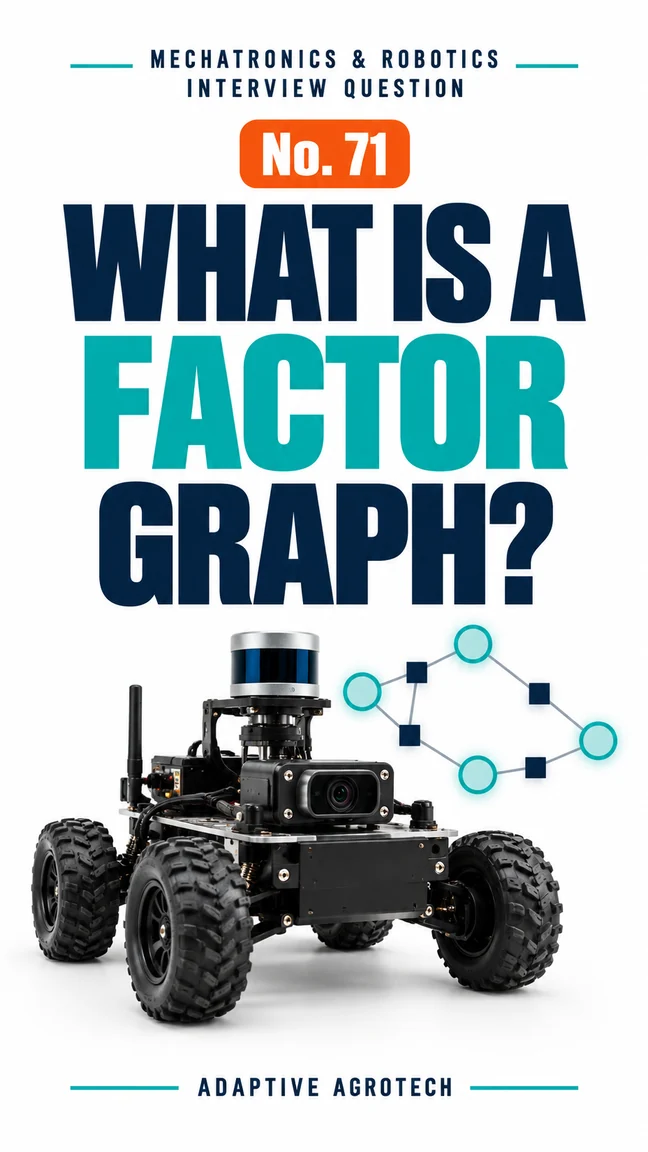
What is a Factor Graph?

A factor graph separates unknown state variables from measurement and prior constraints. Sparse connections describe which variables each observation affects, and optimization seeks agreement using associations, noise models, and an initial estimate.

Watch & explore
Motion planningNo. 092

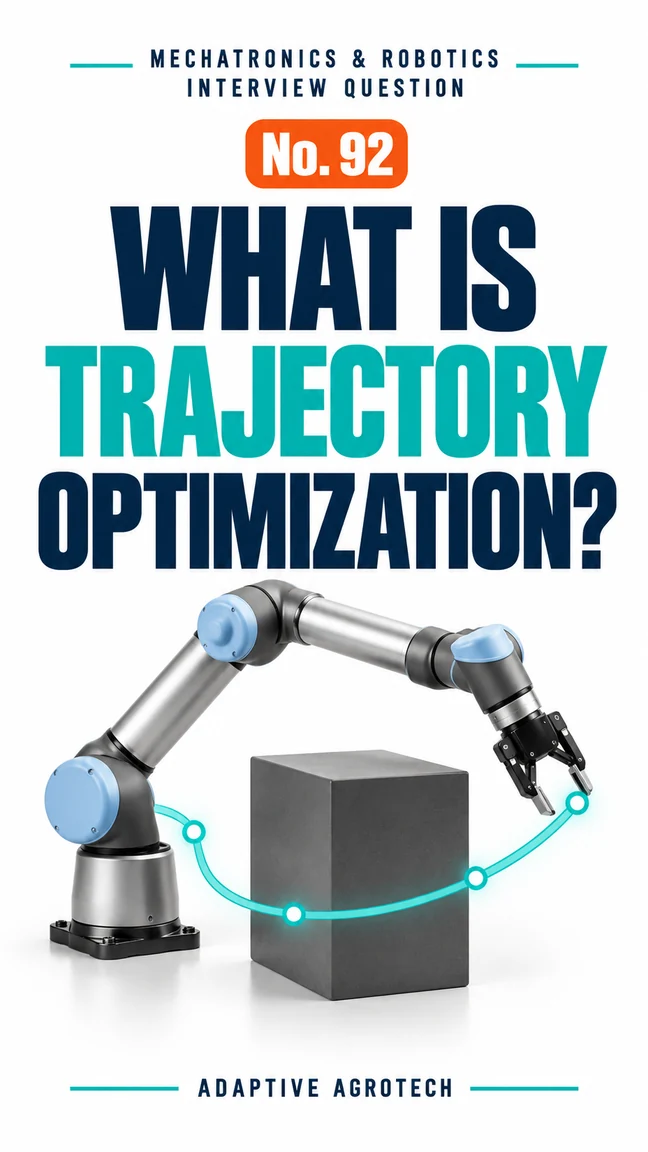
What is Trajectory Optimization?

Trajectory optimization adjusts robot states and commands to improve a chosen objective while satisfying constraints. Solver results depend on initialization, and a locally optimal sampled trajectory still needs continuous motion clearance checks.

Watch & explore
Robot kinematicsNo. 093

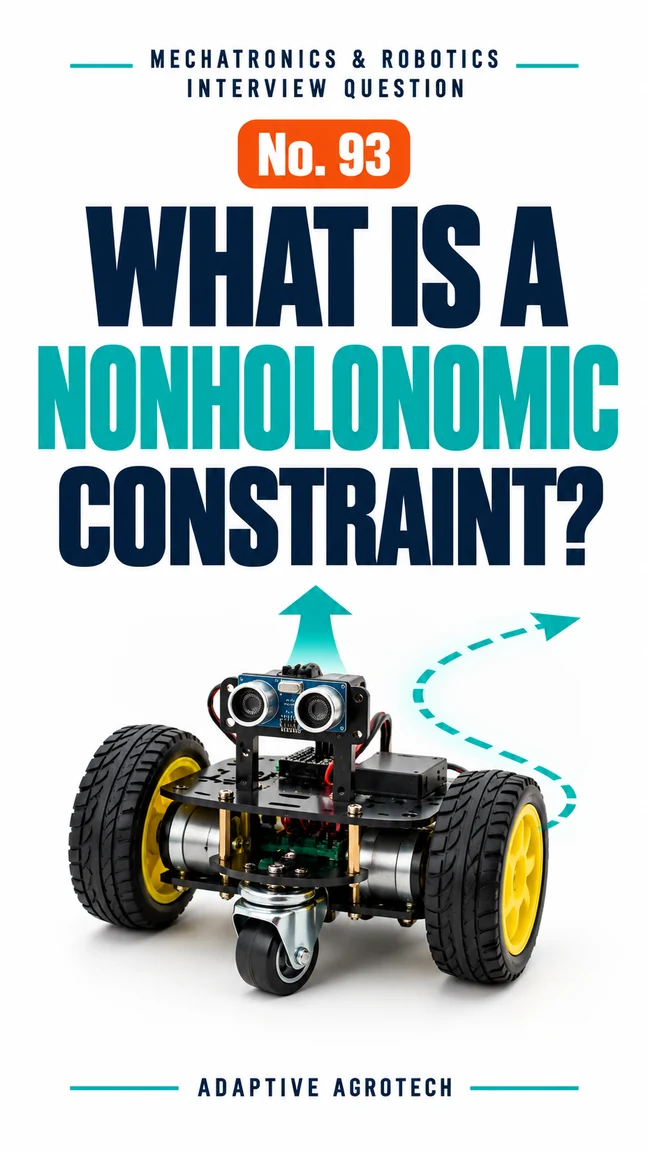
What is a Nonholonomic Constraint?

A nonholonomic constraint limits instantaneous velocities without reducing all positions reachable over time. Rolling wheels illustrate this distinction: a car cannot slide sideways immediately, yet sequences of arcs can change its lateral position.

Watch & explore
Robot kinematicsNo. 140

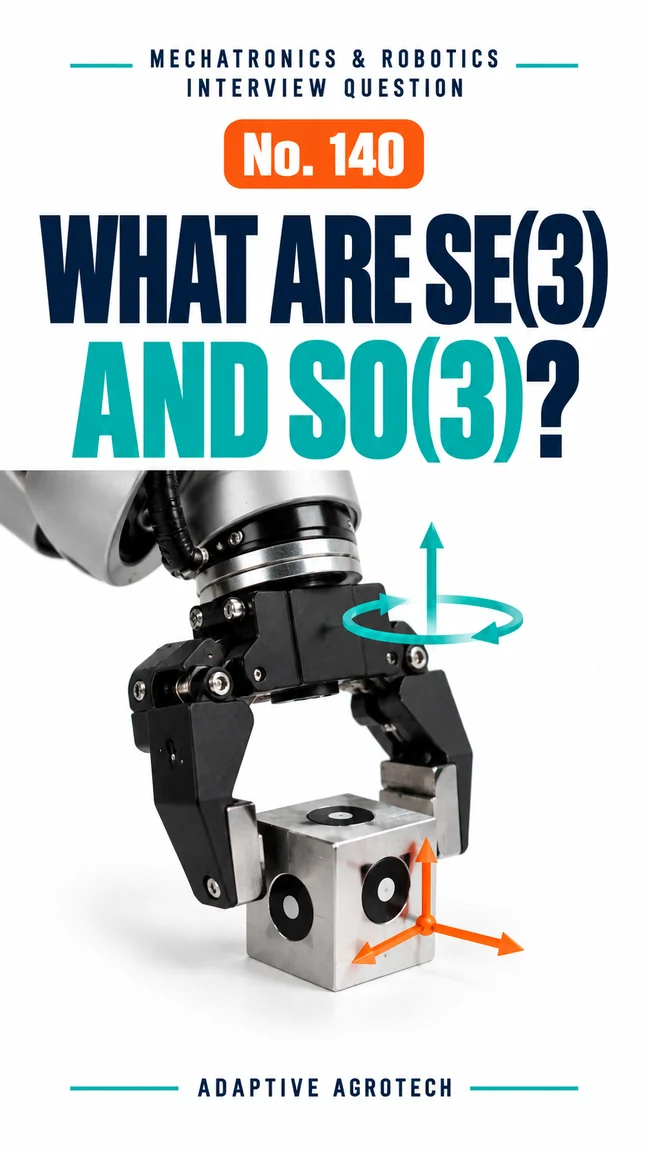
What Are SE(3) and SO(3) in Robotics?

SO(3) contains valid three dimensional rotations, while SE(3) contains rigid poses with rotation and translation. Their stored matrices obey constraints, excluding scaling, shear, and reflections despite containing more entries than independent degrees of freedom.

Watch & explore
Robot kinematicsNo. 155

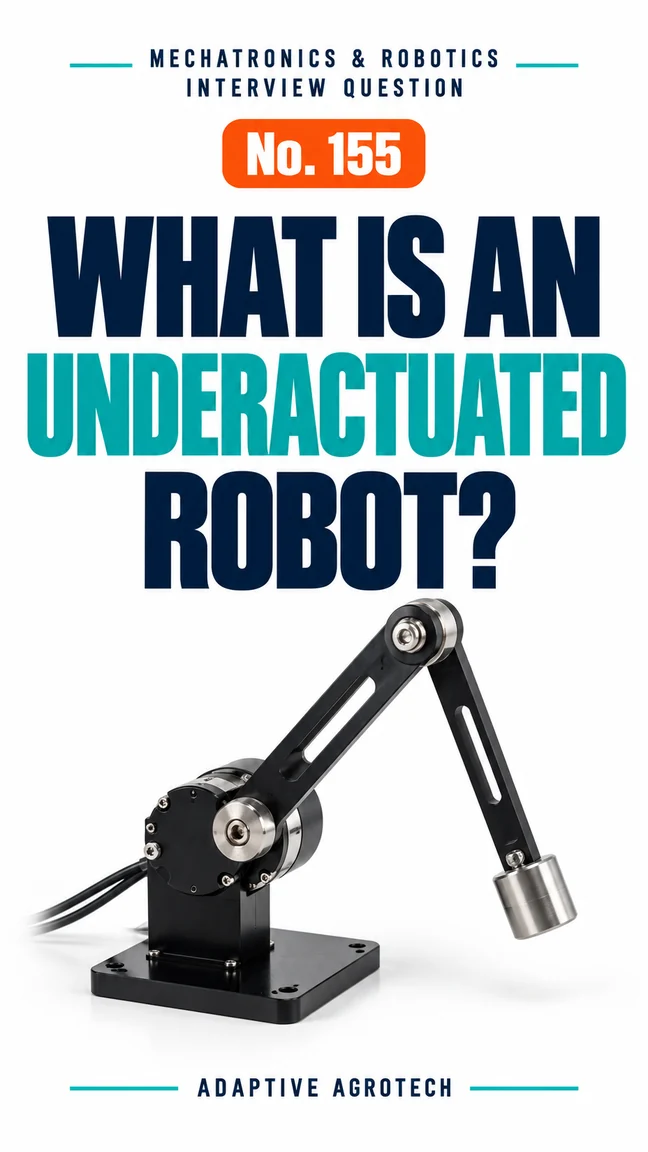
What Is an Underactuated Robot?

An underactuated robot has fewer independent control inputs than configuration coordinates. Indirect control can exploit coupled dynamics, but it cannot independently request every acceleration, and contact can change the effective constraints and actuation.

Watch & explore
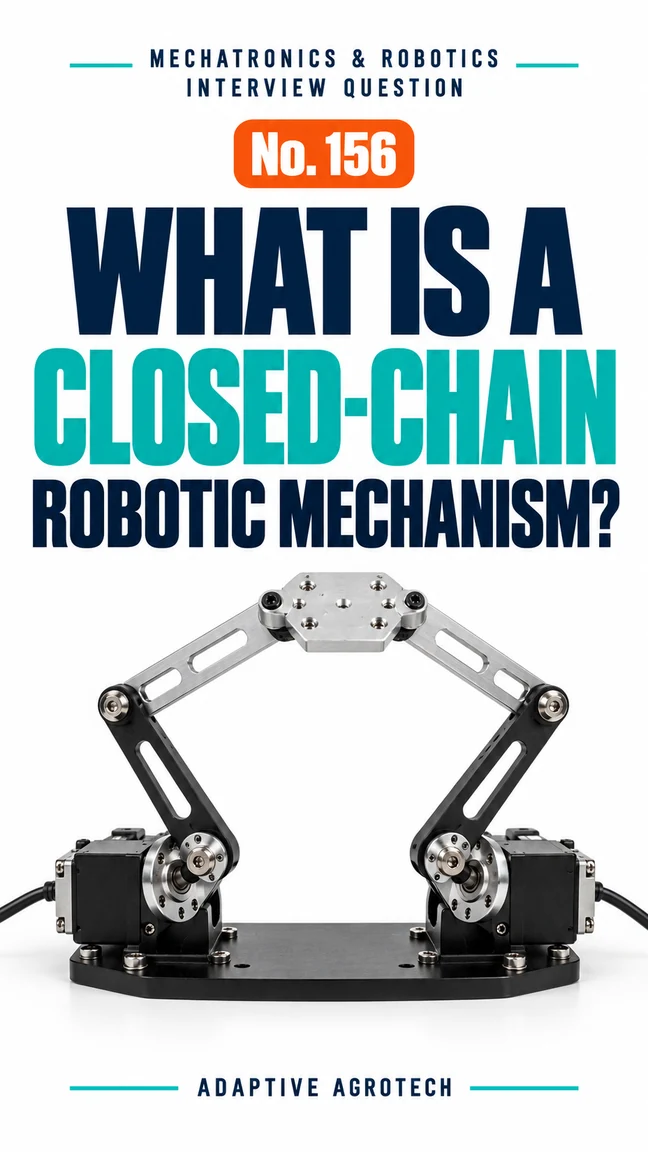
Robot kinematicsNo. 156

What Is a Closed-Chain Robotic Mechanism?

A closed-chain mechanism contains a loop of linked joints, creating closure constraints between coordinates. Its joints cannot all be commanded independently, and valid motion must account for assembly modes and singular configurations.

Watch & explore
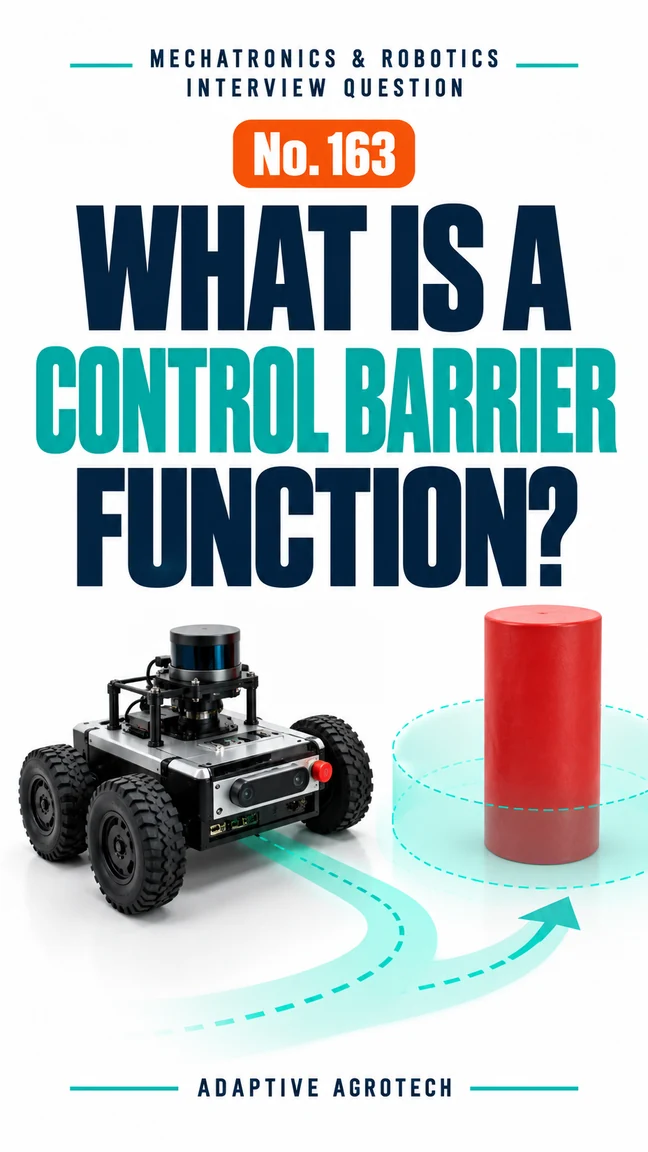
Control systemsNo. 163

What Is a Control Barrier Function?

A control barrier function encodes an allowed region of state space. Its derivative condition restricts the control input so the state can remain inside. This differs from merely adding an obstacle penalty to a cost.

Watch & explore
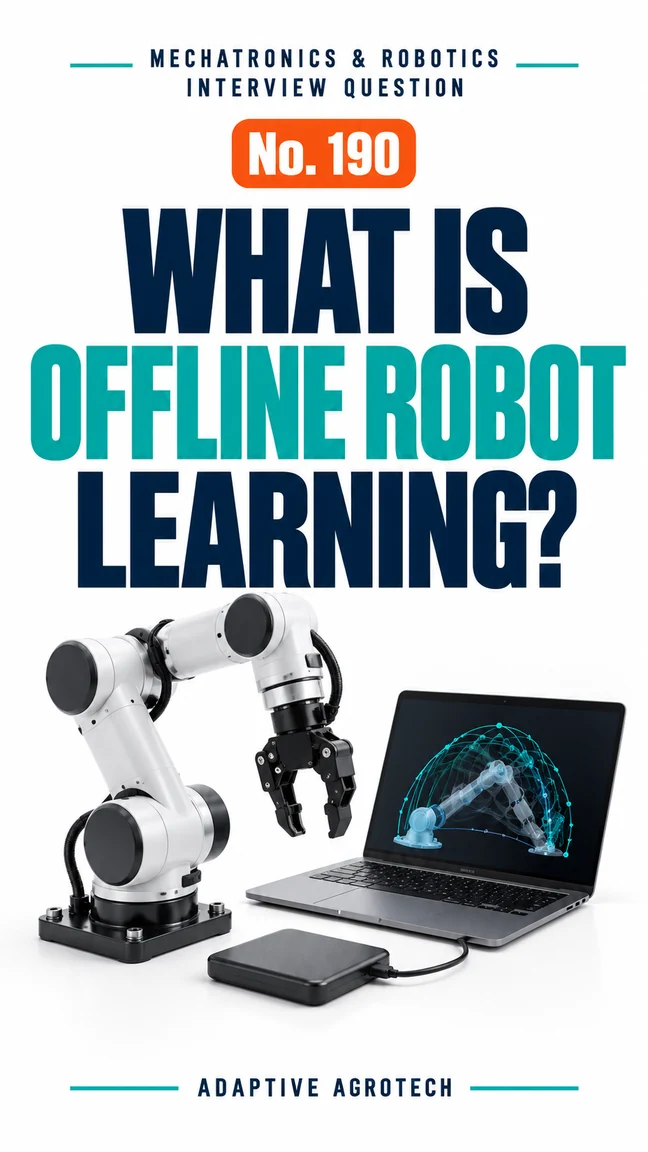
AI & machine learningNo. 190

What Is Offline Reinforcement Learning?

Offline reinforcement learning trains from a fixed dataset of previously collected transitions. During this training stage, the algorithm does not collect new experience by interacting with the environment. It still uses a reward based learning objective.

Watch & explore
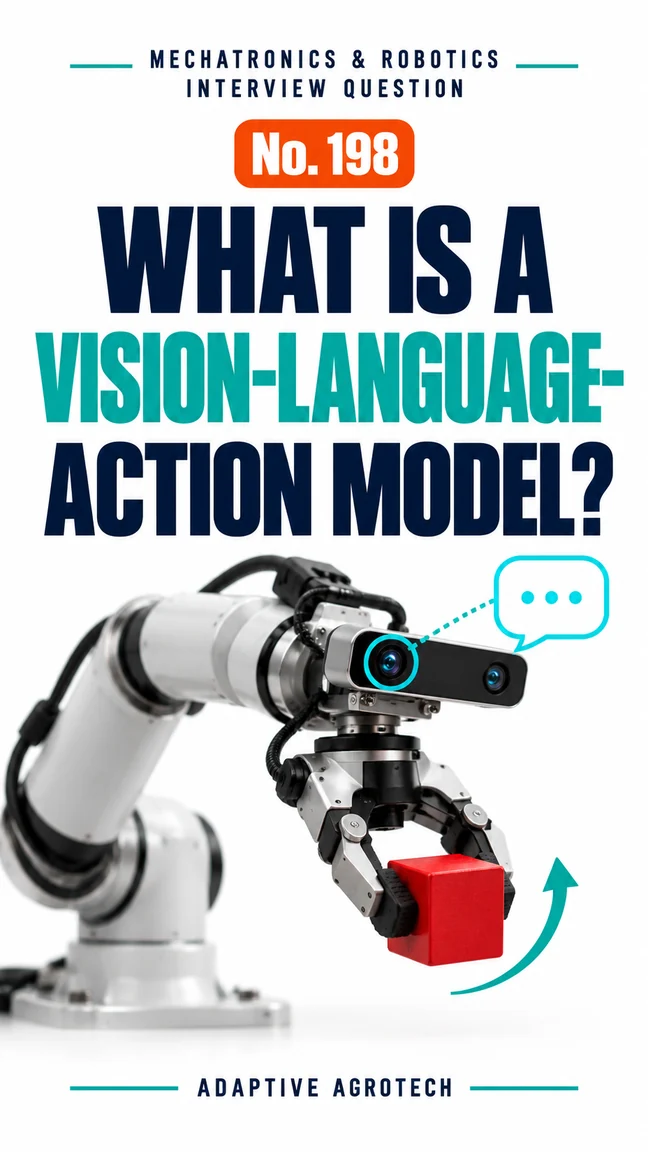
AI & machine learningNo. 198

What Is a Vision-Language-Action Model?

A vision language action model connects visual observations and language instructions to robot actions. It may also use joint positions or other robot state. Its output describes movements, rather than only a written answer.

Watch & explore
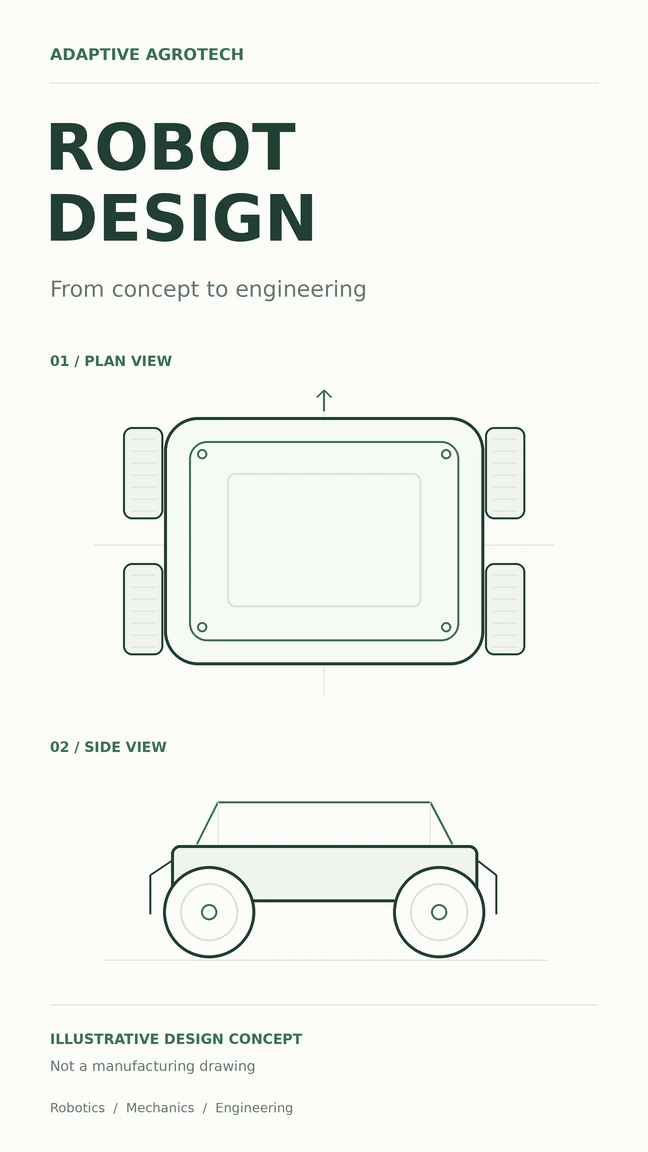
Robot design

Adaptive AgroTech Robot Design

Explore Adaptive AgroTech’s robot-design work in a short visual introduction. Use the design prompts below to think about the relationship between a robot’s intended task, physical layout and engineering constraints.

Watch & explore