Skip to content
Adaptive AgroTech NetworkUniversity of Southern Denmark · SDU Drone Center
Robotics · Mechatronics · Intelligent systems

Short videos.
Lasting understanding.

Explore one engineering idea at a time. Watch a short lesson, read the key concepts and test your understanding before your next interview, project or class.

24 topics found

Video · Key ideas · Check your understanding

Localization & estimationNo. 031

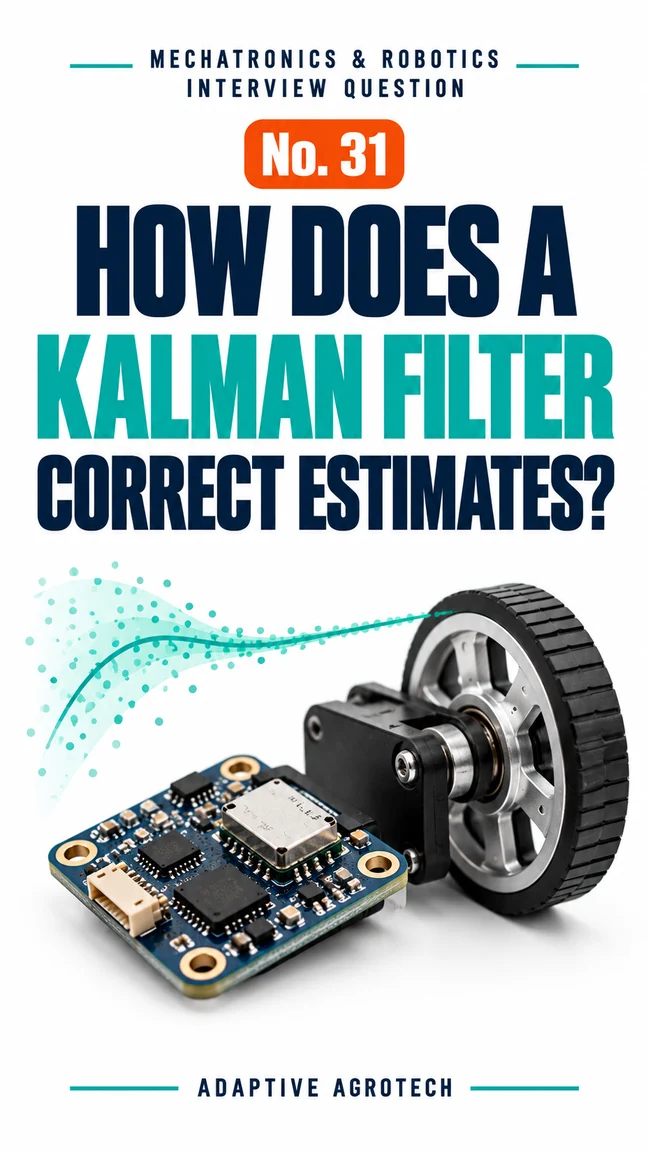
The Kalman Filter: Predict, Measure, Correct

A Kalman filter recursively predicts hidden state and uncertainty, then corrects them with measurements. Innovation and relative variances determine correction strength, while valid linear Gaussian assumptions underpin the stated estimation guarantee.

Watch & explore
Control systemsNo. 039

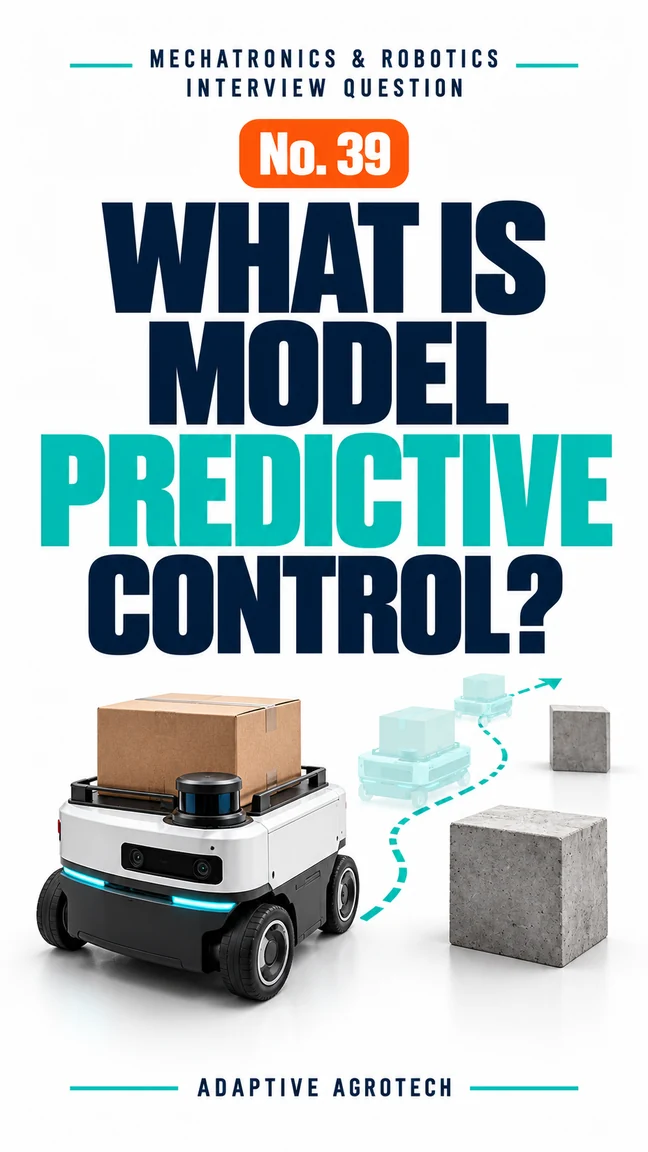
What is Model Predictive Control?

MPC optimizes a sequence of predicted control moves under included constraints, then applies the first move and repeats. New measurements refresh the plan, but prediction errors and solver deadlines limit practical performance.

Watch & explore
Control systemsNo. 044

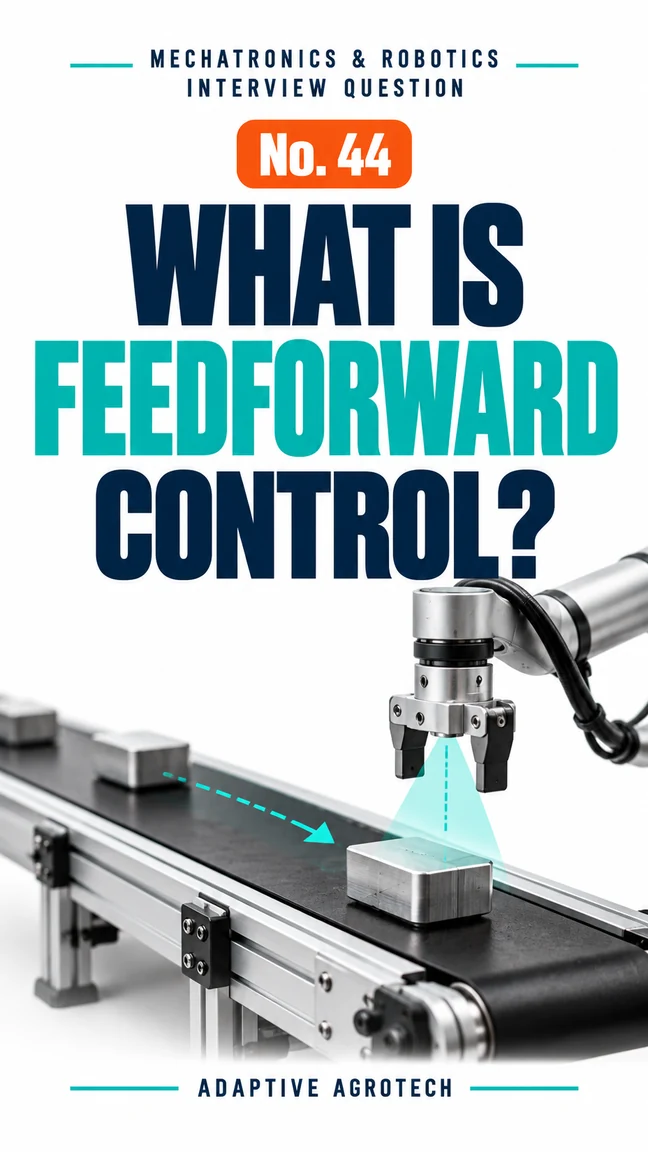
What is Feedforward Control?

Feedforward predicts required control effort from desired motion or measured disturbances. Gravity compensation and model-based wheel commands reduce feedback's workload, while model mismatch and motor limits still require feedback correction.

Watch & explore
Localization & estimationNo. 058

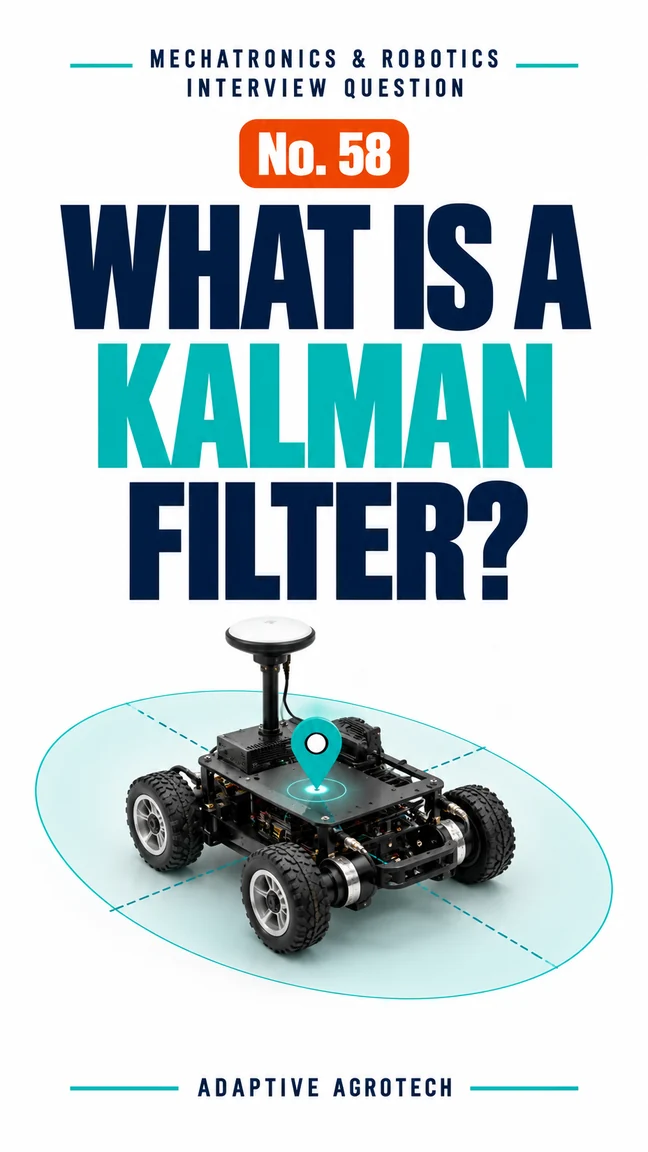
What is a Kalman Filter?

A Kalman filter predicts state and uncertainty, then applies an uncertainty-based measurement correction. Its numerical precision depends on valid noise and motion models rather than ensuring that the physical estimate is accurate.

Watch & explore
Localization & estimationNo. 059

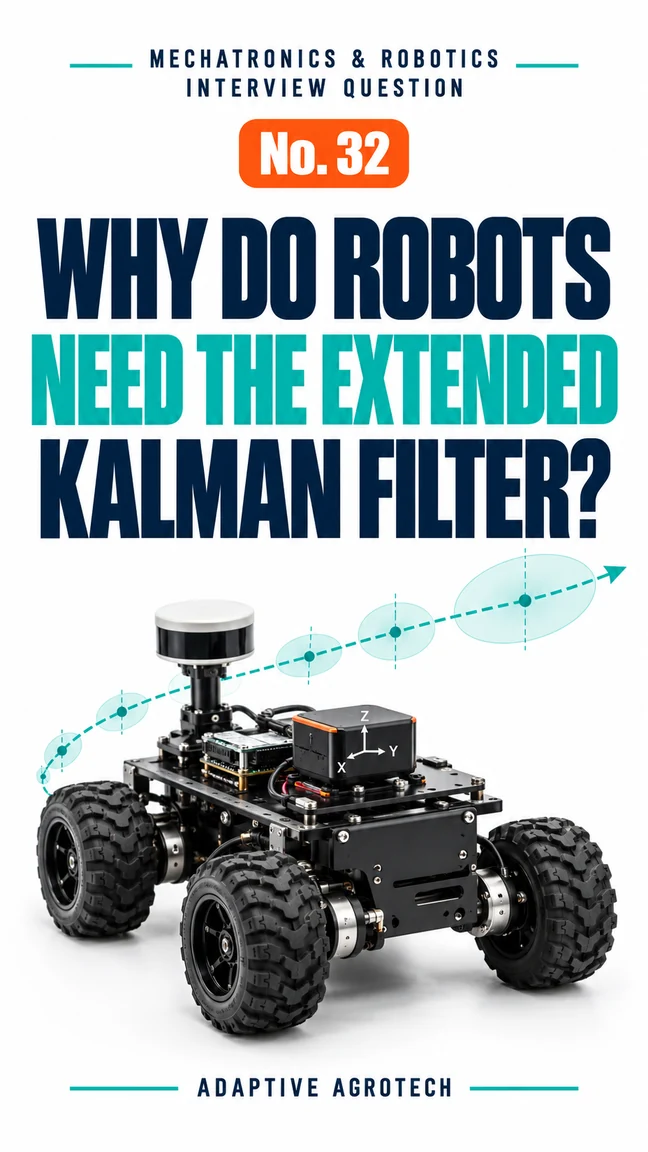
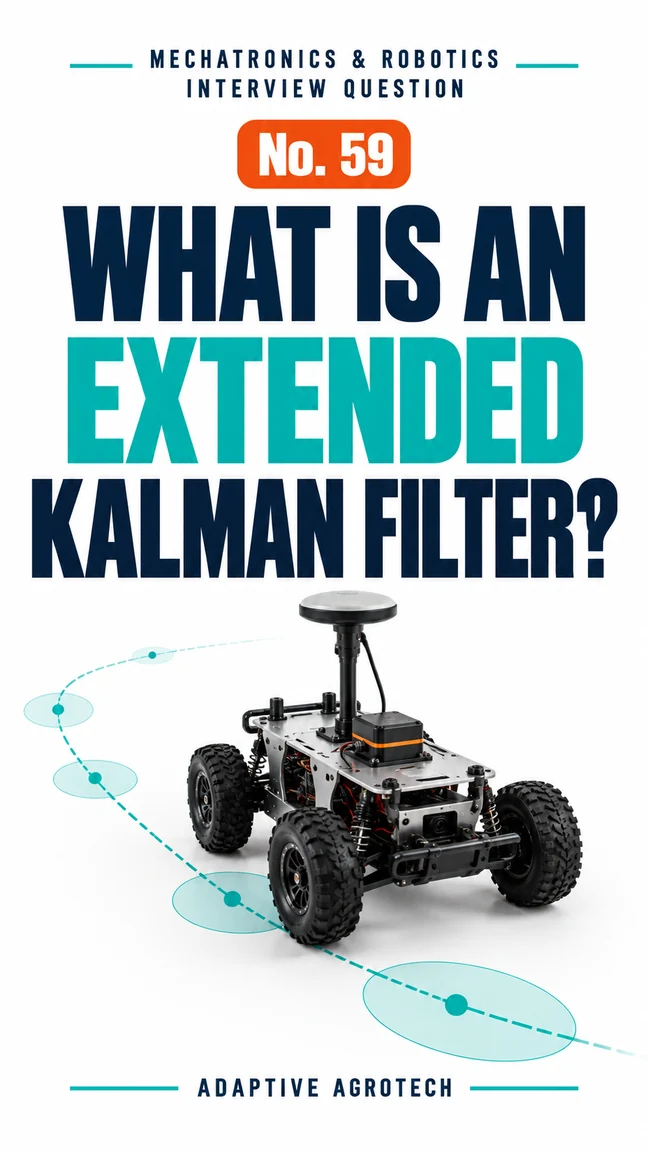
What is an Extended Kalman Filter?

The EKF uses nonlinear models for state prediction and Jacobians for local uncertainty handling. Heading-dependent robot motion is a typical application, with initialization and residual checks exposing failures of the local approximation.

Watch & explore
Localization & estimationNo. 065

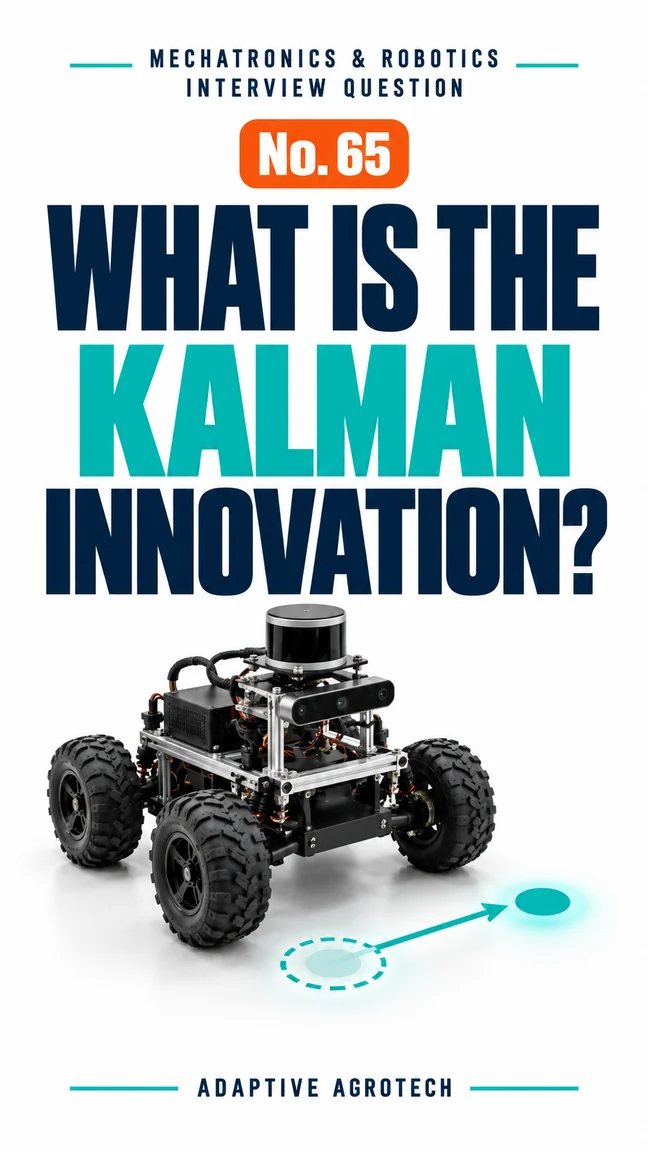
What is the Kalman Innovation?

Kalman innovation is the difference between an actual reading and its prediction. Interpreting it against expected uncertainty helps reveal timing, calibration, and model problems that smooth output alone can conceal.

Watch & explore
Localization & estimationNo. 066

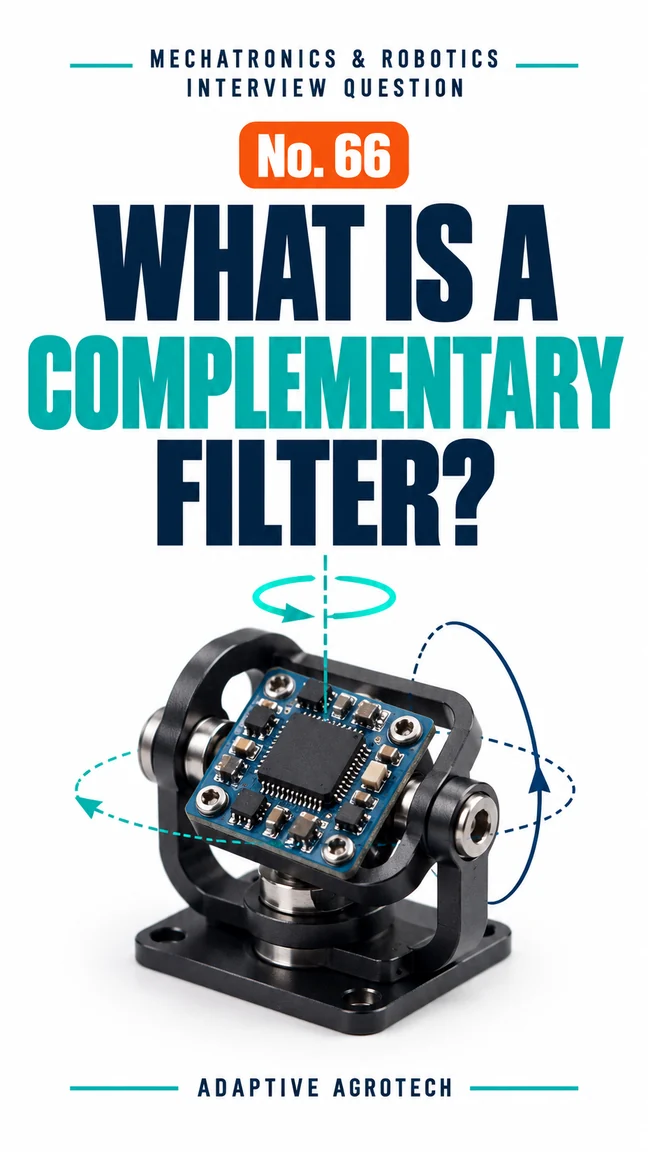
What is a Complementary Filter?

A complementary filter blends fast gyro response with a slower gravity-based tilt reference. Its weights control drift correction, while motion acceleration and gravity's lack of yaw information constrain the estimate.

Watch & explore
Motion planningNo. 088

What is a Velocity Obstacle?

A velocity obstacle identifies robot velocities that predict collision with a moving object. Relative geometry and assumed motion define the forbidden set; selected alternatives must also be reachable and updated as motion changes.

Watch & explore
Robot kinematicsNo. 151

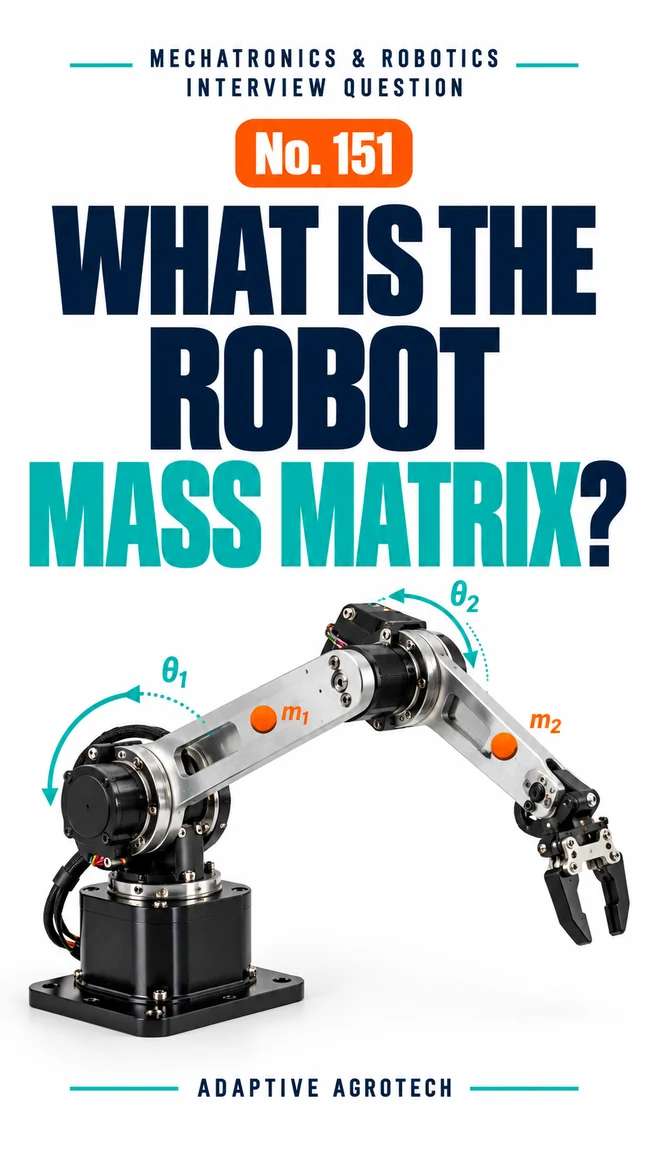
What Is the Robot Mass Matrix?

The robot mass matrix expresses configuration dependent inertia and coupling between joint accelerations and effort. It also defines kinetic energy, and a physically valid matrix in independent rigid robot coordinates is symmetric and positive definite.

Watch & explore
Control systemsNo. 166

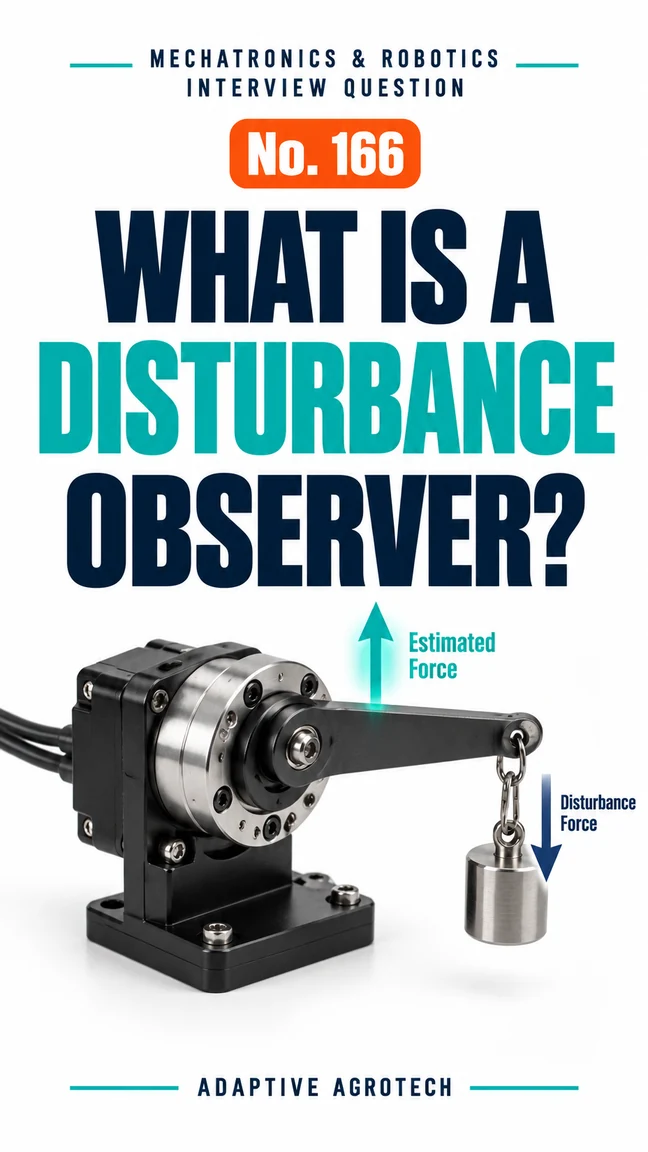
What Is a Disturbance Observer?

A disturbance observer estimates an unknown influence from the robot input, measured output, and a nominal model. The estimate can include external loads and some model mismatch, depending on its structure and assumptions.

Watch & explore
AI & machine learningNo. 182

What Is the Bellman Equation?

The Bellman expectation equation relates a state’s value to expected immediate reward plus discounted next state value. The expectation averages actions from the policy and transitions from the environment.

Watch & explore
AI & machine learningNo. 187

What Is Behavior Cloning?

Behavior cloning trains a policy to reproduce expert actions from paired observations and commands. It uses supervised learning, such as minimizing prediction error for continuous actions recorded while a person operates the robot.

Watch & explore
Computer visionNo. 219

What Is Non-Maximum Suppression?

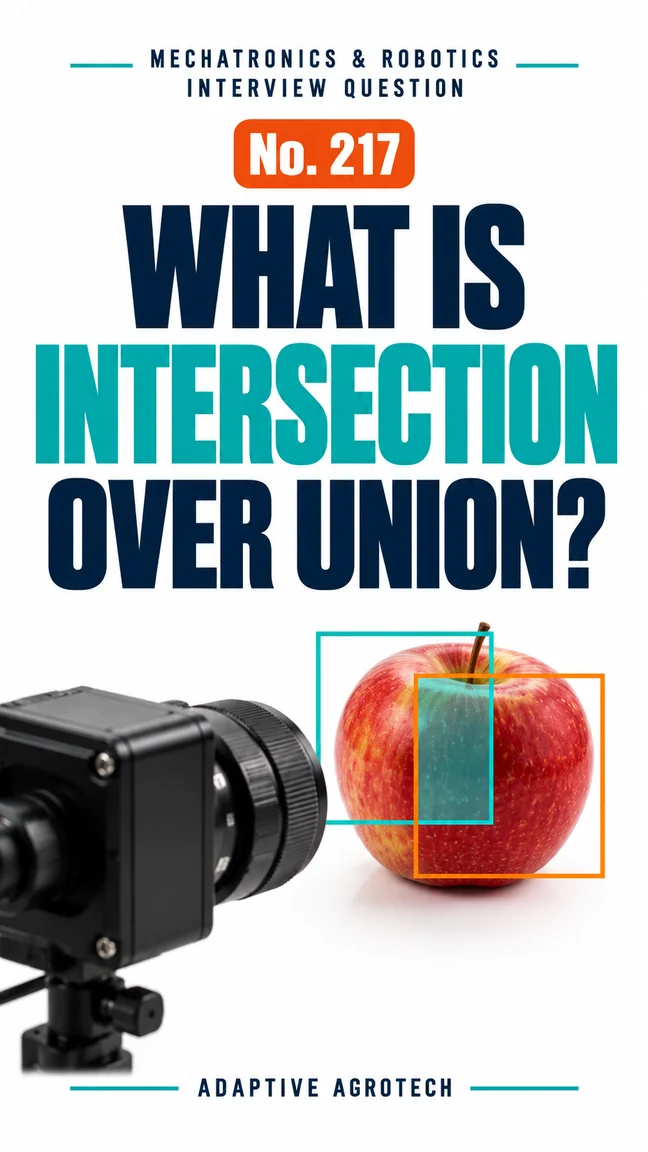
Non maximum suppression reduces duplicate detection boxes. A common greedy version keeps the highest scoring box, then suppresses lower scoring boxes that overlap it above a chosen intersection over union threshold. It repeats with the remaining candidates.

Watch & explore
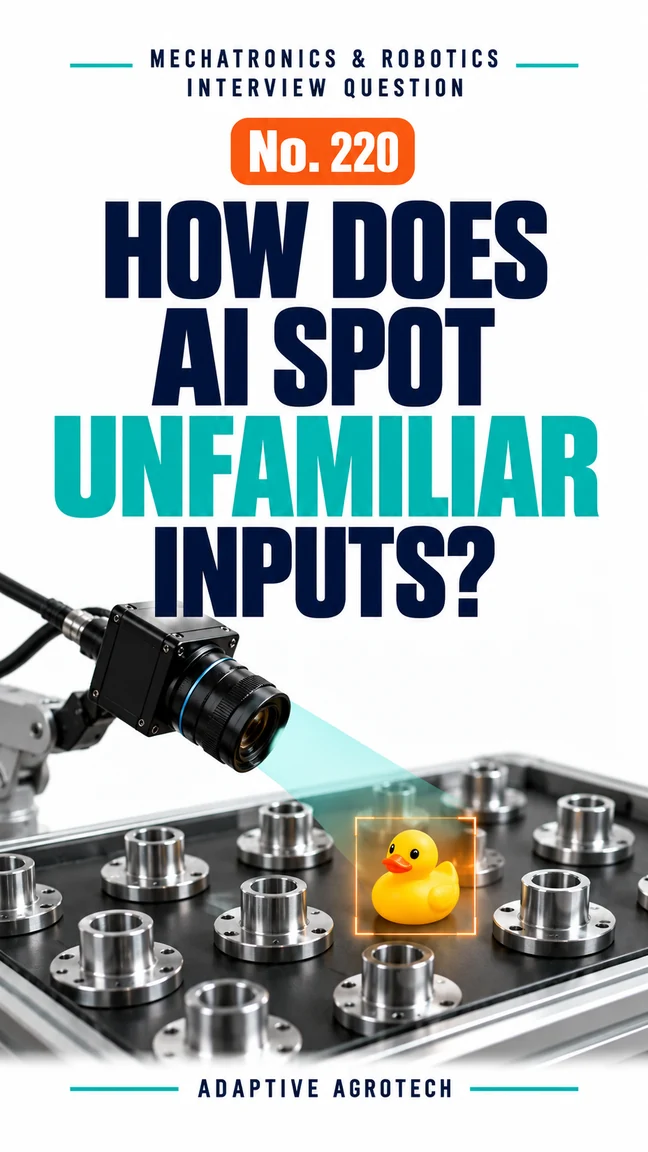
Computer visionNo. 220

What Is Out-of-Distribution Detection?

Out of distribution detection tries to recognize inputs that differ from the model training distribution. This is a detection task alongside prediction. The robot may need to identify an unfamiliar situation even when its classifier produces a confident label.

Watch & explore