Skip to content
Adaptive AgroTech NetworkUniversity of Southern Denmark · SDU Drone Center
Robotics · Mechatronics · Intelligent systems

Short videos.
Lasting understanding.

Explore one engineering idea at a time. Watch a short lesson, read the key concepts and test your understanding before your next interview, project or class.

8 topics found

Video · Key ideas · Check your understanding

Control systemsNo. 040

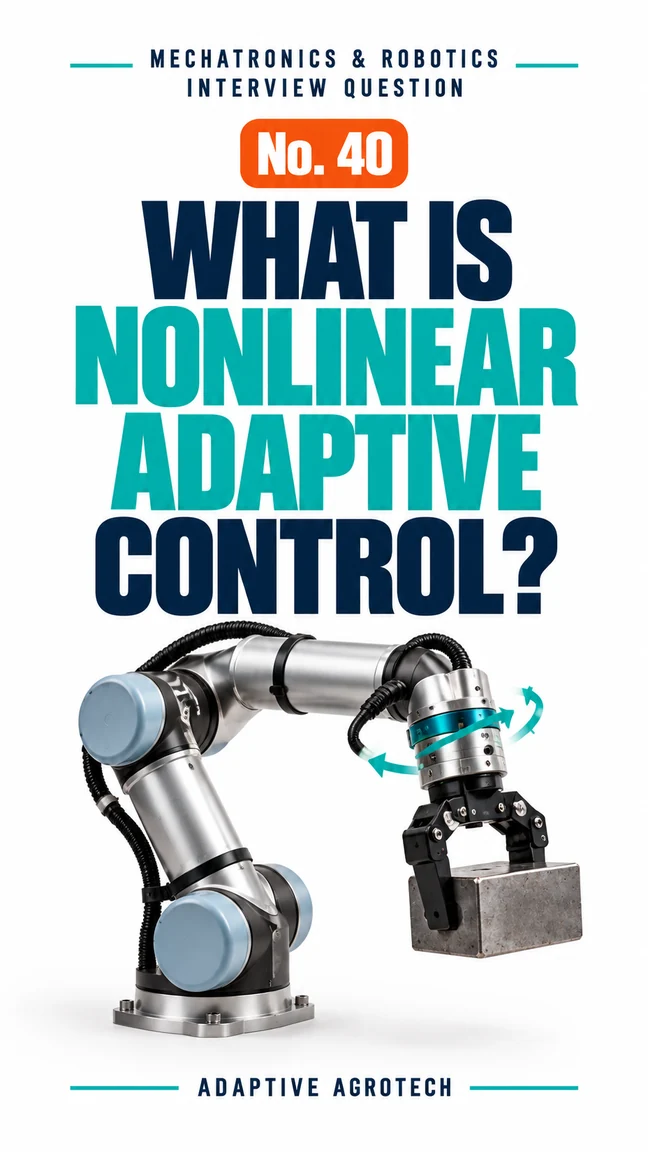
What is Nonlinear Adaptive Control?

Nonlinear adaptive control combines a nonlinear law with parameter updates. Tracking error can adjust estimated payload or friction, but successful tracking does not alone establish convergence to the true physical parameters.

Watch & explore
Control systemsNo. 043

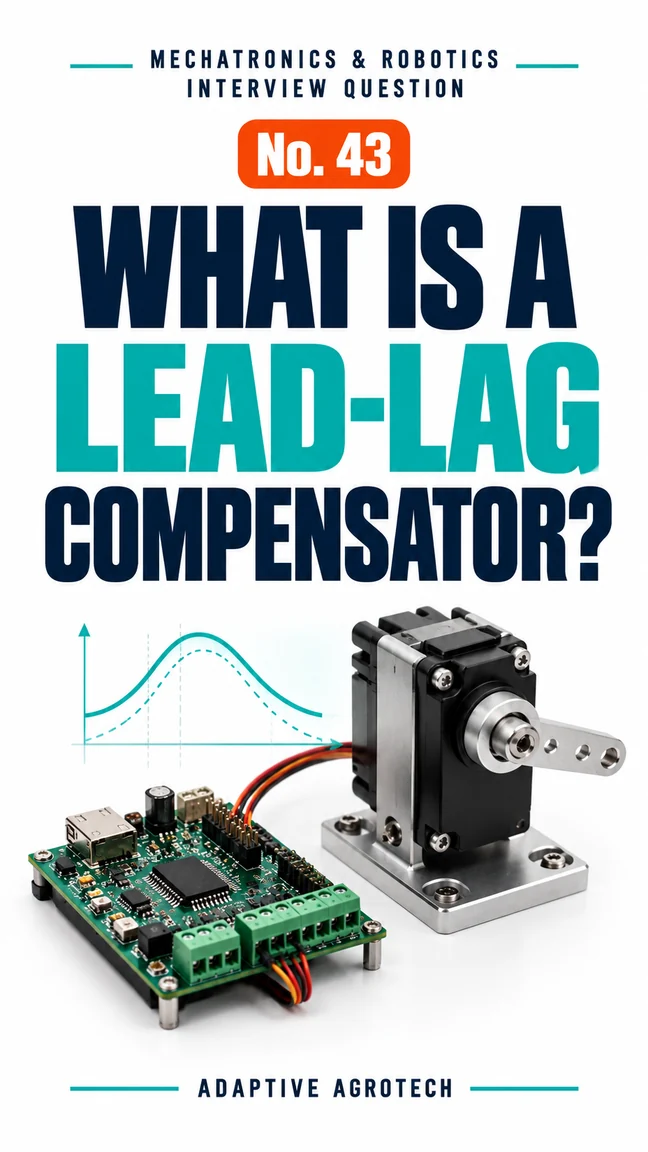
What is a Lead-Lag Compensator?

A lead-lag compensator shapes a servo's frequency response through coordinated filters. Lead adds phase and lag improves relative low-frequency gain, with combined stability margins and noise sensitivity determining the final design.

Watch & explore
Control systemsNo. 044

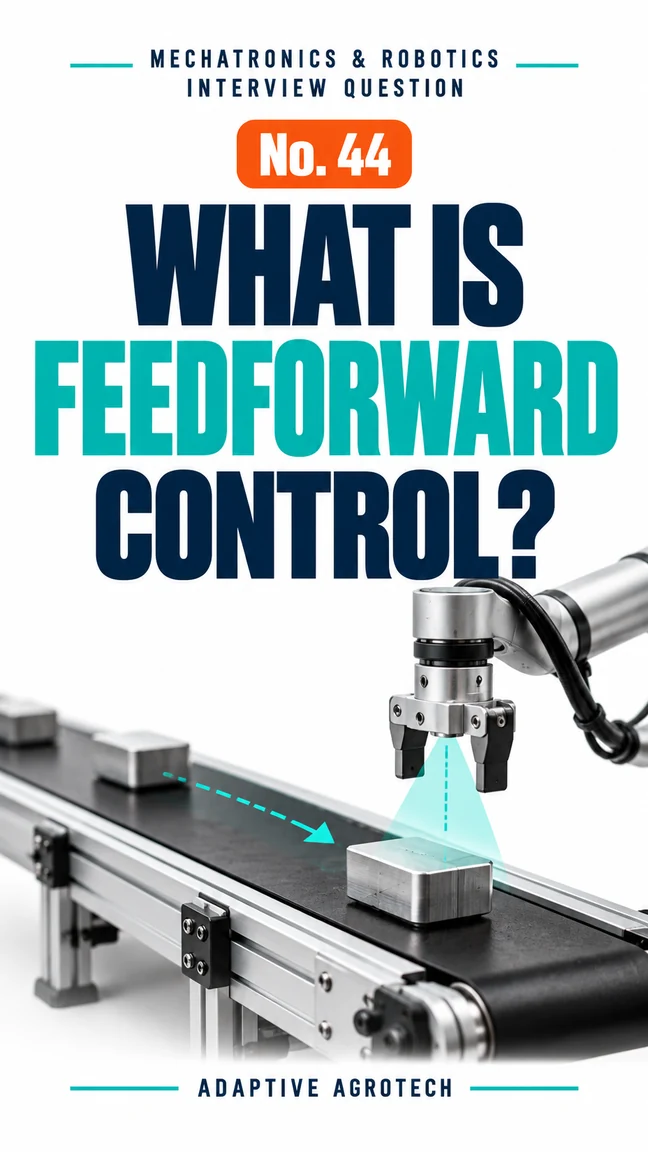
What is Feedforward Control?

Feedforward predicts required control effort from desired motion or measured disturbances. Gravity compensation and model-based wheel commands reduce feedback's workload, while model mismatch and motor limits still require feedback correction.

Watch & explore
Control systemsNo. 045

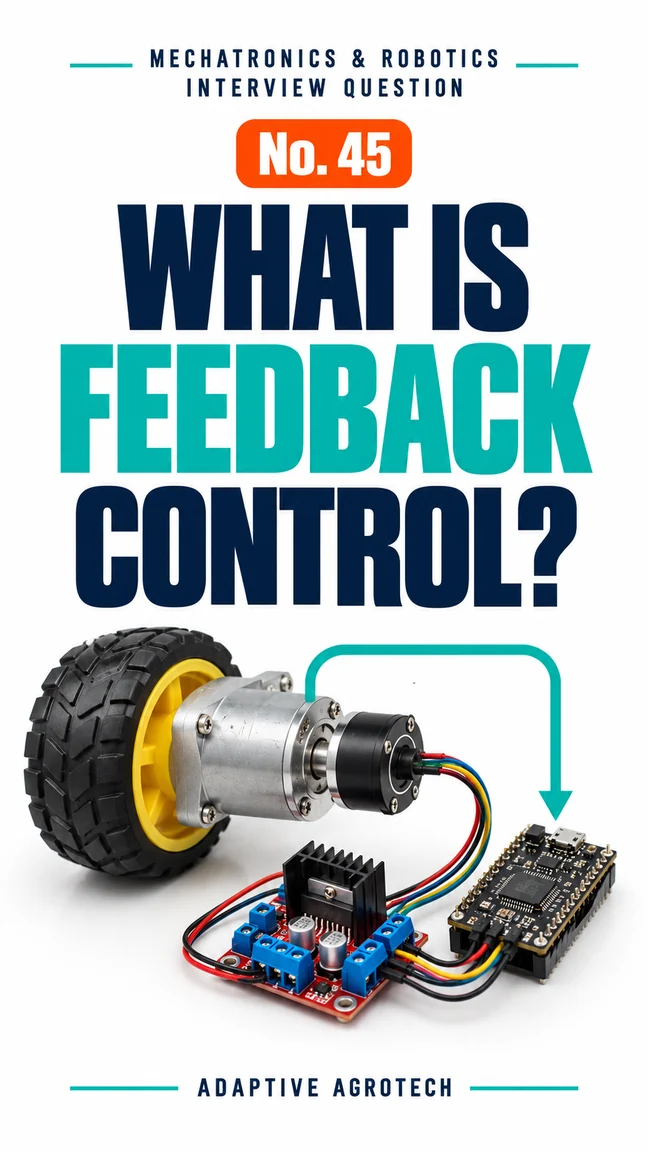
What is Feedback Control?

Feedback compares measured robot behavior with a target and changes the next command to reduce error. It can reject changing loads, while excessive gain, sensor noise, or timing delay can instead produce oscillation.

Watch & explore
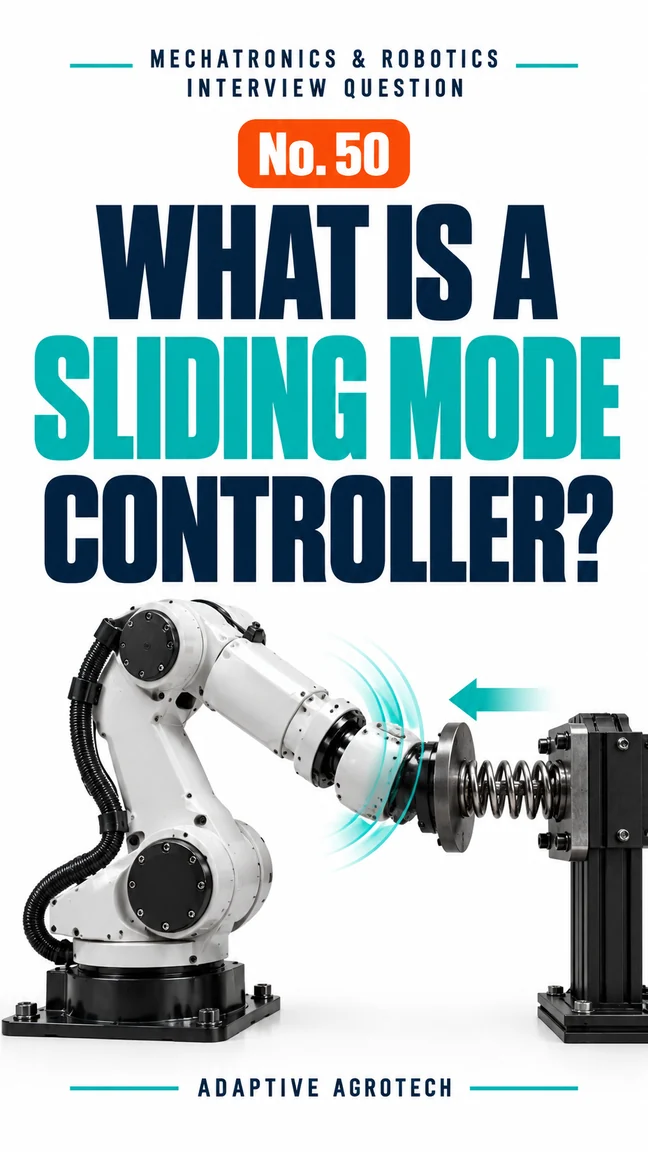
Control systemsNo. 050

What is a Sliding Mode Controller?

Sliding mode control drives state toward a designed tracking surface using a switching term. It can address certain bounded uncertainties, but chattering and finite actuator effort require attention when realizing the design.

Watch & explore
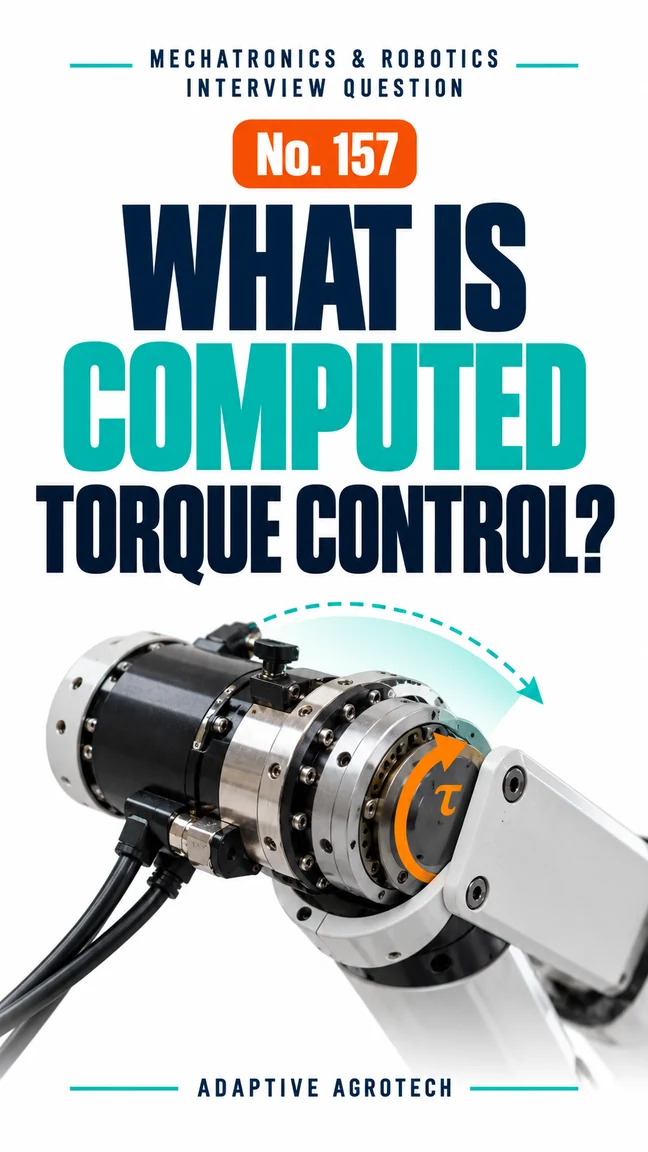
Control systemsNo. 157

What Is Computed Torque Control?

Computed torque control combines a robot dynamics model with tracking feedback to request joint torque. Ideal model cancellation can simplify error dynamics, while real payload errors, friction, and saturation limit the result.

Watch & explore
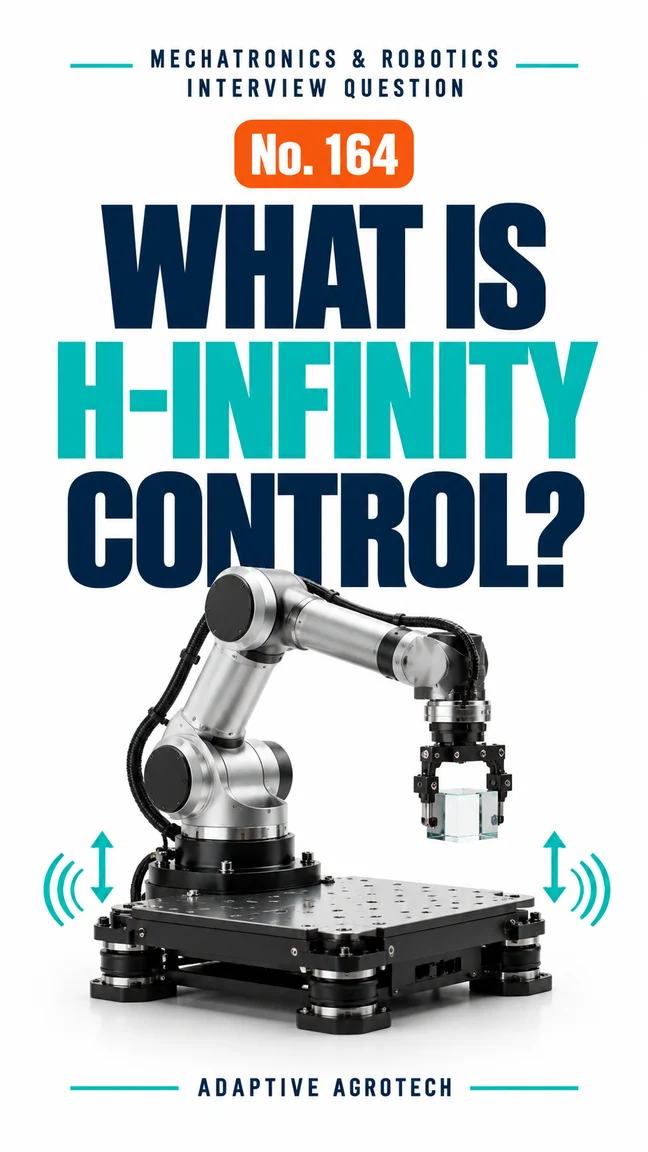
Control systemsNo. 164

What Is H-Infinity Control?

H infinity control limits the worst case amplification from disturbances to selected outputs. For a stable linear system, its H infinity norm measures the largest gain across frequency and input directions.

Watch & explore