Skip to content
Adaptive AgroTech NetworkUniversity of Southern Denmark · SDU Drone Center
Robotics · Mechatronics · Intelligent systems

Short videos.
Lasting understanding.

Explore one engineering idea at a time. Watch a short lesson, read the key concepts and test your understanding before your next interview, project or class.

10 topics found

Video · Key ideas · Check your understanding

Robot kinematicsNo. 093

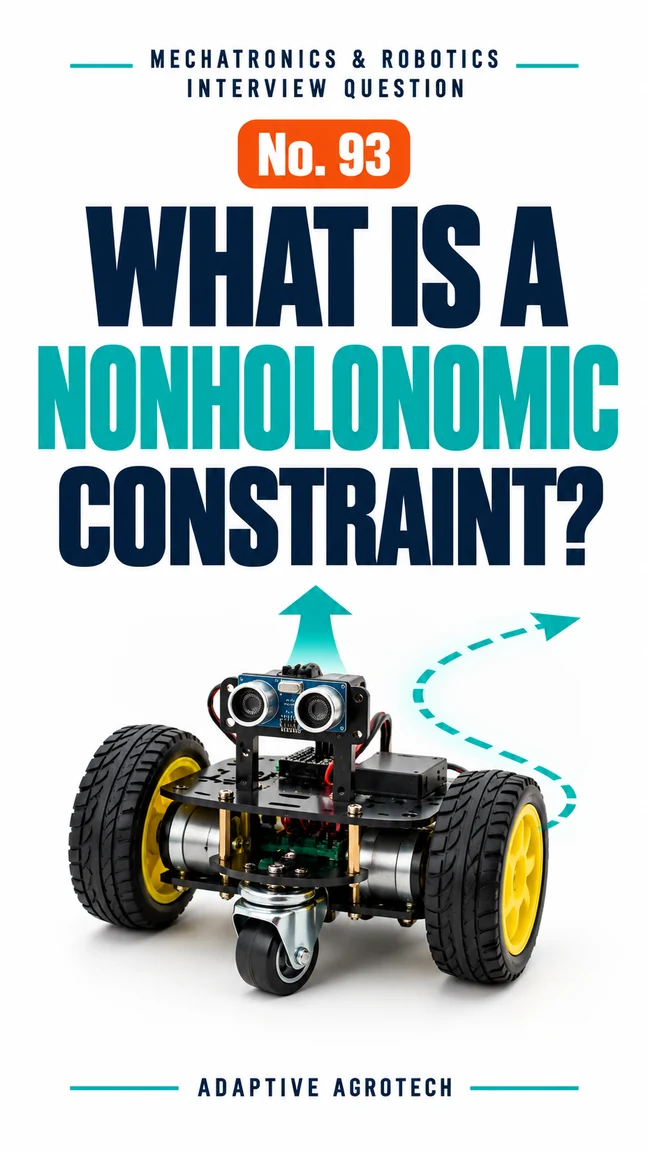
What is a Nonholonomic Constraint?

A nonholonomic constraint limits instantaneous velocities without reducing all positions reachable over time. Rolling wheels illustrate this distinction: a car cannot slide sideways immediately, yet sequences of arcs can change its lateral position.

Watch & explore
Robot kinematicsNo. 094

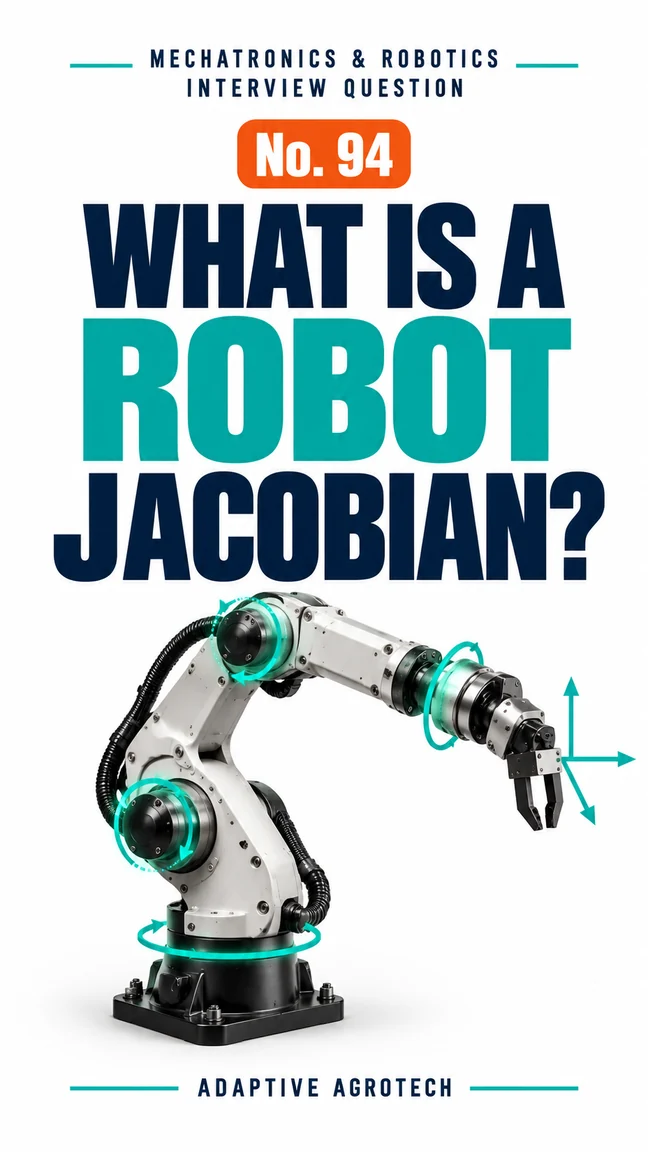
What is a Robot Jacobian?

The robot Jacobian maps joint rates to instantaneous tool velocity at a particular configuration. Its columns describe individual joint contributions, making it useful for local motion and force calculations rather than complete path planning.

Watch & explore
Robot kinematicsNo. 096

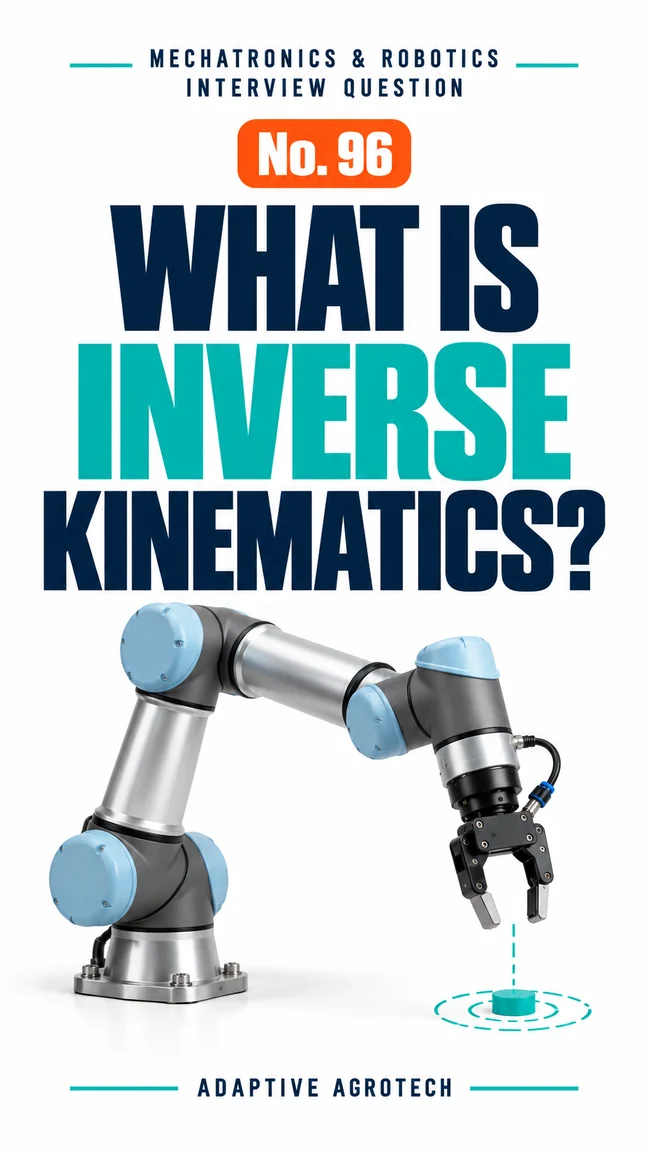
What is Inverse Kinematics?

Inverse kinematics finds joint values for a desired tool pose. A target can have several solutions or none, so solution choice must respect joint limits and the complete arm motion must be checked.

Watch & explore
Robot kinematicsNo. 141

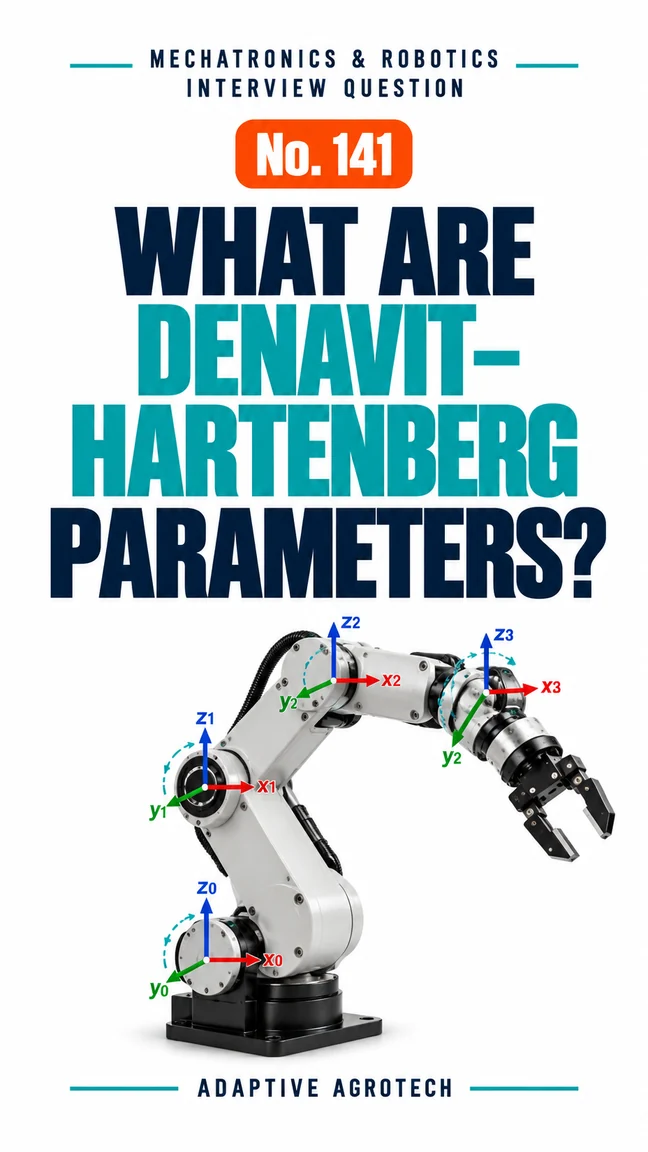
What Are Denavit–Hartenberg Parameters?

Denavit–Hartenberg parameters describe neighboring frames of a serial robot through four geometric quantities. Consistent frame conventions let their transforms produce forward kinematics, while mixing standard and modified DH rules corrupts the geometry.

Watch & explore
Robot kinematicsNo. 144

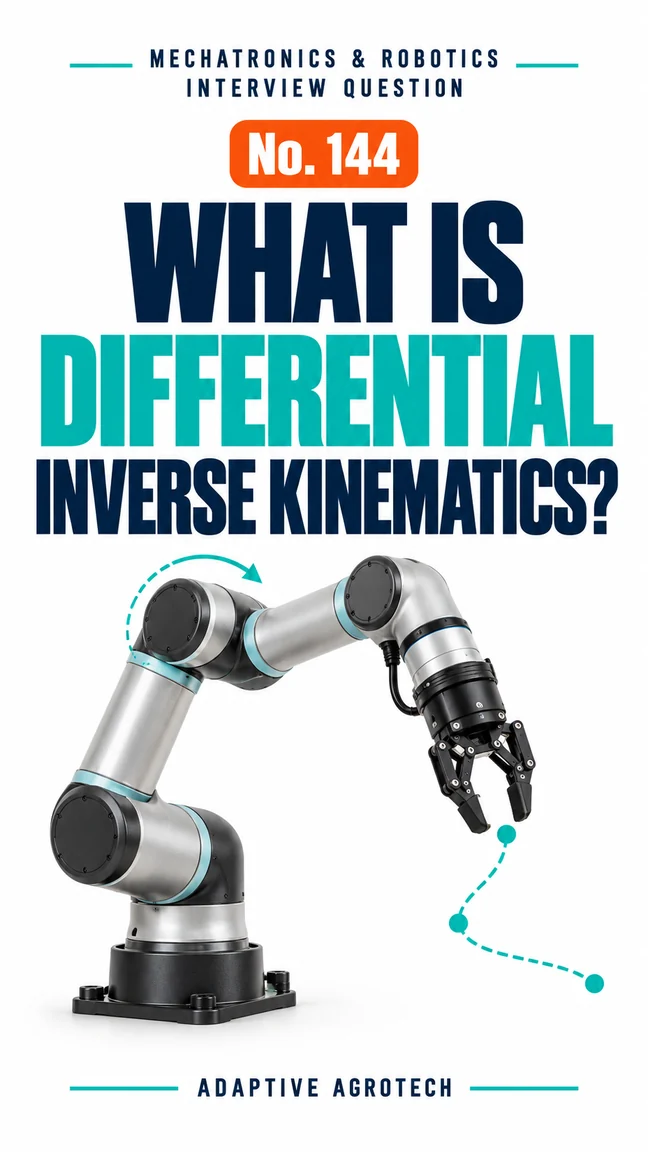
What Is Differential Inverse Kinematics?

Differential inverse kinematics solves locally for joint speeds that produce a desired tool velocity. The Jacobian must update as motion progresses, and damping near singularities trades tracking accuracy for less extreme joint commands.

Watch & explore
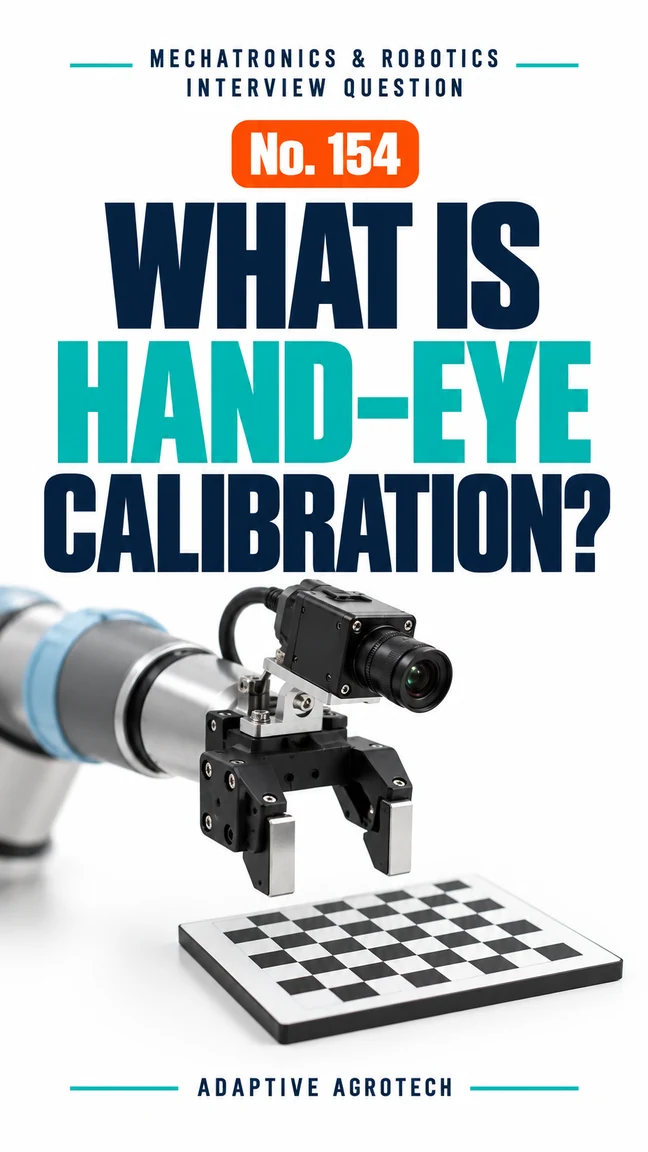
Robot kinematicsNo. 154

What Is Hand–Eye Calibration?

Hand–eye calibration estimates a fixed rigid relationship between camera and robot frames. Eye-in-hand observations across diverse robot poses constrain that transform, while synchronized measurements and validation on unused poses determine practical calibration quality.

Watch & explore