Skip to content
Adaptive AgroTech NetworkUniversity of Southern Denmark · SDU Drone Center
Robotics · Mechatronics · Intelligent systems

Short videos.
Lasting understanding.

Explore one engineering idea at a time. Watch a short lesson, read the key concepts and test your understanding before your next interview, project or class.

307 topics found

Video · Key ideas · Check your understanding

Communication & networksNo. 121

What is ISOBUS?

ISOBUS defines common communication functions for agricultural machines under ISO 11783. Built above CAN, it supports implement terminals and task data, but compatibility depends on the specific functions supported by both machines.

Watch & explore
Communication & networksNo. 122

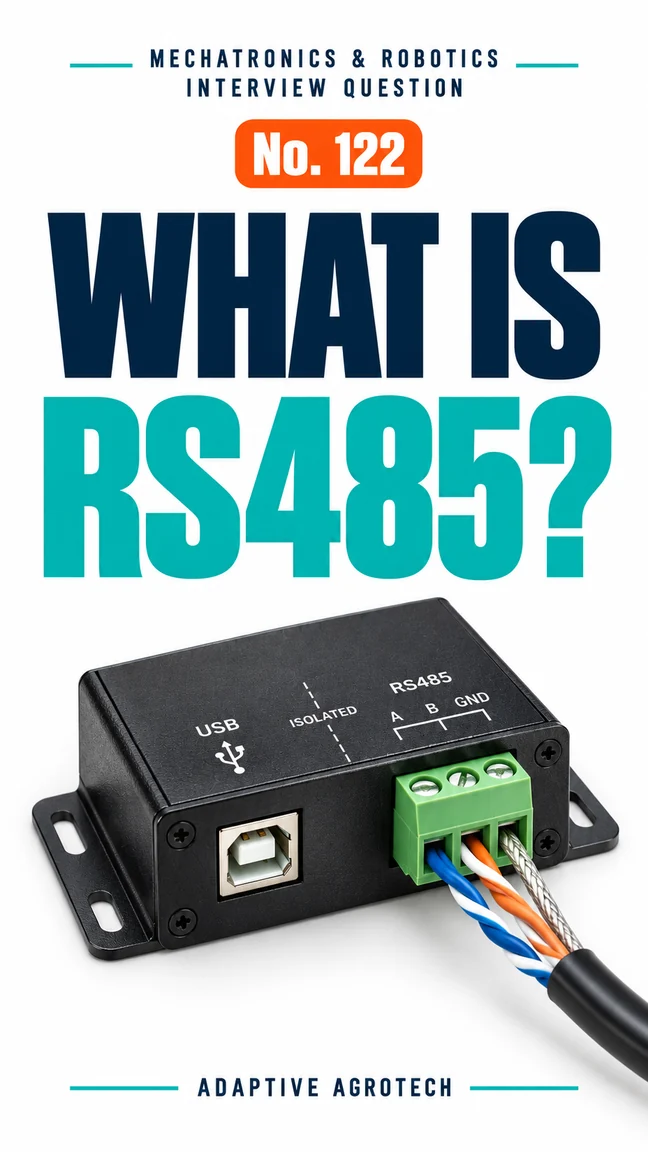
What is RS485?

RS485 specifies a differential electrical interface for serial communication. Multiple devices can share a half duplex pair with one active transmitter, while message structure, addressing, and timing come from a separate protocol.

Watch & explore
Communication & networksNo. 123

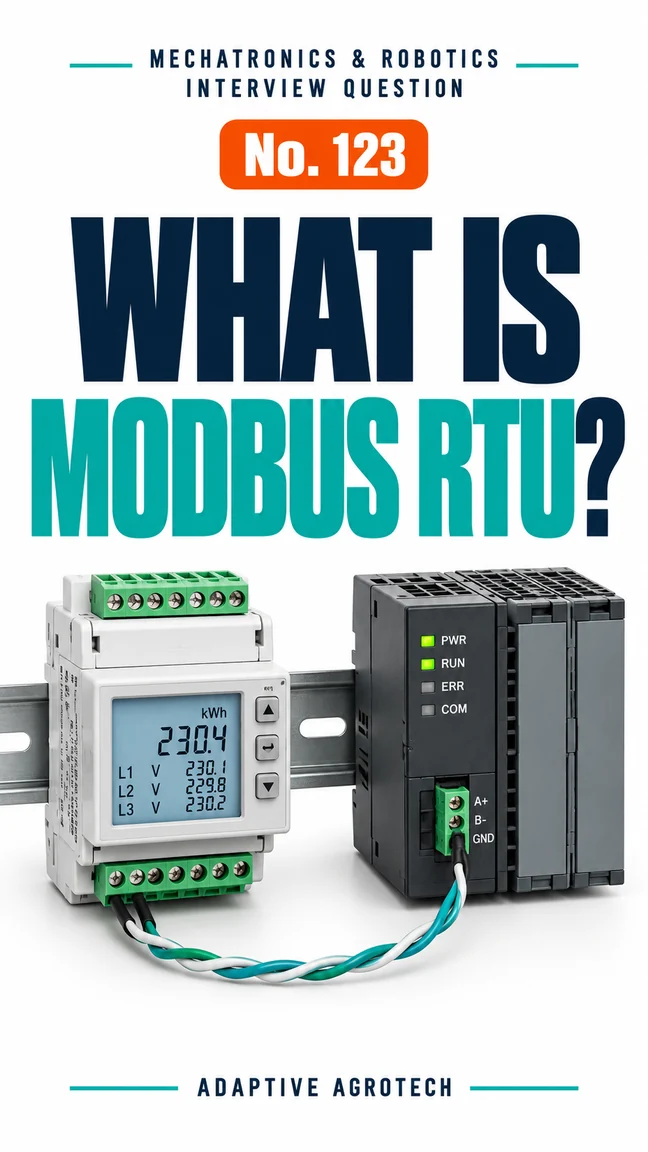
What is Modbus RTU?

Modbus RTU exchanges device data through addressed serial requests and checked frames. Timing helps delimit messages, while device-specific register maps determine units and interpretation; a successful write reply alone does not confirm motion.

Watch & explore
Communication & networksNo. 124

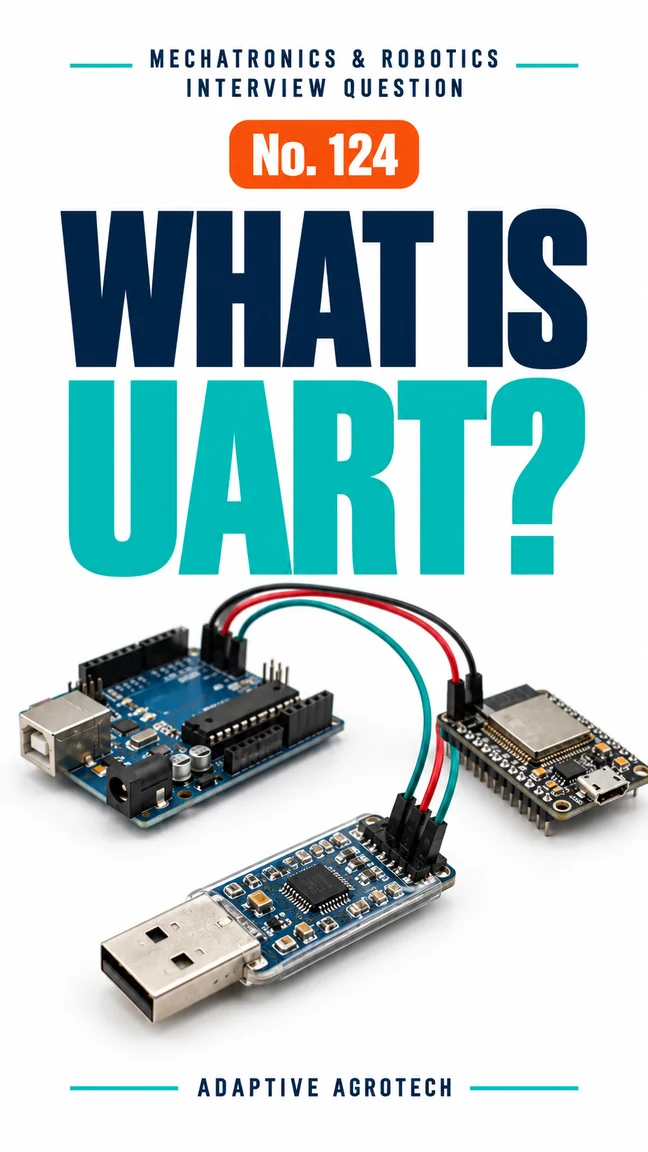
What is UART?

A UART converts bytes to asynchronous serial bits and back without a shared clock wire. Both endpoints need matching baud and framing, suitable logic levels, and crossed transmit and receive connections.

Watch & explore
Communication & networksNo. 125

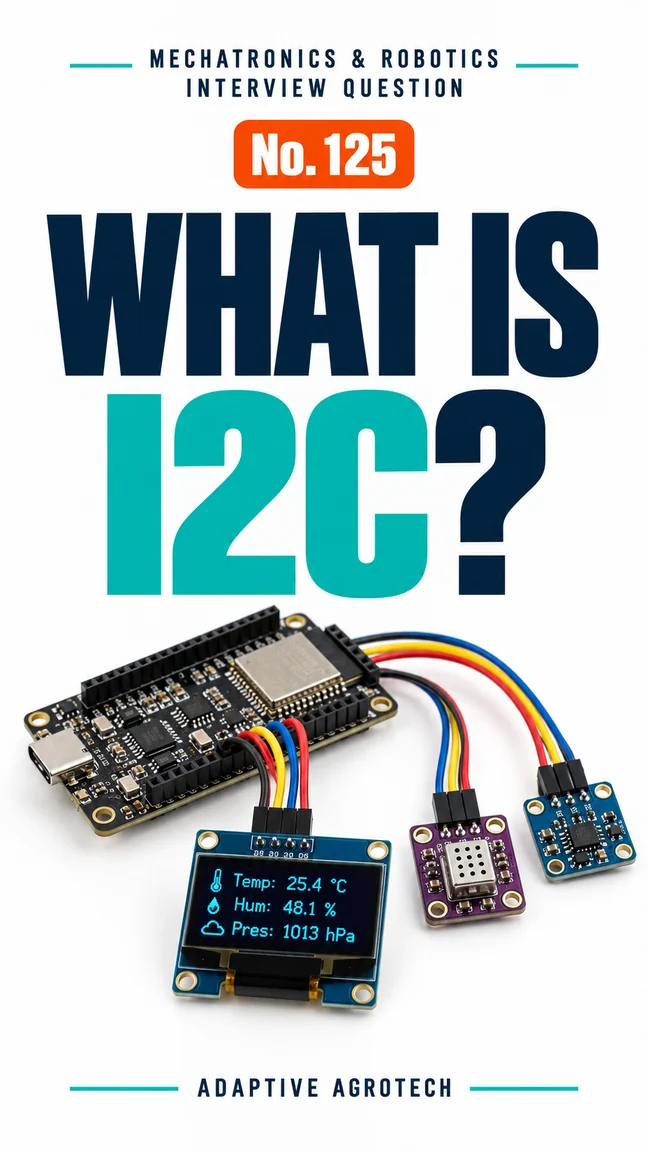
What is I2C?

I2C connects a controller to addressed chips using shared clock and data lines. Pull-ups create the high level, and correct addresses, capacitance, and electrical loading are essential for reliable short interchip connections.

Watch & explore
Communication & networksNo. 126

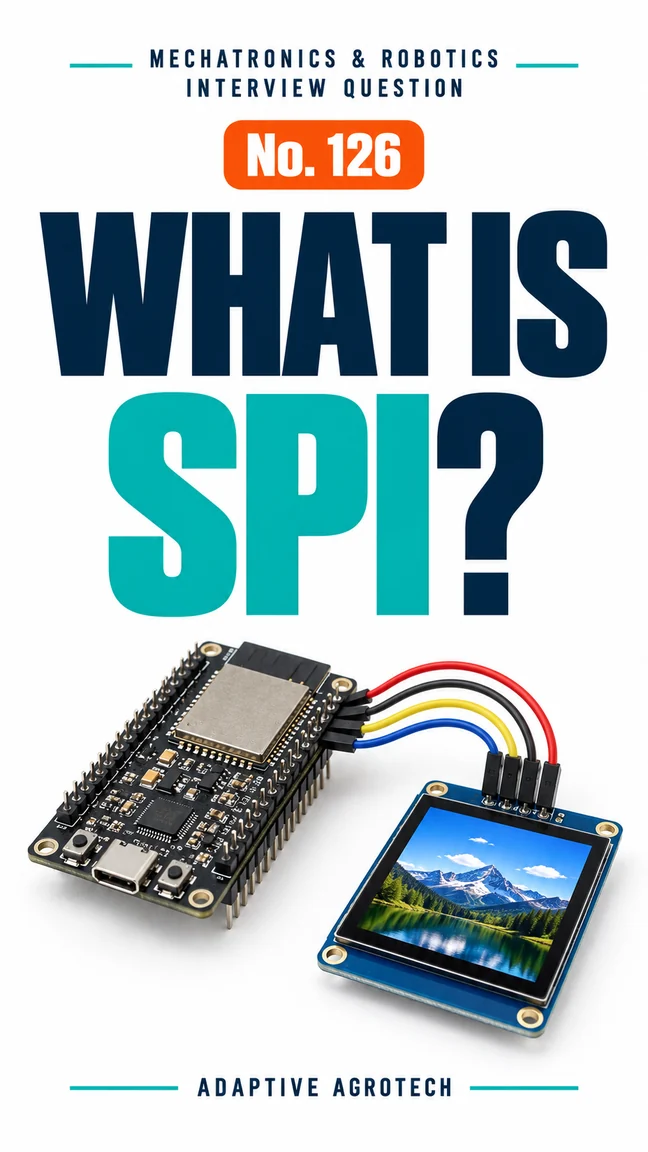
What is SPI?

SPI is a clocked interchip interface with controller supplied clock, target selection, and separate data directions. Correct transfers require matching clock polarity, phase, select timing, and each target device’s timing specification.

Watch & explore
Communication & networksNo. 127

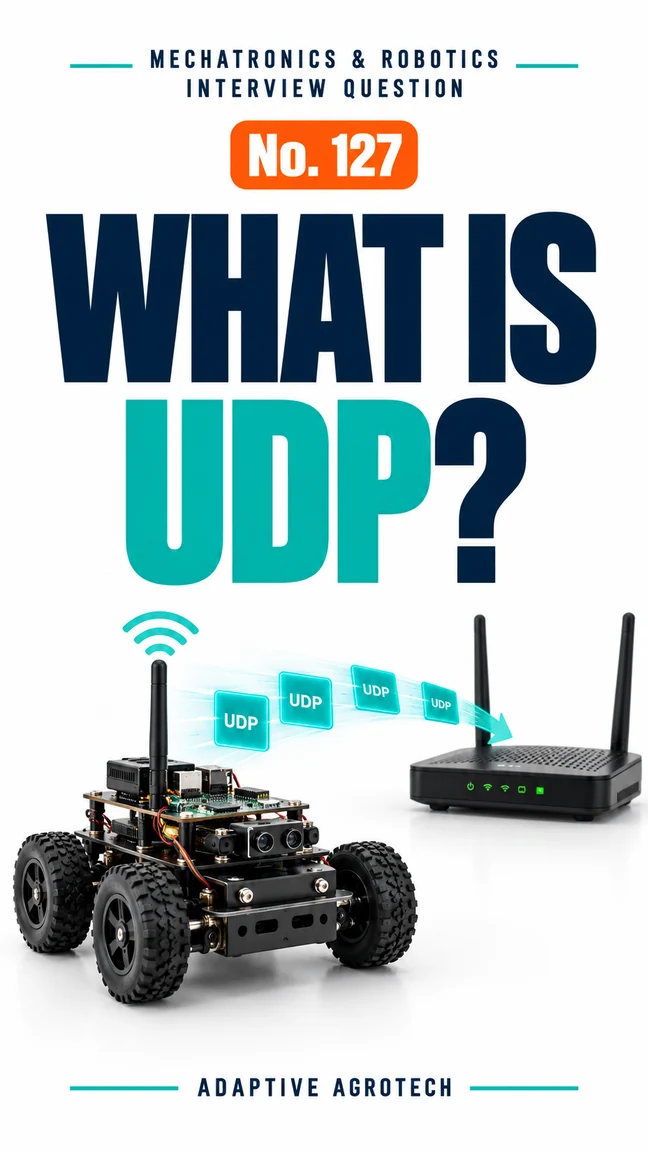
What is UDP?

UDP transports separate datagrams with low transport overhead but no built-in guarantee of arrival or order. Robot streams should track sequence and measurement age, since choosing UDP alone does not establish timely or safe control.

Watch & explore
Communication & networksNo. 128

What is TCP?

TCP offers reliable ordered bytes through acknowledgements and retransmission. Applications must define their own message boundaries and timeouts, and retransmission can delay later data despite the transport’s reliability guarantees.

Watch & explore
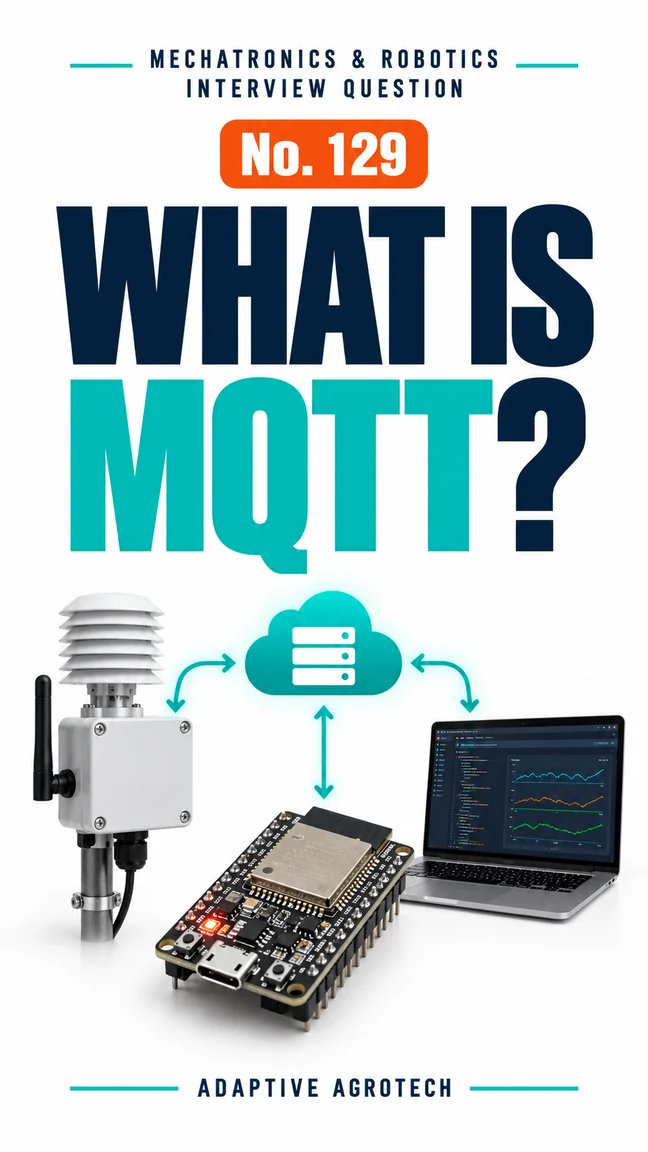
Communication & networksNo. 129

What is MQTT?

MQTT routes published topic messages through a broker to interested subscribers. It suits robot telemetry and dashboards, with deployment choices for access security and delivery policy rather than assuming brokered data provides independent safety.

Watch & explore
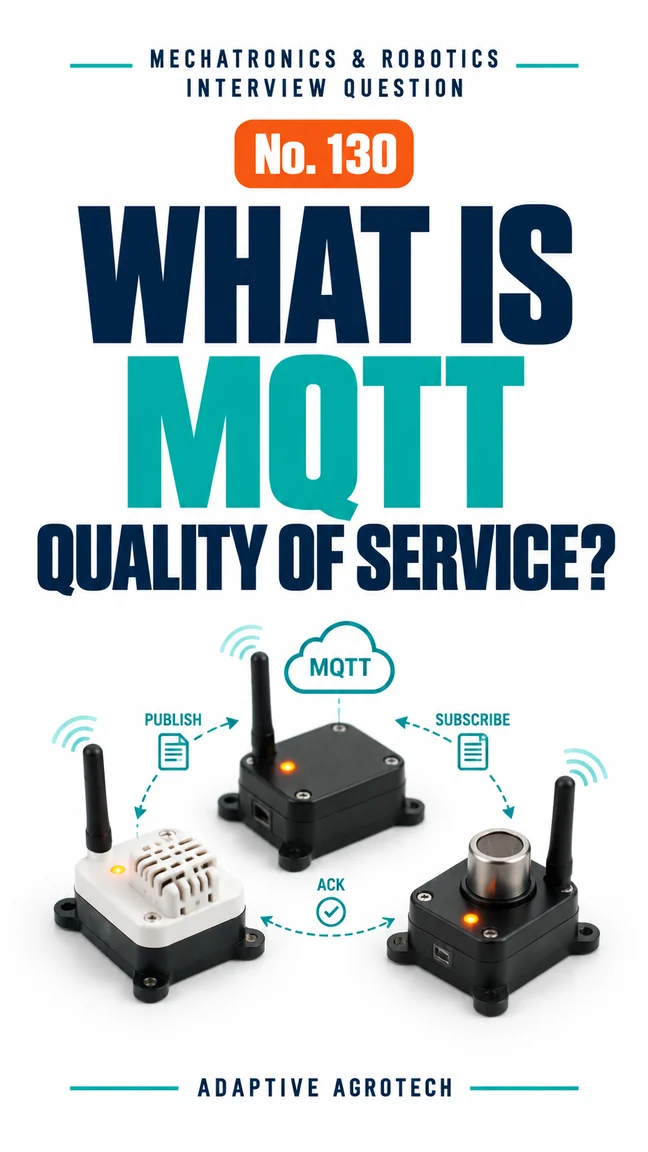
Communication & networksNo. 130

What is MQTT Quality of Service?

MQTT QoS defines delivery levels with different acknowledgement costs: at most once, possible duplicate delivery, or exactly once within a protocol exchange. These guarantees do not establish how many times an actuator physically executes.

Watch & explore
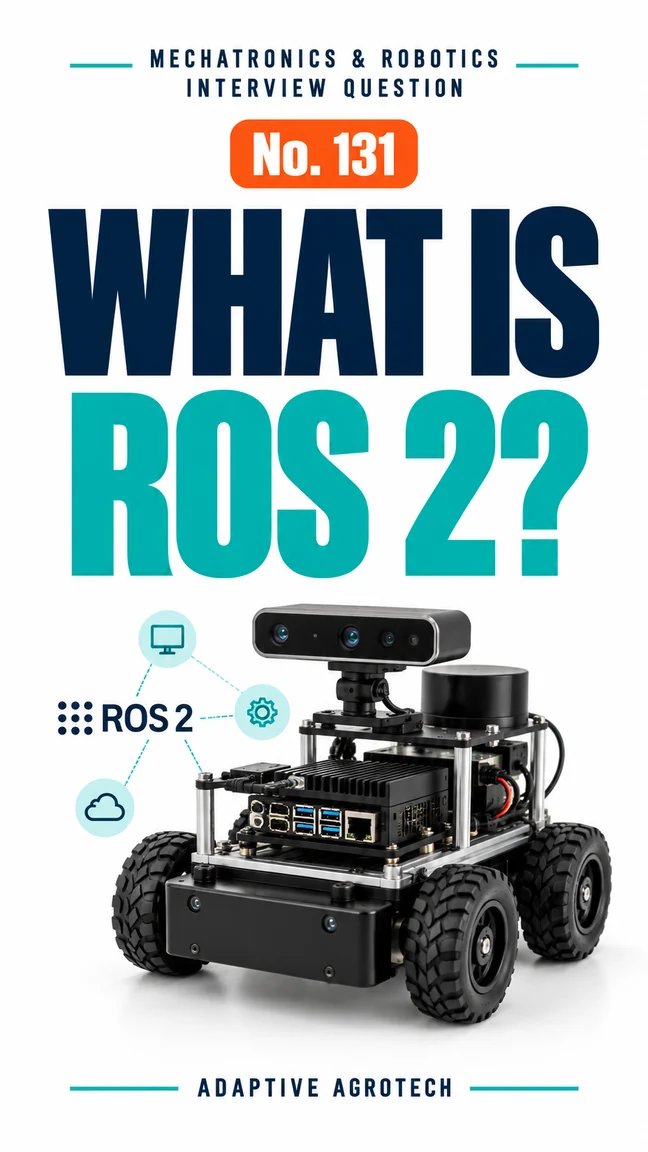
Communication & networksNo. 131

What is ROS 2?

ROS 2 organizes robot software into cooperating nodes with typed interfaces. Topics serve streams, services serve requests, and actions support longer tasks, while timing, motion behavior, and calibration still require engineering validation.

Watch & explore
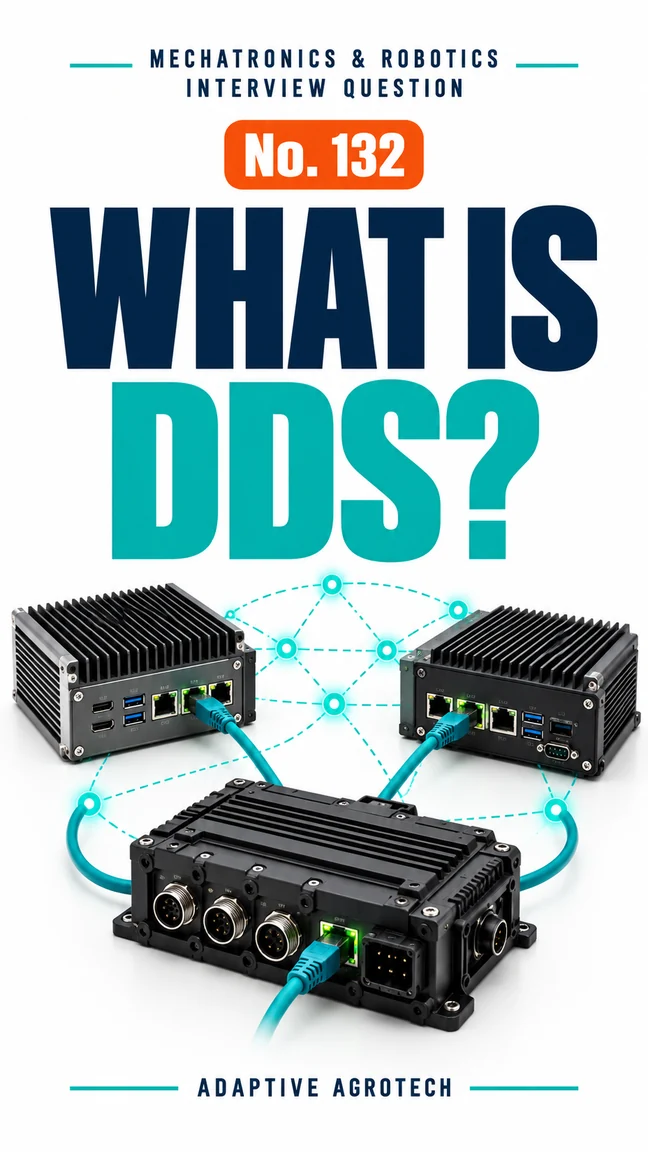
Communication & networksNo. 132

What is DDS?

DDS is a typed publish and subscribe standard with discovery and communication policies. Writers and readers must agree on data and QoS behavior, and successful discovery does not establish timely data delivery.

Watch & explore
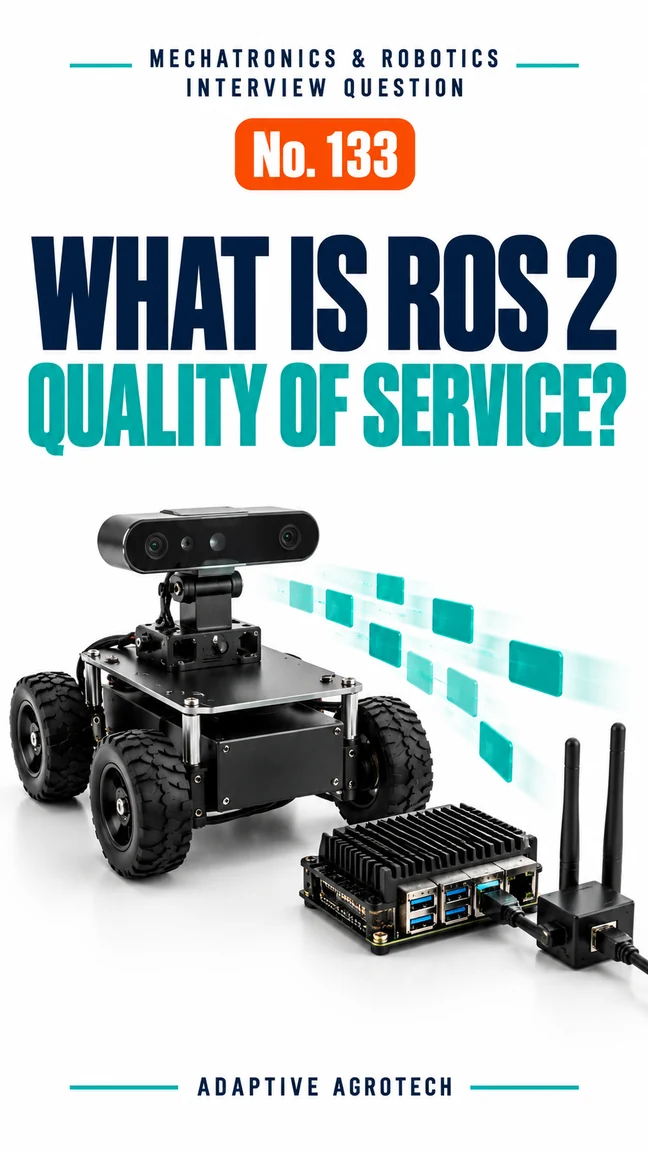
Communication & networksNo. 133

What is ROS 2 Quality of Service?

ROS 2 QoS policies govern reliability, retained history, durability, and timing. Publisher and subscriber policies must be compatible, and timely fresh data can matter more than retrying every old sample.

Watch & explore
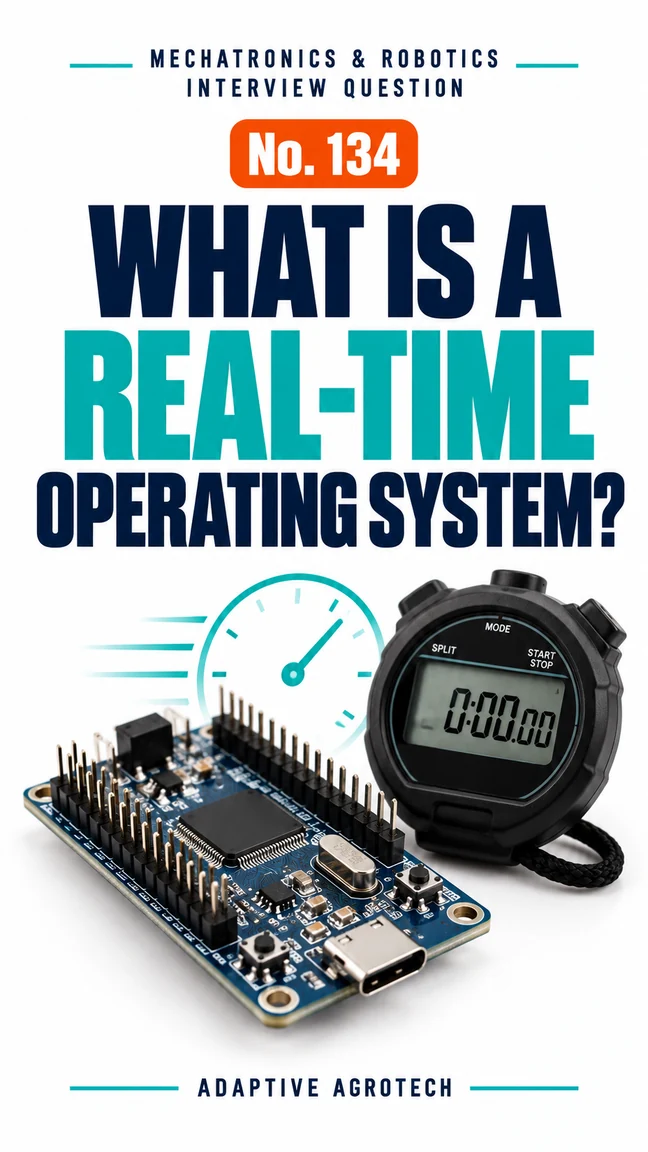
Embedded electronicsNo. 134

What is a Real-Time Operating System?

An RTOS schedules software around timing requirements, where a late result can be incorrect for the task. Priorities and sleeping tasks help, but complete deadlines still require execution and blocking analysis under load.

Watch & explore
Embedded electronicsNo. 135

What is Priority Inversion?

Priority inversion occurs when an urgent task waits for a lower priority lock owner, especially if intermediate priority work delays that owner. Priority inheritance helps release the lock sooner, alongside bounded critical sections.

Watch & explore
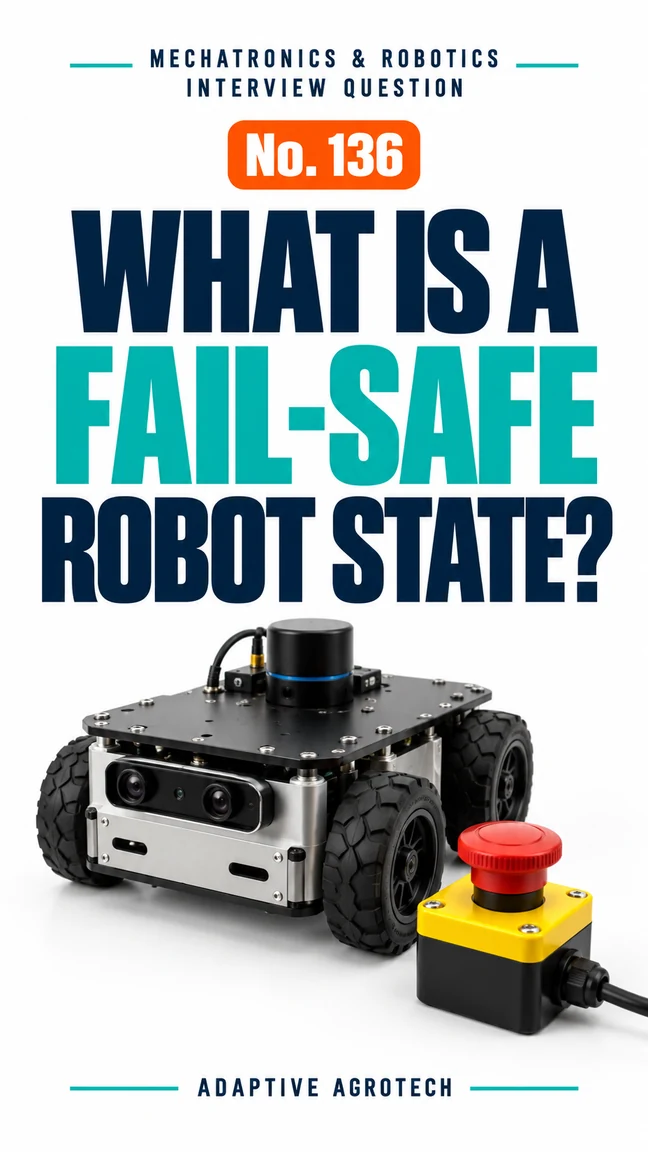
Mechanics & safetyNo. 136

What is a Fail-Safe Robot State?

A fail-safe state is a defined fault response that reduces the hazards of a particular robot. Stopping or removing power may be insufficient, so stored energy, gravity, braking, and transition verification must guide the design.

Watch & explore
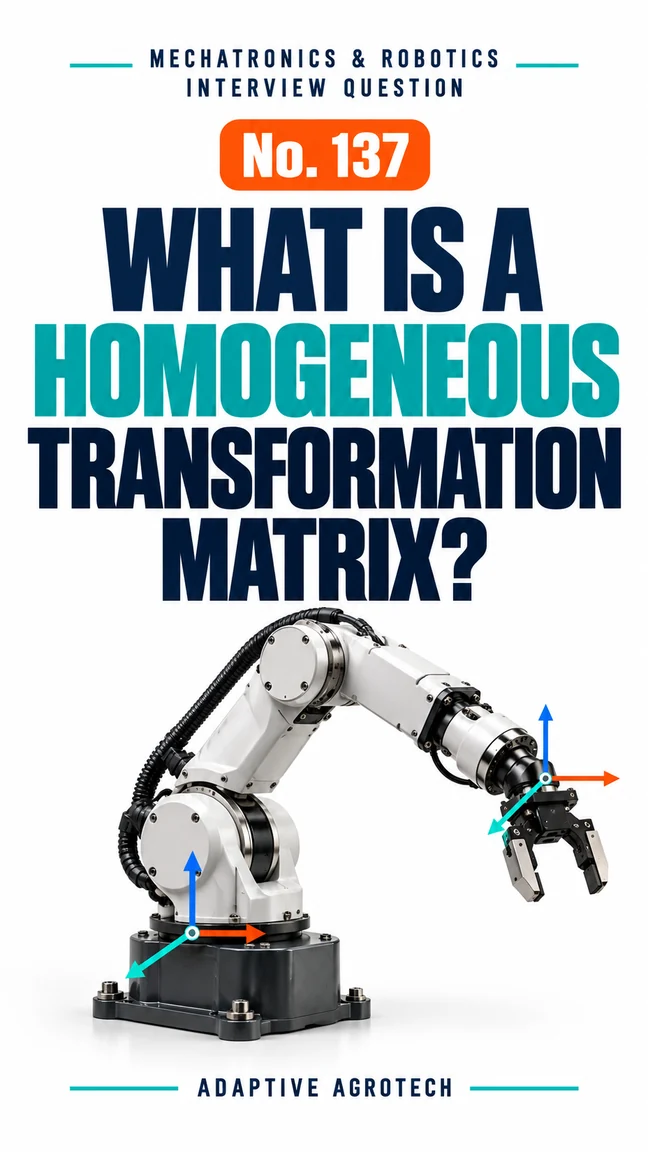
Robot kinematicsNo. 137

What Is a Homogeneous Transformation Matrix?

A homogeneous transformation combines rigid orientation and translation in one four by four matrix. It converts coordinates and composes frame relationships, with multiplication order and clear source and destination frame labels determining meaning.

Watch & explore
Robot kinematicsNo. 139

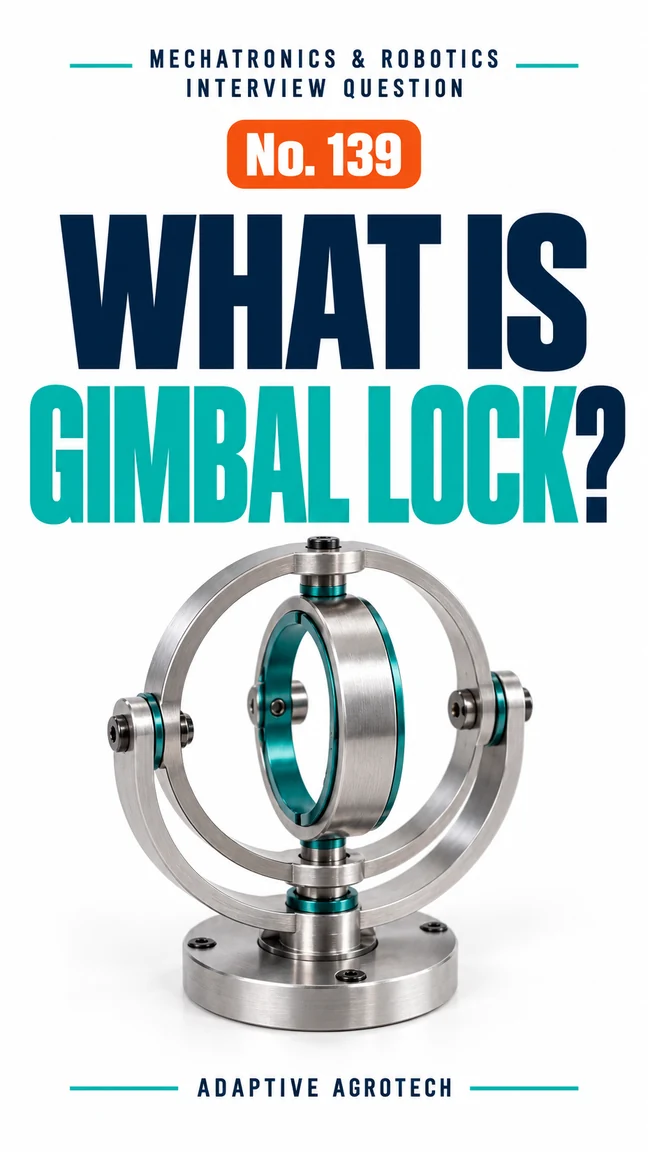
What Is Gimbal Lock?

Gimbal lock is an Euler coordinate singularity where rotation axes become dependent. For ZYX angles it occurs at pitch ±90°, affecting reported angles and rate mappings while leaving the rigid body’s physical rotation ability intact.

Watch & explore
Robot kinematicsNo. 140

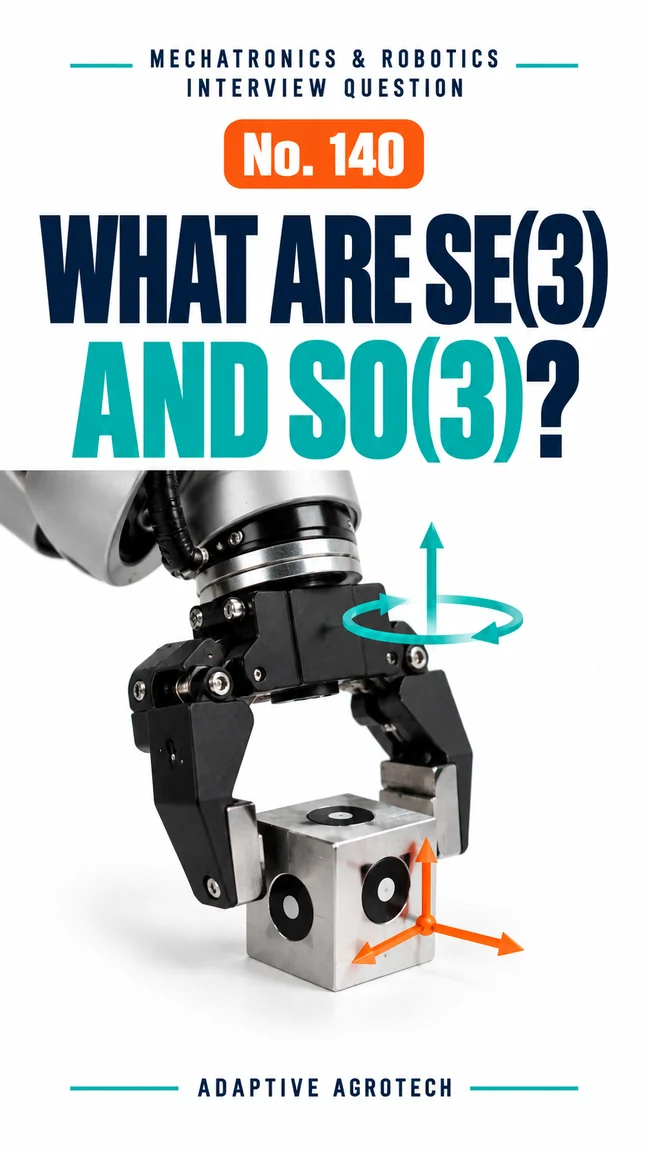
What Are SE(3) and SO(3) in Robotics?

SO(3) contains valid three dimensional rotations, while SE(3) contains rigid poses with rotation and translation. Their stored matrices obey constraints, excluding scaling, shear, and reflections despite containing more entries than independent degrees of freedom.

Watch & explore
Robot kinematicsNo. 141

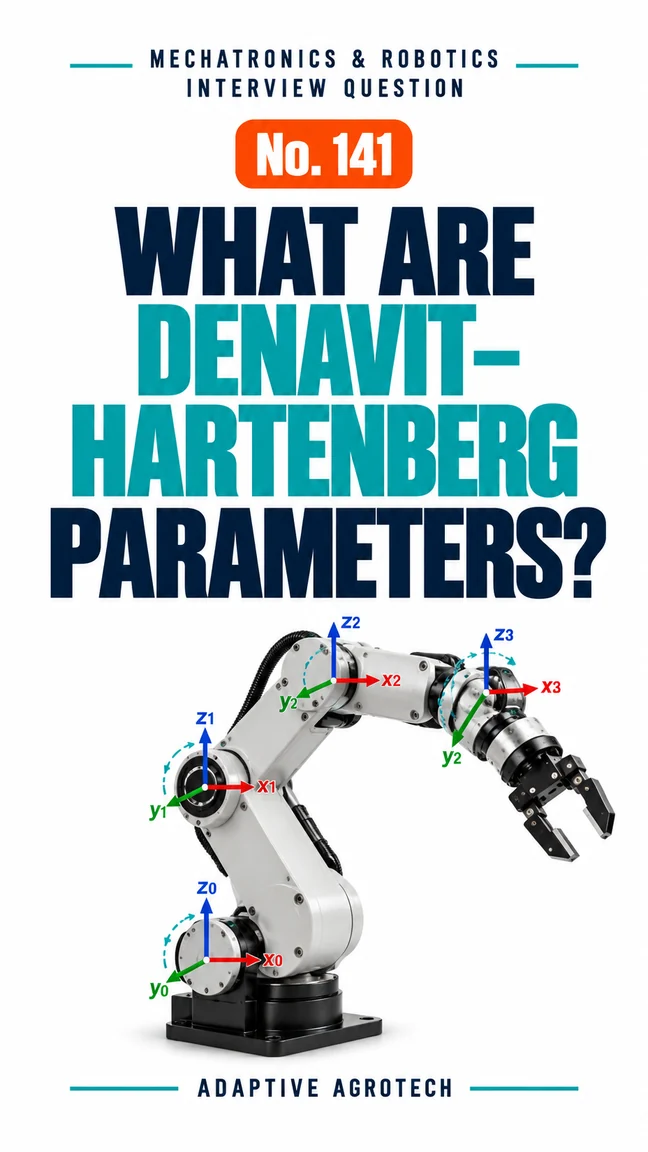
What Are Denavit–Hartenberg Parameters?

Denavit–Hartenberg parameters describe neighboring frames of a serial robot through four geometric quantities. Consistent frame conventions let their transforms produce forward kinematics, while mixing standard and modified DH rules corrupts the geometry.

Watch & explore
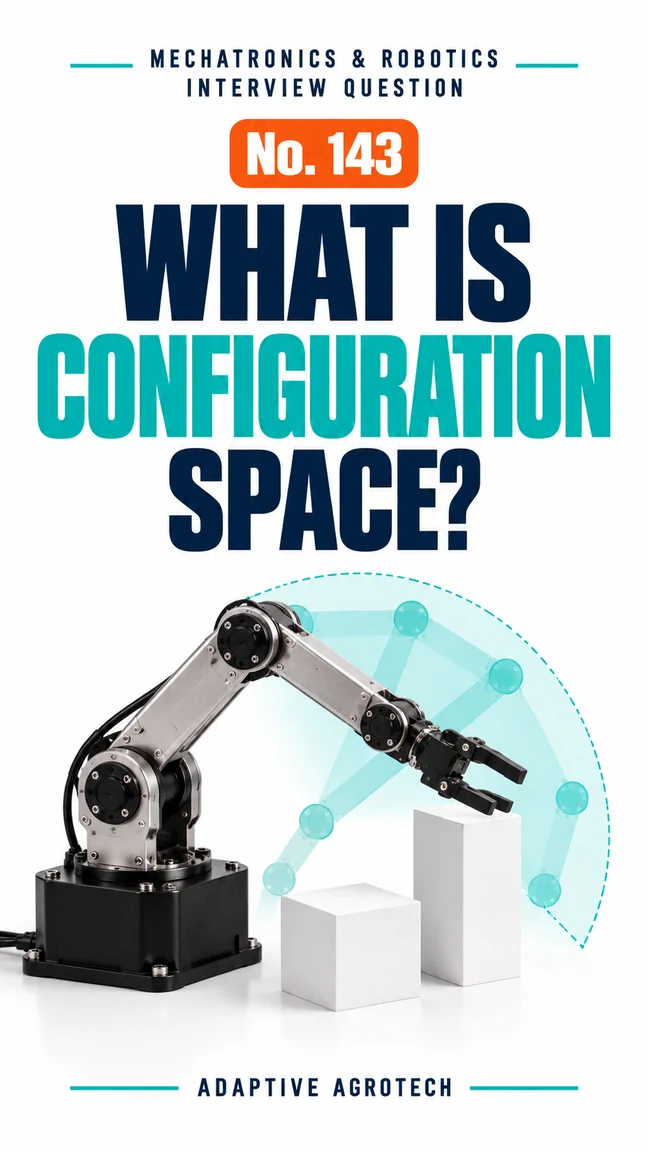
Motion planningNo. 143

What Is Configuration Space in Robotics?

Configuration space represents the entire robot as a point whose coordinates locate its moving parts. Workspace obstacles become forbidden configuration regions, with joint limits and angular wrapping shaping the available planning space.

Watch & explore
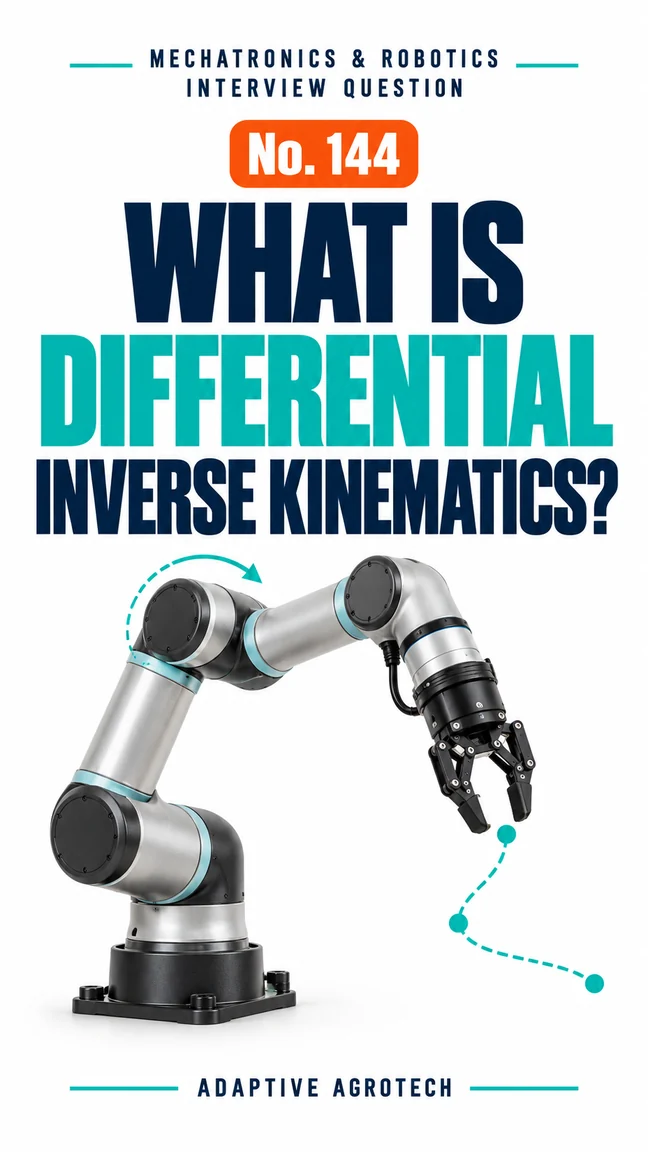
Robot kinematicsNo. 144

What Is Differential Inverse Kinematics?

Differential inverse kinematics solves locally for joint speeds that produce a desired tool velocity. The Jacobian must update as motion progresses, and damping near singularities trades tracking accuracy for less extreme joint commands.

Watch & explore