Skip to content
Adaptive AgroTech NetworkUniversity of Southern Denmark · SDU Drone Center
Robotics · Mechatronics · Intelligent systems

Short videos.
Lasting understanding.

Explore one engineering idea at a time. Watch a short lesson, read the key concepts and test your understanding before your next interview, project or class.

15 topics found

Video · Key ideas · Check your understanding

Sensors & perceptionNo. 004

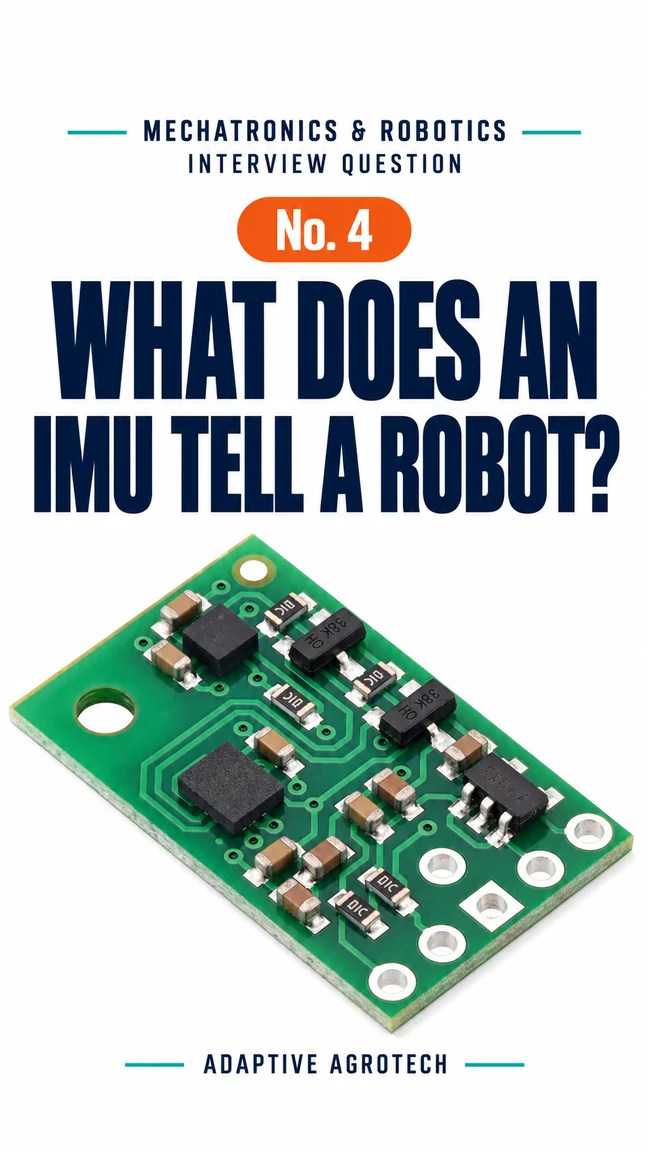
What Does an IMU Tell a Robot?

A six-axis IMU combines acceleration and angular-rate measurements. Gravity can constrain tilt, while gyro integration estimates turning; sensor bias still causes drift and prevents an IMU alone from guaranteeing absolute heading.

Watch & explore
Control systemsNo. 024

How a Robot Finds and Docks at Its Charger

Automatic docking combines navigation, close-range pose sensing, slow alignment, and electrical confirmation. Successful motion alone is insufficient: charging feedback, timeouts, and bounded recovery attempts determine whether docking actually succeeded.

Watch & explore
Sensors & perceptionNo. 073

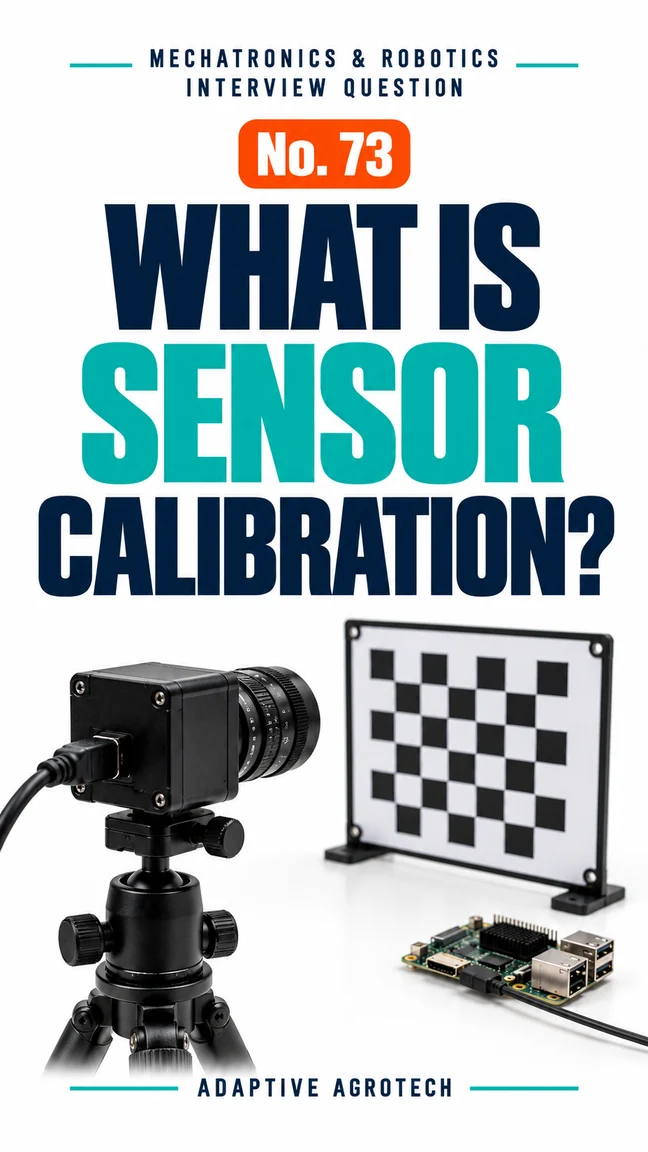
What is Sensor Calibration?

Sensor calibration estimates the parameters connecting readings to physical geometry. Known references constrain offsets, scales, distortion, and inter-sensor transforms, while independent validation and stable mounting determine whether the result remains useful.

Watch & explore
Robot kinematicsNo. 137

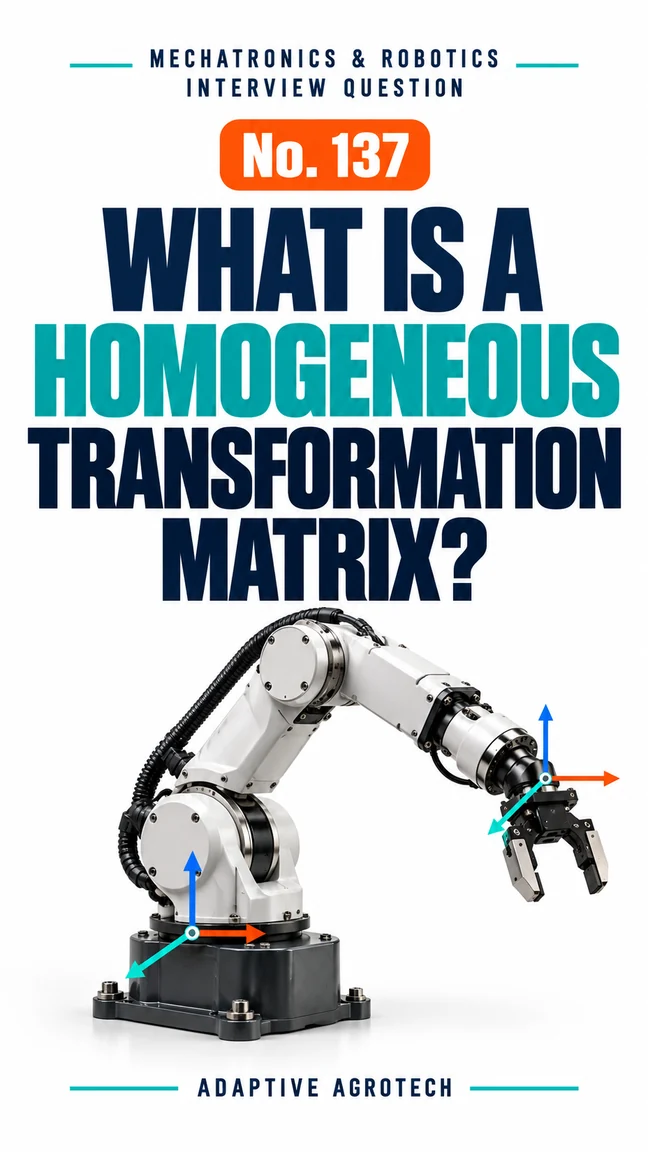
What Is a Homogeneous Transformation Matrix?

A homogeneous transformation combines rigid orientation and translation in one four by four matrix. It converts coordinates and composes frame relationships, with multiplication order and clear source and destination frame labels determining meaning.

Watch & explore
Robot kinematicsNo. 139

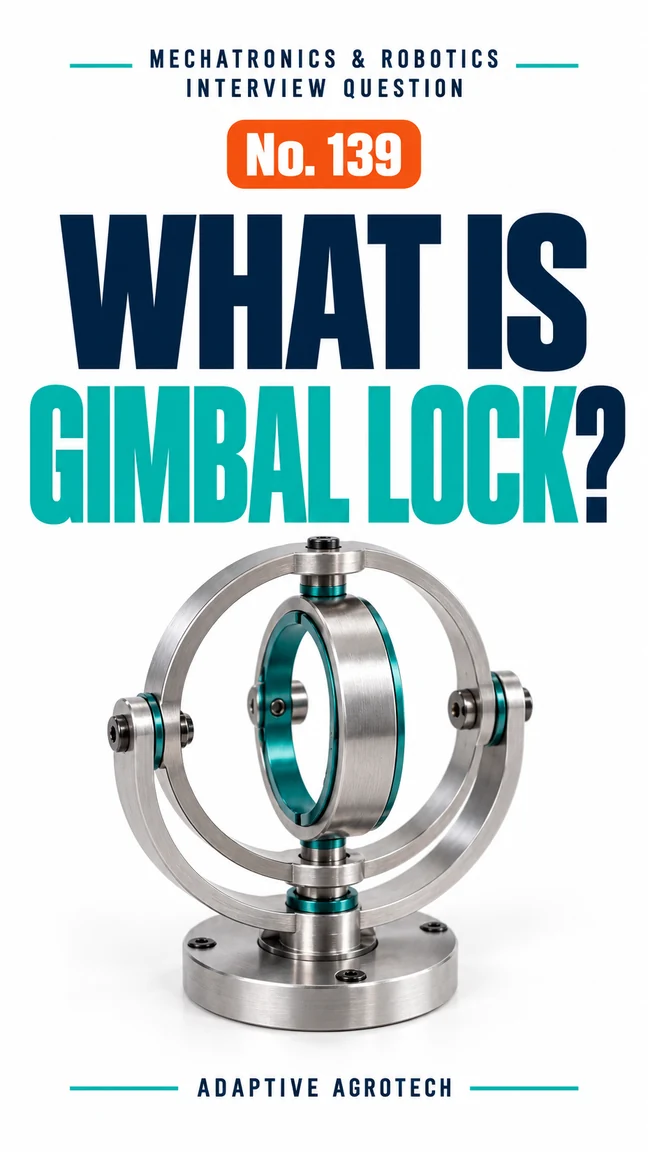
What Is Gimbal Lock?

Gimbal lock is an Euler coordinate singularity where rotation axes become dependent. For ZYX angles it occurs at pitch ±90°, affecting reported angles and rate mappings while leaving the rigid body’s physical rotation ability intact.

Watch & explore
Robot kinematicsNo. 140

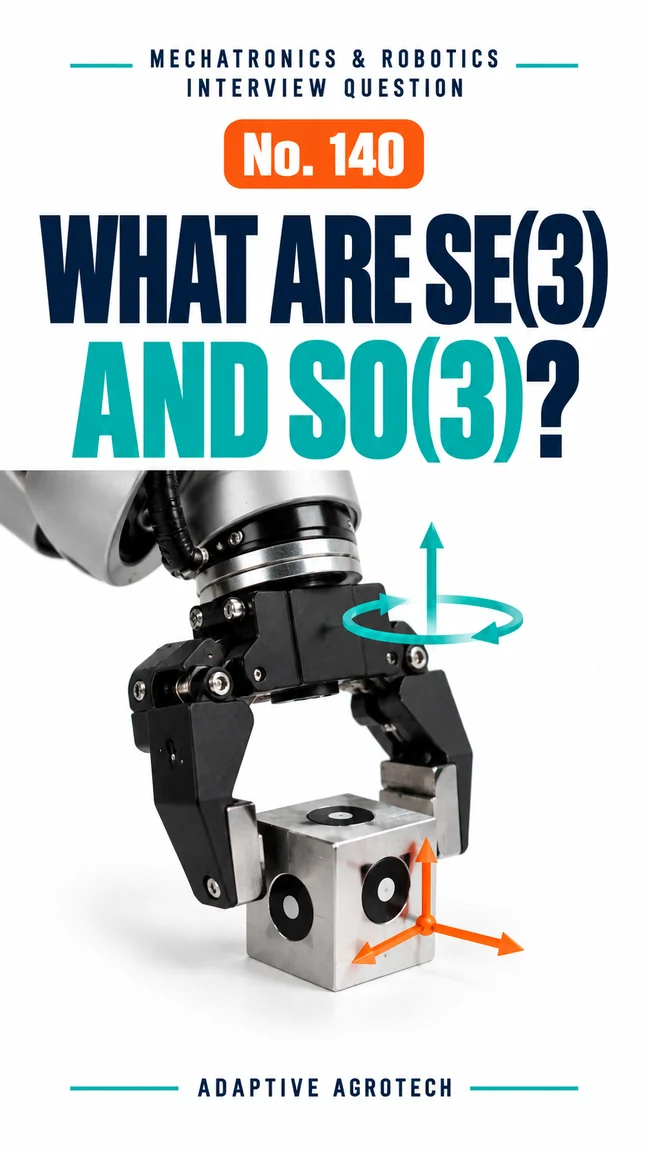
What Are SE(3) and SO(3) in Robotics?

SO(3) contains valid three dimensional rotations, while SE(3) contains rigid poses with rotation and translation. Their stored matrices obey constraints, excluding scaling, shear, and reflections despite containing more entries than independent degrees of freedom.

Watch & explore
Robot kinematicsNo. 147

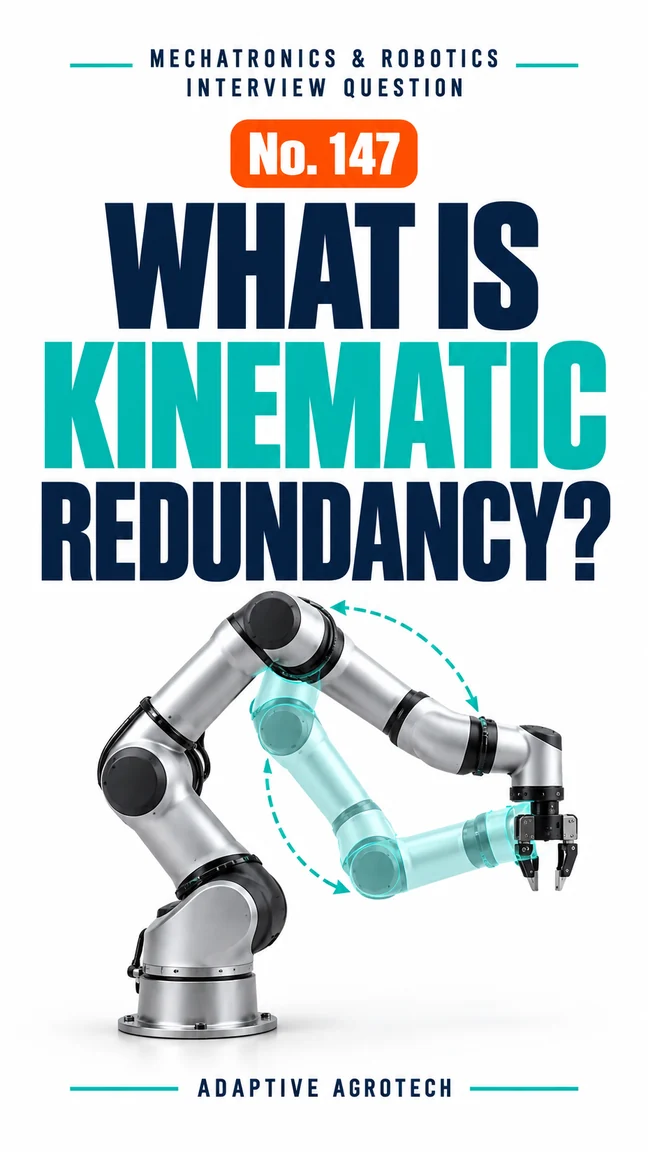
What Is Kinematic Redundancy?

Kinematic redundancy means more independent joint motion is available than a specified task requires. It permits posture choices, but depends on task definition and Jacobian rank rather than joint count alone.

Watch & explore