Skip to content
Adaptive AgroTech NetworkUniversity of Southern Denmark · SDU Drone Center
Robotics · Mechatronics · Intelligent systems

Short videos.
Lasting understanding.

Explore one engineering idea at a time. Watch a short lesson, read the key concepts and test your understanding before your next interview, project or class.

16 topics found

Video · Key ideas · Check your understanding

Control systemsNo. 037

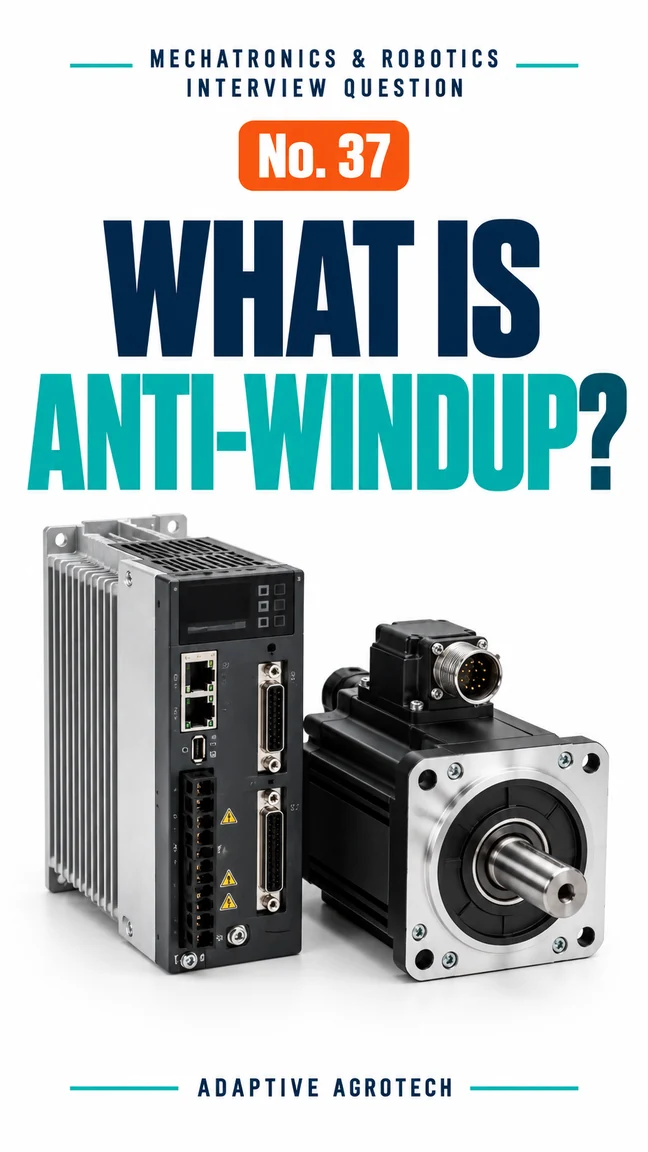
What is Anti-Windup?

Anti-windup prevents hidden integral buildup when actuator limits block the requested response. Conditional integration stops accumulation that drives further into saturation while allowing the integral state to unwind toward recovery.

Watch & explore
Control systemsNo. 038

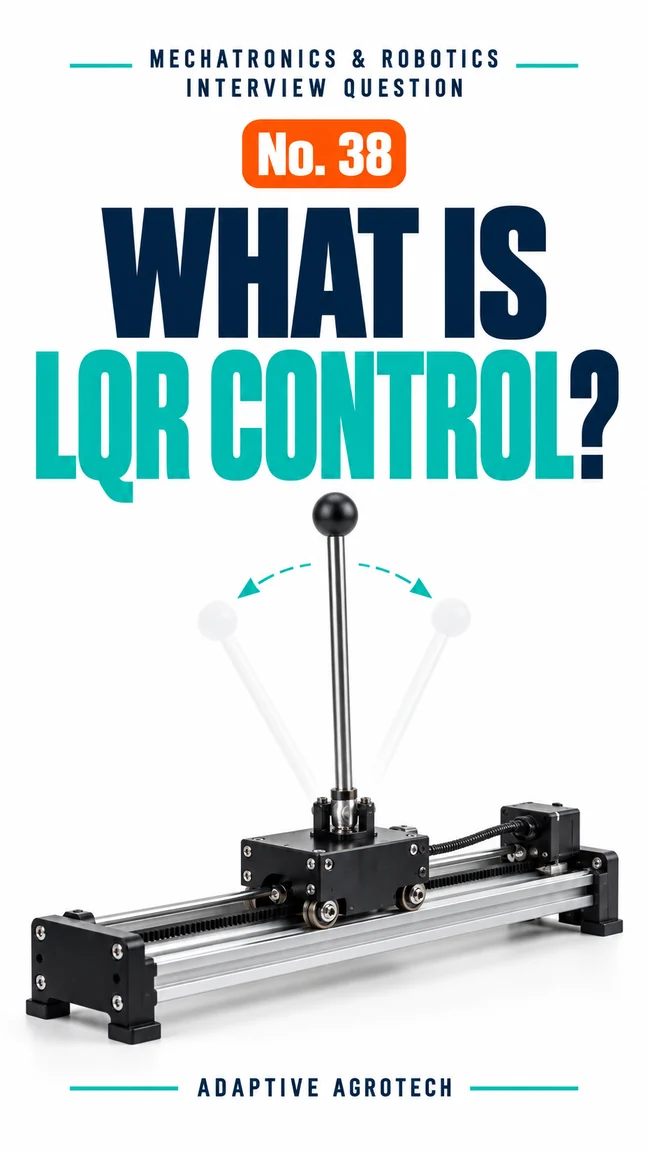
What is LQR?

LQR chooses state-feedback gains that balance state error against control effort in a linear model. Cost weights shape behavior, while the basic regulator does not impose hard actuator constraints or eliminate model error.

Watch & explore
Control systemsNo. 050

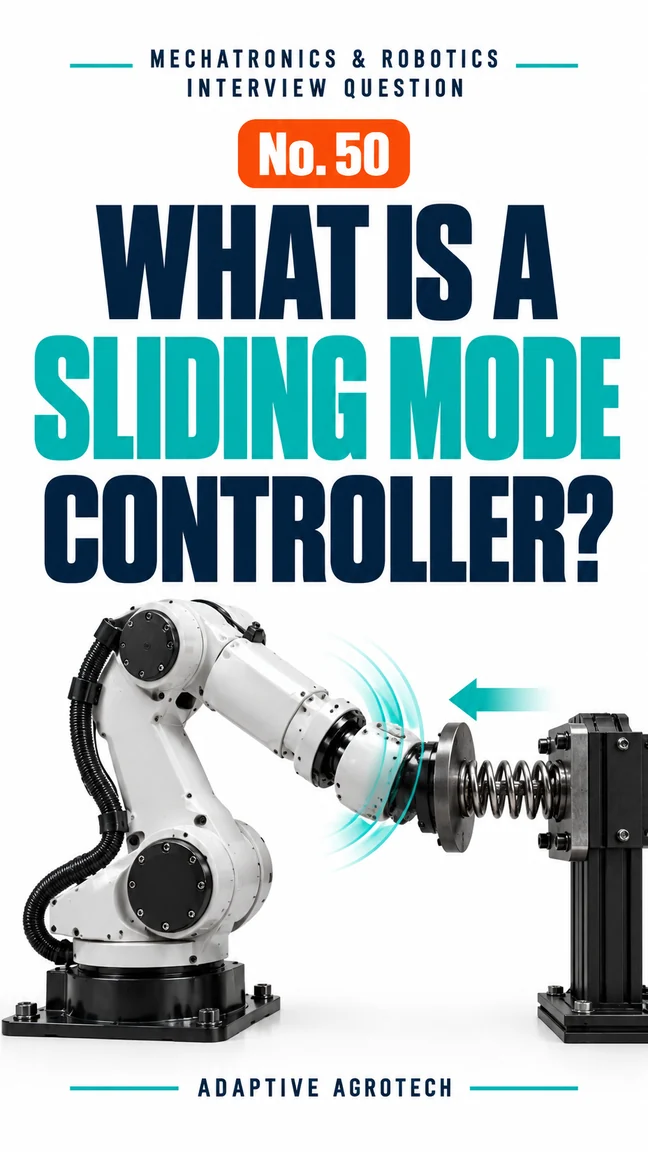
What is a Sliding Mode Controller?

Sliding mode control drives state toward a designed tracking surface using a switching term. It can address certain bounded uncertainties, but chattering and finite actuator effort require attention when realizing the design.

Watch & explore
Control systemsNo. 051

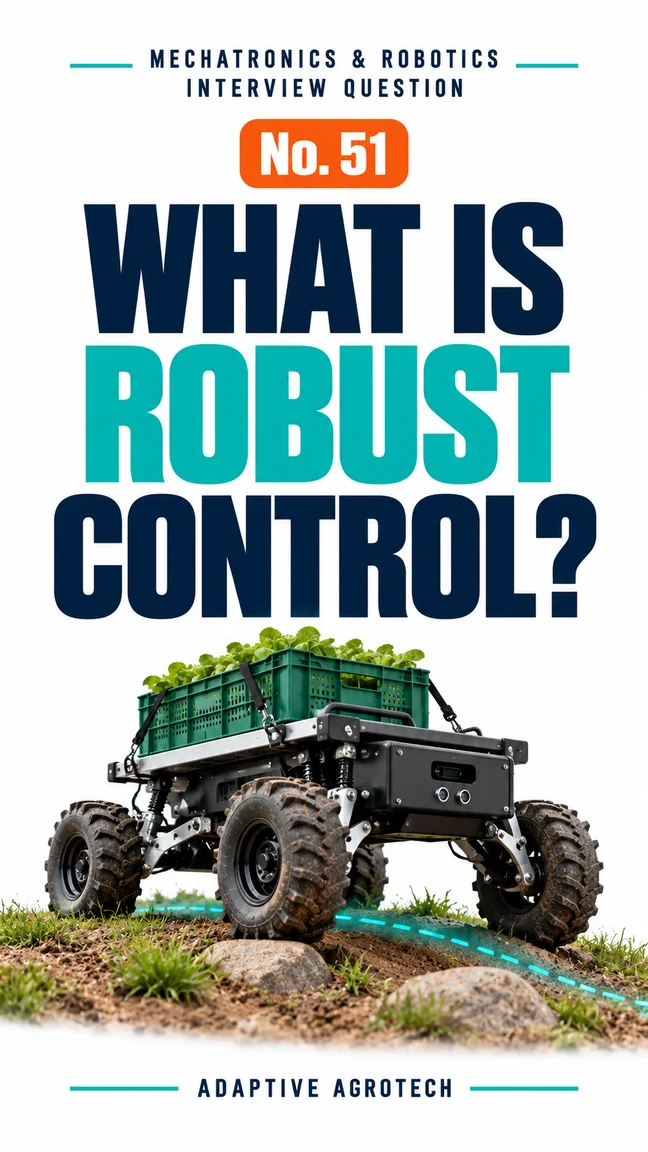
What is Robust Control?

Robust control includes a specified uncertainty set in its design and checks performance across a family of plants. Any guarantee remains limited to that set rather than covering all possible hardware differences.

Watch & explore
Control systemsNo. 055

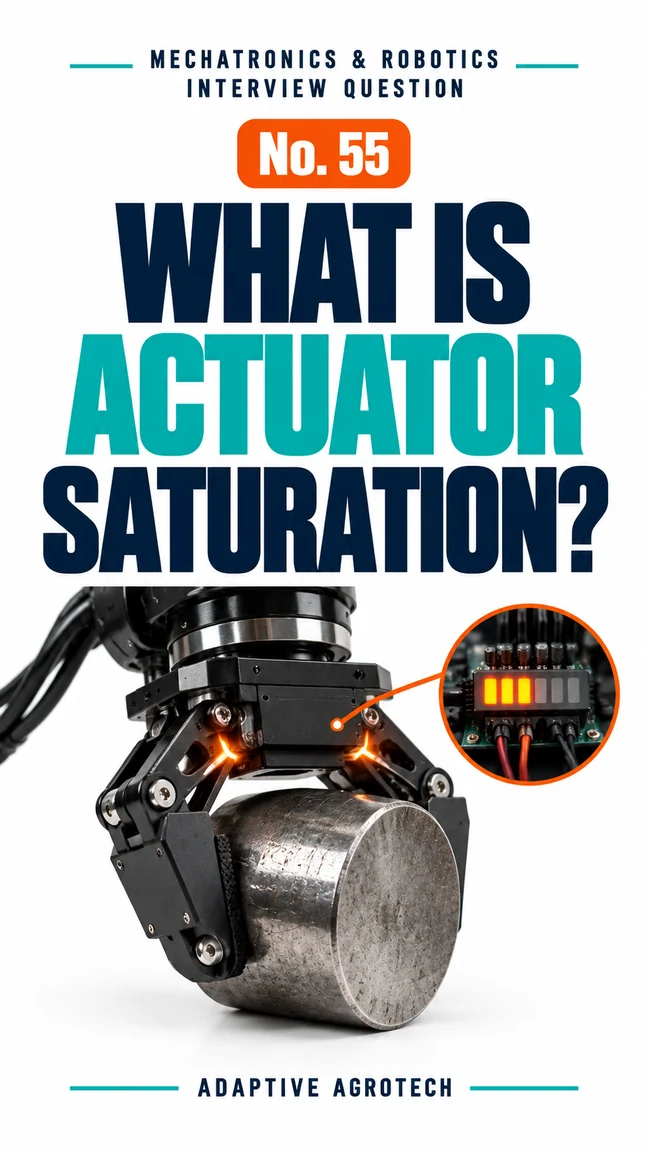
What is Actuator Saturation?

Actuator saturation clips commands at physical voltage, current, or effort limits. The delivered motion then differs from an unlimited model, potentially causing slow tracking or integral windup and requiring realistic limits in control design.

Watch & explore
Control systemsNo. 091

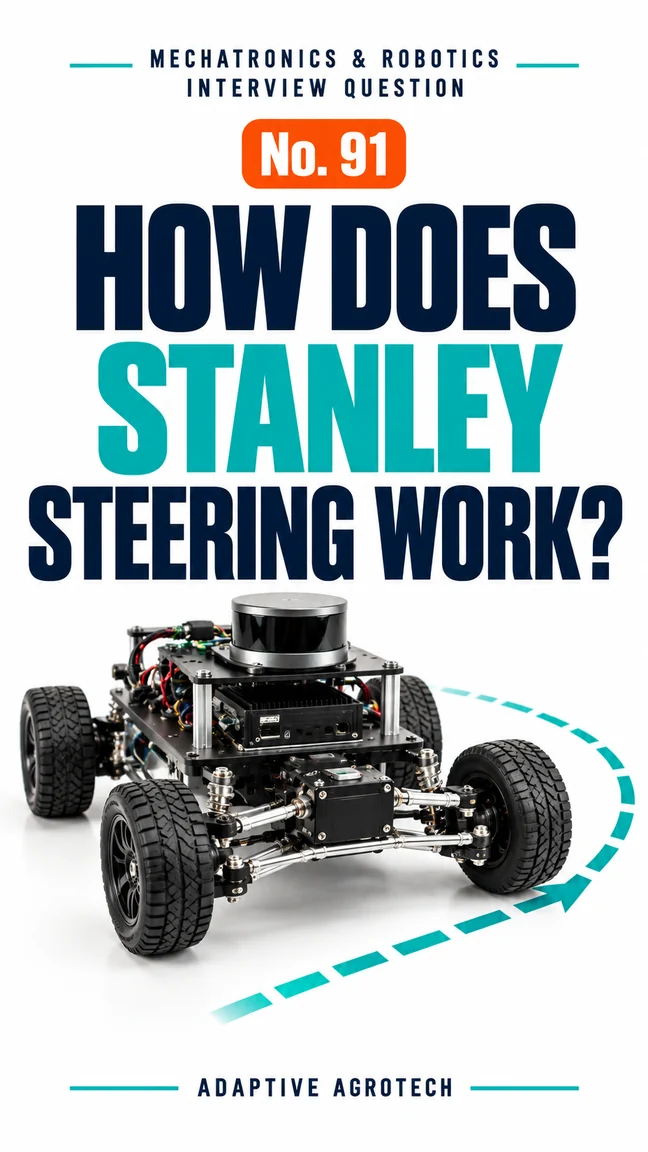
What is the Stanley Steering Controller?

The Stanley controller combines heading error with front axle cross track error to steer a car like robot. Speed scales the lateral correction, and practical implementations must handle low speed behavior and steering limitations.

Watch & explore
Control systemsNo. 157

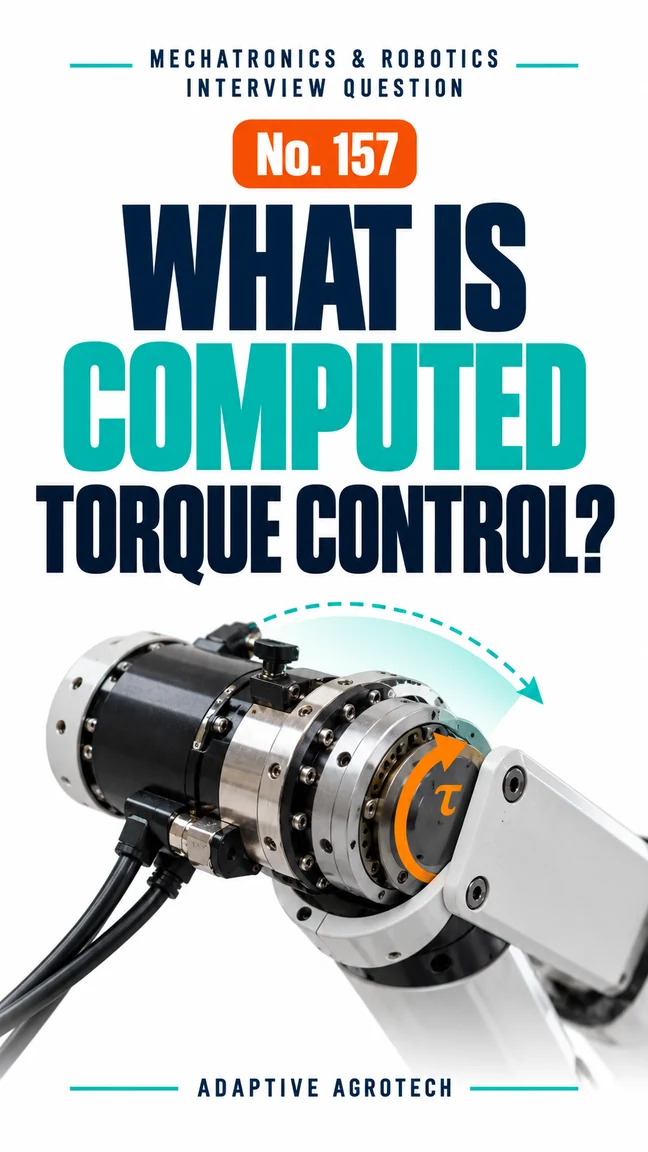
What Is Computed Torque Control?

Computed torque control combines a robot dynamics model with tracking feedback to request joint torque. Ideal model cancellation can simplify error dynamics, while real payload errors, friction, and saturation limit the result.

Watch & explore
Control systemsNo. 158

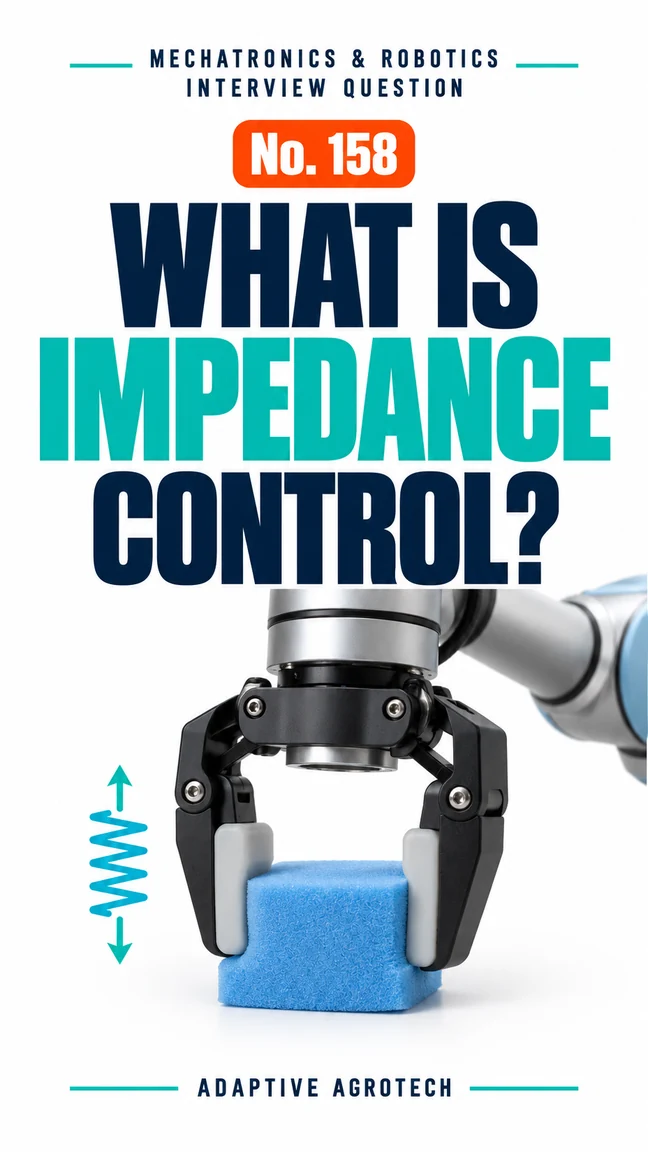
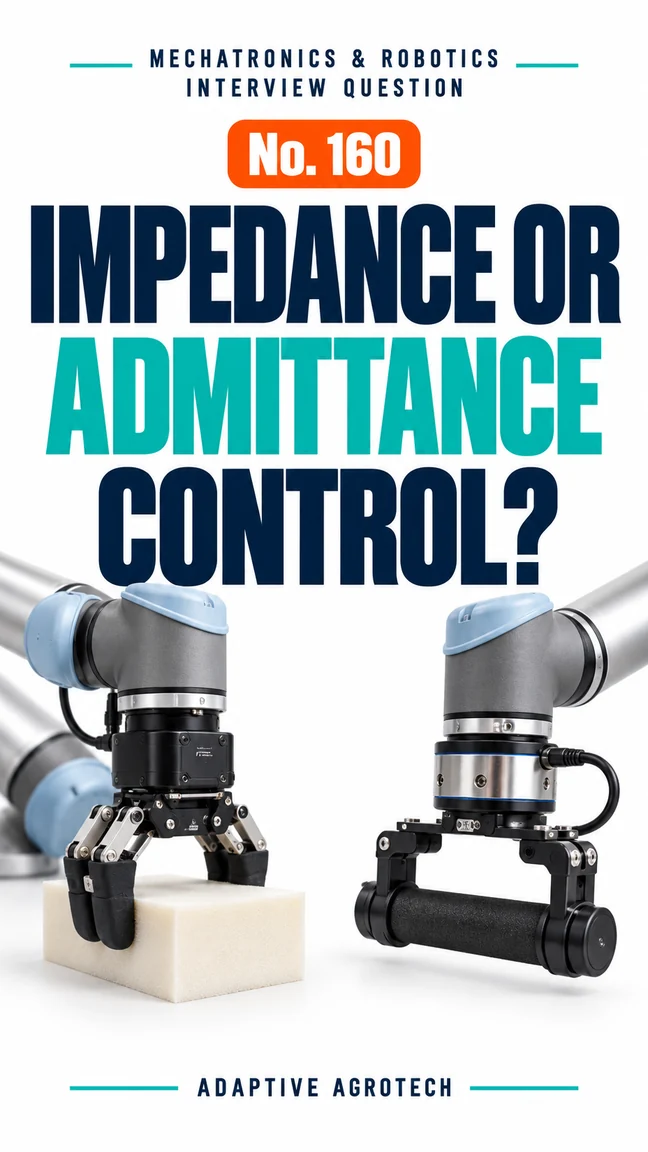
What Is Impedance Control?

Impedance control shapes interaction by relating motion error to commanded force or torque. Virtual stiffness and damping create compliant behavior, but stability depends on the complete actuator, sensing, delay, and environment dynamics.

Watch & explore
Control systemsNo. 164

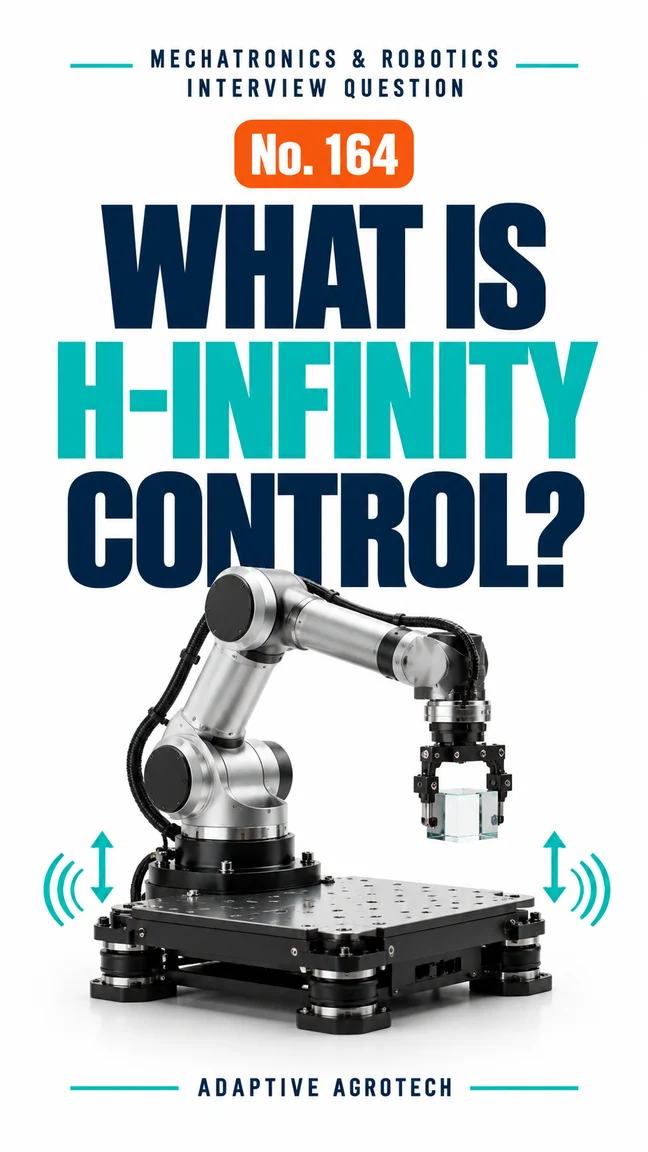
What Is H-Infinity Control?

H infinity control limits the worst case amplification from disturbances to selected outputs. For a stable linear system, its H infinity norm measures the largest gain across frequency and input directions.

Watch & explore
Control systemsNo. 166

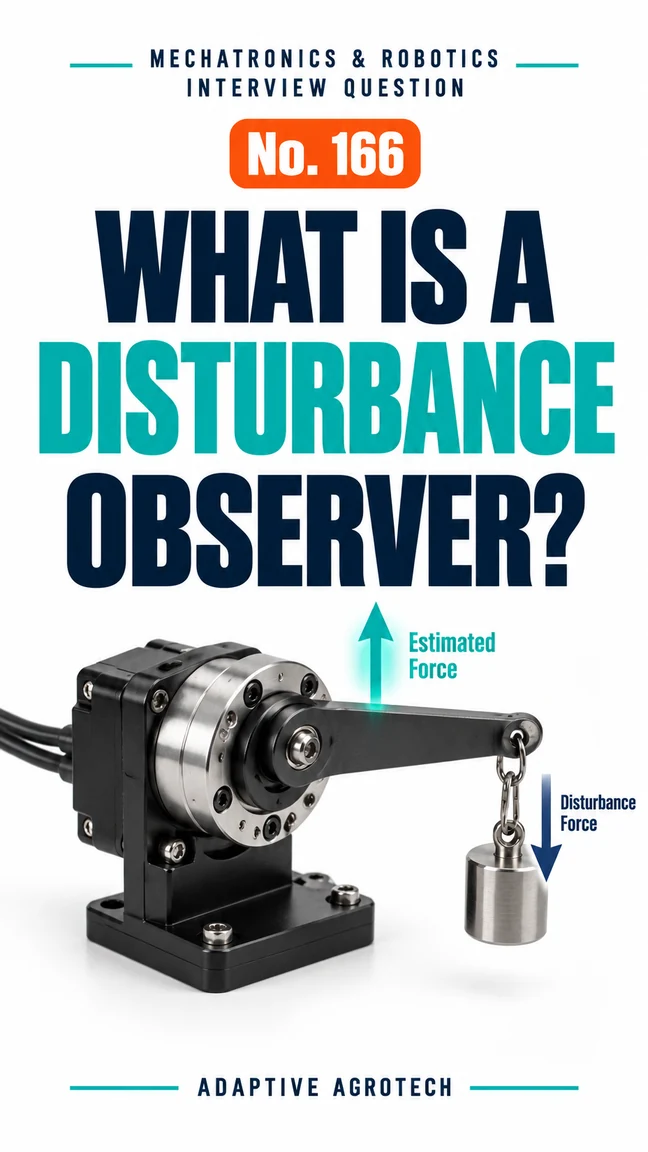
What Is a Disturbance Observer?

A disturbance observer estimates an unknown influence from the robot input, measured output, and a nominal model. The estimate can include external loads and some model mismatch, depending on its structure and assumptions.

Watch & explore