Skip to content
Adaptive AgroTech NetworkUniversity of Southern Denmark · SDU Drone Center
Robotics · Mechatronics · Intelligent systems

Short videos.
Lasting understanding.

Explore one engineering idea at a time. Watch a short lesson, read the key concepts and test your understanding before your next interview, project or class.

35 topics to explore

Video · Key ideas · Check your understanding

Communication & networksNo. 020

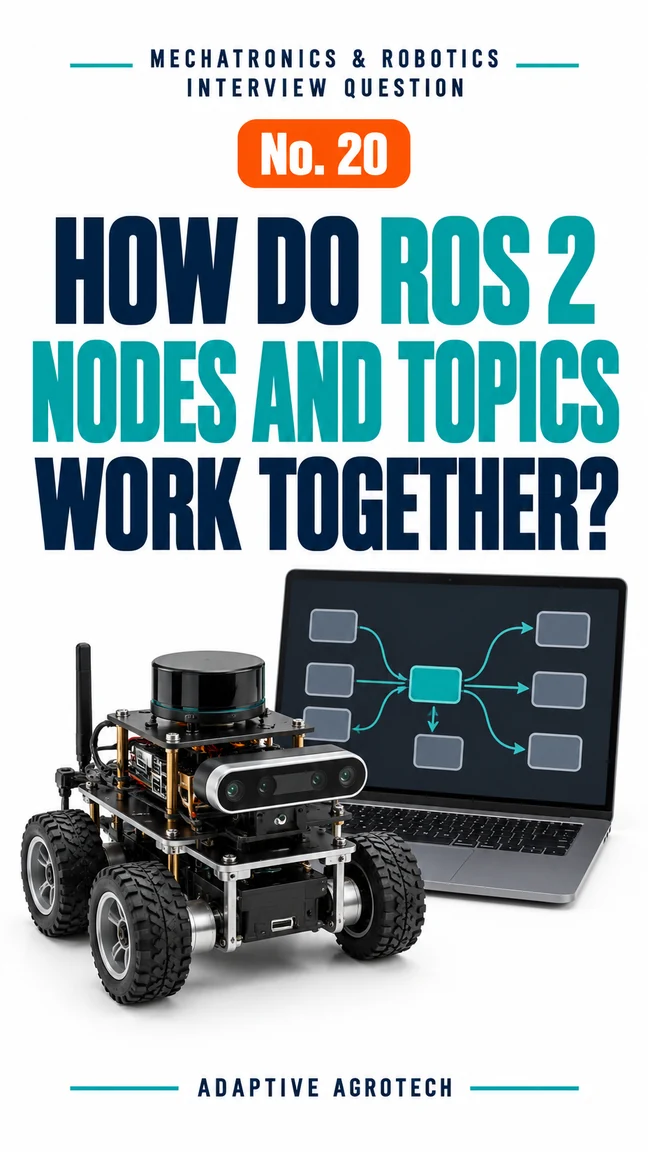
How ROS 2 Nodes and Topics Work Together

ROS 2 nodes exchange typed streams through topics, allowing one publisher to serve multiple subscribers. Hardware interfaces turn velocity messages into motor communication, and discovery and delivery settings determine whether messages arrive.

Watch & explore
Communication & networksNo. 117

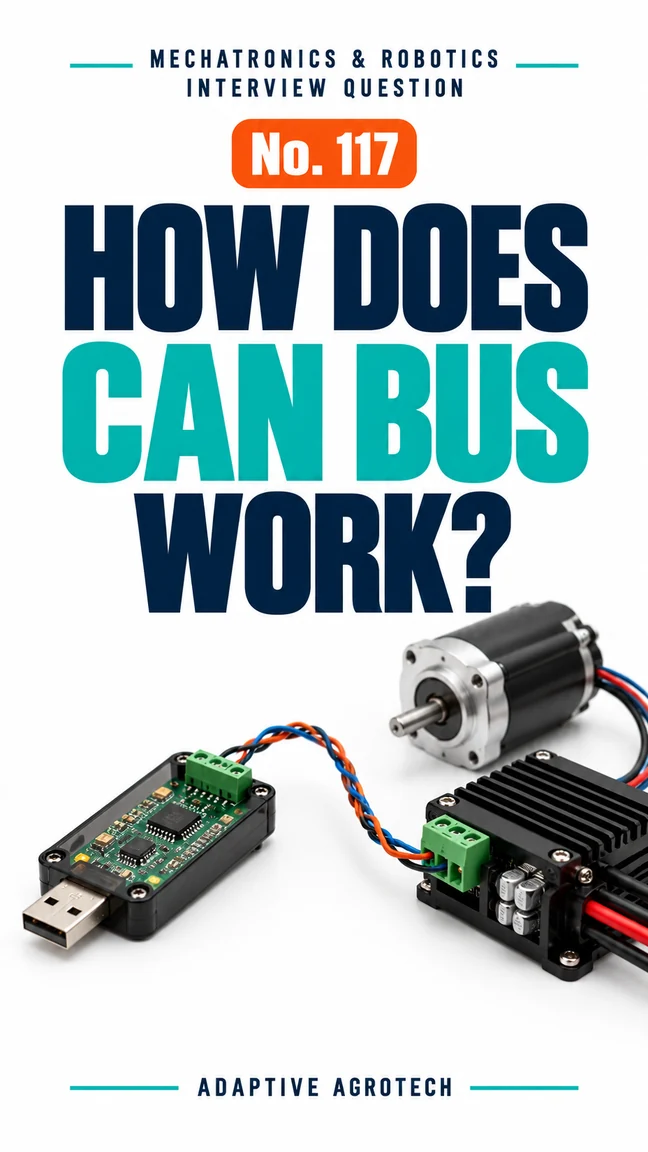
What is CAN Bus?

CAN links multiple electronic control units through a shared message bus. Frame identifiers support priority and data selection, while delivery checks still need application feedback and stale-command supervision to confirm robot behavior.

Watch & explore
Communication & networksNo. 118

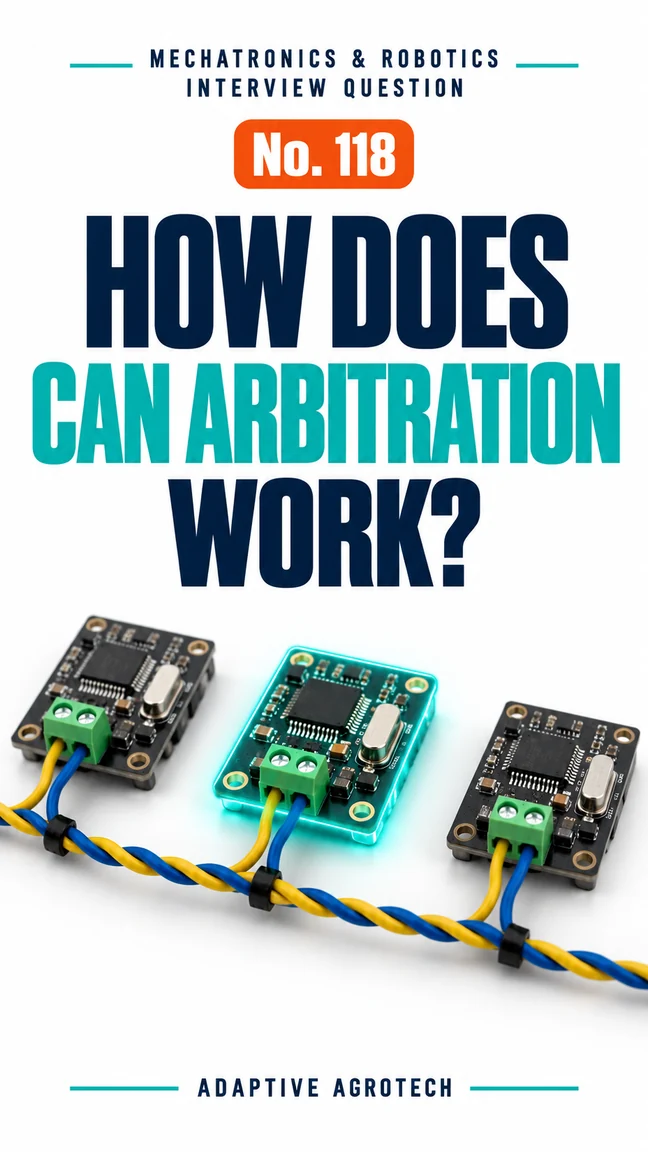
What is CAN Bus Arbitration?

CAN arbitration resolves simultaneous transmissions while preserving the winning frame. Senders compare transmitted and observed identifier bits; dominant zero wins over recessive one, giving lower identifiers higher priority for equal frame formats.

Watch & explore
Communication & networksNo. 120

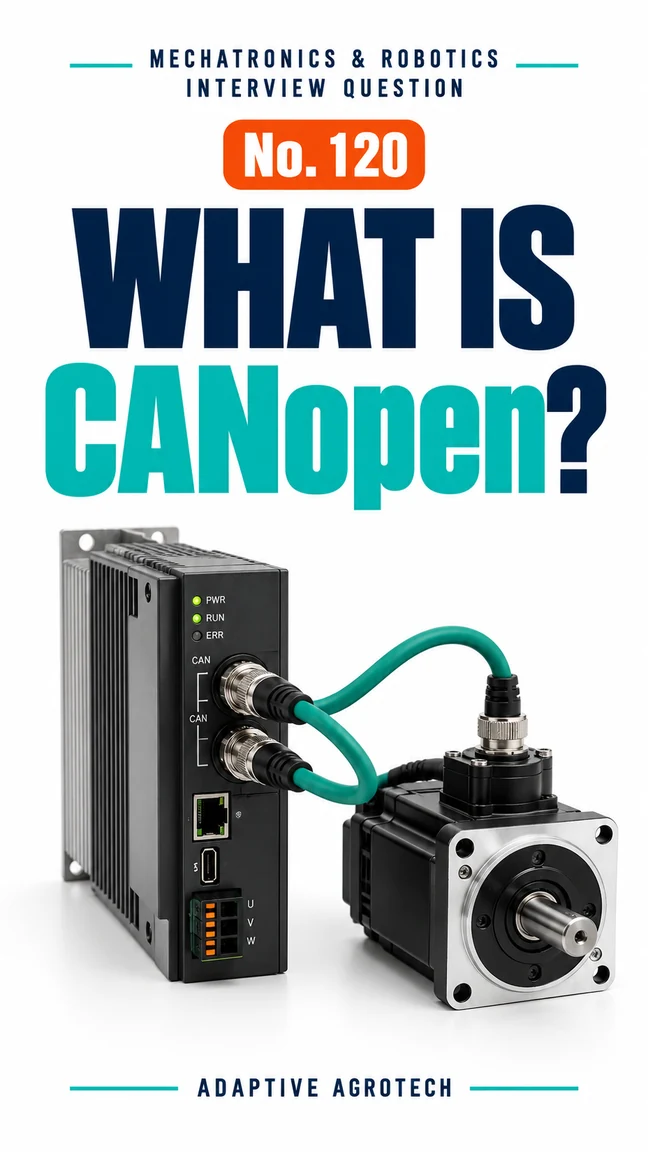
What is CANopen?

CANopen adds device profiles and communication meaning above CAN. Object dictionaries organize settings and process values, while SDO and PDO mechanisms support configuration and time critical exchange between compatible robot devices.

Watch & explore
Communication & networksNo. 121

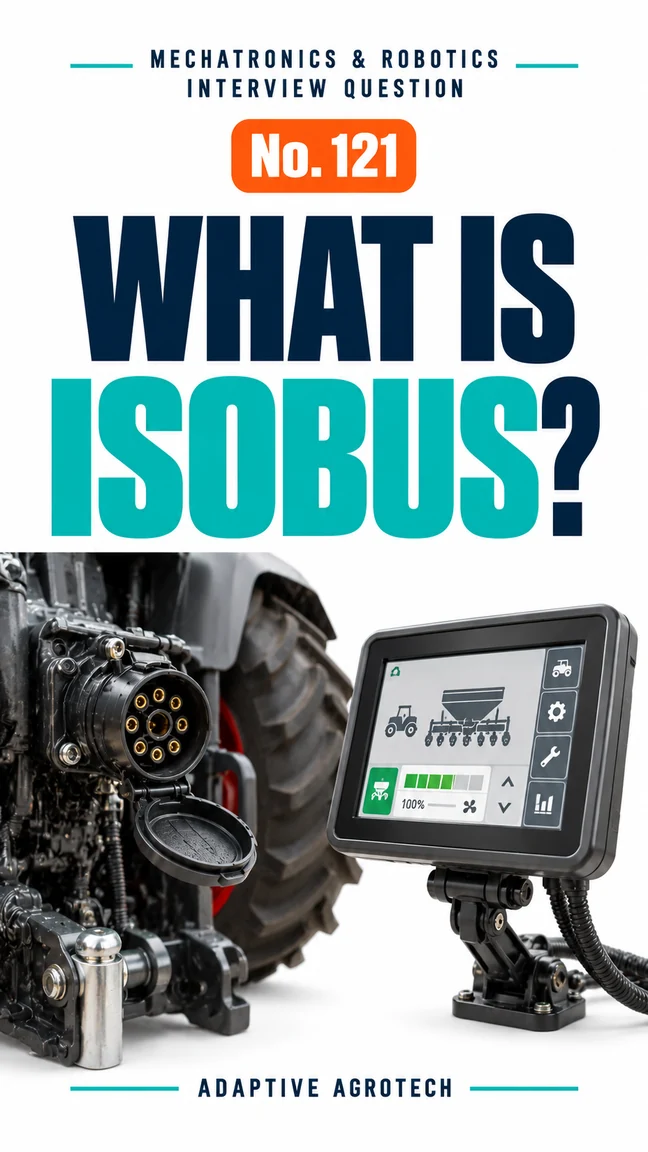
What is ISOBUS?

ISOBUS defines common communication functions for agricultural machines under ISO 11783. Built above CAN, it supports implement terminals and task data, but compatibility depends on the specific functions supported by both machines.

Watch & explore
Communication & networksNo. 122

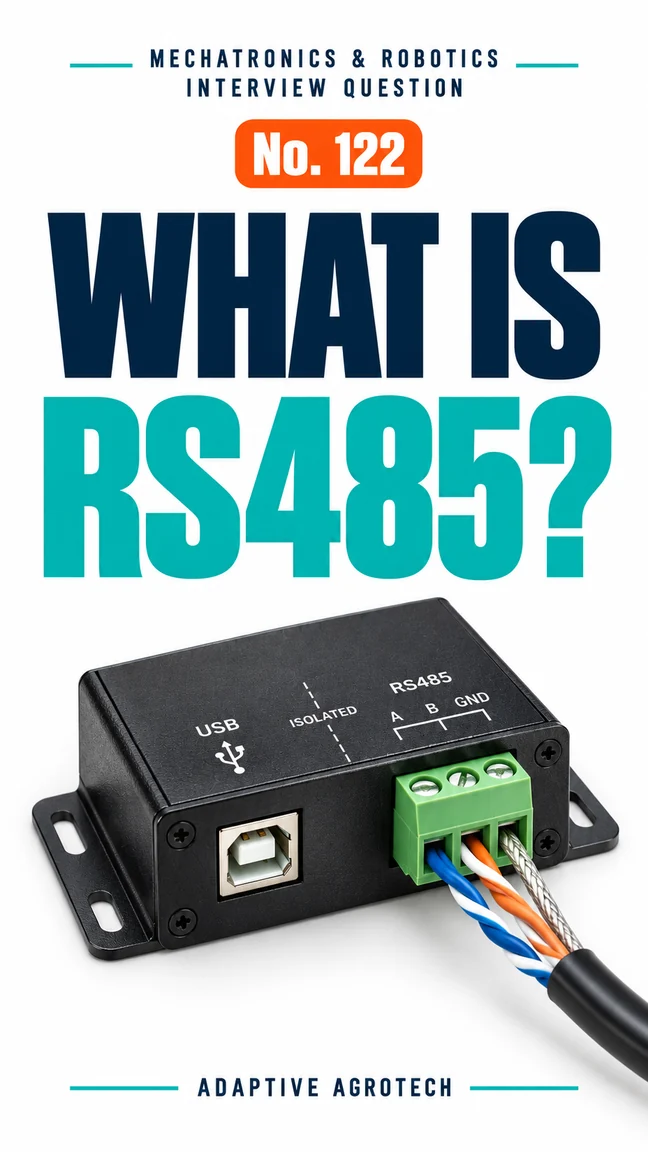
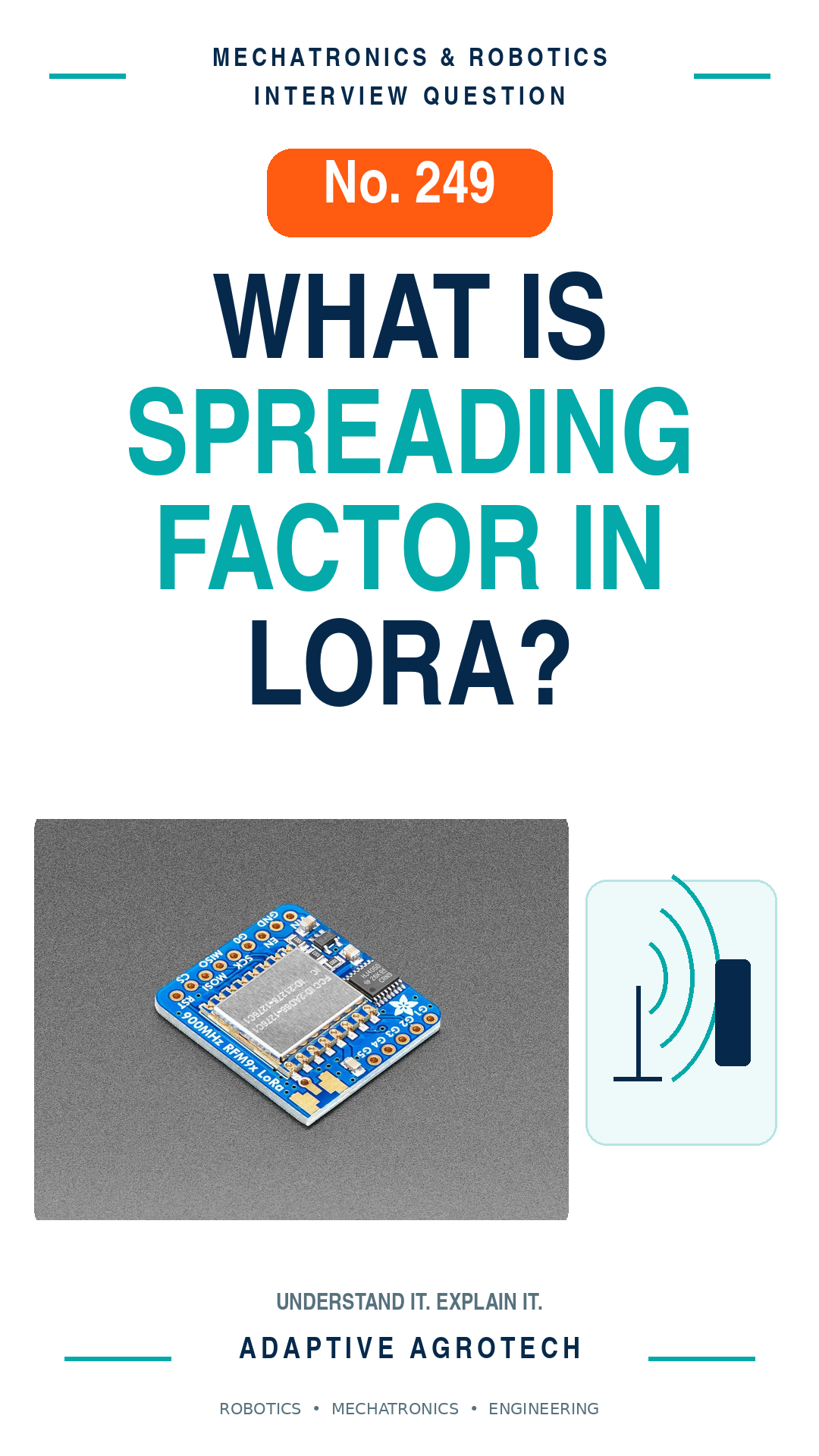
What is RS485?

RS485 specifies a differential electrical interface for serial communication. Multiple devices can share a half duplex pair with one active transmitter, while message structure, addressing, and timing come from a separate protocol.

Watch & explore
Communication & networksNo. 123

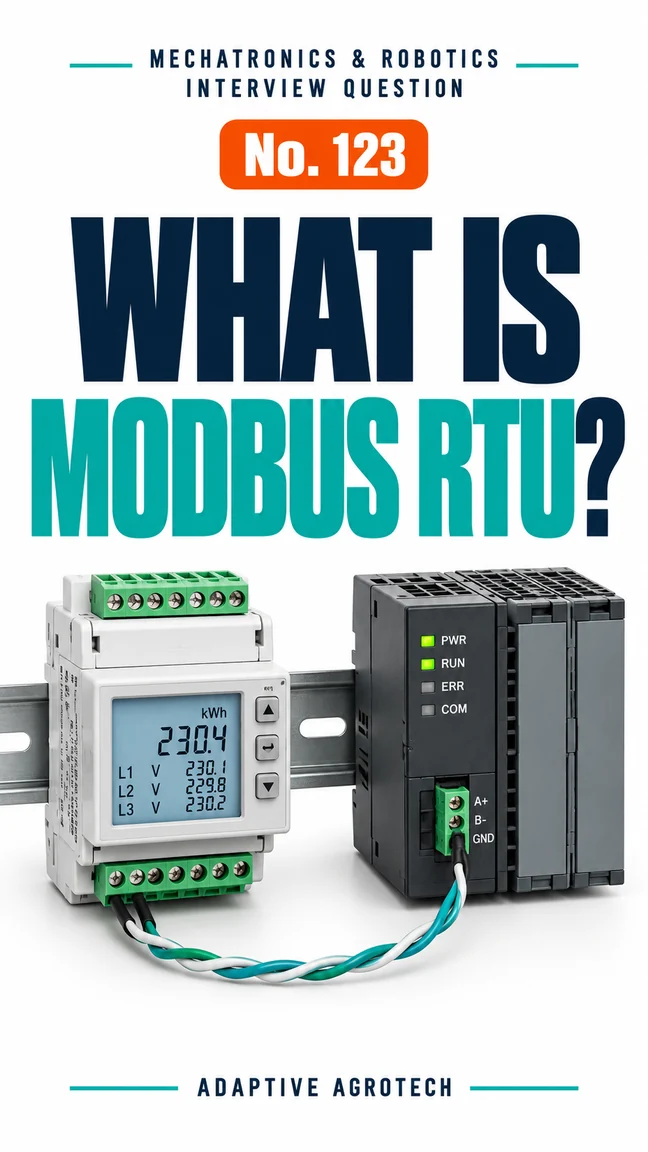
What is Modbus RTU?

Modbus RTU exchanges device data through addressed serial requests and checked frames. Timing helps delimit messages, while device-specific register maps determine units and interpretation; a successful write reply alone does not confirm motion.

Watch & explore
Communication & networksNo. 124

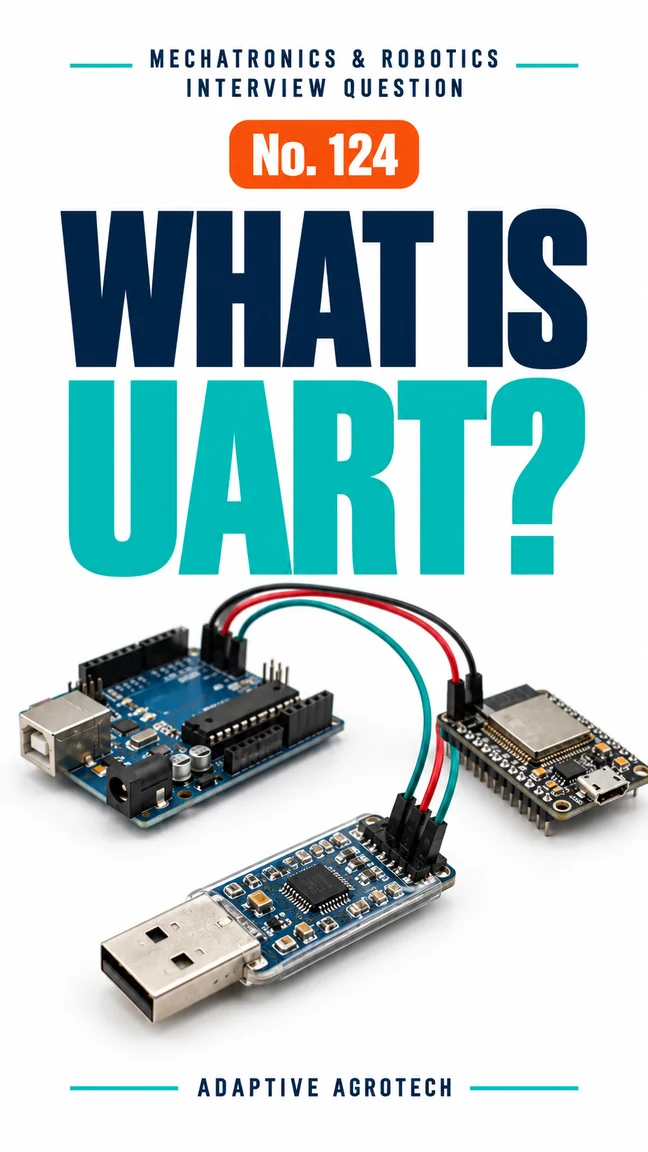
What is UART?

A UART converts bytes to asynchronous serial bits and back without a shared clock wire. Both endpoints need matching baud and framing, suitable logic levels, and crossed transmit and receive connections.

Watch & explore
Communication & networksNo. 125

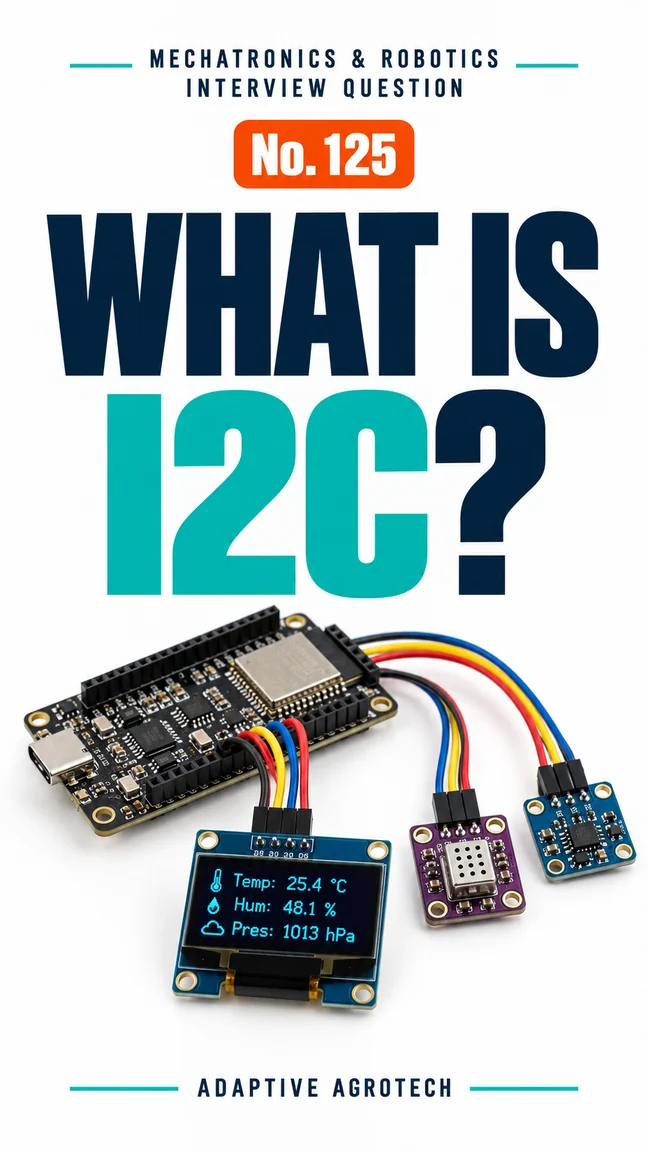
What is I2C?

I2C connects a controller to addressed chips using shared clock and data lines. Pull-ups create the high level, and correct addresses, capacitance, and electrical loading are essential for reliable short interchip connections.

Watch & explore
Communication & networksNo. 126

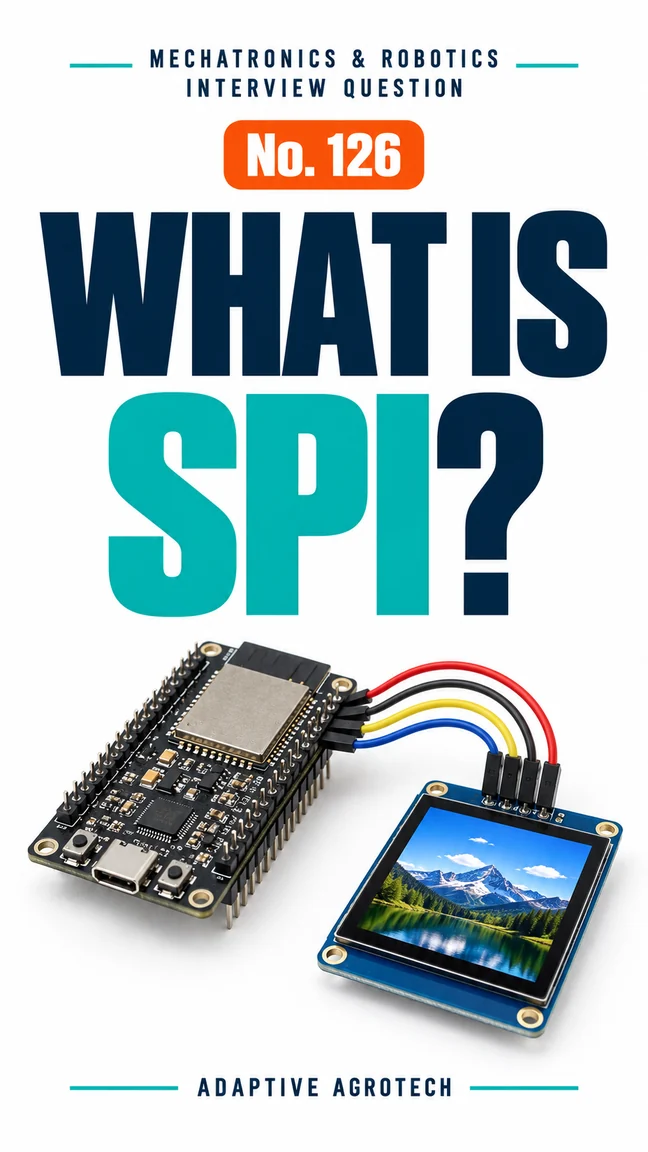
What is SPI?

SPI is a clocked interchip interface with controller supplied clock, target selection, and separate data directions. Correct transfers require matching clock polarity, phase, select timing, and each target device’s timing specification.

Watch & explore
Communication & networksNo. 127

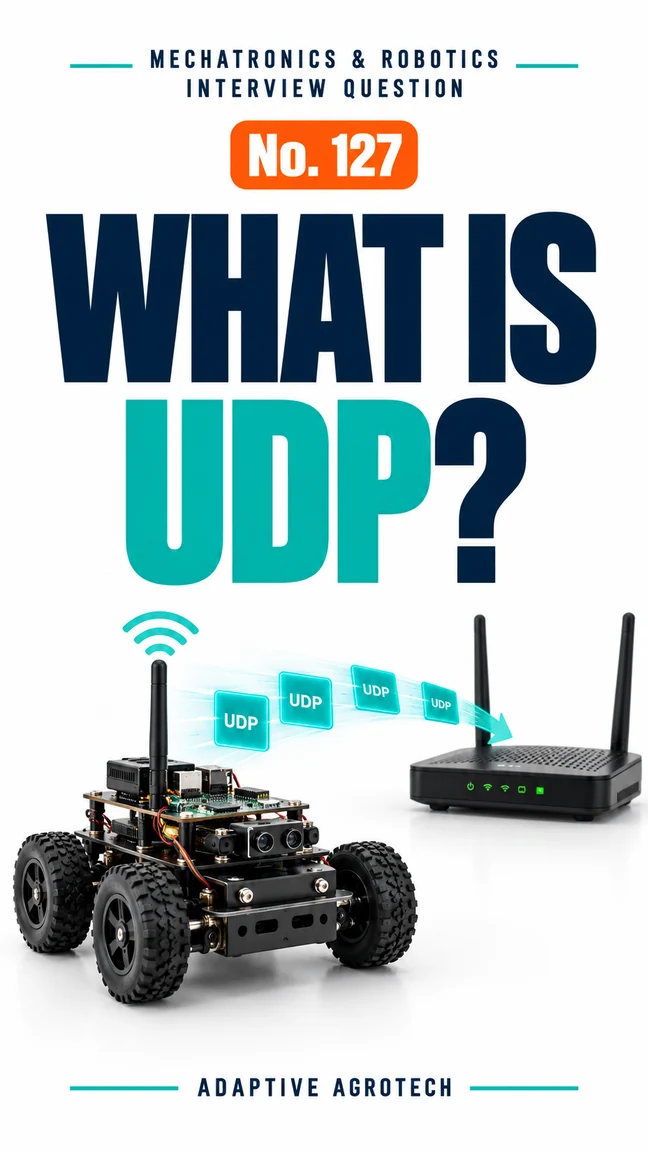
What is UDP?

UDP transports separate datagrams with low transport overhead but no built-in guarantee of arrival or order. Robot streams should track sequence and measurement age, since choosing UDP alone does not establish timely or safe control.

Watch & explore
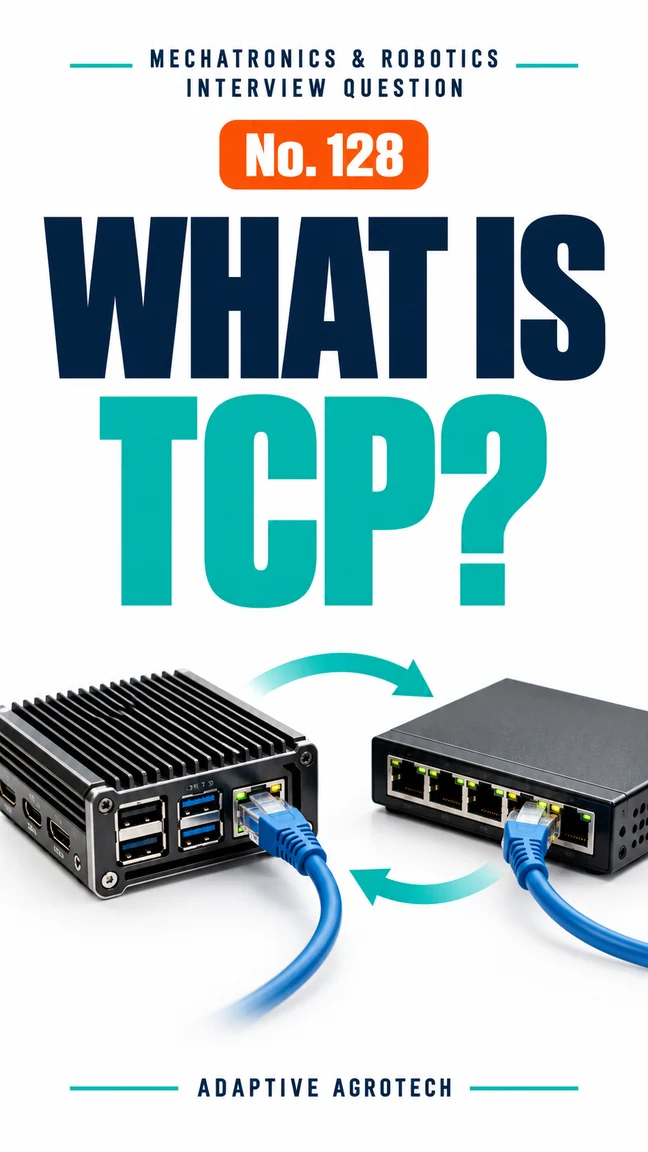
Communication & networksNo. 128

What is TCP?

TCP offers reliable ordered bytes through acknowledgements and retransmission. Applications must define their own message boundaries and timeouts, and retransmission can delay later data despite the transport’s reliability guarantees.

Watch & explore
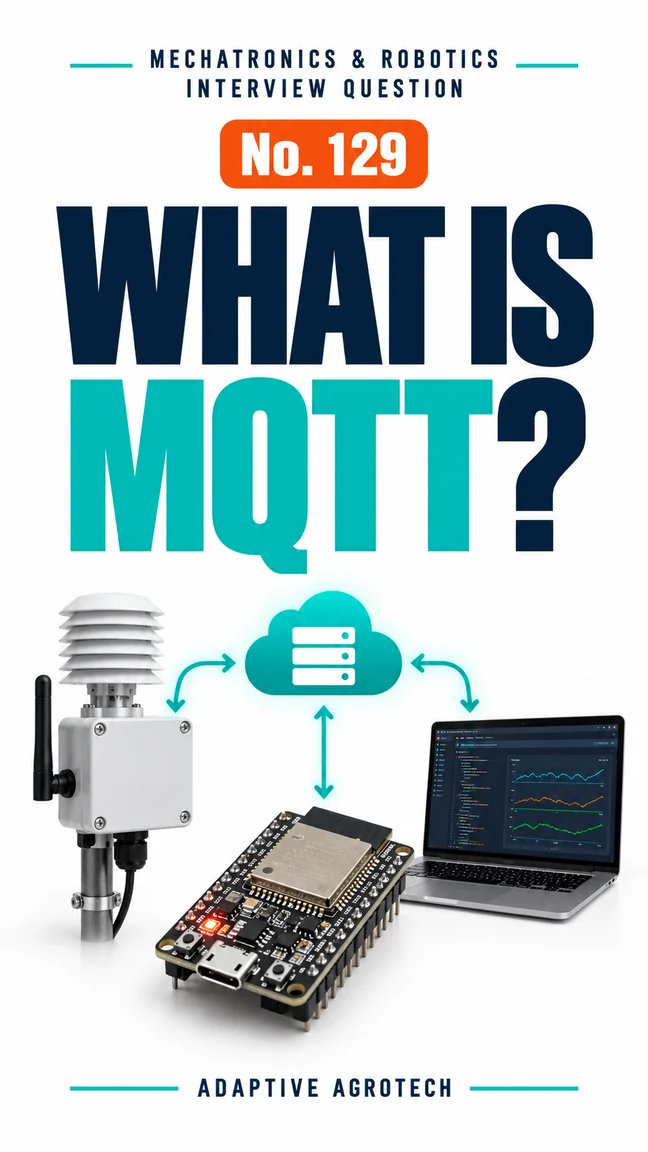
Communication & networksNo. 129

What is MQTT?

MQTT routes published topic messages through a broker to interested subscribers. It suits robot telemetry and dashboards, with deployment choices for access security and delivery policy rather than assuming brokered data provides independent safety.

Watch & explore
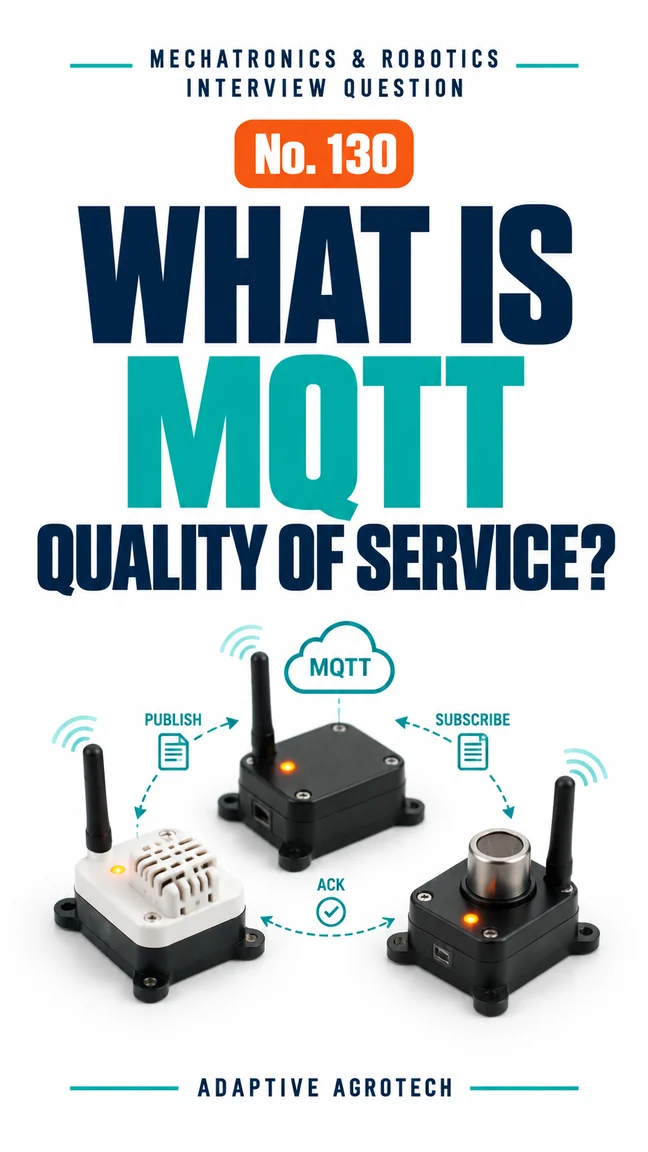
Communication & networksNo. 130

What is MQTT Quality of Service?

MQTT QoS defines delivery levels with different acknowledgement costs: at most once, possible duplicate delivery, or exactly once within a protocol exchange. These guarantees do not establish how many times an actuator physically executes.

Watch & explore
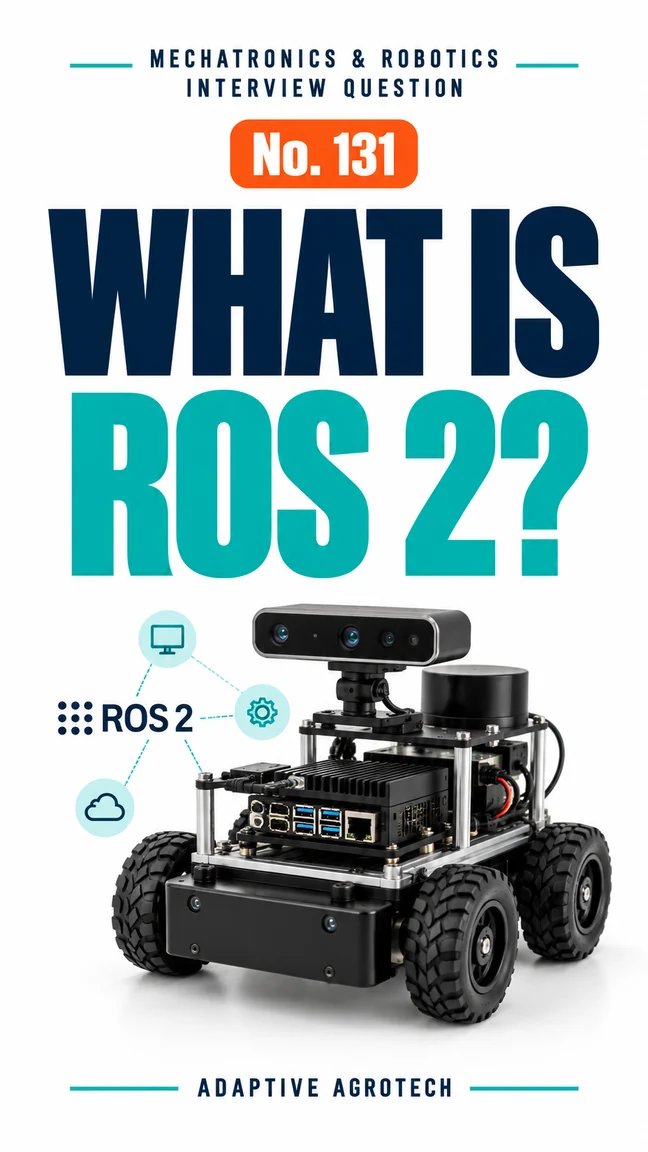
Communication & networksNo. 131

What is ROS 2?

ROS 2 organizes robot software into cooperating nodes with typed interfaces. Topics serve streams, services serve requests, and actions support longer tasks, while timing, motion behavior, and calibration still require engineering validation.

Watch & explore
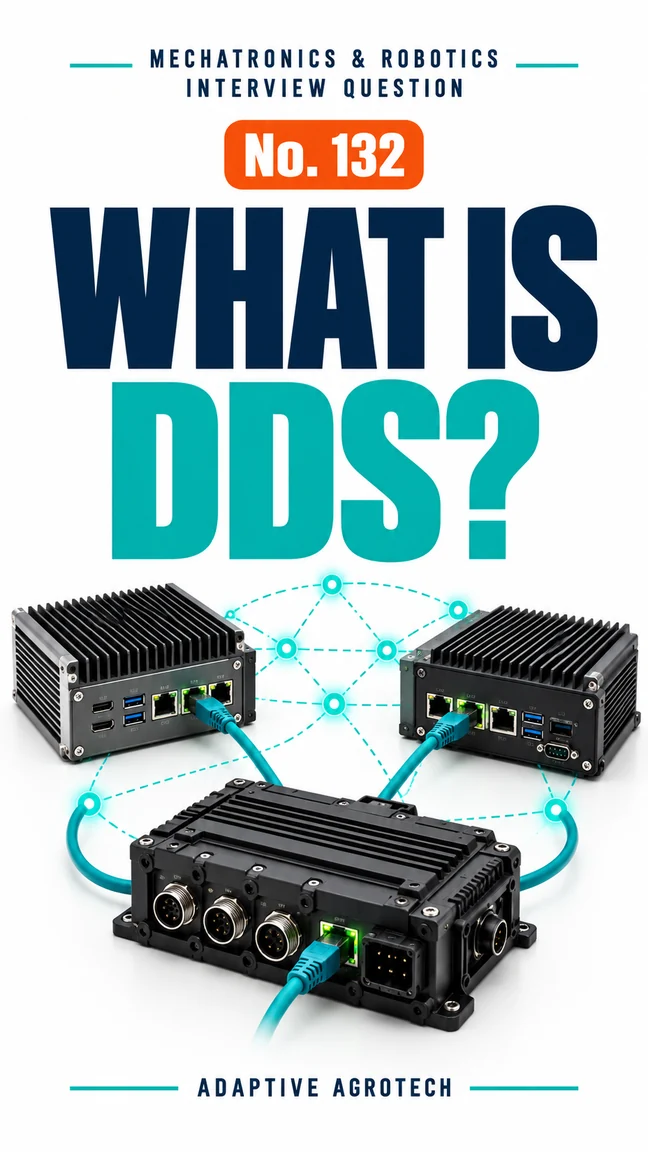
Communication & networksNo. 132

What is DDS?

DDS is a typed publish and subscribe standard with discovery and communication policies. Writers and readers must agree on data and QoS behavior, and successful discovery does not establish timely data delivery.

Watch & explore
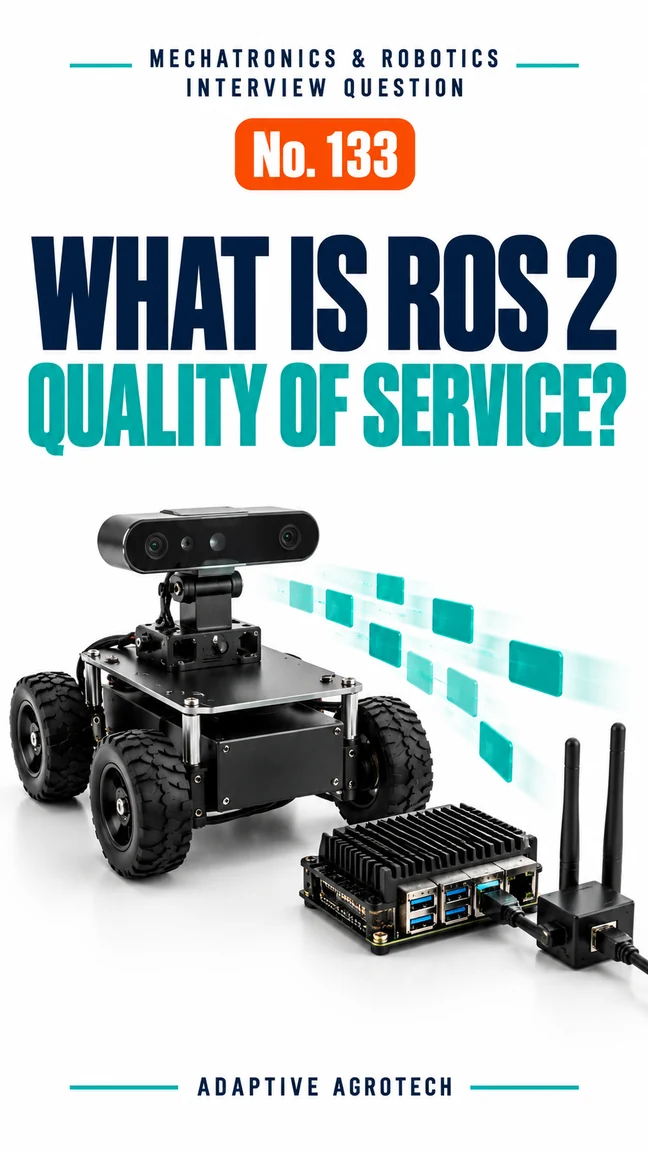
Communication & networksNo. 133

What is ROS 2 Quality of Service?

ROS 2 QoS policies govern reliability, retained history, durability, and timing. Publisher and subscriber policies must be compatible, and timely fresh data can matter more than retrying every old sample.

Watch & explore