Skip to content
Adaptive AgroTech NetworkUniversity of Southern Denmark · SDU Drone Center
Robotics · Mechatronics · Intelligent systems

Short videos.
Lasting understanding.

Explore one engineering idea at a time. Watch a short lesson, read the key concepts and test your understanding before your next interview, project or class.

16 topics found

Video · Key ideas · Check your understanding

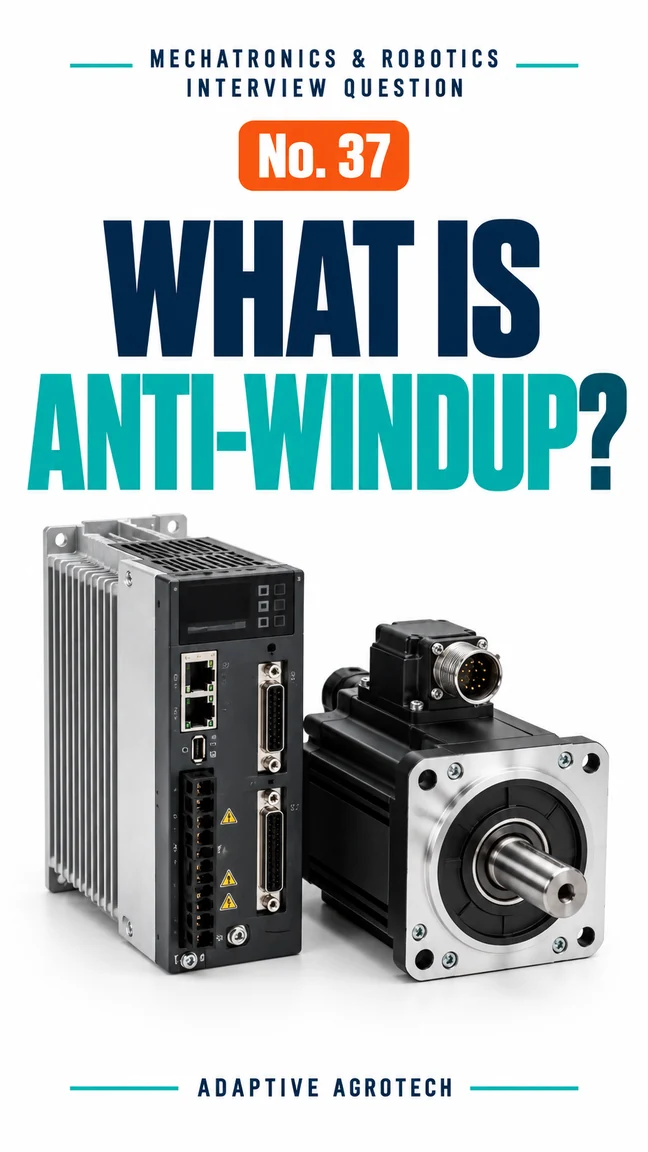
Control systemsNo. 037

What is Anti-Windup?

Anti-windup prevents hidden integral buildup when actuator limits block the requested response. Conditional integration stops accumulation that drives further into saturation while allowing the integral state to unwind toward recovery.

Watch & explore
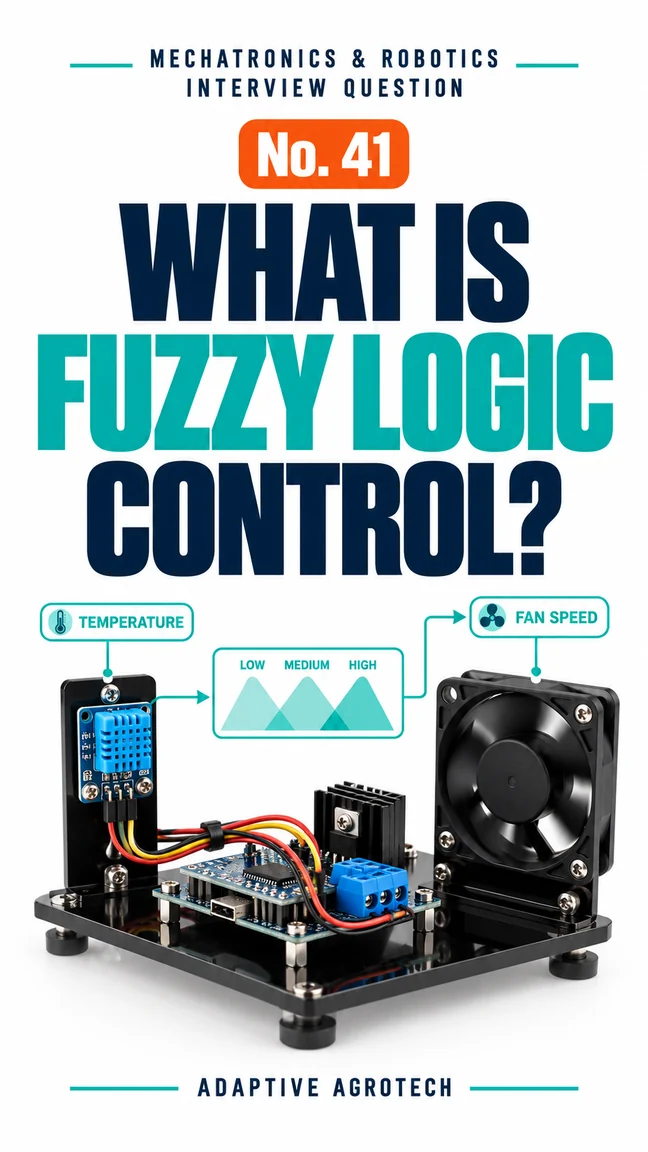
Control systemsNo. 041

What is Fuzzy Logic Control?

Fuzzy logic turns overlapping linguistic rules into a numeric control command. Multiple memberships can activate rules together, encoding practical knowledge while still requiring stability and operating-range validation under real disturbances and limits.

Watch & explore
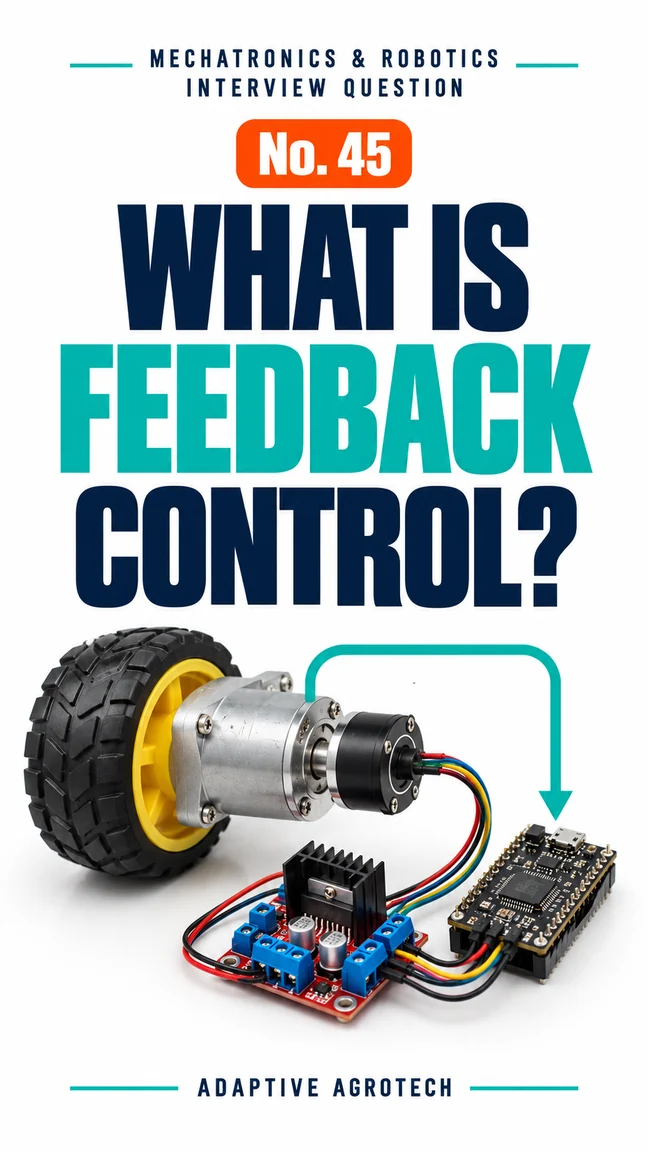
Control systemsNo. 045

What is Feedback Control?

Feedback compares measured robot behavior with a target and changes the next command to reduce error. It can reject changing loads, while excessive gain, sensor noise, or timing delay can instead produce oscillation.

Watch & explore
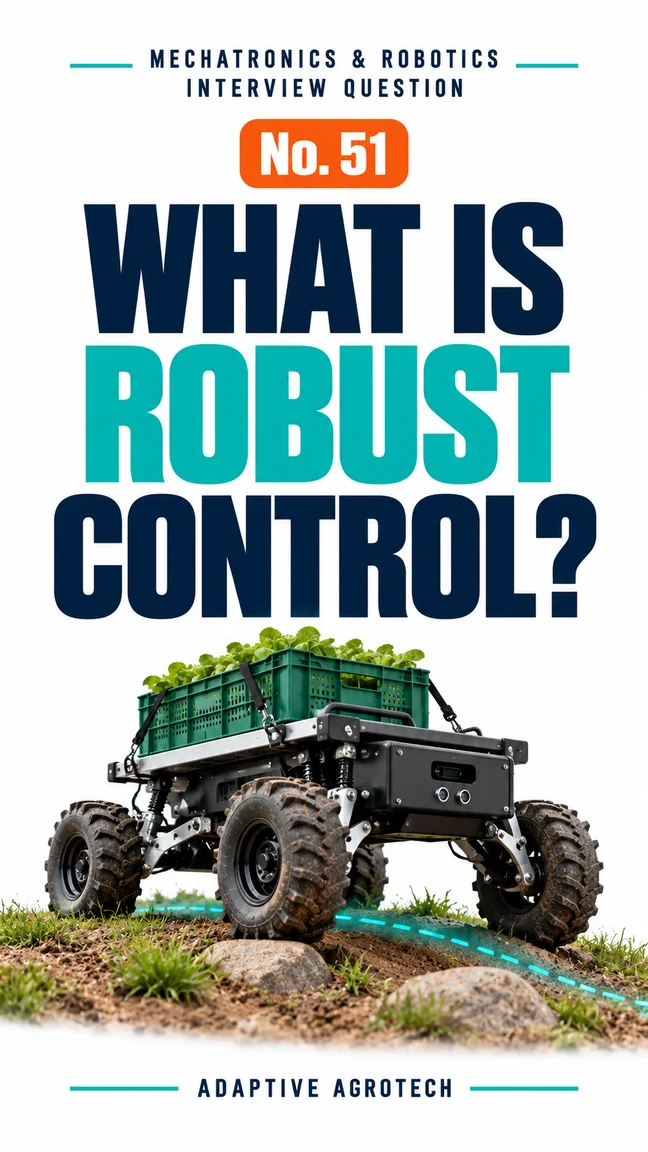
Control systemsNo. 051

What is Robust Control?

Robust control includes a specified uncertainty set in its design and checks performance across a family of plants. Any guarantee remains limited to that set rather than covering all possible hardware differences.

Watch & explore
Control systemsNo. 054

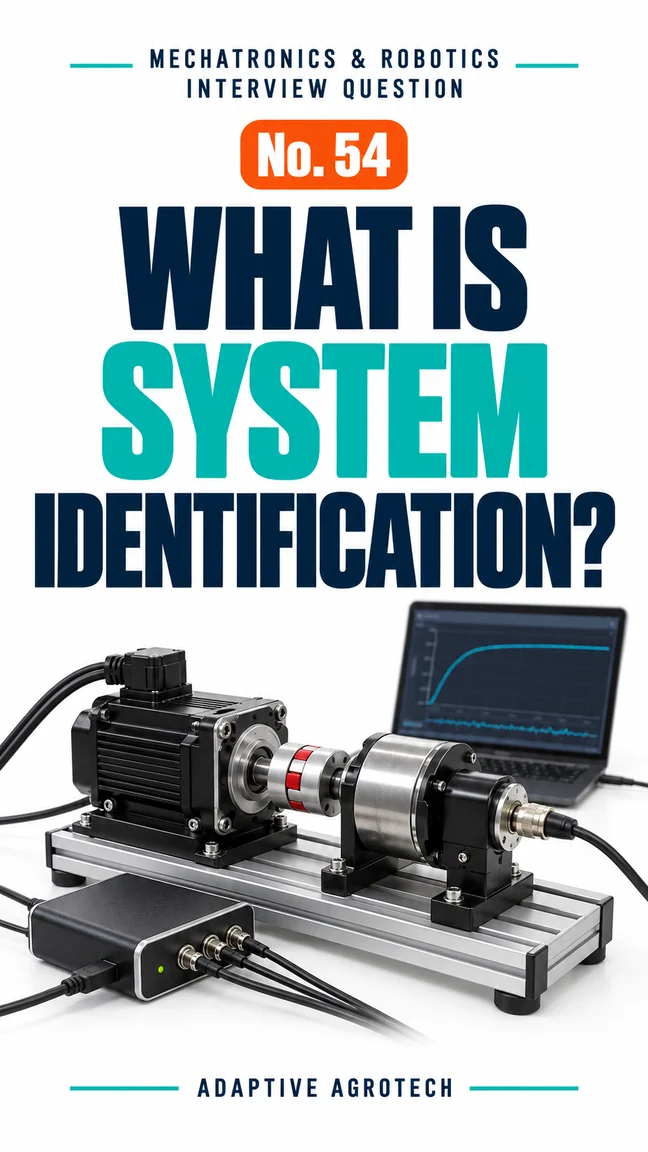
What is System Identification?

System identification fits a dynamic model from recorded inputs and outputs. Informative excitation reveals relevant behavior, and separate validation data helps distinguish useful dynamics from overfitting, delay, bias, or changing operating conditions.

Watch & explore
Control systemsNo. 091

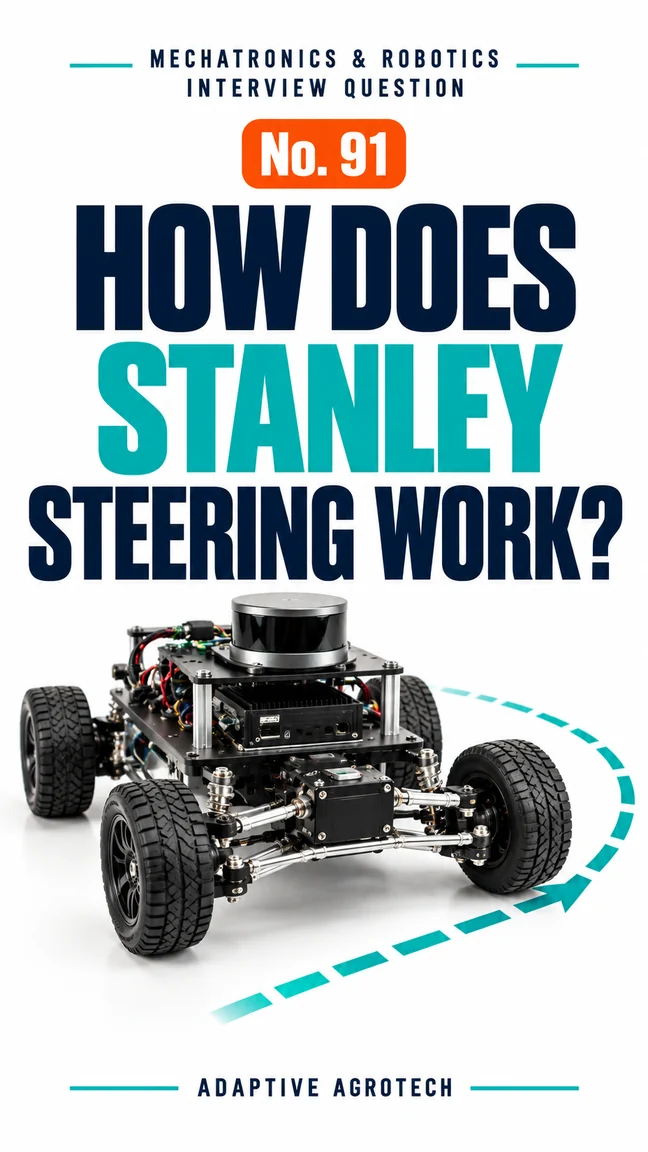
What is the Stanley Steering Controller?

The Stanley controller combines heading error with front axle cross track error to steer a car like robot. Speed scales the lateral correction, and practical implementations must handle low speed behavior and steering limitations.

Watch & explore
Control systemsNo. 158

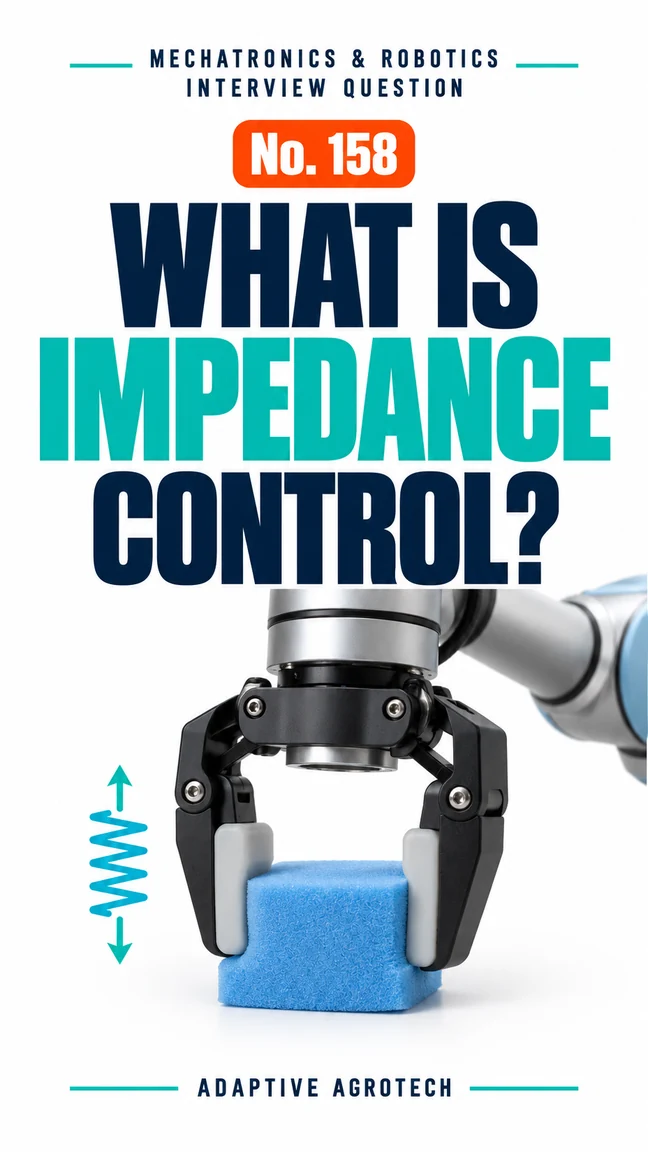
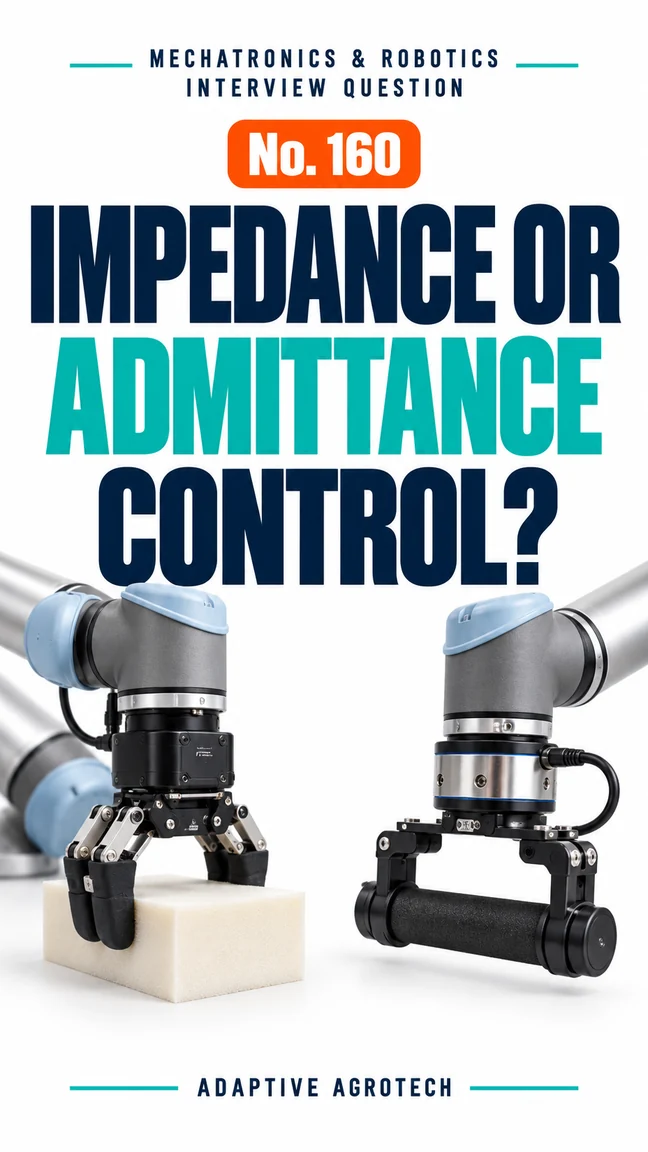
What Is Impedance Control?

Impedance control shapes interaction by relating motion error to commanded force or torque. Virtual stiffness and damping create compliant behavior, but stability depends on the complete actuator, sensing, delay, and environment dynamics.

Watch & explore
Control systemsNo. 159

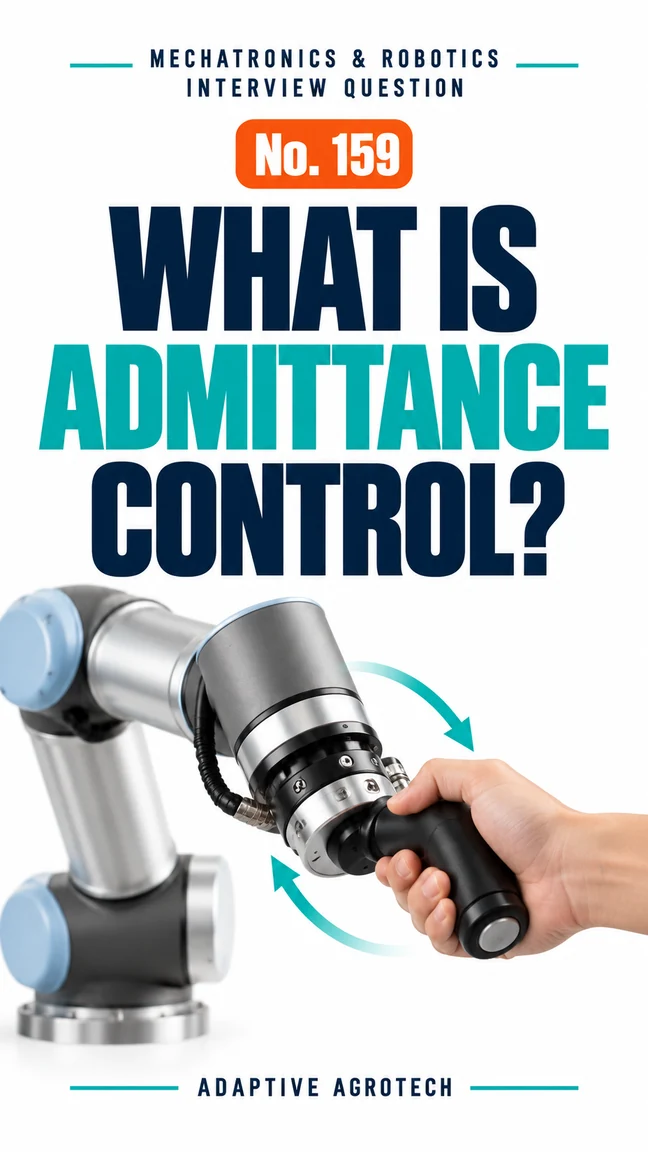
What Is Admittance Control?

Admittance control turns measured interaction force into a motion reference through virtual dynamics. An inner motion loop follows that reference, while force bias, delay, and practical motion limits strongly influence resulting behavior.

Watch & explore
Control systemsNo. 162

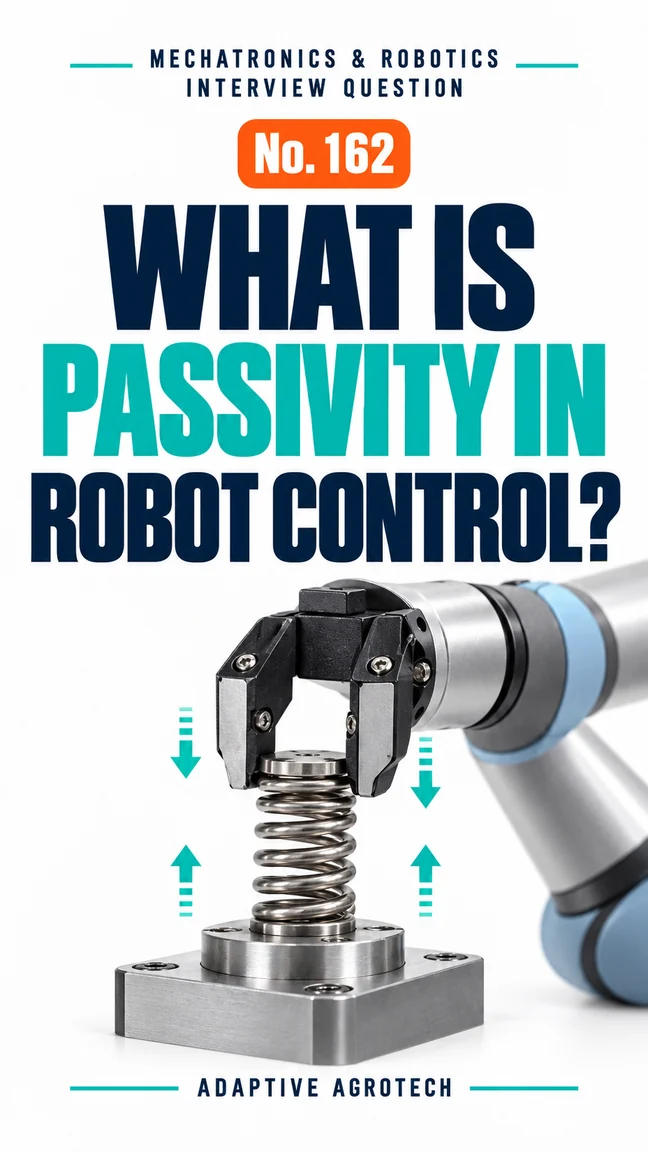
What Is Passivity in Robot Control?

Passivity is an input–output energy property. A passive system cannot supply more energy than it initially stores plus the energy it receives. For mechanical interaction, force and velocity form a power pair at the contact.

Watch & explore
Control systemsNo. 168

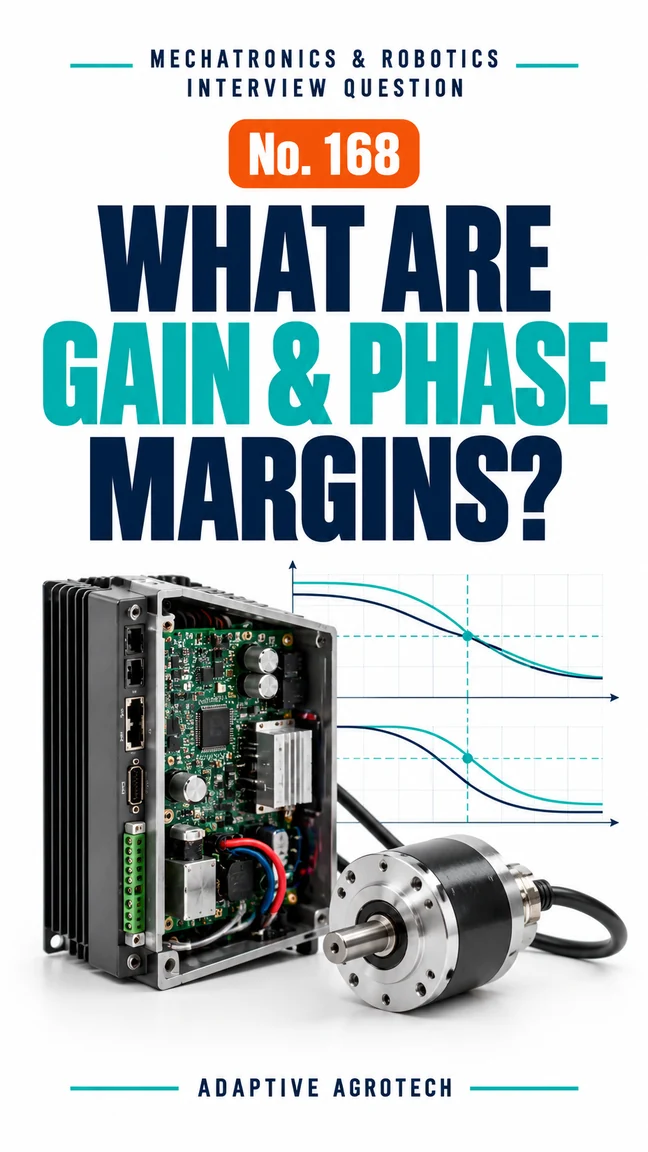
What Are Gain Margin and Phase Margin?

Gain and phase margins describe how a loop can change before reaching a stability boundary. For standard negative feedback, phase margin is measured at unity loop gain. Gain margin uses the minus one hundred eighty degree phase crossover.

Watch & explore
Control systemsNo. 170

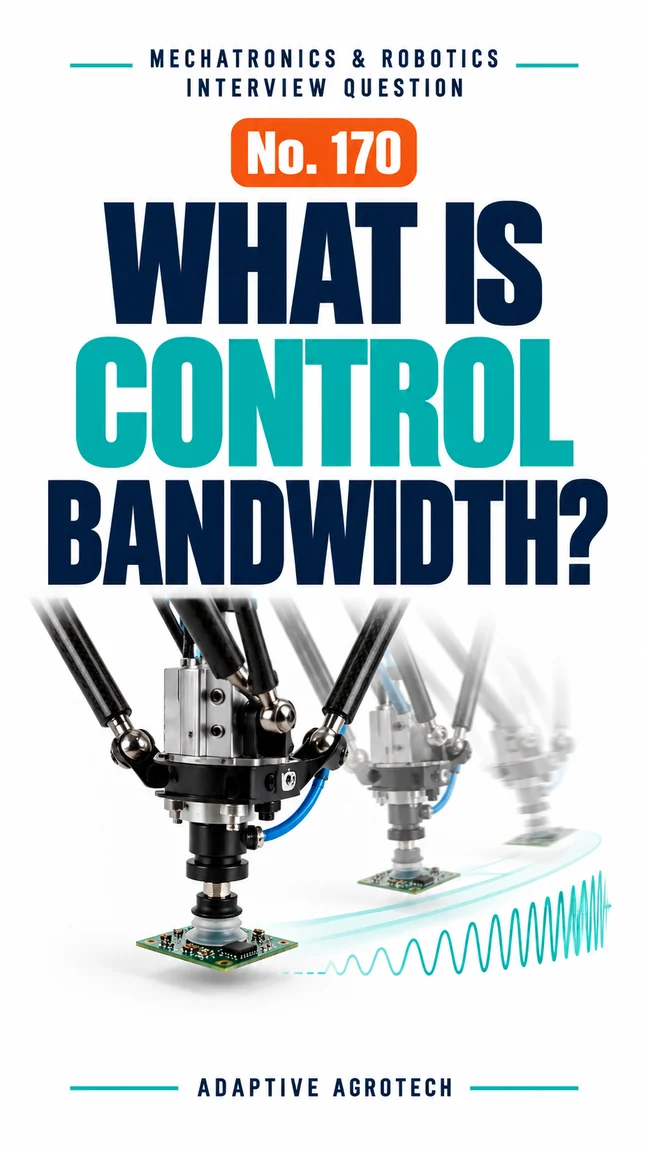
What Is Control Bandwidth?

Control bandwidth describes the frequency range over which a closed loop responds effectively. For a common low pass tracking response, bandwidth is the first frequency where magnitude falls three decibels below its low frequency value.

Watch & explore
Control systemsNo. 172

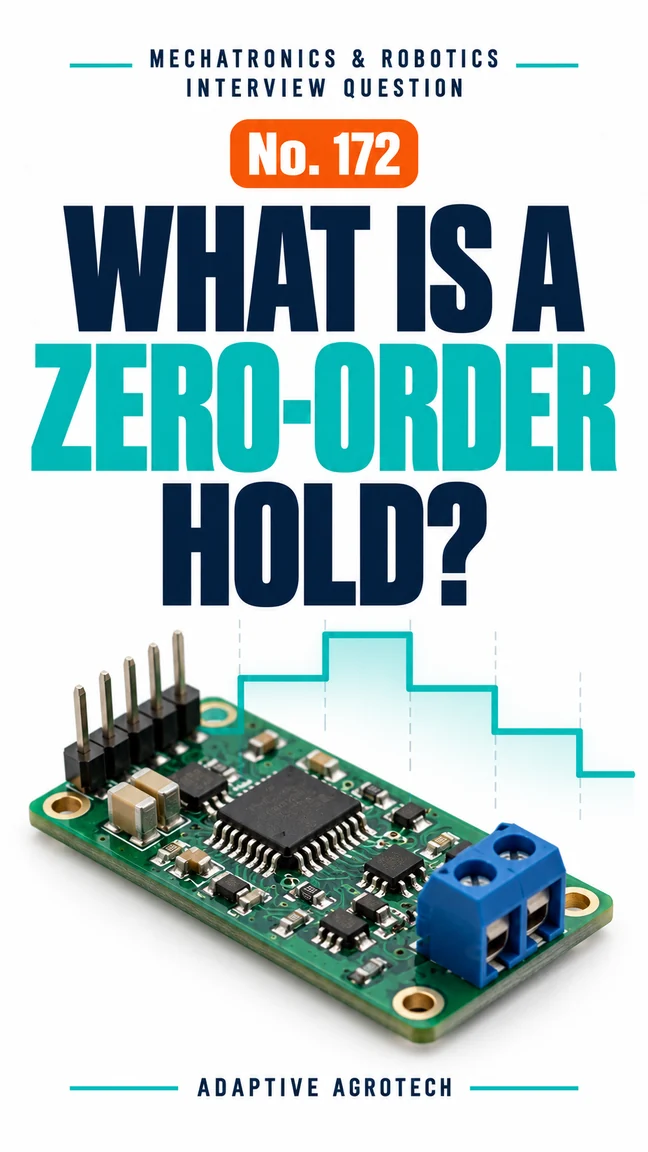
What Is a Zero-Order Hold?

A zero order hold keeps each sampled command constant until the next update. Its output is a staircase. It does not draw a straight line between samples or predict the next command.

Watch & explore