Skip to content
Adaptive AgroTech NetworkUniversity of Southern Denmark · SDU Drone Center
Robotics · Mechatronics · Intelligent systems

Short videos.
Lasting understanding.

Explore one engineering idea at a time. Watch a short lesson, read the key concepts and test your understanding before your next interview, project or class.

36 topics found

Video · Key ideas · Check your understanding

Control systemsNo. 040

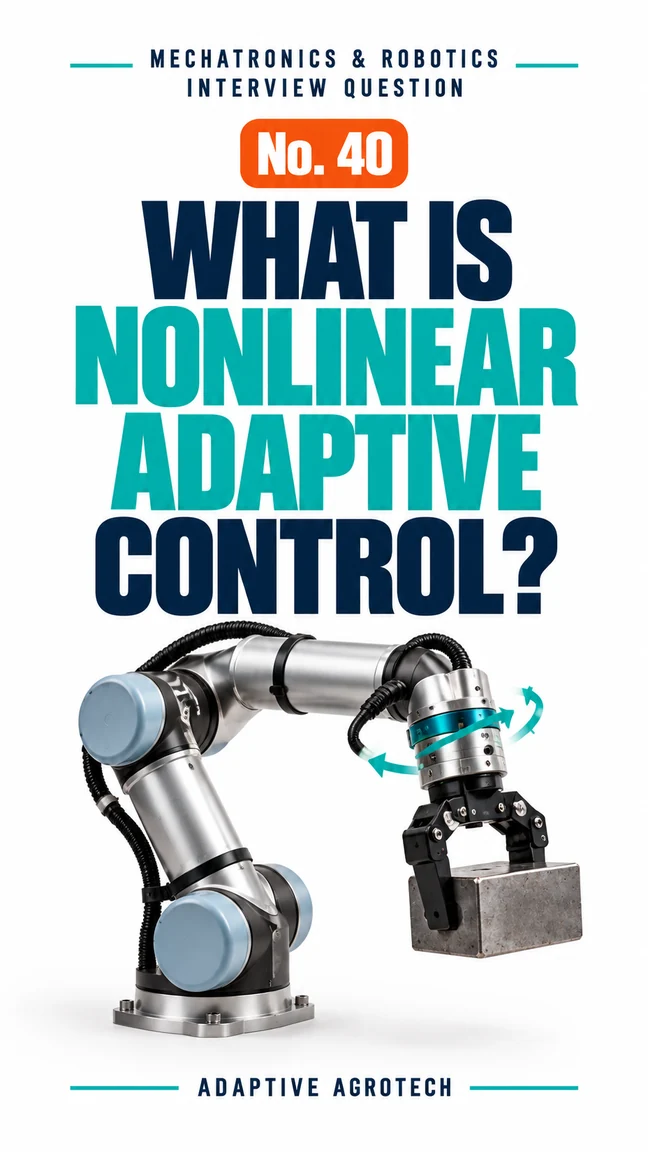
What is Nonlinear Adaptive Control?

Nonlinear adaptive control combines a nonlinear law with parameter updates. Tracking error can adjust estimated payload or friction, but successful tracking does not alone establish convergence to the true physical parameters.

Watch & explore
Control systemsNo. 041

What is Fuzzy Logic Control?

Fuzzy logic turns overlapping linguistic rules into a numeric control command. Multiple memberships can activate rules together, encoding practical knowledge while still requiring stability and operating-range validation under real disturbances and limits.

Watch & explore
Control systemsNo. 051

What is Robust Control?

Robust control includes a specified uncertainty set in its design and checks performance across a family of plants. Any guarantee remains limited to that set rather than covering all possible hardware differences.

Watch & explore

Control systemsNo. 053

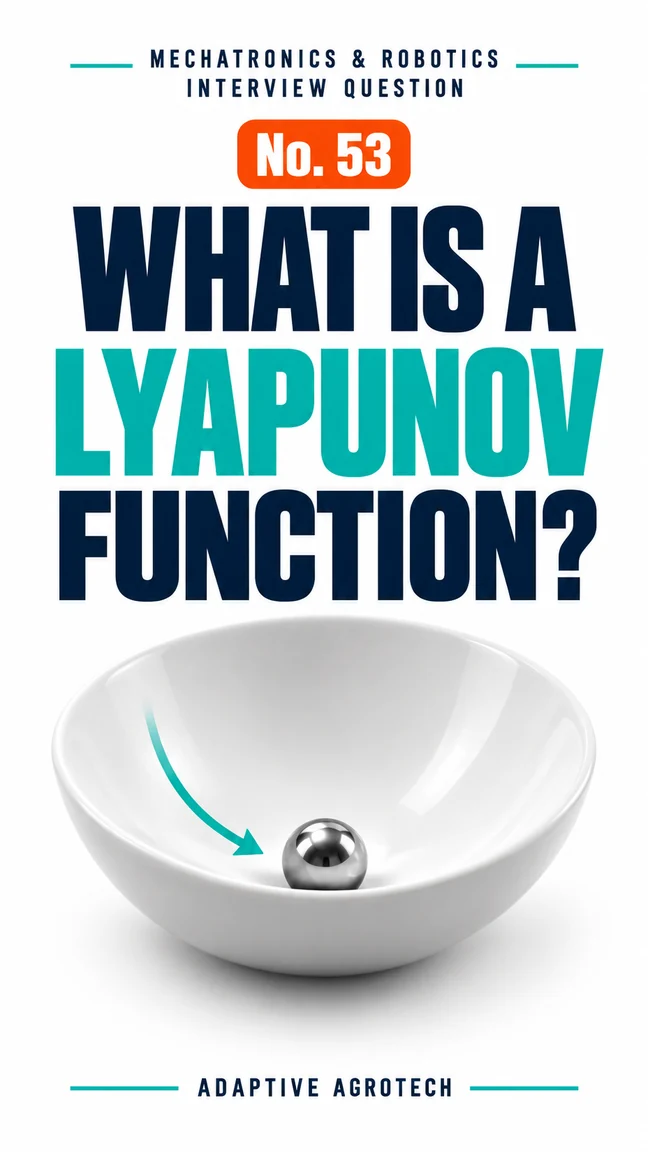
What is a Lyapunov Function?

A Lyapunov function provides a scalar route to analyzing stability without solving every trajectory. Its value and change along motion support a claim whose scope depends on the theorem's assumptions and region.

Watch & explore
Localization & estimationNo. 058

What is a Kalman Filter?

A Kalman filter predicts state and uncertainty, then applies an uncertainty-based measurement correction. Its numerical precision depends on valid noise and motion models rather than ensuring that the physical estimate is accurate.

Watch & explore
Sensors & perceptionNo. 062

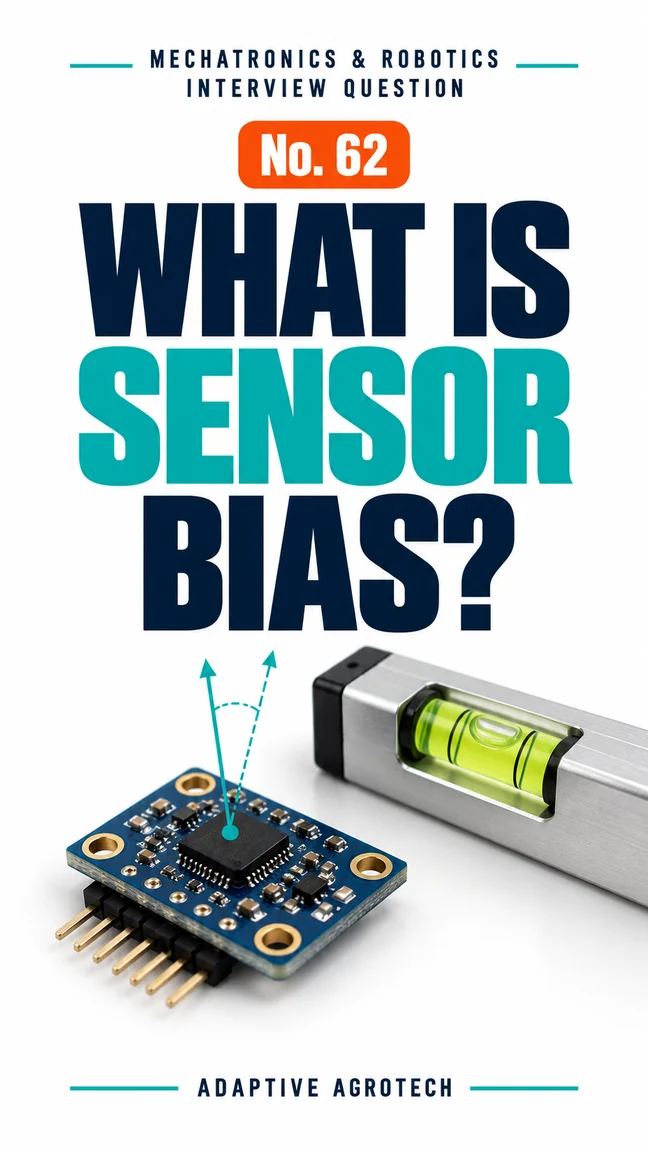
What is Sensor Bias?

Sensor bias is a systematic measurement offset that can accumulate through integration. Gyro bias illustrates the resulting heading drift, while changing temperature and time limit the lasting value of one calibration.

Watch & explore
Sensors & perceptionNo. 063

What is Sensor Noise?

Sensor noise causes random measurement variation around the signal. Averaging can smooth readings but delays change detection, so representative logging and frequency analysis help preserve the motion information a controller needs.

Watch & explore
Localization & estimationNo. 064

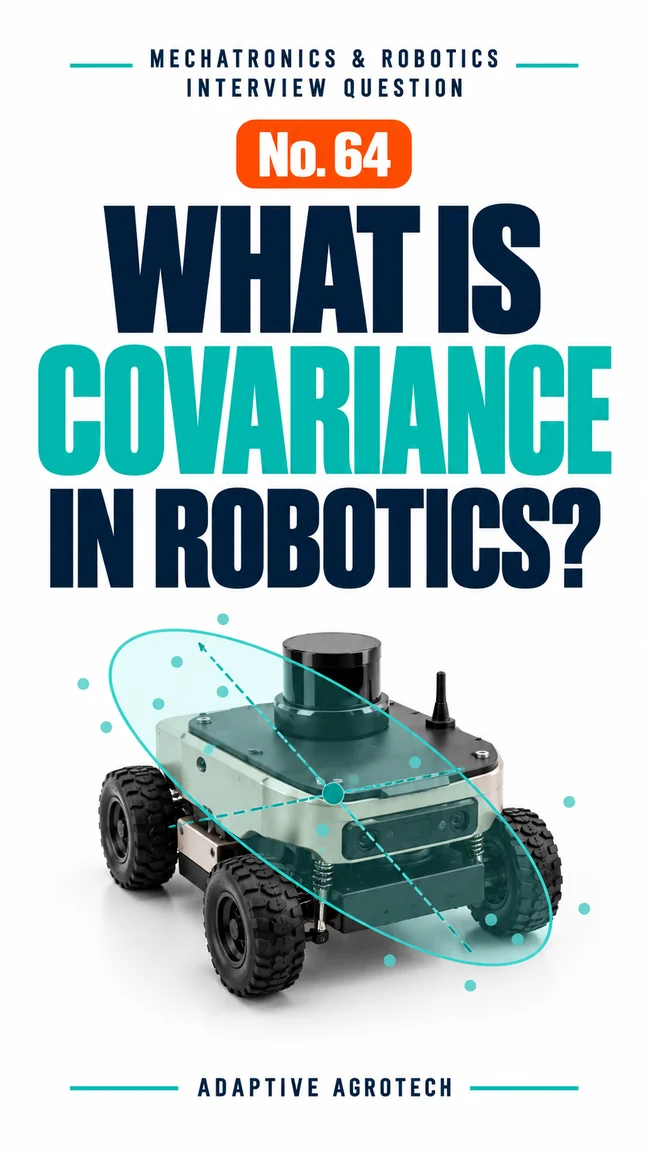
What is Covariance in Robot Estimation?

Covariance describes uncertainty magnitude and coupled estimation errors. Ellipse shape makes those relationships visible, while compatible frames, correct units, and credible values are essential before covariance is used to weight fusion.

Watch & explore
Localization & estimationNo. 065

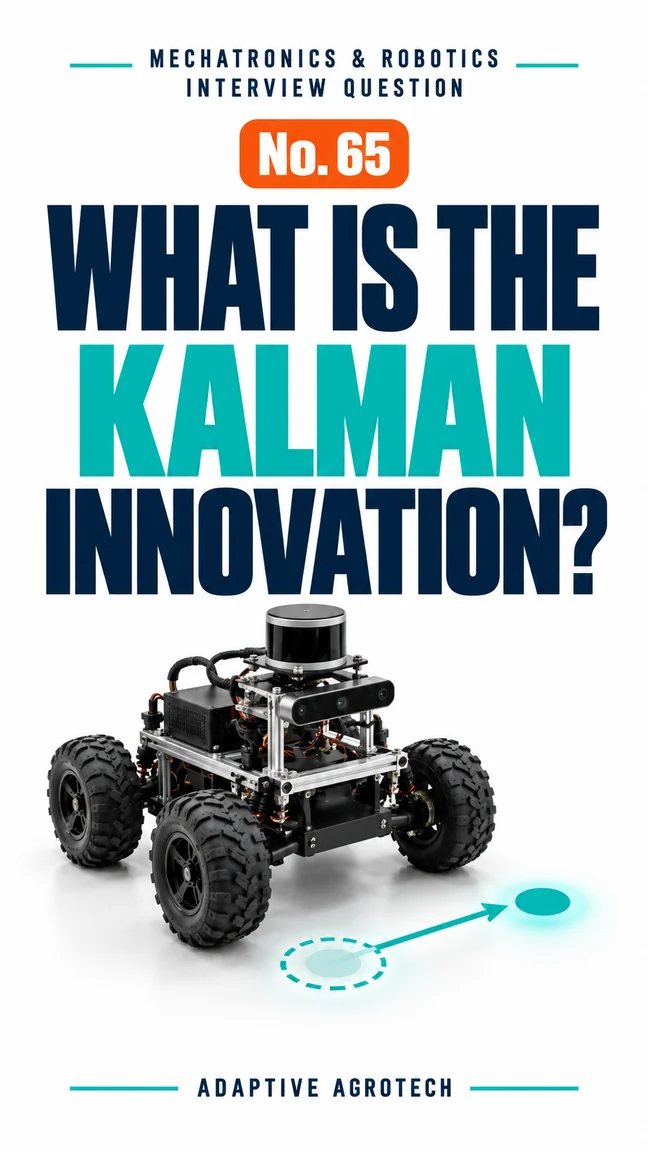
What is the Kalman Innovation?

Kalman innovation is the difference between an actual reading and its prediction. Interpreting it against expected uncertainty helps reveal timing, calibration, and model problems that smooth output alone can conceal.

Watch & explore
Localization & estimationNo. 076

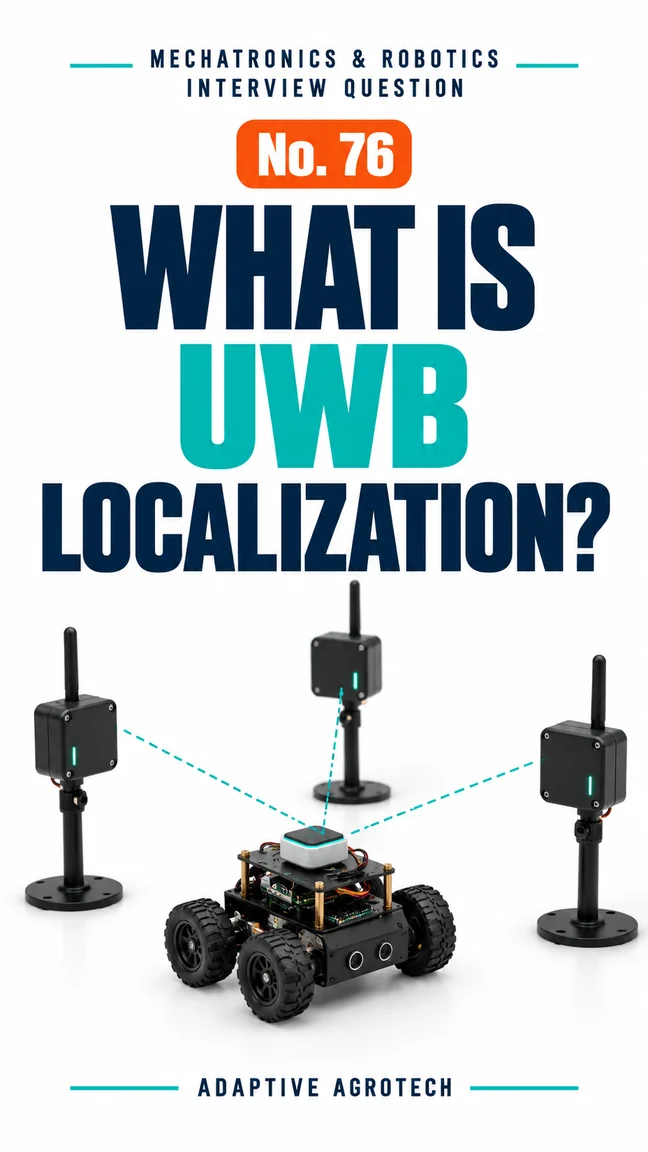
What is UWB Localization?

UWB ranging estimates distances from radio travel time to surveyed anchors. Several ranges constrain tag position, while anchor geometry and blocked direct paths affect reliability and motivate motion fusion and inconsistent-reading rejection.

Watch & explore
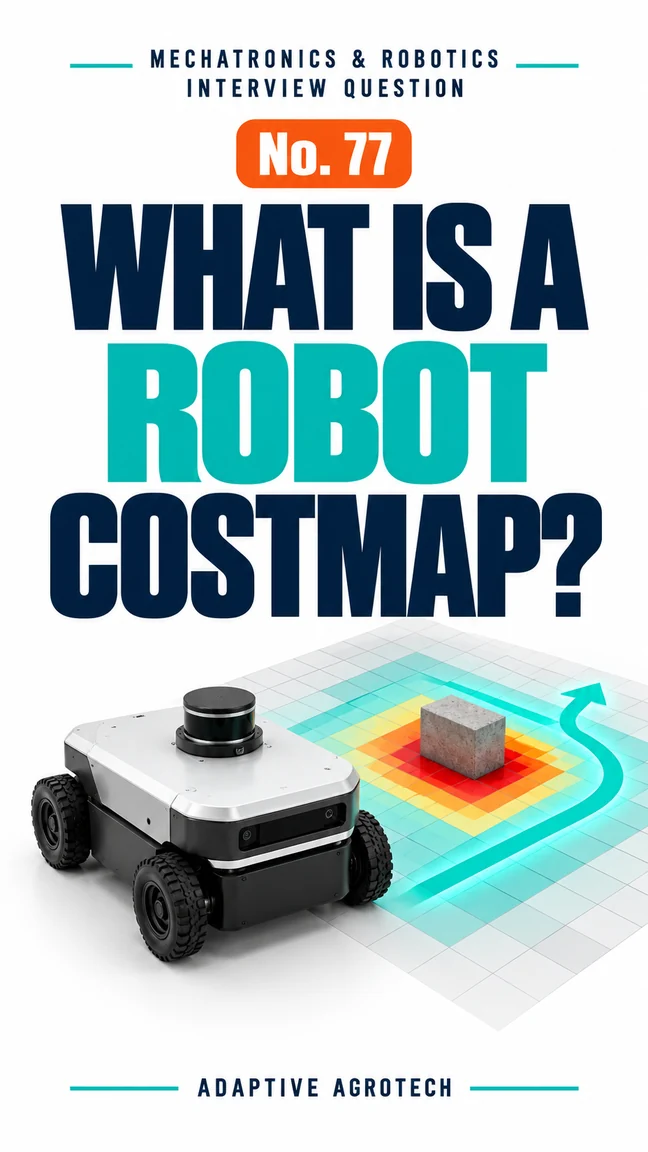
Motion planningNo. 077

What is a Robot Costmap?

A costmap assigns travel costs that guide route choice and clearance. Obstacle inflation discourages paths near walls, while footprint geometry and fresh updates prevent point-based routes from hiding physical collisions.

Watch & explore
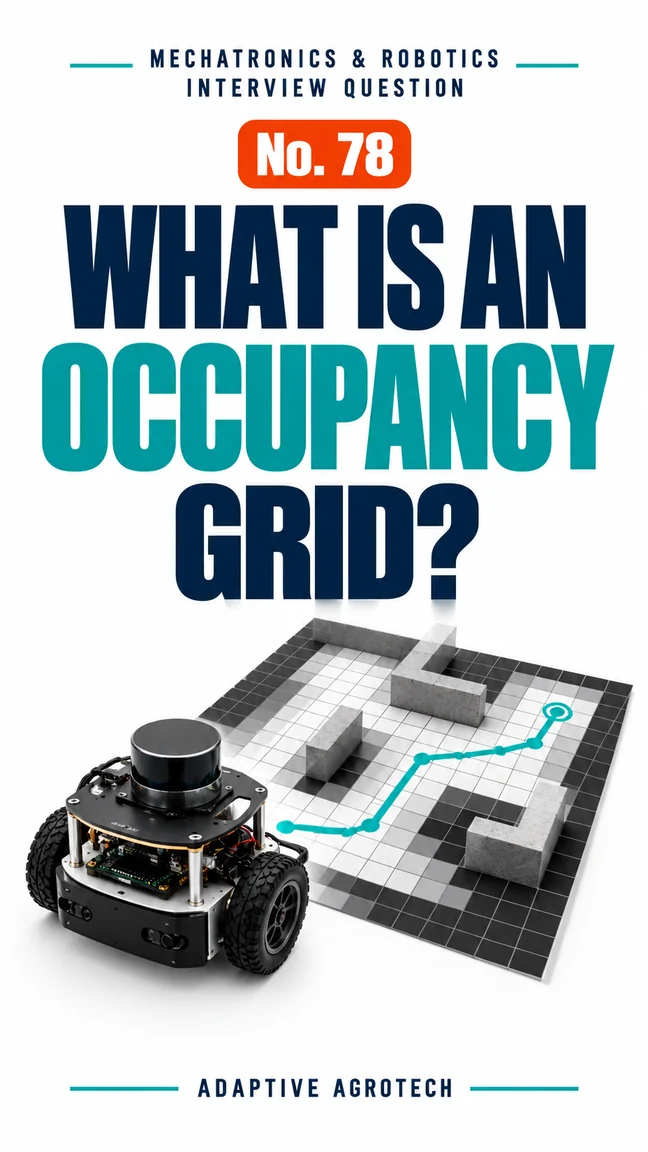
Motion planningNo. 078

What is an Occupancy Grid?

An occupancy grid divides space into cells that express obstacle belief. Laser evidence updates free and occupied regions, while unknown cells require an explicit navigation policy instead of being treated as clear.

Watch & explore
Motion planningNo. 085

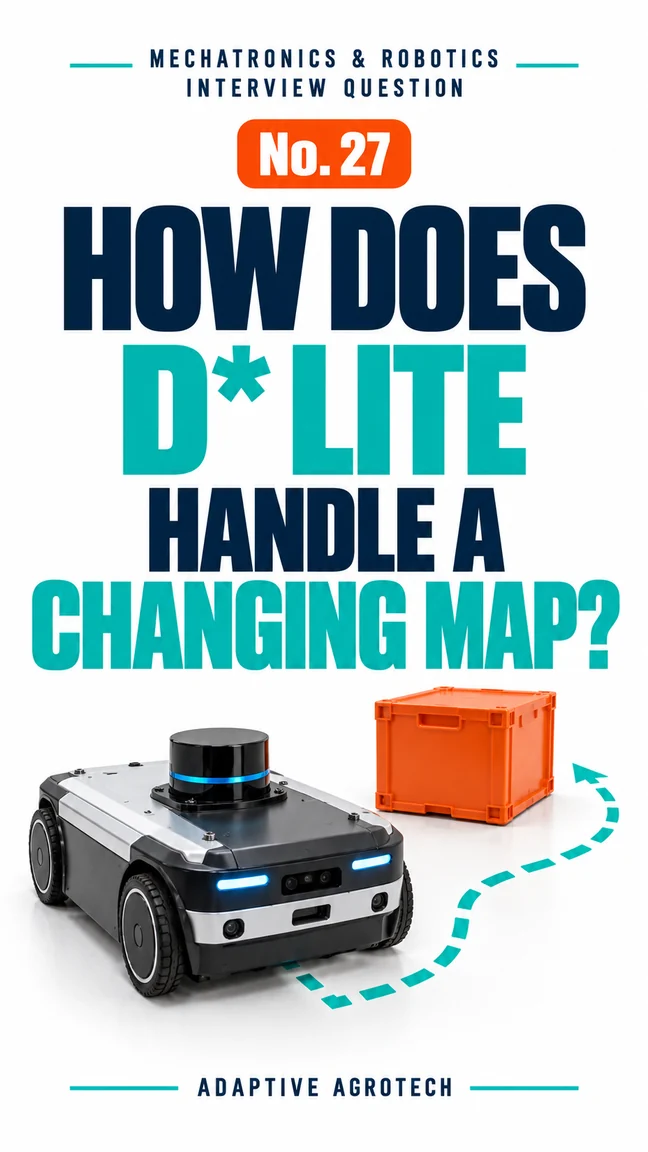
What is D-Star Lite?

D* Lite replans on a graph by reusing earlier search information when travel costs change. It repairs affected values and updates the route, while still relying on current sensing and appropriate motion control.

Watch & explore
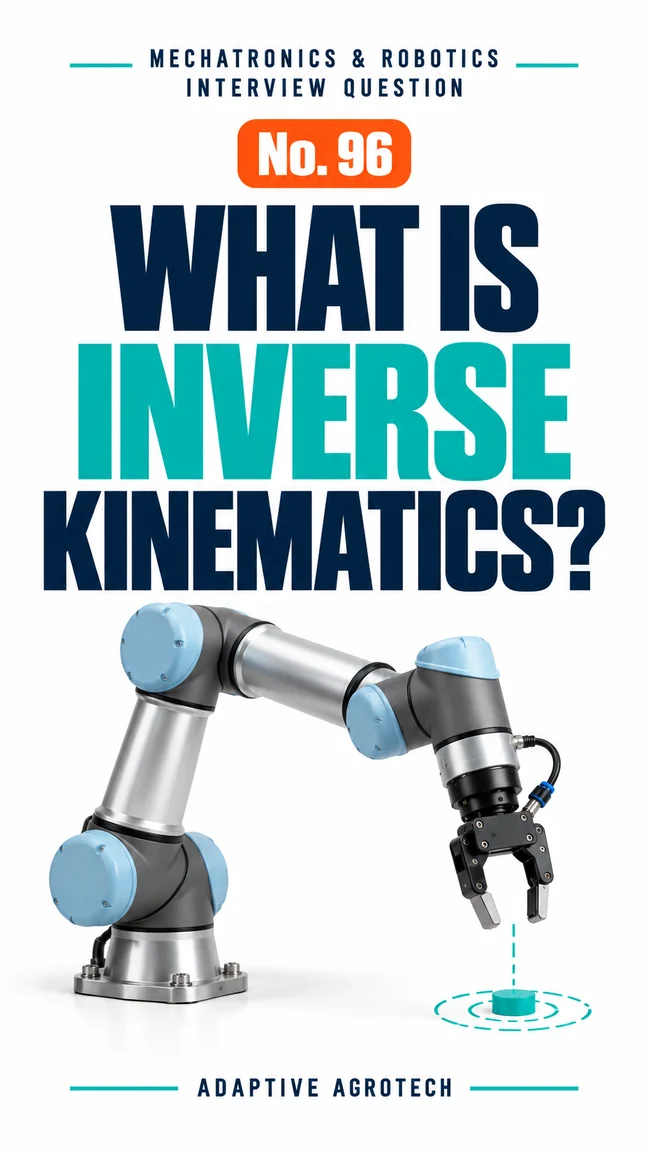
Robot kinematicsNo. 096

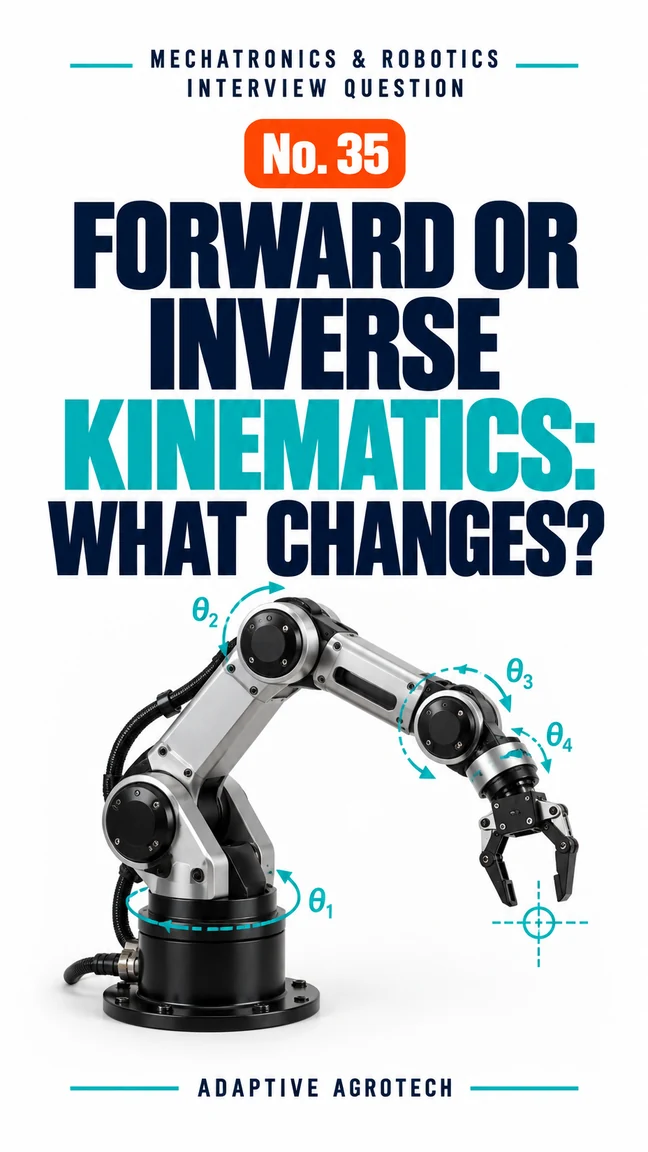
What is Inverse Kinematics?

Inverse kinematics finds joint values for a desired tool pose. A target can have several solutions or none, so solution choice must respect joint limits and the complete arm motion must be checked.

Watch & explore
Embedded electronicsNo. 097

What is a Pull-Up Resistor?

A pull-up resistor defines a digital input’s idle high state while allowing a switch to pull it low. Its resistance must balance leakage, signal rise time, current, and voltage limits.

Watch & explore
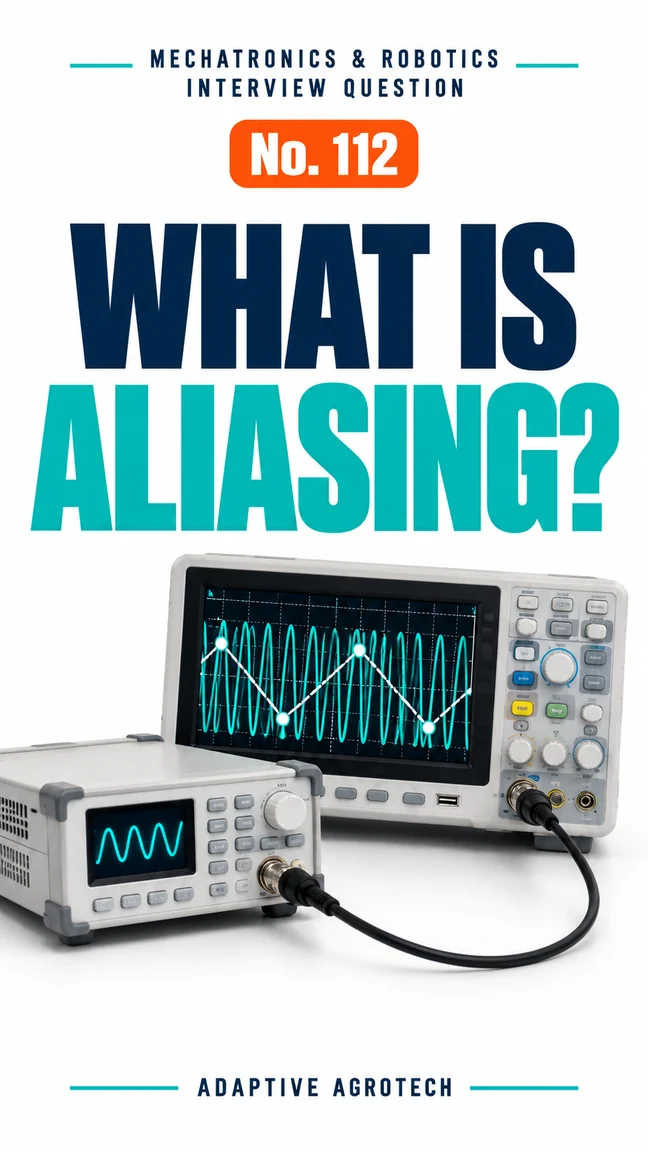
Sensors & perceptionNo. 112

What is Aliasing?

Aliasing makes distinct input frequencies indistinguishable after sampling, potentially turning fast vibration into an apparent slow signal. Analog bandwidth limiting and a sufficient sample rate must prevent the ambiguity before conversion.

Watch & explore
Communication & networksNo. 120

What is CANopen?

CANopen adds device profiles and communication meaning above CAN. Object dictionaries organize settings and process values, while SDO and PDO mechanisms support configuration and time critical exchange between compatible robot devices.

Watch & explore
Communication & networksNo. 125

What is I2C?

I2C connects a controller to addressed chips using shared clock and data lines. Pull-ups create the high level, and correct addresses, capacitance, and electrical loading are essential for reliable short interchip connections.

Watch & explore
Robot kinematicsNo. 148

What Is a Manipulability Ellipsoid?

A manipulability ellipsoid shows how a unit joint velocity sphere maps to tool velocities through the Jacobian. Its axes expose easier and lost local directions, with meaning dependent on coordinates, units, and the velocity metric.

Watch & explore
Robot kinematicsNo. 151

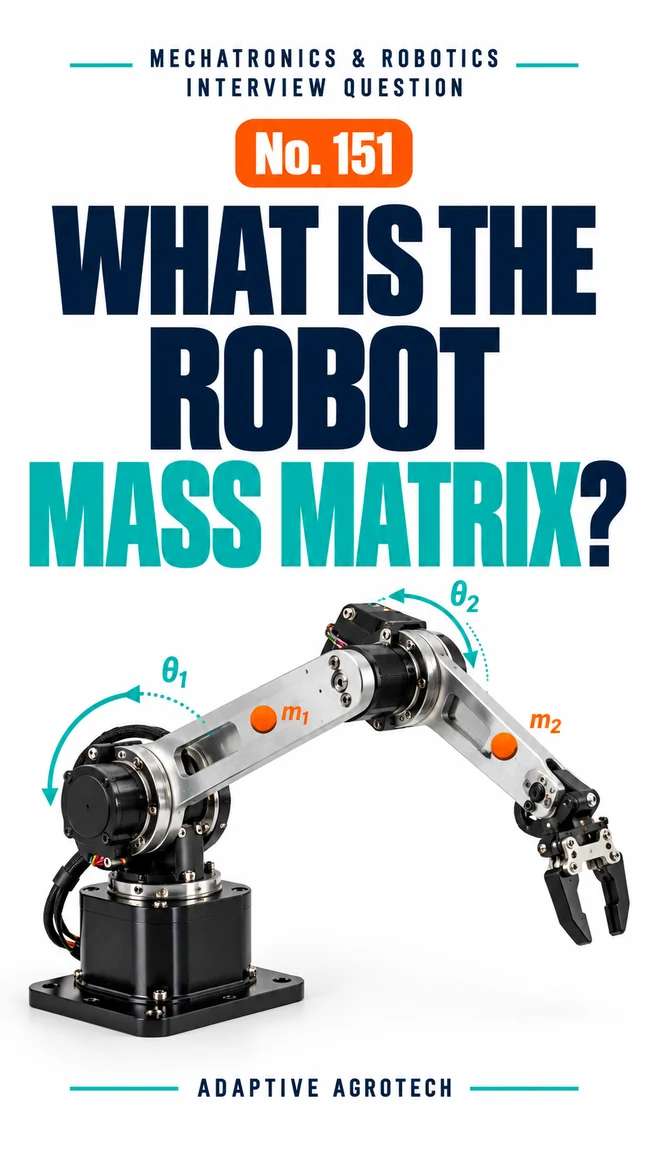
What Is the Robot Mass Matrix?

The robot mass matrix expresses configuration dependent inertia and coupling between joint accelerations and effort. It also defines kinetic energy, and a physically valid matrix in independent rigid robot coordinates is symmetric and positive definite.

Watch & explore