Skip to content
Adaptive AgroTech NetworkUniversity of Southern Denmark · SDU Drone Center
Robotics · Mechatronics · Intelligent systems

Short videos.
Lasting understanding.

Explore one engineering idea at a time. Watch a short lesson, read the key concepts and test your understanding before your next interview, project or class.

196 topics found

Video · Key ideas · Check your understanding

Motion planningNo. 084

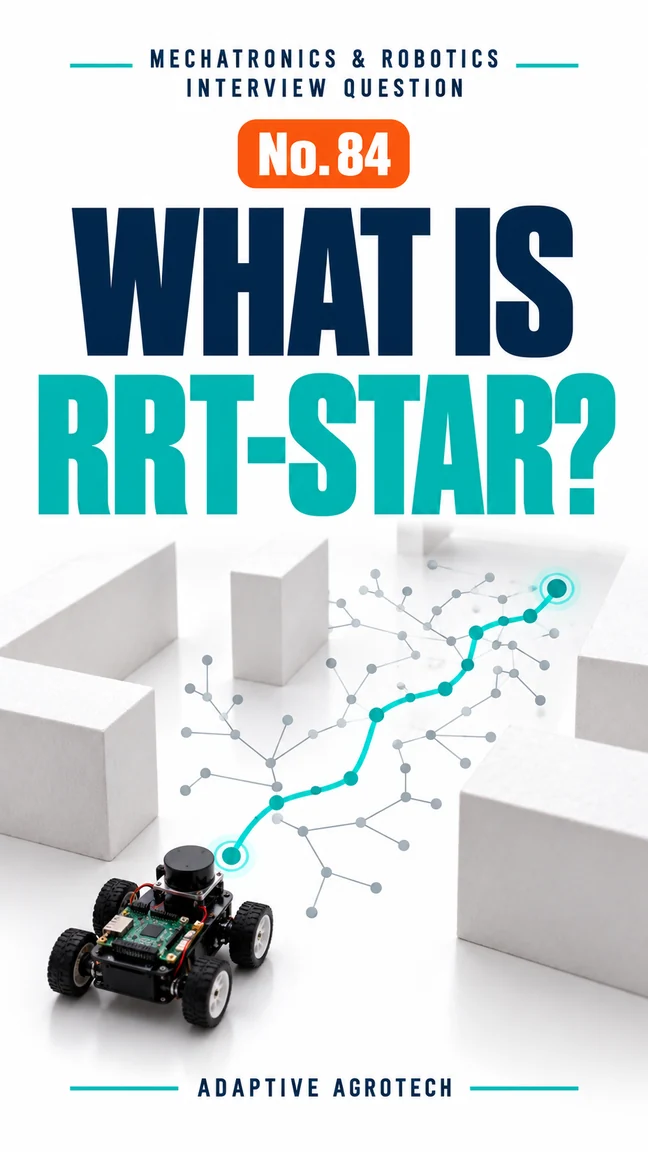
What is RRT-Star?

RRT* improves a sampled search tree by choosing lower cost parents and rewiring nearby connections. Continued search can reduce path cost, while asymptotic optimality does not guarantee an exact optimum in a short run.

Watch & explore
Motion planningNo. 086

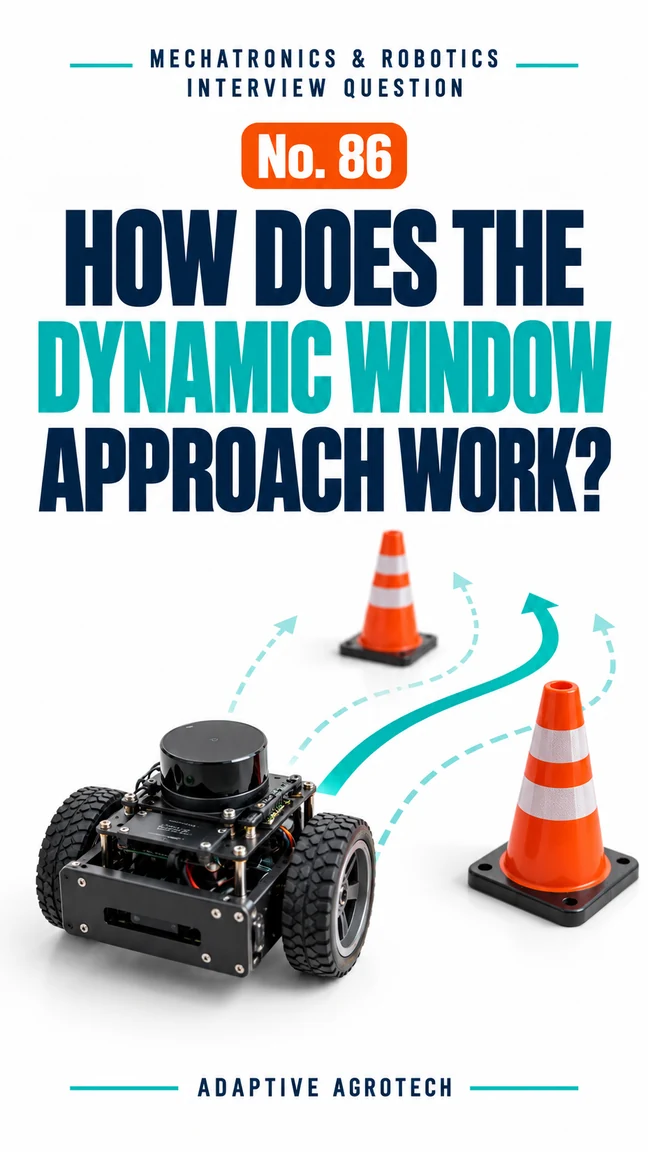
What is the Dynamic Window Approach?

The dynamic window approach selects a reachable speed and turn rate by predicting short trajectories. It rejects commands that cannot stop before obstacles, then scores remaining candidates for progress and clearance.

Watch & explore
Motion planningNo. 088

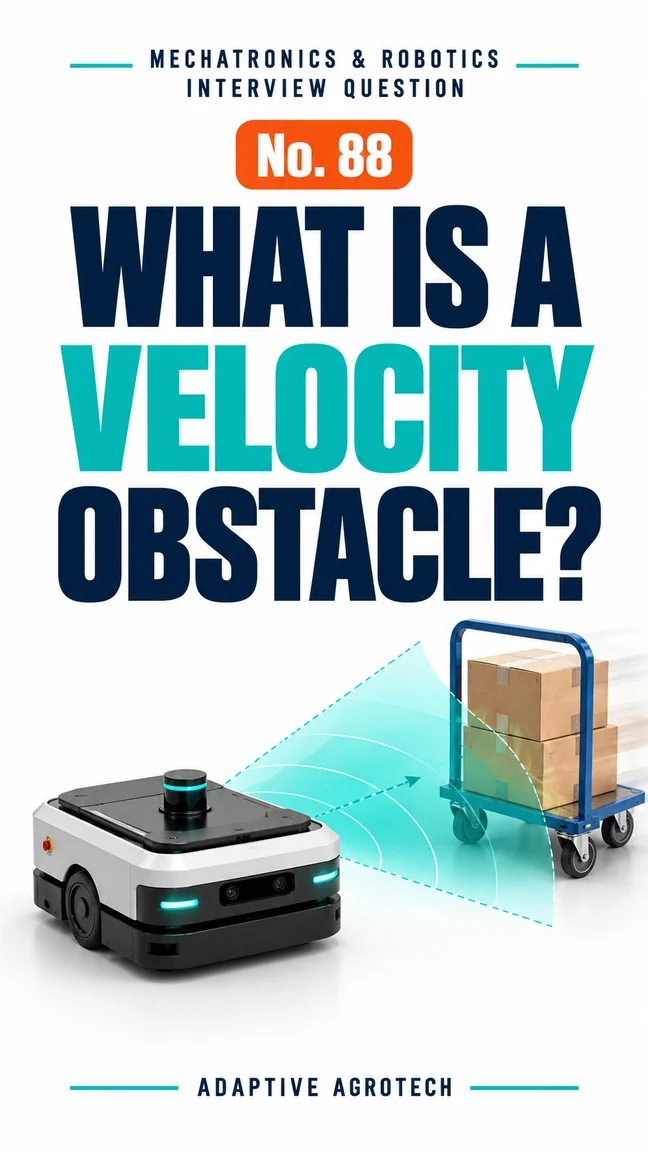
What is a Velocity Obstacle?

A velocity obstacle identifies robot velocities that predict collision with a moving object. Relative geometry and assumed motion define the forbidden set; selected alternatives must also be reachable and updated as motion changes.

Watch & explore
Motion planningNo. 092

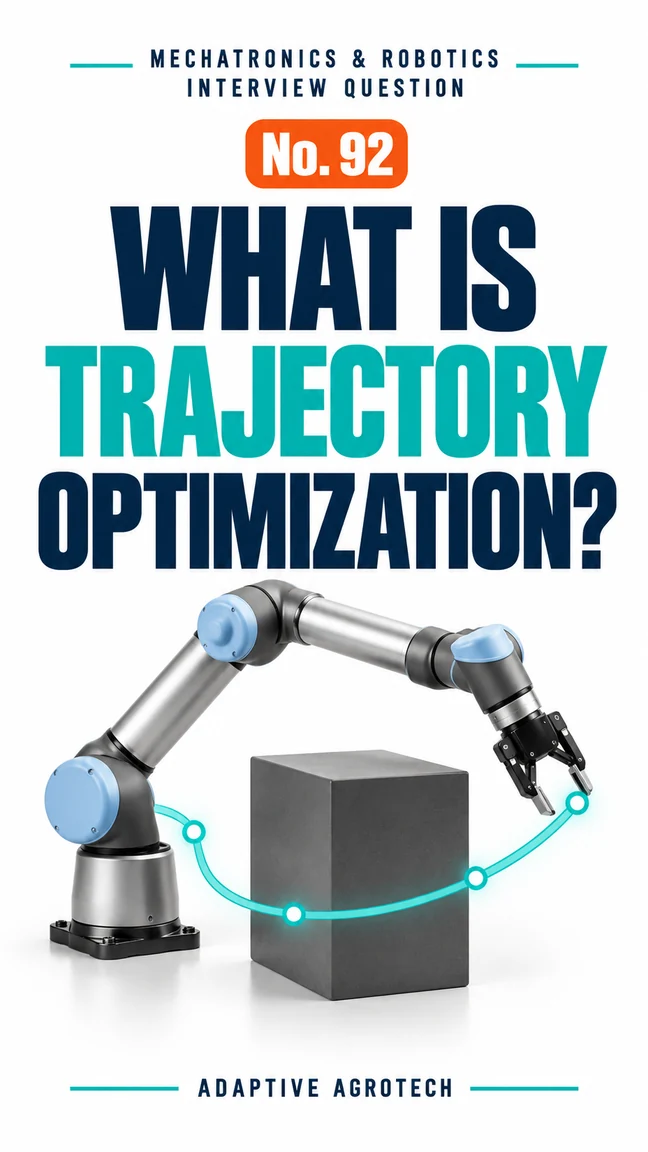
What is Trajectory Optimization?

Trajectory optimization adjusts robot states and commands to improve a chosen objective while satisfying constraints. Solver results depend on initialization, and a locally optimal sampled trajectory still needs continuous motion clearance checks.

Watch & explore
Robot kinematicsNo. 093

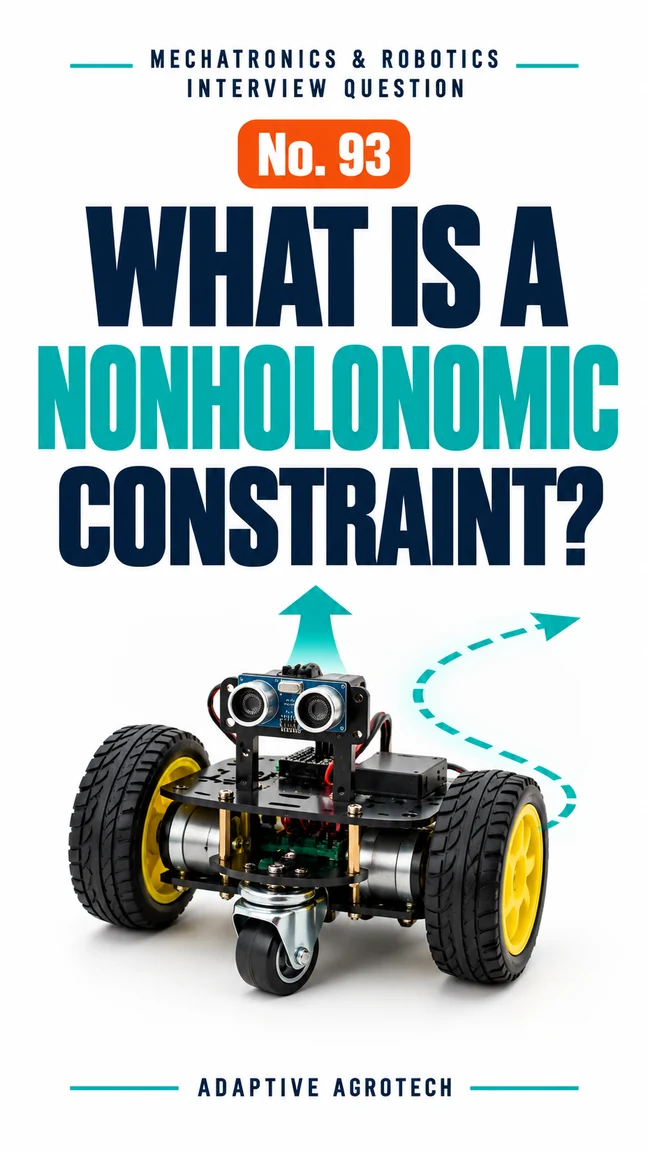
What is a Nonholonomic Constraint?

A nonholonomic constraint limits instantaneous velocities without reducing all positions reachable over time. Rolling wheels illustrate this distinction: a car cannot slide sideways immediately, yet sequences of arcs can change its lateral position.

Watch & explore
Robot kinematicsNo. 095

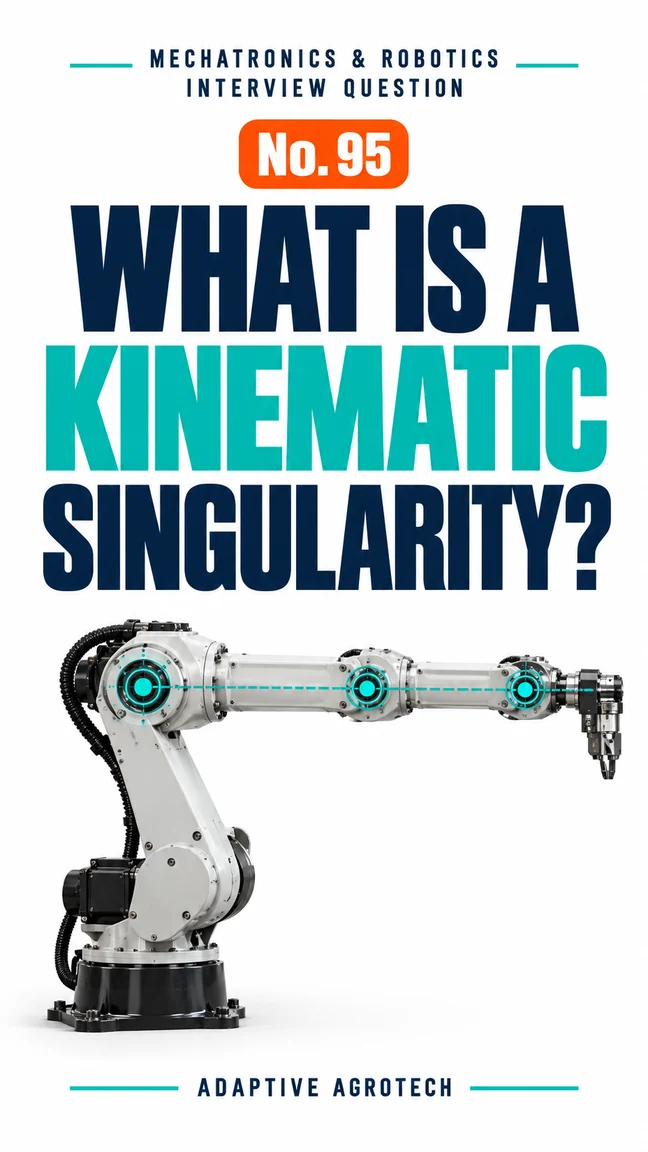
What is a Kinematic Singularity?

A kinematic singularity occurs where the robot Jacobian loses rank and an instantaneous tool motion direction disappears. Near such poses, inverse velocity commands can grow large even when a target position remains reachable.

Watch & explore
Robot kinematicsNo. 096

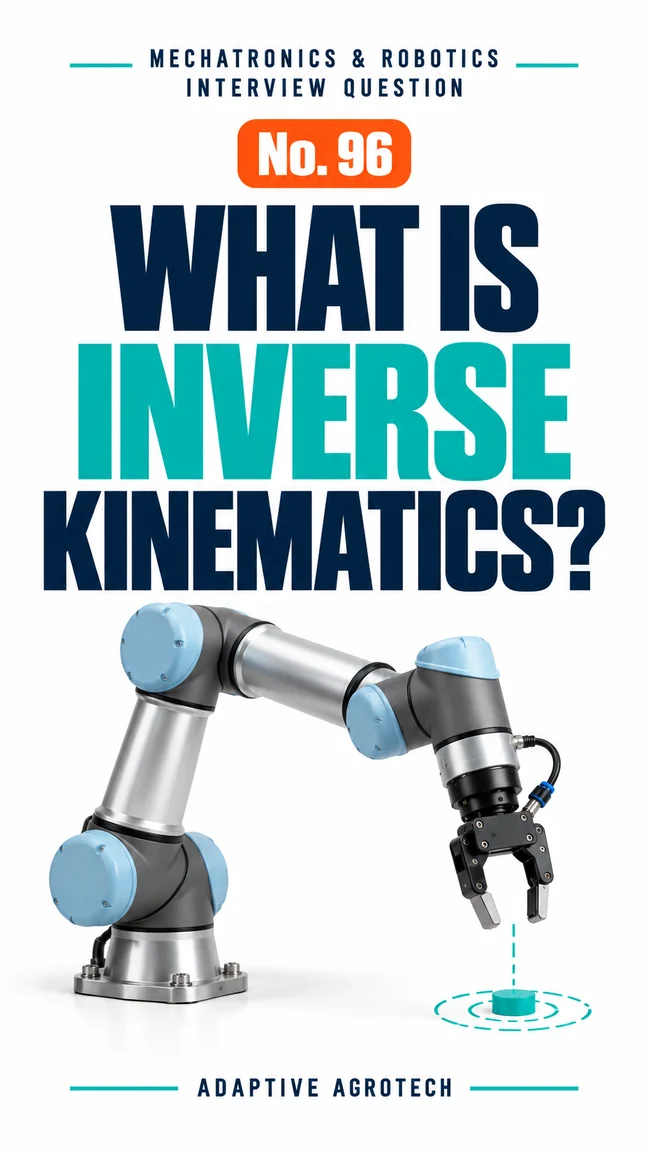
What is Inverse Kinematics?

Inverse kinematics finds joint values for a desired tool pose. A target can have several solutions or none, so solution choice must respect joint limits and the complete arm motion must be checked.

Watch & explore
Embedded electronicsNo. 097

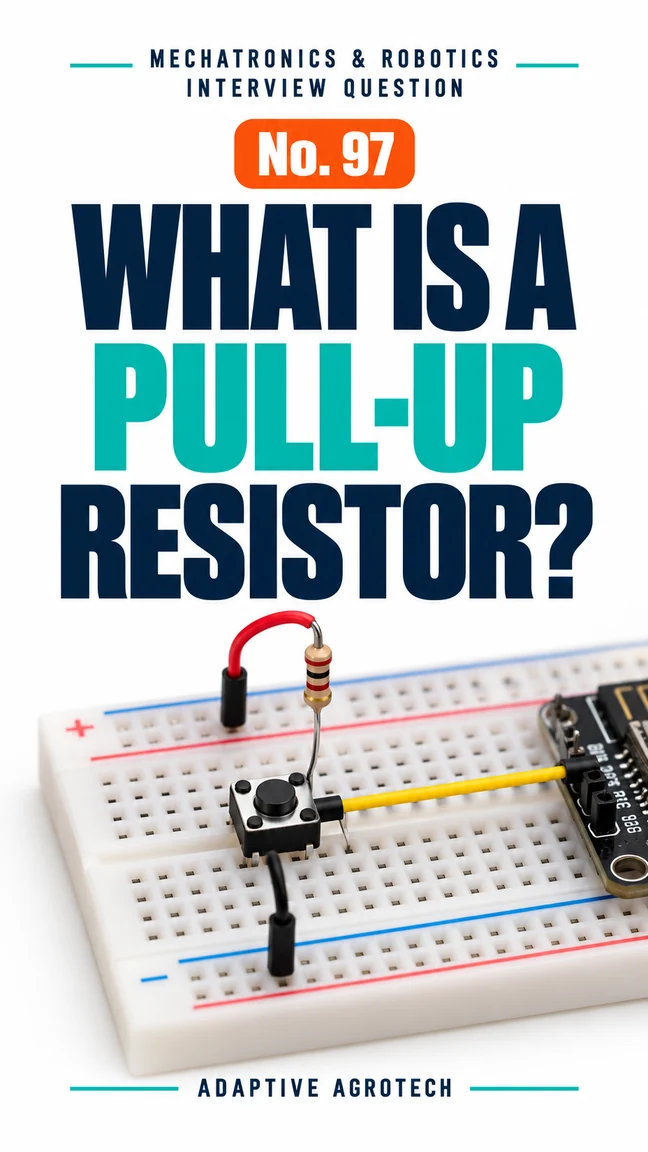
What is a Pull-Up Resistor?

A pull-up resistor defines a digital input’s idle high state while allowing a switch to pull it low. Its resistance must balance leakage, signal rise time, current, and voltage limits.

Watch & explore
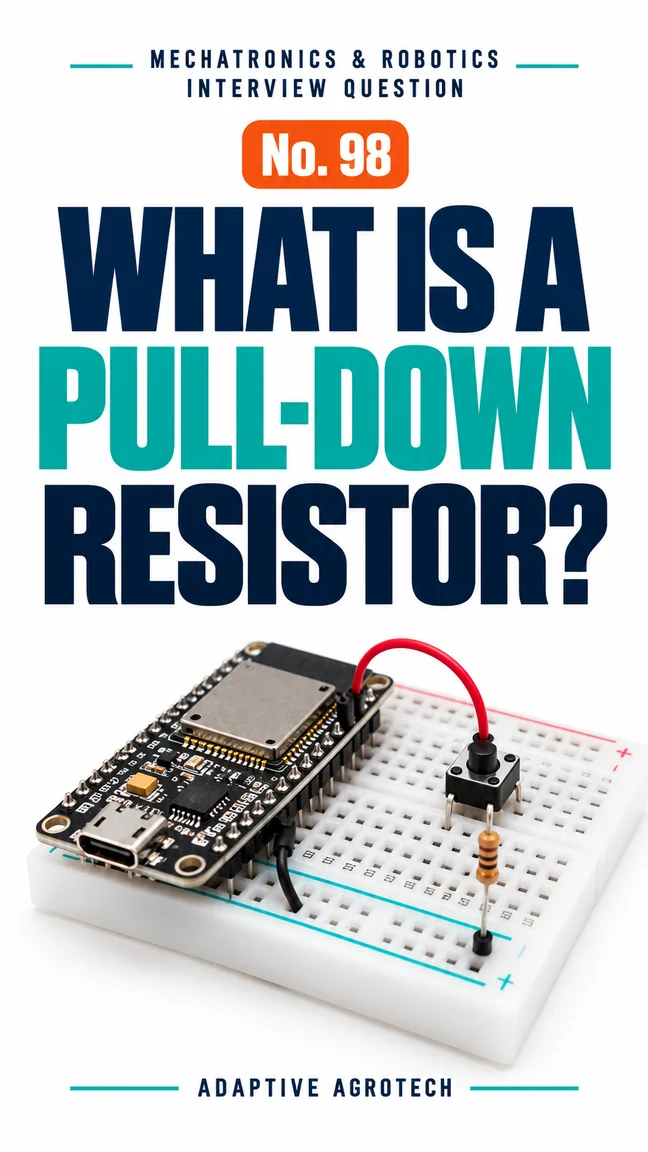
Embedded electronicsNo. 098

What is a Pull-Down Resistor?

A pull-down resistor holds an undriven digital input low and limits current when a switch drives it high. Reliable selection depends on input leakage, logic thresholds, and the circuit’s susceptibility to noise.

Watch & explore
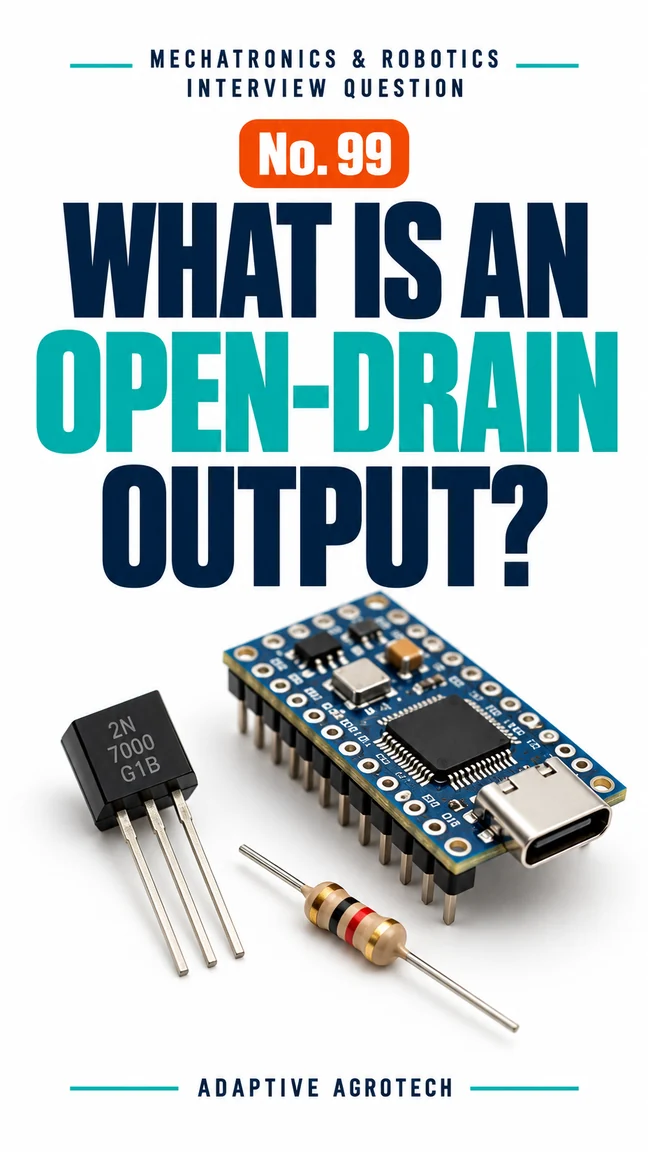
Embedded electronicsNo. 099

What is an Open-Drain Output?

An open-drain output either pulls a line low or releases it; an external pull-up supplies the high state. Compatible outputs can share a line, subject to voltage, sink current, and rise time limits.

Watch & explore
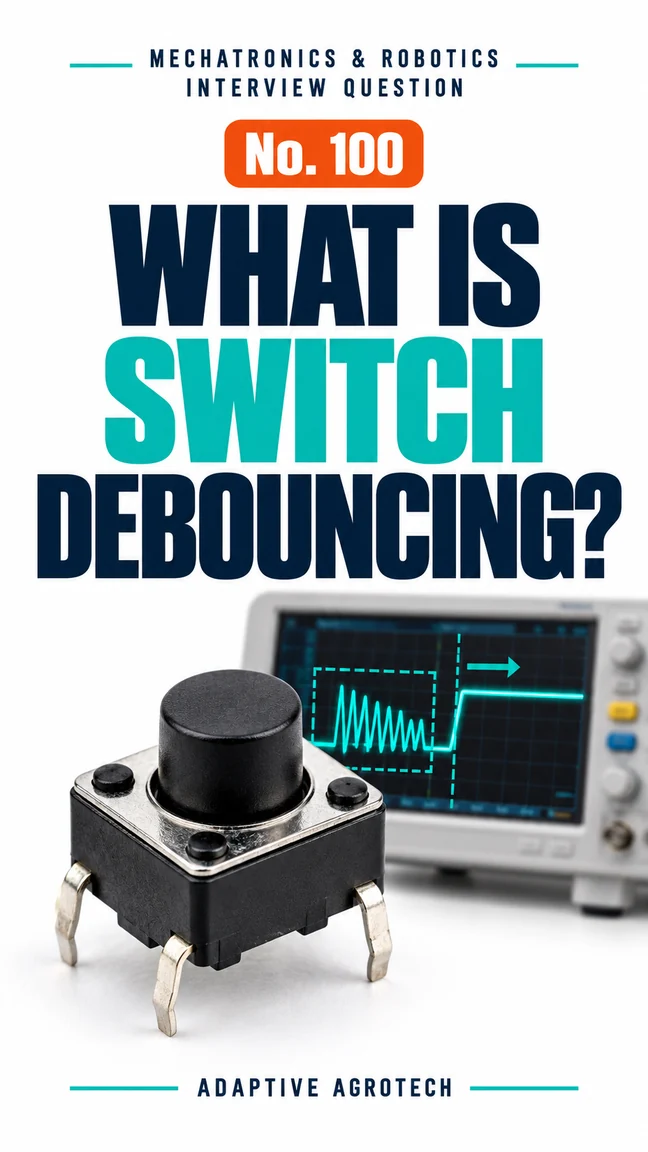
Embedded electronicsNo. 100

What is Switch Debouncing?

Switch debouncing prevents mechanical contact bounce from becoming multiple digital events. A stable state test or suitable hardware rejects brief transitions, while the chosen delay must preserve valid short presses.

Watch & explore
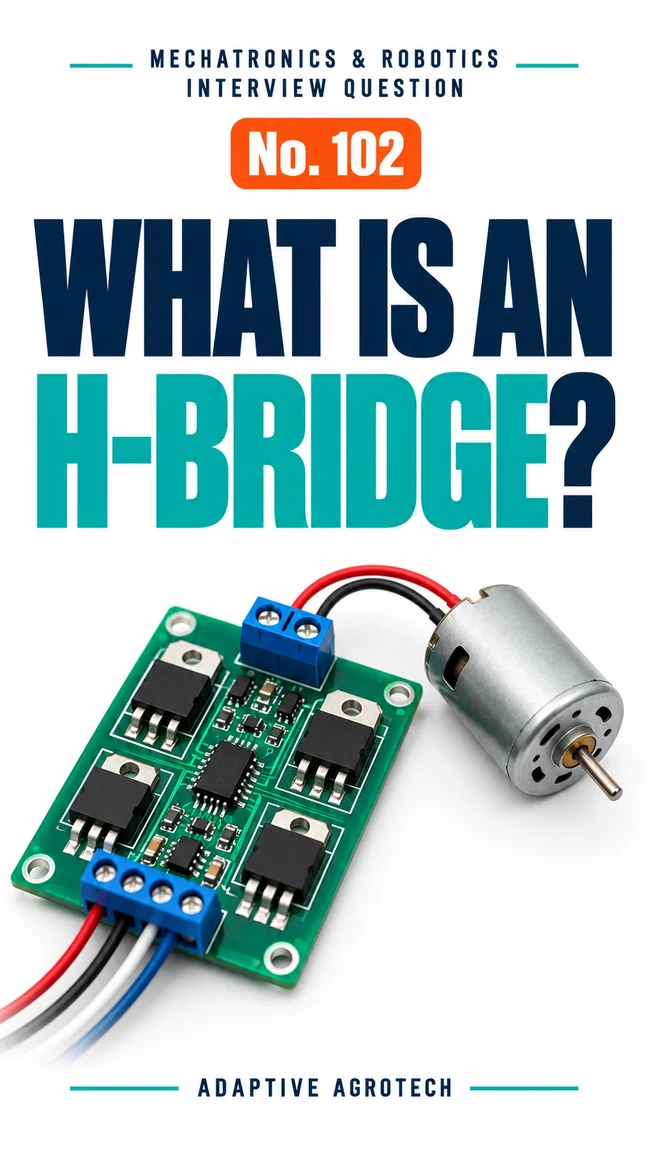
Embedded electronicsNo. 102

What is an H-Bridge?

An H-bridge reverses motor current using four switches arranged around the motor. Diagonal pairs set direction, while timing, current limits, and recirculation paths prevent damaging supply shorts and manage winding current.

Watch & explore
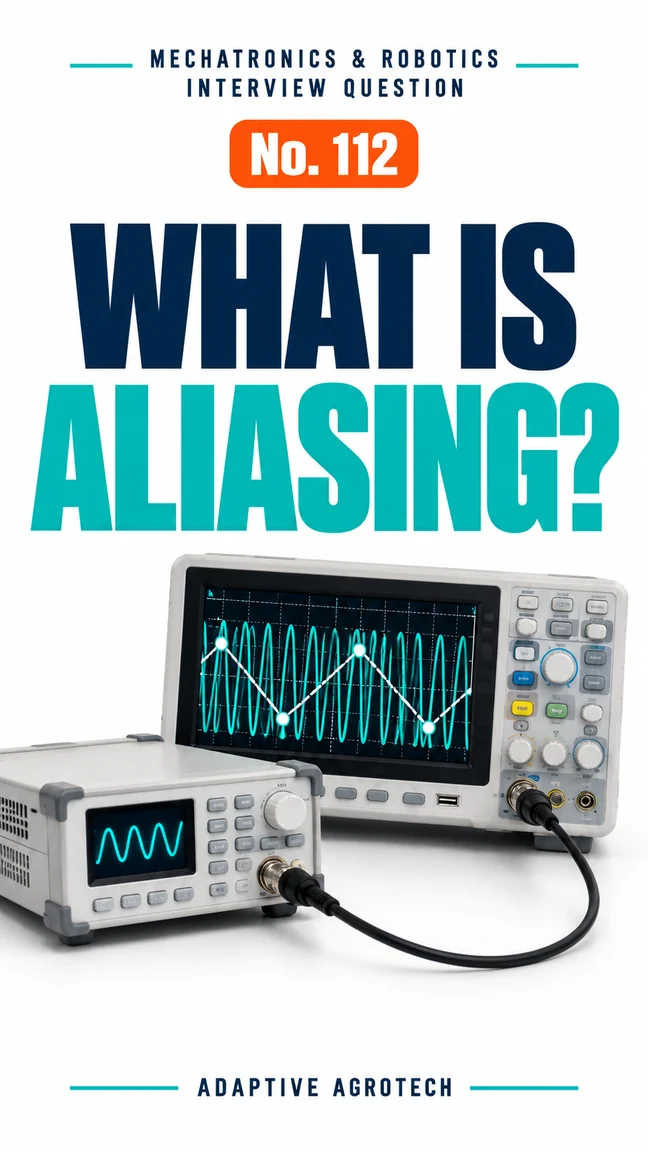
Sensors & perceptionNo. 112

What is Aliasing?

Aliasing makes distinct input frequencies indistinguishable after sampling, potentially turning fast vibration into an apparent slow signal. Analog bandwidth limiting and a sufficient sample rate must prevent the ambiguity before conversion.

Watch & explore
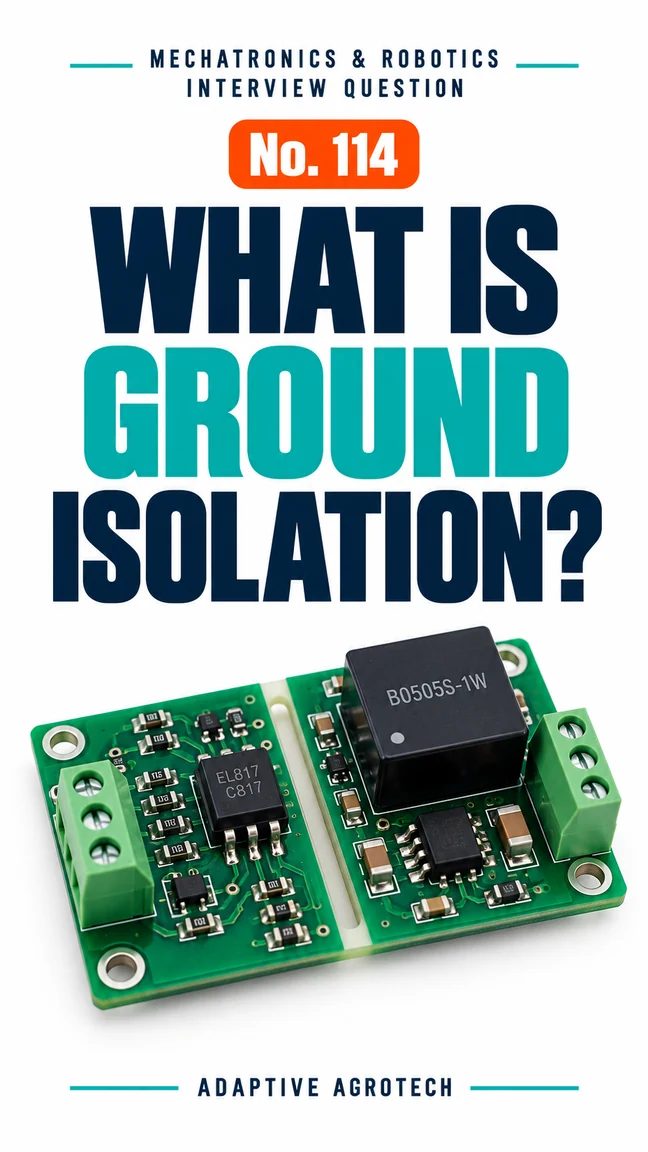
Embedded electronicsNo. 114

What is Ground Isolation?

Ground isolation separates circuit grounds while allowing signals across a nonconductive coupling barrier. It can interrupt ground loops, but power connections and complete wiring must preserve the intended boundary and voltage ratings.

Watch & explore
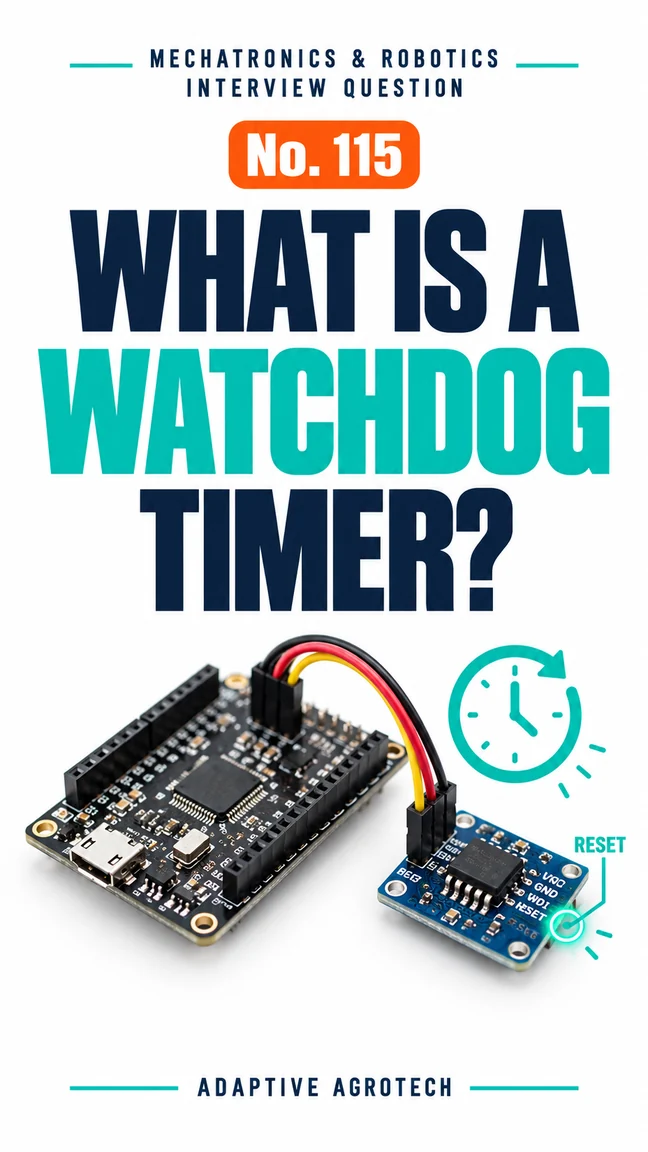
Embedded electronicsNo. 115

What is a Watchdog Timer?

A watchdog timer supervises software progress by requiring service before a deadline. Feeding should represent real task health, and recovery must disable unwanted motion rather than assuming a controller reset is sufficient.

Watch & explore
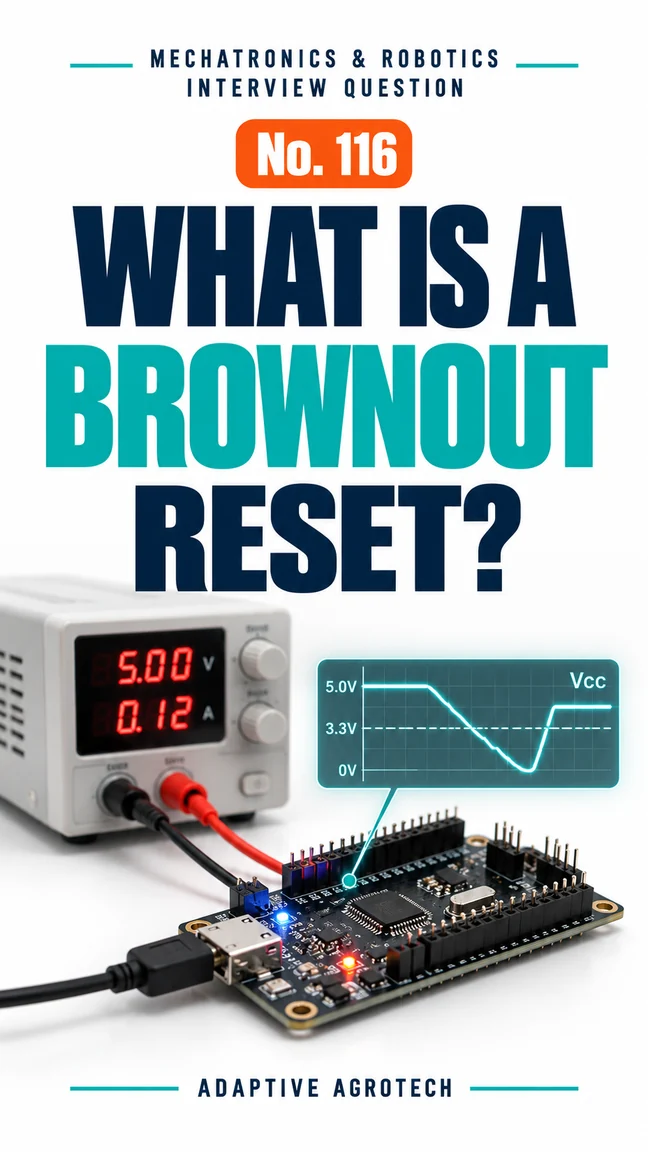
Embedded electronicsNo. 116

What is a Brownout Reset?

A brownout reset holds or resets a controller when its supply falls below a reliable operating threshold. Motor startup can cause brief local voltage dips, so diagnosis should measure at the controller and improve power delivery.

Watch & explore
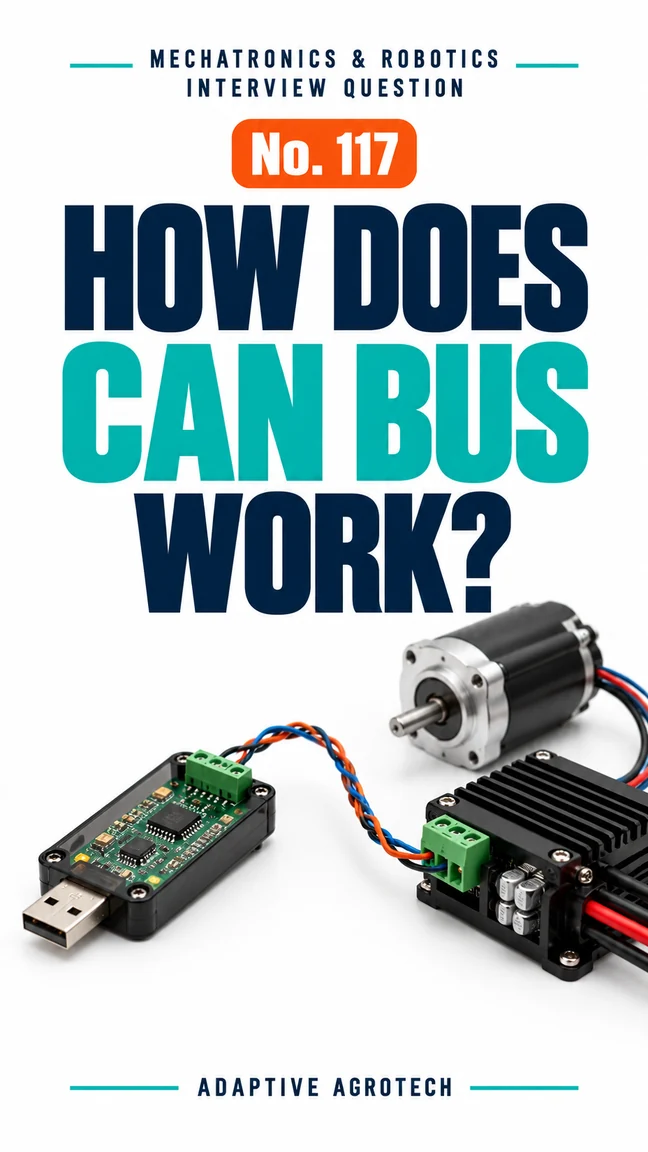
Communication & networksNo. 117

What is CAN Bus?

CAN links multiple electronic control units through a shared message bus. Frame identifiers support priority and data selection, while delivery checks still need application feedback and stale-command supervision to confirm robot behavior.

Watch & explore
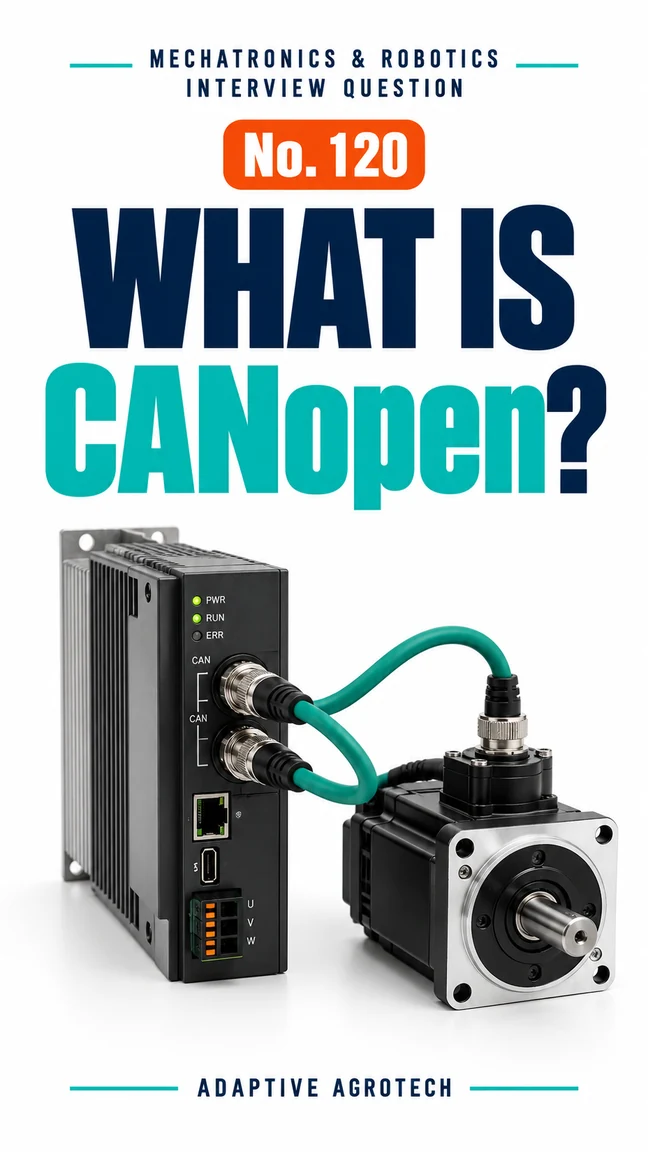
Communication & networksNo. 120

What is CANopen?

CANopen adds device profiles and communication meaning above CAN. Object dictionaries organize settings and process values, while SDO and PDO mechanisms support configuration and time critical exchange between compatible robot devices.

Watch & explore
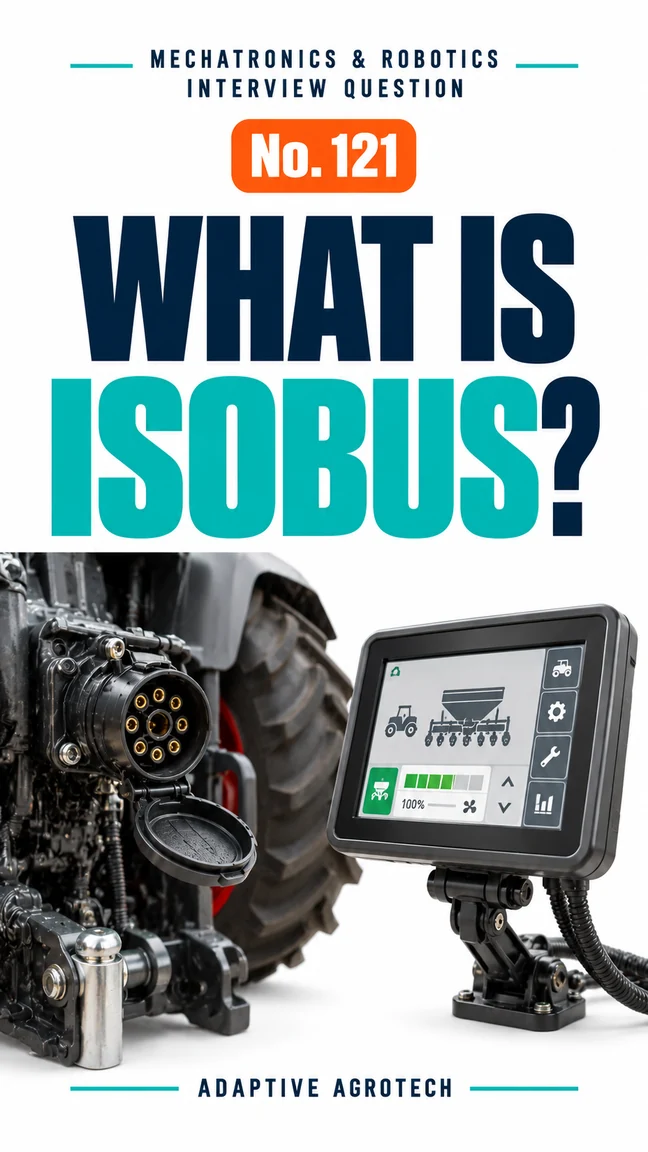
Communication & networksNo. 121

What is ISOBUS?

ISOBUS defines common communication functions for agricultural machines under ISO 11783. Built above CAN, it supports implement terminals and task data, but compatibility depends on the specific functions supported by both machines.

Watch & explore
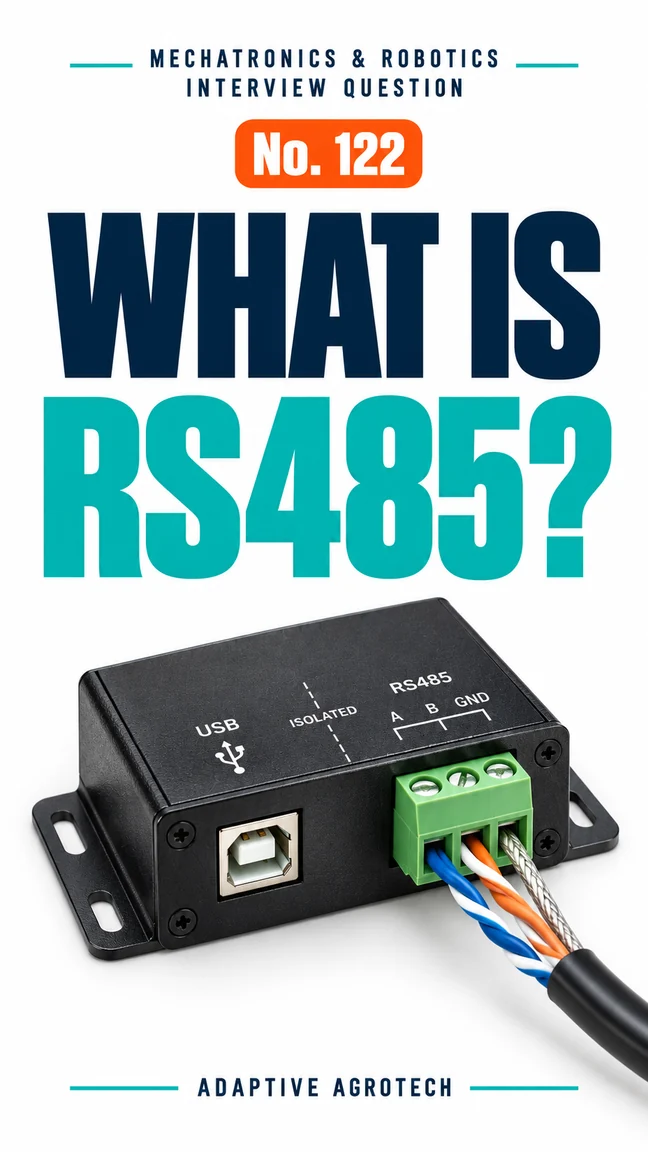
Communication & networksNo. 122

What is RS485?

RS485 specifies a differential electrical interface for serial communication. Multiple devices can share a half duplex pair with one active transmitter, while message structure, addressing, and timing come from a separate protocol.

Watch & explore
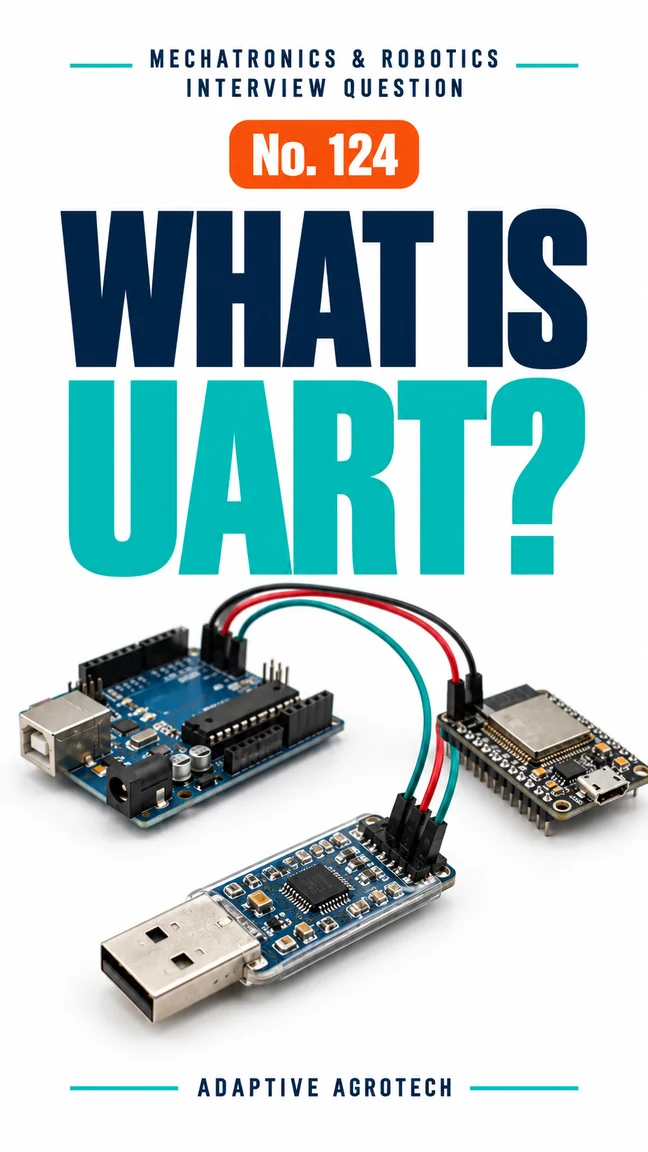
Communication & networksNo. 124

What is UART?

A UART converts bytes to asynchronous serial bits and back without a shared clock wire. Both endpoints need matching baud and framing, suitable logic levels, and crossed transmit and receive connections.

Watch & explore
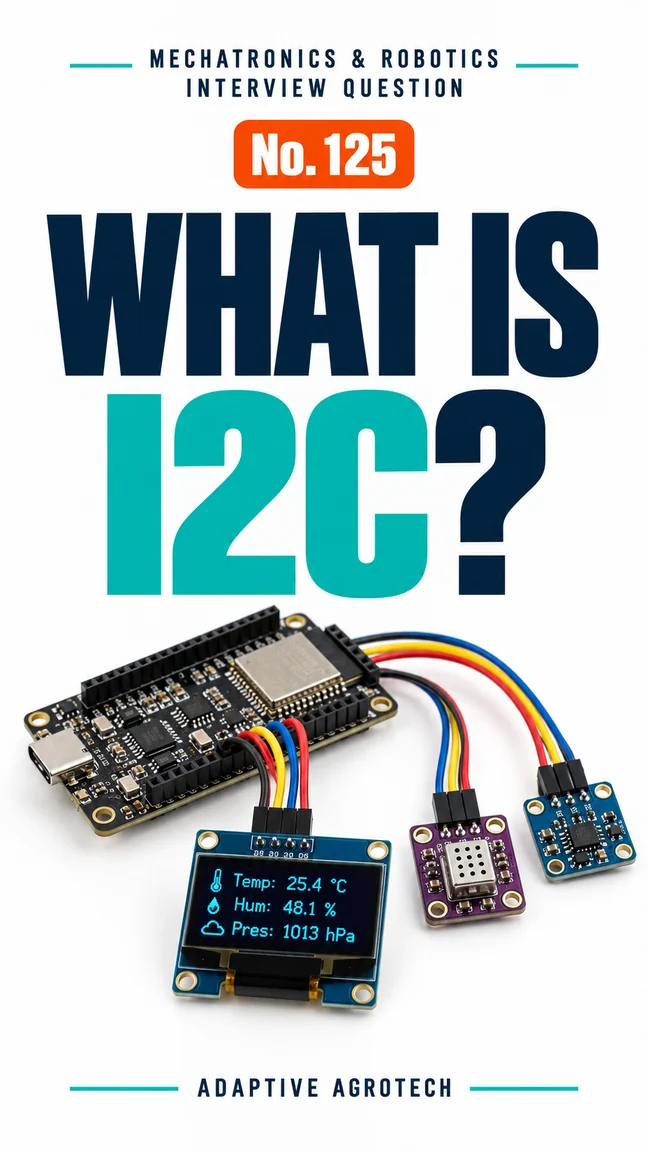
Communication & networksNo. 125

What is I2C?

I2C connects a controller to addressed chips using shared clock and data lines. Pull-ups create the high level, and correct addresses, capacitance, and electrical loading are essential for reliable short interchip connections.

Watch & explore