Skip to content
Adaptive AgroTech NetworkUniversity of Southern Denmark · SDU Drone Center
Robotics · Mechatronics · Intelligent systems

Short videos.
Lasting understanding.

Explore one engineering idea at a time. Watch a short lesson, read the key concepts and test your understanding before your next interview, project or class.

307 topics found

Video · Key ideas · Check your understanding

Localization & estimationNo. 049

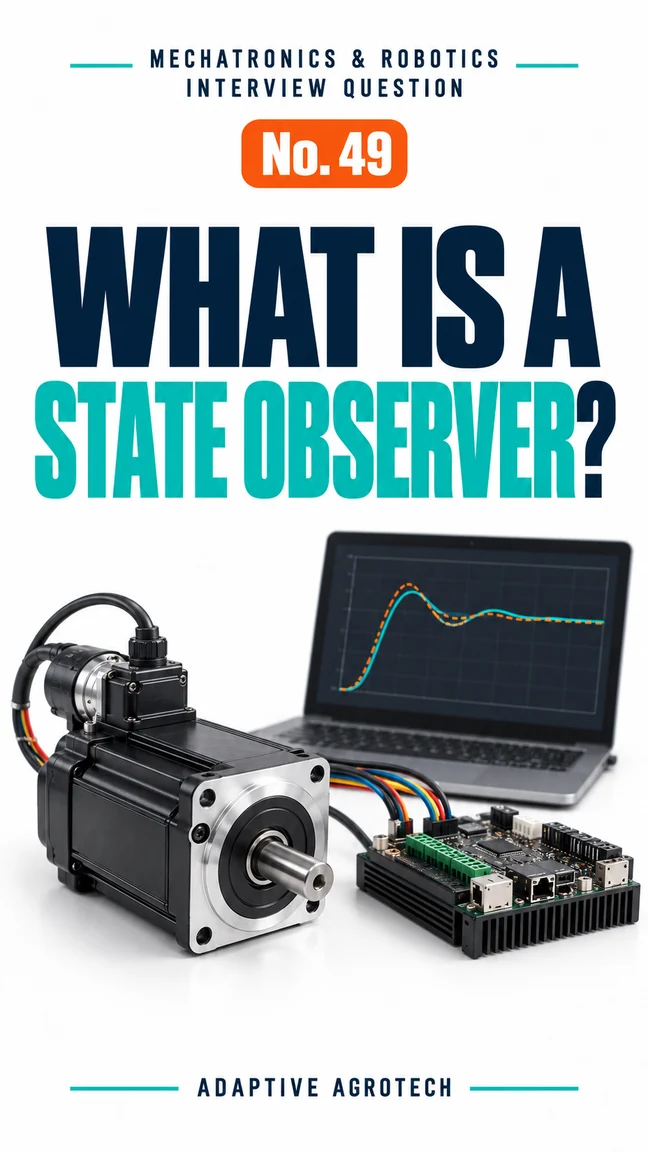
What is a State Observer?

A state observer estimates internal variables by predicting with a model and correcting from measured outputs. Observer gain sets the correction response, with observability, noise sensitivity, and model error limiting the result.

Watch & explore
Control systemsNo. 050

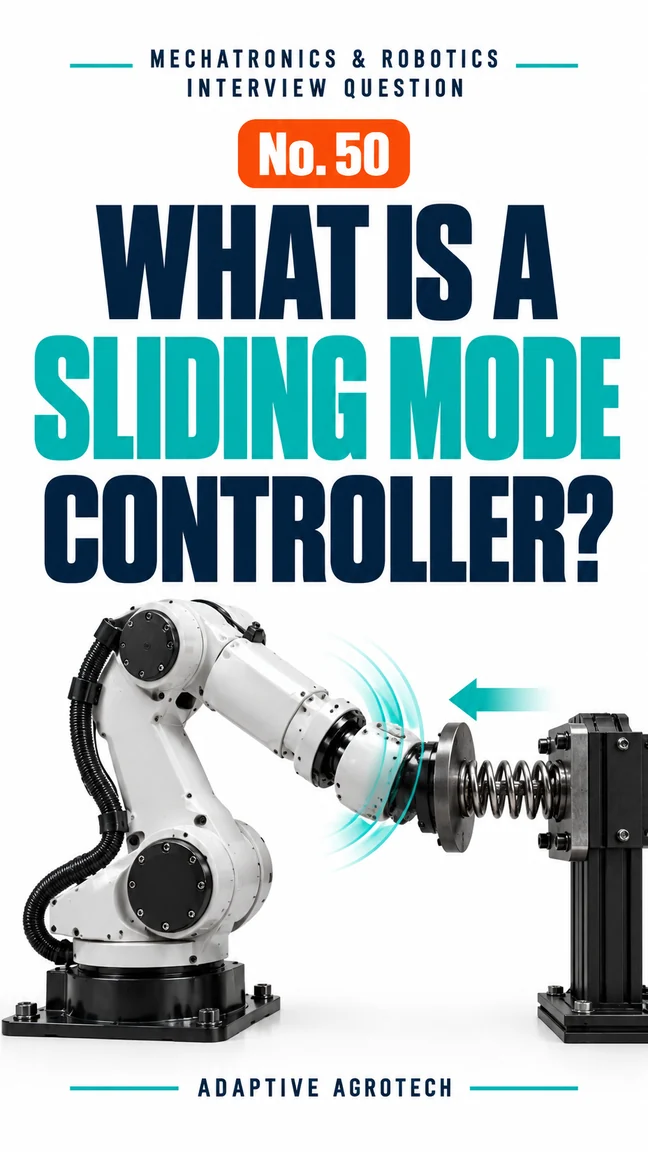
What is a Sliding Mode Controller?

Sliding mode control drives state toward a designed tracking surface using a switching term. It can address certain bounded uncertainties, but chattering and finite actuator effort require attention when realizing the design.

Watch & explore
Control systemsNo. 051

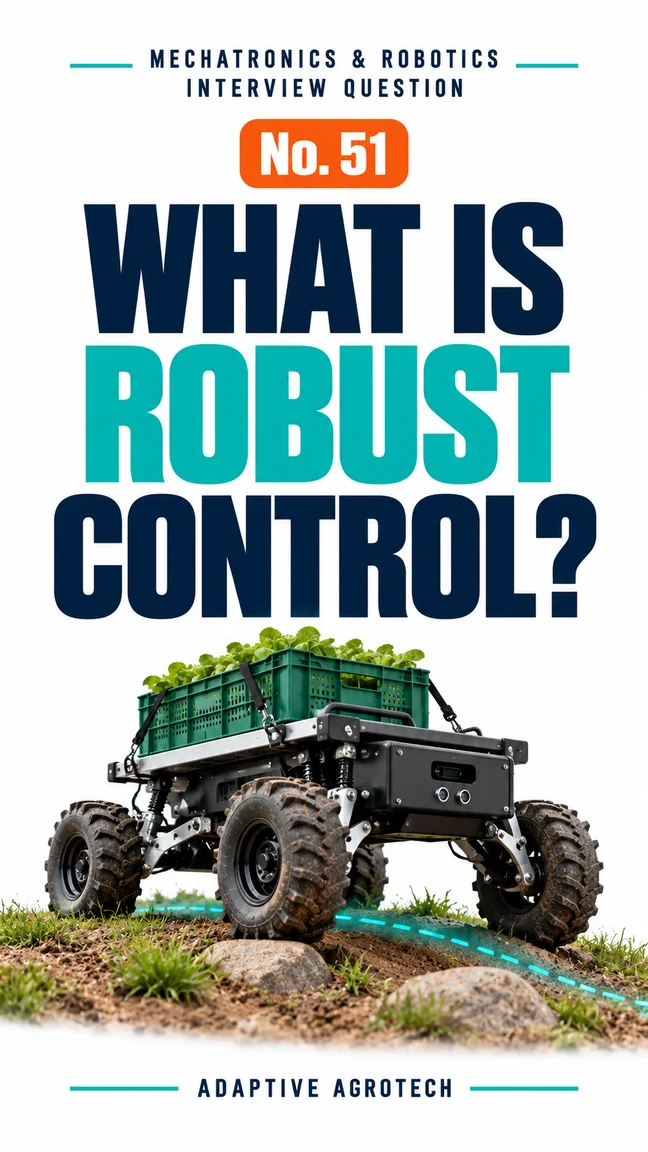
What is Robust Control?

Robust control includes a specified uncertainty set in its design and checks performance across a family of plants. Any guarantee remains limited to that set rather than covering all possible hardware differences.

Watch & explore
Control systemsNo. 052

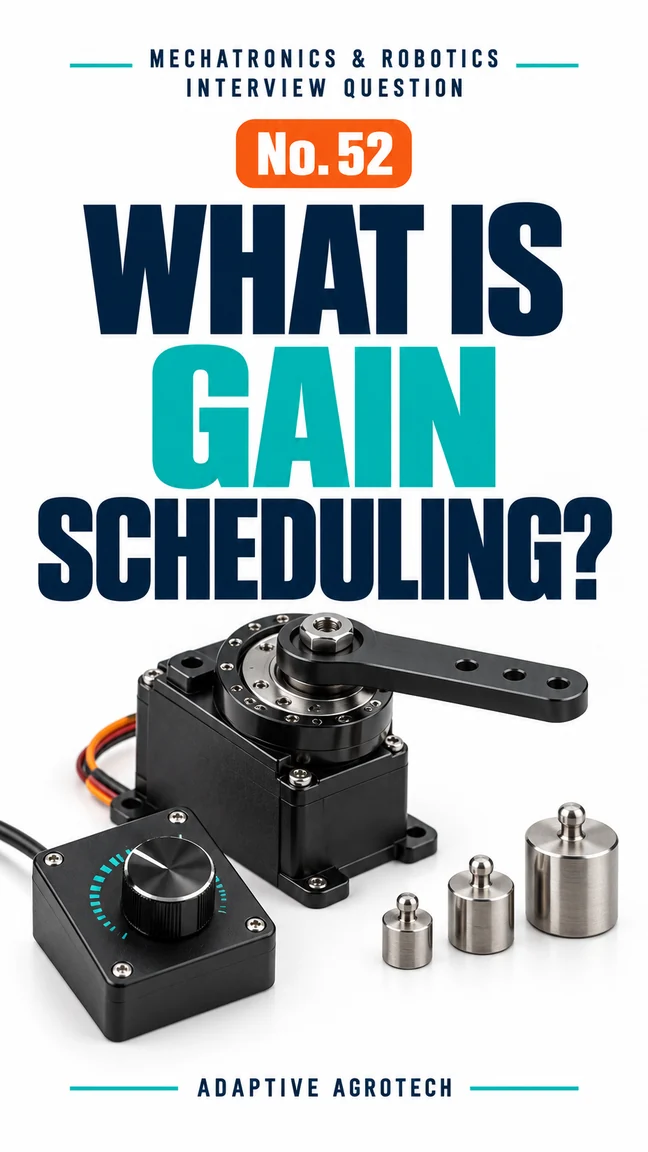
What is Gain Scheduling?

Gain scheduling selects or blends controllers using measured operating conditions. Designed gains can accommodate changing dynamics, but stable individual operating points do not by themselves establish stable transitions throughout the schedule.

Watch & explore
Control systemsNo. 053

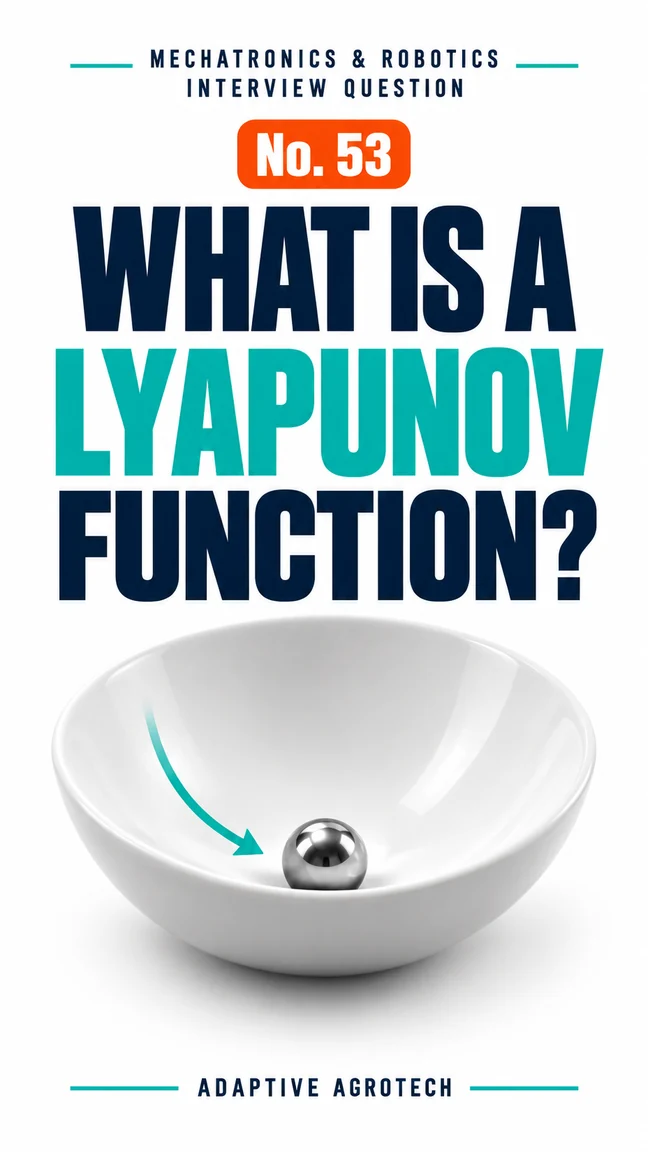
What is a Lyapunov Function?

A Lyapunov function provides a scalar route to analyzing stability without solving every trajectory. Its value and change along motion support a claim whose scope depends on the theorem's assumptions and region.

Watch & explore
Control systemsNo. 054

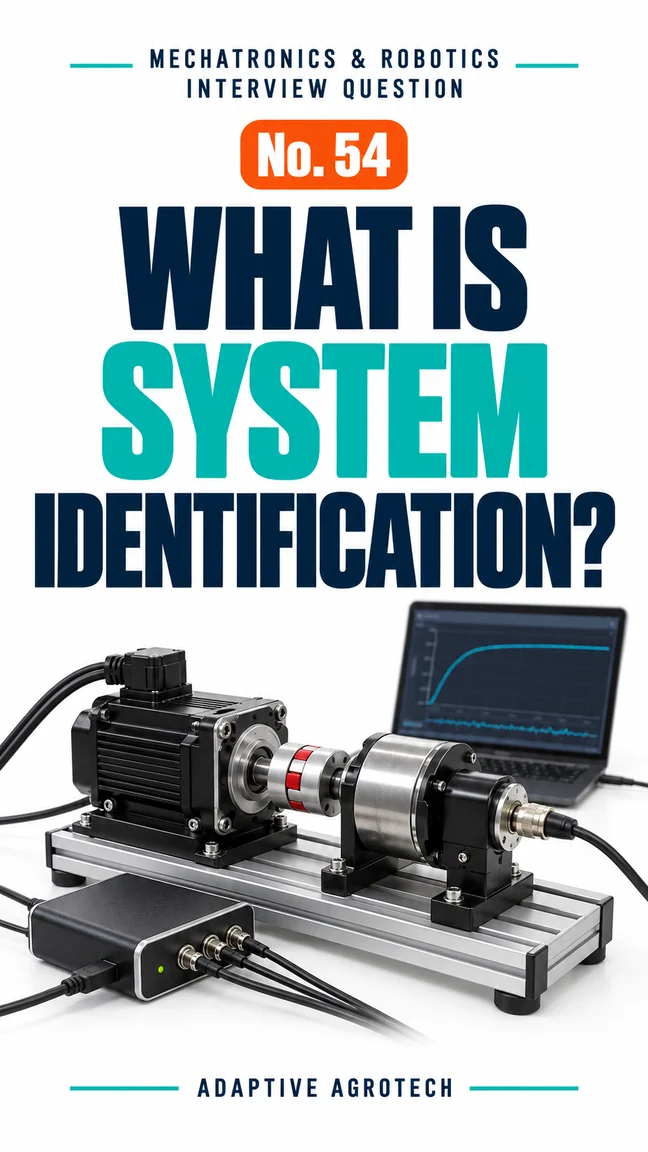
What is System Identification?

System identification fits a dynamic model from recorded inputs and outputs. Informative excitation reveals relevant behavior, and separate validation data helps distinguish useful dynamics from overfitting, delay, bias, or changing operating conditions.

Watch & explore
Control systemsNo. 055

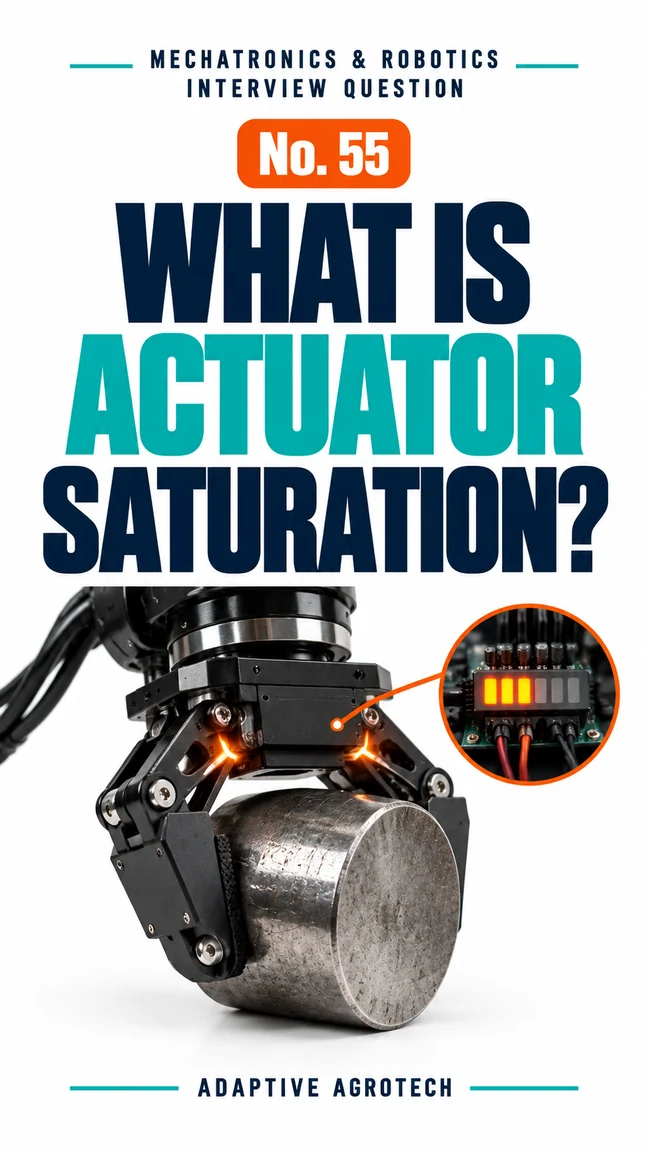
What is Actuator Saturation?

Actuator saturation clips commands at physical voltage, current, or effort limits. The delivered motion then differs from an unlimited model, potentially causing slow tracking or integral windup and requiring realistic limits in control design.

Watch & explore
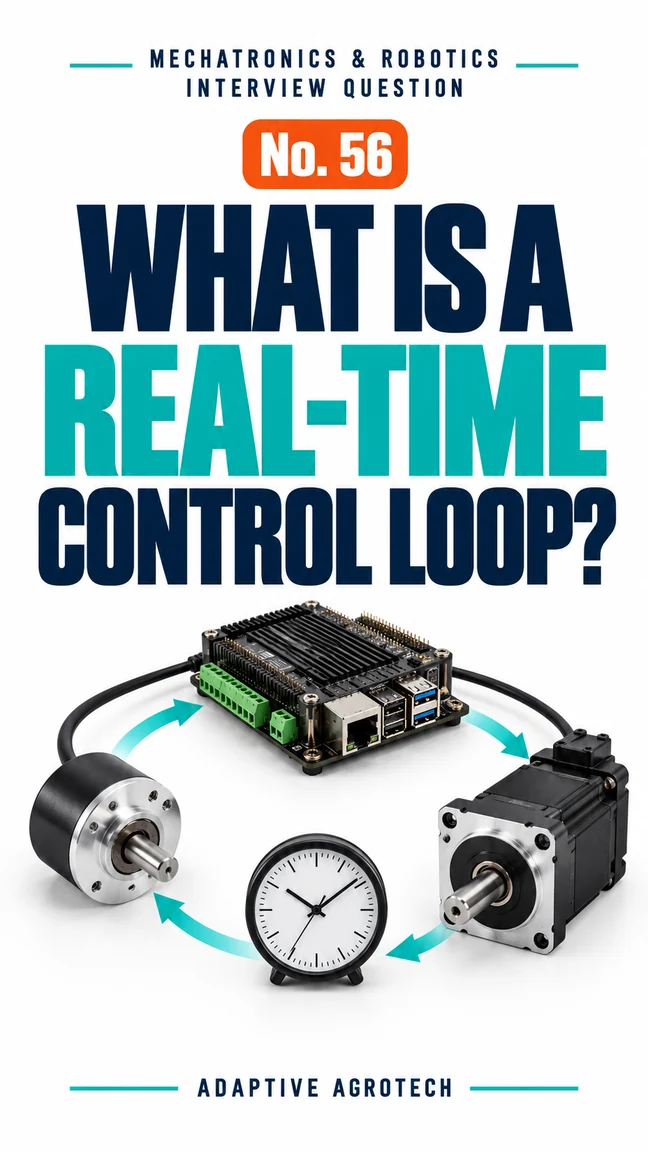
Embedded electronicsNo. 056

What is a Real-Time Control Loop?

Real-time control requires completion before a defined deadline rather than merely good average speed. Sensor acquisition, computation, and output share the timing budget, and worst-case delay and jitter determine whether the chain meets it.

Watch & explore
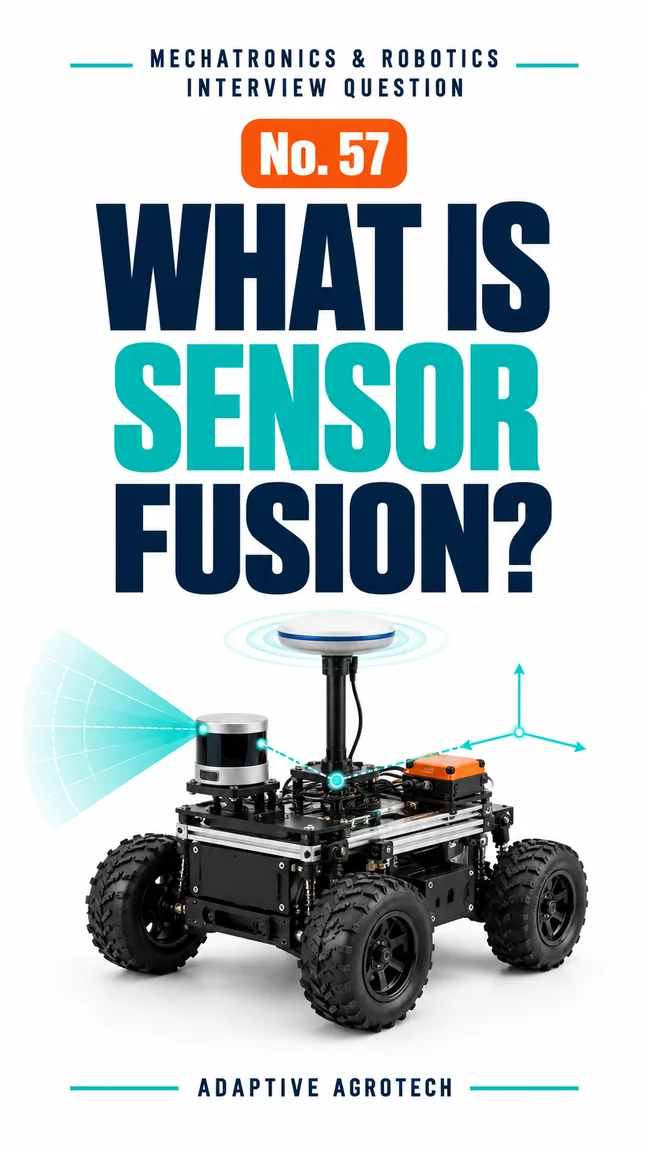
Localization & estimationNo. 057

What is Sensor Fusion?

Sensor fusion estimates one shared state from complementary measurements. Fast wheel and gyro updates bridge position fixes, while sound timing, frames, uncertainty, and correlation handling prevent misleading confidence in the fused result.

Watch & explore
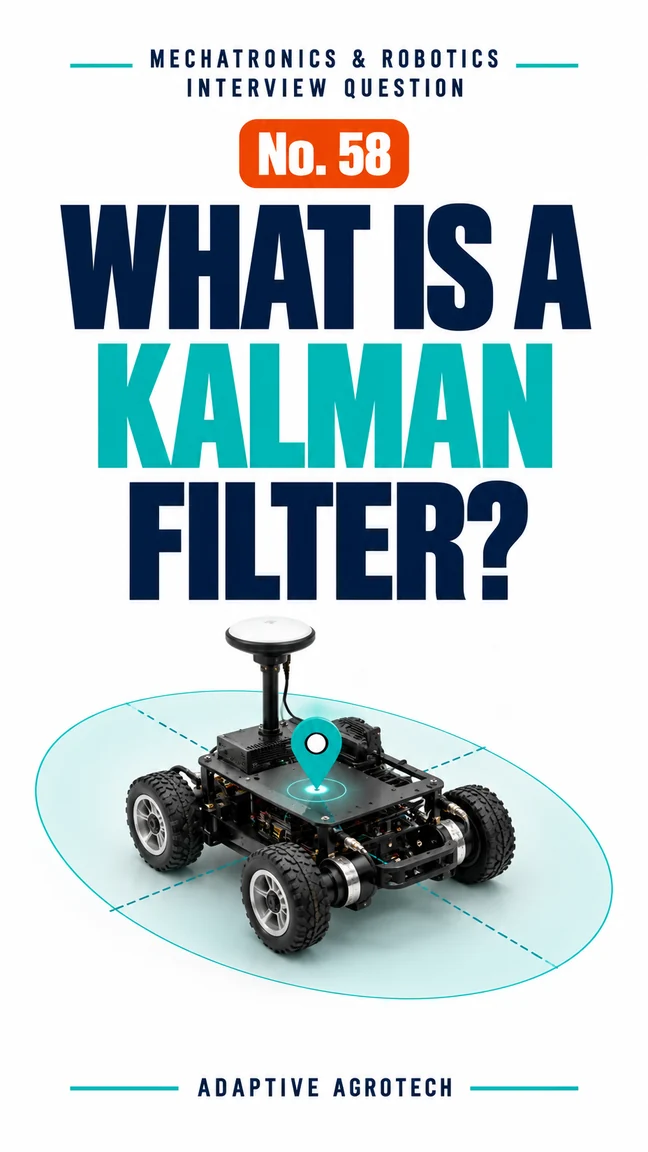
Localization & estimationNo. 058

What is a Kalman Filter?

A Kalman filter predicts state and uncertainty, then applies an uncertainty-based measurement correction. Its numerical precision depends on valid noise and motion models rather than ensuring that the physical estimate is accurate.

Watch & explore
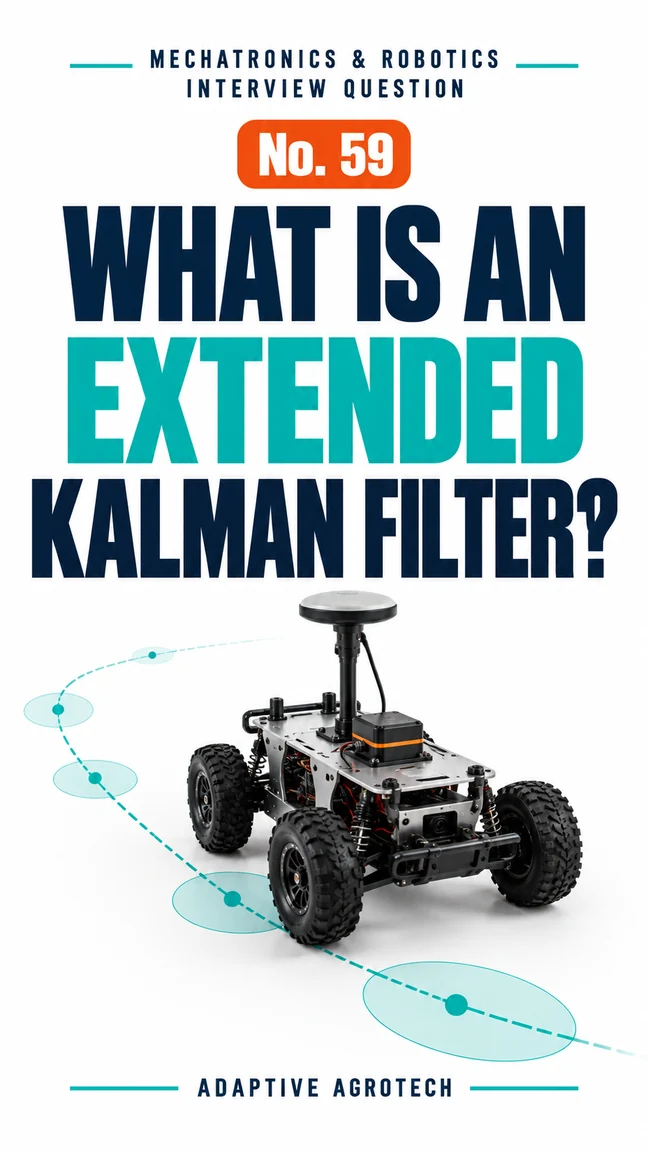
Localization & estimationNo. 059

What is an Extended Kalman Filter?

The EKF uses nonlinear models for state prediction and Jacobians for local uncertainty handling. Heading-dependent robot motion is a typical application, with initialization and residual checks exposing failures of the local approximation.

Watch & explore
Localization & estimationNo. 060

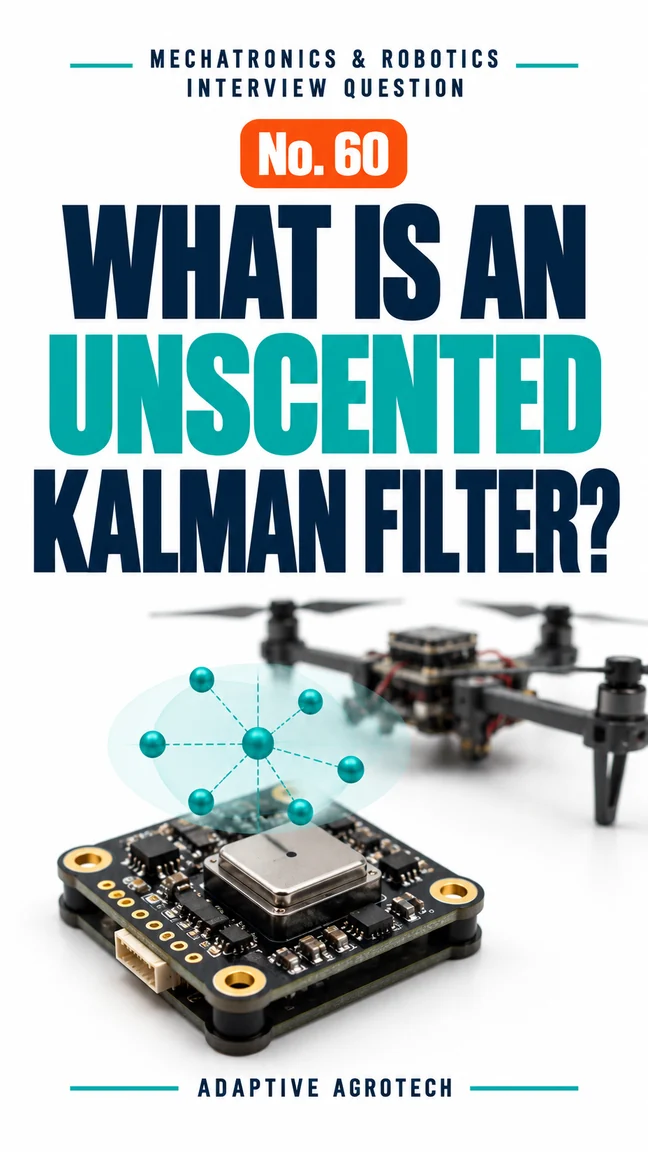
What is an Unscented Kalman Filter?

The UKF represents mean and covariance with weighted sigma points and transforms them through nonlinear models. It avoids Jacobian calculation and can capture nonlinear effects, while retaining computational, noise-model, and tuning requirements.

Watch & explore
Localization & estimationNo. 061

What is a Particle Filter?

A particle filter represents localization with many weighted pose hypotheses. Motion moves them, measurements score them, and resampling focuses computation on plausible alternatives, with particle count controlling hypothesis retention and resource demand.

Watch & explore
Sensors & perceptionNo. 062

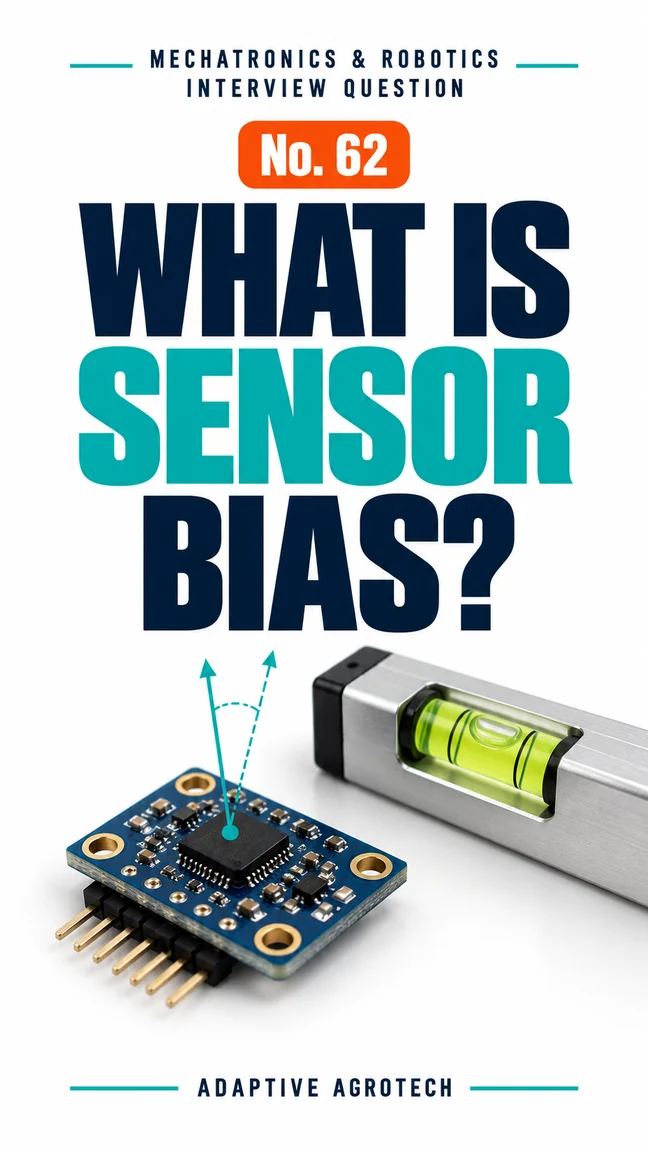
What is Sensor Bias?

Sensor bias is a systematic measurement offset that can accumulate through integration. Gyro bias illustrates the resulting heading drift, while changing temperature and time limit the lasting value of one calibration.

Watch & explore
Sensors & perceptionNo. 063

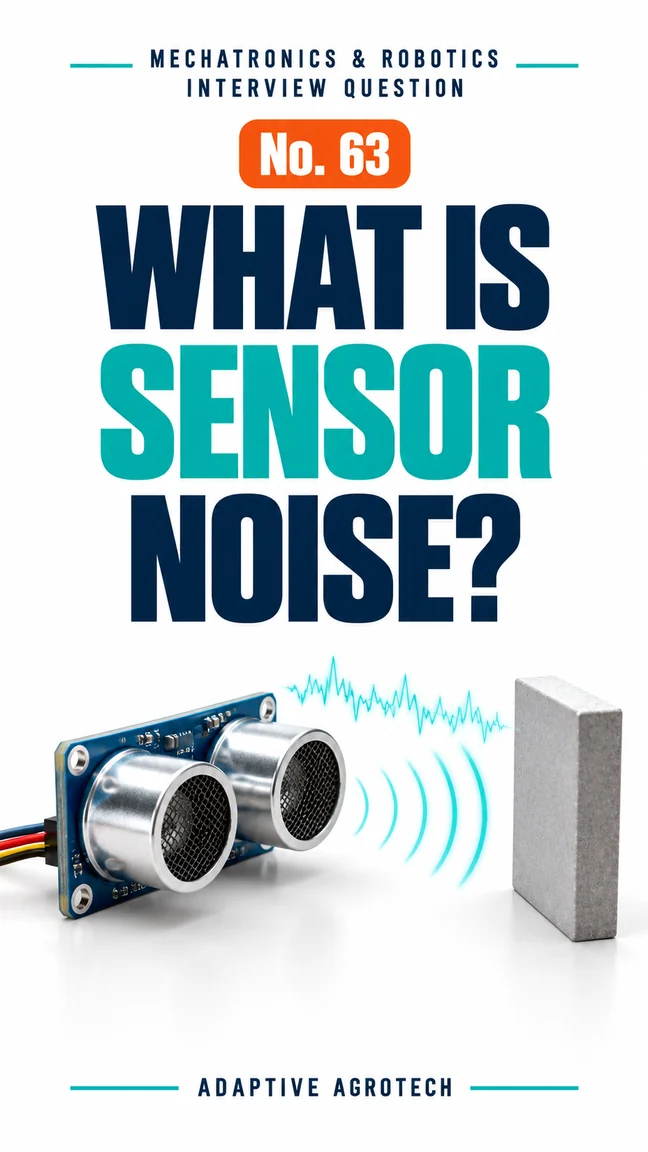
What is Sensor Noise?

Sensor noise causes random measurement variation around the signal. Averaging can smooth readings but delays change detection, so representative logging and frequency analysis help preserve the motion information a controller needs.

Watch & explore
Localization & estimationNo. 064

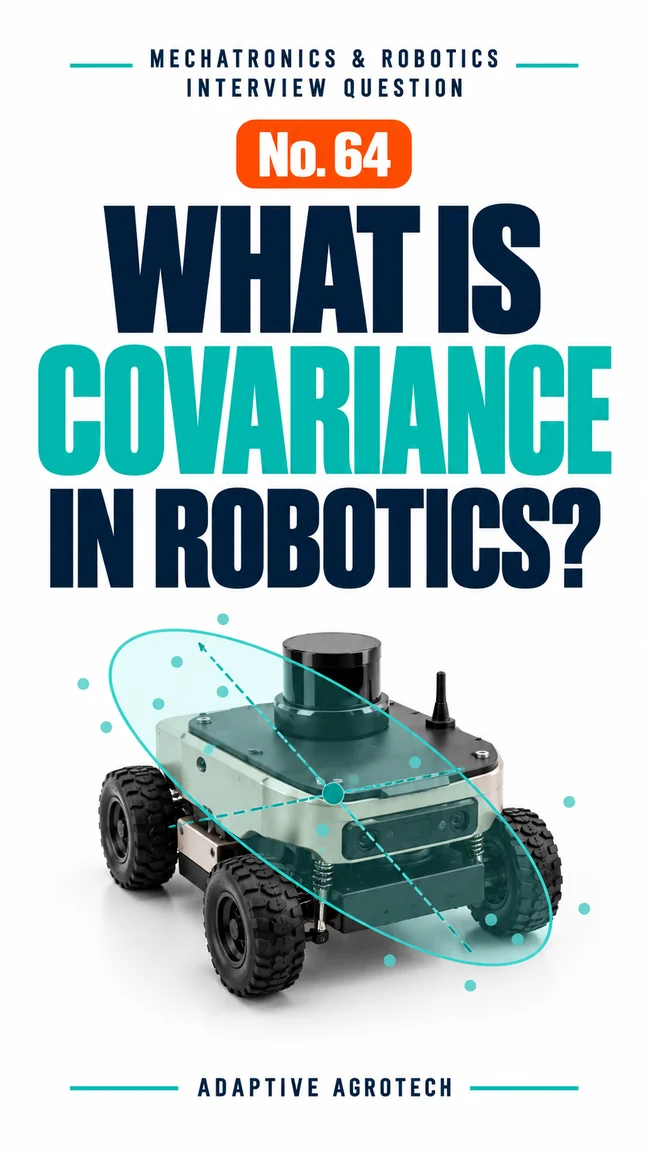
What is Covariance in Robot Estimation?

Covariance describes uncertainty magnitude and coupled estimation errors. Ellipse shape makes those relationships visible, while compatible frames, correct units, and credible values are essential before covariance is used to weight fusion.

Watch & explore
Localization & estimationNo. 065

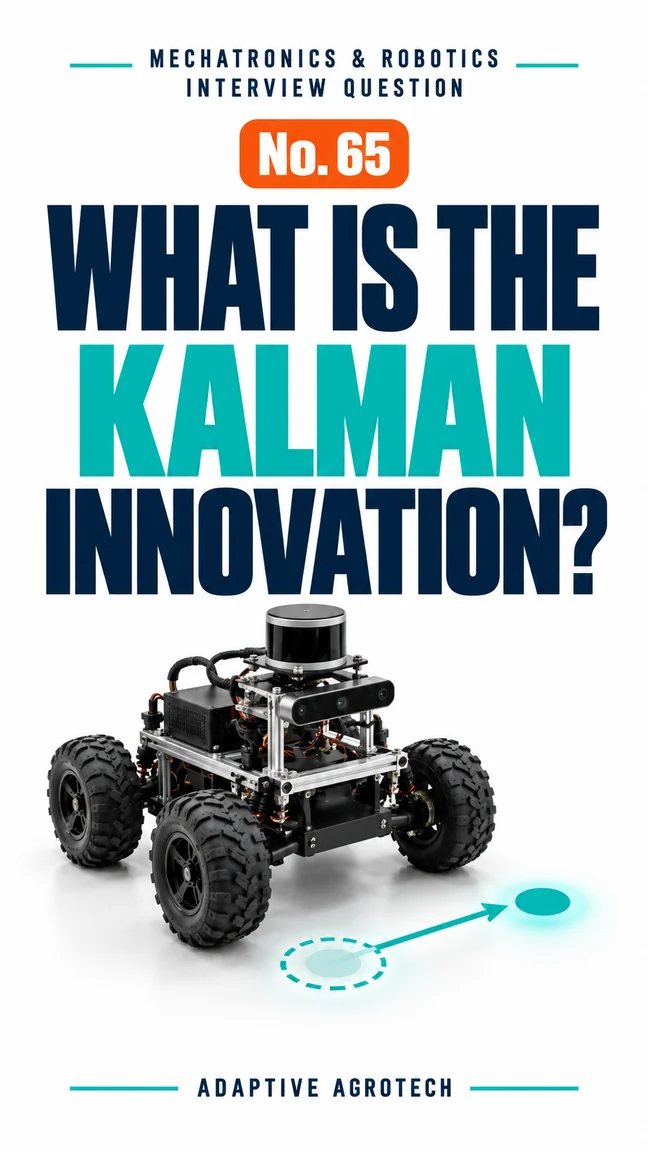
What is the Kalman Innovation?

Kalman innovation is the difference between an actual reading and its prediction. Interpreting it against expected uncertainty helps reveal timing, calibration, and model problems that smooth output alone can conceal.

Watch & explore
Localization & estimationNo. 066

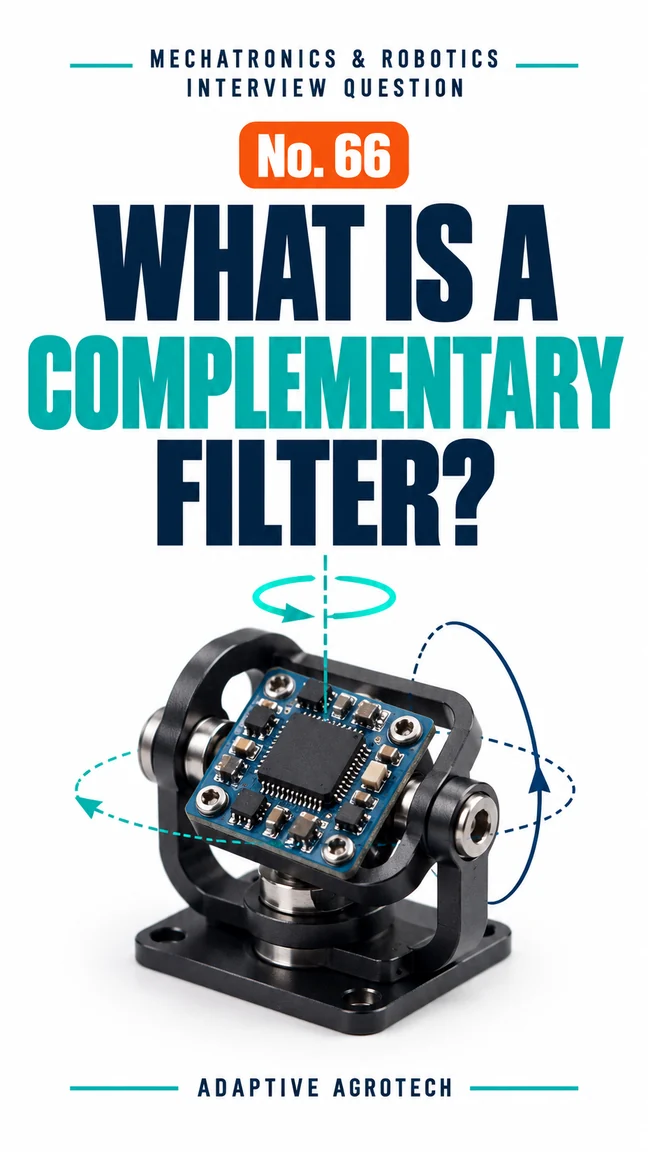
What is a Complementary Filter?

A complementary filter blends fast gyro response with a slower gravity-based tilt reference. Its weights control drift correction, while motion acceleration and gravity's lack of yaw information constrain the estimate.

Watch & explore
Localization & estimationNo. 067

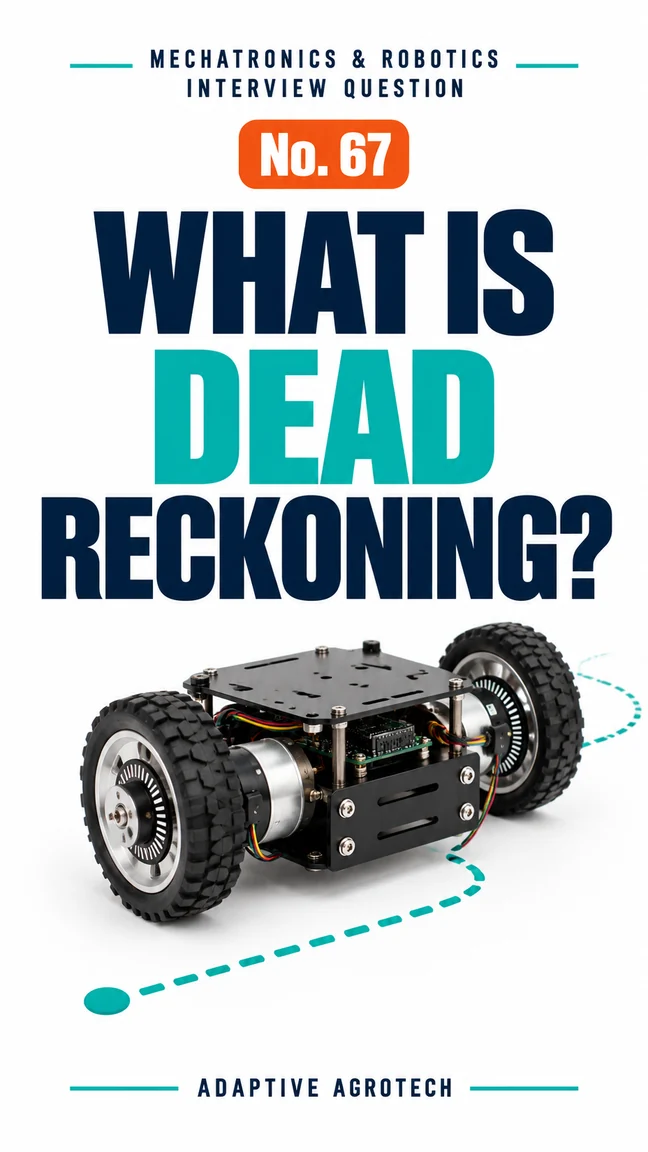
What is Dead Reckoning?

Dead reckoning updates a starting pose from measured motion. Wheel slip and heading error accumulate across steps, making the method useful between external fixes while requiring trusted references to limit long-term drift.

Watch & explore
Computer visionNo. 068

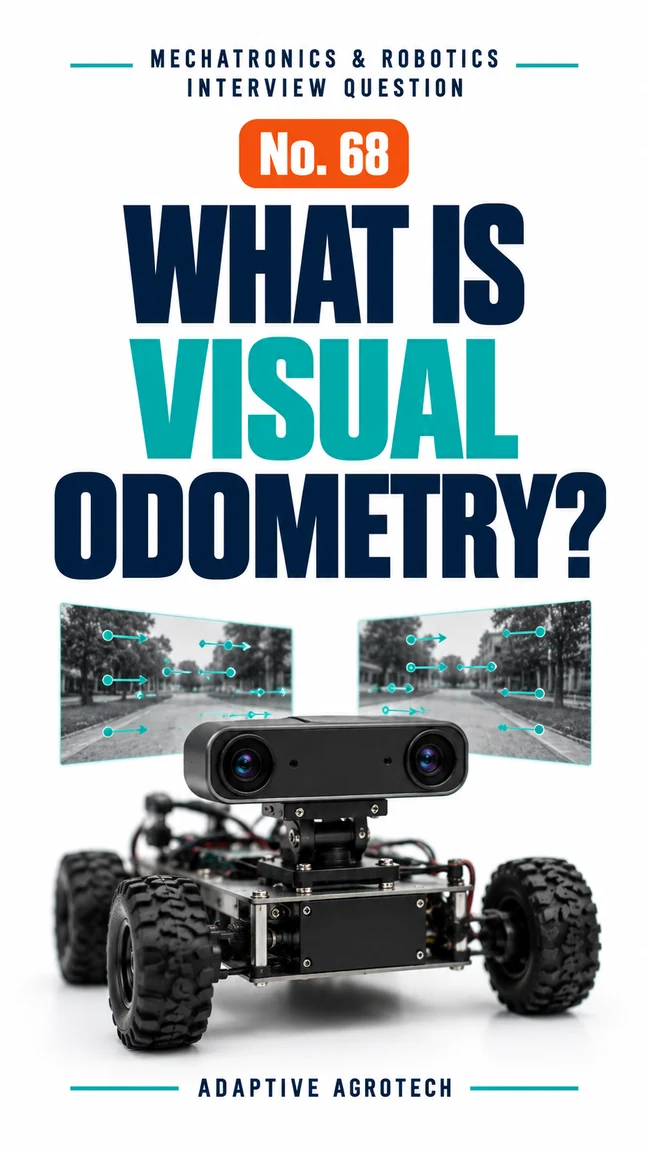
What is Visual Odometry?

Visual odometry estimates relative camera motion from image sequences. Feature or brightness changes constrain geometry, stereo provides metric depth, and monocular scale ambiguity and tracking failures limit its long-term position estimate.

Watch & explore
Localization & estimationNo. 069

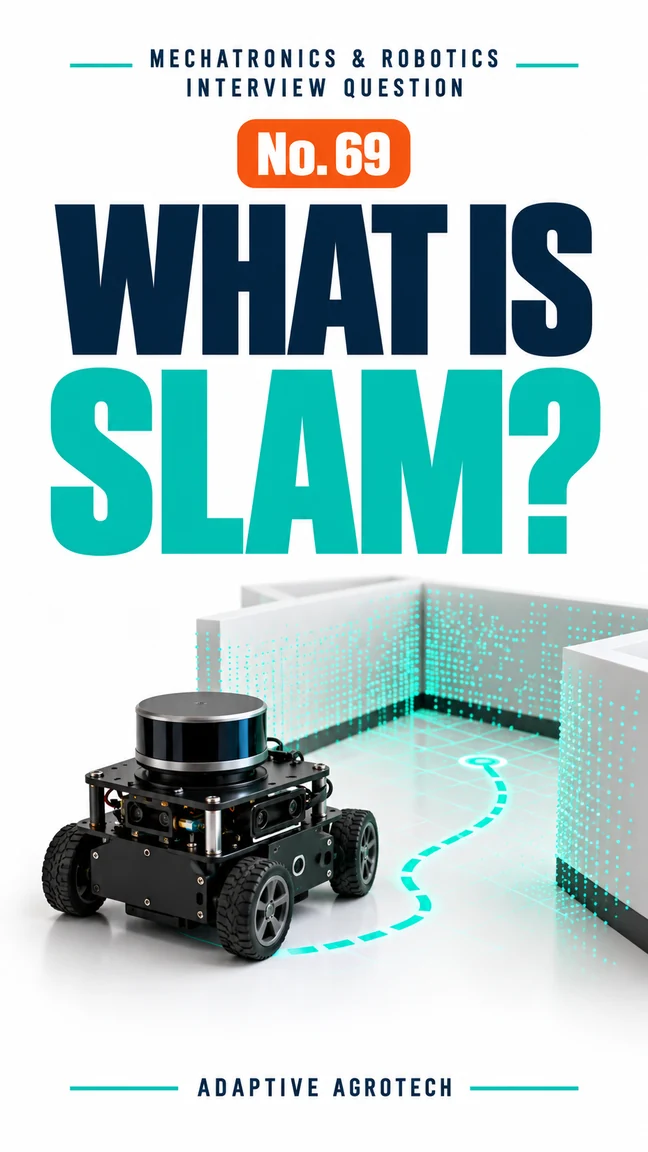
What is SLAM?

SLAM jointly estimates robot trajectory and an initially unknown map. Motion and sensor observations constrain the same model, while revisits can reduce drift and incorrect associations can damage both map and pose.

Watch & explore
Localization & estimationNo. 070

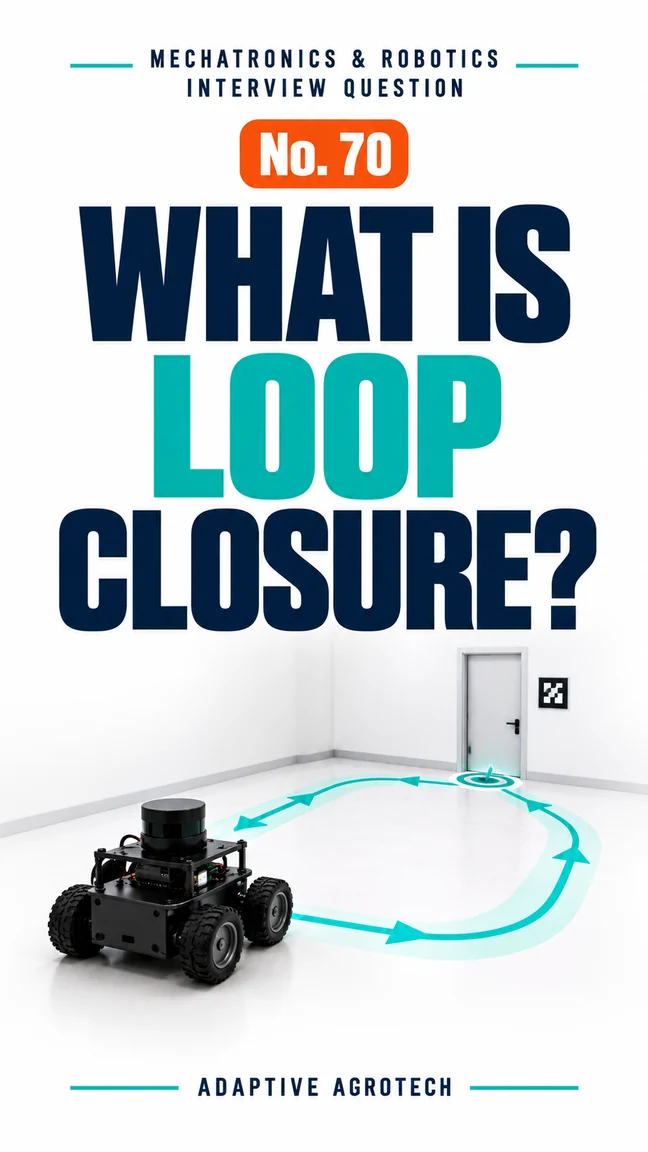
What is Loop Closure?

Loop closure links a current pose to a previously visited place. Optimization spreads correction across connected poses and features, but geometric verification is essential because one false match can distort a useful map.

Watch & explore
Localization & estimationNo. 071

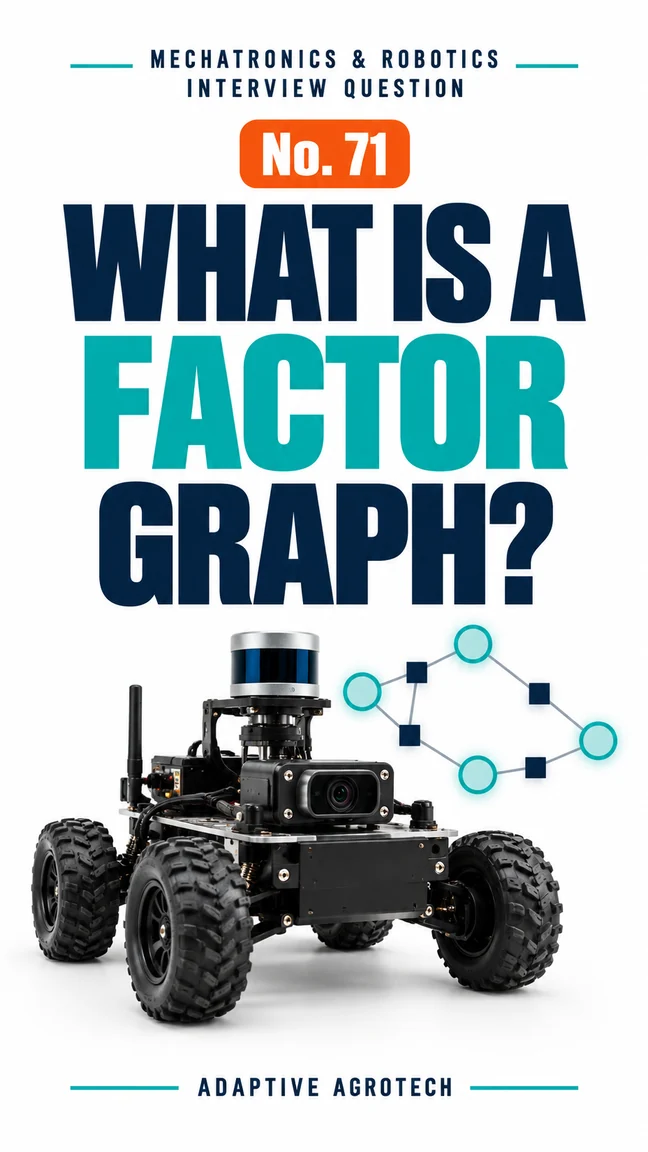
What is a Factor Graph?

A factor graph separates unknown state variables from measurement and prior constraints. Sparse connections describe which variables each observation affects, and optimization seeks agreement using associations, noise models, and an initial estimate.

Watch & explore
Localization & estimationNo. 072

What is ICP Point-Cloud Registration?

ICP iteratively aligns overlapping point clouds through correspondences and rigid transforms. Repeated refinement estimates motion, while sufficient overlap and good initialization are essential because convergence can occur at an incorrect local solution.

Watch & explore