Skip to content
Adaptive AgroTech NetworkUniversity of Southern Denmark · SDU Drone Center
Robotics · Mechatronics · Intelligent systems

Short videos.
Lasting understanding.

Explore one engineering idea at a time. Watch a short lesson, read the key concepts and test your understanding before your next interview, project or class.

53 topics found

Video · Key ideas · Check your understanding

Sensors & perceptionNo. 001

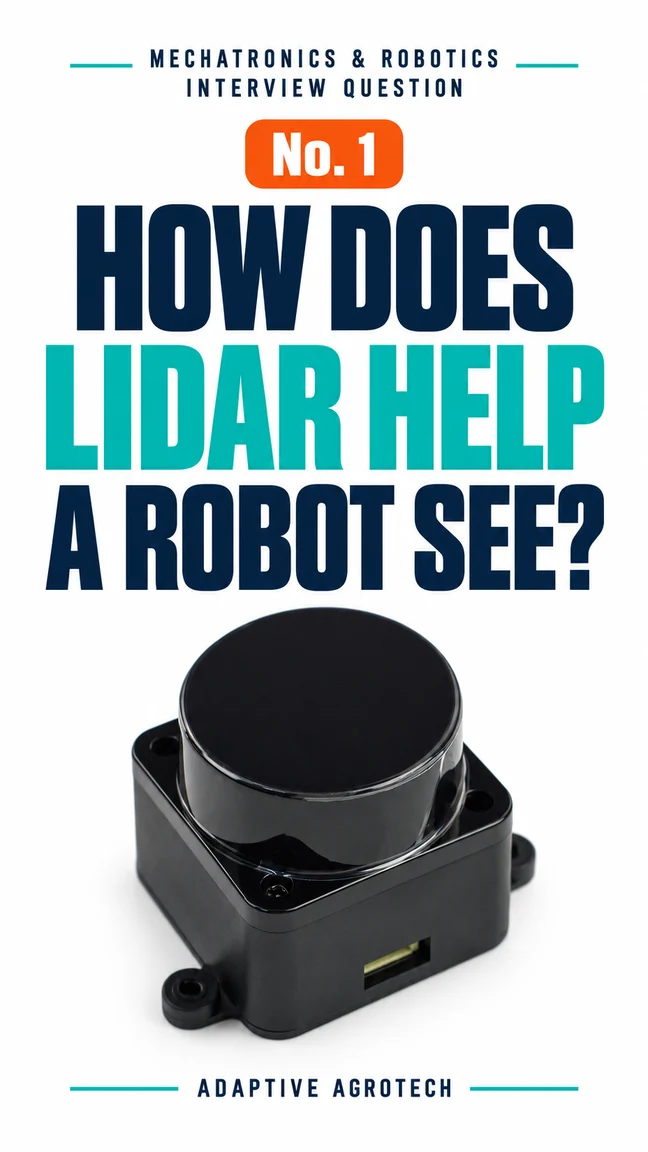
How LiDAR Helps a Robot See

Scanning LiDAR pairs range with angle to detect surrounding surfaces. Time-of-flight measurements support obstacle detection and mapping, while a two-dimensional scan can miss objects outside its measurement plane.

Watch & explore
Sensors & perceptionNo. 004

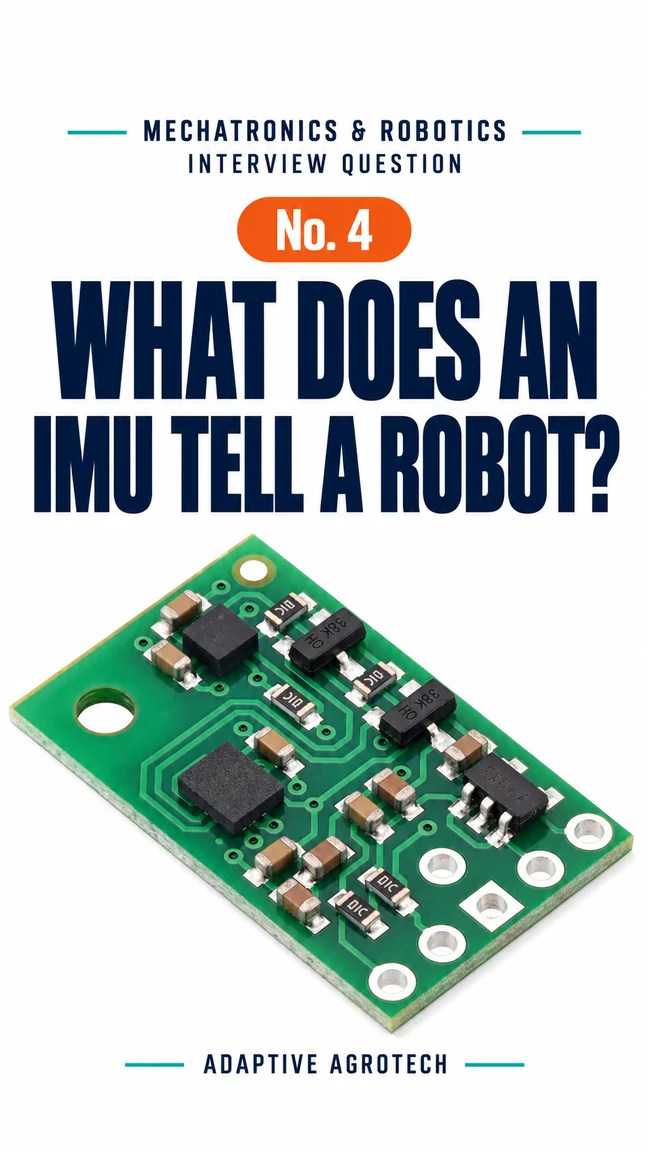
What Does an IMU Tell a Robot?

A six-axis IMU combines acceleration and angular-rate measurements. Gravity can constrain tilt, while gyro integration estimates turning; sensor bias still causes drift and prevents an IMU alone from guaranteeing absolute heading.

Watch & explore
Control systemsNo. 037

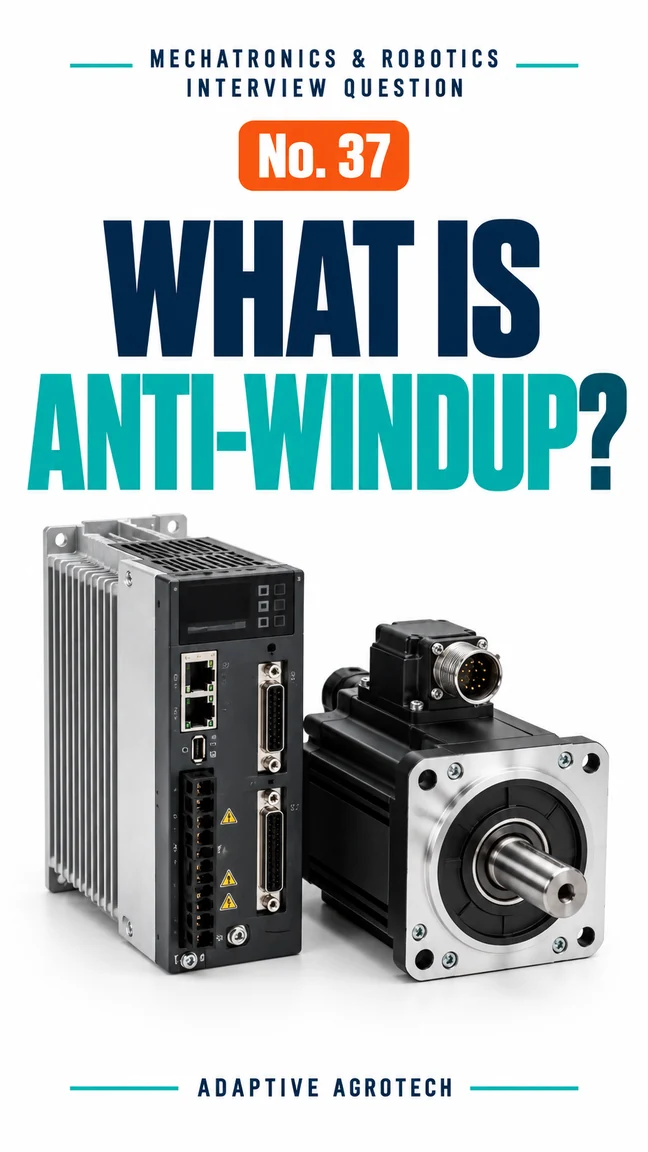
What is Anti-Windup?

Anti-windup prevents hidden integral buildup when actuator limits block the requested response. Conditional integration stops accumulation that drives further into saturation while allowing the integral state to unwind toward recovery.

Watch & explore
Control systemsNo. 039

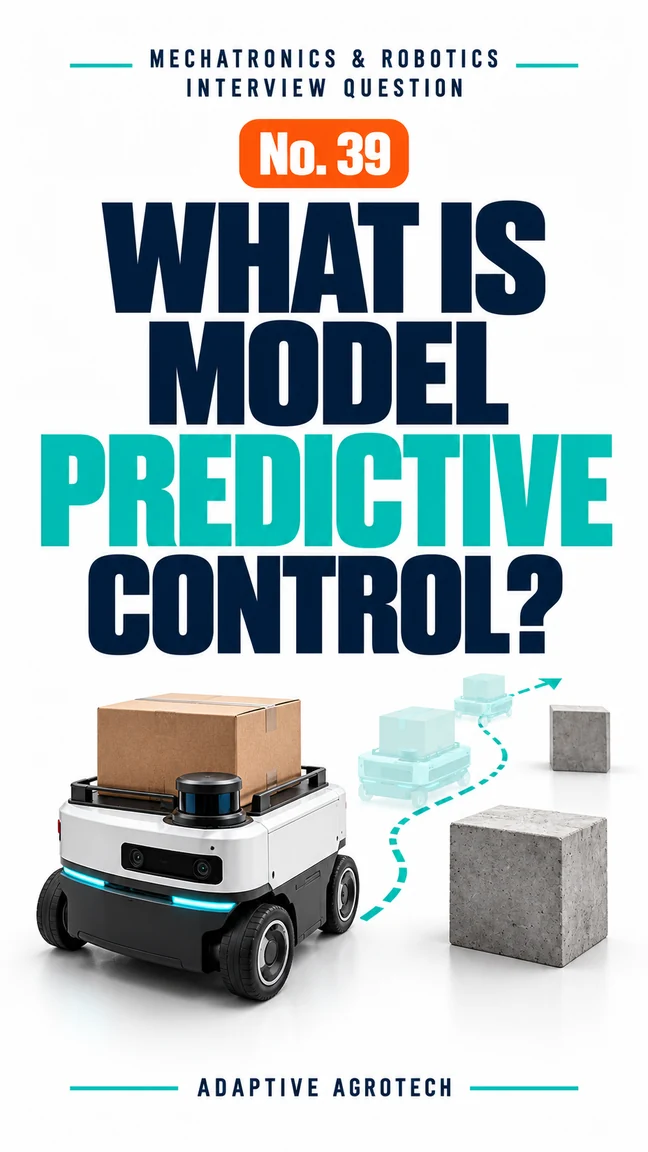
What is Model Predictive Control?

MPC optimizes a sequence of predicted control moves under included constraints, then applies the first move and repeats. New measurements refresh the plan, but prediction errors and solver deadlines limit practical performance.

Watch & explore
Localization & estimationNo. 049

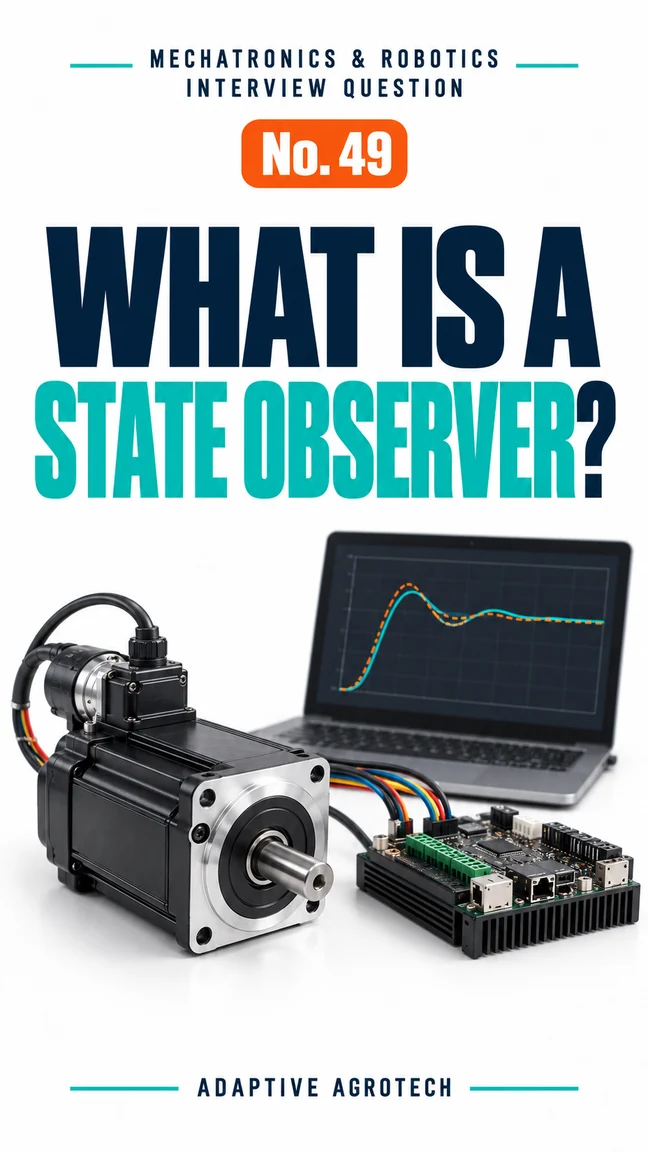
What is a State Observer?

A state observer estimates internal variables by predicting with a model and correcting from measured outputs. Observer gain sets the correction response, with observability, noise sensitivity, and model error limiting the result.

Watch & explore
Control systemsNo. 053

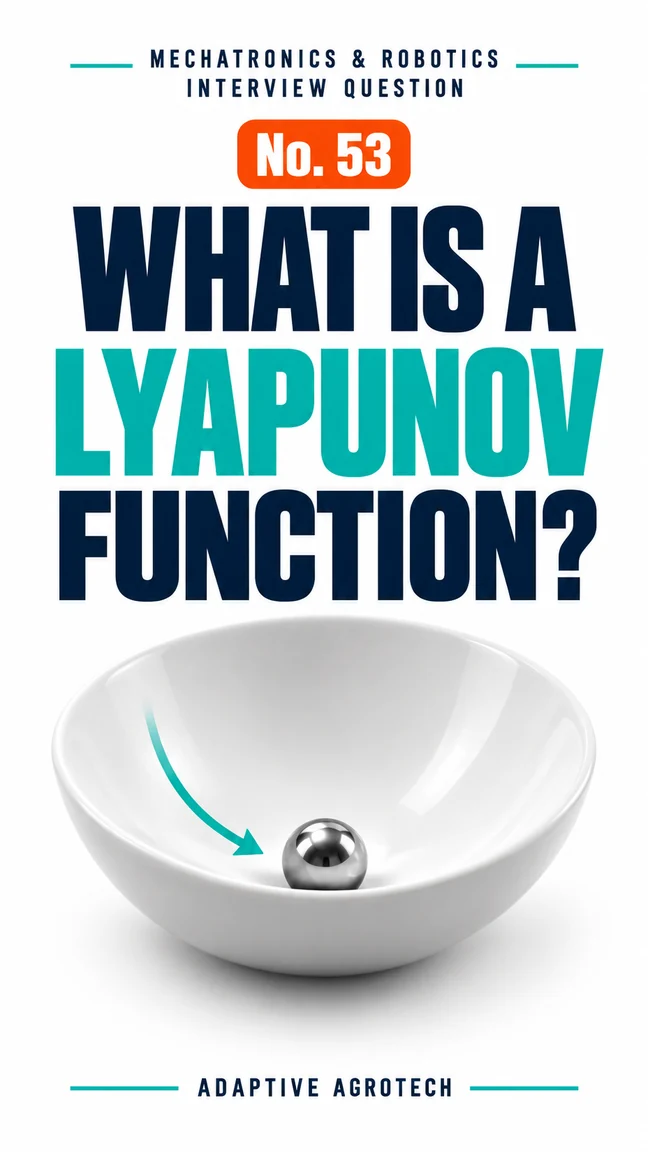
What is a Lyapunov Function?

A Lyapunov function provides a scalar route to analyzing stability without solving every trajectory. Its value and change along motion support a claim whose scope depends on the theorem's assumptions and region.

Watch & explore
Localization & estimationNo. 059

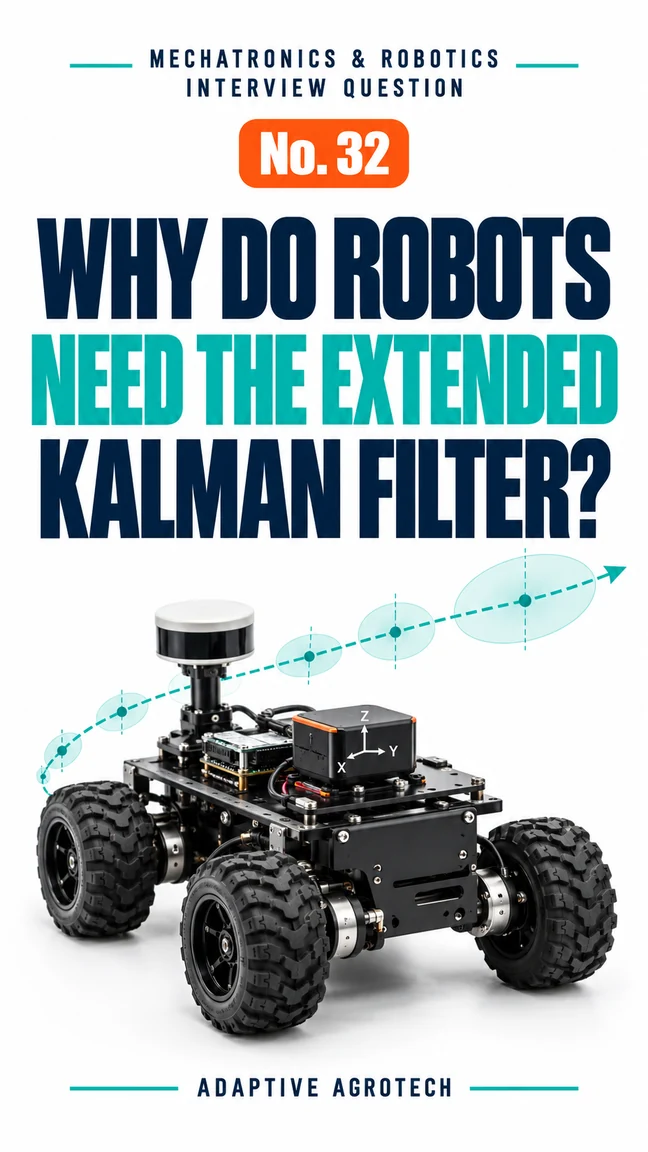
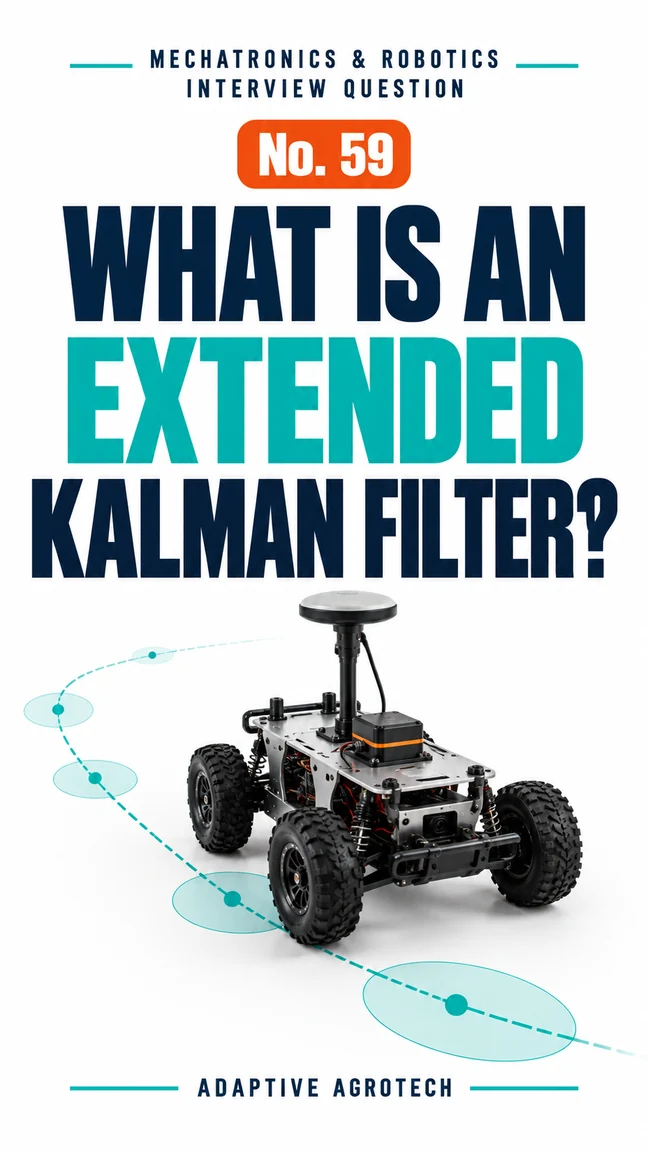
What is an Extended Kalman Filter?

The EKF uses nonlinear models for state prediction and Jacobians for local uncertainty handling. Heading-dependent robot motion is a typical application, with initialization and residual checks exposing failures of the local approximation.

Watch & explore
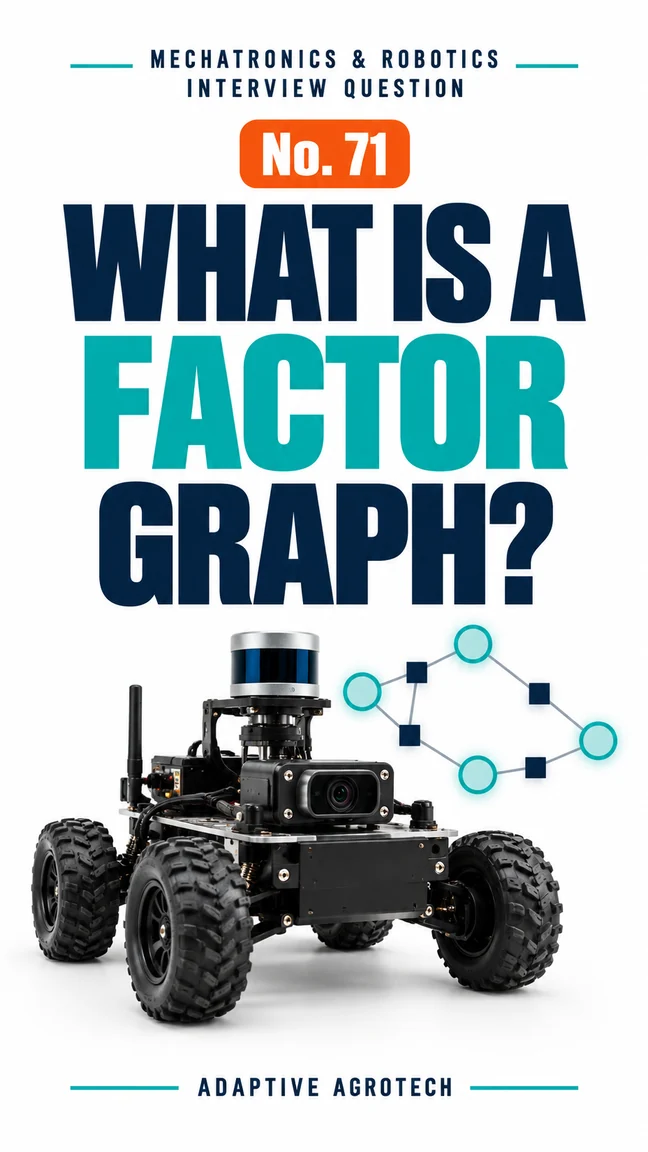
Localization & estimationNo. 071

What is a Factor Graph?

A factor graph separates unknown state variables from measurement and prior constraints. Sparse connections describe which variables each observation affects, and optimization seeks agreement using associations, noise models, and an initial estimate.

Watch & explore
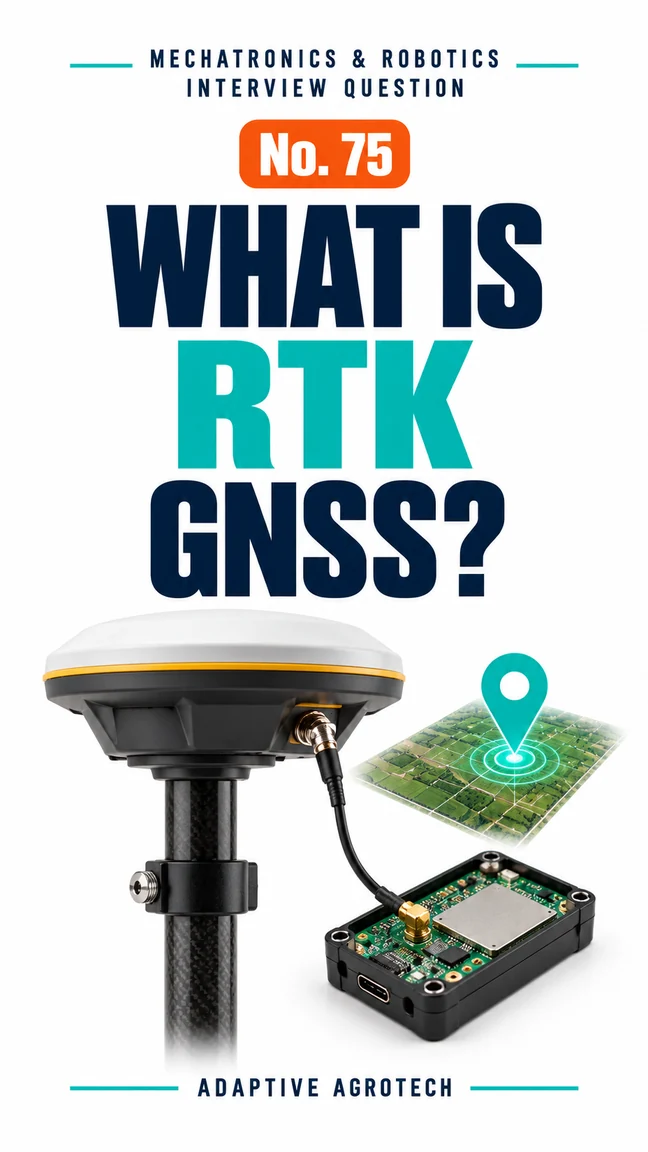
Localization & estimationNo. 075

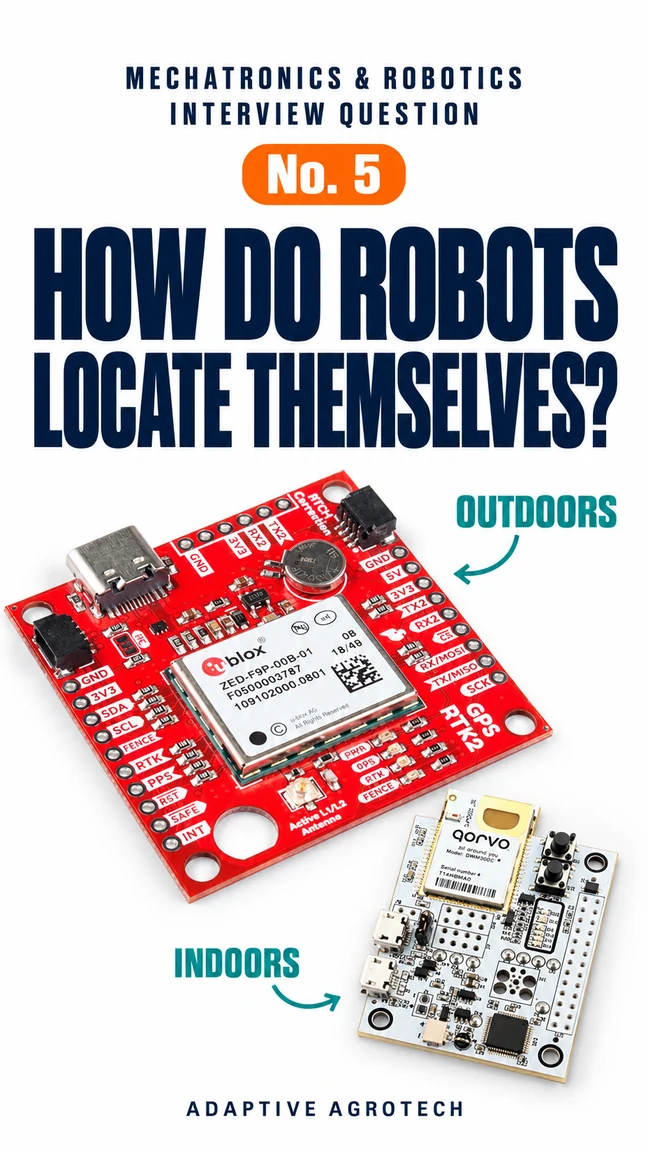
What is RTK GNSS?

RTK GNSS combines carrier-phase measurements with reference corrections for precise positioning. Resolving whole-cycle ambiguity supports centimetre-level fixed solutions under good conditions, while integrity checks remain necessary during actual robot motion.

Watch & explore
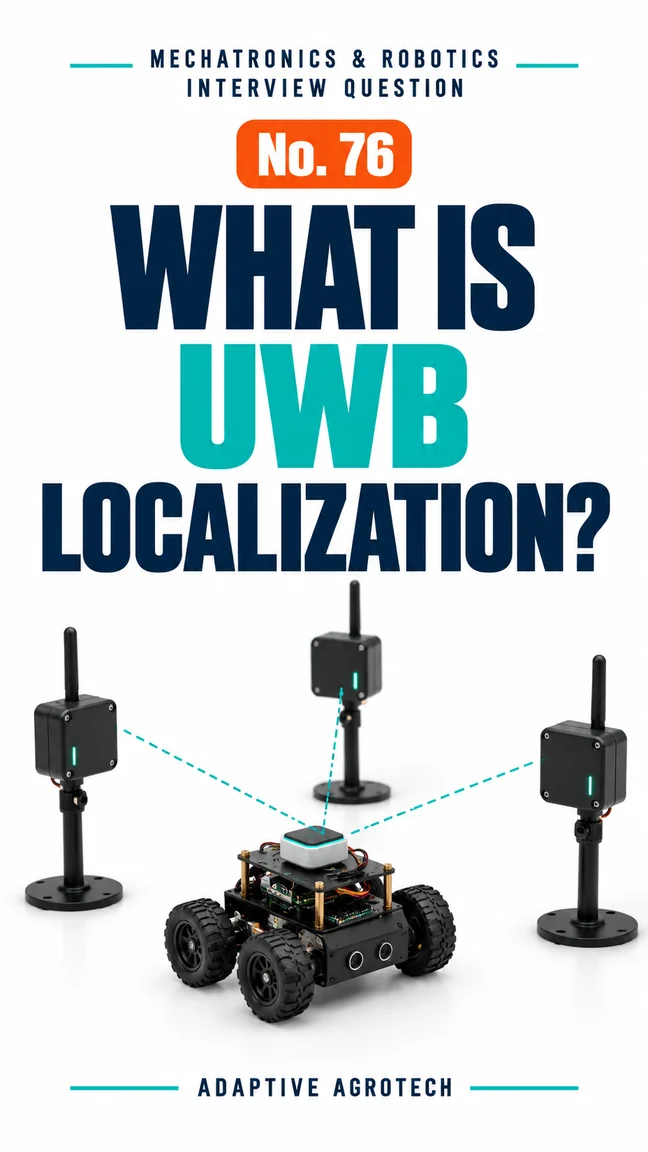
Localization & estimationNo. 076

What is UWB Localization?

UWB ranging estimates distances from radio travel time to surveyed anchors. Several ranges constrain tag position, while anchor geometry and blocked direct paths affect reliability and motivate motion fusion and inconsistent-reading rejection.

Watch & explore
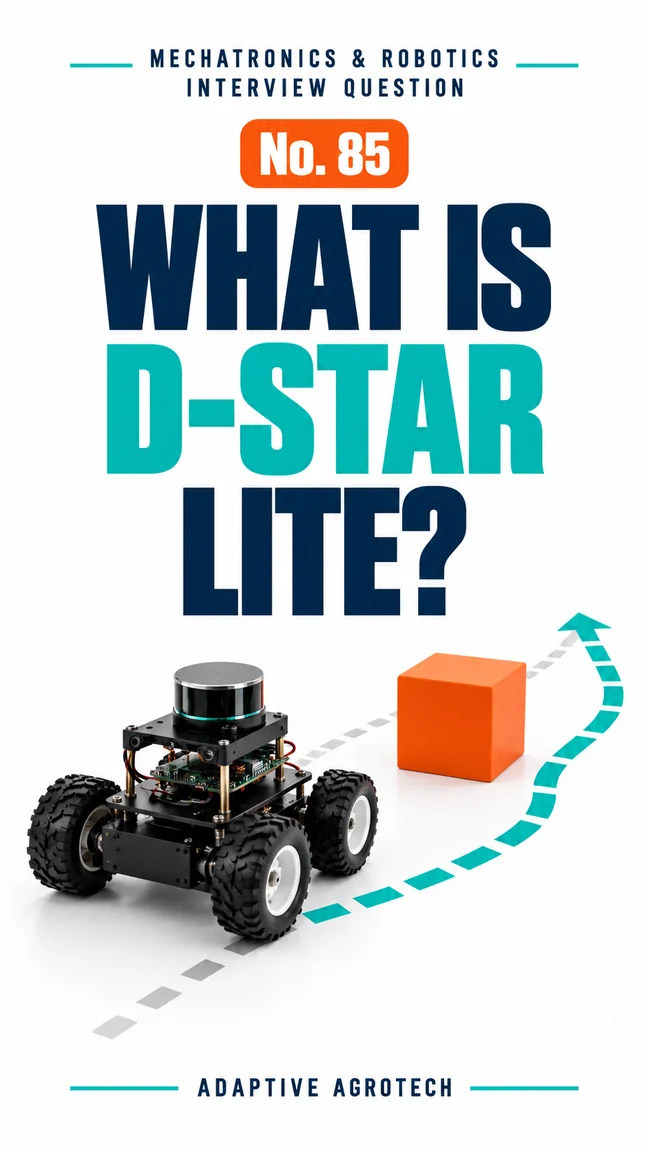
Motion planningNo. 085

What is D-Star Lite?

D* Lite replans on a graph by reusing earlier search information when travel costs change. It repairs affected values and updates the route, while still relying on current sensing and appropriate motion control.

Watch & explore
Motion planningNo. 087

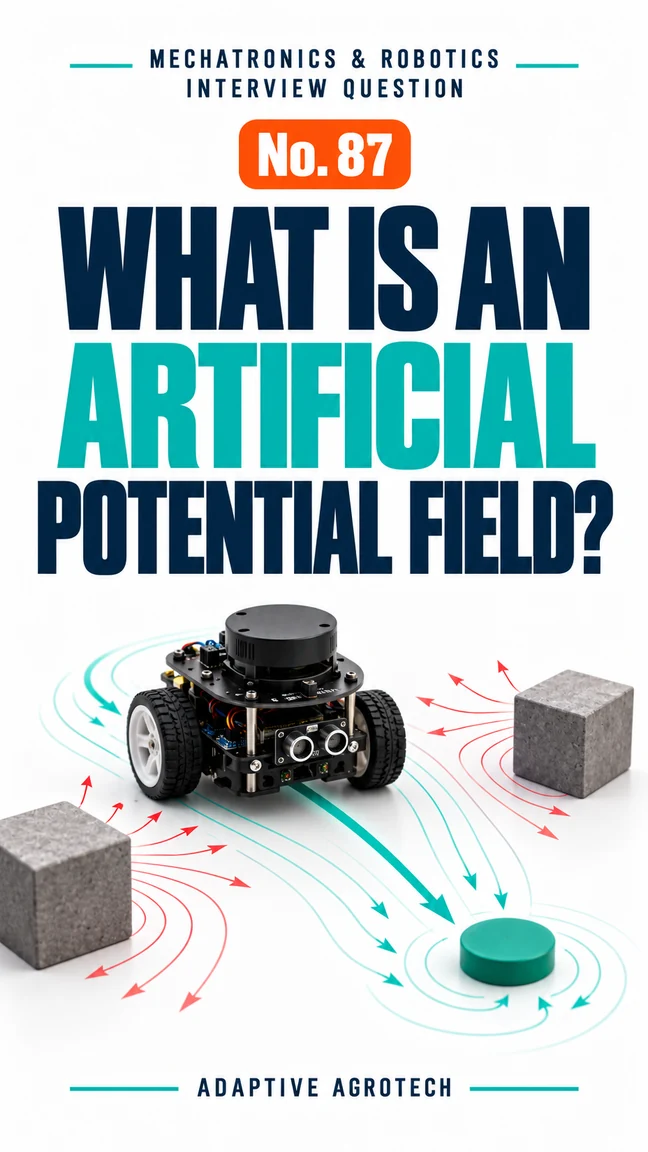
What is an Artificial Potential Field?

Artificial potential fields combine attraction toward a goal with repulsion from nearby obstacles. Following the resulting descent direction gives reactive motion, but opposing effects can cancel at a local minimum before the goal.

Watch & explore
Control systemsNo. 091

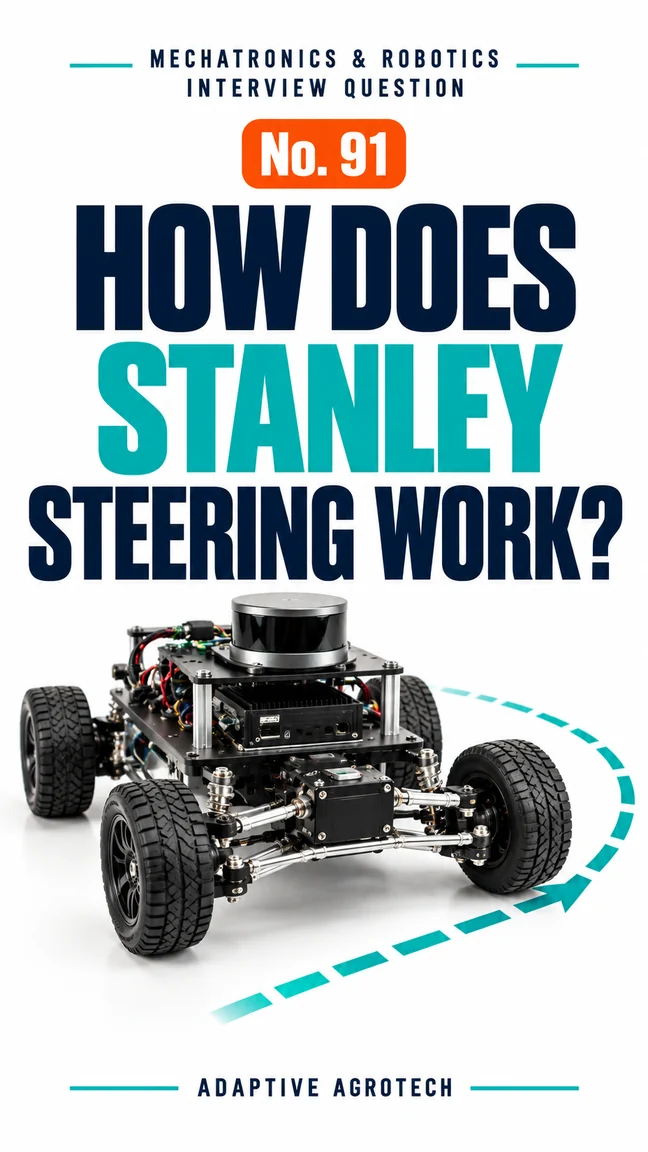
What is the Stanley Steering Controller?

The Stanley controller combines heading error with front axle cross track error to steer a car like robot. Speed scales the lateral correction, and practical implementations must handle low speed behavior and steering limitations.

Watch & explore
Embedded electronicsNo. 102

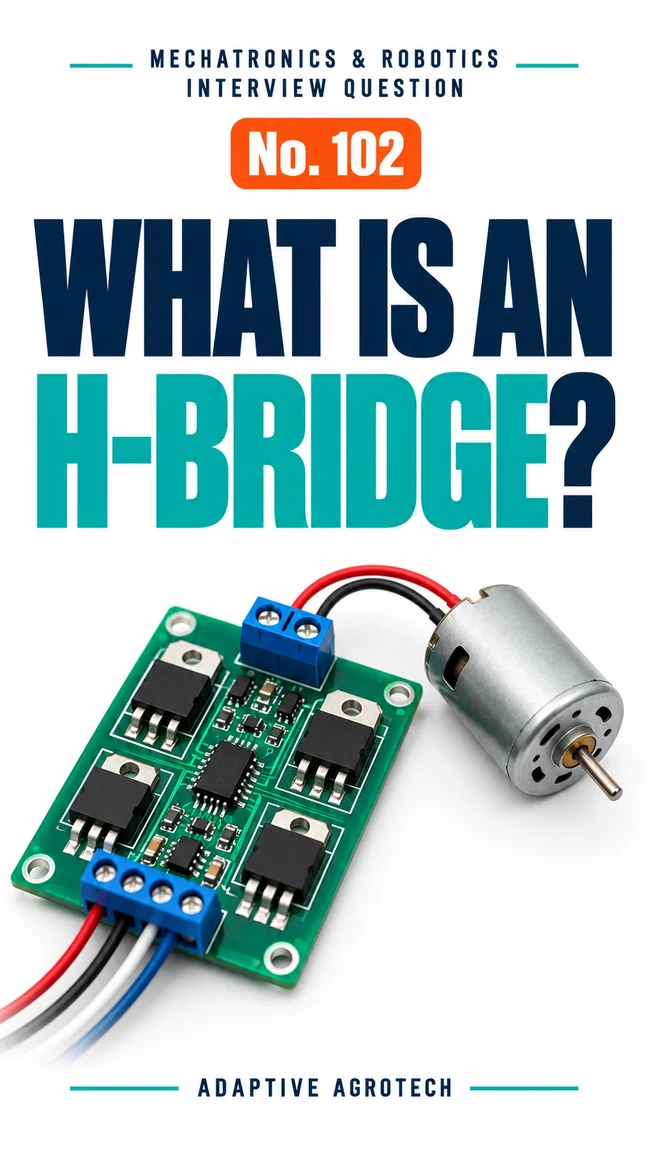
What is an H-Bridge?

An H-bridge reverses motor current using four switches arranged around the motor. Diagonal pairs set direction, while timing, current limits, and recirculation paths prevent damaging supply shorts and manage winding current.

Watch & explore
Embedded electronicsNo. 104

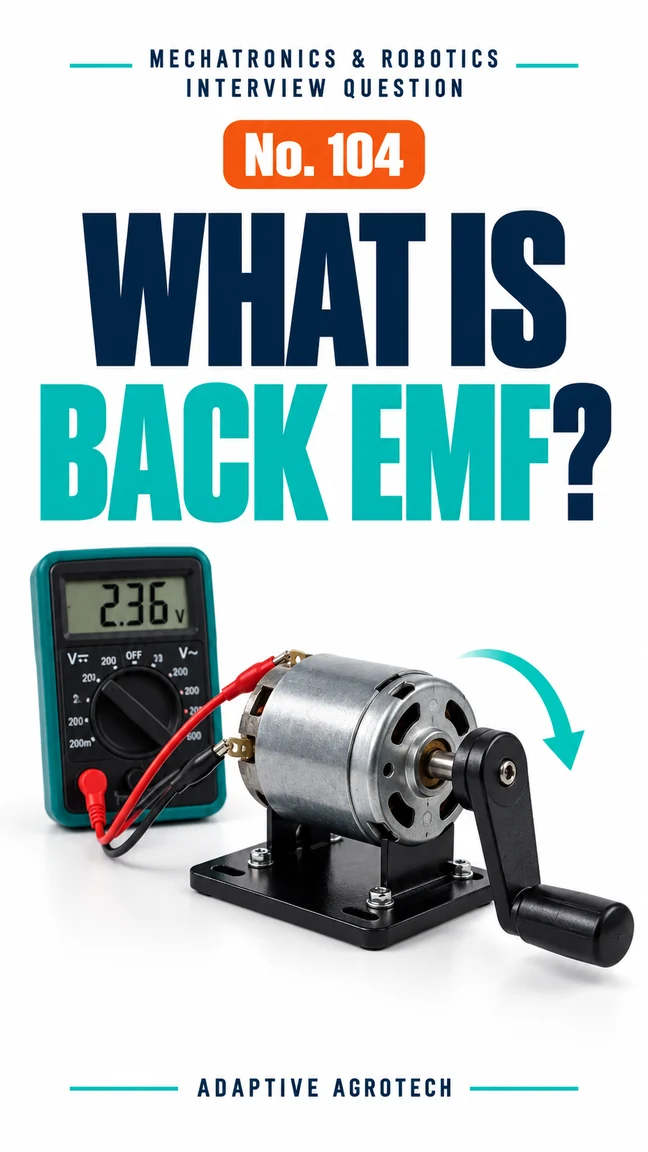
What is Back EMF?

Back EMF is the voltage generated by a spinning motor that opposes its drive voltage. In a simple steady model it reduces winding current, explaining why a slowing or jammed wheel can draw more current.

Watch & explore
Communication & networksNo. 117

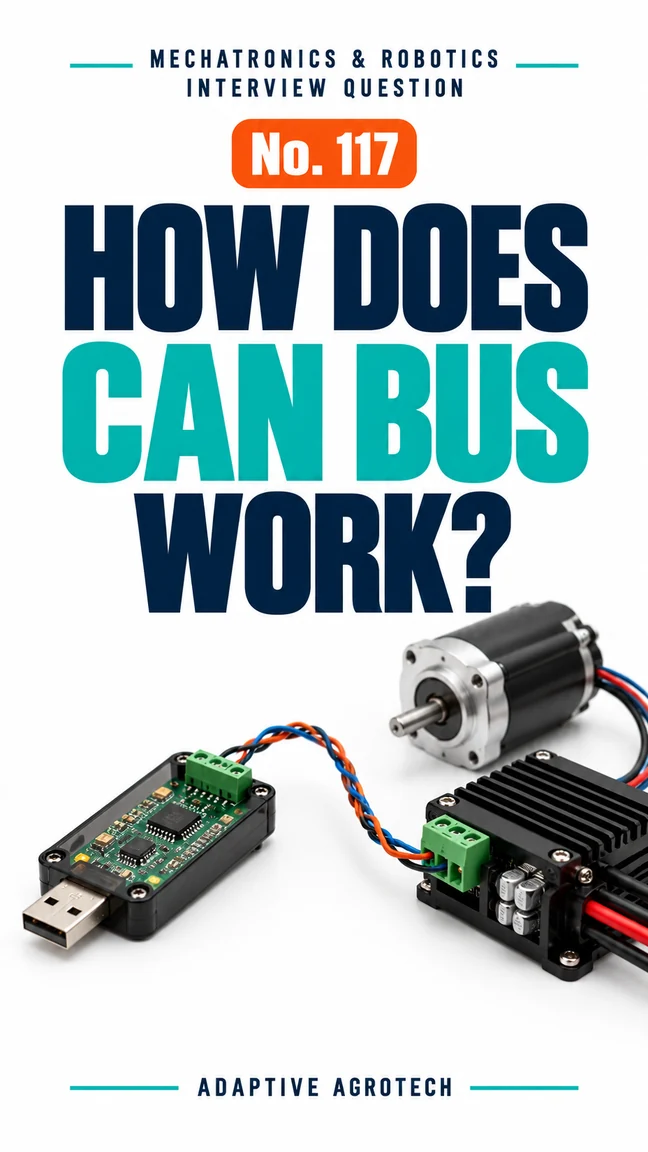
What is CAN Bus?

CAN links multiple electronic control units through a shared message bus. Frame identifiers support priority and data selection, while delivery checks still need application feedback and stale-command supervision to confirm robot behavior.

Watch & explore