Skip to content
Adaptive AgroTech NetworkUniversity of Southern Denmark · SDU Drone Center
Robotics · Mechatronics · Intelligent systems

Short videos.
Lasting understanding.

Explore one engineering idea at a time. Watch a short lesson, read the key concepts and test your understanding before your next interview, project or class.

19 topics found

Video · Key ideas · Check your understanding

Sensors & perceptionNo. 001

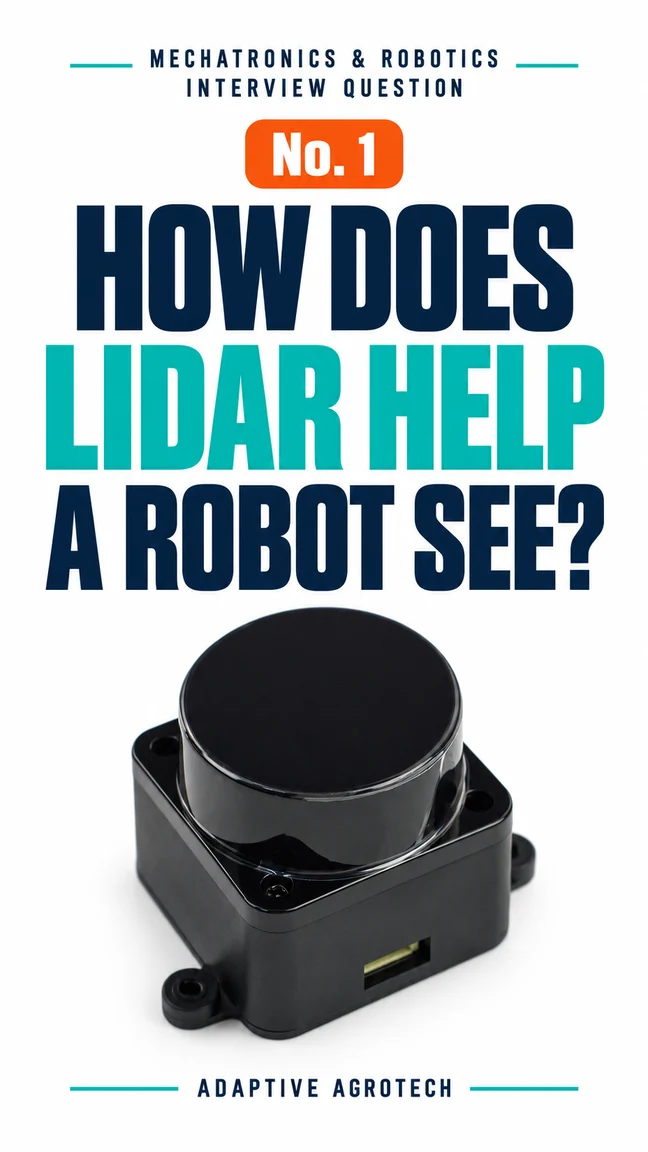
How LiDAR Helps a Robot See

Scanning LiDAR pairs range with angle to detect surrounding surfaces. Time-of-flight measurements support obstacle detection and mapping, while a two-dimensional scan can miss objects outside its measurement plane.

Watch & explore
Communication & networksNo. 020

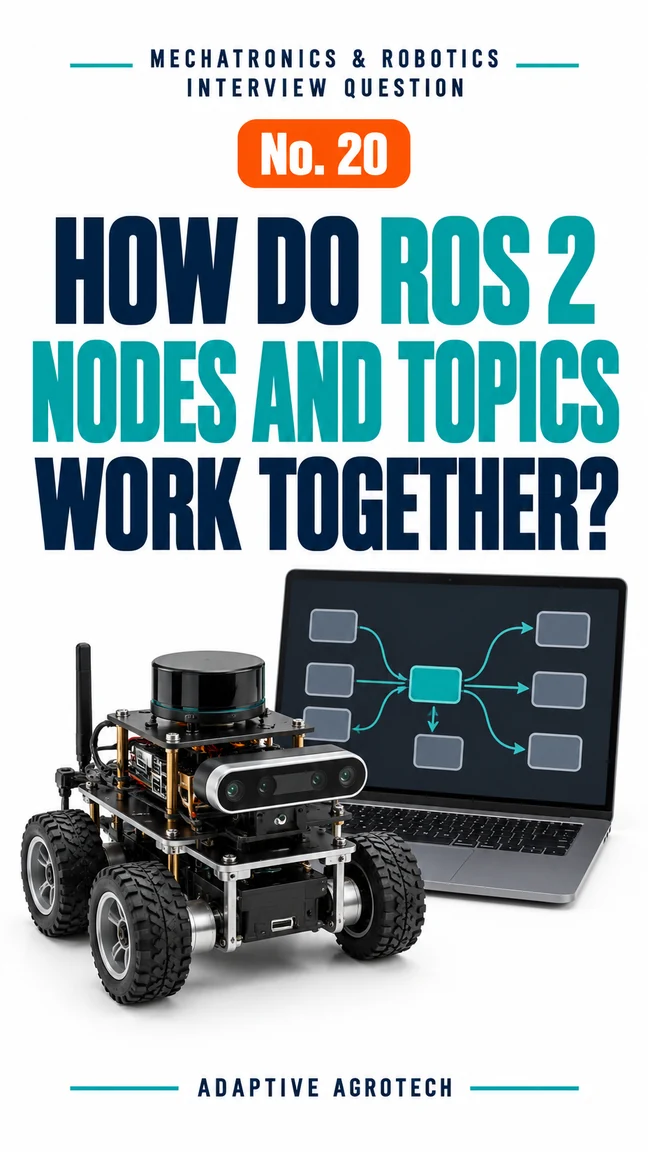
How ROS 2 Nodes and Topics Work Together

ROS 2 nodes exchange typed streams through topics, allowing one publisher to serve multiple subscribers. Hardware interfaces turn velocity messages into motor communication, and discovery and delivery settings determine whether messages arrive.

Watch & explore
Robot kinematicsNo. 021

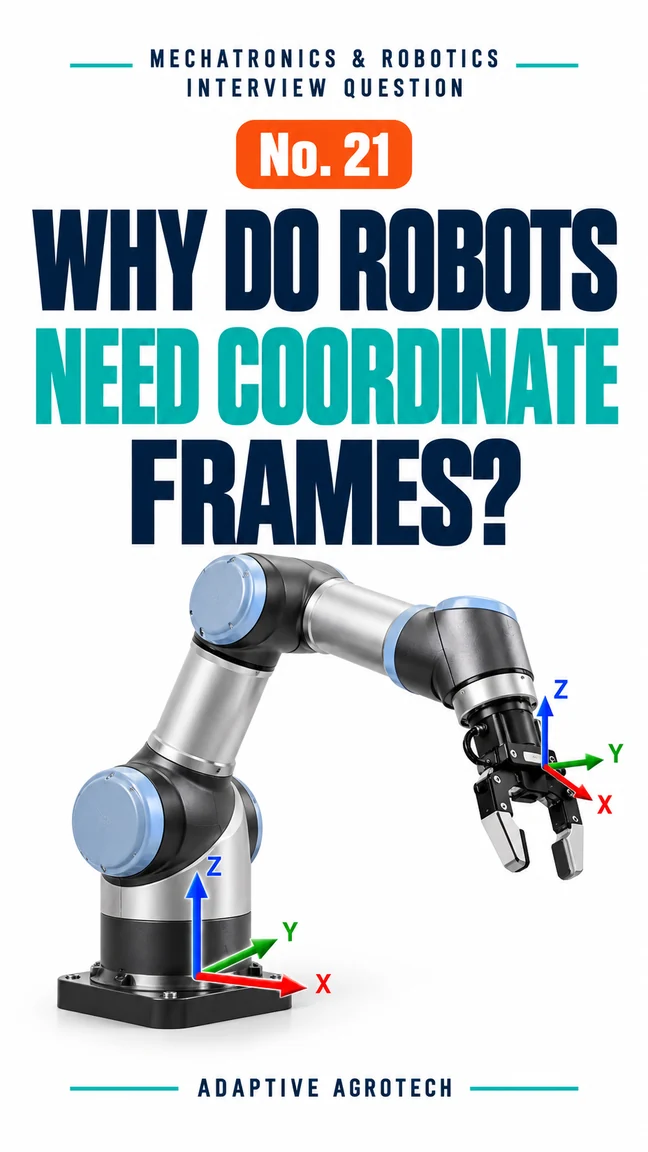
Why a Robot Needs Coordinate Frames

Coordinate frames describe the same physical point from different origins and axes. Rigid transforms connect sensor, robot, and map coordinates, and correct composition requires consistent directions, conventions, and measurement timestamps.

Watch & explore
Control systemsNo. 024

How a Robot Finds and Docks at Its Charger

Automatic docking combines navigation, close-range pose sensing, slow alignment, and electrical confirmation. Successful motion alone is insufficient: charging feedback, timeouts, and bounded recovery attempts determine whether docking actually succeeded.

Watch & explore
Computer visionNo. 068

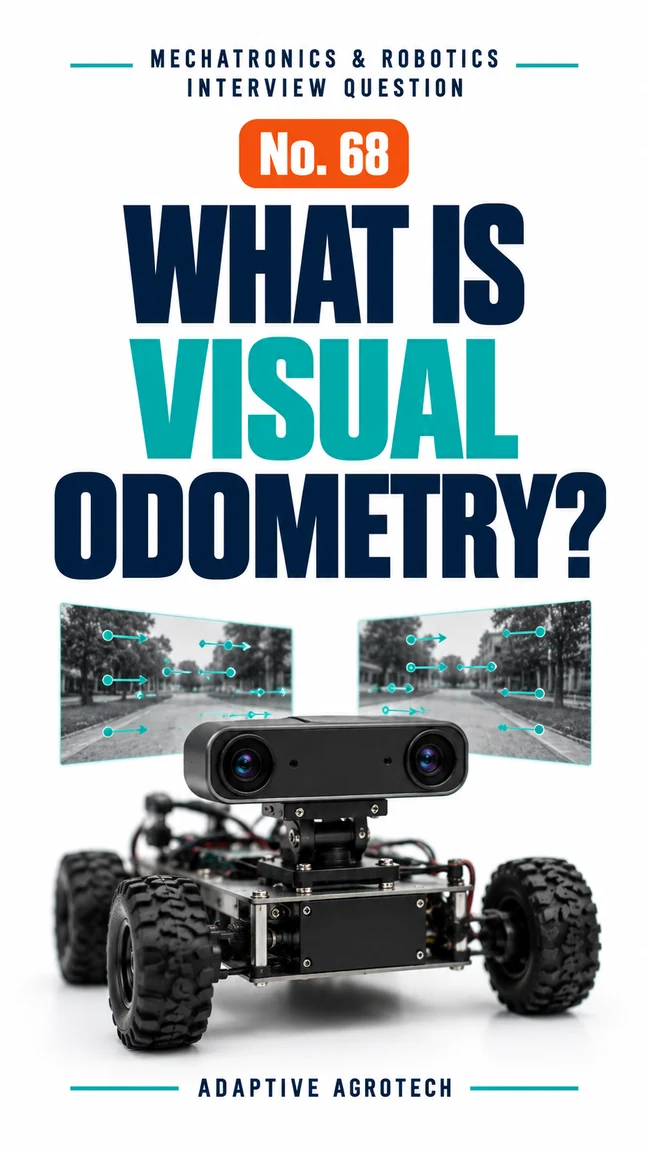
What is Visual Odometry?

Visual odometry estimates relative camera motion from image sequences. Feature or brightness changes constrain geometry, stereo provides metric depth, and monocular scale ambiguity and tracking failures limit its long-term position estimate.

Watch & explore
Motion planningNo. 077

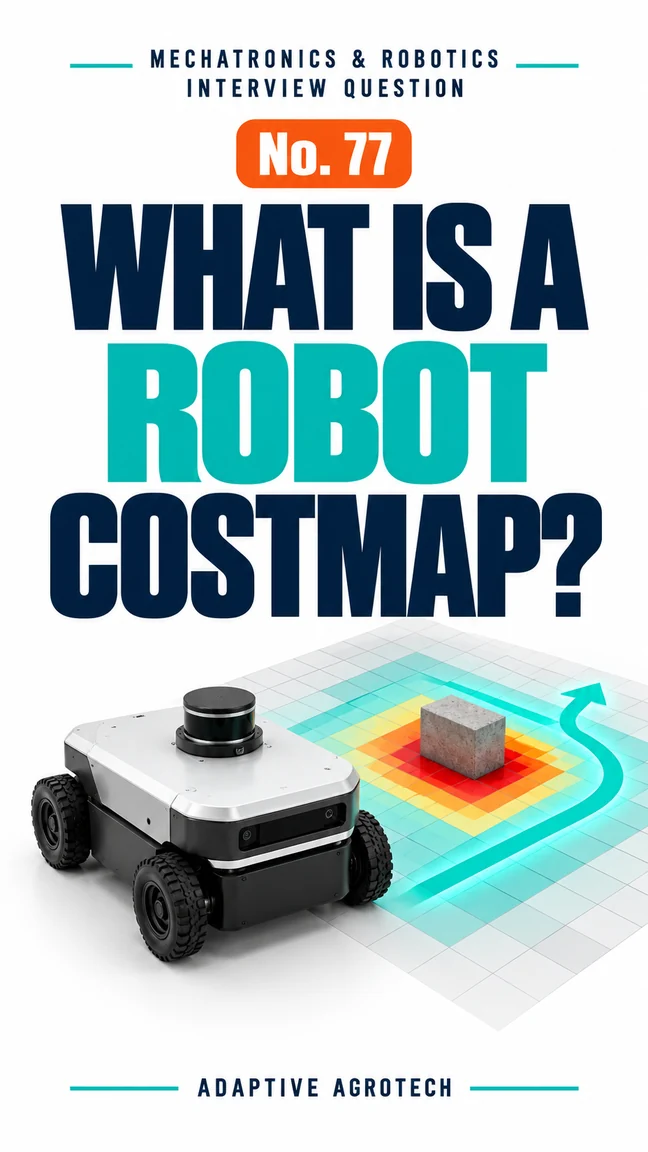
What is a Robot Costmap?

A costmap assigns travel costs that guide route choice and clearance. Obstacle inflation discourages paths near walls, while footprint geometry and fresh updates prevent point-based routes from hiding physical collisions.

Watch & explore
Motion planningNo. 078

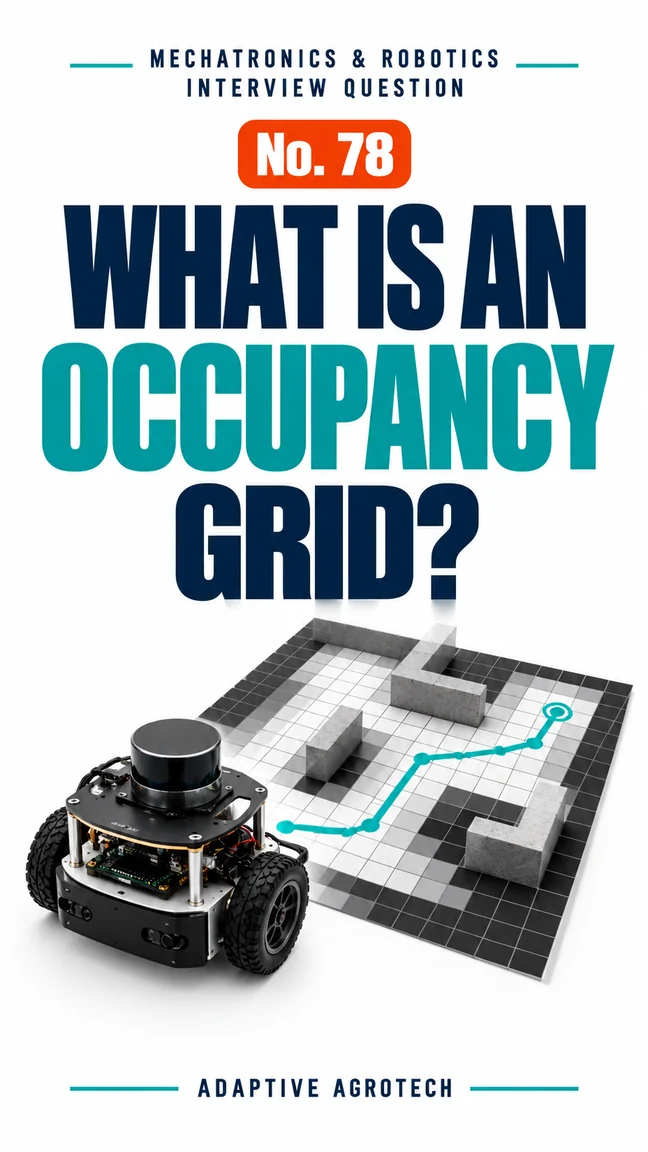
What is an Occupancy Grid?

An occupancy grid divides space into cells that express obstacle belief. Laser evidence updates free and occupied regions, while unknown cells require an explicit navigation policy instead of being treated as clear.

Watch & explore
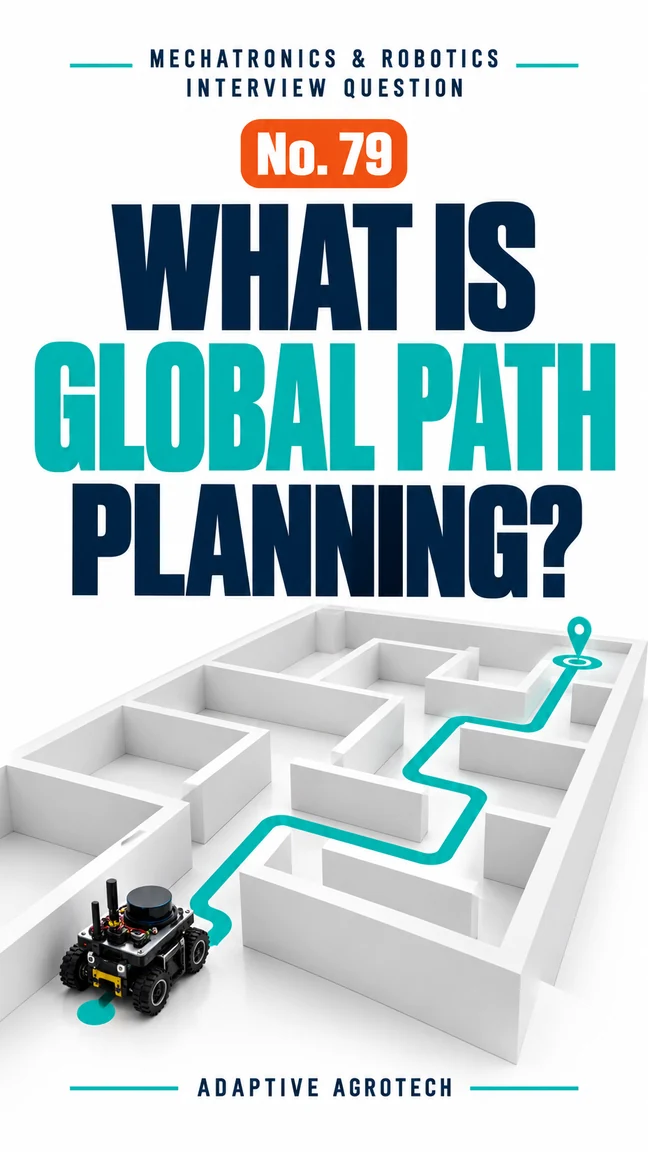
Motion planningNo. 079

What is Global Path Planning?

Global planning uses a map and costs to connect the robot with a distant goal. The selected graph defines the preferred route, which still requires local motion control and replanning when conditions change.

Watch & explore
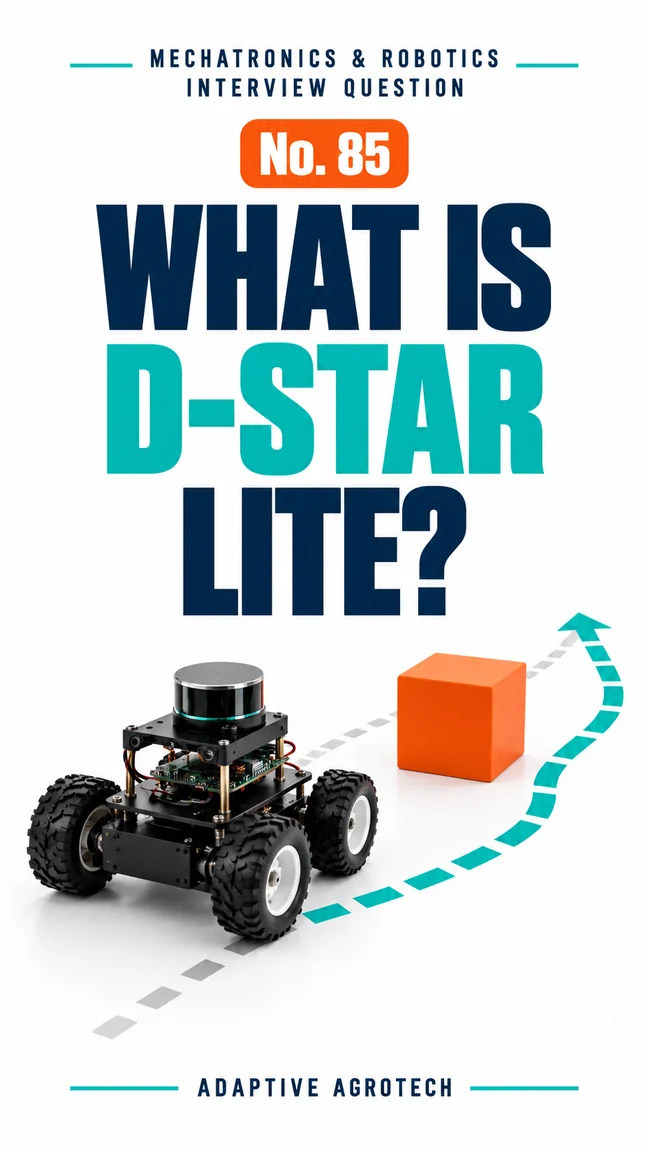
Motion planningNo. 085

What is D-Star Lite?

D* Lite replans on a graph by reusing earlier search information when travel costs change. It repairs affected values and updates the route, while still relying on current sensing and appropriate motion control.

Watch & explore
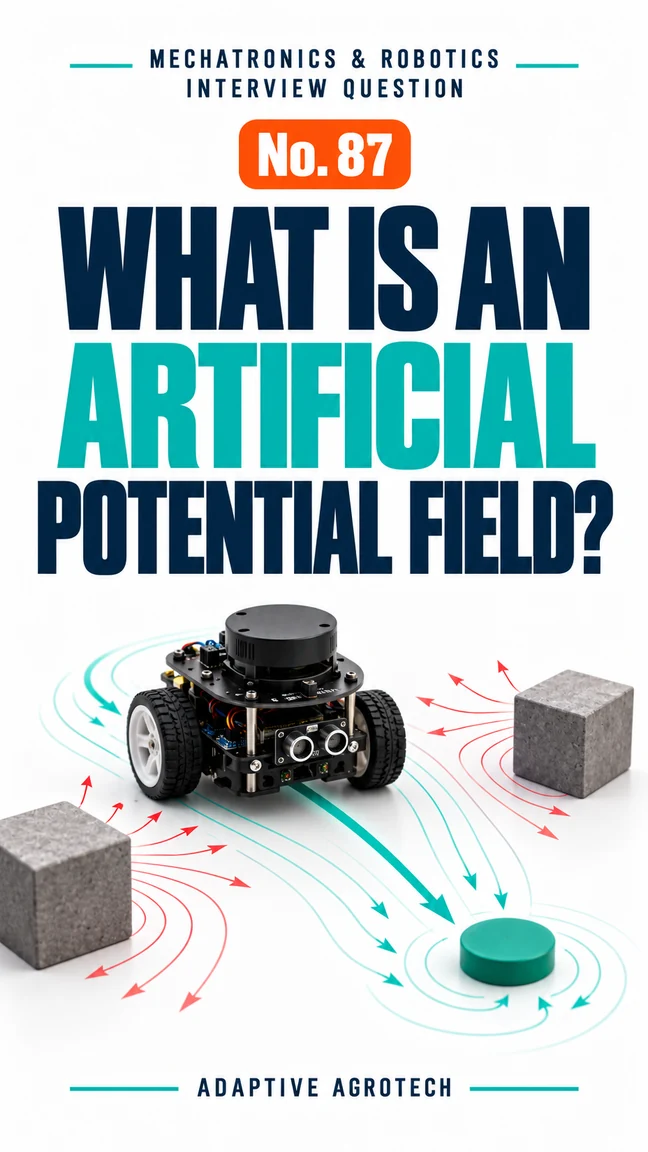
Motion planningNo. 087

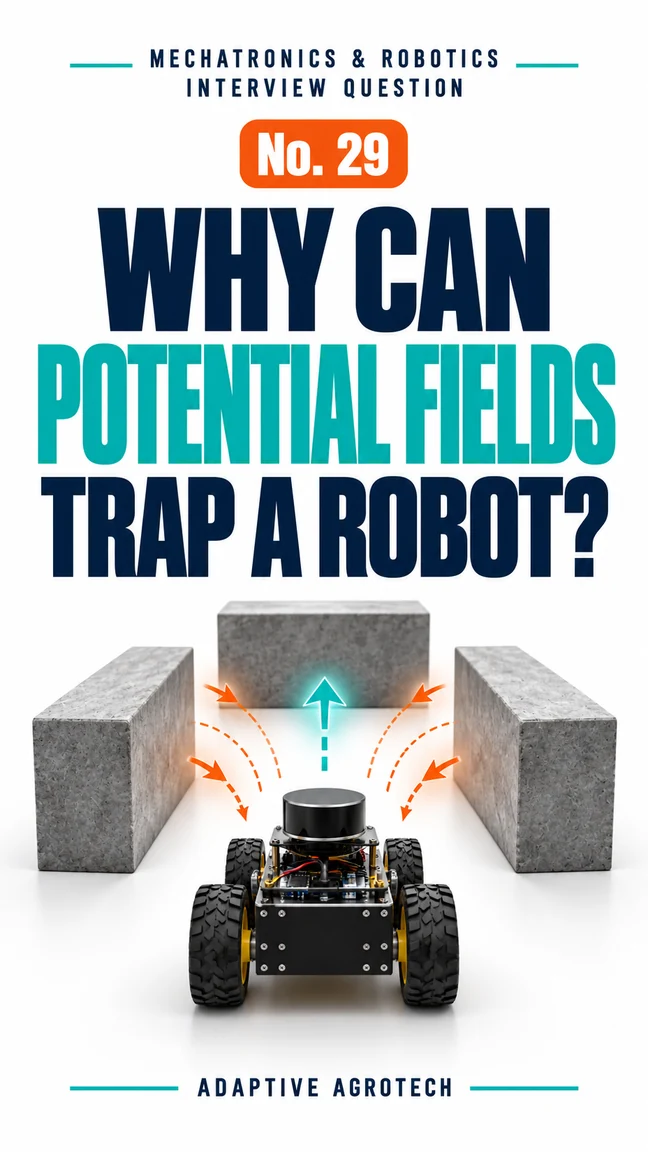
What is an Artificial Potential Field?

Artificial potential fields combine attraction toward a goal with repulsion from nearby obstacles. Following the resulting descent direction gives reactive motion, but opposing effects can cancel at a local minimum before the goal.

Watch & explore
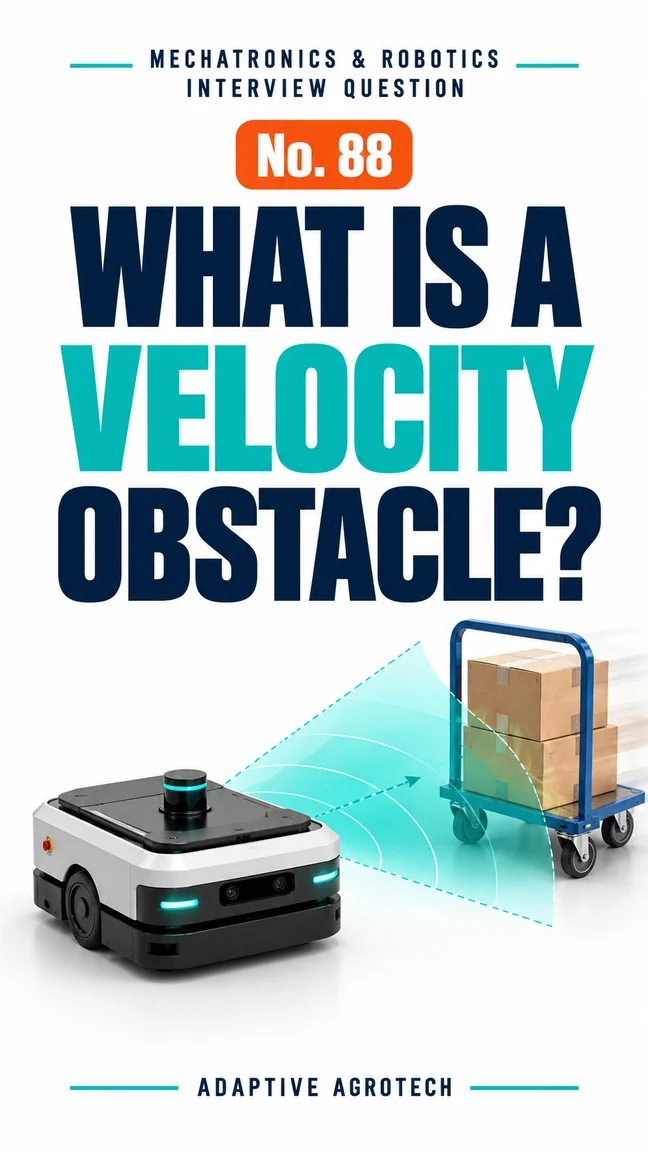
Motion planningNo. 088

What is a Velocity Obstacle?

A velocity obstacle identifies robot velocities that predict collision with a moving object. Relative geometry and assumed motion define the forbidden set; selected alternatives must also be reachable and updated as motion changes.

Watch & explore
Motion planningNo. 089

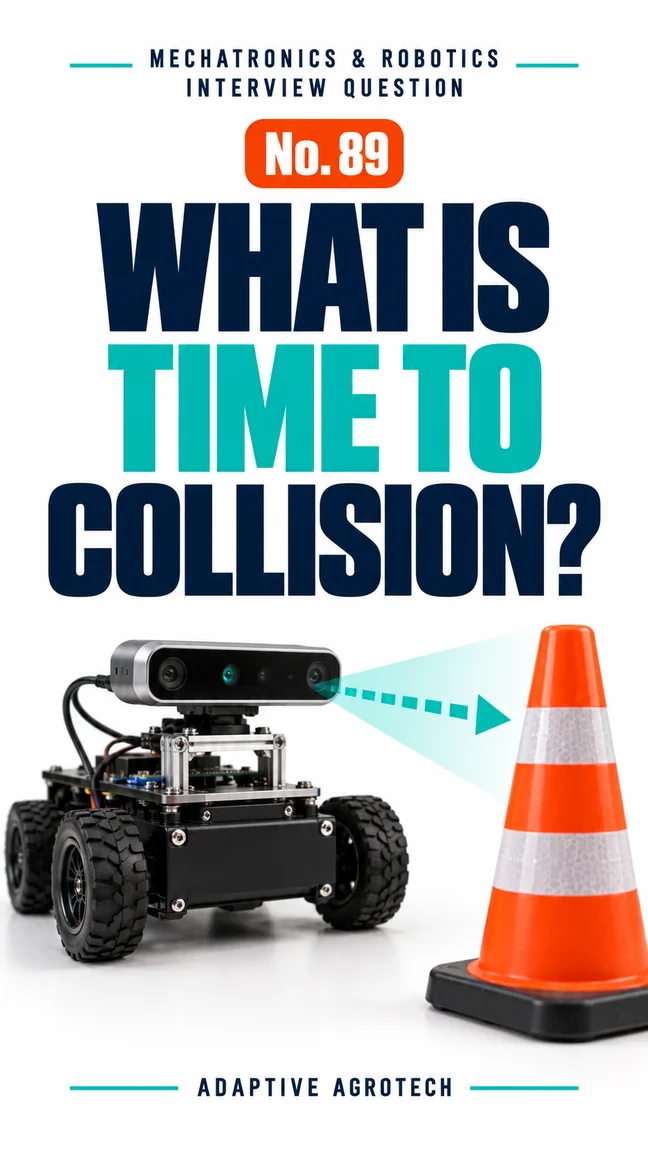
What is Time to Collision?

Time to collision predicts the time remaining before contact under an assumed motion model. Straight closing motion permits clearance divided by closing speed, while crossing trajectories require geometry and uncertainty to be considered.

Watch & explore
Communication & networksNo. 131

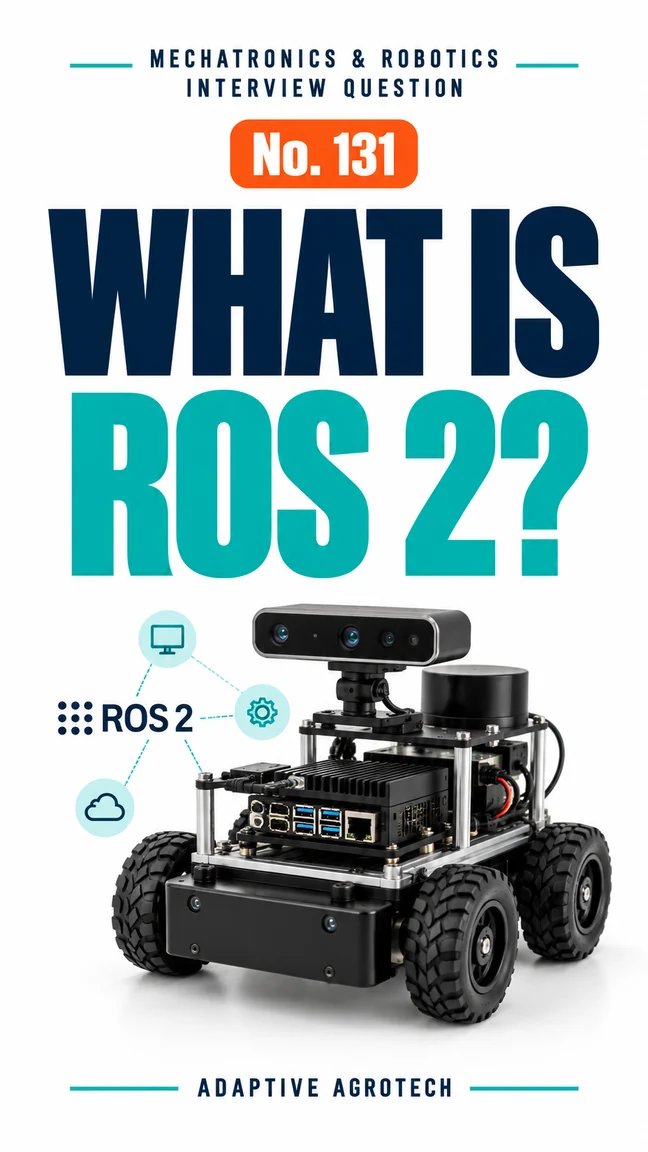
What is ROS 2?

ROS 2 organizes robot software into cooperating nodes with typed interfaces. Topics serve streams, services serve requests, and actions support longer tasks, while timing, motion behavior, and calibration still require engineering validation.

Watch & explore