Skip to content
Adaptive AgroTech NetworkUniversity of Southern Denmark · SDU Drone Center
Robotics · Mechatronics · Intelligent systems

Short videos.
Lasting understanding.

Explore one engineering idea at a time. Watch a short lesson, read the key concepts and test your understanding before your next interview, project or class.

22 topics found

Video · Key ideas · Check your understanding

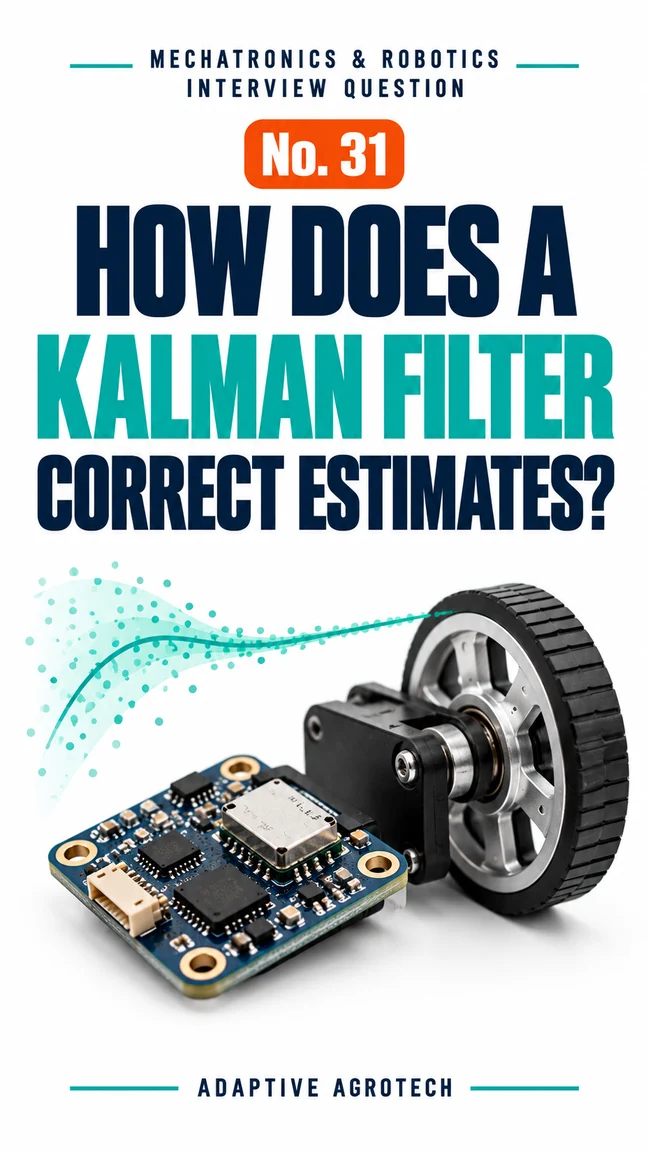
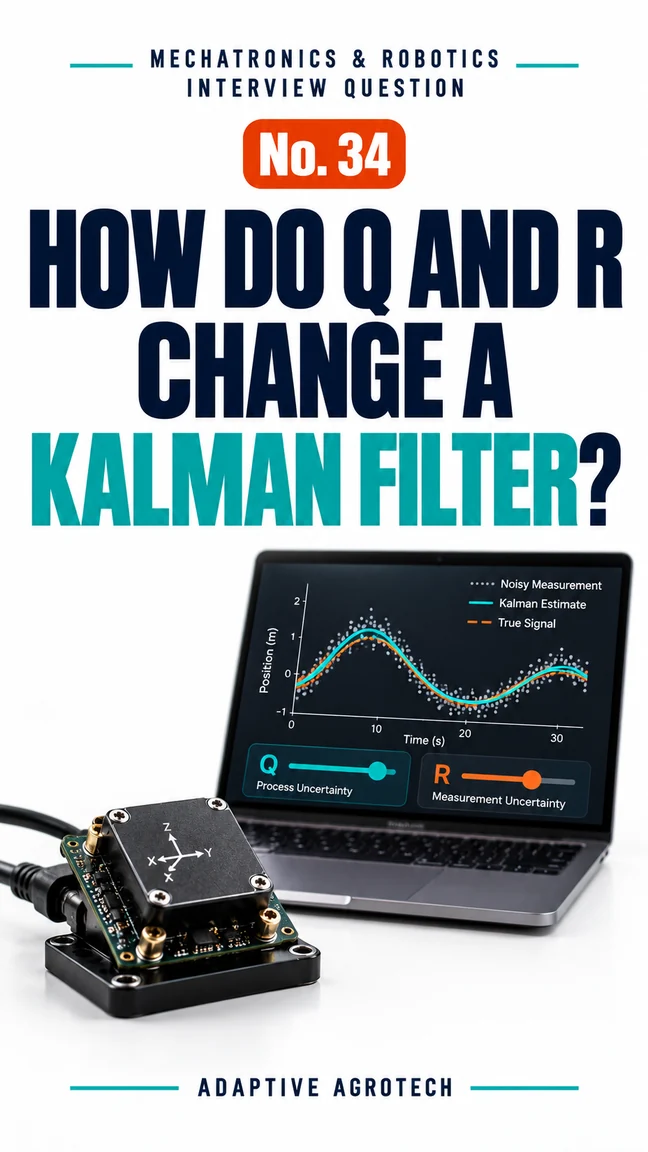
Localization & estimationNo. 031

The Kalman Filter: Predict, Measure, Correct

A Kalman filter recursively predicts hidden state and uncertainty, then corrects them with measurements. Innovation and relative variances determine correction strength, while valid linear Gaussian assumptions underpin the stated estimation guarantee.

Watch & explore
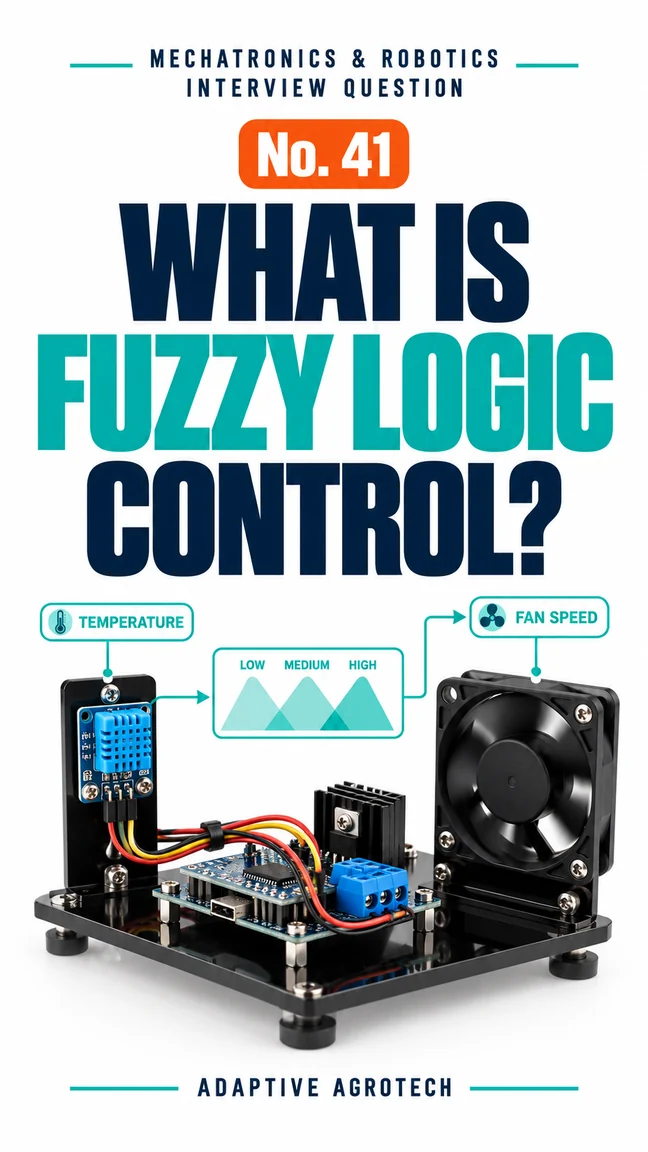
Control systemsNo. 041

What is Fuzzy Logic Control?

Fuzzy logic turns overlapping linguistic rules into a numeric control command. Multiple memberships can activate rules together, encoding practical knowledge while still requiring stability and operating-range validation under real disturbances and limits.

Watch & explore
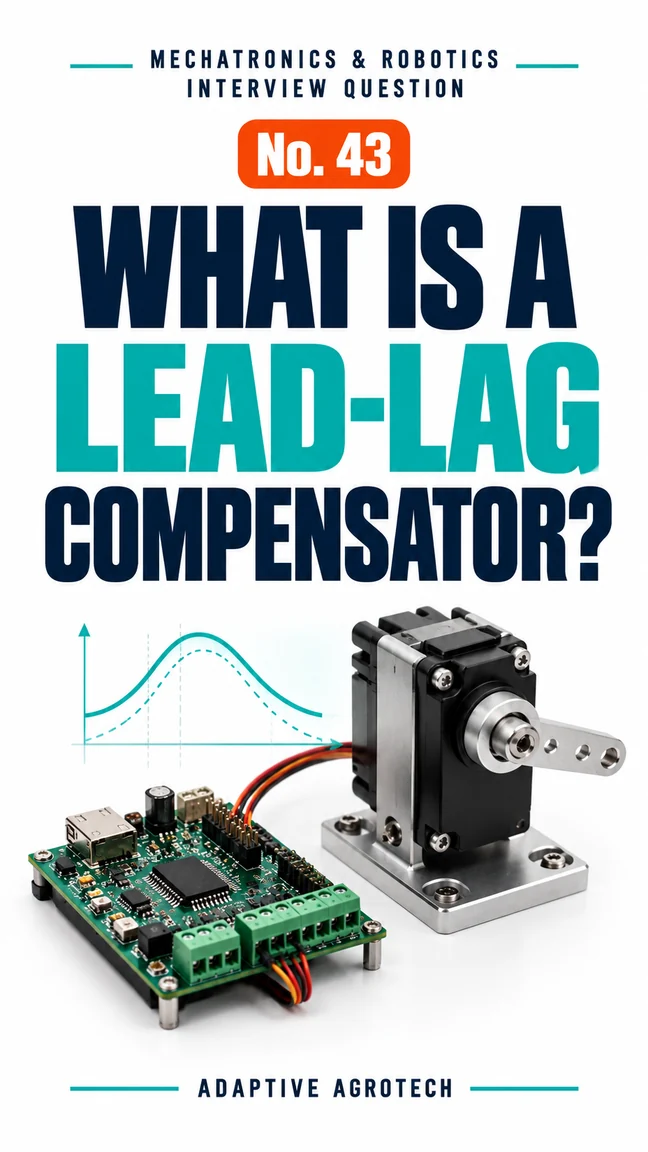
Control systemsNo. 043

What is a Lead-Lag Compensator?

A lead-lag compensator shapes a servo's frequency response through coordinated filters. Lead adds phase and lag improves relative low-frequency gain, with combined stability margins and noise sensitivity determining the final design.

Watch & explore
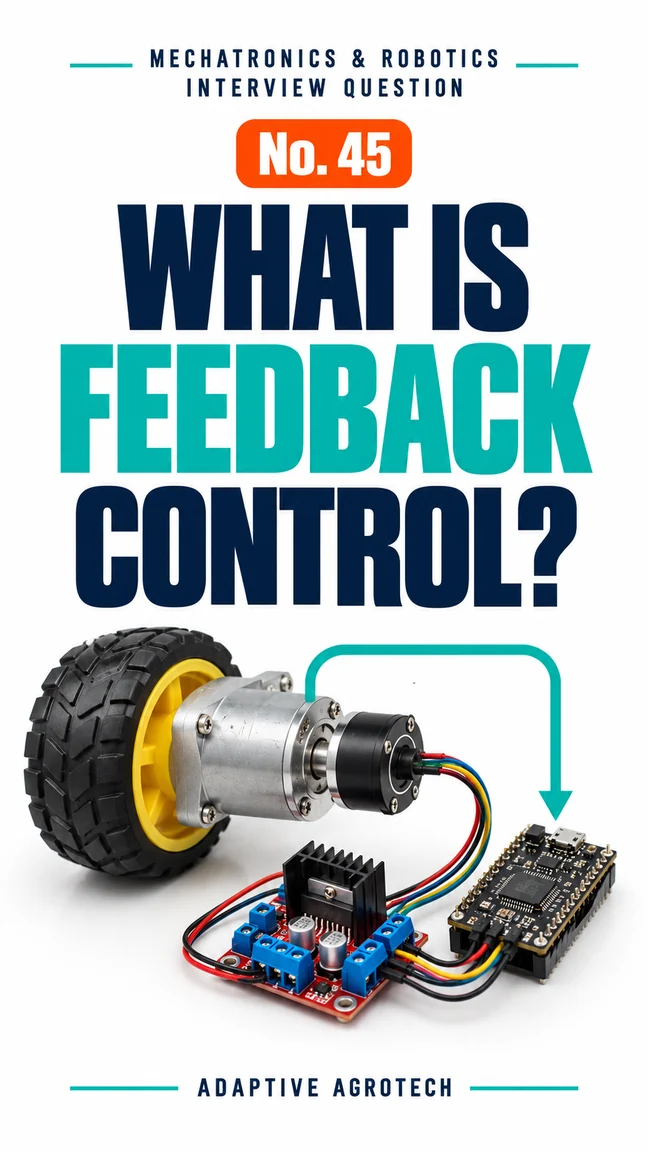
Control systemsNo. 045

What is Feedback Control?

Feedback compares measured robot behavior with a target and changes the next command to reduce error. It can reject changing loads, while excessive gain, sensor noise, or timing delay can instead produce oscillation.

Watch & explore
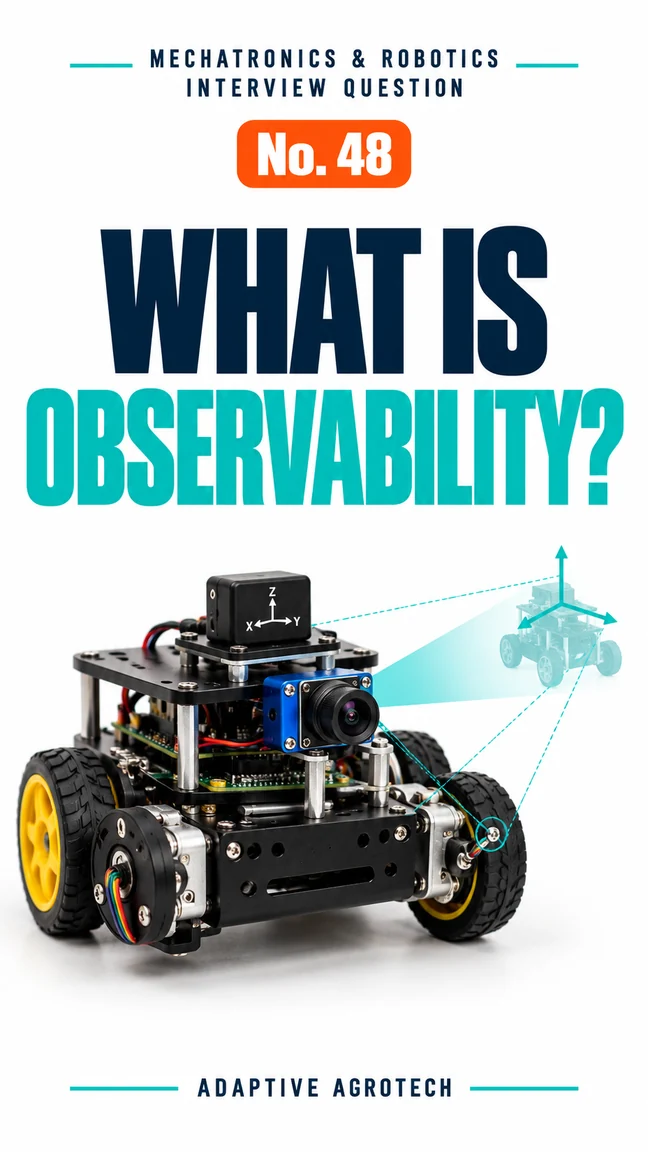
Control systemsNo. 048

What is Observability?

Observability asks whether model states can be inferred from output history and known inputs. Dynamics can reveal an unmeasured variable, while duplicate sensors may reduce noise without exposing previously hidden state information.

Watch & explore
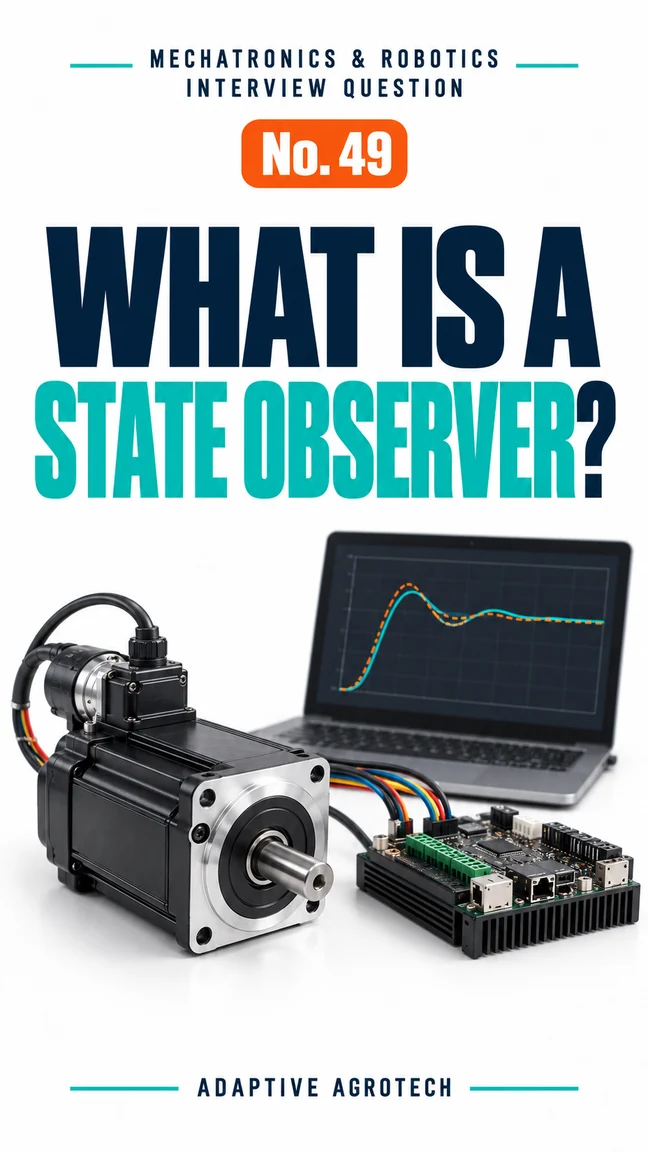
Localization & estimationNo. 049

What is a State Observer?

A state observer estimates internal variables by predicting with a model and correcting from measured outputs. Observer gain sets the correction response, with observability, noise sensitivity, and model error limiting the result.

Watch & explore
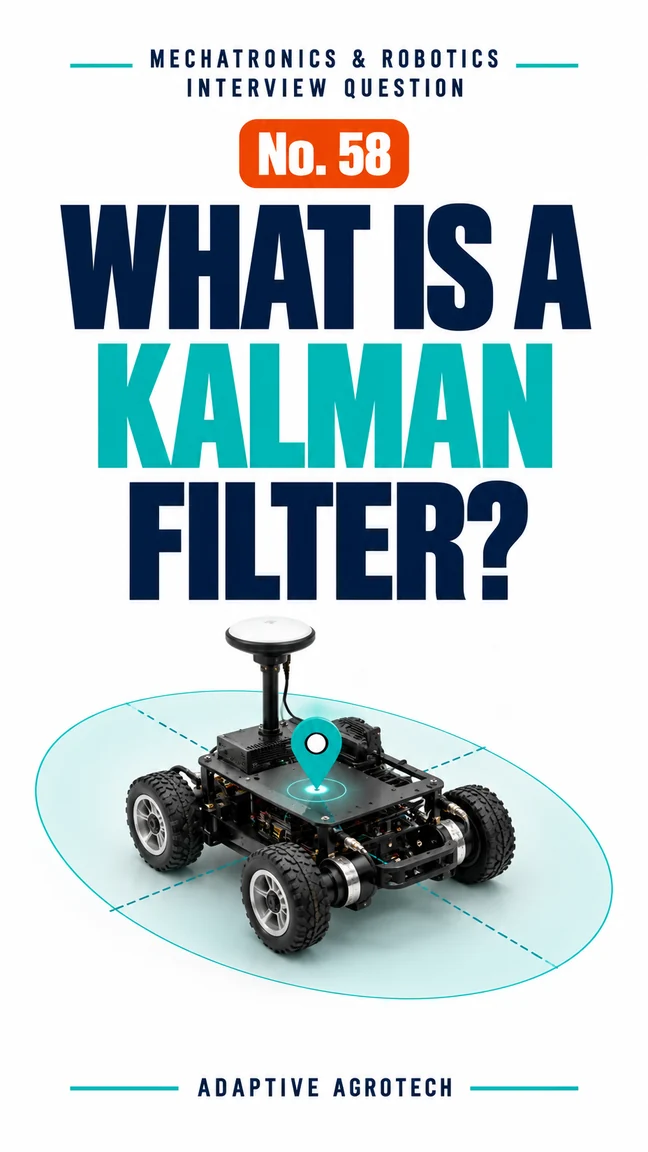
Localization & estimationNo. 058

What is a Kalman Filter?

A Kalman filter predicts state and uncertainty, then applies an uncertainty-based measurement correction. Its numerical precision depends on valid noise and motion models rather than ensuring that the physical estimate is accurate.

Watch & explore
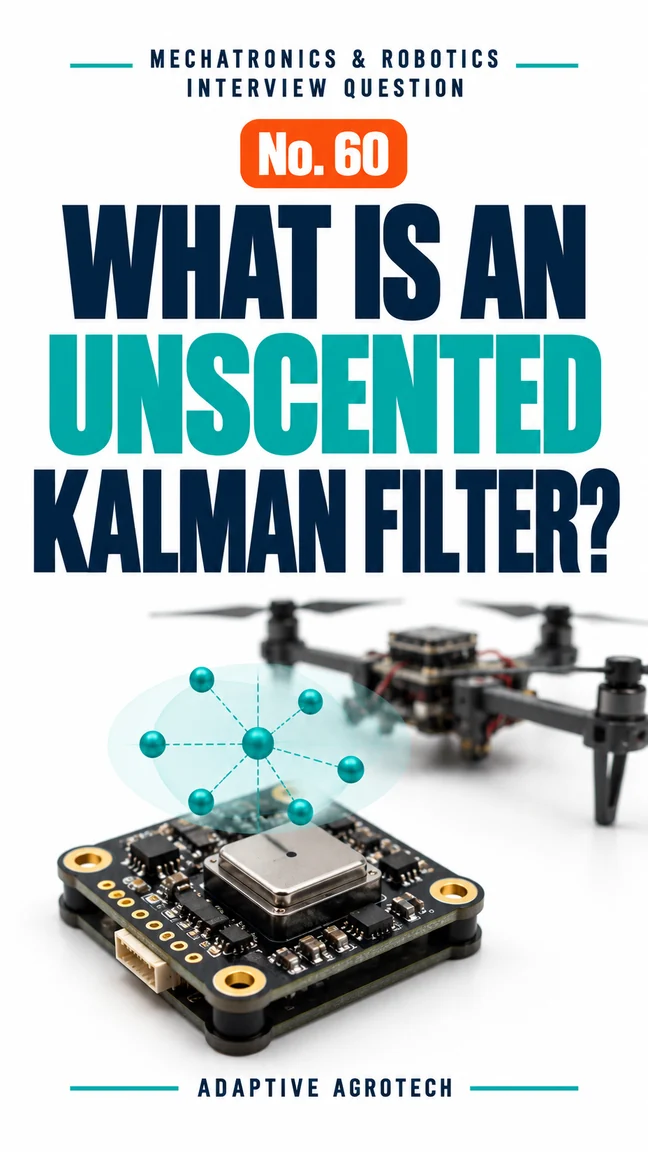
Localization & estimationNo. 060

What is an Unscented Kalman Filter?

The UKF represents mean and covariance with weighted sigma points and transforms them through nonlinear models. It avoids Jacobian calculation and can capture nonlinear effects, while retaining computational, noise-model, and tuning requirements.

Watch & explore
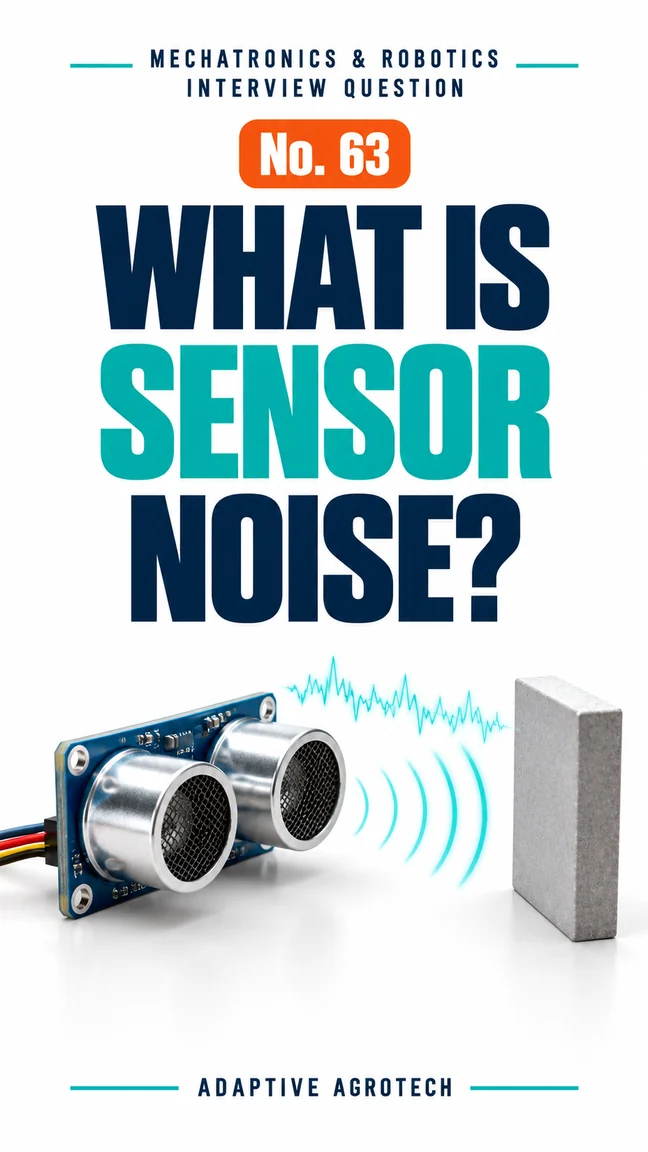
Sensors & perceptionNo. 063

What is Sensor Noise?

Sensor noise causes random measurement variation around the signal. Averaging can smooth readings but delays change detection, so representative logging and frequency analysis help preserve the motion information a controller needs.

Watch & explore
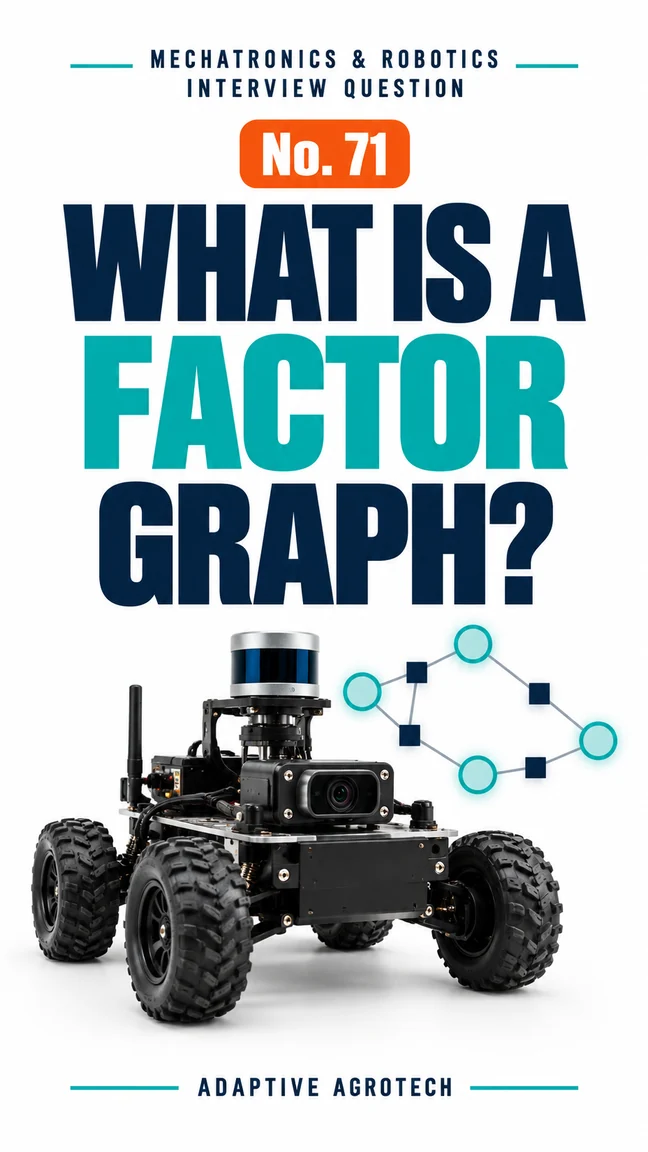
Localization & estimationNo. 071

What is a Factor Graph?

A factor graph separates unknown state variables from measurement and prior constraints. Sparse connections describe which variables each observation affects, and optimization seeks agreement using associations, noise models, and an initial estimate.

Watch & explore
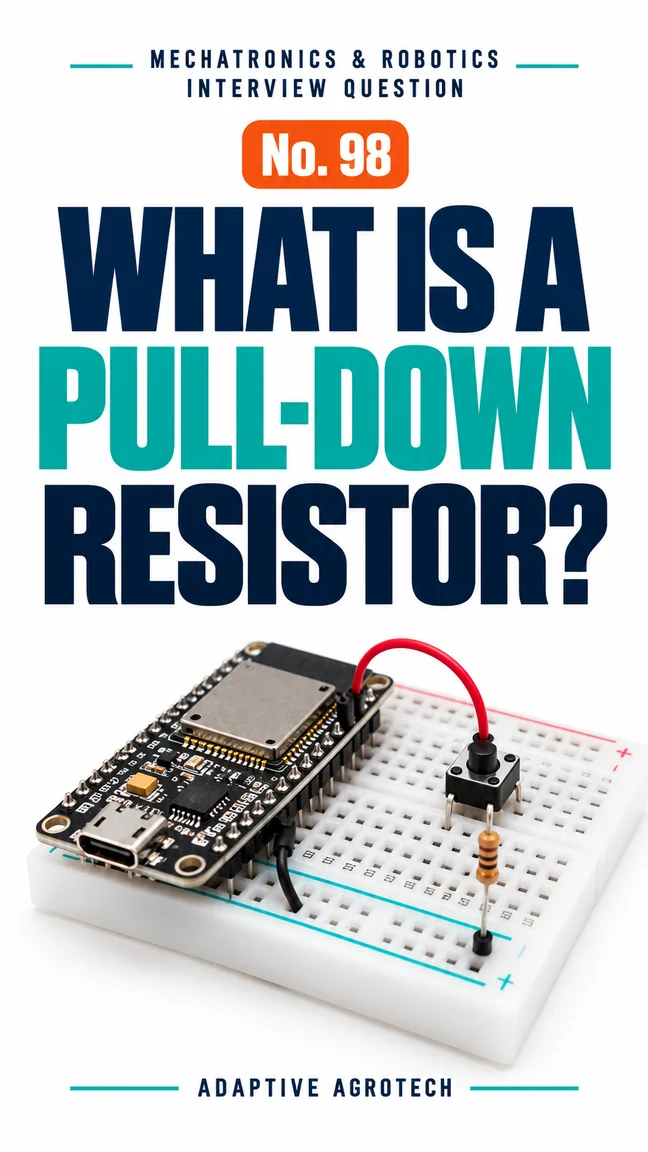
Embedded electronicsNo. 098

What is a Pull-Down Resistor?

A pull-down resistor holds an undriven digital input low and limits current when a switch drives it high. Reliable selection depends on input leakage, logic thresholds, and the circuit’s susceptibility to noise.

Watch & explore
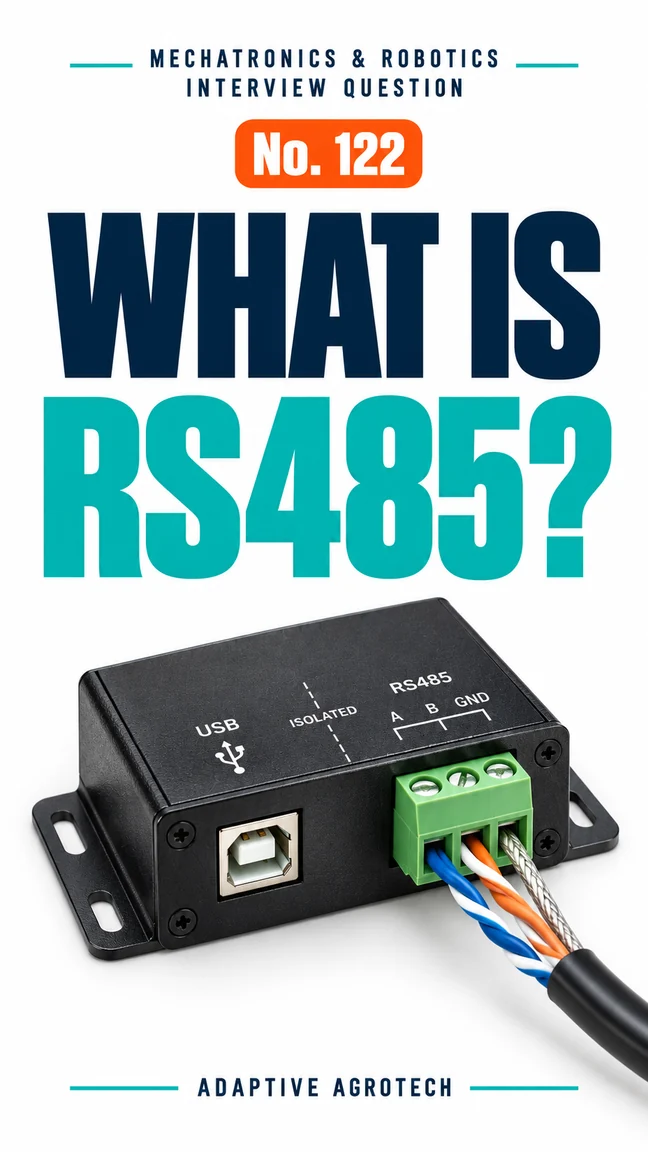
Communication & networksNo. 122

What is RS485?

RS485 specifies a differential electrical interface for serial communication. Multiple devices can share a half duplex pair with one active transmitter, while message structure, addressing, and timing come from a separate protocol.

Watch & explore
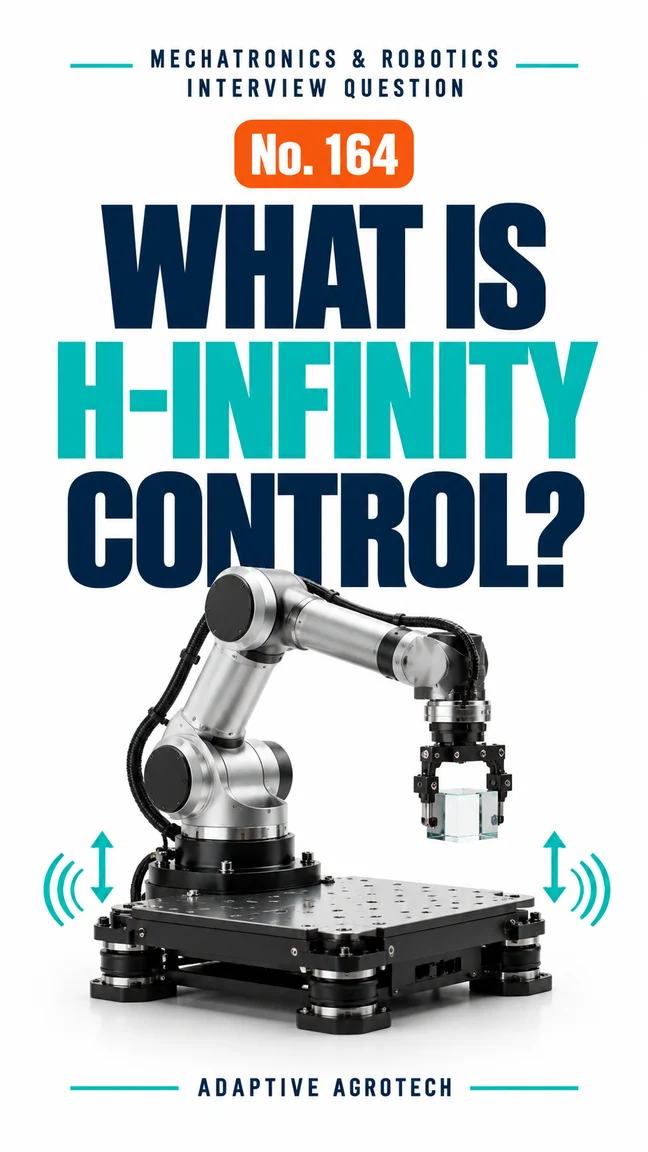
Control systemsNo. 164

What Is H-Infinity Control?

H infinity control limits the worst case amplification from disturbances to selected outputs. For a stable linear system, its H infinity norm measures the largest gain across frequency and input directions.

Watch & explore
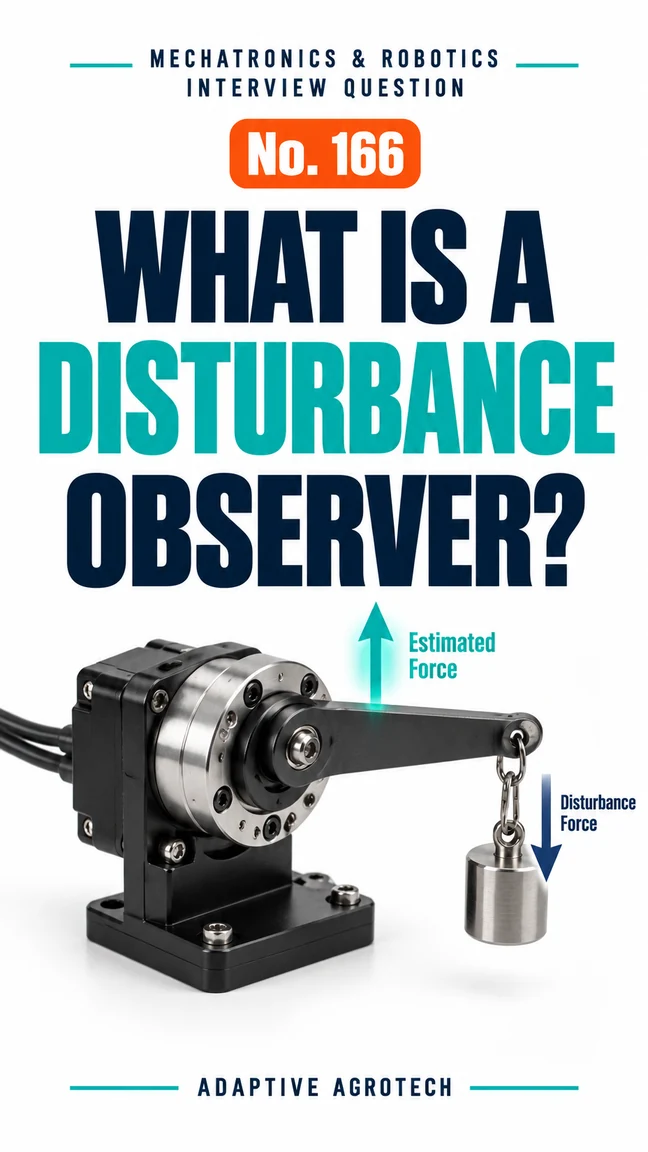
Control systemsNo. 166

What Is a Disturbance Observer?

A disturbance observer estimates an unknown influence from the robot input, measured output, and a nominal model. The estimate can include external loads and some model mismatch, depending on its structure and assumptions.

Watch & explore
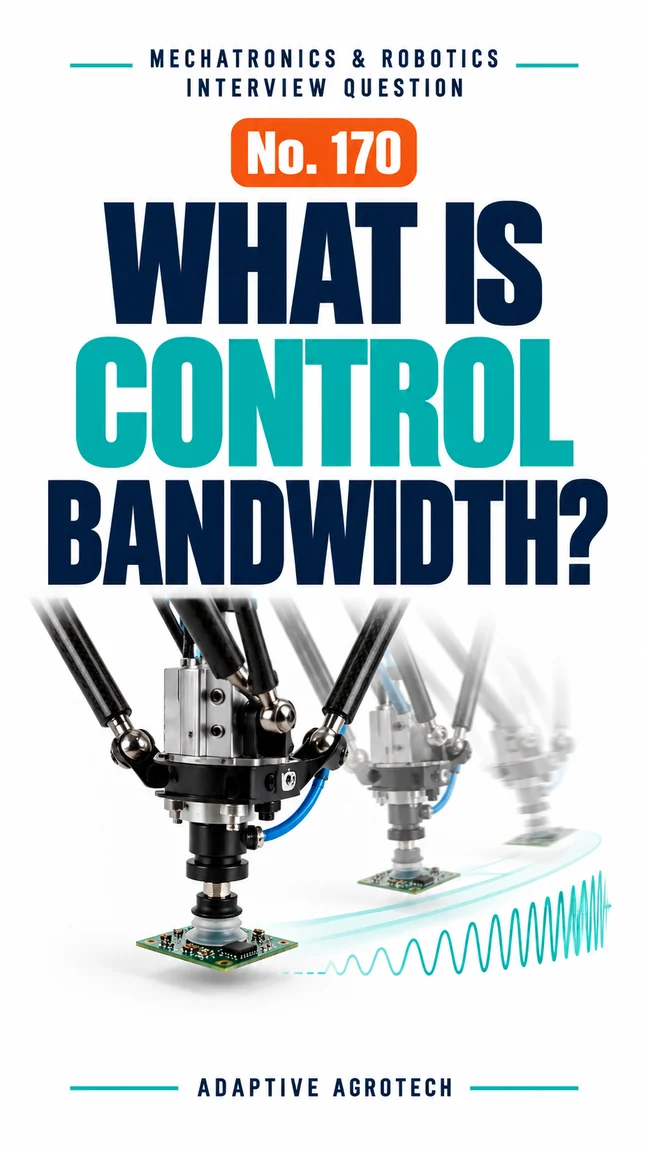
Control systemsNo. 170

What Is Control Bandwidth?

Control bandwidth describes the frequency range over which a closed loop responds effectively. For a common low pass tracking response, bandwidth is the first frequency where magnitude falls three decibels below its low frequency value.

Watch & explore
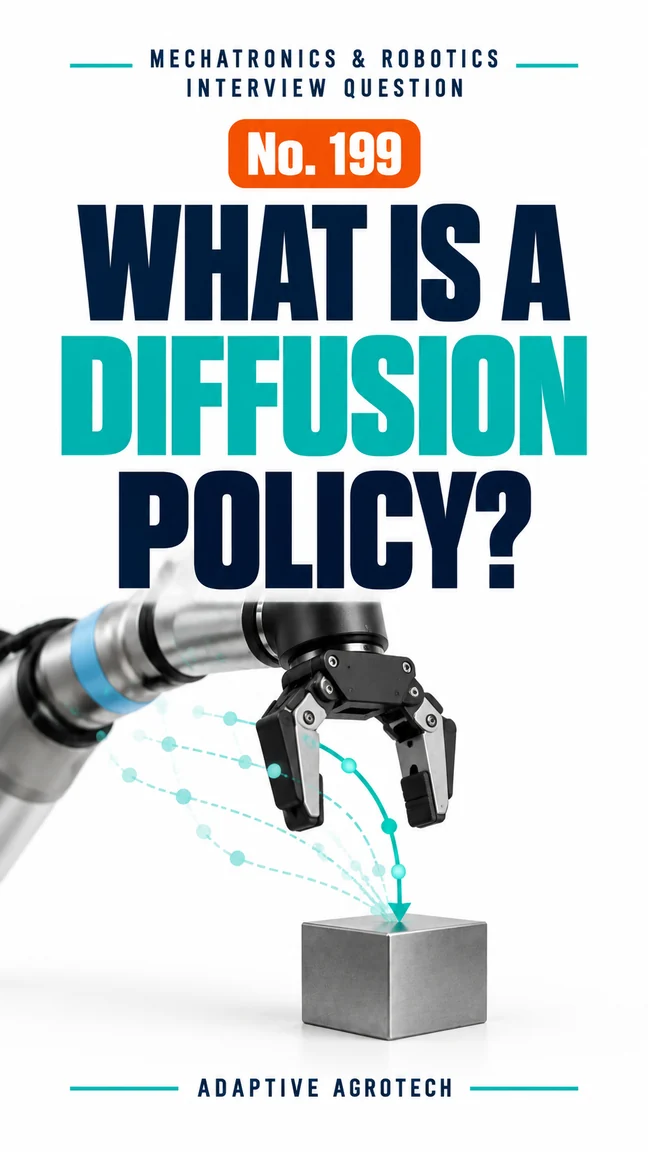
AI & machine learningNo. 199

What Is a Diffusion Policy?

A diffusion policy learns to generate robot action sequences by gradually removing noise. During inference, observations condition this process, so an initially noisy sequence becomes a candidate movement consistent with the learned demonstrations.

Watch & explore
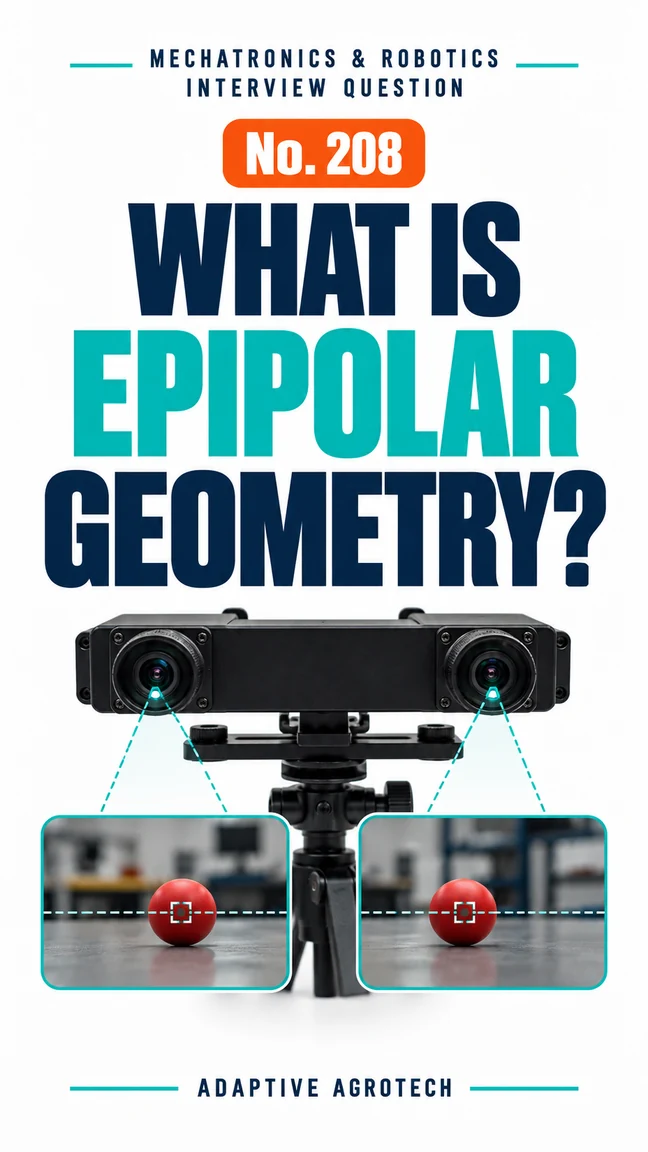
Computer visionNo. 208

What Is Epipolar Geometry?

Epipolar geometry relates two views of the same three dimensional scene. Given a point in one image, its matching point in the other image lies on an epipolar line, when the camera geometry and correspondence assumptions hold.

Watch & explore