Skip to content
Adaptive AgroTech NetworkUniversity of Southern Denmark · SDU Drone Center
Robotics · Mechatronics · Intelligent systems

Short videos.
Lasting understanding.

Explore one engineering idea at a time. Watch a short lesson, read the key concepts and test your understanding before your next interview, project or class.

14 topics found

Video · Key ideas · Check your understanding

Control systemsNo. 024

How a Robot Finds and Docks at Its Charger

Automatic docking combines navigation, close-range pose sensing, slow alignment, and electrical confirmation. Successful motion alone is insufficient: charging feedback, timeouts, and bounded recovery attempts determine whether docking actually succeeded.

Watch & explore
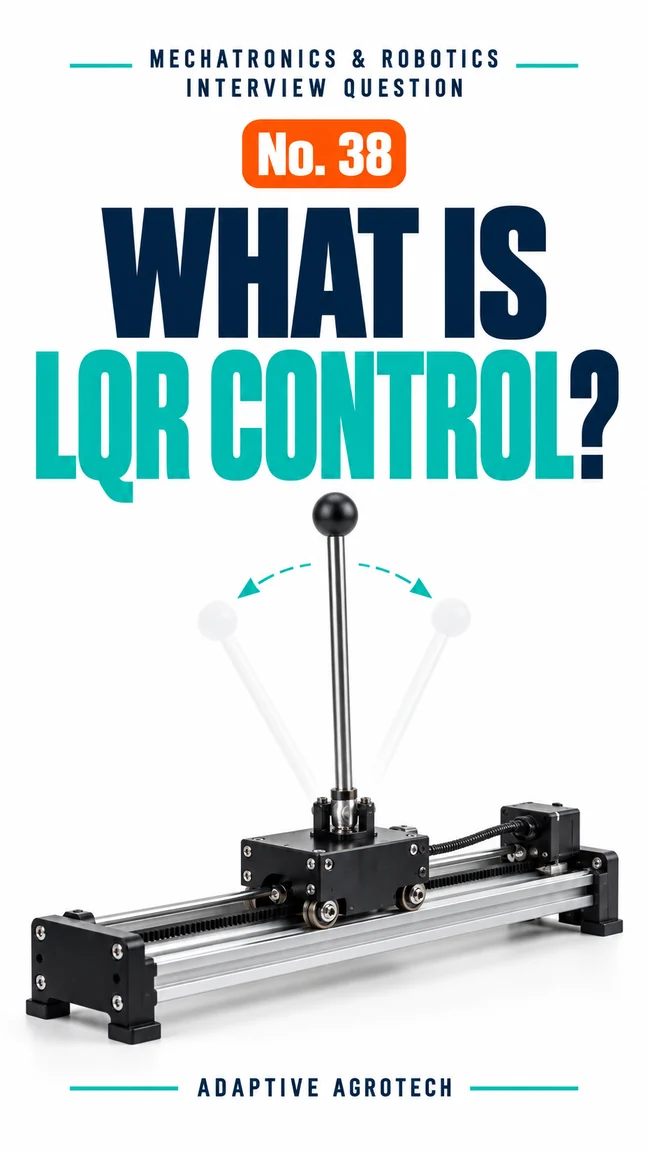
Control systemsNo. 038

What is LQR?

LQR chooses state-feedback gains that balance state error against control effort in a linear model. Cost weights shape behavior, while the basic regulator does not impose hard actuator constraints or eliminate model error.

Watch & explore
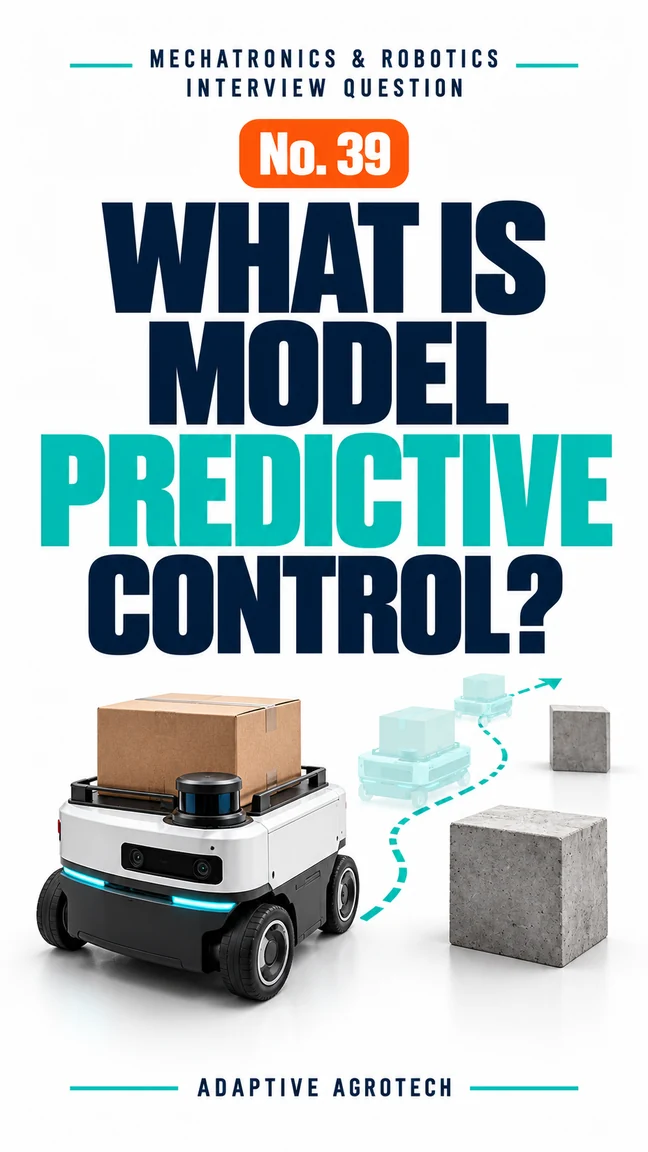
Control systemsNo. 039

What is Model Predictive Control?

MPC optimizes a sequence of predicted control moves under included constraints, then applies the first move and repeats. New measurements refresh the plan, but prediction errors and solver deadlines limit practical performance.

Watch & explore
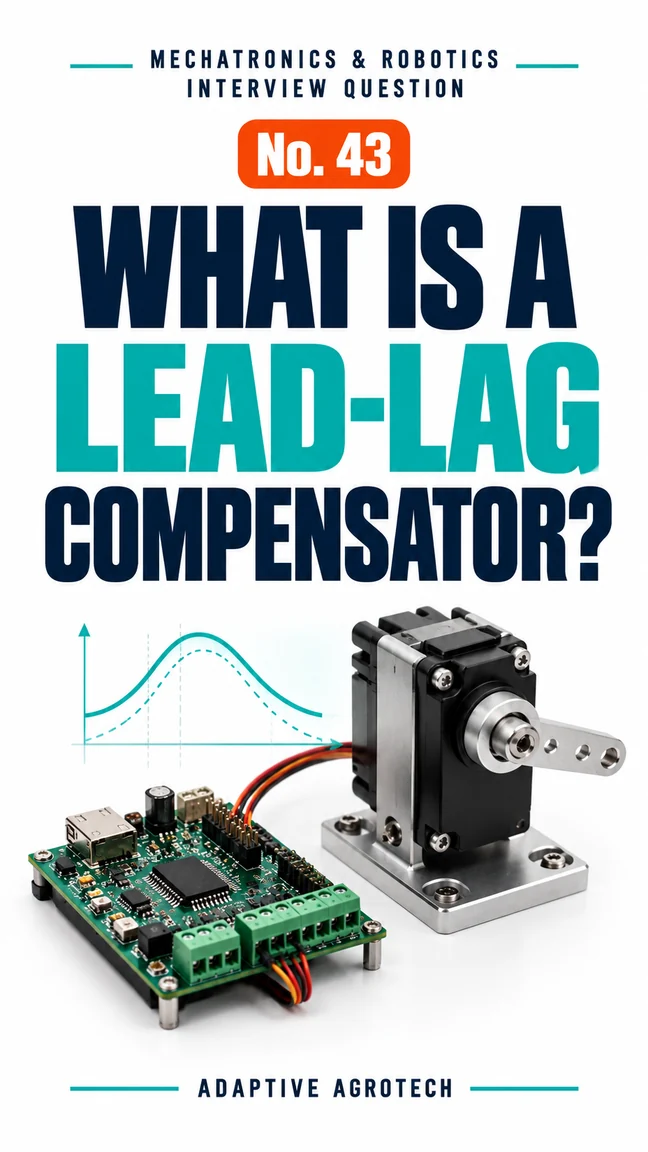
Control systemsNo. 043

What is a Lead-Lag Compensator?

A lead-lag compensator shapes a servo's frequency response through coordinated filters. Lead adds phase and lag improves relative low-frequency gain, with combined stability margins and noise sensitivity determining the final design.

Watch & explore
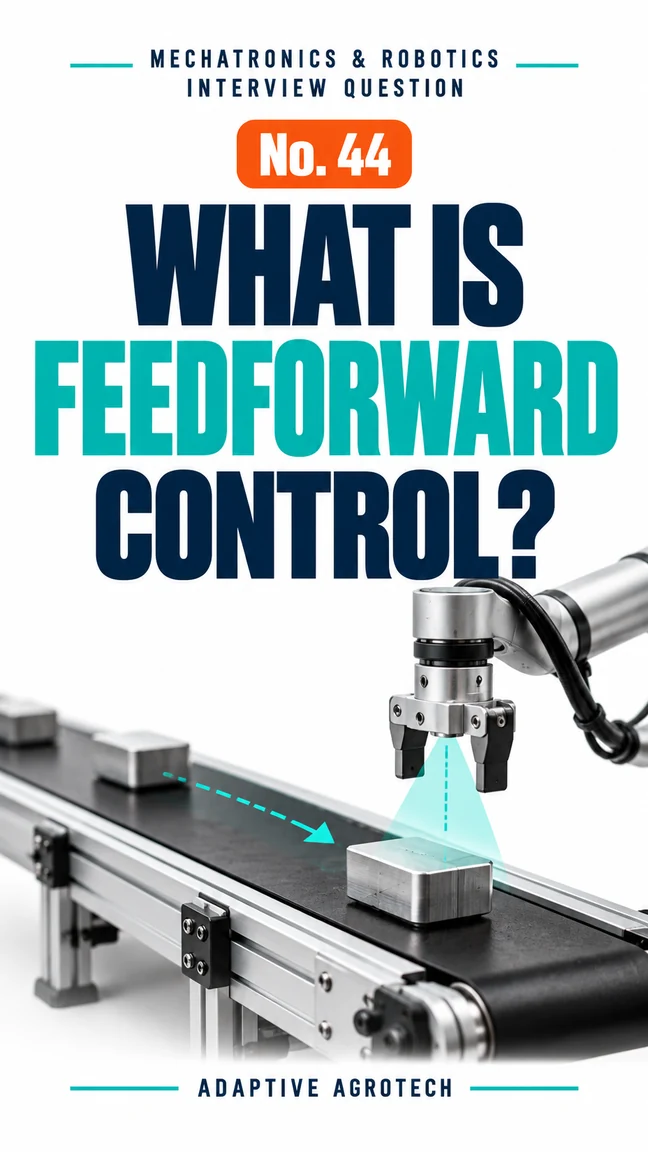
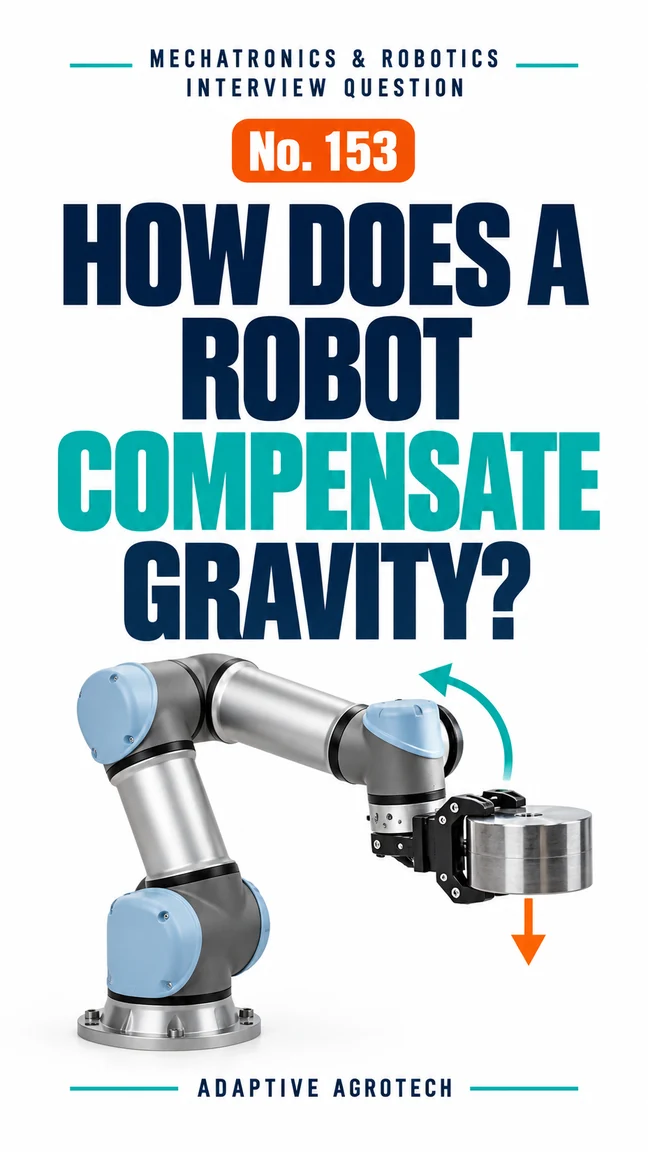
Control systemsNo. 044

What is Feedforward Control?

Feedforward predicts required control effort from desired motion or measured disturbances. Gravity compensation and model-based wheel commands reduce feedback's workload, while model mismatch and motor limits still require feedback correction.

Watch & explore
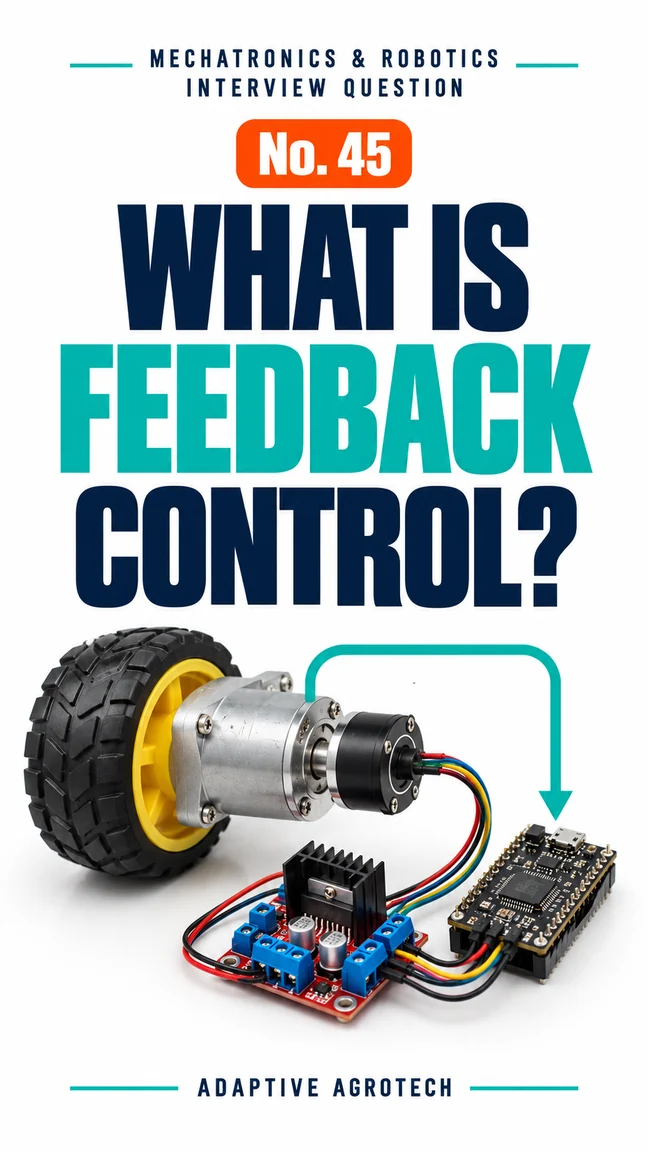
Control systemsNo. 045

What is Feedback Control?

Feedback compares measured robot behavior with a target and changes the next command to reduce error. It can reject changing loads, while excessive gain, sensor noise, or timing delay can instead produce oscillation.

Watch & explore
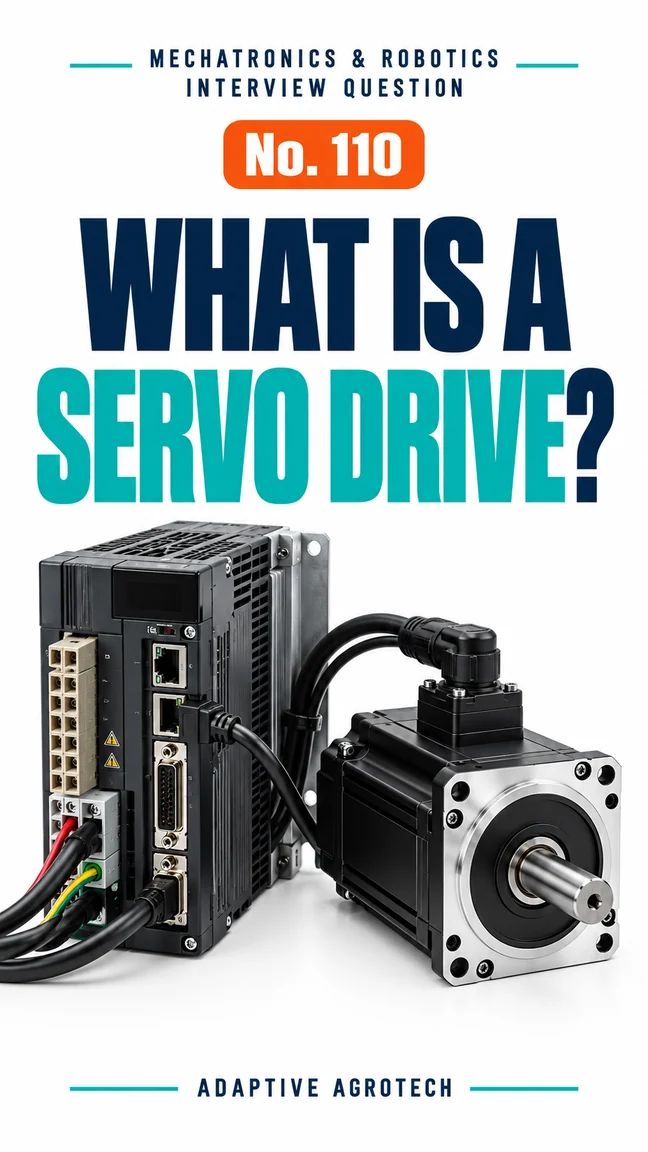
Control systemsNo. 110

What is a Servo Drive?

A servo drive controls motor power using feedback to follow a motion or torque command. Common nested current, speed, and position loops must be tuned around the real mechanics and operating limits.

Watch & explore
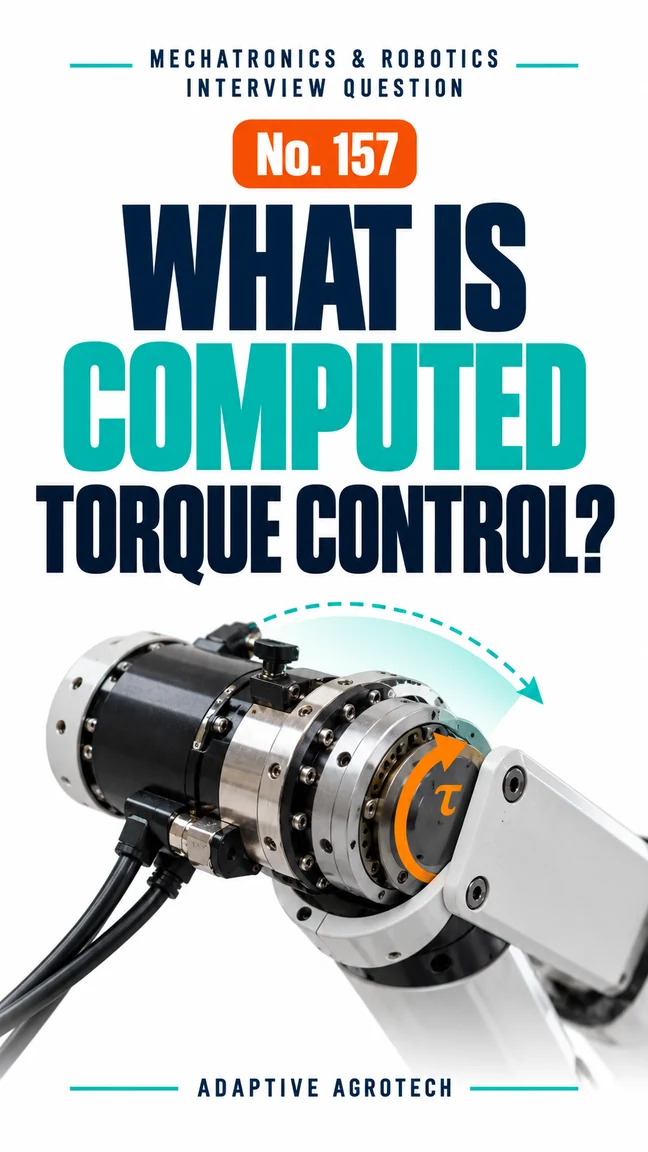
Control systemsNo. 157

What Is Computed Torque Control?

Computed torque control combines a robot dynamics model with tracking feedback to request joint torque. Ideal model cancellation can simplify error dynamics, while real payload errors, friction, and saturation limit the result.

Watch & explore
Control systemsNo. 162

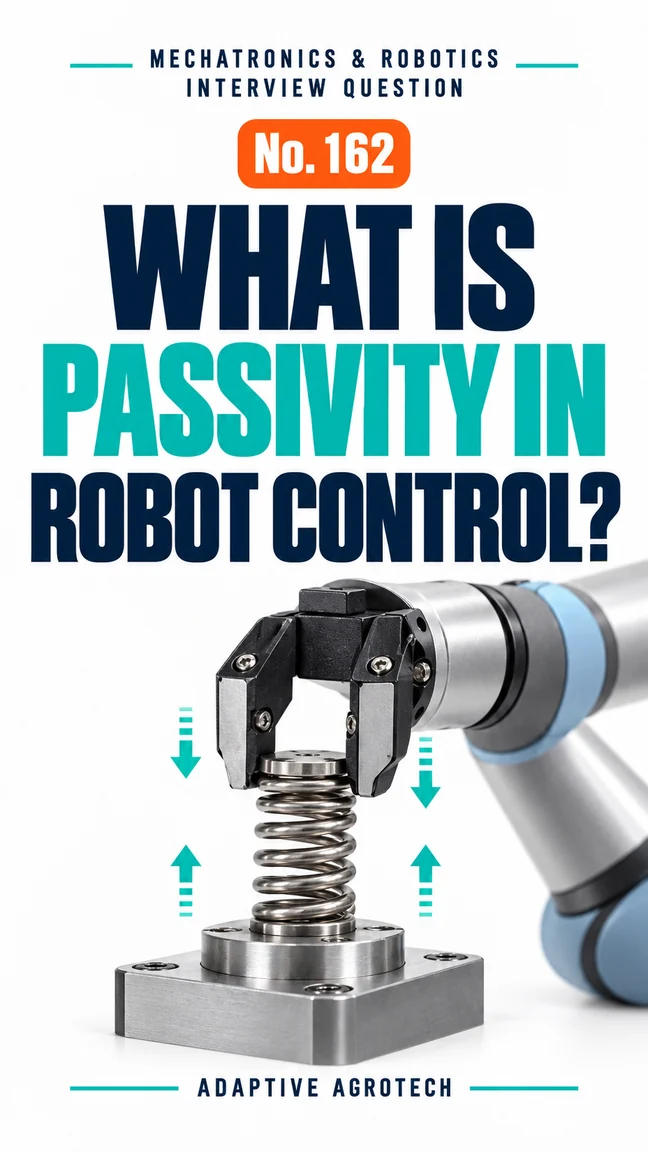
What Is Passivity in Robot Control?

Passivity is an input–output energy property. A passive system cannot supply more energy than it initially stores plus the energy it receives. For mechanical interaction, force and velocity form a power pair at the contact.

Watch & explore
Control systemsNo. 168

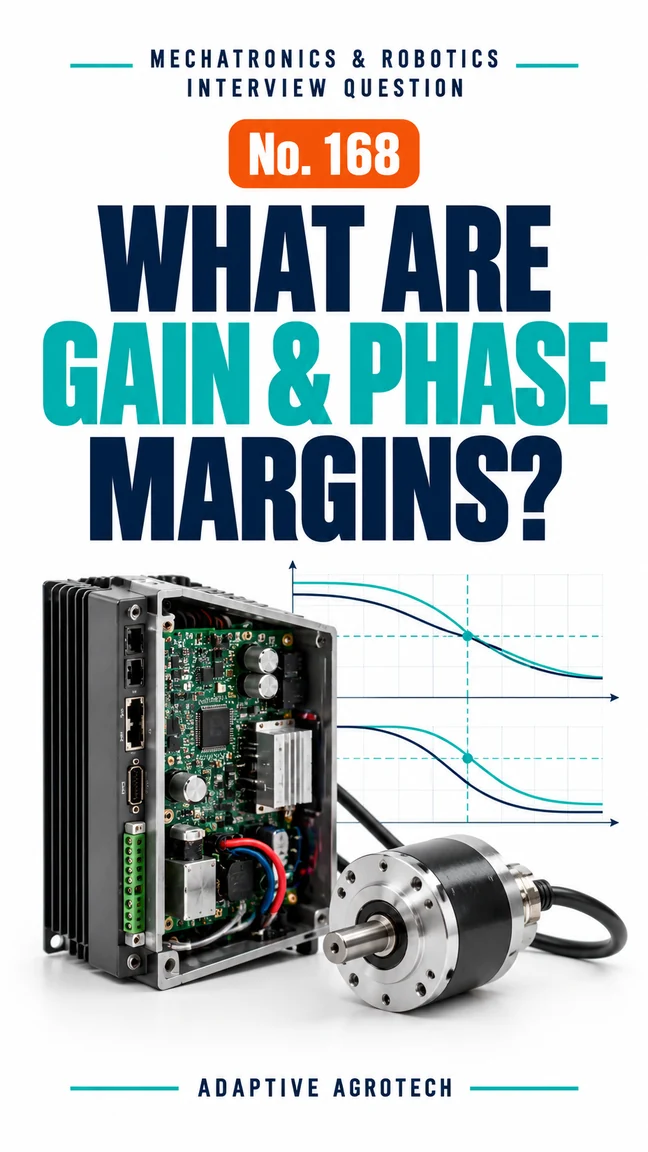
What Are Gain Margin and Phase Margin?

Gain and phase margins describe how a loop can change before reaching a stability boundary. For standard negative feedback, phase margin is measured at unity loop gain. Gain margin uses the minus one hundred eighty degree phase crossover.

Watch & explore