Skip to content
Adaptive AgroTech NetworkUniversity of Southern Denmark · SDU Drone Center
Robotics · Mechatronics · Intelligent systems

Short videos.
Lasting understanding.

Explore one engineering idea at a time. Watch a short lesson, read the key concepts and test your understanding before your next interview, project or class.

20 topics found

Video · Key ideas · Check your understanding

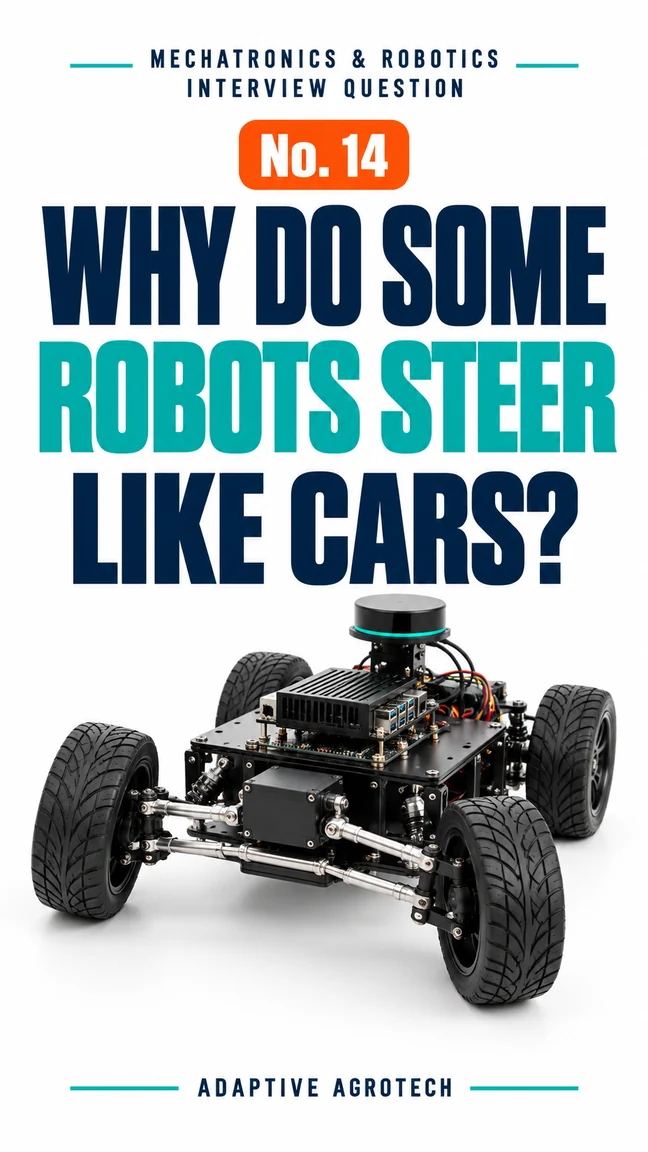
Robot kinematicsNo. 014

Why Some Robots Steer Like Cars

Car-like steering follows curved rolling paths. Ackermann geometry turns the inside wheel more sharply, while wheelbase and steering limits determine turning radius and constrain the manoeuvres a planner can request.

Watch & explore
Robot kinematicsNo. 021

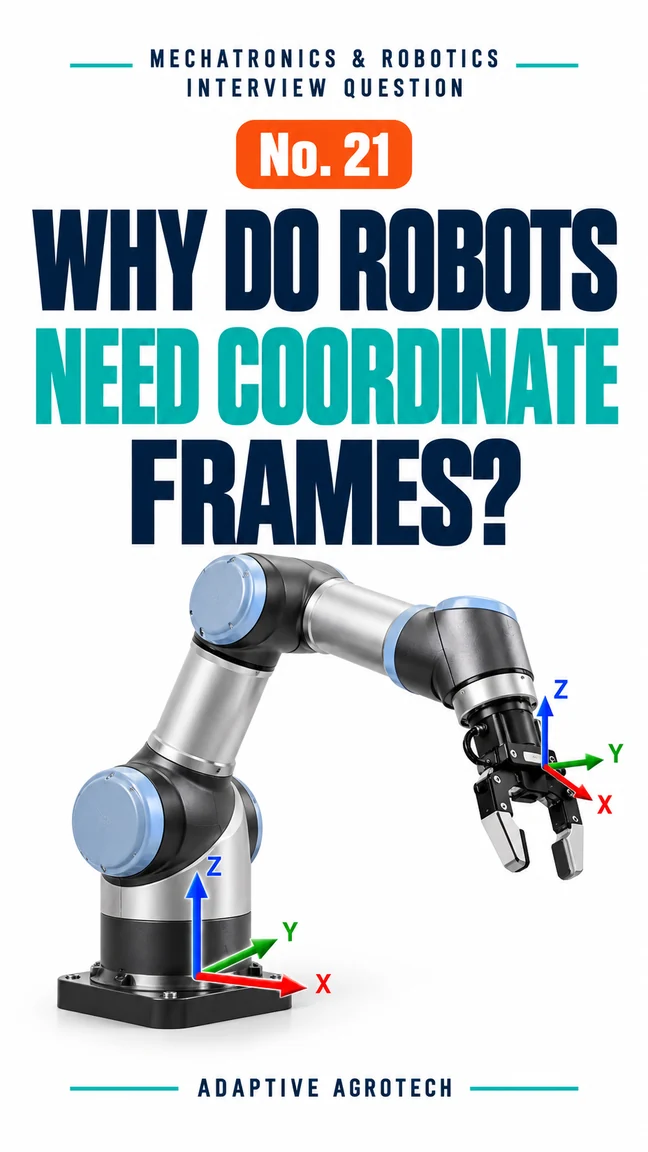
Why a Robot Needs Coordinate Frames

Coordinate frames describe the same physical point from different origins and axes. Rigid transforms connect sensor, robot, and map coordinates, and correct composition requires consistent directions, conventions, and measurement timestamps.

Watch & explore
Robot kinematicsNo. 093

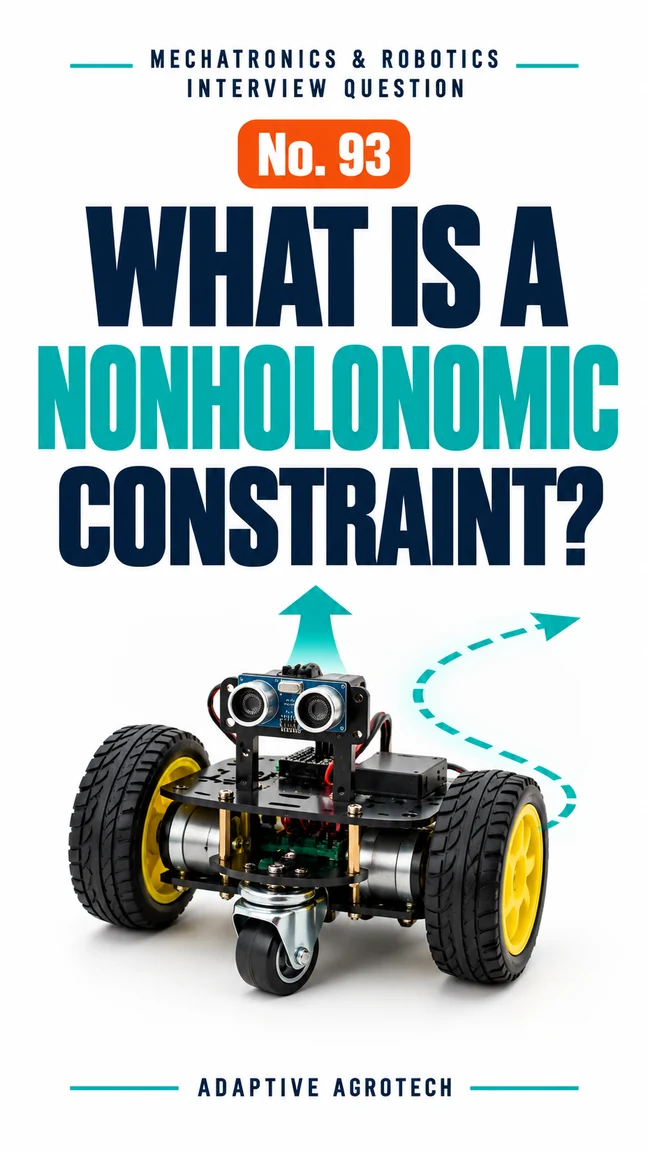
What is a Nonholonomic Constraint?

A nonholonomic constraint limits instantaneous velocities without reducing all positions reachable over time. Rolling wheels illustrate this distinction: a car cannot slide sideways immediately, yet sequences of arcs can change its lateral position.

Watch & explore
Robot kinematicsNo. 094

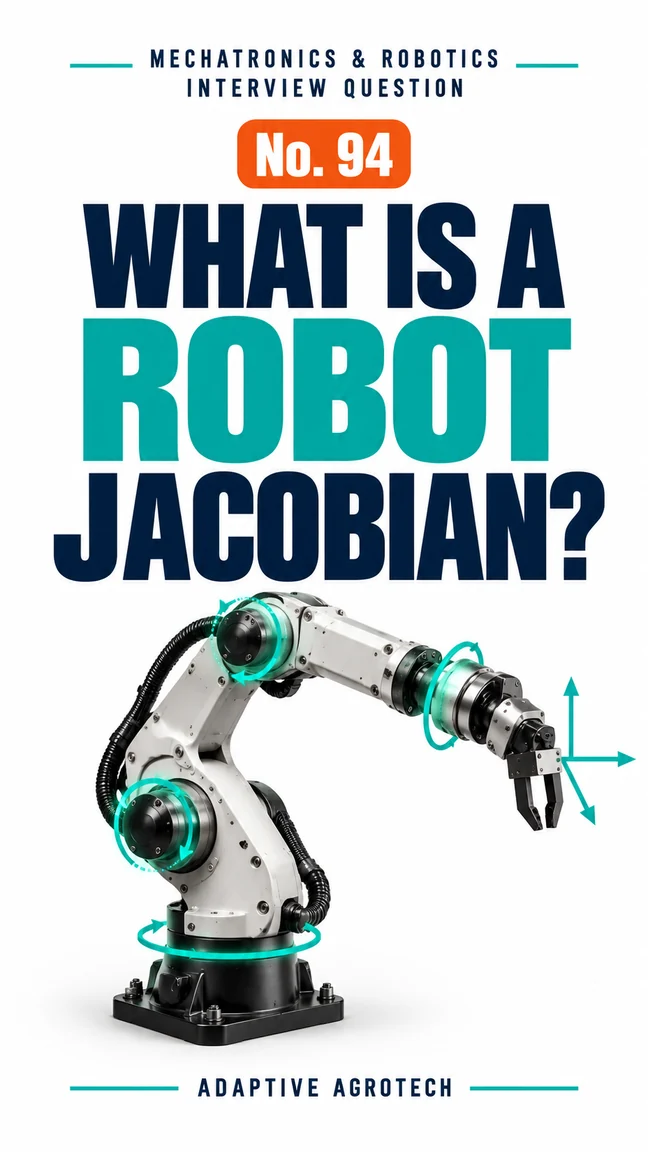
What is a Robot Jacobian?

The robot Jacobian maps joint rates to instantaneous tool velocity at a particular configuration. Its columns describe individual joint contributions, making it useful for local motion and force calculations rather than complete path planning.

Watch & explore
Robot kinematicsNo. 095

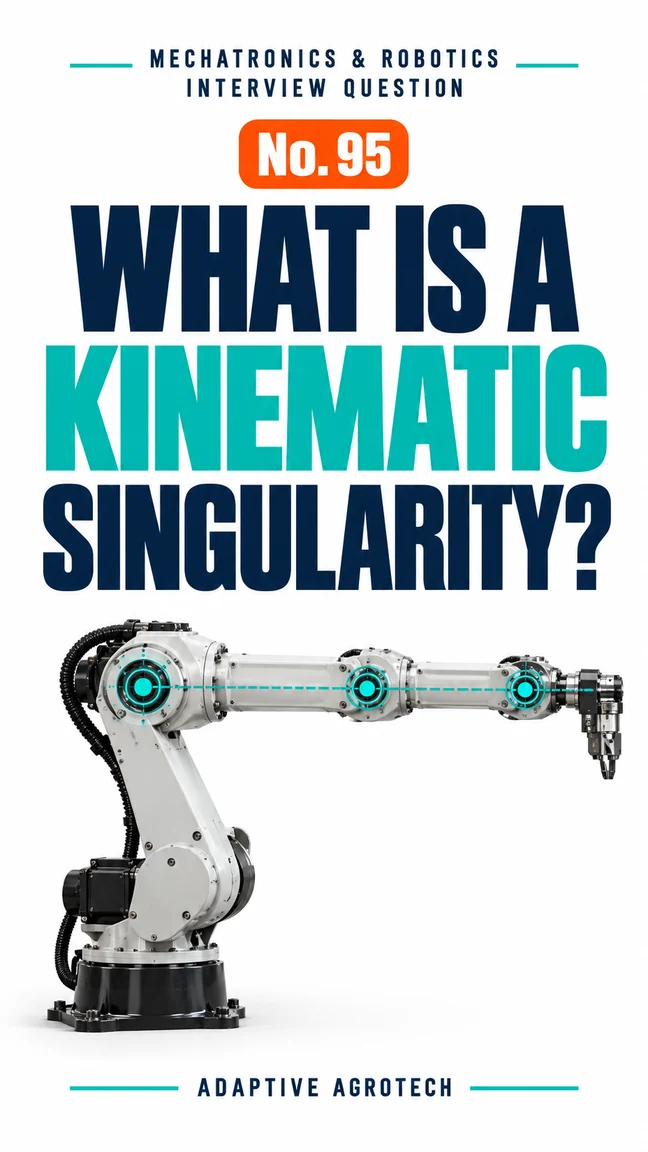
What is a Kinematic Singularity?

A kinematic singularity occurs where the robot Jacobian loses rank and an instantaneous tool motion direction disappears. Near such poses, inverse velocity commands can grow large even when a target position remains reachable.

Watch & explore
Robot kinematicsNo. 096

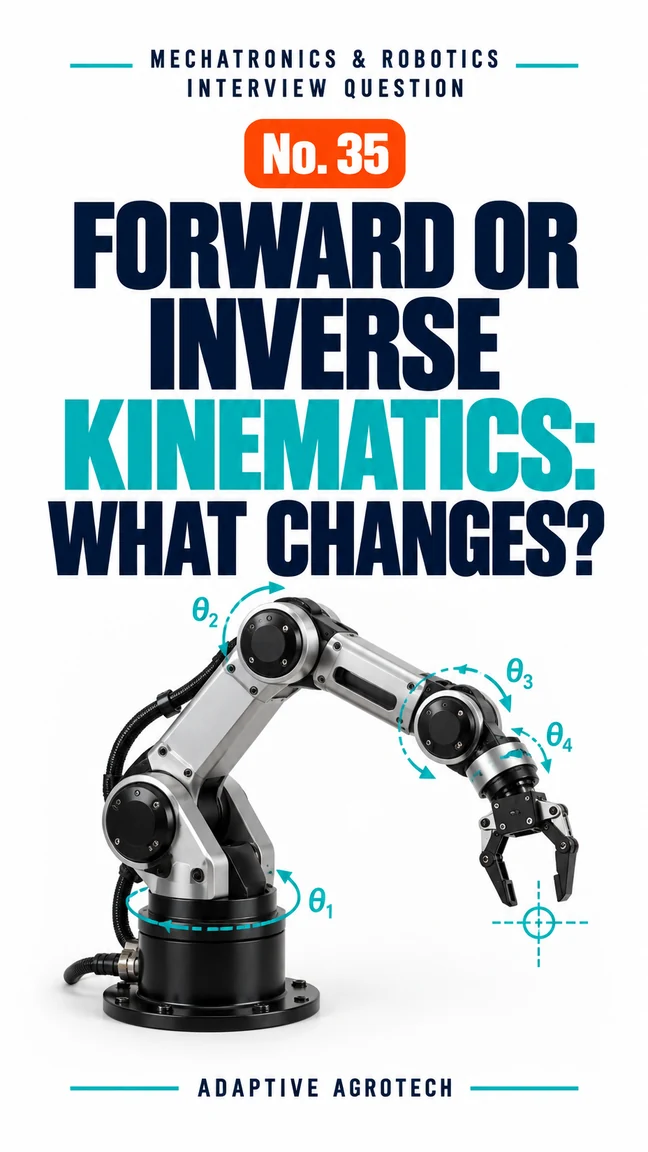
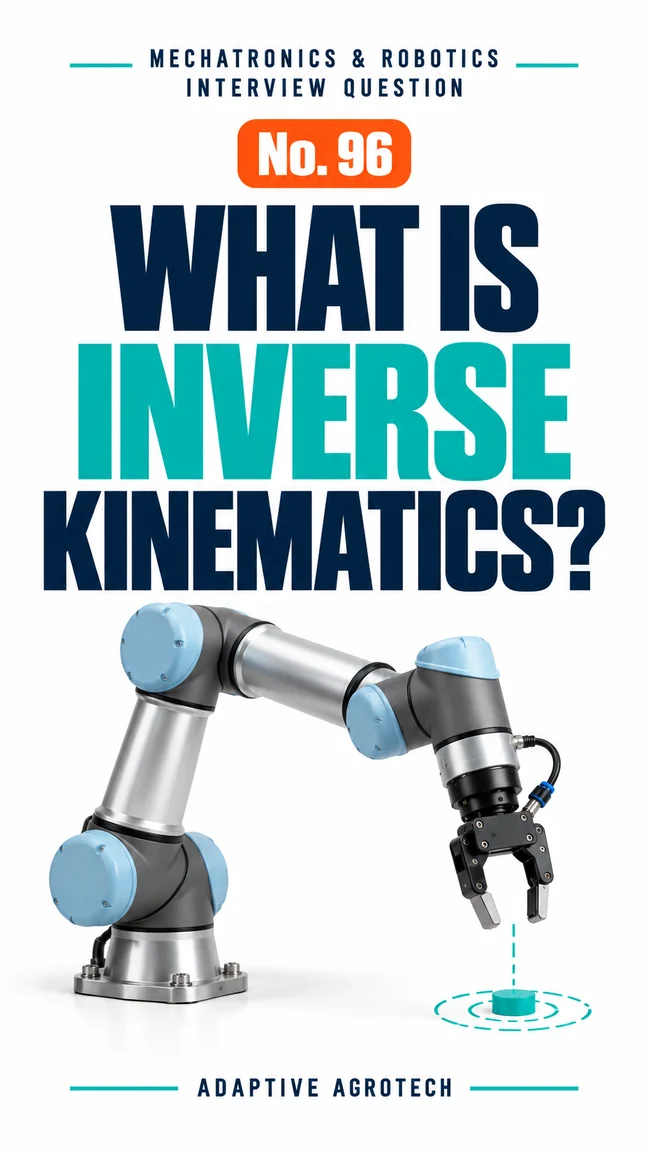
What is Inverse Kinematics?

Inverse kinematics finds joint values for a desired tool pose. A target can have several solutions or none, so solution choice must respect joint limits and the complete arm motion must be checked.

Watch & explore
Robot kinematicsNo. 139

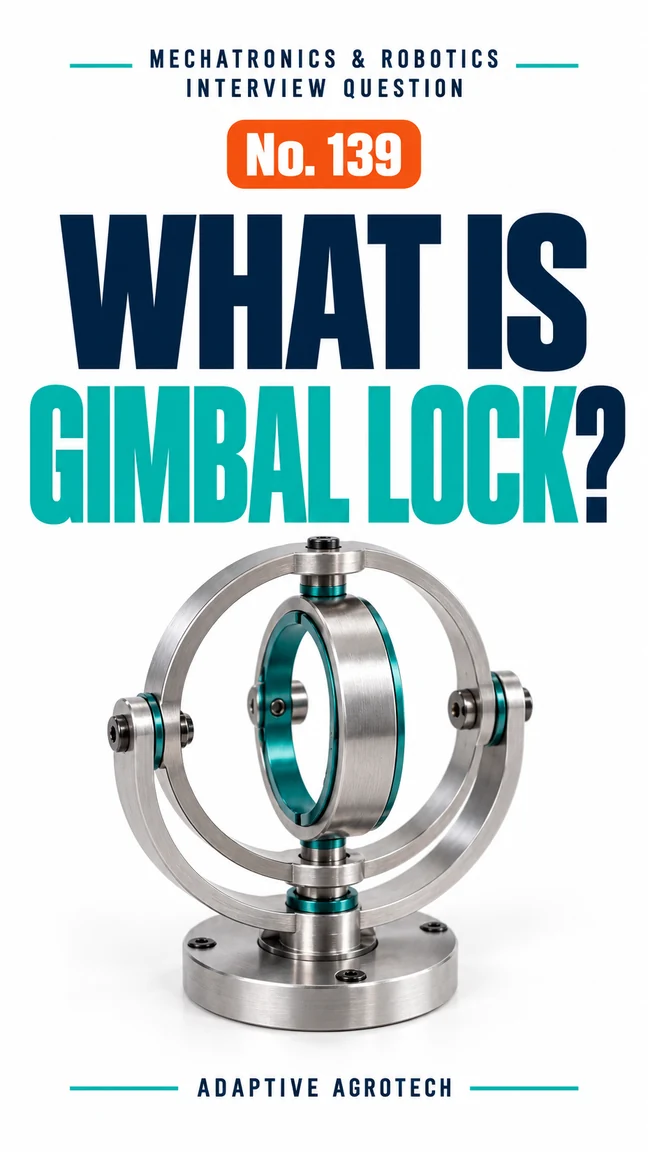
What Is Gimbal Lock?

Gimbal lock is an Euler coordinate singularity where rotation axes become dependent. For ZYX angles it occurs at pitch ±90°, affecting reported angles and rate mappings while leaving the rigid body’s physical rotation ability intact.

Watch & explore
Robot kinematicsNo. 141

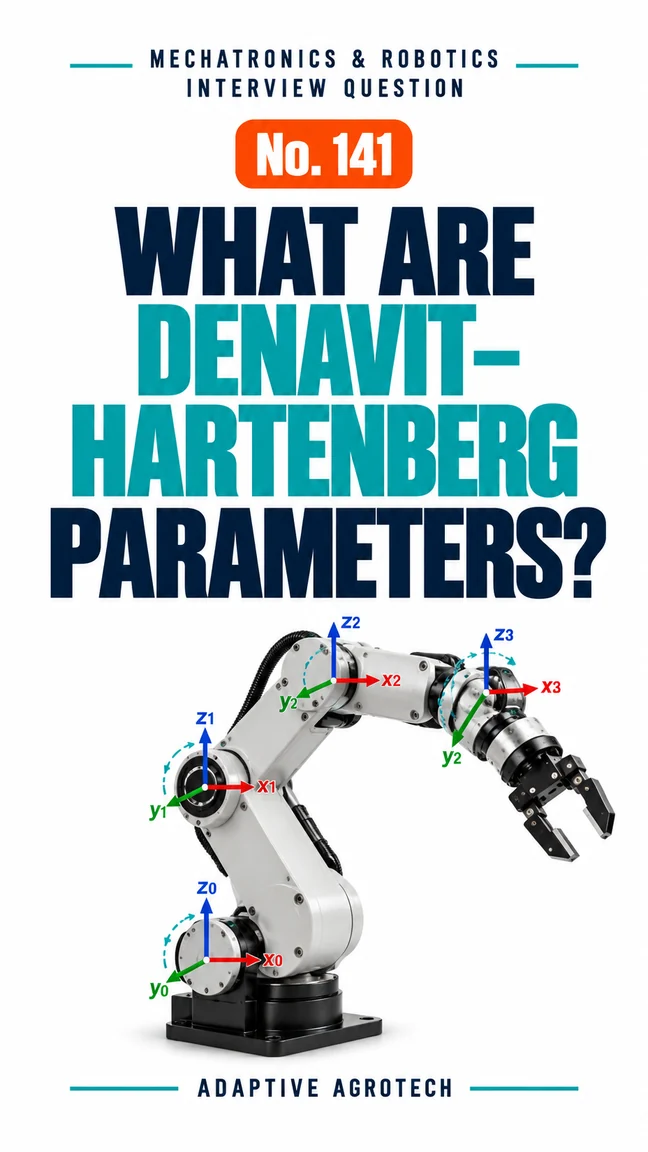
What Are Denavit–Hartenberg Parameters?

Denavit–Hartenberg parameters describe neighboring frames of a serial robot through four geometric quantities. Consistent frame conventions let their transforms produce forward kinematics, while mixing standard and modified DH rules corrupts the geometry.

Watch & explore
Robot kinematicsNo. 144

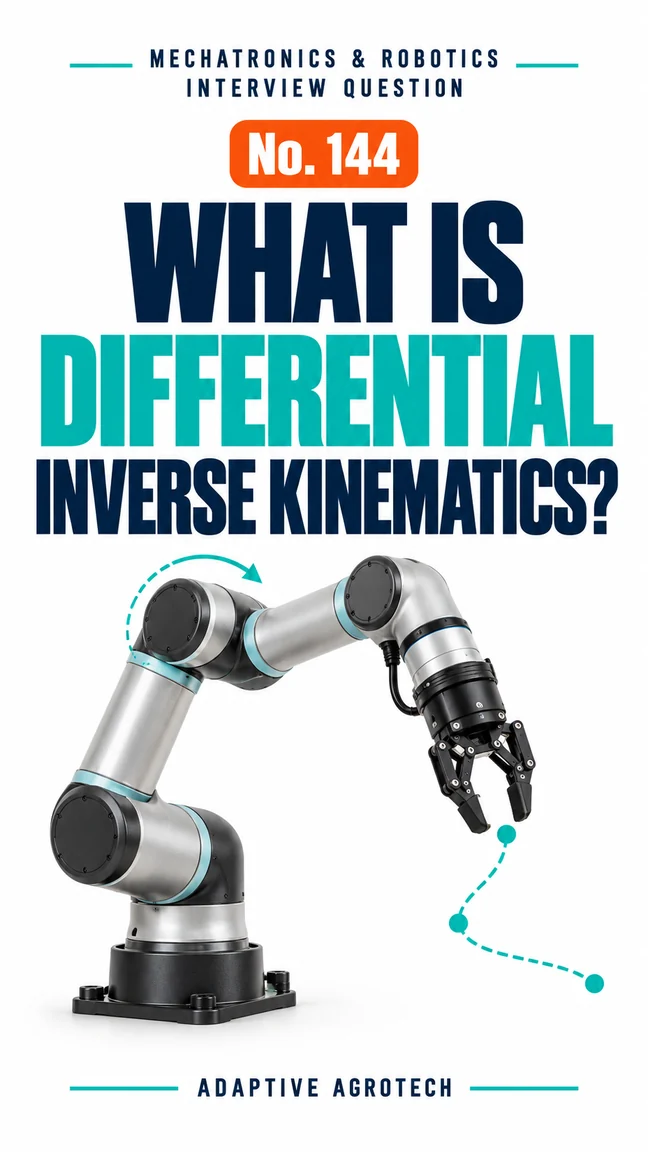
What Is Differential Inverse Kinematics?

Differential inverse kinematics solves locally for joint speeds that produce a desired tool velocity. The Jacobian must update as motion progresses, and damping near singularities trades tracking accuracy for less extreme joint commands.

Watch & explore
Robot kinematicsNo. 147

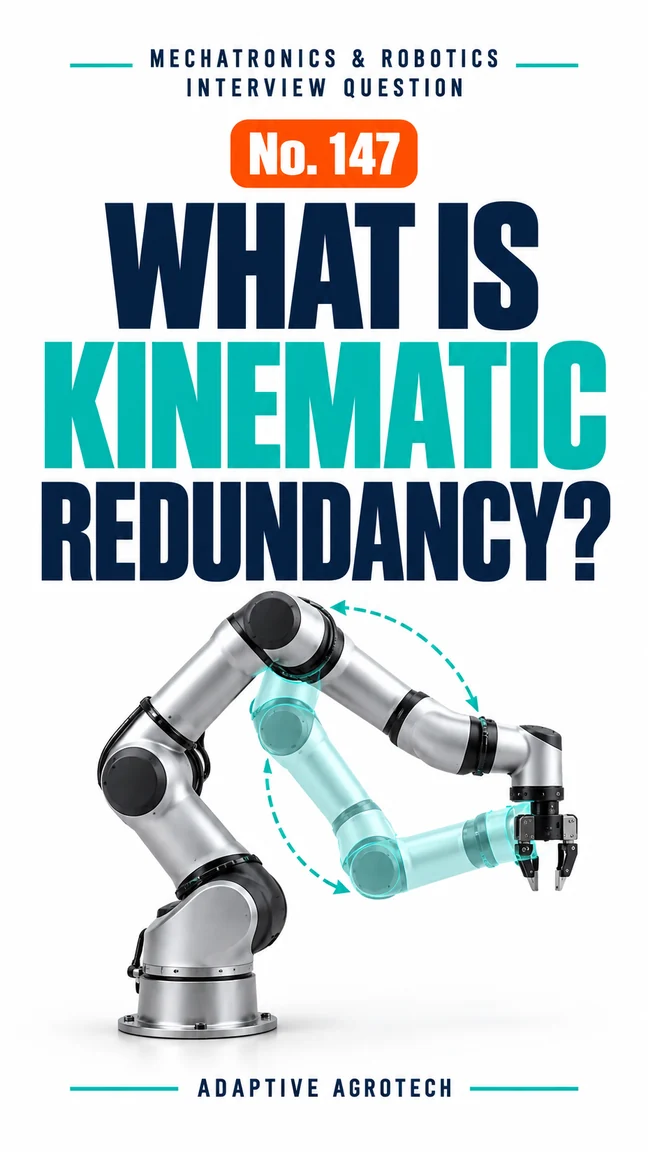
What Is Kinematic Redundancy?

Kinematic redundancy means more independent joint motion is available than a specified task requires. It permits posture choices, but depends on task definition and Jacobian rank rather than joint count alone.

Watch & explore
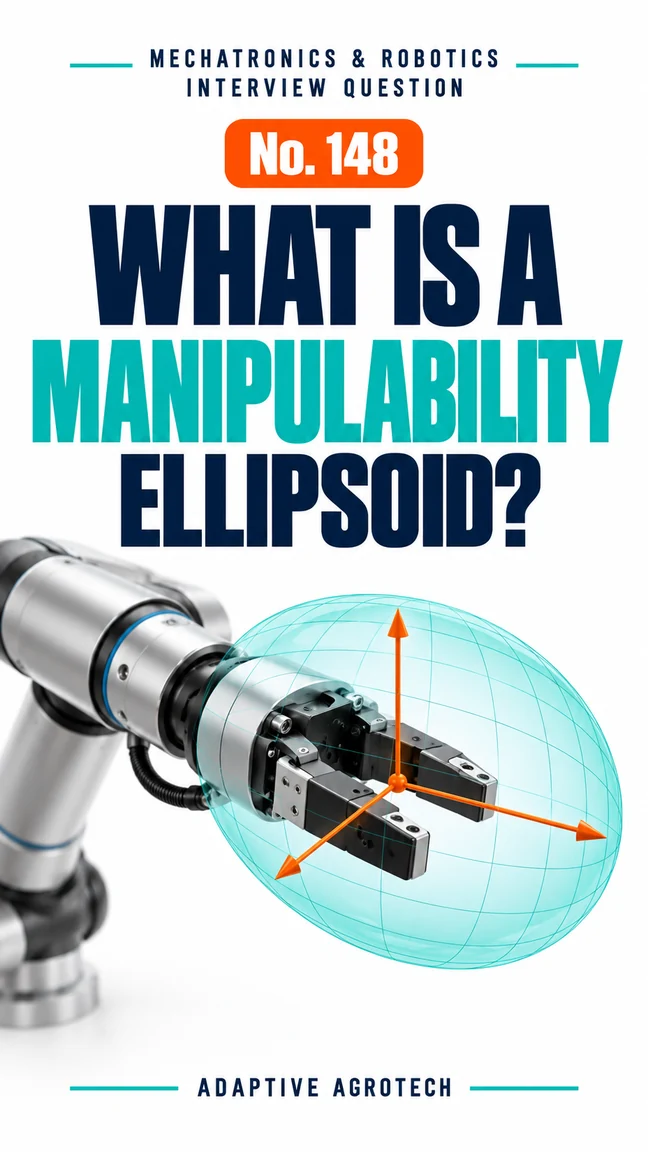
Robot kinematicsNo. 148

What Is a Manipulability Ellipsoid?

A manipulability ellipsoid shows how a unit joint velocity sphere maps to tool velocities through the Jacobian. Its axes expose easier and lost local directions, with meaning dependent on coordinates, units, and the velocity metric.

Watch & explore
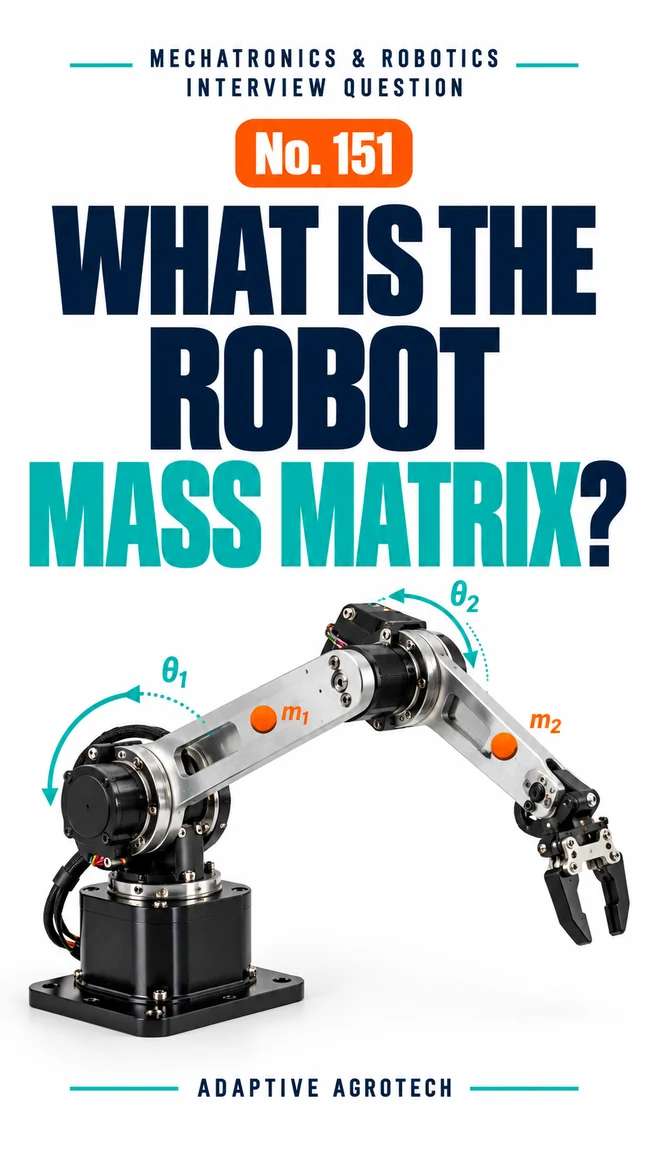
Robot kinematicsNo. 151

What Is the Robot Mass Matrix?

The robot mass matrix expresses configuration dependent inertia and coupling between joint accelerations and effort. It also defines kinetic energy, and a physically valid matrix in independent rigid robot coordinates is symmetric and positive definite.

Watch & explore
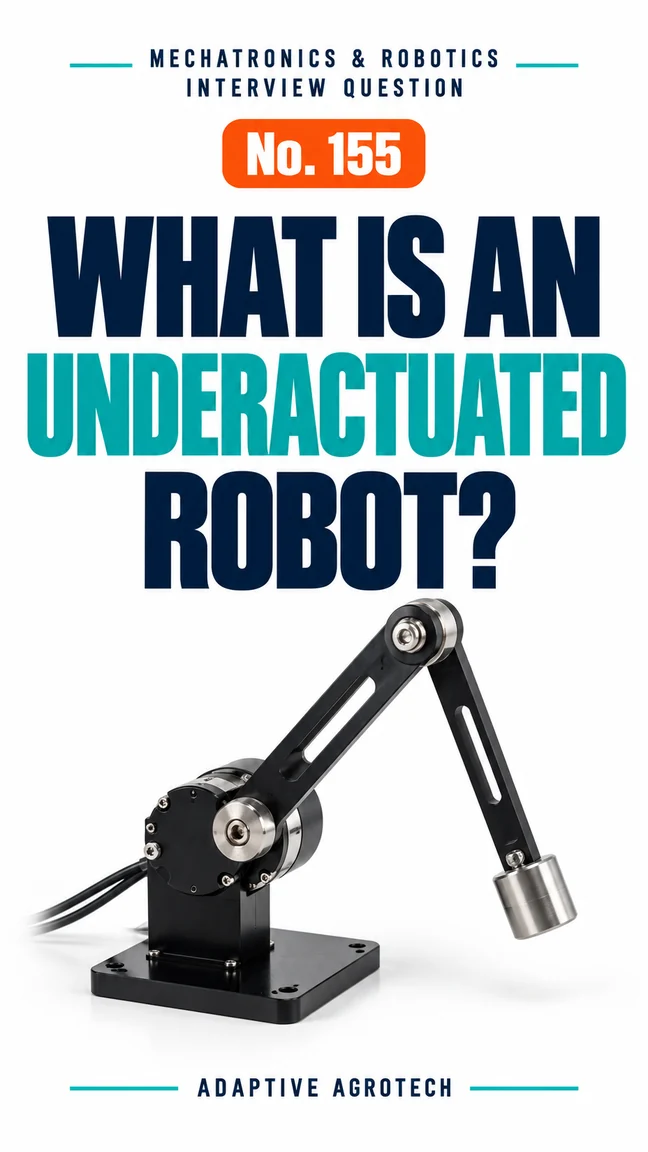
Robot kinematicsNo. 155

What Is an Underactuated Robot?

An underactuated robot has fewer independent control inputs than configuration coordinates. Indirect control can exploit coupled dynamics, but it cannot independently request every acceleration, and contact can change the effective constraints and actuation.

Watch & explore
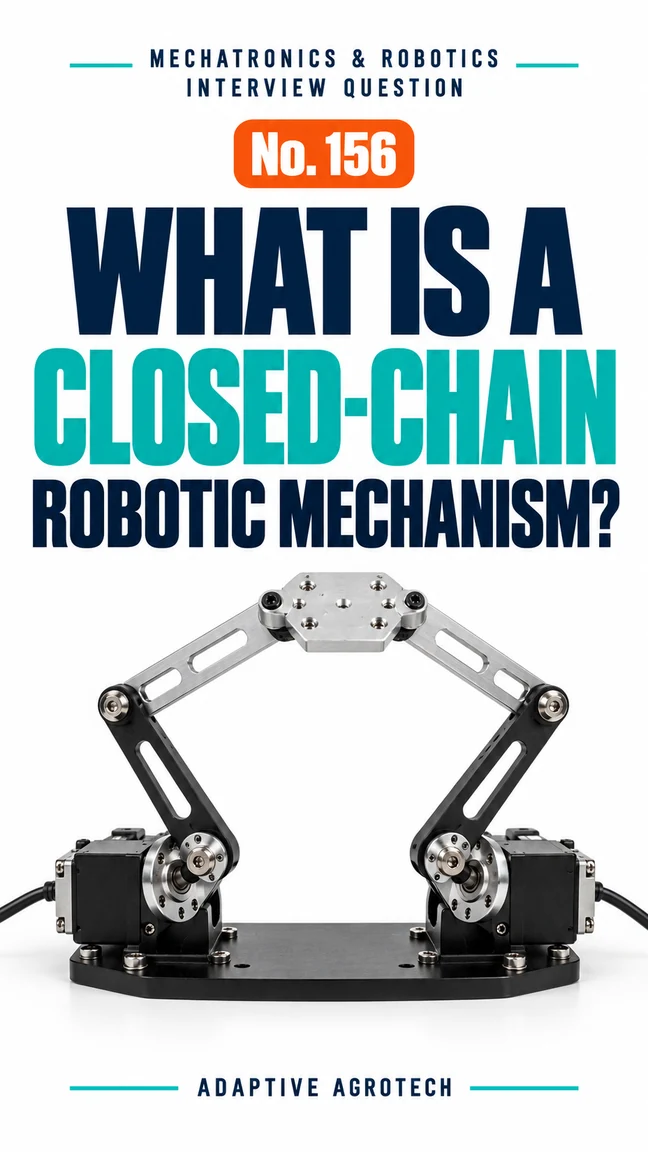
Robot kinematicsNo. 156

What Is a Closed-Chain Robotic Mechanism?

A closed-chain mechanism contains a loop of linked joints, creating closure constraints between coordinates. Its joints cannot all be commanded independently, and valid motion must account for assembly modes and singular configurations.

Watch & explore