Skip to content
Adaptive AgroTech NetworkUniversity of Southern Denmark · SDU Drone Center
Robotics · Mechatronics · Intelligent systems

Short videos.
Lasting understanding.

Explore one engineering idea at a time. Watch a short lesson, read the key concepts and test your understanding before your next interview, project or class.

222 topics found

Video · Key ideas · Check your understanding

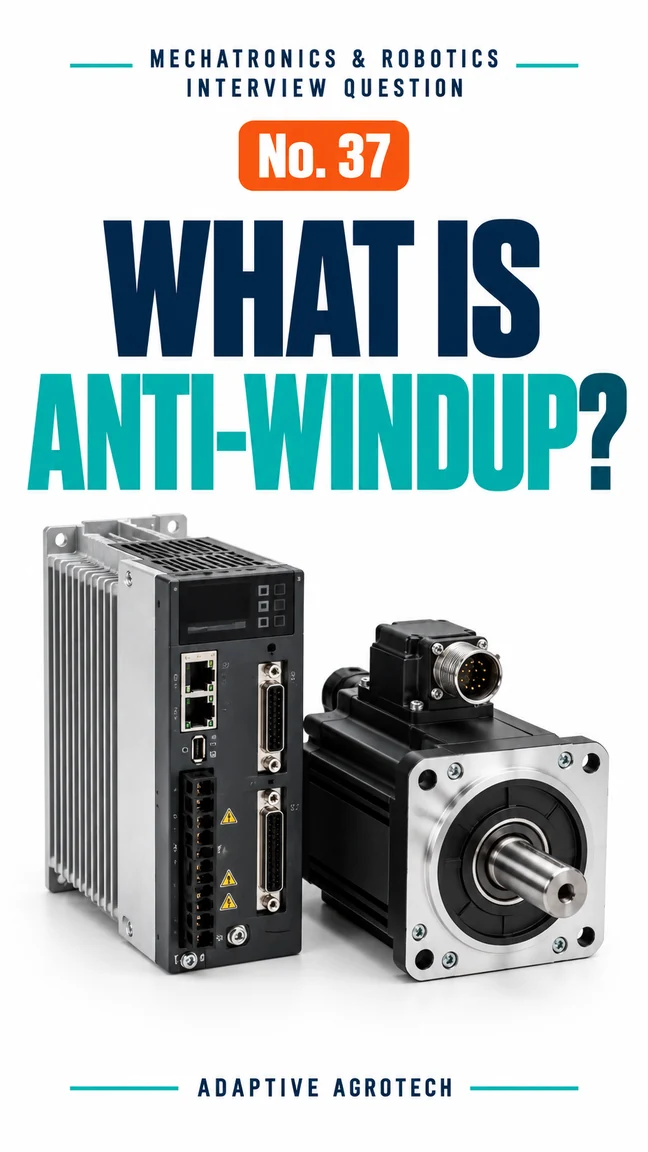
Control systemsNo. 037

What is Anti-Windup?

Anti-windup prevents hidden integral buildup when actuator limits block the requested response. Conditional integration stops accumulation that drives further into saturation while allowing the integral state to unwind toward recovery.

Watch & explore
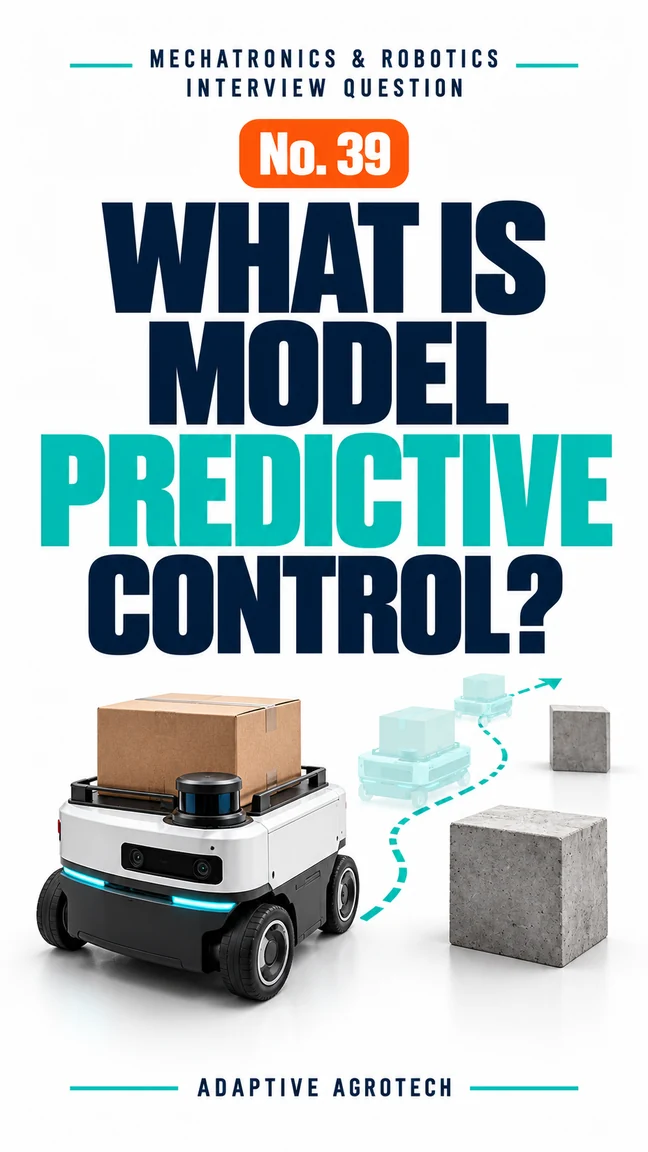
Control systemsNo. 039

What is Model Predictive Control?

MPC optimizes a sequence of predicted control moves under included constraints, then applies the first move and repeats. New measurements refresh the plan, but prediction errors and solver deadlines limit practical performance.

Watch & explore
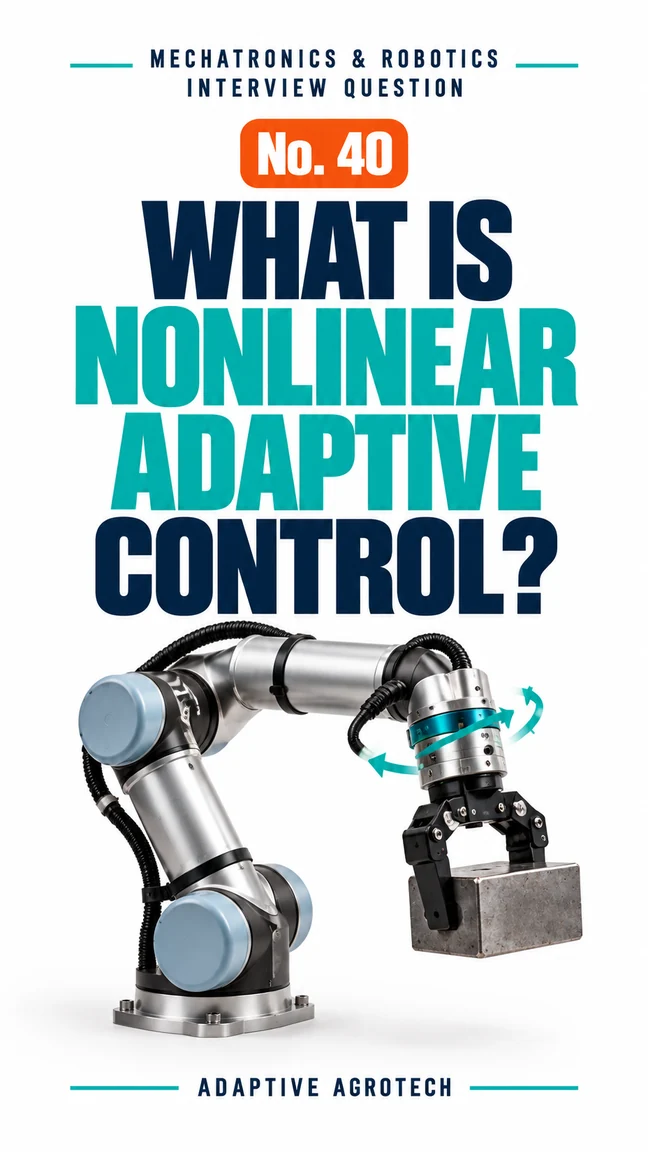
Control systemsNo. 040

What is Nonlinear Adaptive Control?

Nonlinear adaptive control combines a nonlinear law with parameter updates. Tracking error can adjust estimated payload or friction, but successful tracking does not alone establish convergence to the true physical parameters.

Watch & explore
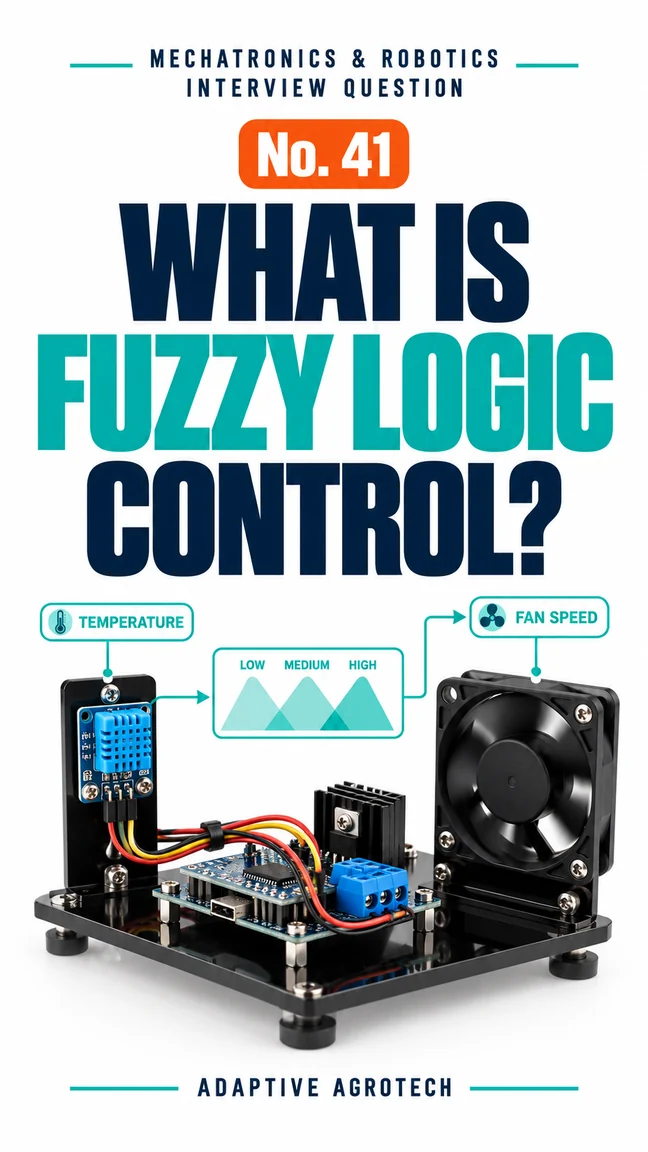
Control systemsNo. 041

What is Fuzzy Logic Control?

Fuzzy logic turns overlapping linguistic rules into a numeric control command. Multiple memberships can activate rules together, encoding practical knowledge while still requiring stability and operating-range validation under real disturbances and limits.

Watch & explore
Control systemsNo. 043

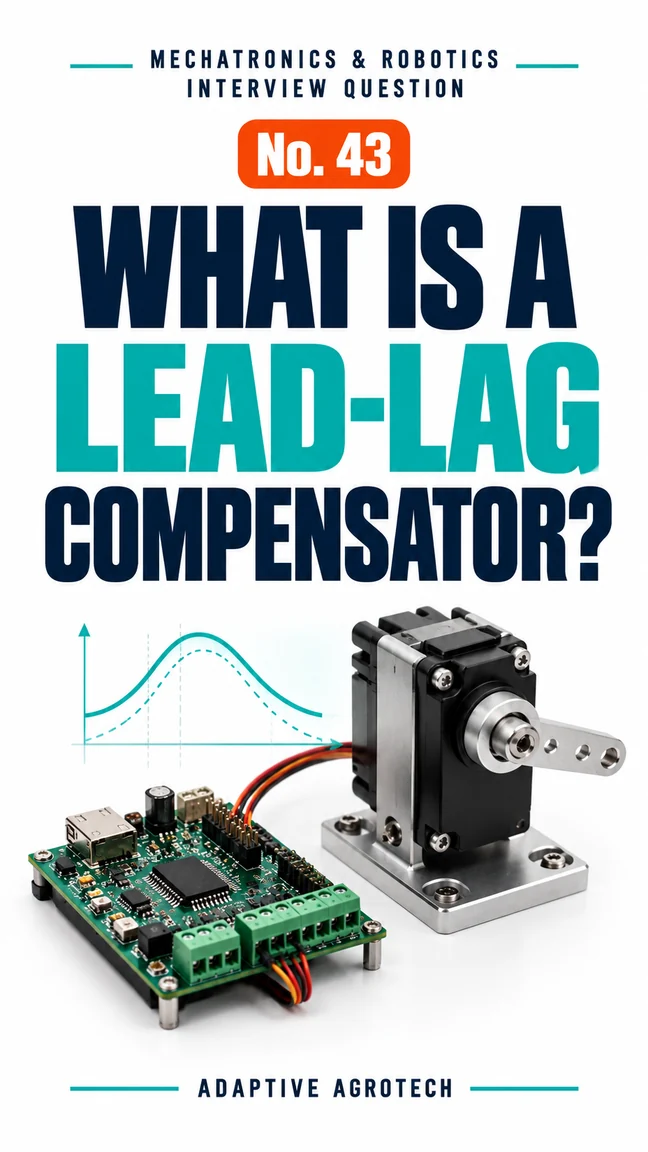
What is a Lead-Lag Compensator?

A lead-lag compensator shapes a servo's frequency response through coordinated filters. Lead adds phase and lag improves relative low-frequency gain, with combined stability margins and noise sensitivity determining the final design.

Watch & explore
Control systemsNo. 045

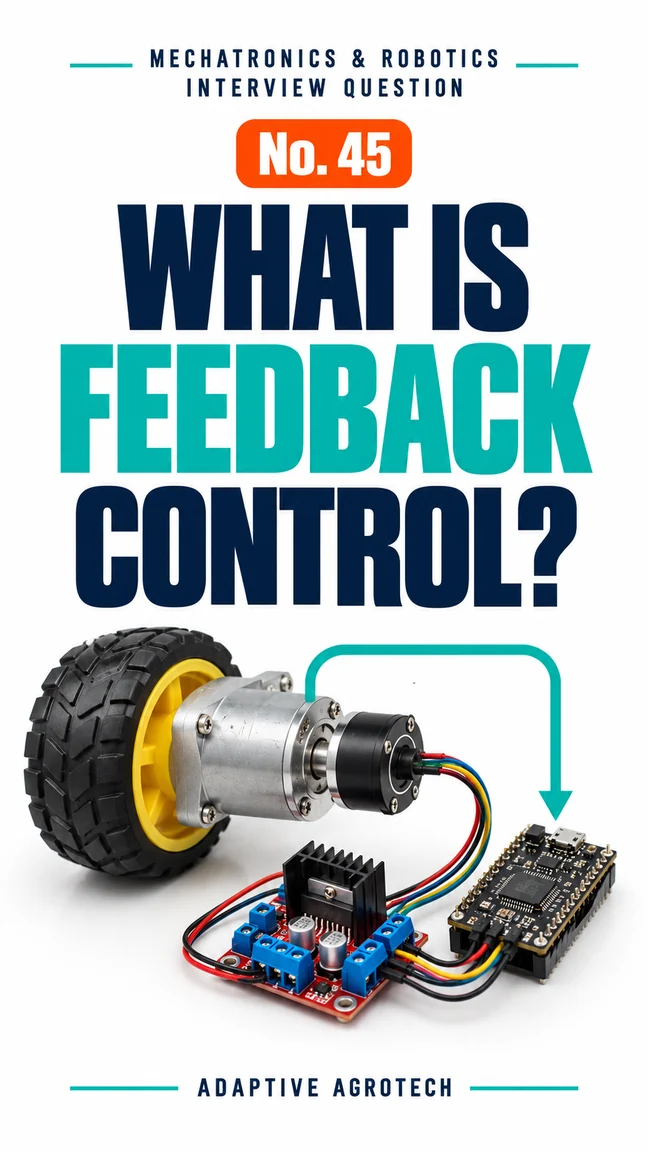
What is Feedback Control?

Feedback compares measured robot behavior with a target and changes the next command to reduce error. It can reject changing loads, while excessive gain, sensor noise, or timing delay can instead produce oscillation.

Watch & explore
Control systemsNo. 046

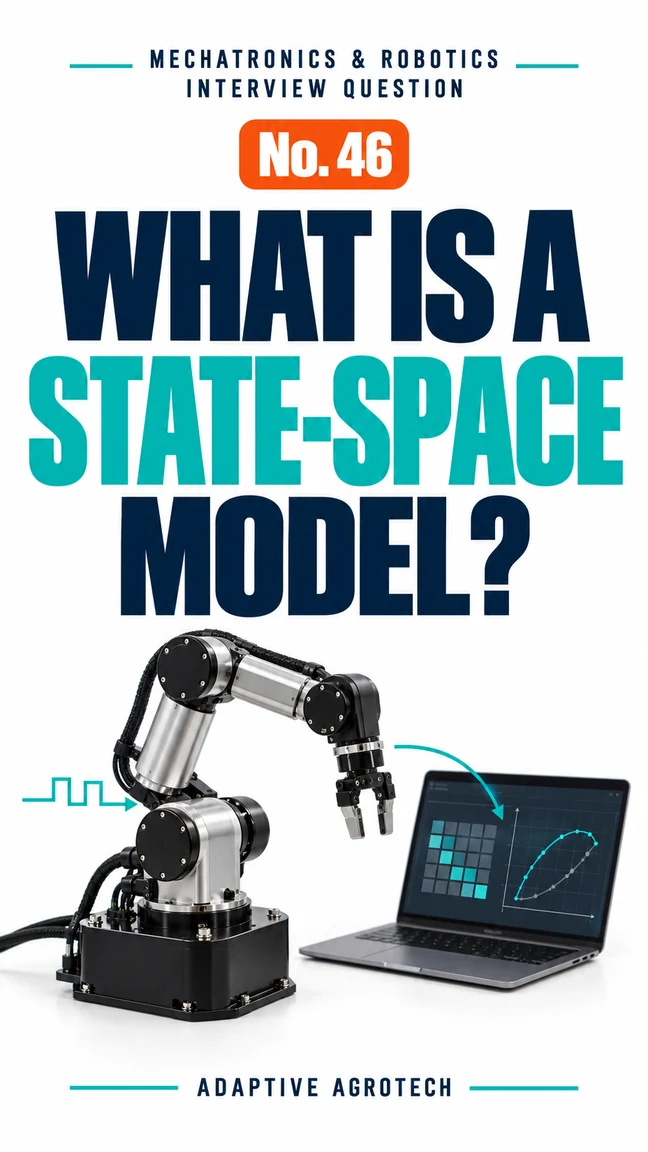
What is a State-Space Model?

A state-space model organizes internal states, inputs, and outputs to predict dynamics. Motor speed and current provide one example, while nonlinear robots may require nonlinear equations or locally valid linear approximations.

Watch & explore
Control systemsNo. 047

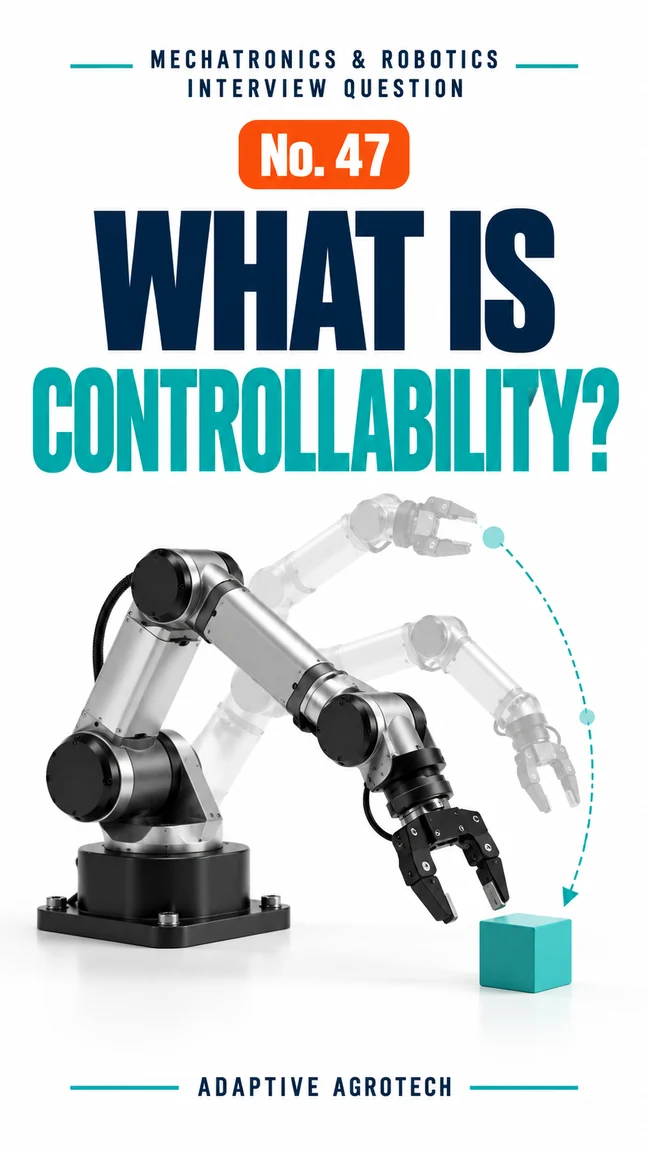
What is Controllability?

Controllability asks whether modeled inputs can move a system between arbitrary states in finite time. A full-rank linear test addresses mathematical actuation, while physical torque limits can still restrict real reachability.

Watch & explore
Control systemsNo. 048

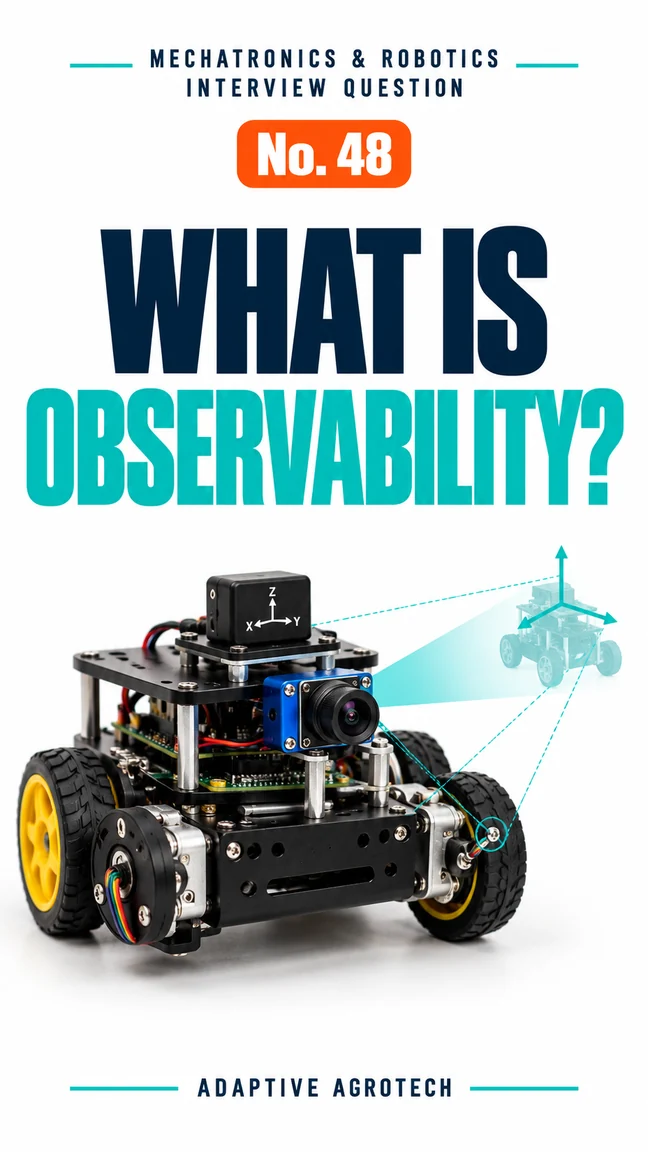
What is Observability?

Observability asks whether model states can be inferred from output history and known inputs. Dynamics can reveal an unmeasured variable, while duplicate sensors may reduce noise without exposing previously hidden state information.

Watch & explore
Localization & estimationNo. 049

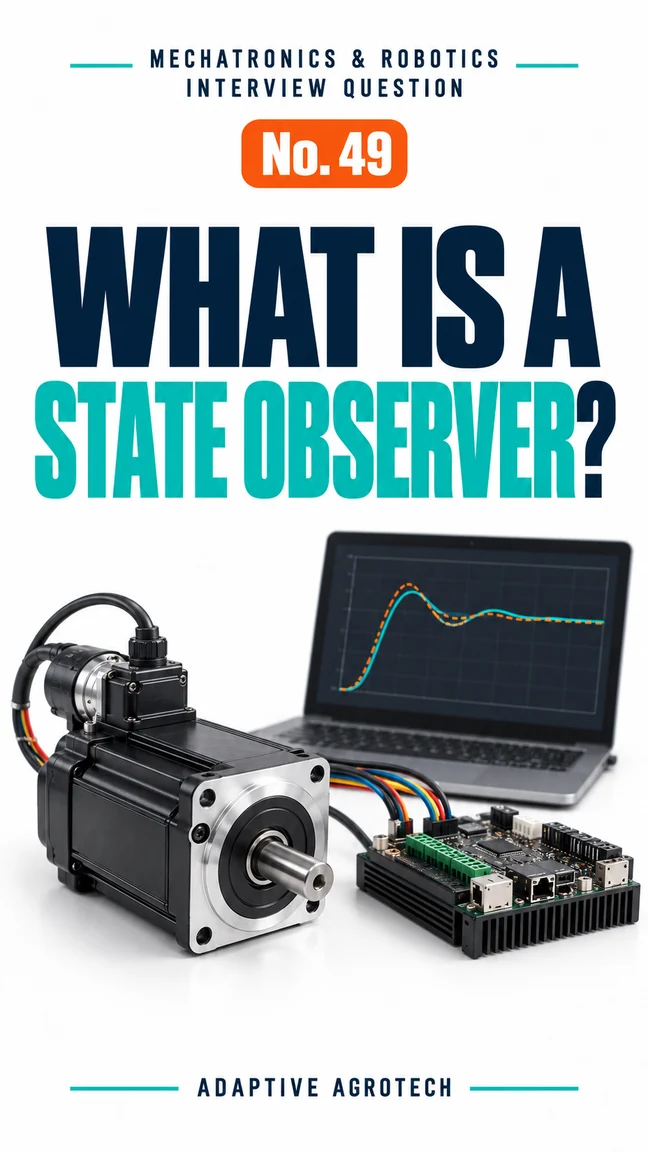
What is a State Observer?

A state observer estimates internal variables by predicting with a model and correcting from measured outputs. Observer gain sets the correction response, with observability, noise sensitivity, and model error limiting the result.

Watch & explore
Control systemsNo. 050

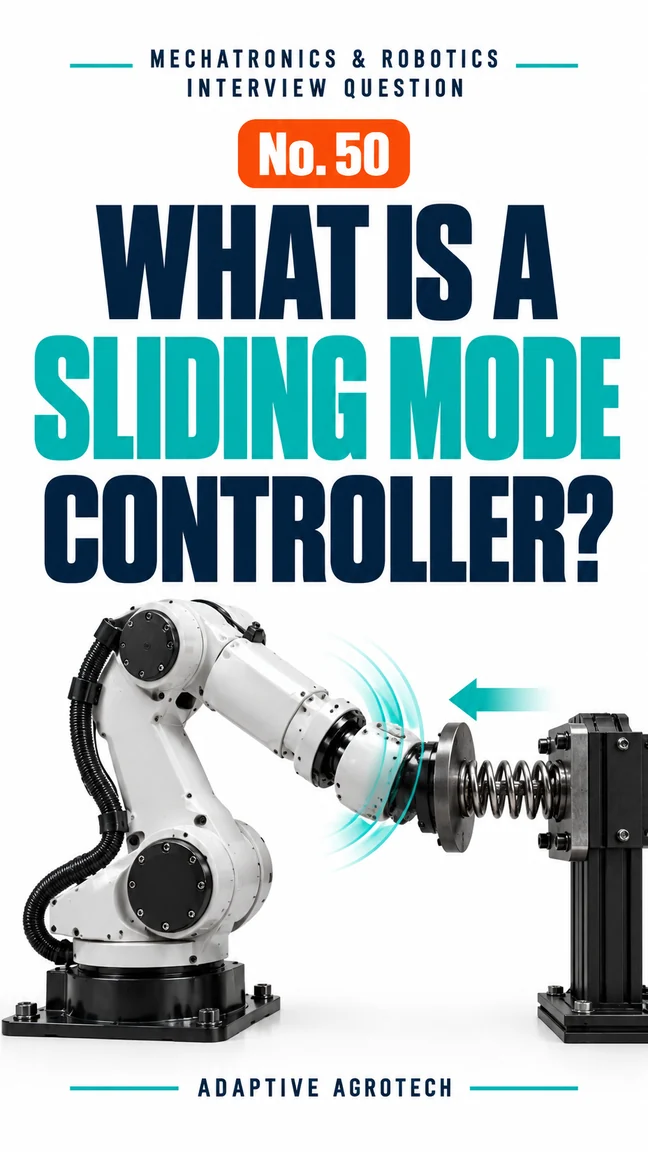
What is a Sliding Mode Controller?

Sliding mode control drives state toward a designed tracking surface using a switching term. It can address certain bounded uncertainties, but chattering and finite actuator effort require attention when realizing the design.

Watch & explore
Control systemsNo. 051

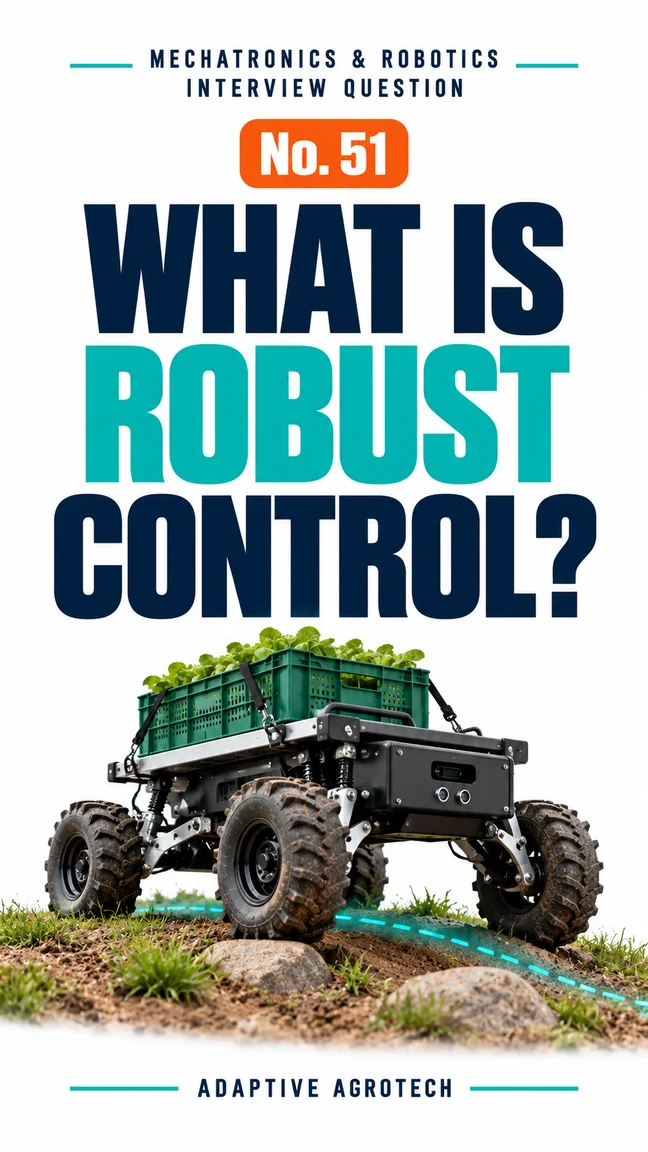
What is Robust Control?

Robust control includes a specified uncertainty set in its design and checks performance across a family of plants. Any guarantee remains limited to that set rather than covering all possible hardware differences.

Watch & explore
Control systemsNo. 052

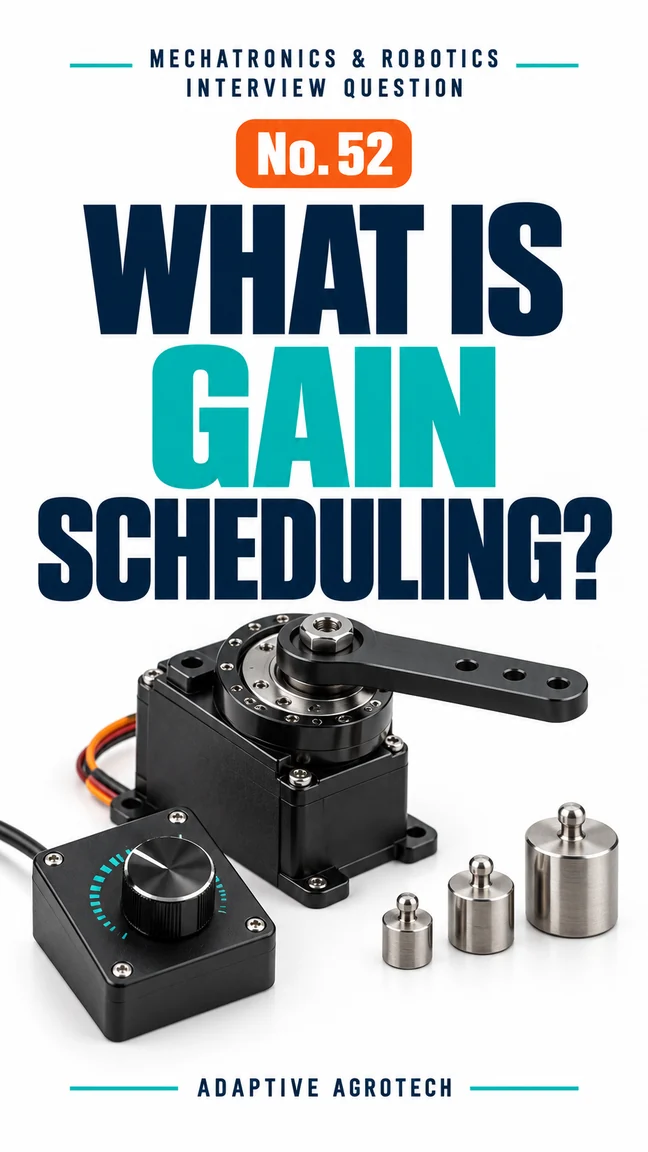
What is Gain Scheduling?

Gain scheduling selects or blends controllers using measured operating conditions. Designed gains can accommodate changing dynamics, but stable individual operating points do not by themselves establish stable transitions throughout the schedule.

Watch & explore
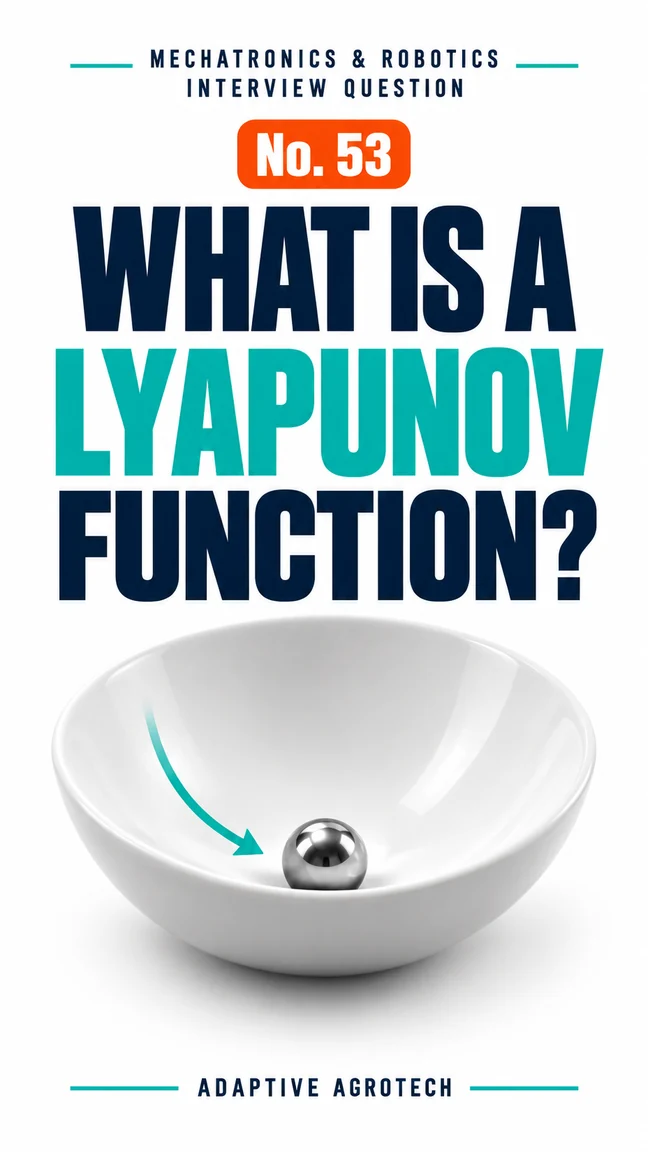
Control systemsNo. 053

What is a Lyapunov Function?

A Lyapunov function provides a scalar route to analyzing stability without solving every trajectory. Its value and change along motion support a claim whose scope depends on the theorem's assumptions and region.

Watch & explore
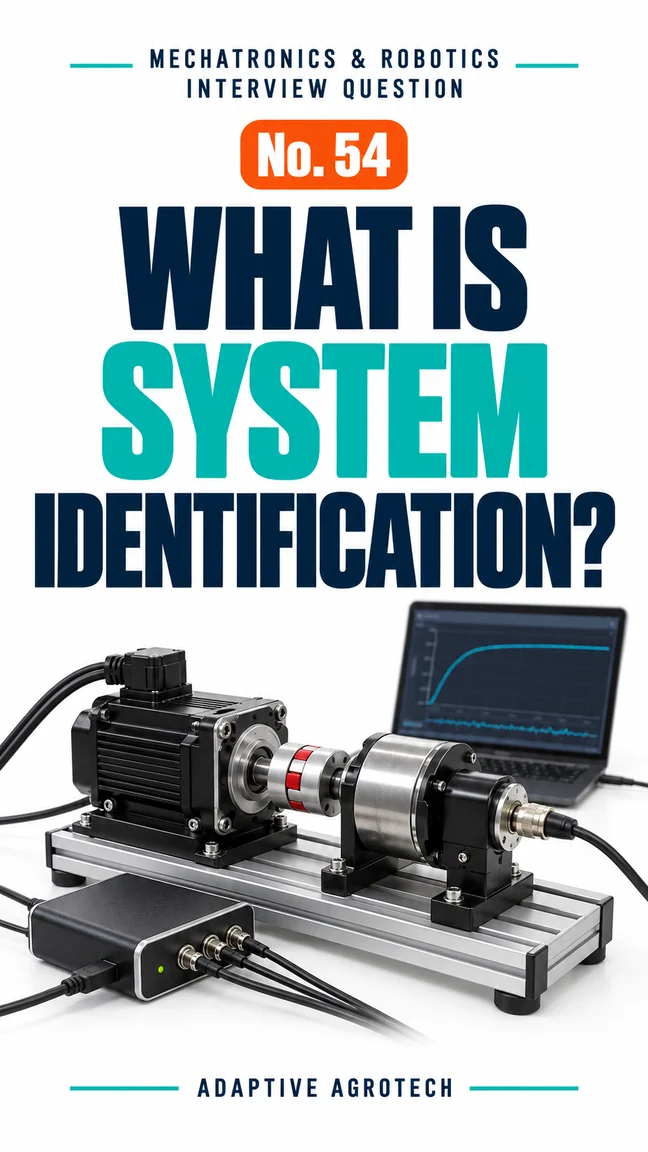
Control systemsNo. 054

What is System Identification?

System identification fits a dynamic model from recorded inputs and outputs. Informative excitation reveals relevant behavior, and separate validation data helps distinguish useful dynamics from overfitting, delay, bias, or changing operating conditions.

Watch & explore
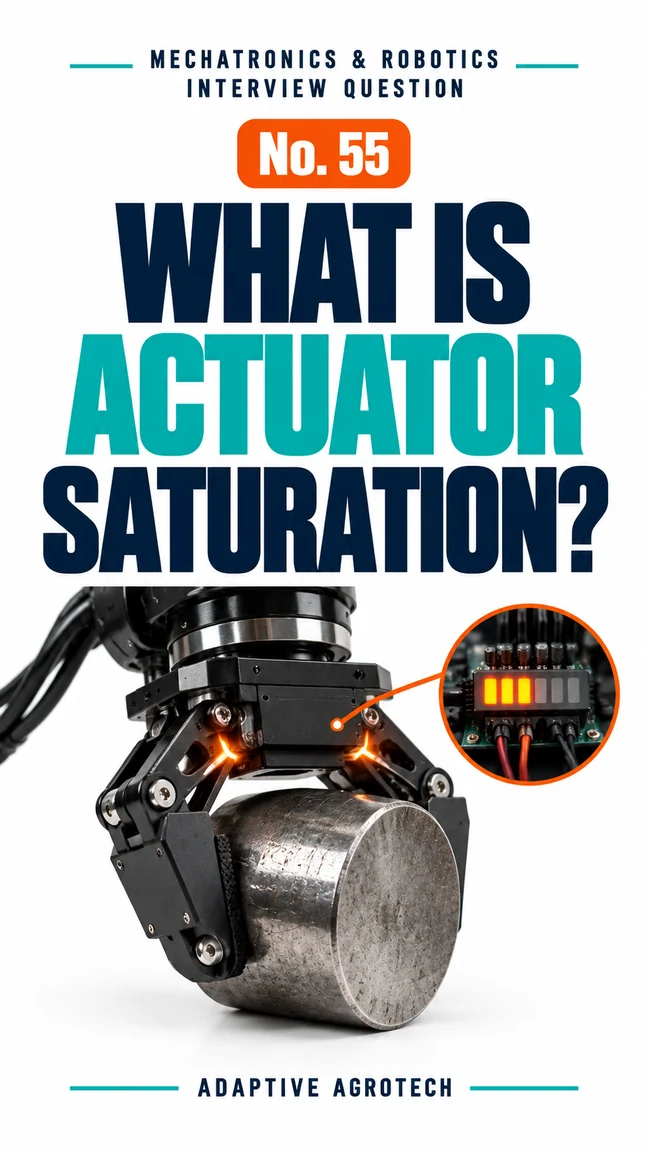
Control systemsNo. 055

What is Actuator Saturation?

Actuator saturation clips commands at physical voltage, current, or effort limits. The delivered motion then differs from an unlimited model, potentially causing slow tracking or integral windup and requiring realistic limits in control design.

Watch & explore
Embedded electronicsNo. 056

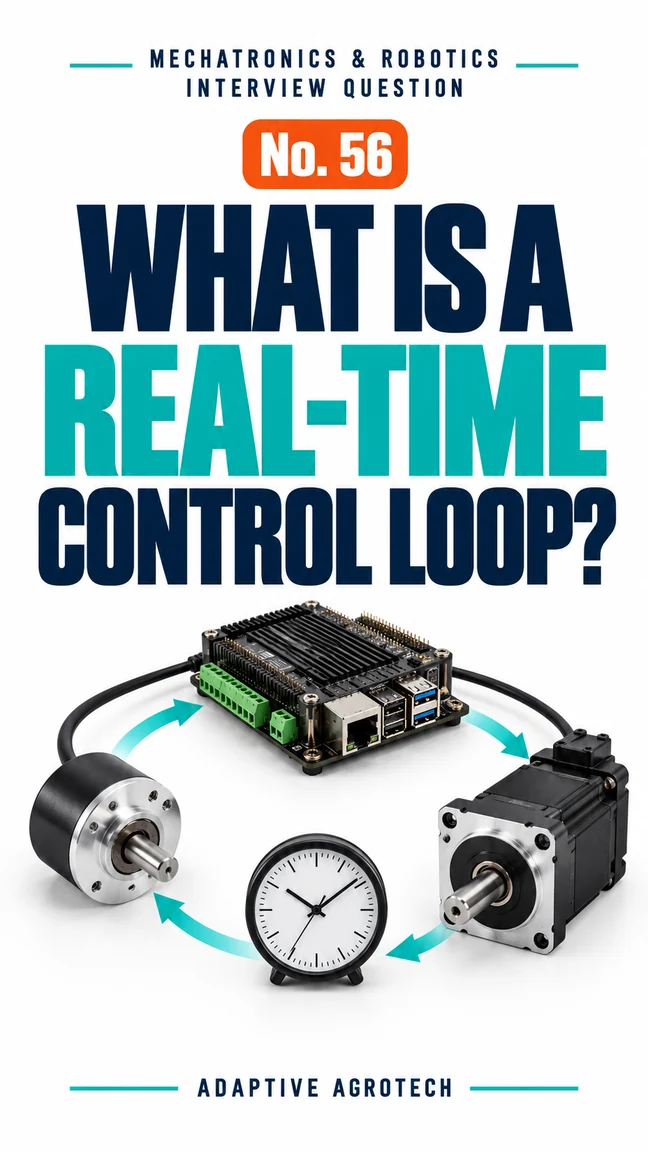
What is a Real-Time Control Loop?

Real-time control requires completion before a defined deadline rather than merely good average speed. Sensor acquisition, computation, and output share the timing budget, and worst-case delay and jitter determine whether the chain meets it.

Watch & explore
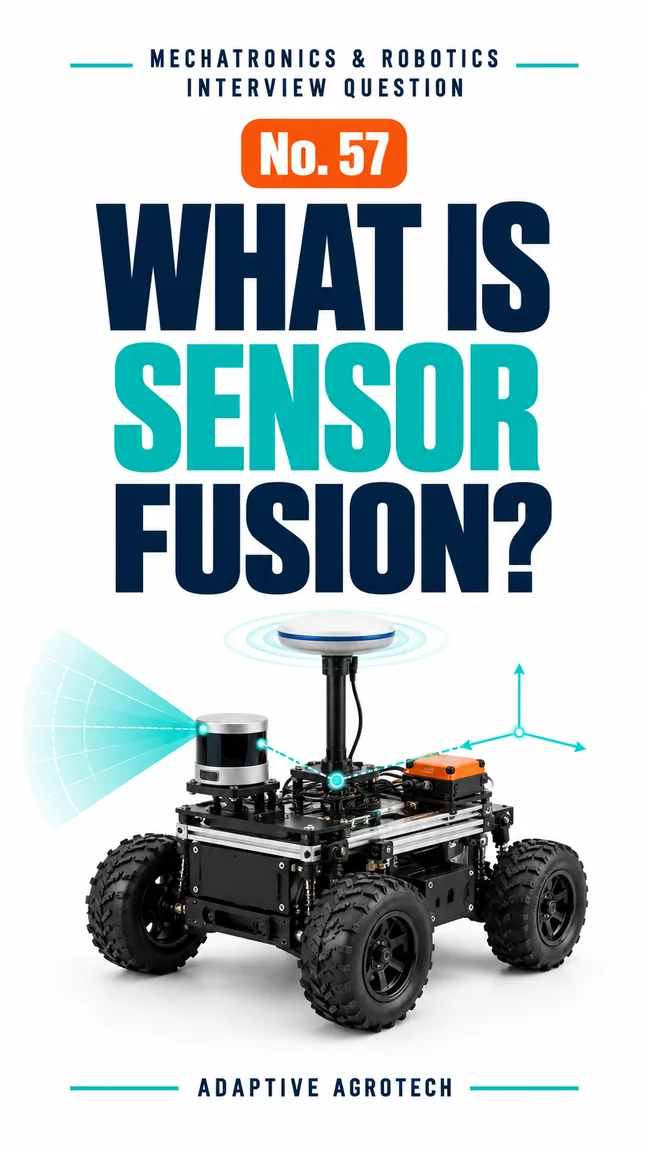
Localization & estimationNo. 057

What is Sensor Fusion?

Sensor fusion estimates one shared state from complementary measurements. Fast wheel and gyro updates bridge position fixes, while sound timing, frames, uncertainty, and correlation handling prevent misleading confidence in the fused result.

Watch & explore