Skip to content
Adaptive AgroTech NetworkUniversity of Southern Denmark · SDU Drone Center
Robotics · Mechatronics · Intelligent systems

Short videos.
Lasting understanding.

Explore one engineering idea at a time. Watch a short lesson, read the key concepts and test your understanding before your next interview, project or class.

222 topics found

Video · Key ideas · Check your understanding

Localization & estimationNo. 058

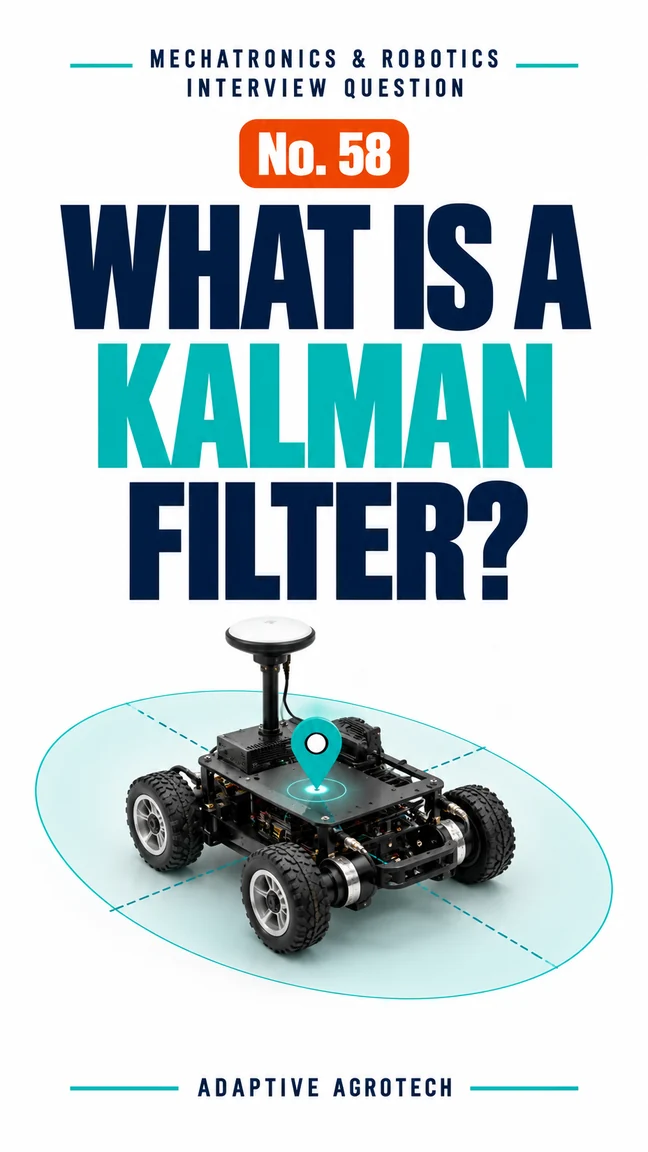
What is a Kalman Filter?

A Kalman filter predicts state and uncertainty, then applies an uncertainty-based measurement correction. Its numerical precision depends on valid noise and motion models rather than ensuring that the physical estimate is accurate.

Watch & explore
Localization & estimationNo. 059

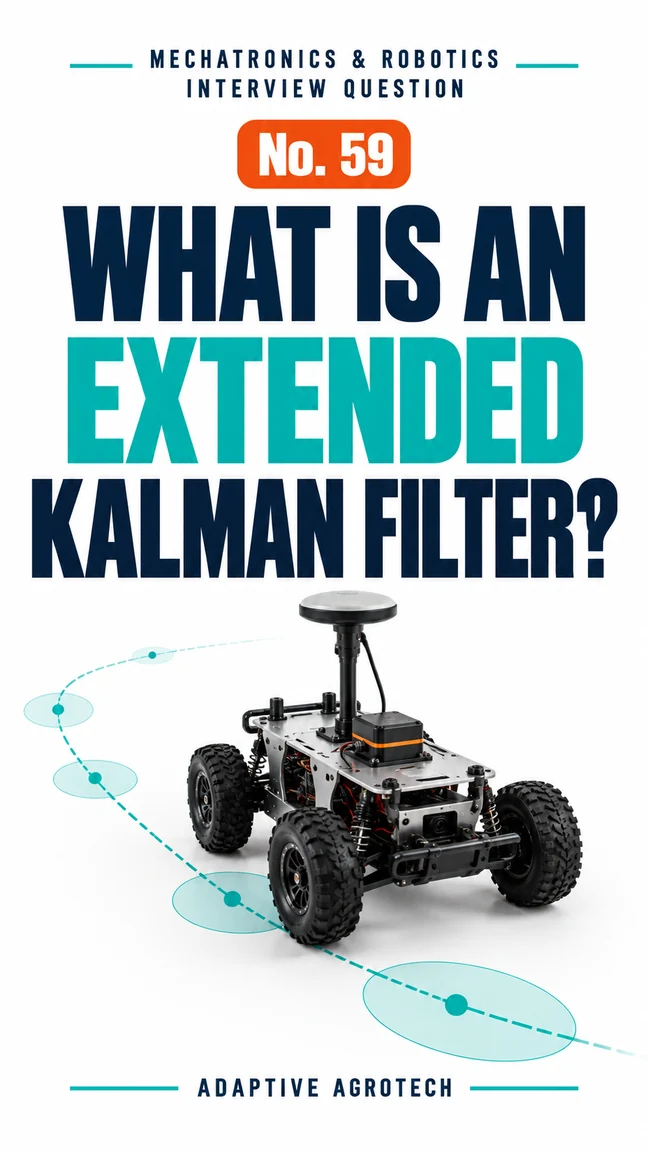
What is an Extended Kalman Filter?

The EKF uses nonlinear models for state prediction and Jacobians for local uncertainty handling. Heading-dependent robot motion is a typical application, with initialization and residual checks exposing failures of the local approximation.

Watch & explore
Localization & estimationNo. 060

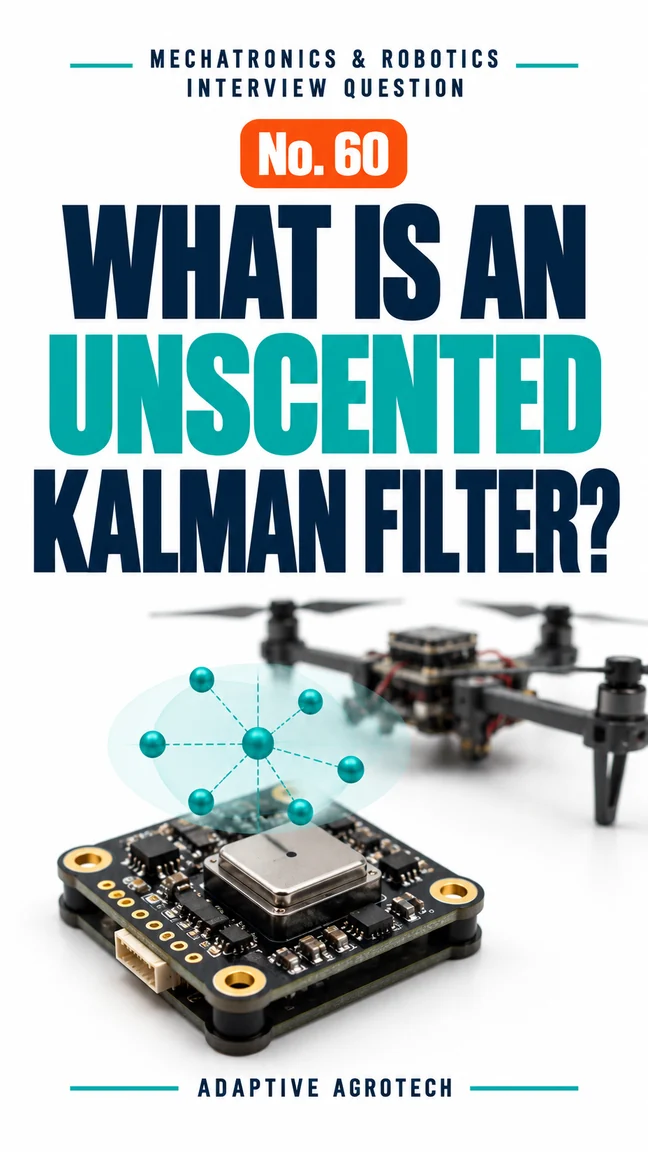
What is an Unscented Kalman Filter?

The UKF represents mean and covariance with weighted sigma points and transforms them through nonlinear models. It avoids Jacobian calculation and can capture nonlinear effects, while retaining computational, noise-model, and tuning requirements.

Watch & explore
Localization & estimationNo. 061

What is a Particle Filter?

A particle filter represents localization with many weighted pose hypotheses. Motion moves them, measurements score them, and resampling focuses computation on plausible alternatives, with particle count controlling hypothesis retention and resource demand.

Watch & explore
Sensors & perceptionNo. 062

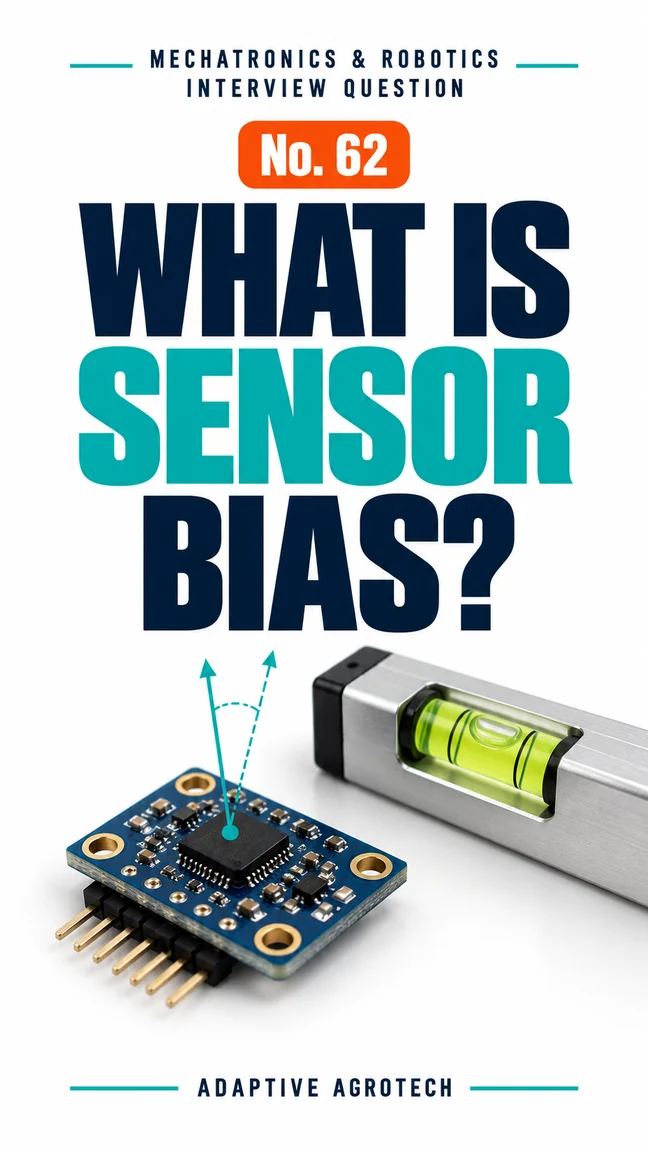
What is Sensor Bias?

Sensor bias is a systematic measurement offset that can accumulate through integration. Gyro bias illustrates the resulting heading drift, while changing temperature and time limit the lasting value of one calibration.

Watch & explore
Sensors & perceptionNo. 063

What is Sensor Noise?

Sensor noise causes random measurement variation around the signal. Averaging can smooth readings but delays change detection, so representative logging and frequency analysis help preserve the motion information a controller needs.

Watch & explore
Localization & estimationNo. 064

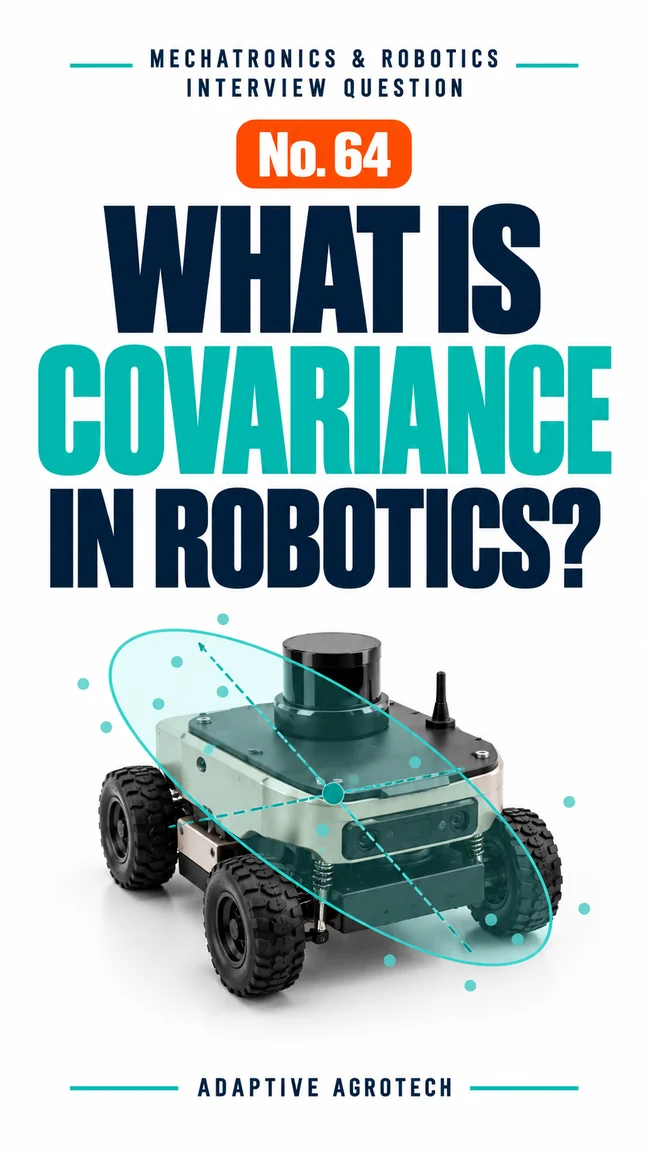
What is Covariance in Robot Estimation?

Covariance describes uncertainty magnitude and coupled estimation errors. Ellipse shape makes those relationships visible, while compatible frames, correct units, and credible values are essential before covariance is used to weight fusion.

Watch & explore
Localization & estimationNo. 065

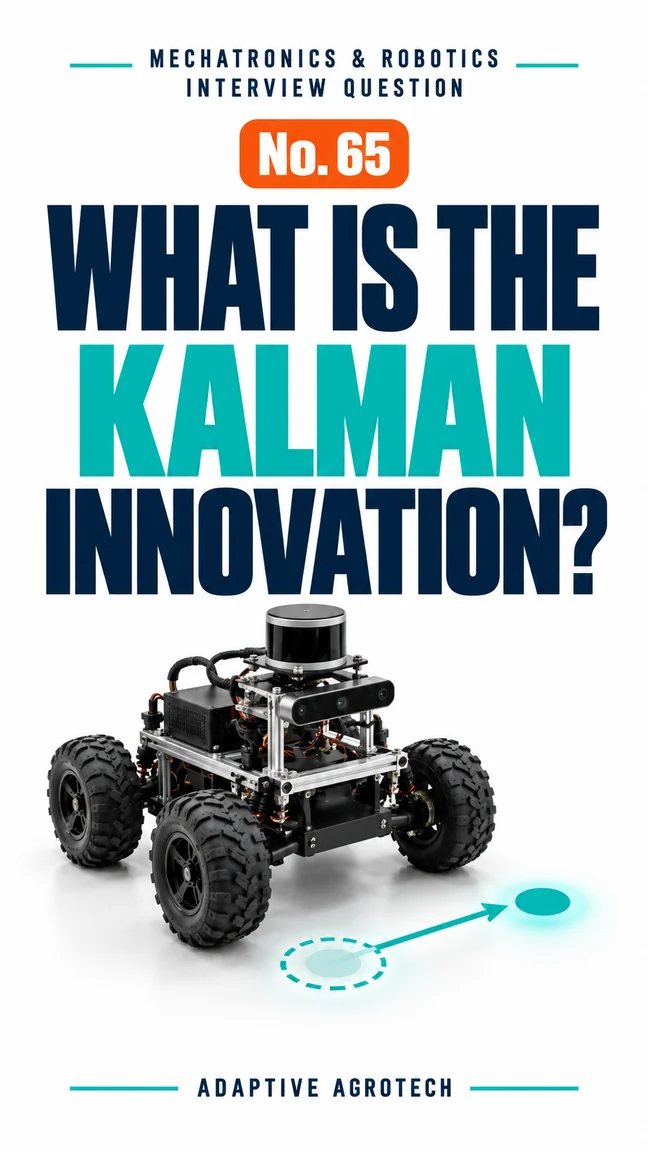
What is the Kalman Innovation?

Kalman innovation is the difference between an actual reading and its prediction. Interpreting it against expected uncertainty helps reveal timing, calibration, and model problems that smooth output alone can conceal.

Watch & explore
Localization & estimationNo. 066

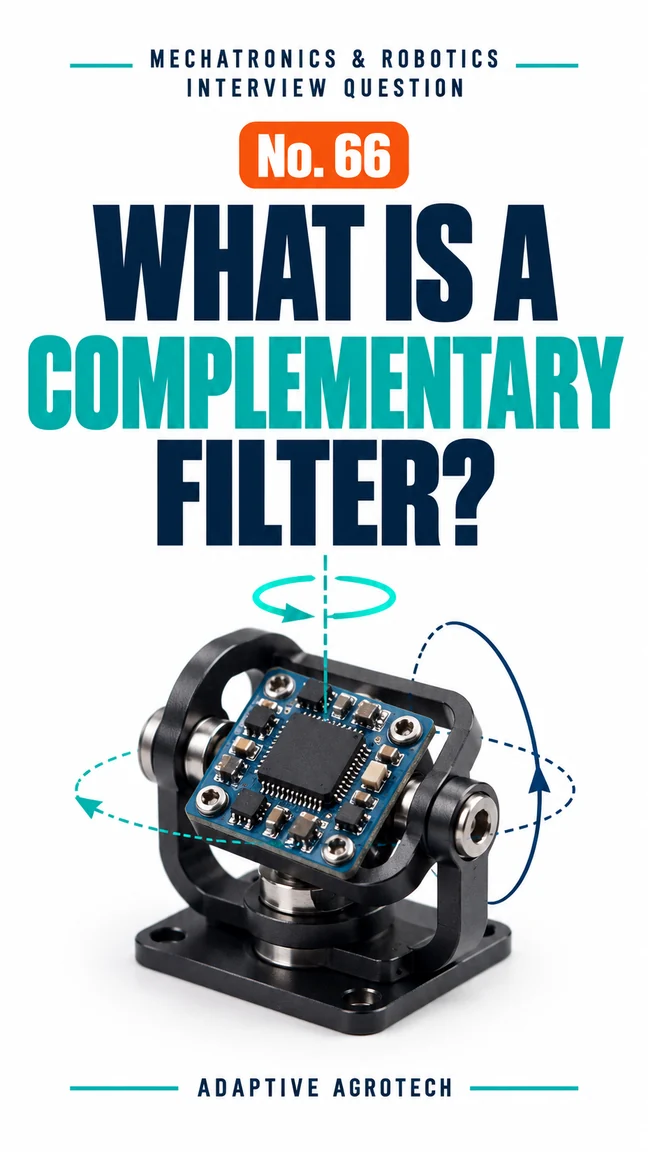
What is a Complementary Filter?

A complementary filter blends fast gyro response with a slower gravity-based tilt reference. Its weights control drift correction, while motion acceleration and gravity's lack of yaw information constrain the estimate.

Watch & explore
Localization & estimationNo. 067

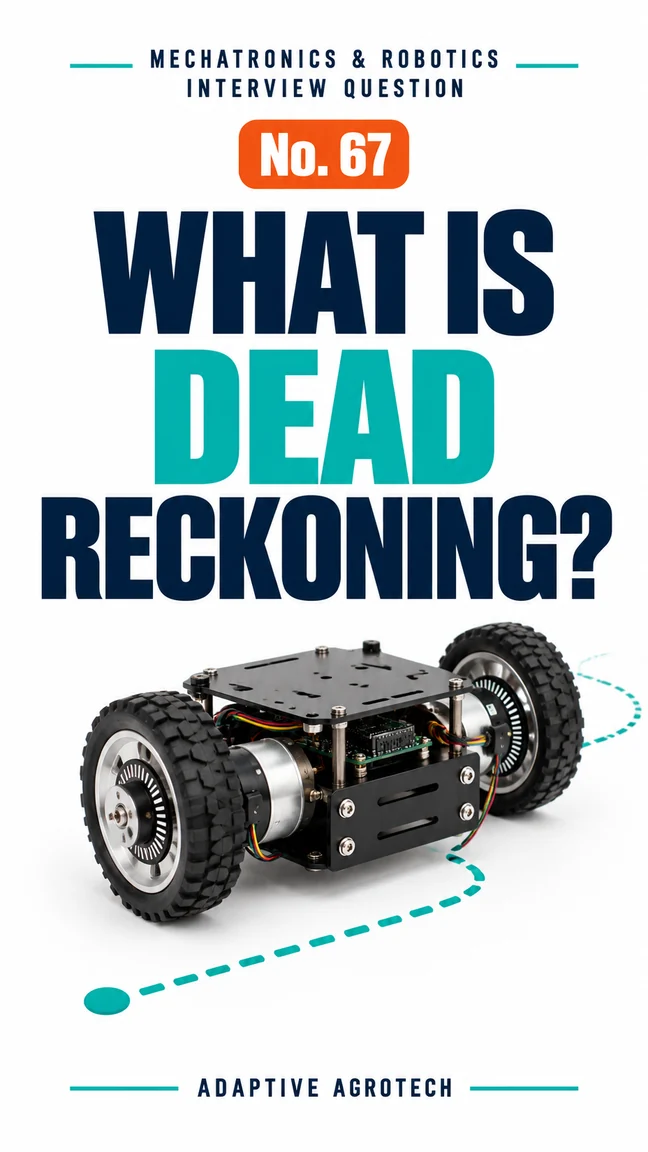
What is Dead Reckoning?

Dead reckoning updates a starting pose from measured motion. Wheel slip and heading error accumulate across steps, making the method useful between external fixes while requiring trusted references to limit long-term drift.

Watch & explore
Computer visionNo. 068

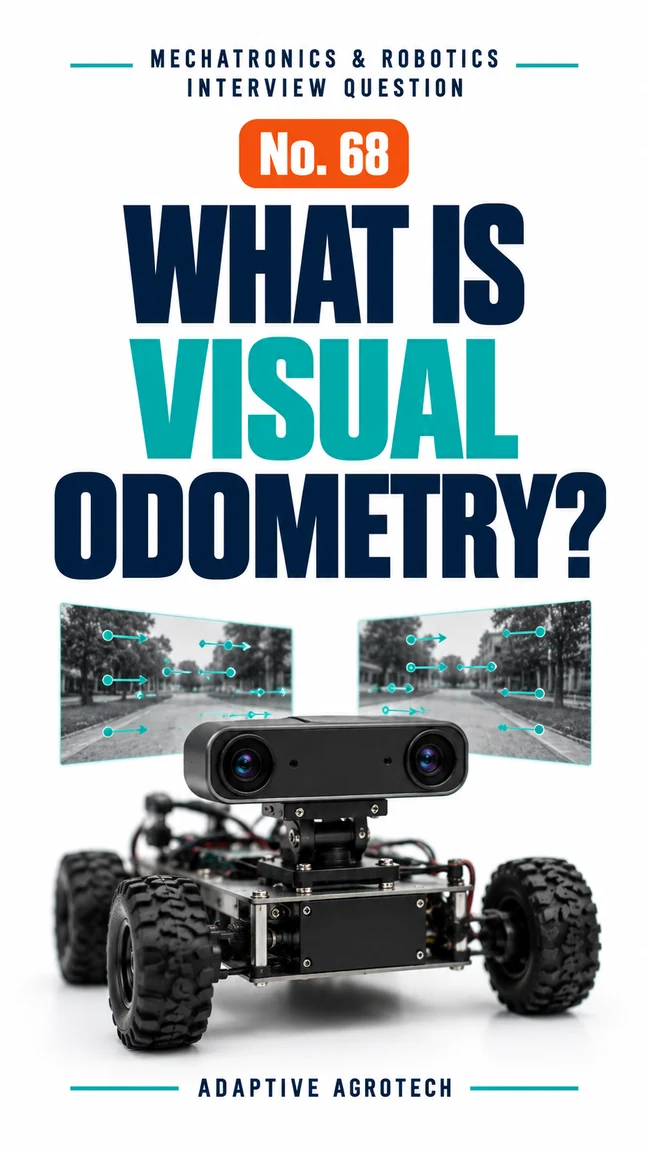
What is Visual Odometry?

Visual odometry estimates relative camera motion from image sequences. Feature or brightness changes constrain geometry, stereo provides metric depth, and monocular scale ambiguity and tracking failures limit its long-term position estimate.

Watch & explore
Localization & estimationNo. 069

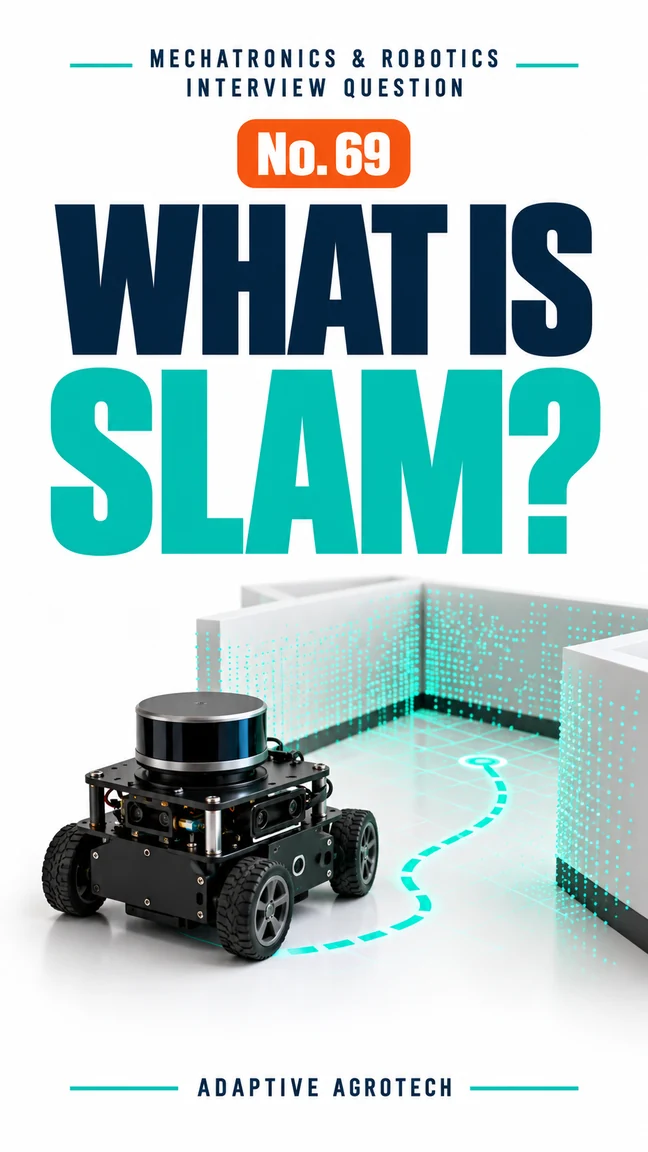
What is SLAM?

SLAM jointly estimates robot trajectory and an initially unknown map. Motion and sensor observations constrain the same model, while revisits can reduce drift and incorrect associations can damage both map and pose.

Watch & explore
Localization & estimationNo. 070

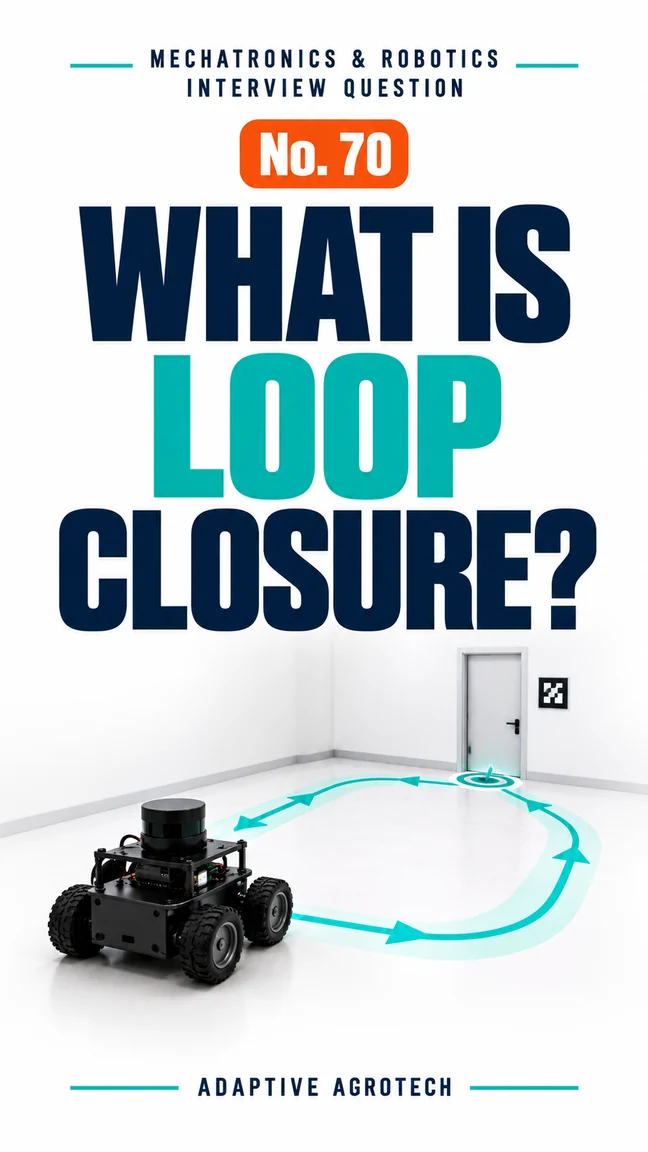
What is Loop Closure?

Loop closure links a current pose to a previously visited place. Optimization spreads correction across connected poses and features, but geometric verification is essential because one false match can distort a useful map.

Watch & explore
Localization & estimationNo. 072

What is ICP Point-Cloud Registration?

ICP iteratively aligns overlapping point clouds through correspondences and rigid transforms. Repeated refinement estimates motion, while sufficient overlap and good initialization are essential because convergence can occur at an incorrect local solution.

Watch & explore
Sensors & perceptionNo. 073

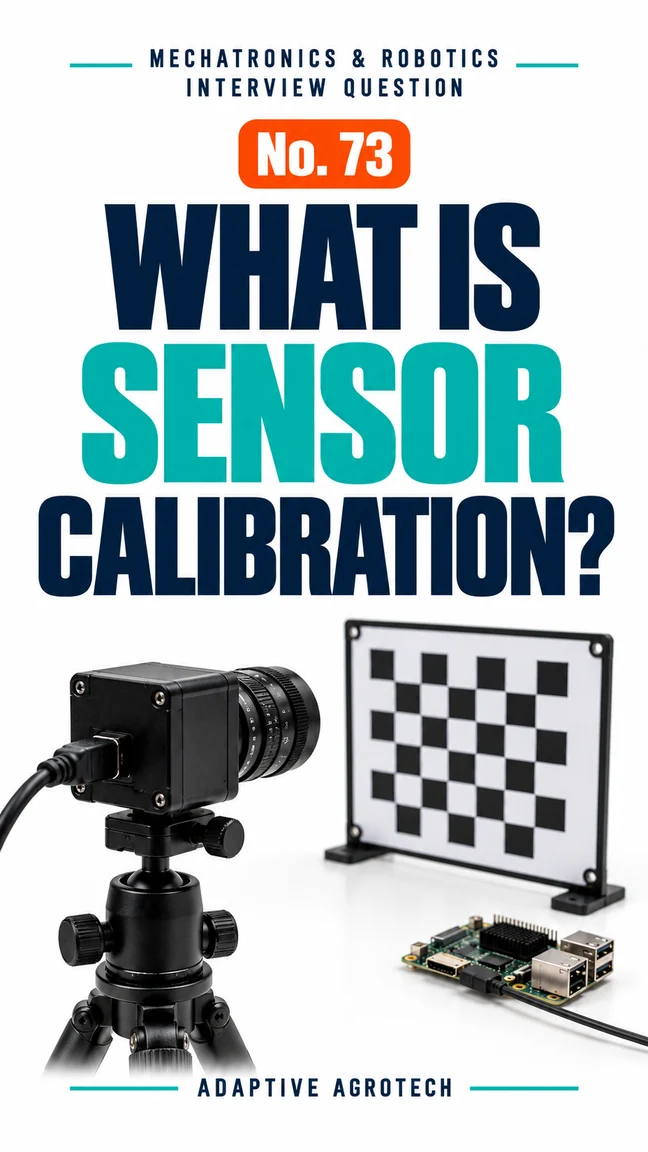
What is Sensor Calibration?

Sensor calibration estimates the parameters connecting readings to physical geometry. Known references constrain offsets, scales, distortion, and inter-sensor transforms, while independent validation and stable mounting determine whether the result remains useful.

Watch & explore
Localization & estimationNo. 075

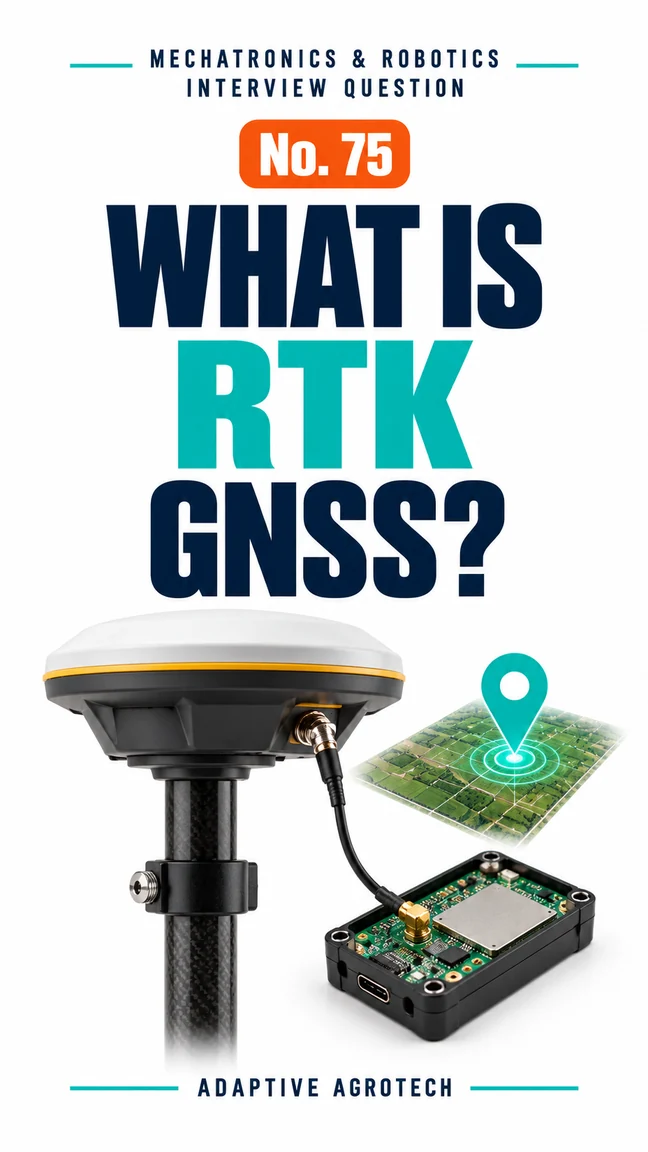
What is RTK GNSS?

RTK GNSS combines carrier-phase measurements with reference corrections for precise positioning. Resolving whole-cycle ambiguity supports centimetre-level fixed solutions under good conditions, while integrity checks remain necessary during actual robot motion.

Watch & explore
Localization & estimationNo. 076

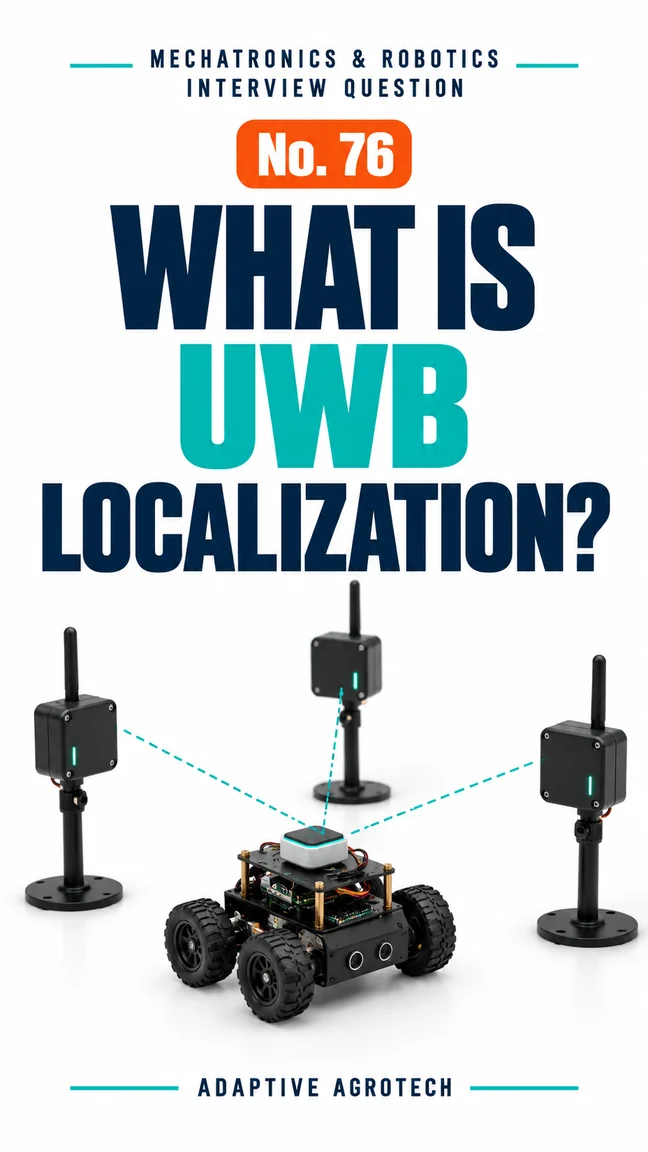
What is UWB Localization?

UWB ranging estimates distances from radio travel time to surveyed anchors. Several ranges constrain tag position, while anchor geometry and blocked direct paths affect reliability and motivate motion fusion and inconsistent-reading rejection.

Watch & explore
Motion planningNo. 077

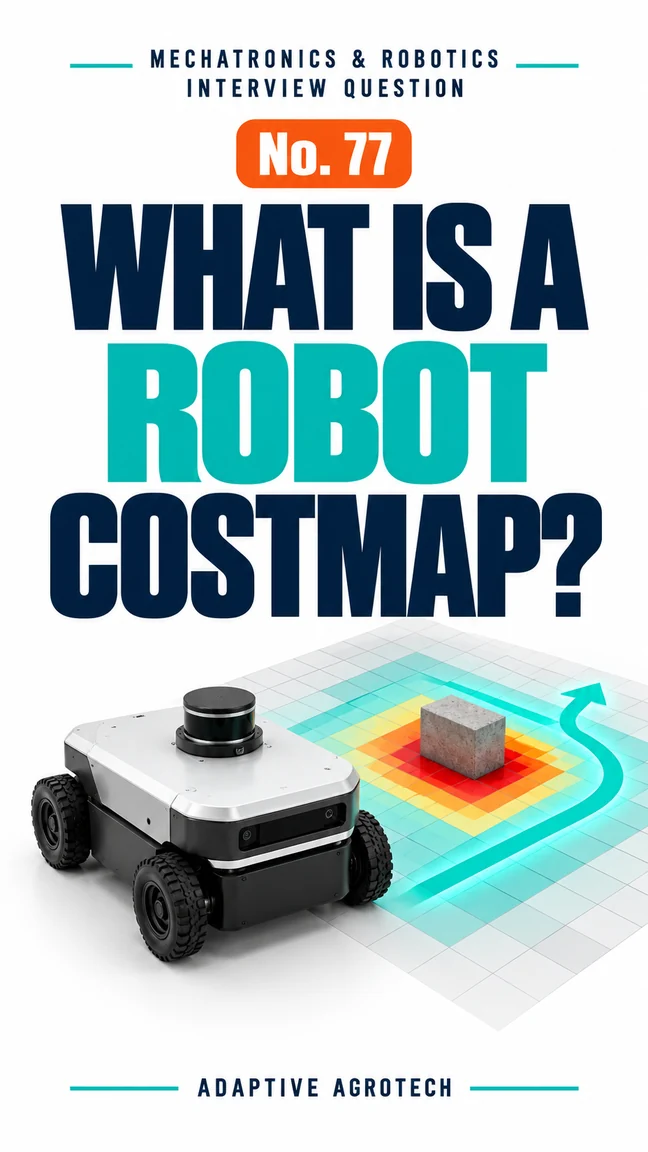
What is a Robot Costmap?

A costmap assigns travel costs that guide route choice and clearance. Obstacle inflation discourages paths near walls, while footprint geometry and fresh updates prevent point-based routes from hiding physical collisions.

Watch & explore
Motion planningNo. 078

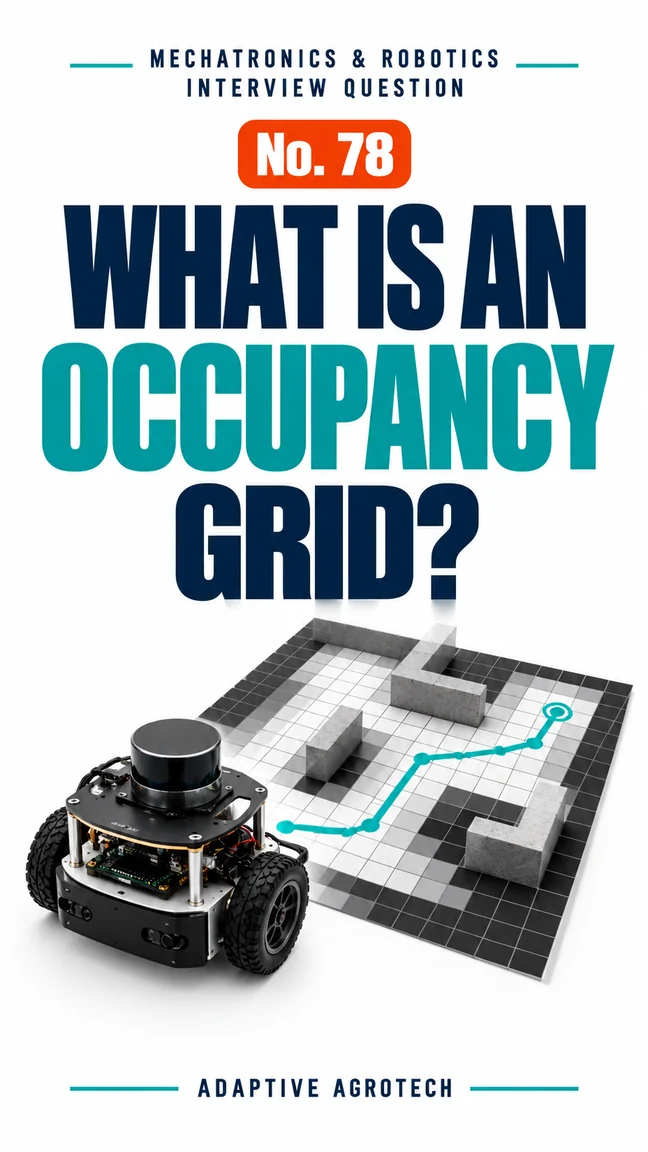
What is an Occupancy Grid?

An occupancy grid divides space into cells that express obstacle belief. Laser evidence updates free and occupied regions, while unknown cells require an explicit navigation policy instead of being treated as clear.

Watch & explore
Motion planningNo. 080

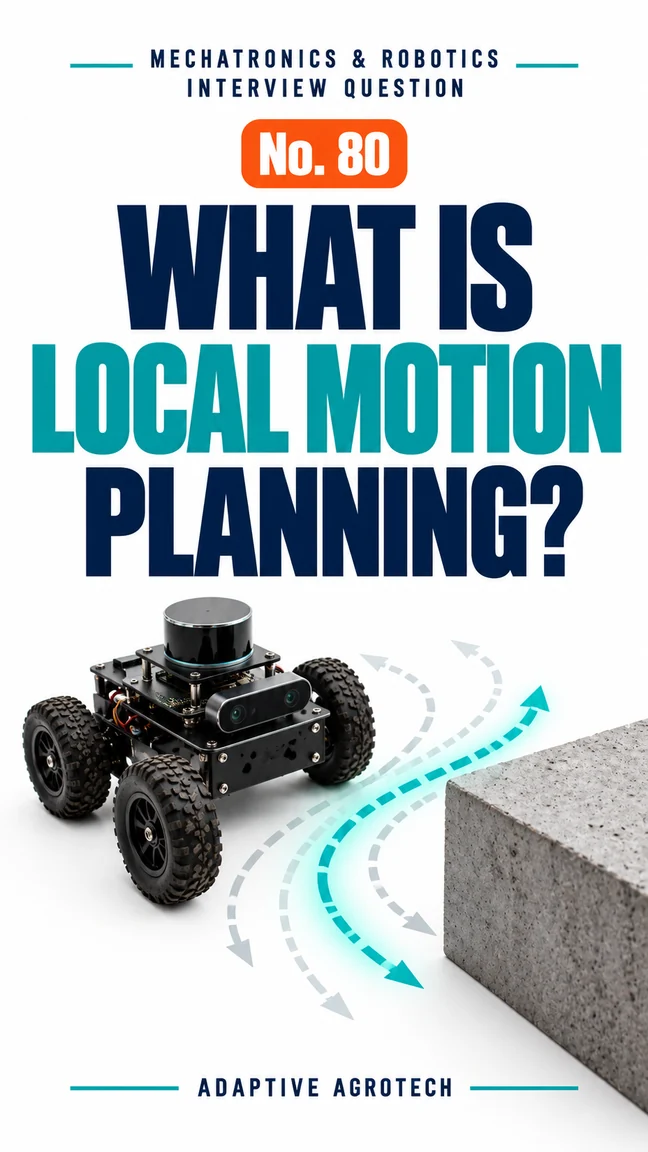
What is Local Motion Planning?

Local planning chooses feasible near-term motion using recent sensing, route guidance, and robot limits. Repeated updates handle nearby changes, while short-horizon traps and unavailable safe motion require global guidance and stopping.

Watch & explore
Motion planningNo. 081

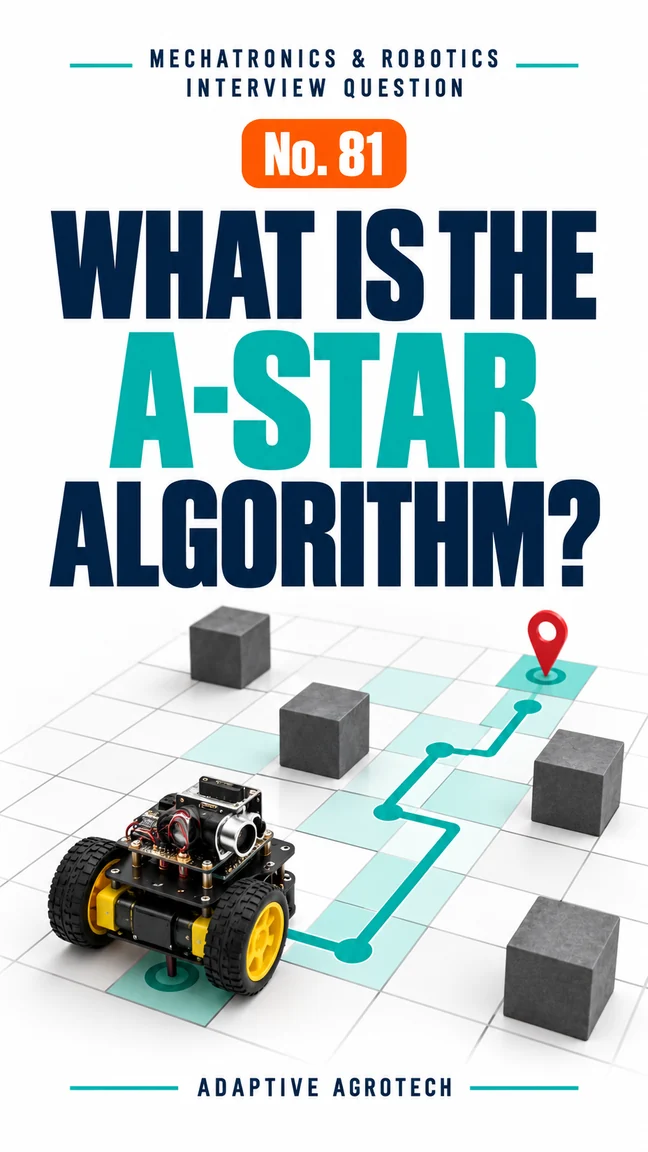
What is the A-Star Algorithm?

A* searches a graph by combining the cost already accumulated with an estimate of the remaining cost. Its heuristic focuses exploration, while optimality depends on the graph, edge costs, and heuristic properties.

Watch & explore
Motion planningNo. 082

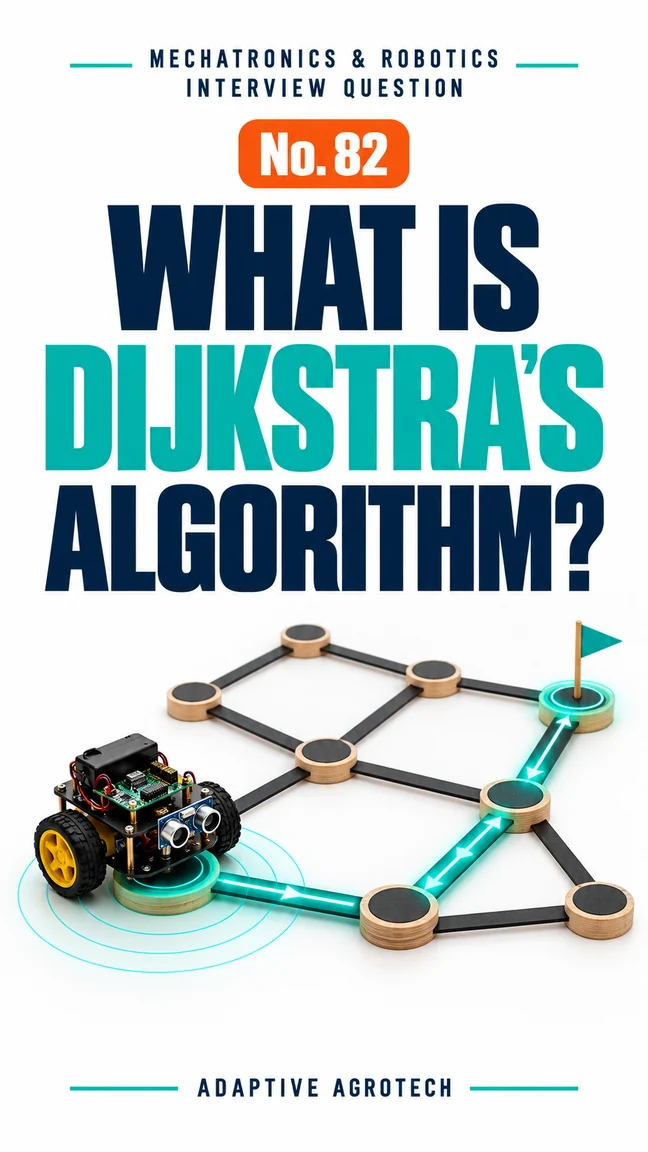
What is Dijkstra’s Algorithm?

Dijkstra’s algorithm finds least cost graph paths by expanding the smallest known cost from the start. It updates cheaper connections and reconstructs routes through parent links, without using a goal heuristic.

Watch & explore