Skip to content
Adaptive AgroTech NetworkUniversity of Southern Denmark · SDU Drone Center
Robotics · Mechatronics · Intelligent systems

Short videos.
Lasting understanding.

Explore one engineering idea at a time. Watch a short lesson, read the key concepts and test your understanding before your next interview, project or class.

17 topics found

Video · Key ideas · Check your understanding

Communication & networksNo. 131

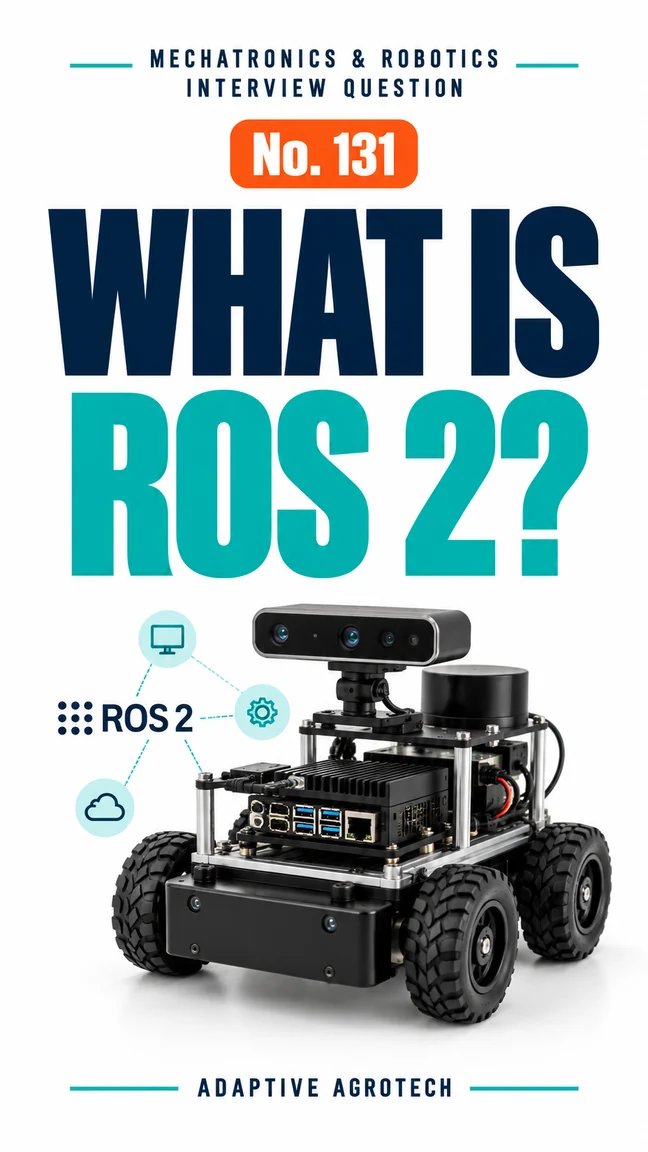
What is ROS 2?

ROS 2 organizes robot software into cooperating nodes with typed interfaces. Topics serve streams, services serve requests, and actions support longer tasks, while timing, motion behavior, and calibration still require engineering validation.

Watch & explore
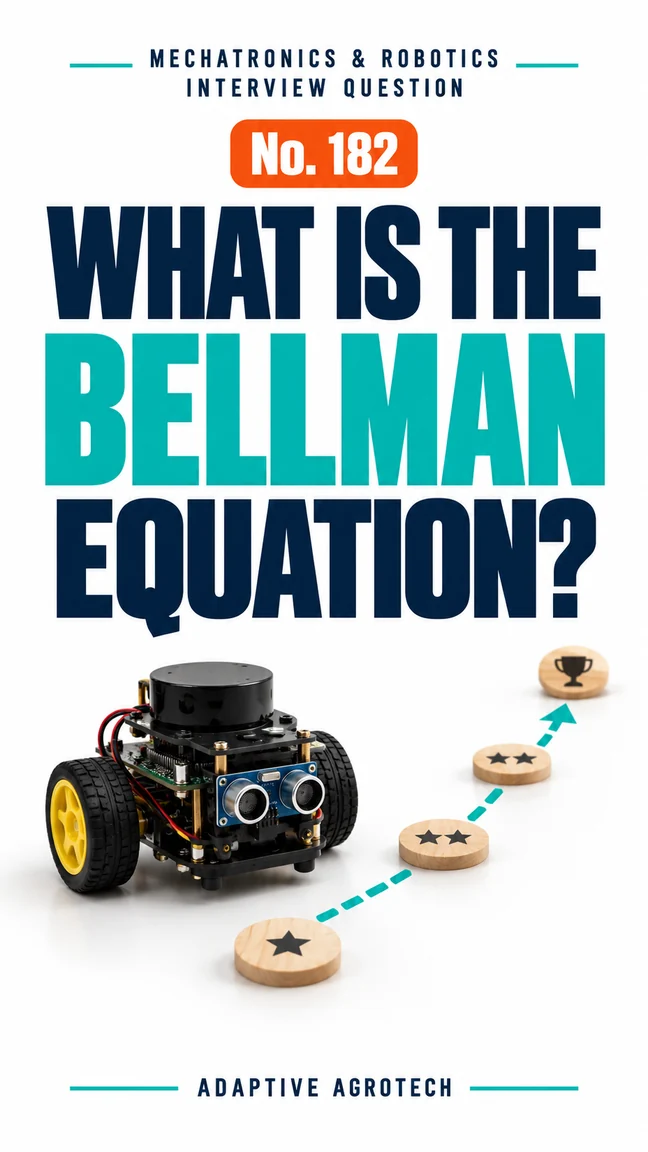
AI & machine learningNo. 182

What Is the Bellman Equation?

The Bellman expectation equation relates a state’s value to expected immediate reward plus discounted next state value. The expectation averages actions from the policy and transitions from the environment.

Watch & explore
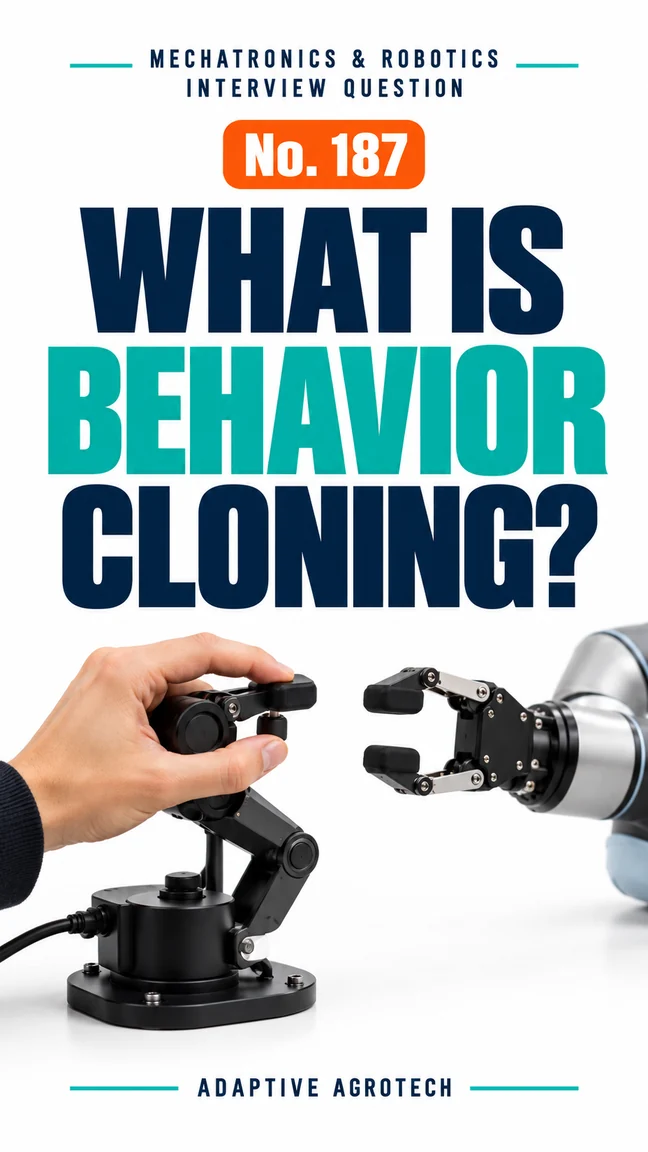
AI & machine learningNo. 187

What Is Behavior Cloning?

Behavior cloning trains a policy to reproduce expert actions from paired observations and commands. It uses supervised learning, such as minimizing prediction error for continuous actions recorded while a person operates the robot.

Watch & explore
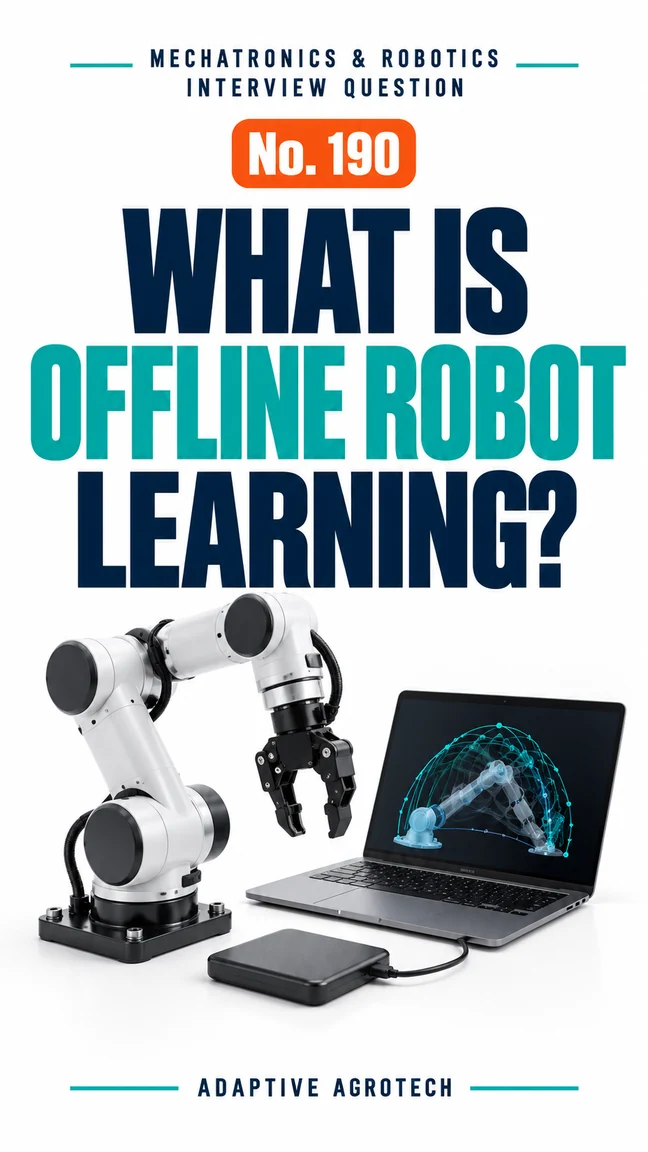
AI & machine learningNo. 190

What Is Offline Reinforcement Learning?

Offline reinforcement learning trains from a fixed dataset of previously collected transitions. During this training stage, the algorithm does not collect new experience by interacting with the environment. It still uses a reward based learning objective.

Watch & explore
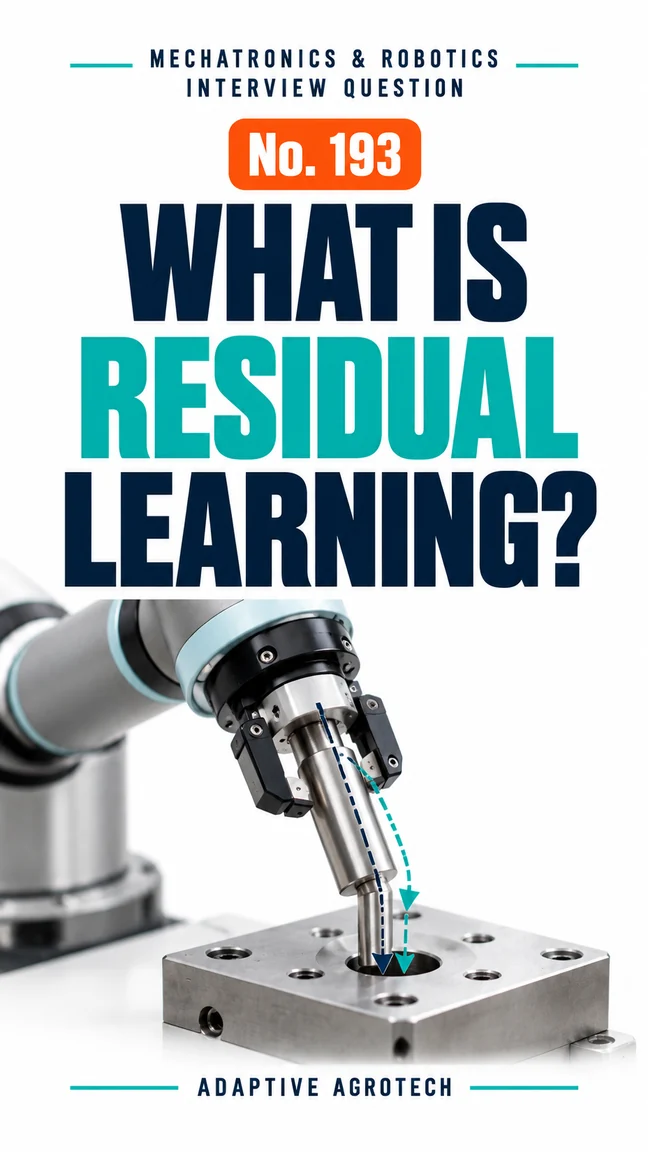
AI & machine learningNo. 193

What Is Residual Learning for Robot Control?

Residual learning combines a conventional controller with a learned correction. The controller handles a known part of the task. A learned residual adjusts its command to address remaining errors or interactions that the model captures poorly.

Watch & explore
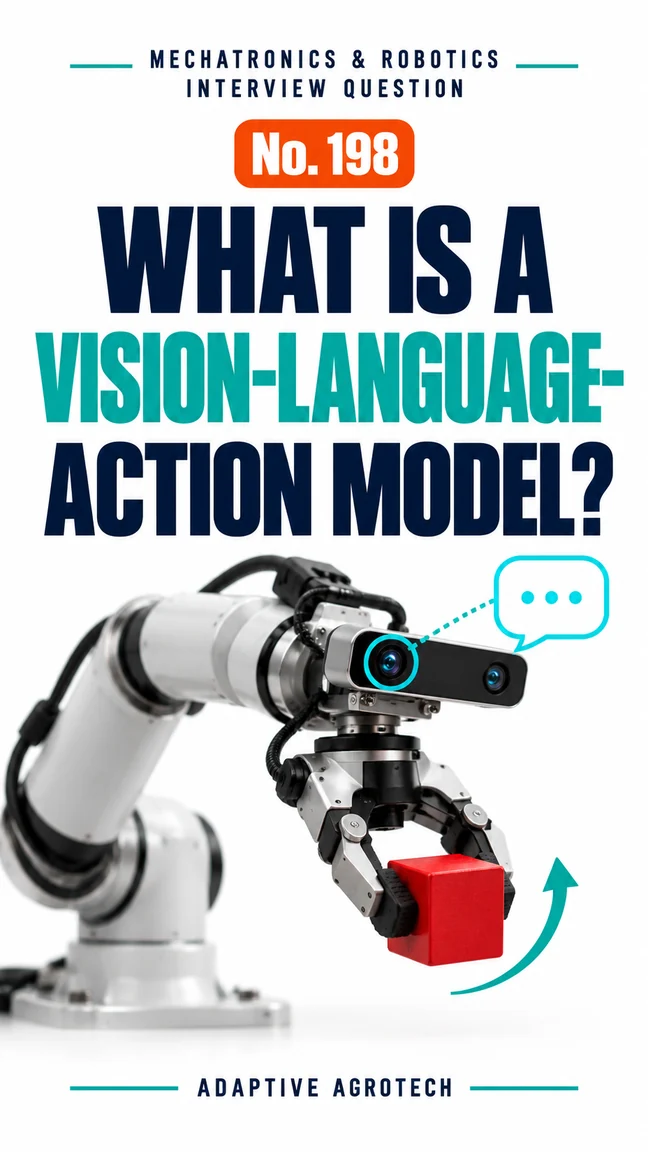
AI & machine learningNo. 198

What Is a Vision-Language-Action Model?

A vision language action model connects visual observations and language instructions to robot actions. It may also use joint positions or other robot state. Its output describes movements, rather than only a written answer.

Watch & explore