Skip to content
Adaptive AgroTech NetworkUniversity of Southern Denmark · SDU Drone Center
Robotics · Mechatronics · Intelligent systems

Short videos.
Lasting understanding.

Explore one engineering idea at a time. Watch a short lesson, read the key concepts and test your understanding before your next interview, project or class.

54 topics found

Video · Key ideas · Check your understanding

Sensors & perceptionNo. 001

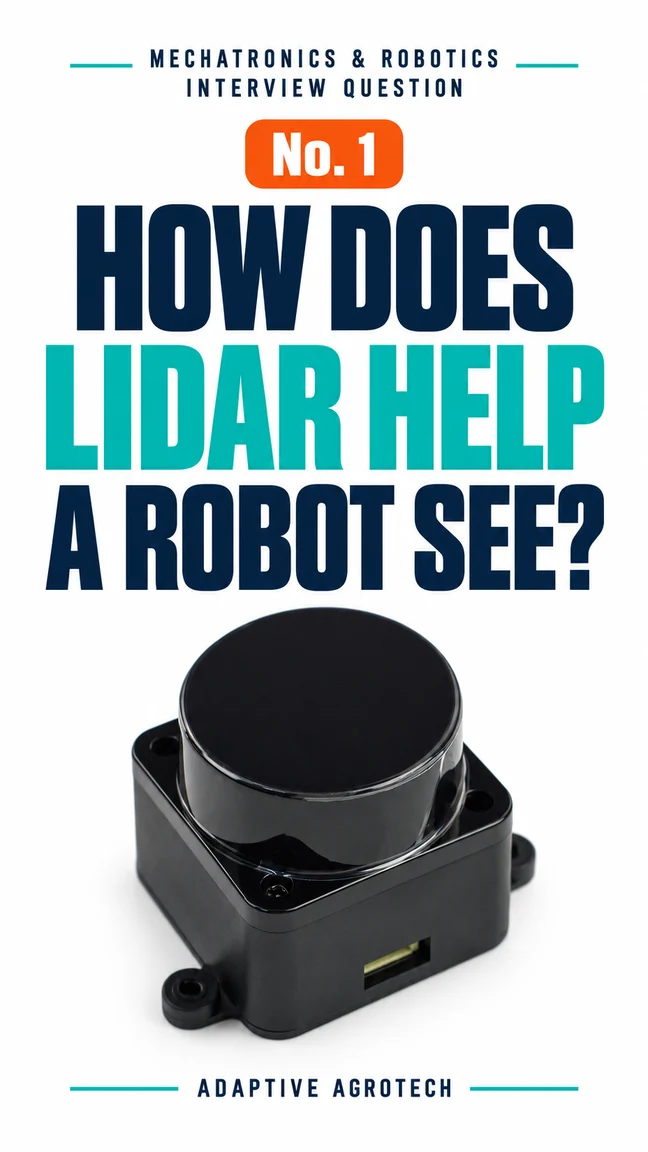
How LiDAR Helps a Robot See

Scanning LiDAR pairs range with angle to detect surrounding surfaces. Time-of-flight measurements support obstacle detection and mapping, while a two-dimensional scan can miss objects outside its measurement plane.

Watch & explore
Robot kinematicsNo. 021

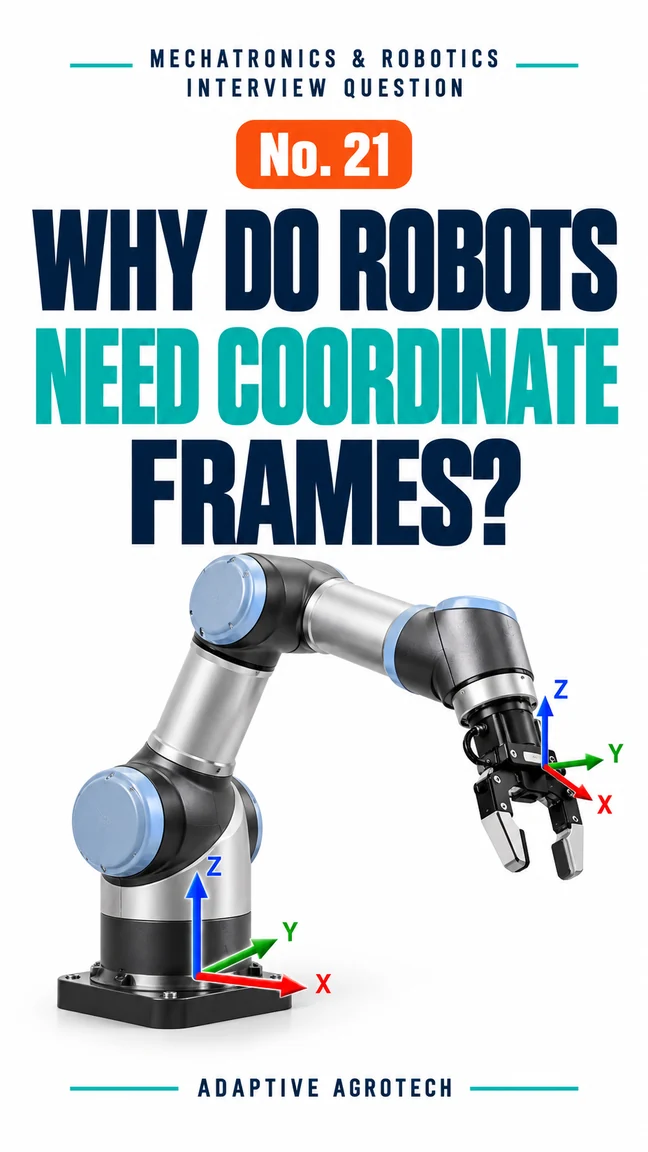
Why a Robot Needs Coordinate Frames

Coordinate frames describe the same physical point from different origins and axes. Rigid transforms connect sensor, robot, and map coordinates, and correct composition requires consistent directions, conventions, and measurement timestamps.

Watch & explore
Control systemsNo. 024

How a Robot Finds and Docks at Its Charger

Automatic docking combines navigation, close-range pose sensing, slow alignment, and electrical confirmation. Successful motion alone is insufficient: charging feedback, timeouts, and bounded recovery attempts determine whether docking actually succeeded.

Watch & explore
Control systemsNo. 037

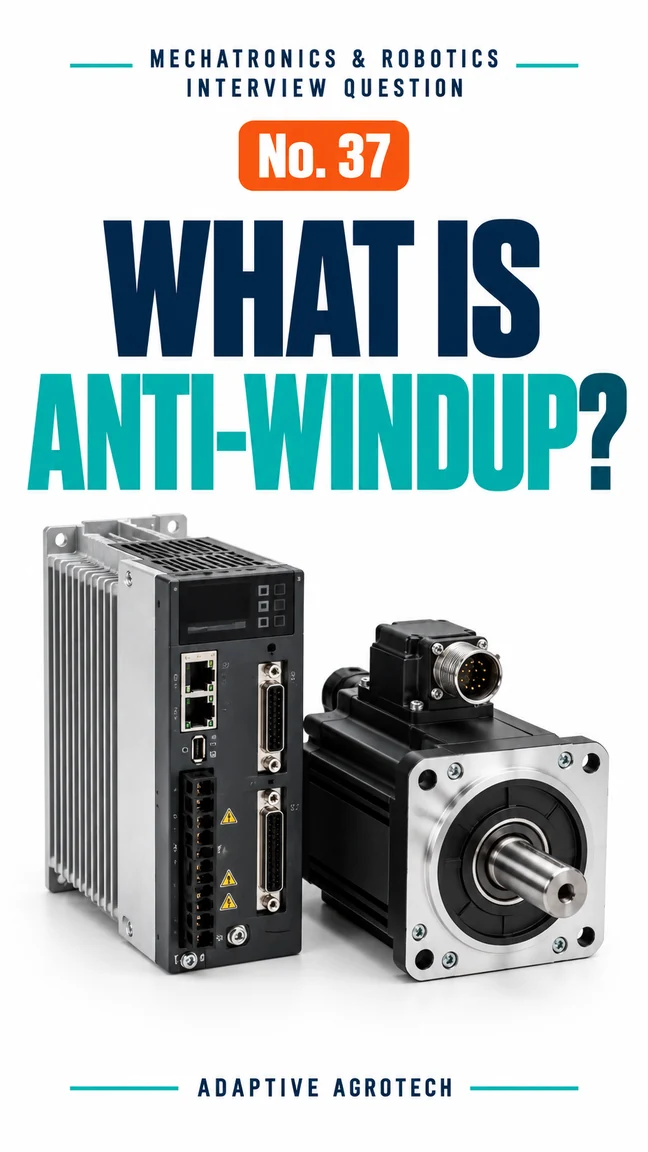
What is Anti-Windup?

Anti-windup prevents hidden integral buildup when actuator limits block the requested response. Conditional integration stops accumulation that drives further into saturation while allowing the integral state to unwind toward recovery.

Watch & explore
Control systemsNo. 038

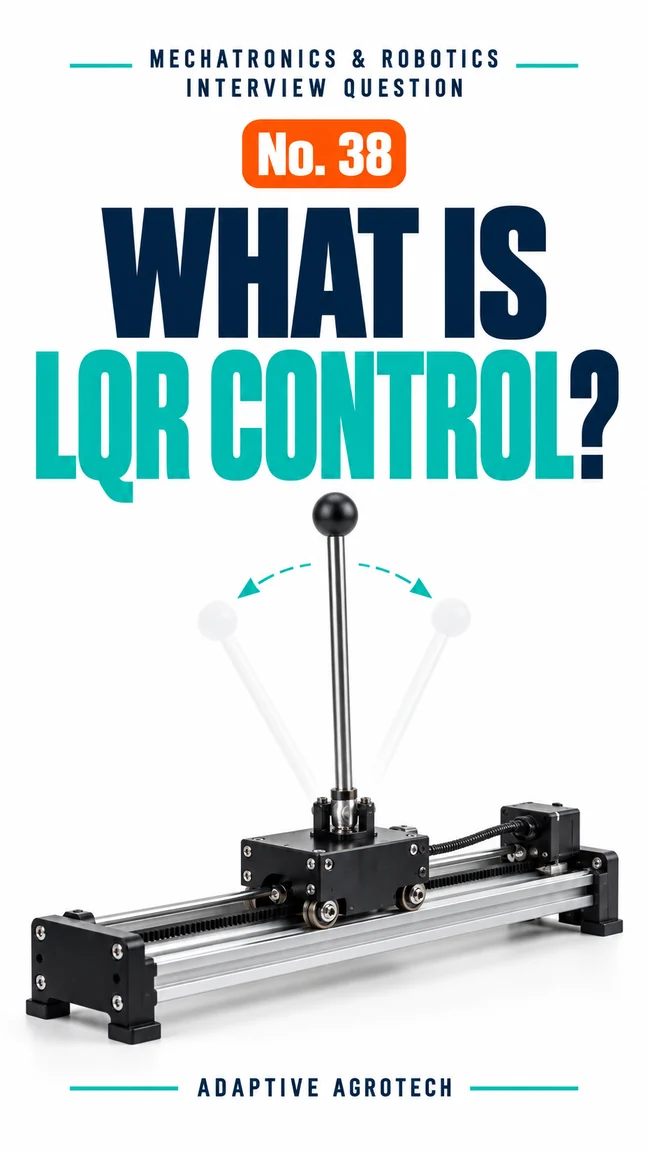
What is LQR?

LQR chooses state-feedback gains that balance state error against control effort in a linear model. Cost weights shape behavior, while the basic regulator does not impose hard actuator constraints or eliminate model error.

Watch & explore
Control systemsNo. 053

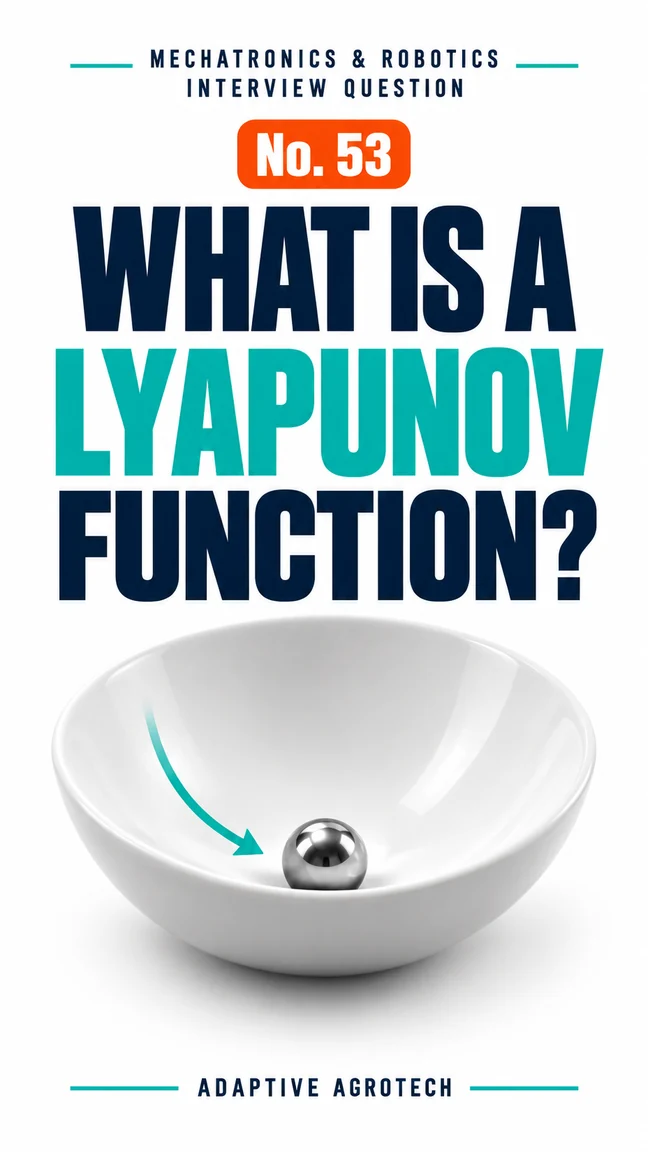
What is a Lyapunov Function?

A Lyapunov function provides a scalar route to analyzing stability without solving every trajectory. Its value and change along motion support a claim whose scope depends on the theorem's assumptions and region.

Watch & explore
Localization & estimationNo. 061

What is a Particle Filter?

A particle filter represents localization with many weighted pose hypotheses. Motion moves them, measurements score them, and resampling focuses computation on plausible alternatives, with particle count controlling hypothesis retention and resource demand.

Watch & explore
Localization & estimationNo. 067

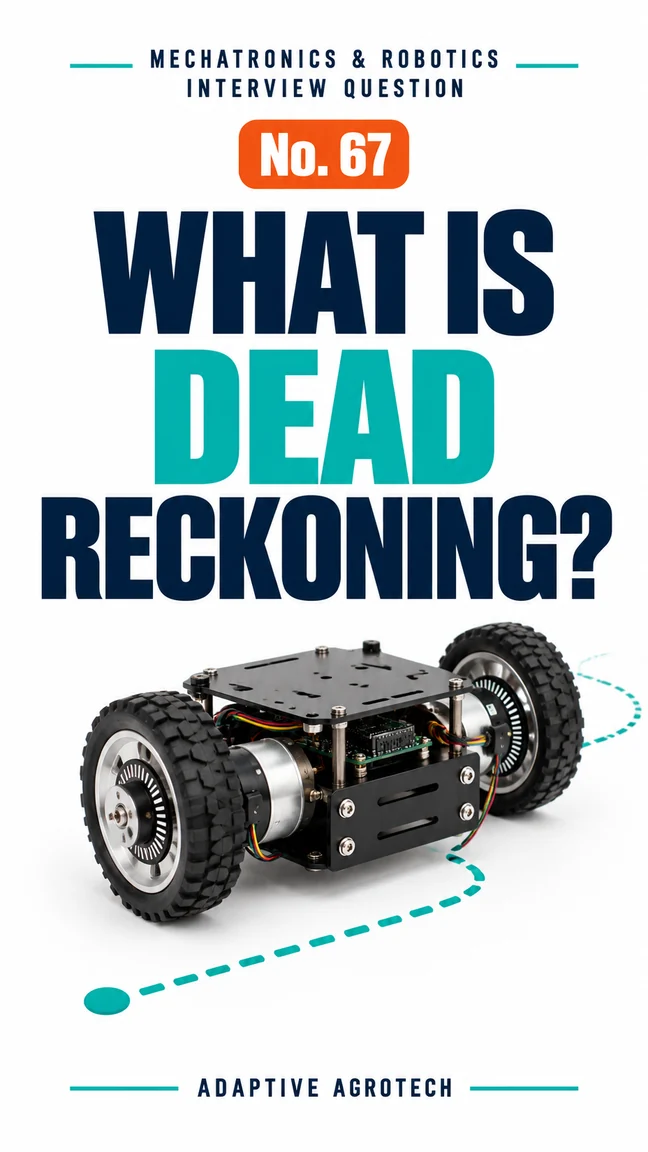
What is Dead Reckoning?

Dead reckoning updates a starting pose from measured motion. Wheel slip and heading error accumulate across steps, making the method useful between external fixes while requiring trusted references to limit long-term drift.

Watch & explore
Computer visionNo. 068

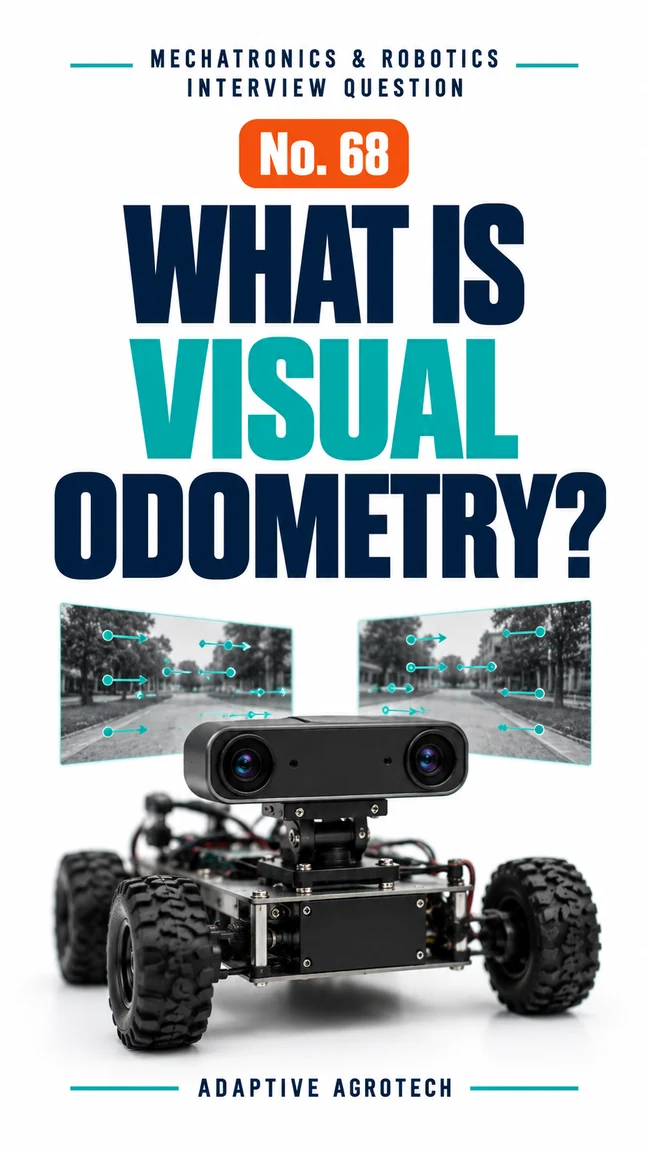
What is Visual Odometry?

Visual odometry estimates relative camera motion from image sequences. Feature or brightness changes constrain geometry, stereo provides metric depth, and monocular scale ambiguity and tracking failures limit its long-term position estimate.

Watch & explore
Localization & estimationNo. 069

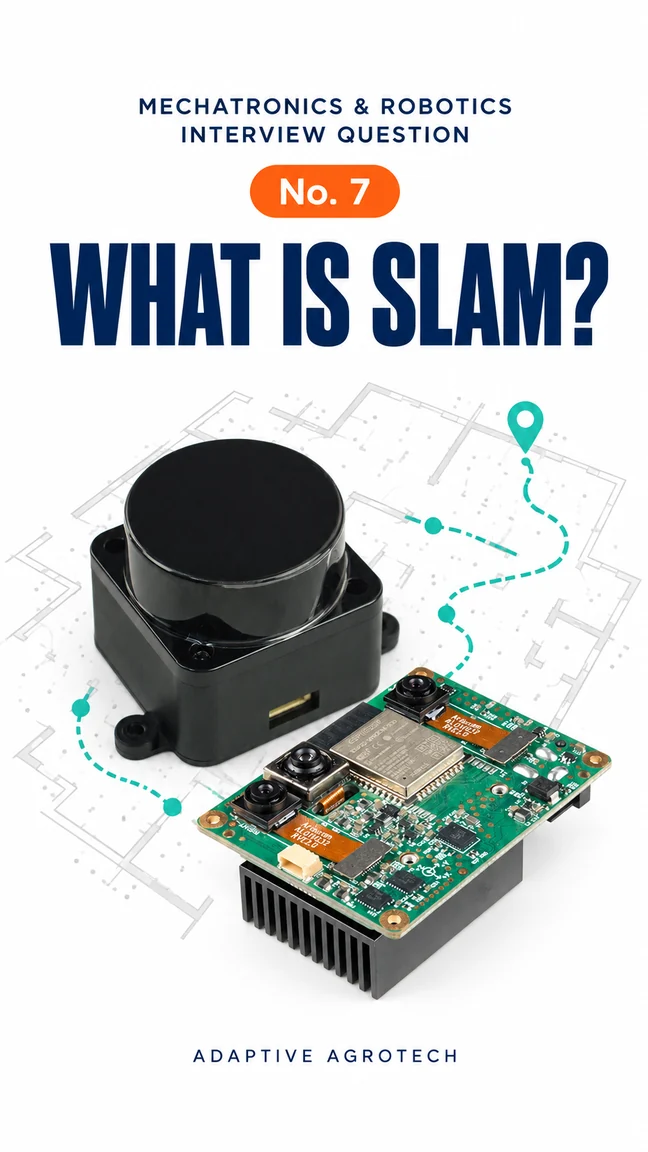
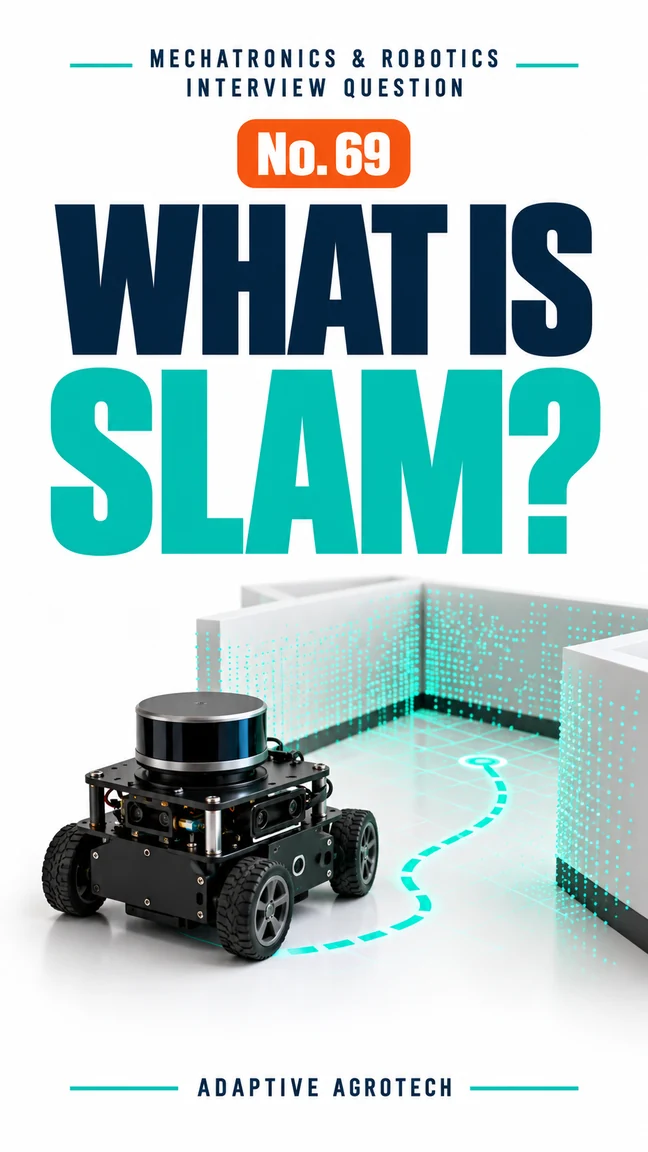
What is SLAM?

SLAM jointly estimates robot trajectory and an initially unknown map. Motion and sensor observations constrain the same model, while revisits can reduce drift and incorrect associations can damage both map and pose.

Watch & explore
Localization & estimationNo. 070

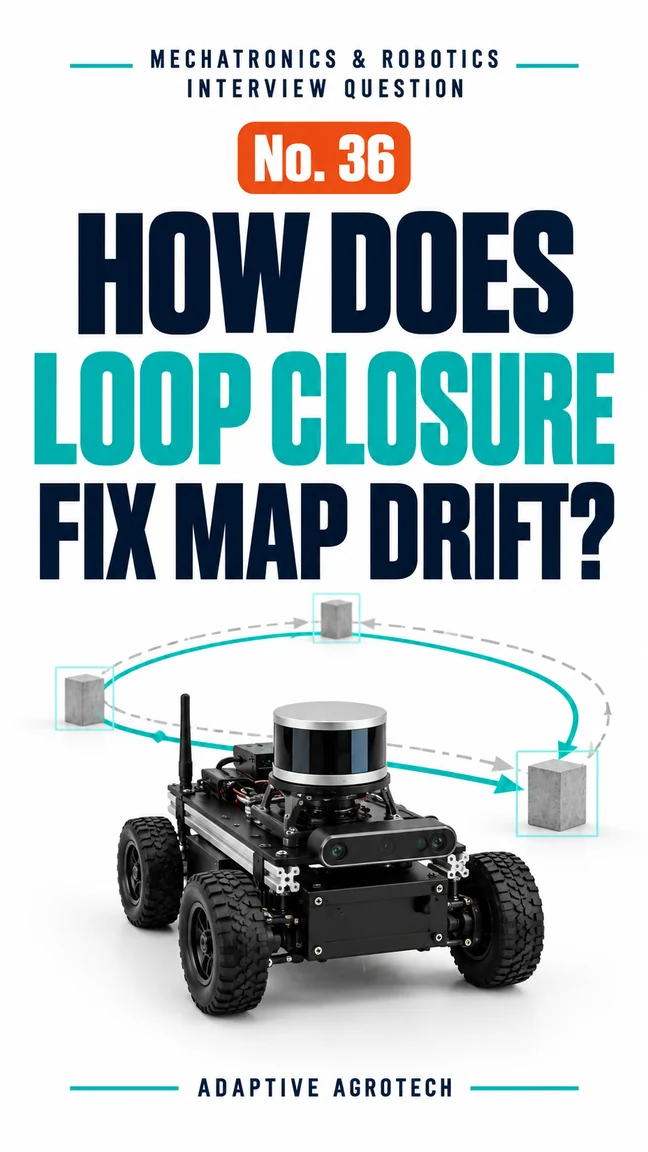
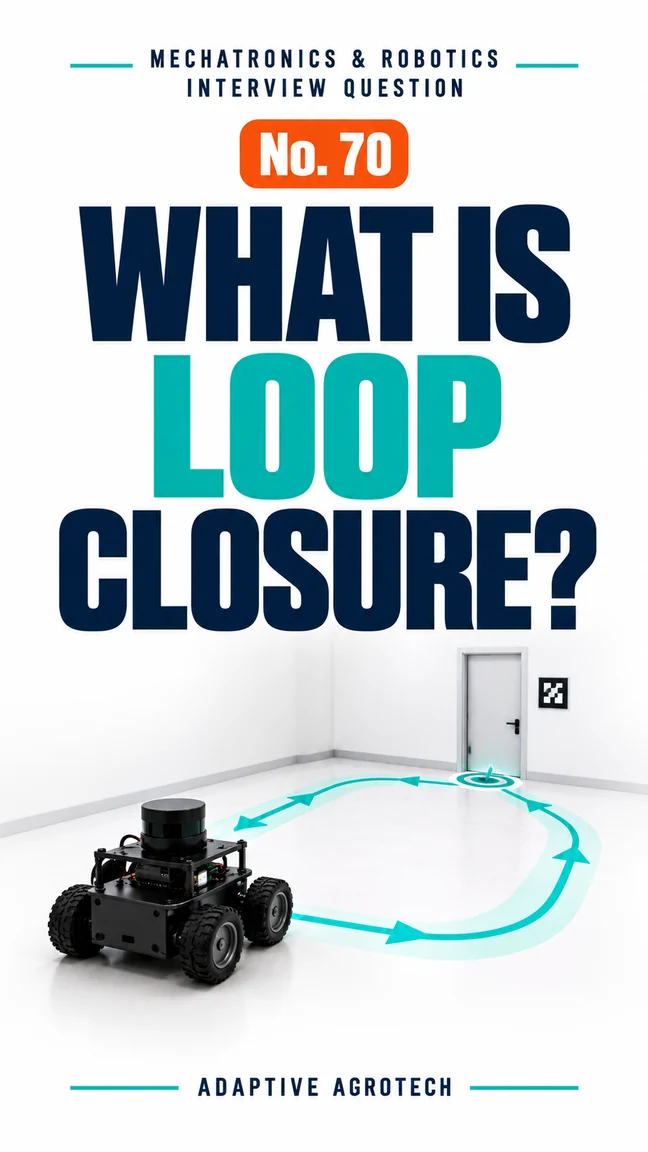
What is Loop Closure?

Loop closure links a current pose to a previously visited place. Optimization spreads correction across connected poses and features, but geometric verification is essential because one false match can distort a useful map.

Watch & explore
Localization & estimationNo. 071

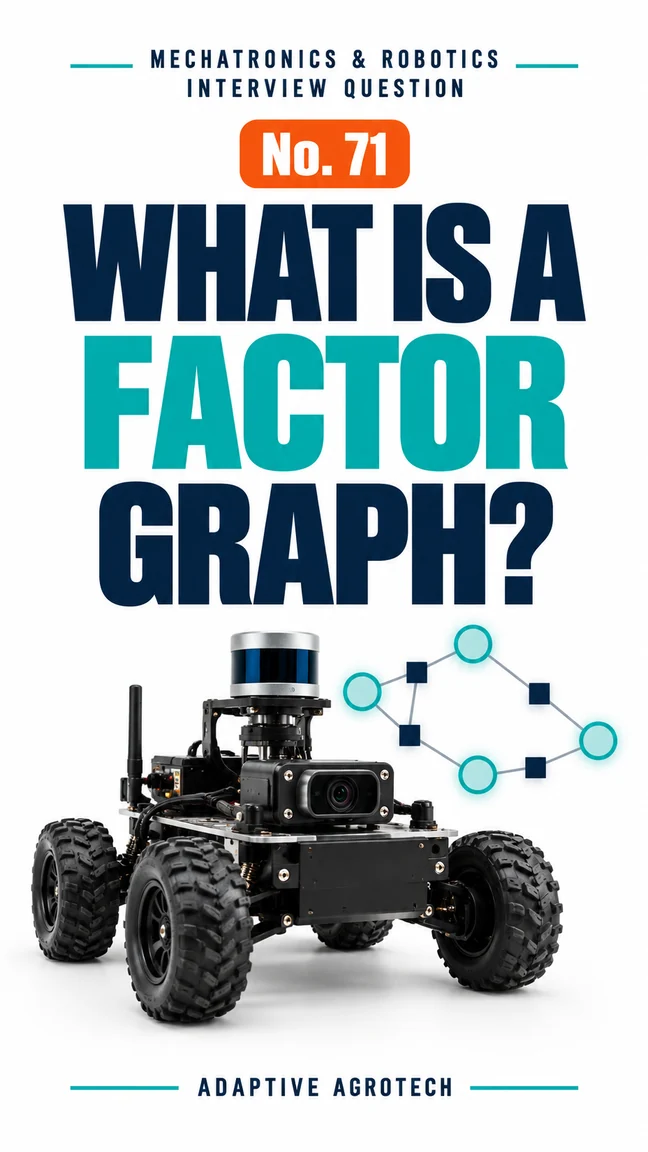
What is a Factor Graph?

A factor graph separates unknown state variables from measurement and prior constraints. Sparse connections describe which variables each observation affects, and optimization seeks agreement using associations, noise models, and an initial estimate.

Watch & explore
Localization & estimationNo. 072

What is ICP Point-Cloud Registration?

ICP iteratively aligns overlapping point clouds through correspondences and rigid transforms. Repeated refinement estimates motion, while sufficient overlap and good initialization are essential because convergence can occur at an incorrect local solution.

Watch & explore
Motion planningNo. 080

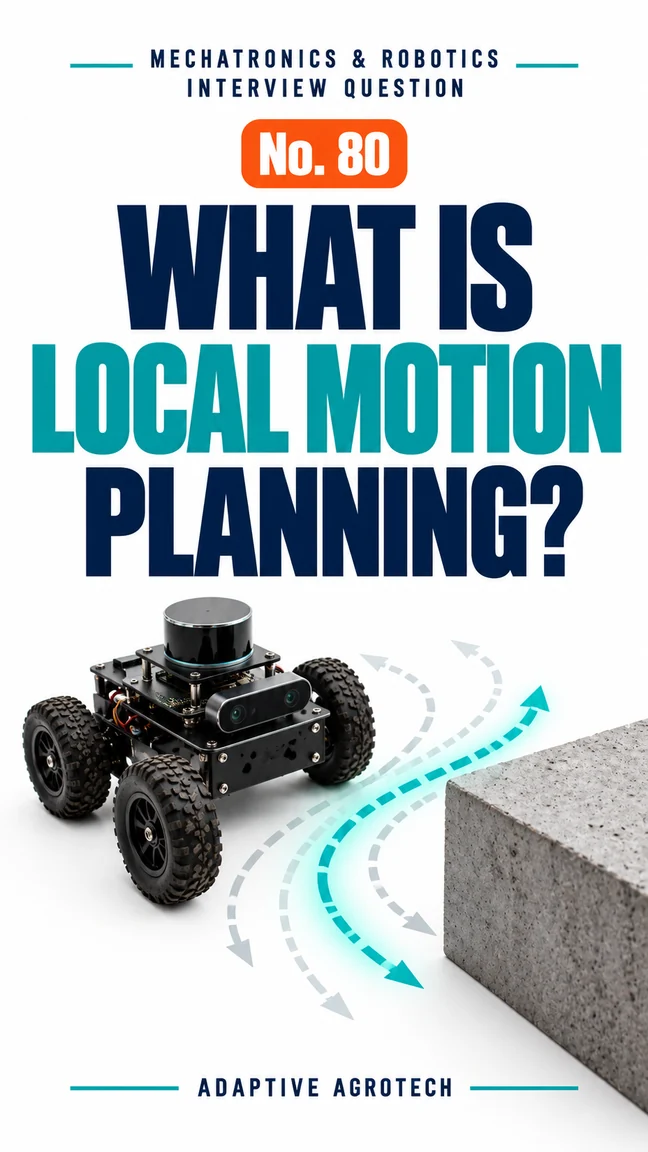
What is Local Motion Planning?

Local planning chooses feasible near-term motion using recent sensing, route guidance, and robot limits. Repeated updates handle nearby changes, while short-horizon traps and unavailable safe motion require global guidance and stopping.

Watch & explore
Robot kinematicsNo. 093

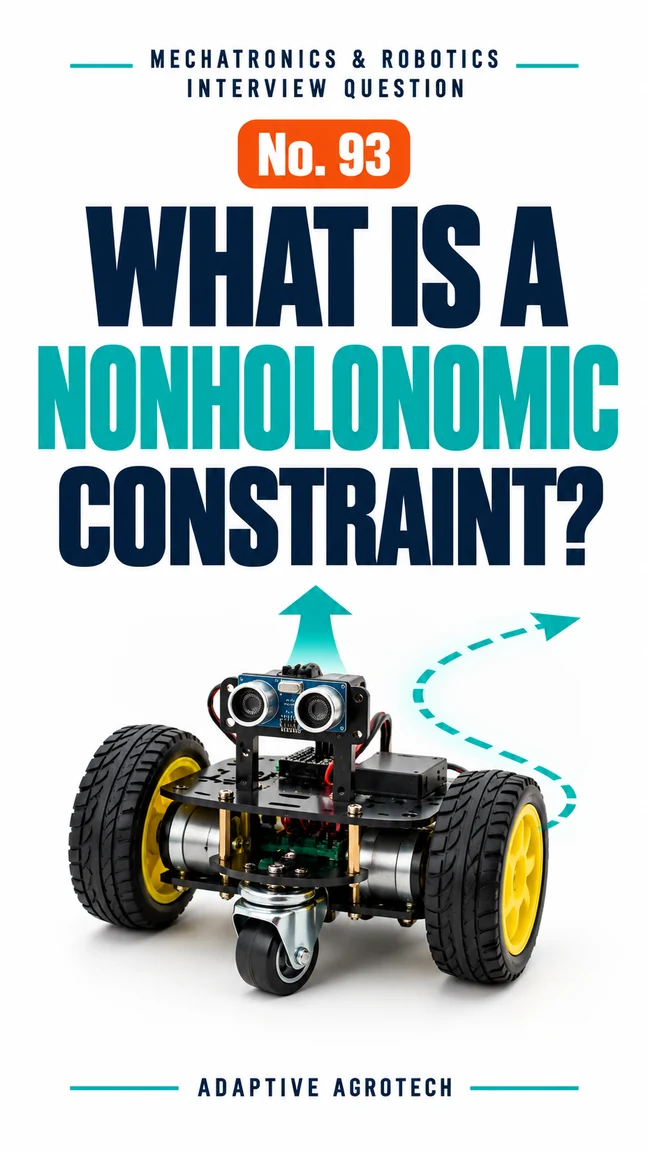
What is a Nonholonomic Constraint?

A nonholonomic constraint limits instantaneous velocities without reducing all positions reachable over time. Rolling wheels illustrate this distinction: a car cannot slide sideways immediately, yet sequences of arcs can change its lateral position.

Watch & explore
Robot kinematicsNo. 094

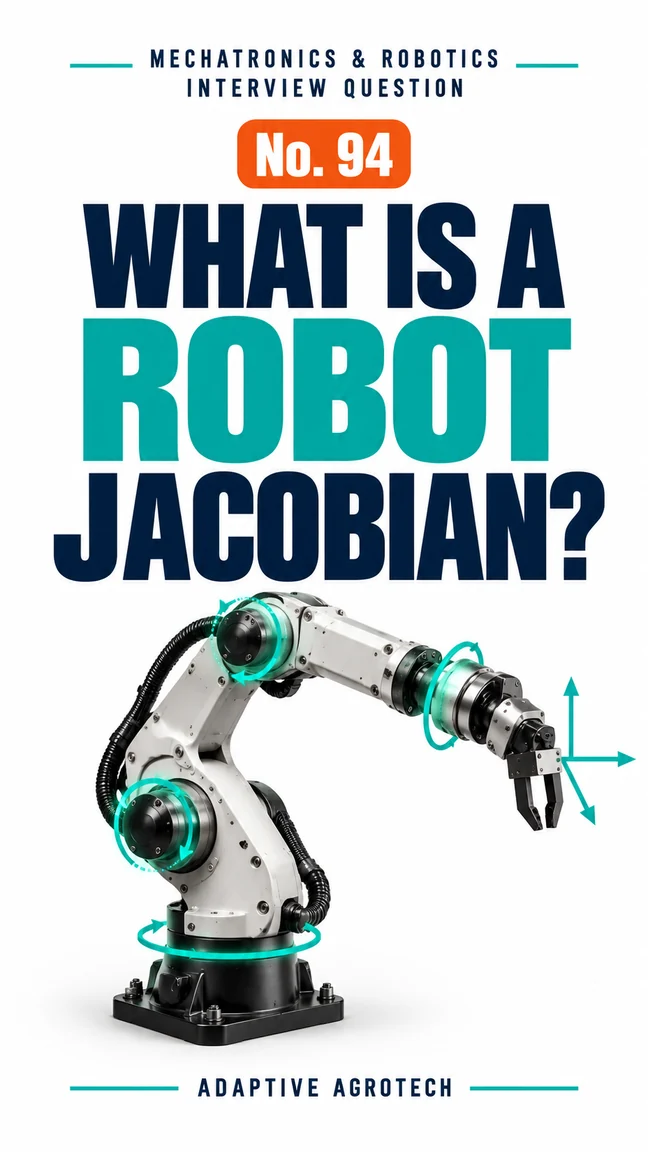
What is a Robot Jacobian?

The robot Jacobian maps joint rates to instantaneous tool velocity at a particular configuration. Its columns describe individual joint contributions, making it useful for local motion and force calculations rather than complete path planning.

Watch & explore
Robot kinematicsNo. 095

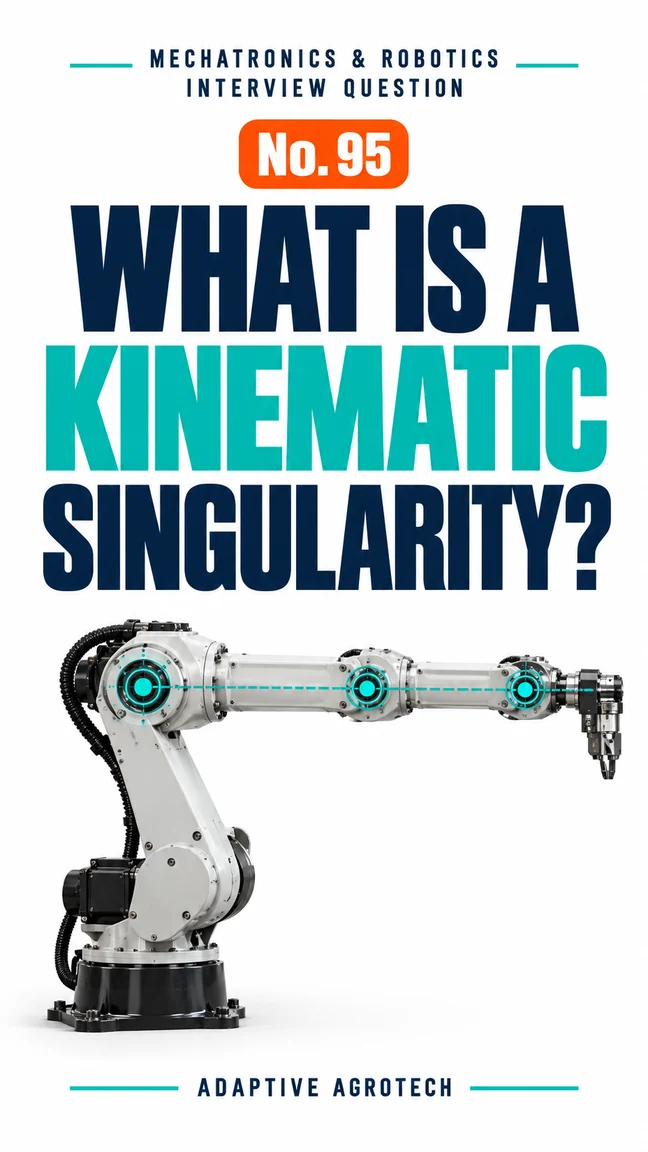
What is a Kinematic Singularity?

A kinematic singularity occurs where the robot Jacobian loses rank and an instantaneous tool motion direction disappears. Near such poses, inverse velocity commands can grow large even when a target position remains reachable.

Watch & explore
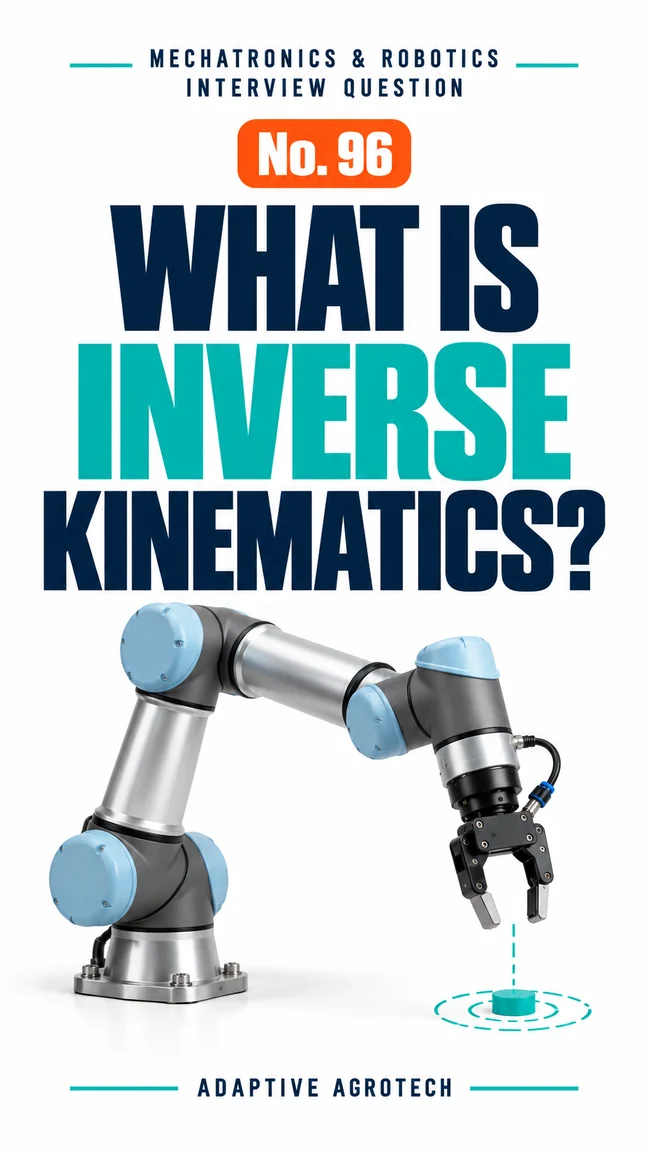
Robot kinematicsNo. 096

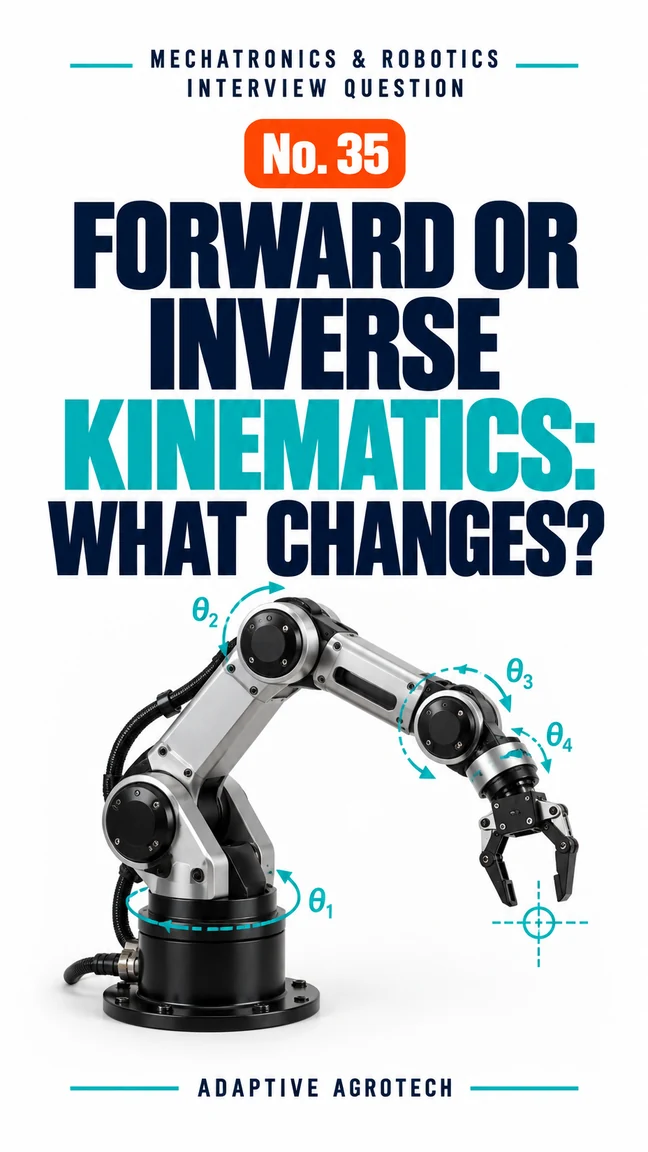
What is Inverse Kinematics?

Inverse kinematics finds joint values for a desired tool pose. A target can have several solutions or none, so solution choice must respect joint limits and the complete arm motion must be checked.

Watch & explore