Skip to content
Adaptive AgroTech NetworkUniversity of Southern Denmark · SDU Drone Center
Robotics · Mechatronics · Intelligent systems

Short videos.
Lasting understanding.

Explore one engineering idea at a time. Watch a short lesson, read the key concepts and test your understanding before your next interview, project or class.

33 topics found

Video · Key ideas · Check your understanding

Control systemsNo. 046

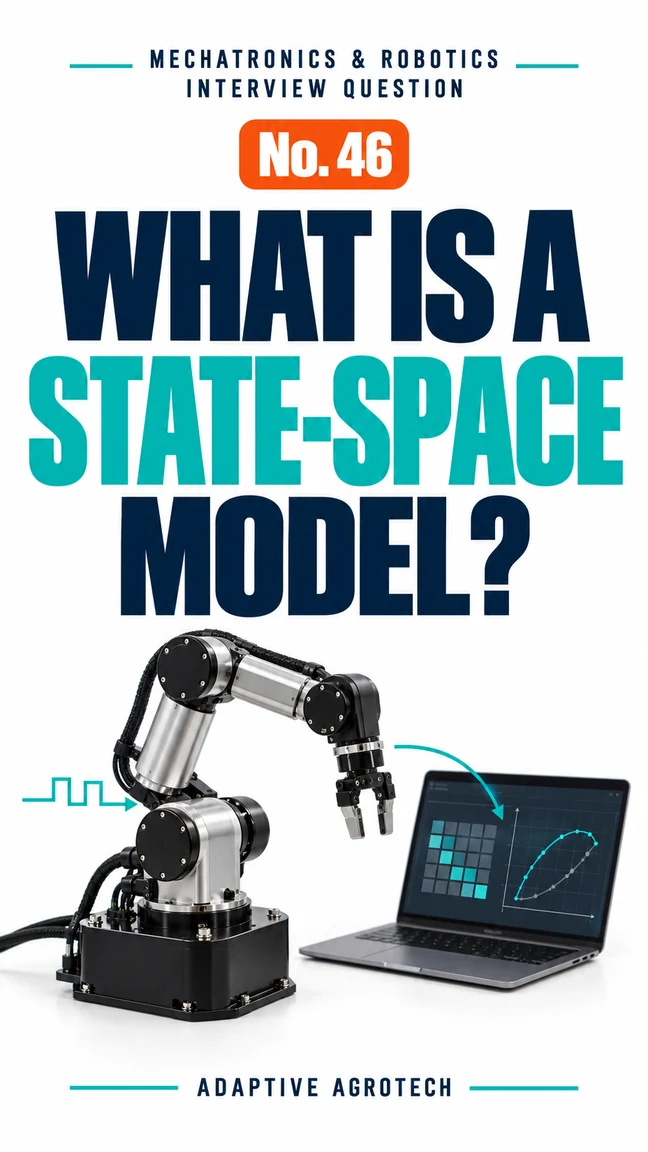
What is a State-Space Model?

A state-space model organizes internal states, inputs, and outputs to predict dynamics. Motor speed and current provide one example, while nonlinear robots may require nonlinear equations or locally valid linear approximations.

Watch & explore
Control systemsNo. 047

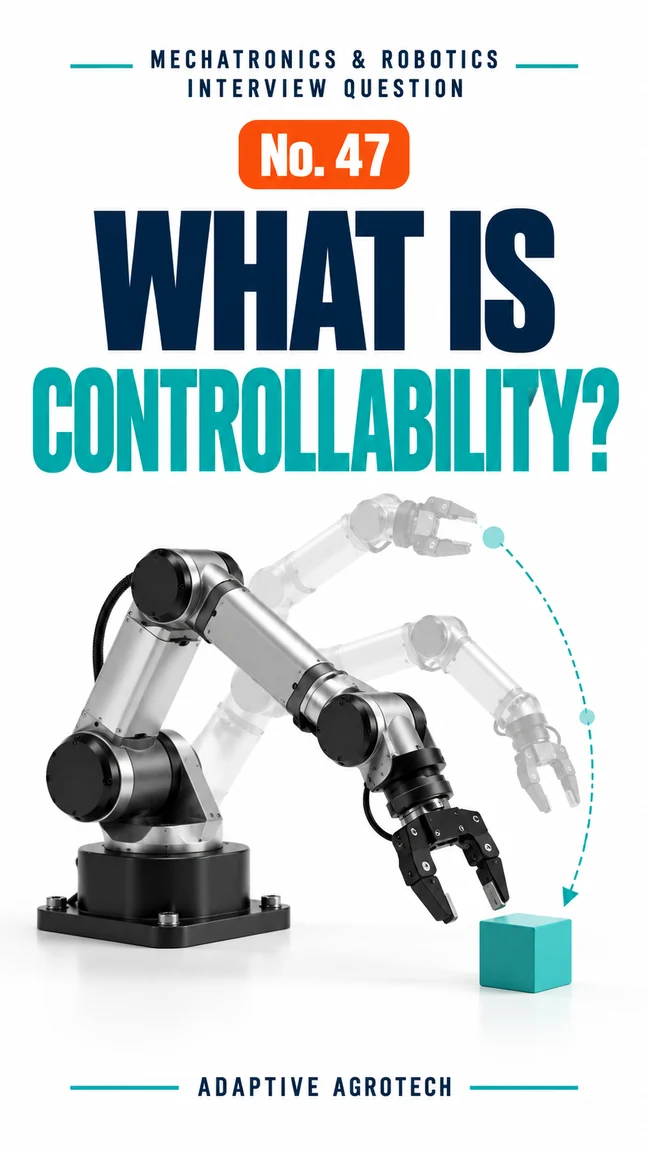
What is Controllability?

Controllability asks whether modeled inputs can move a system between arbitrary states in finite time. A full-rank linear test addresses mathematical actuation, while physical torque limits can still restrict real reachability.

Watch & explore
Control systemsNo. 048

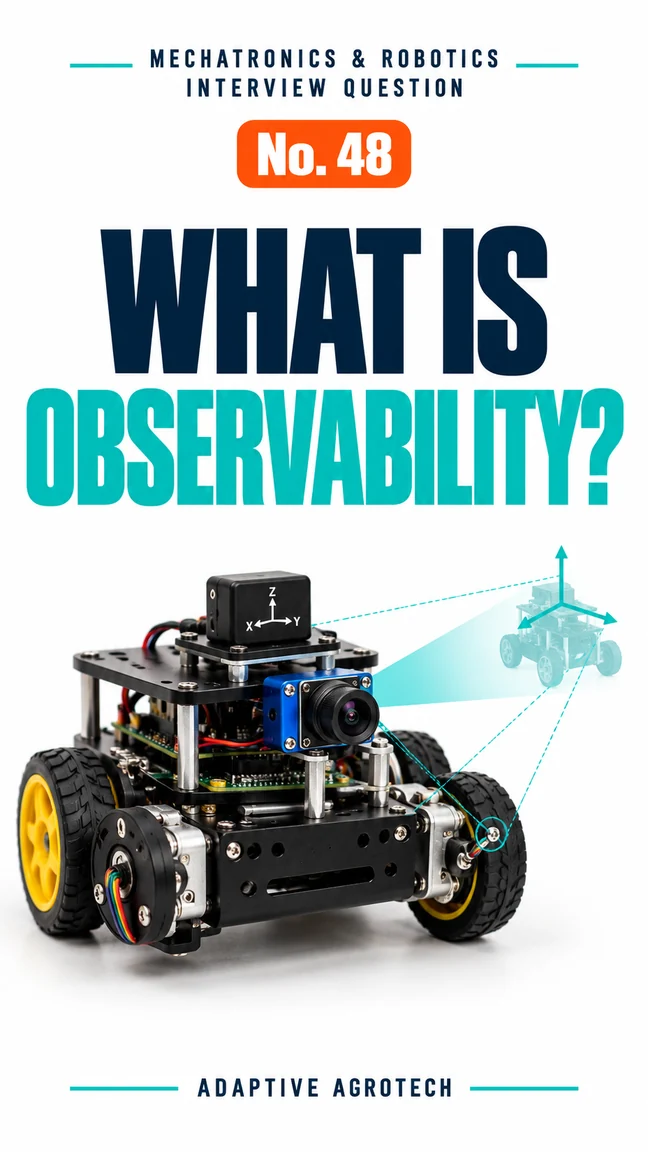
What is Observability?

Observability asks whether model states can be inferred from output history and known inputs. Dynamics can reveal an unmeasured variable, while duplicate sensors may reduce noise without exposing previously hidden state information.

Watch & explore
Localization & estimationNo. 049

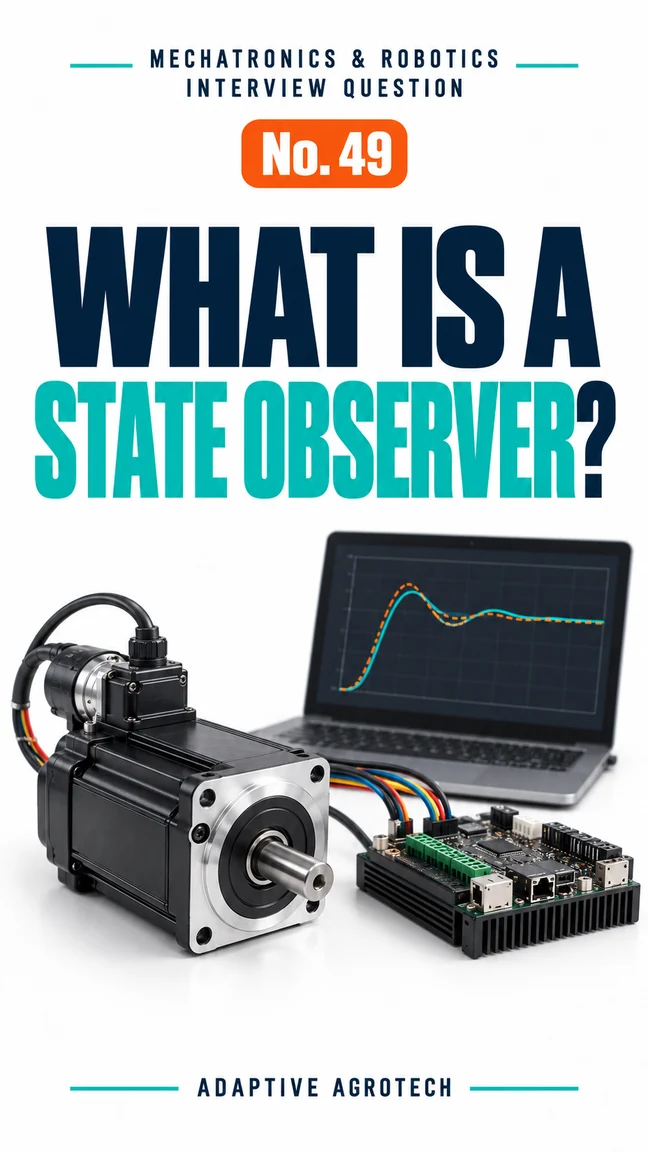
What is a State Observer?

A state observer estimates internal variables by predicting with a model and correcting from measured outputs. Observer gain sets the correction response, with observability, noise sensitivity, and model error limiting the result.

Watch & explore
Control systemsNo. 054

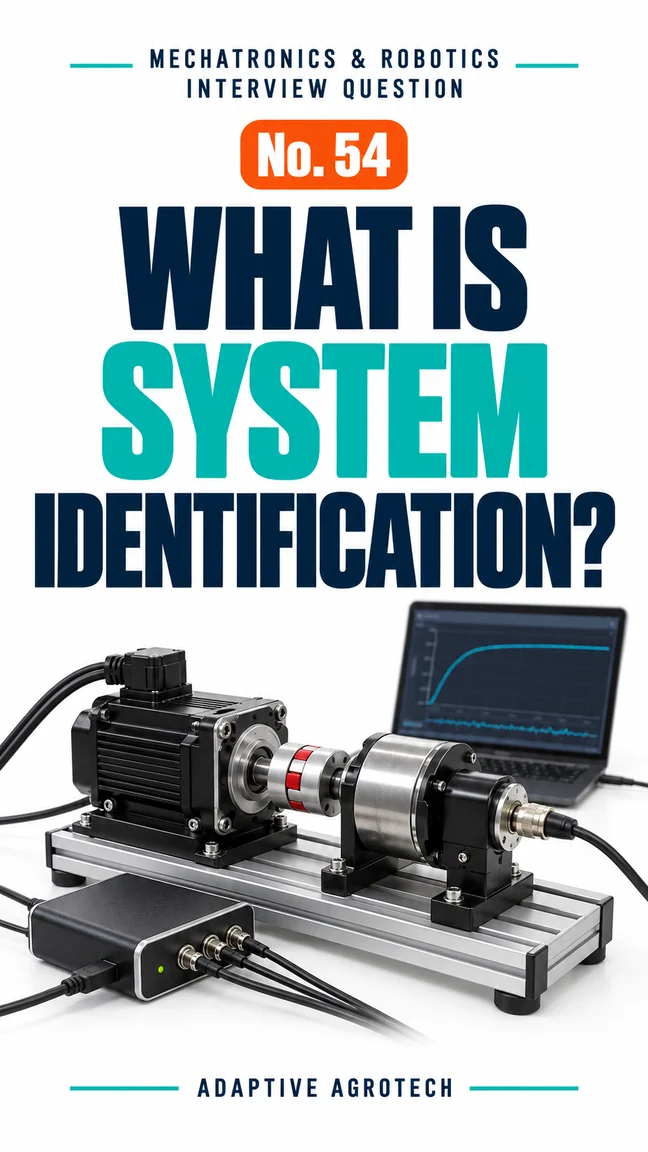
What is System Identification?

System identification fits a dynamic model from recorded inputs and outputs. Informative excitation reveals relevant behavior, and separate validation data helps distinguish useful dynamics from overfitting, delay, bias, or changing operating conditions.

Watch & explore
Control systemsNo. 055

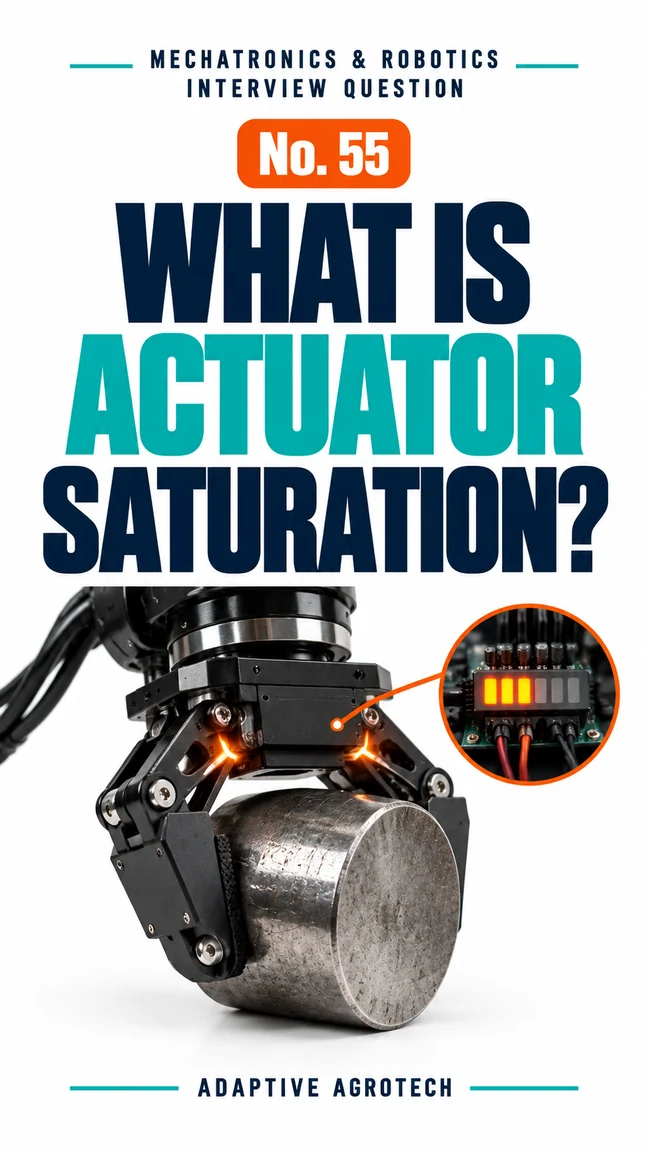
What is Actuator Saturation?

Actuator saturation clips commands at physical voltage, current, or effort limits. The delivered motion then differs from an unlimited model, potentially causing slow tracking or integral windup and requiring realistic limits in control design.

Watch & explore
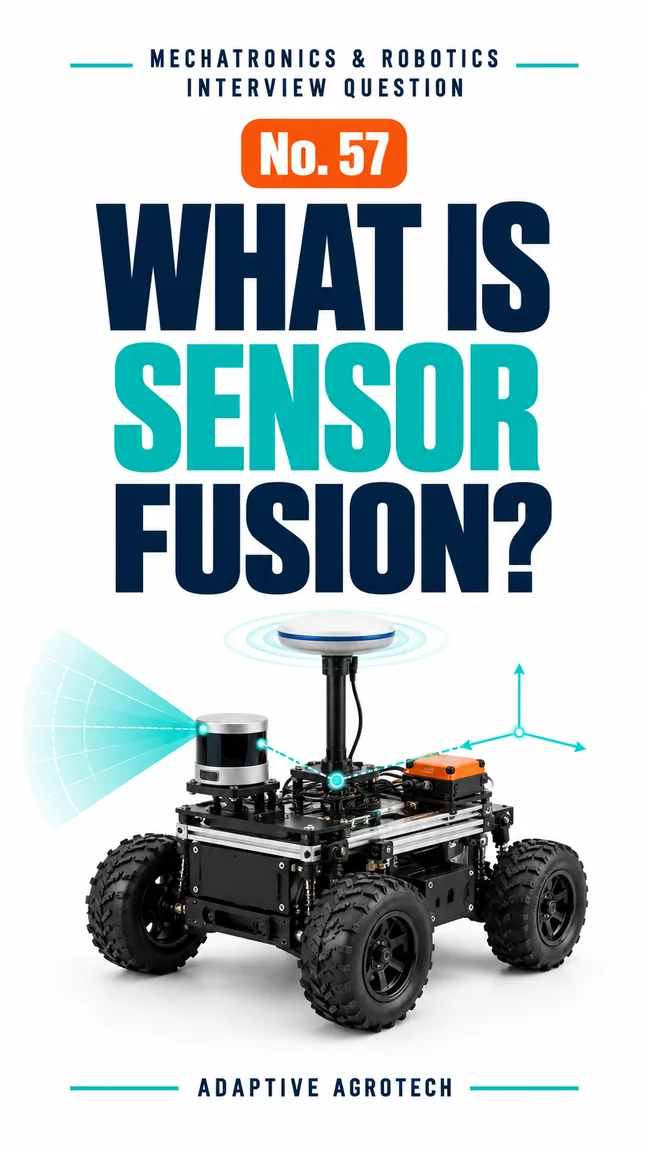
Localization & estimationNo. 057

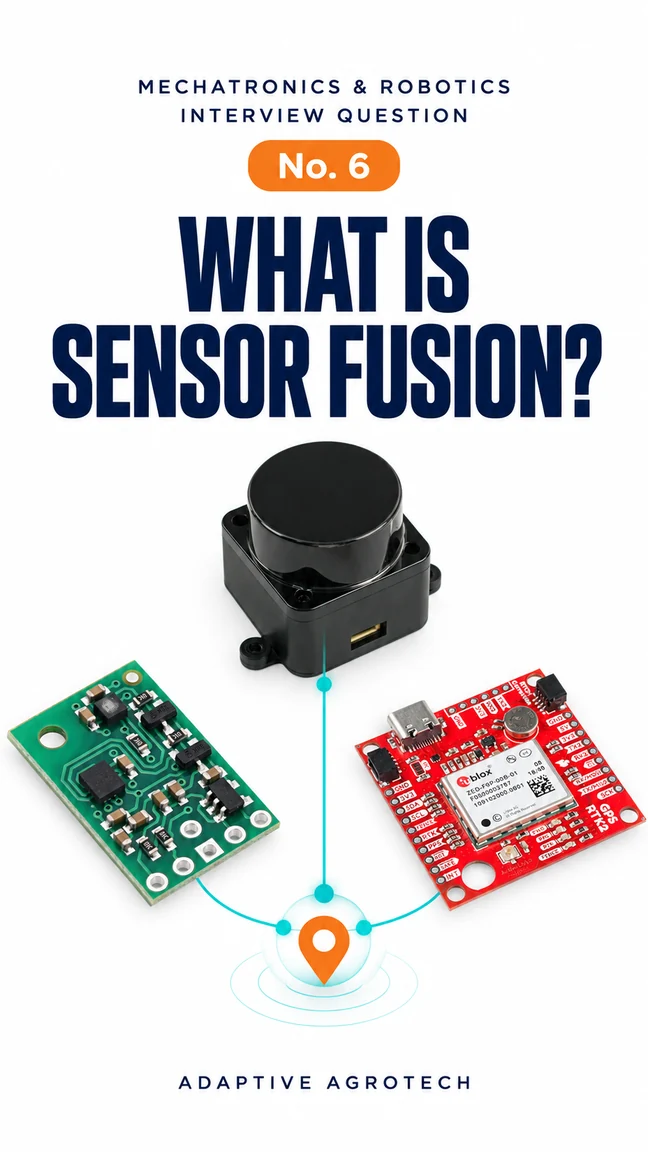
What is Sensor Fusion?

Sensor fusion estimates one shared state from complementary measurements. Fast wheel and gyro updates bridge position fixes, while sound timing, frames, uncertainty, and correlation handling prevent misleading confidence in the fused result.

Watch & explore
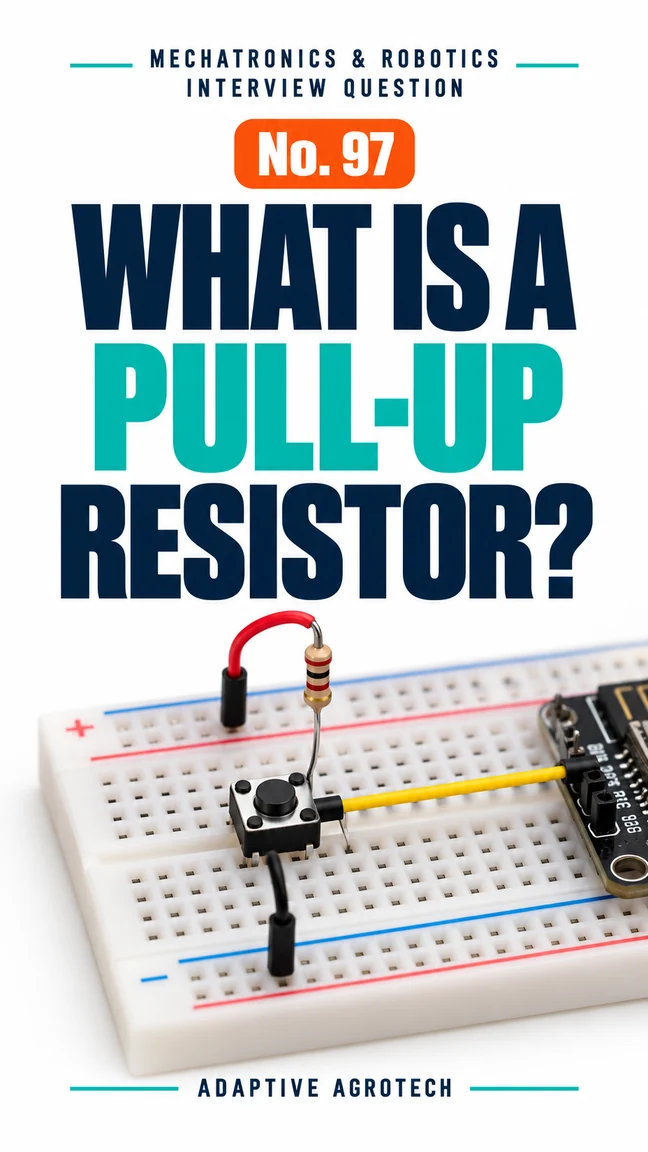
Embedded electronicsNo. 097

What is a Pull-Up Resistor?

A pull-up resistor defines a digital input’s idle high state while allowing a switch to pull it low. Its resistance must balance leakage, signal rise time, current, and voltage limits.

Watch & explore
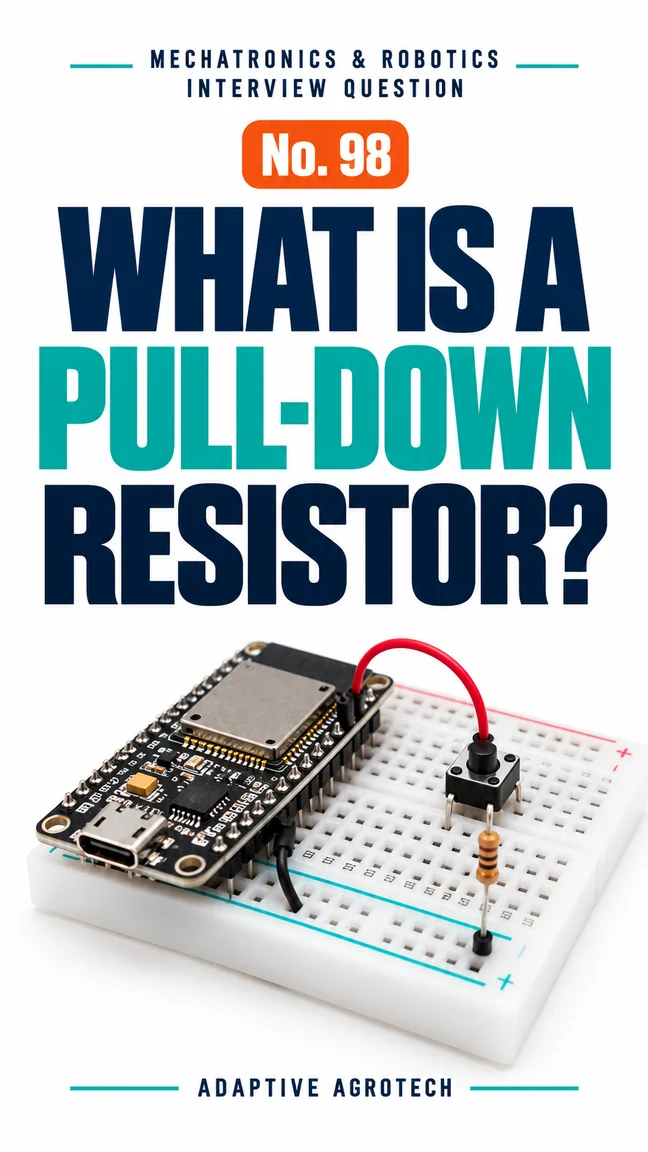
Embedded electronicsNo. 098

What is a Pull-Down Resistor?

A pull-down resistor holds an undriven digital input low and limits current when a switch drives it high. Reliable selection depends on input leakage, logic thresholds, and the circuit’s susceptibility to noise.

Watch & explore
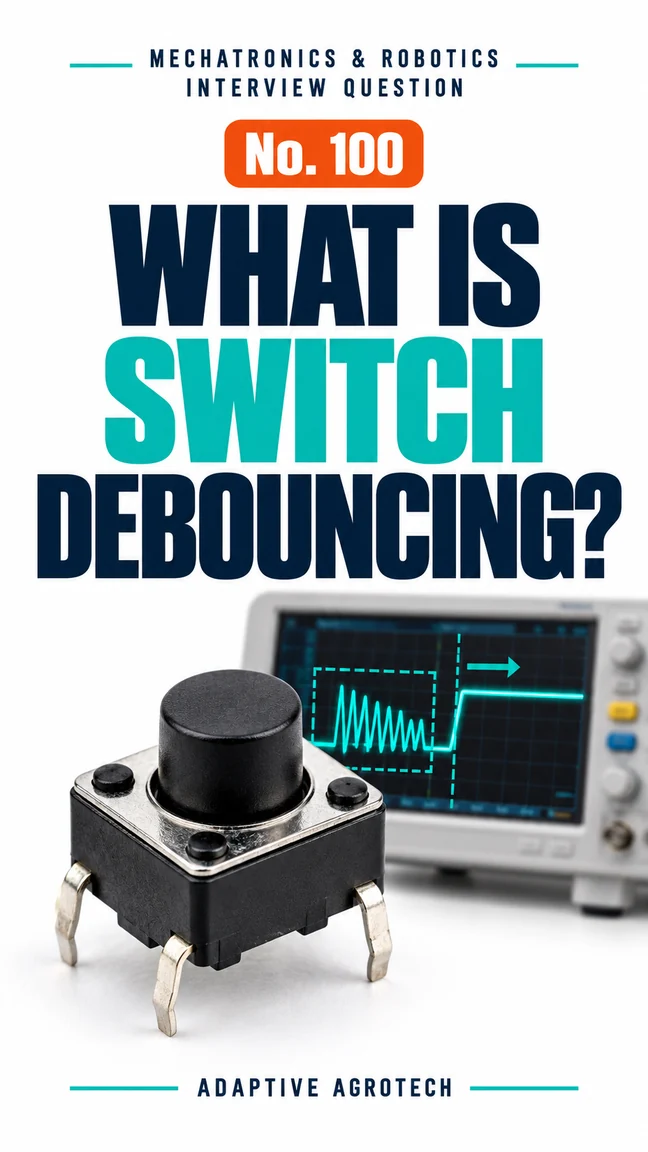
Embedded electronicsNo. 100

What is Switch Debouncing?

Switch debouncing prevents mechanical contact bounce from becoming multiple digital events. A stable state test or suitable hardware rejects brief transitions, while the chosen delay must preserve valid short presses.

Watch & explore
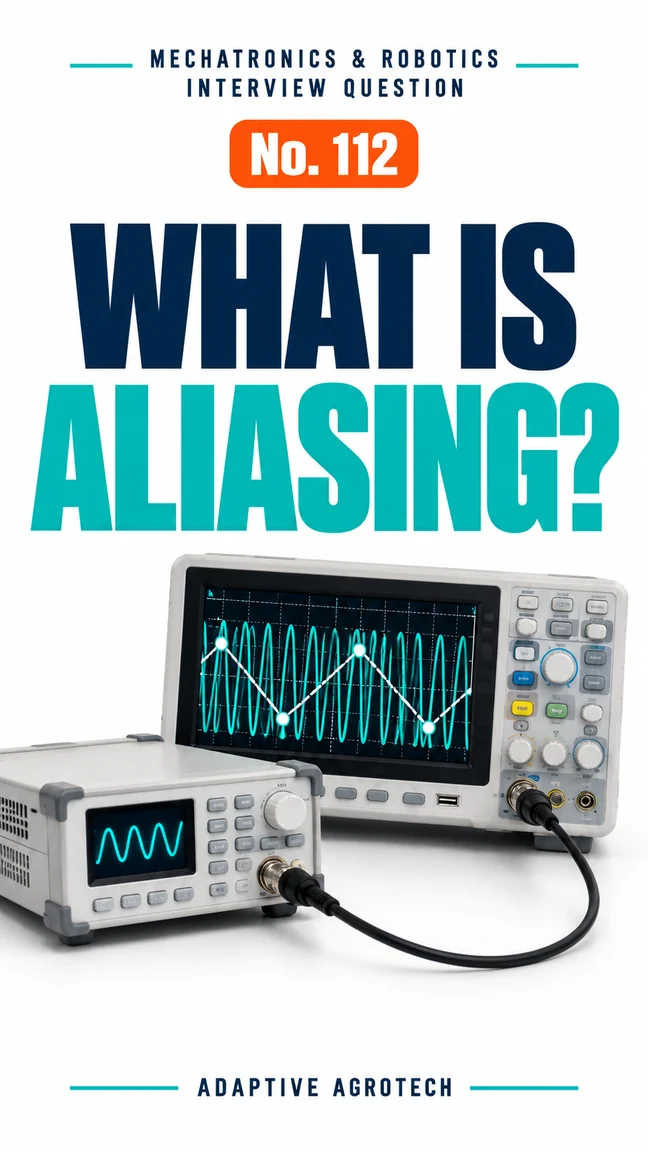
Sensors & perceptionNo. 112

What is Aliasing?

Aliasing makes distinct input frequencies indistinguishable after sampling, potentially turning fast vibration into an apparent slow signal. Analog bandwidth limiting and a sufficient sample rate must prevent the ambiguity before conversion.

Watch & explore
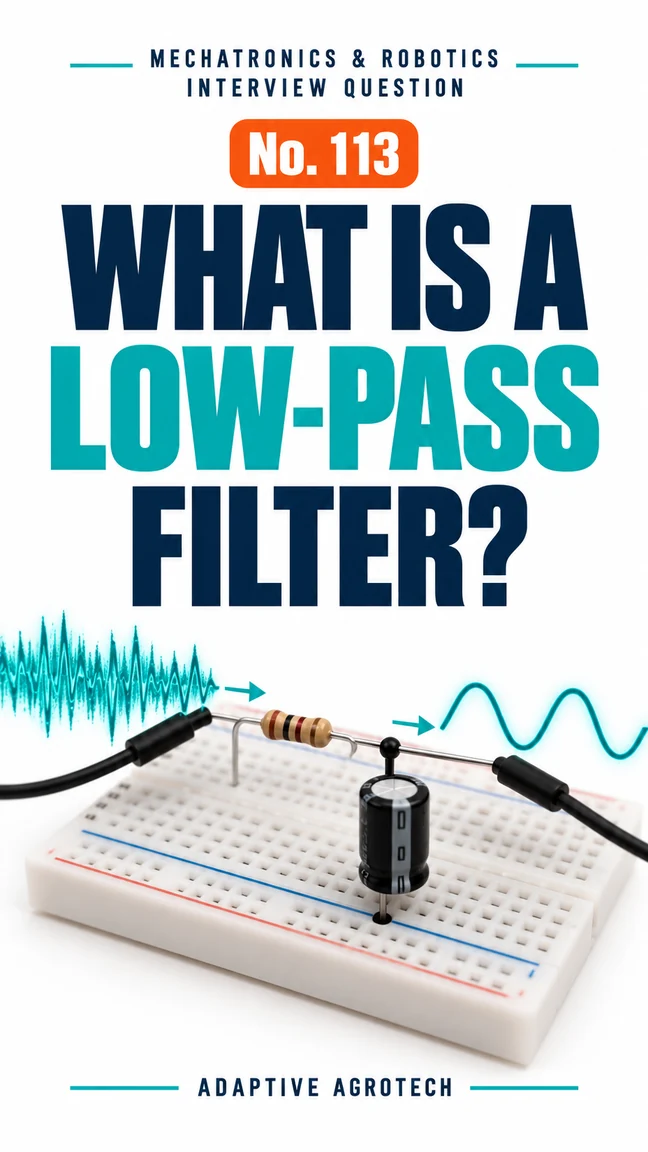
Sensors & perceptionNo. 113

What is a Low-Pass Filter?

A low-pass filter attenuates rapid changes while preserving slower signals, which can smooth robot measurements. Its cutoff sets a bandwidth tradeoff, and the resulting delay can conceal events the controller needs.

Watch & explore
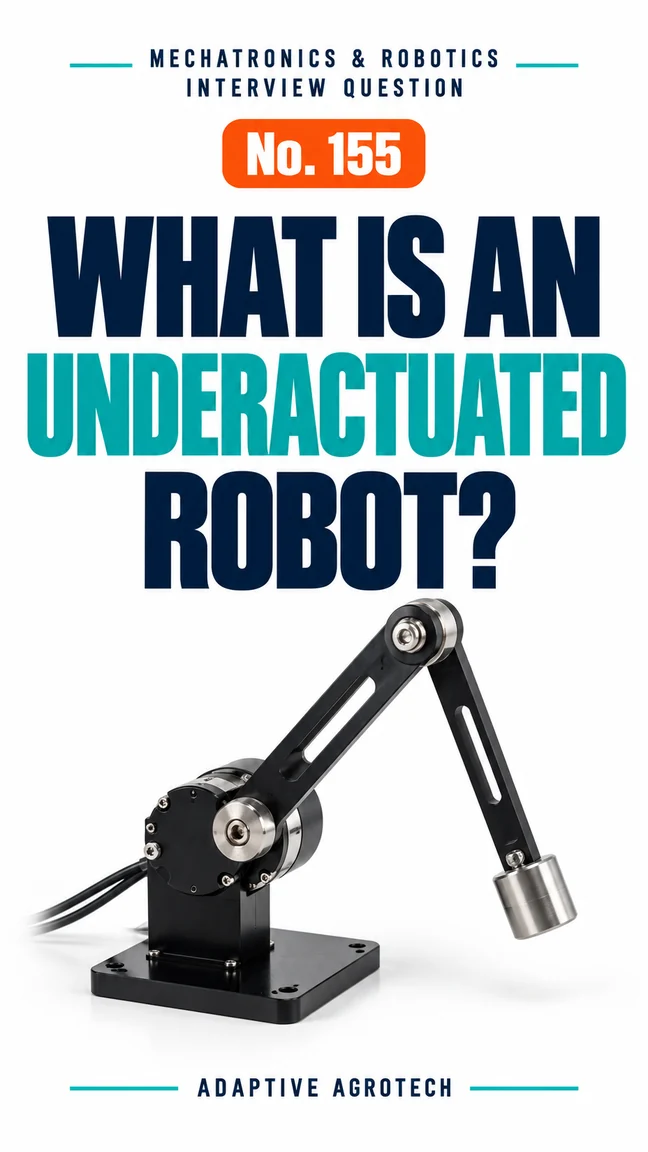
Robot kinematicsNo. 155

What Is an Underactuated Robot?

An underactuated robot has fewer independent control inputs than configuration coordinates. Indirect control can exploit coupled dynamics, but it cannot independently request every acceleration, and contact can change the effective constraints and actuation.

Watch & explore
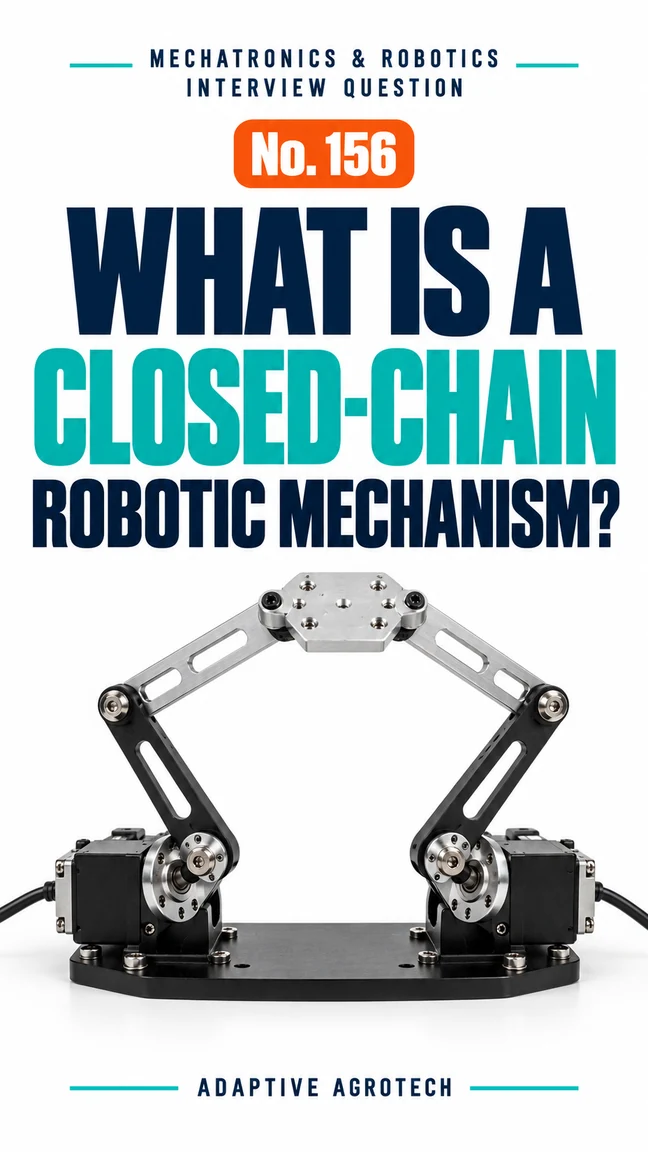
Robot kinematicsNo. 156

What Is a Closed-Chain Robotic Mechanism?

A closed-chain mechanism contains a loop of linked joints, creating closure constraints between coordinates. Its joints cannot all be commanded independently, and valid motion must account for assembly modes and singular configurations.

Watch & explore
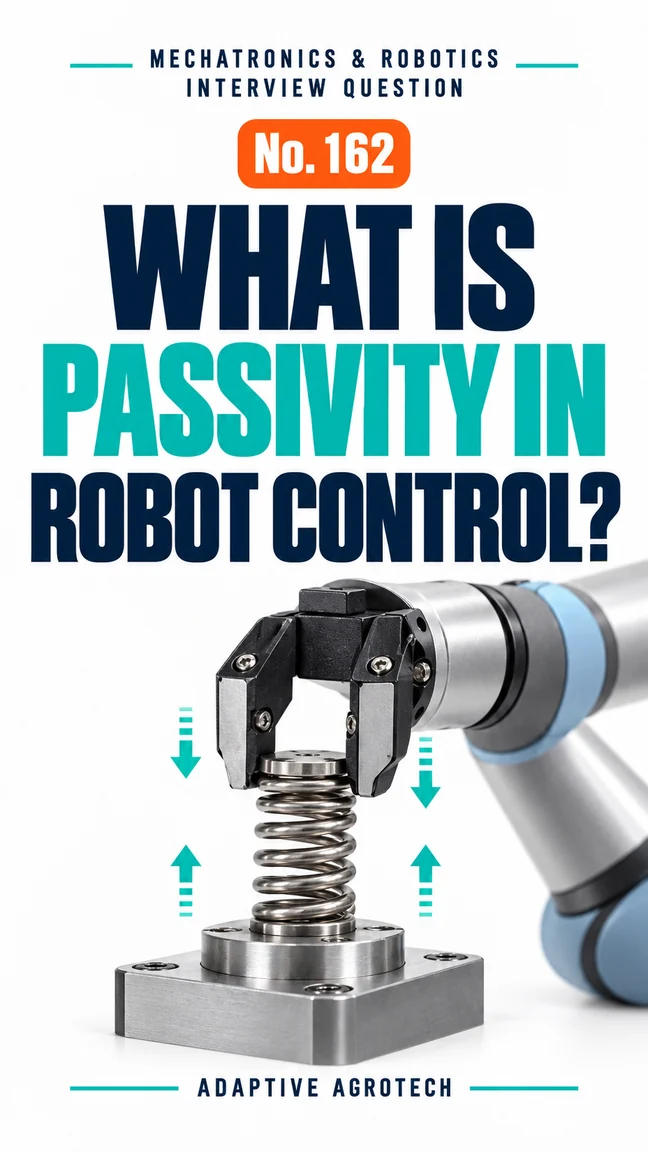
Control systemsNo. 162

What Is Passivity in Robot Control?

Passivity is an input–output energy property. A passive system cannot supply more energy than it initially stores plus the energy it receives. For mechanical interaction, force and velocity form a power pair at the contact.

Watch & explore
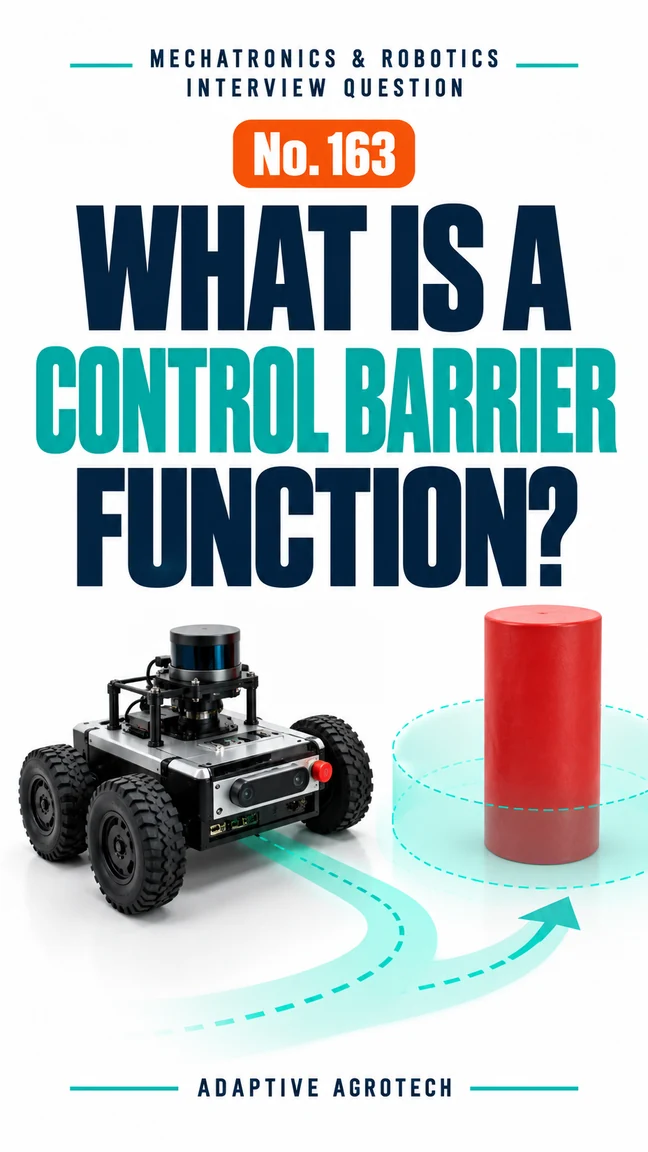
Control systemsNo. 163

What Is a Control Barrier Function?

A control barrier function encodes an allowed region of state space. Its derivative condition restricts the control input so the state can remain inside. This differs from merely adding an obstacle penalty to a cost.

Watch & explore
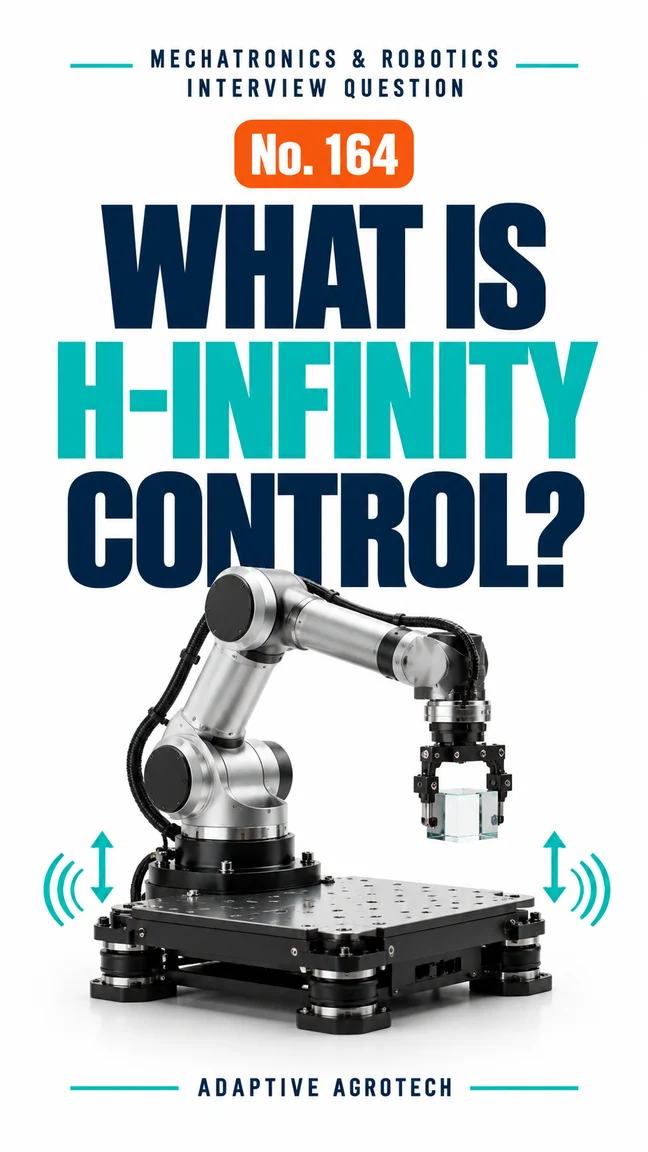
Control systemsNo. 164

What Is H-Infinity Control?

H infinity control limits the worst case amplification from disturbances to selected outputs. For a stable linear system, its H infinity norm measures the largest gain across frequency and input directions.

Watch & explore
Control systemsNo. 166

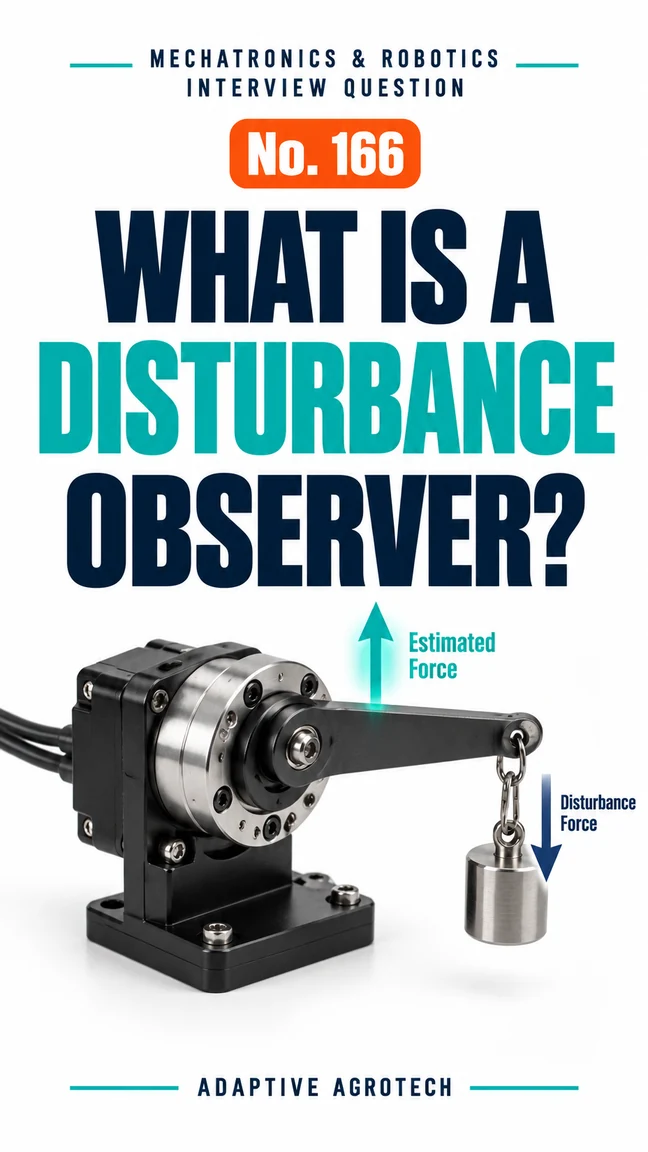
What Is a Disturbance Observer?

A disturbance observer estimates an unknown influence from the robot input, measured output, and a nominal model. The estimate can include external loads and some model mismatch, depending on its structure and assumptions.

Watch & explore