Skip to content
Adaptive AgroTech NetworkUniversity of Southern Denmark · SDU Drone Center
Robotics · Mechatronics · Intelligent systems

Short videos.
Lasting understanding.

Explore one engineering idea at a time. Watch a short lesson, read the key concepts and test your understanding before your next interview, project or class.

53 topics found

Video · Key ideas · Check your understanding

Communication & networksNo. 118

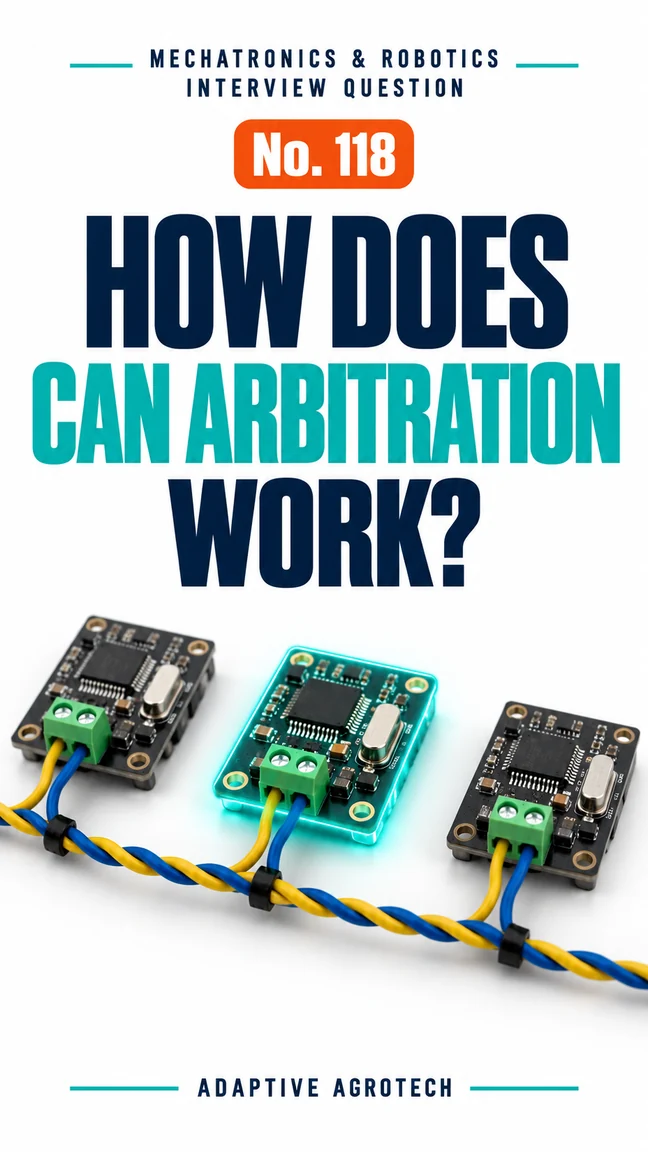
What is CAN Bus Arbitration?

CAN arbitration resolves simultaneous transmissions while preserving the winning frame. Senders compare transmitted and observed identifier bits; dominant zero wins over recessive one, giving lower identifiers higher priority for equal frame formats.

Watch & explore
Communication & networksNo. 120

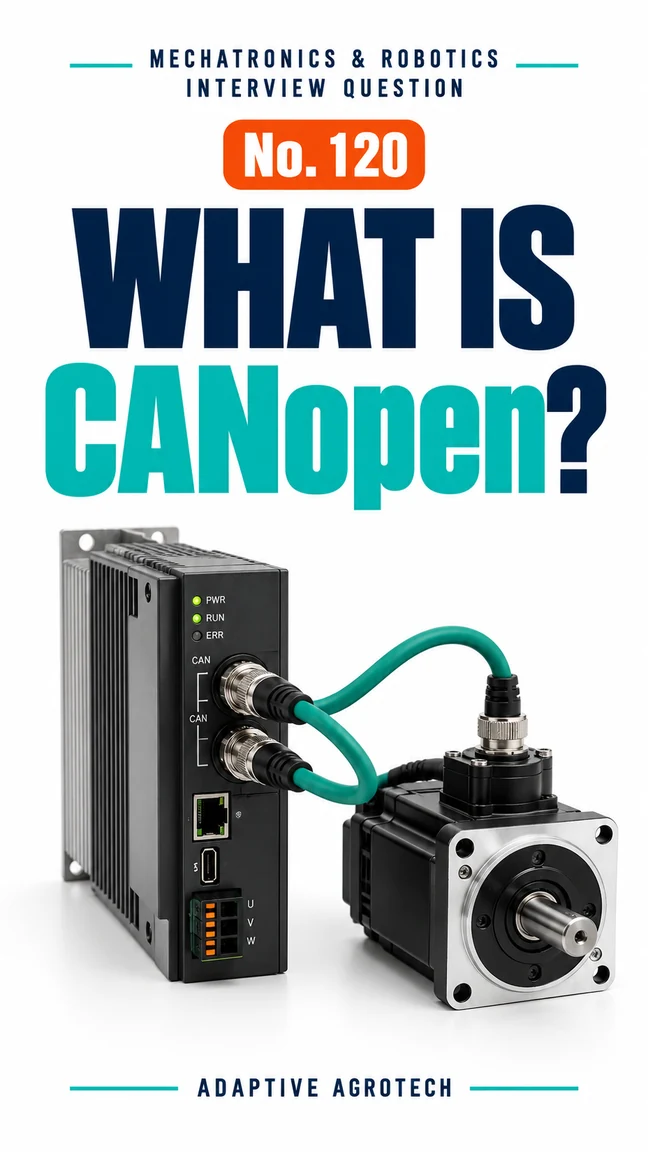
What is CANopen?

CANopen adds device profiles and communication meaning above CAN. Object dictionaries organize settings and process values, while SDO and PDO mechanisms support configuration and time critical exchange between compatible robot devices.

Watch & explore
Communication & networksNo. 121

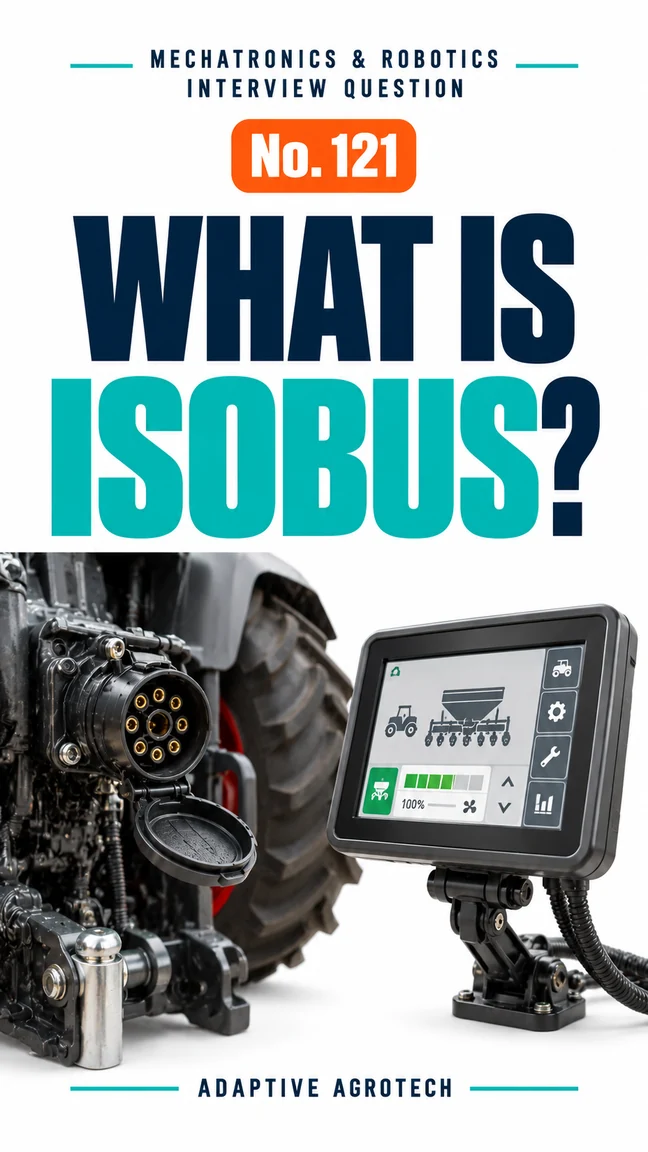
What is ISOBUS?

ISOBUS defines common communication functions for agricultural machines under ISO 11783. Built above CAN, it supports implement terminals and task data, but compatibility depends on the specific functions supported by both machines.

Watch & explore
Communication & networksNo. 127

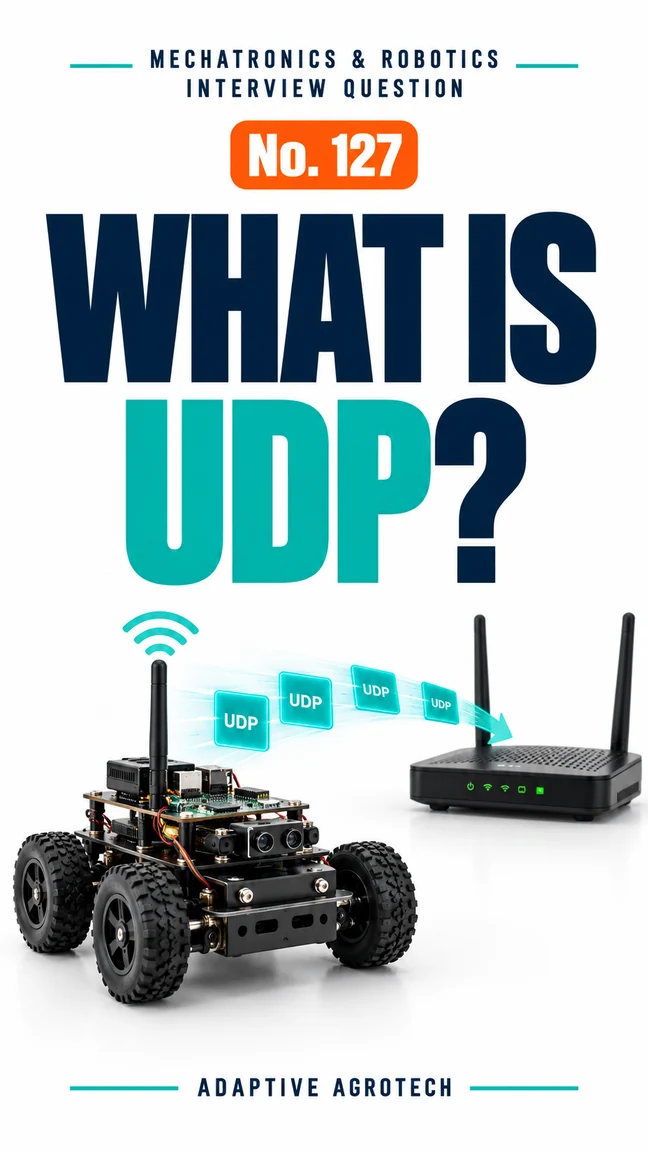
What is UDP?

UDP transports separate datagrams with low transport overhead but no built-in guarantee of arrival or order. Robot streams should track sequence and measurement age, since choosing UDP alone does not establish timely or safe control.

Watch & explore
Communication & networksNo. 131

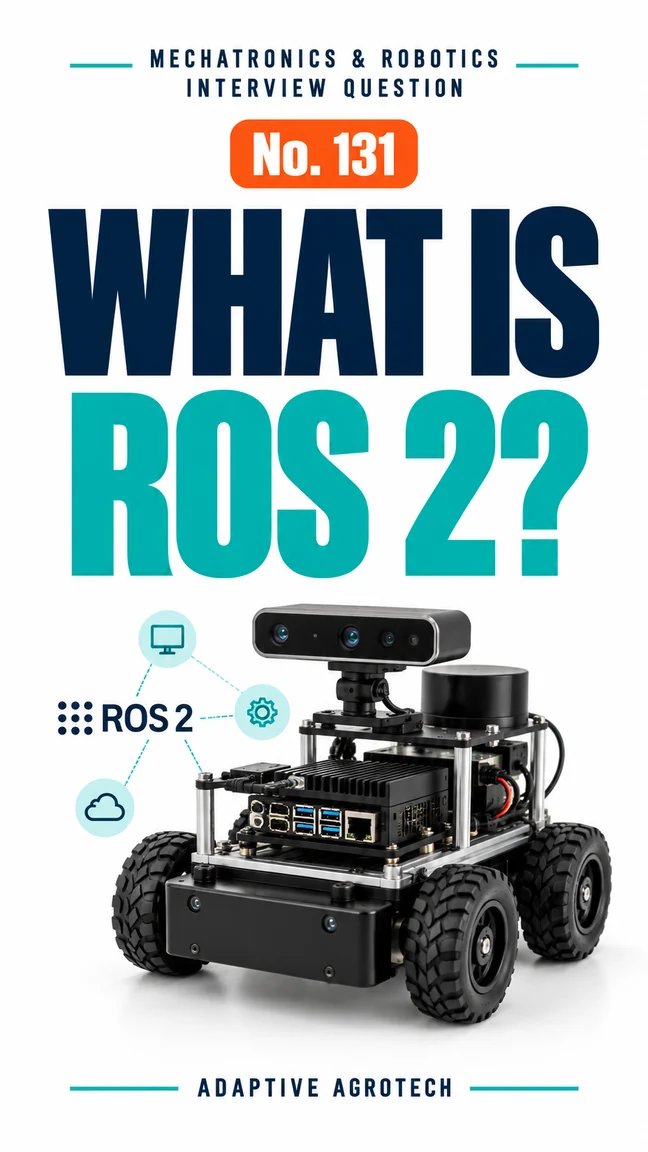
What is ROS 2?

ROS 2 organizes robot software into cooperating nodes with typed interfaces. Topics serve streams, services serve requests, and actions support longer tasks, while timing, motion behavior, and calibration still require engineering validation.

Watch & explore
Robot kinematicsNo. 140

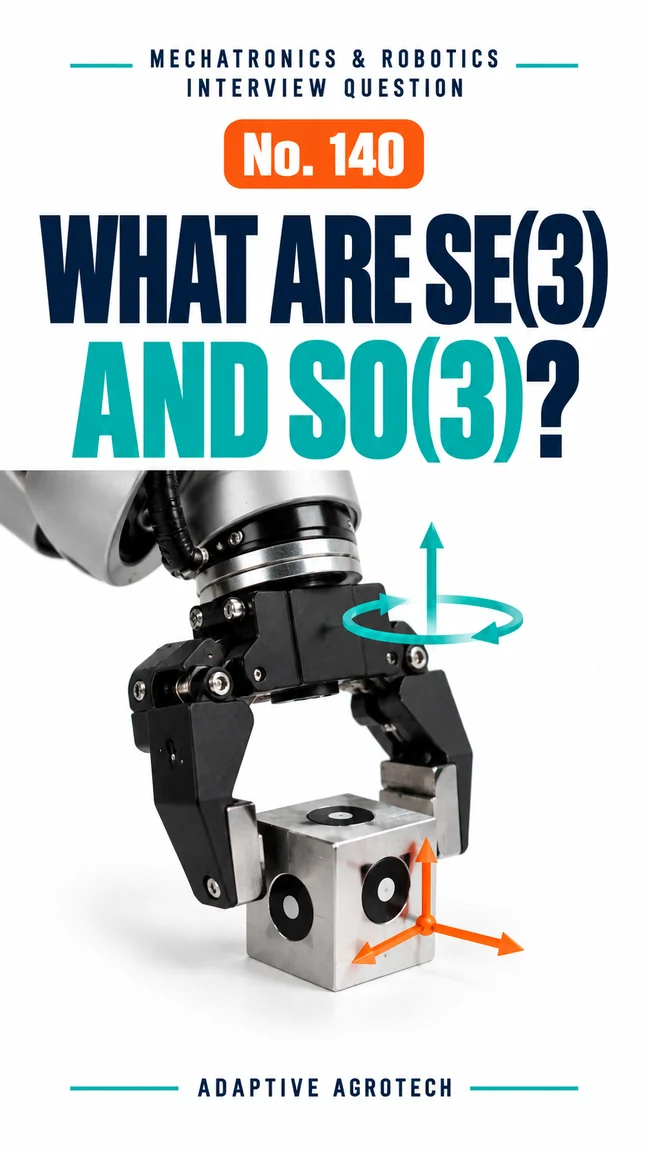
What Are SE(3) and SO(3) in Robotics?

SO(3) contains valid three dimensional rotations, while SE(3) contains rigid poses with rotation and translation. Their stored matrices obey constraints, excluding scaling, shear, and reflections despite containing more entries than independent degrees of freedom.

Watch & explore
Motion planningNo. 143

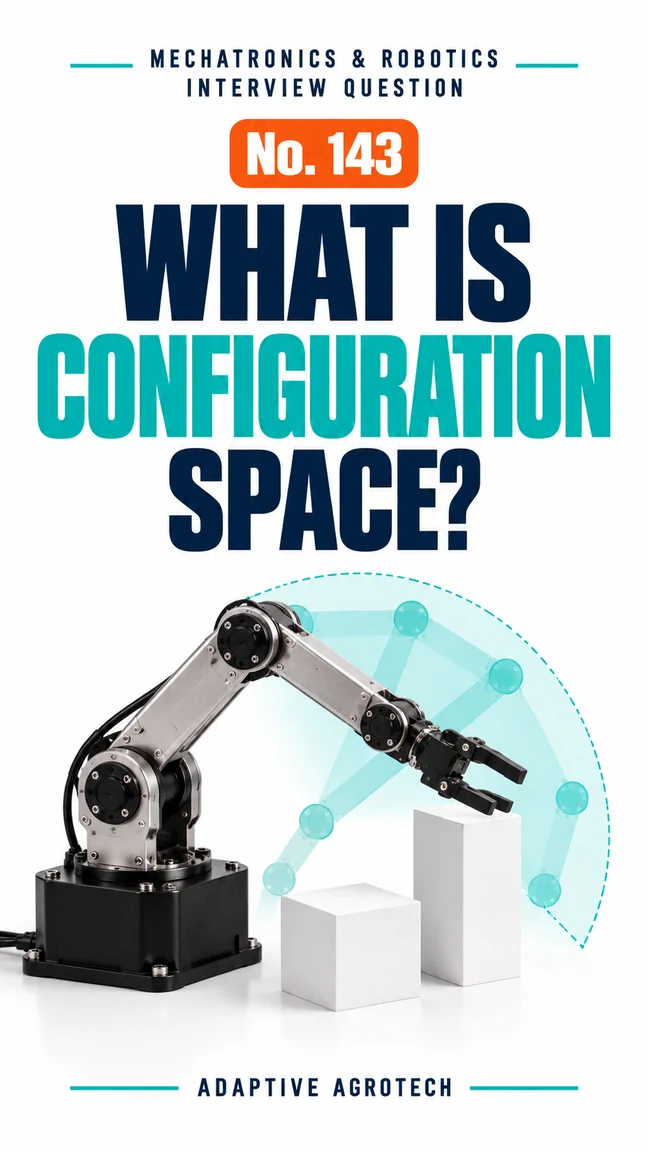
What Is Configuration Space in Robotics?

Configuration space represents the entire robot as a point whose coordinates locate its moving parts. Workspace obstacles become forbidden configuration regions, with joint limits and angular wrapping shaping the available planning space.

Watch & explore
Robot kinematicsNo. 156

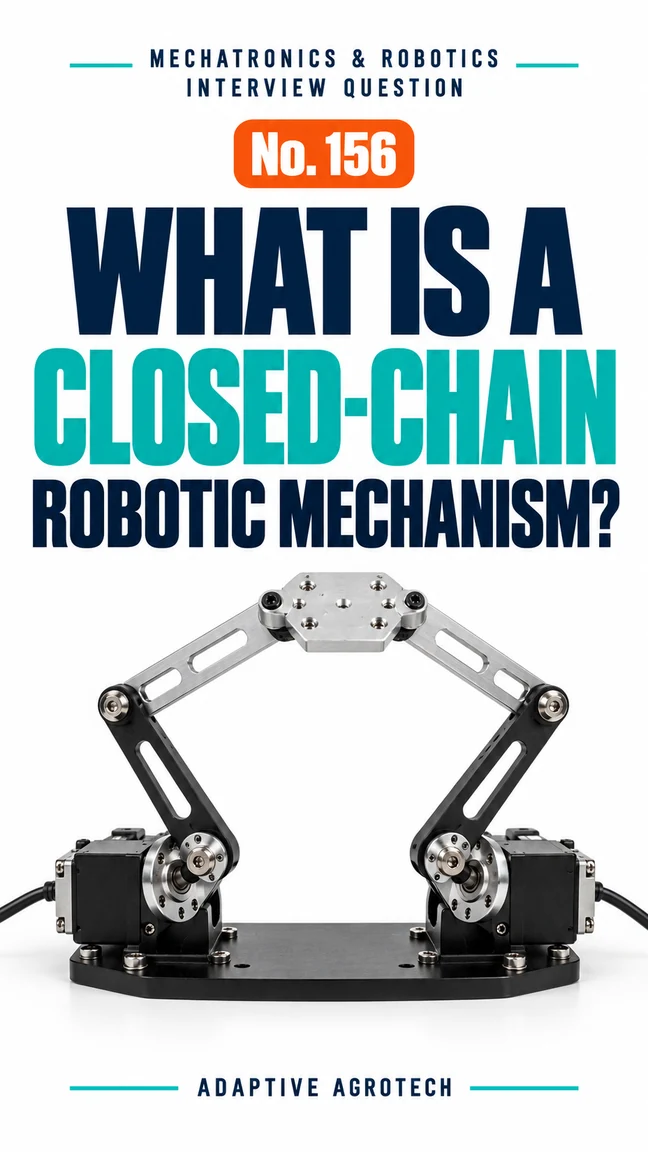
What Is a Closed-Chain Robotic Mechanism?

A closed-chain mechanism contains a loop of linked joints, creating closure constraints between coordinates. Its joints cannot all be commanded independently, and valid motion must account for assembly modes and singular configurations.

Watch & explore
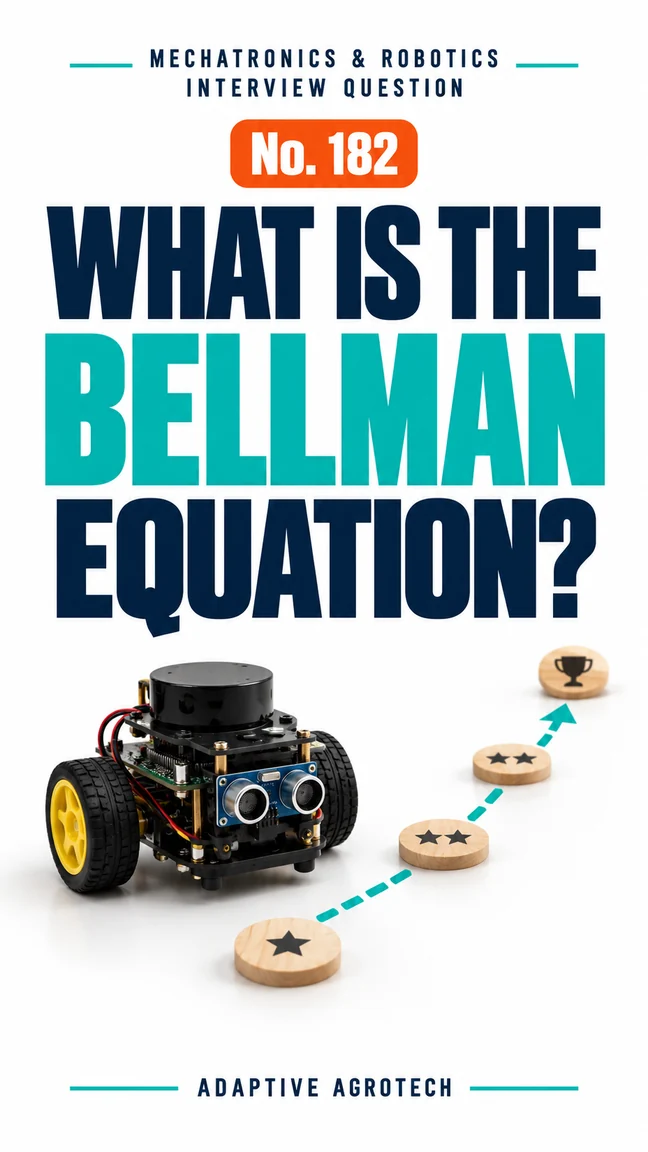
AI & machine learningNo. 182

What Is the Bellman Equation?

The Bellman expectation equation relates a state’s value to expected immediate reward plus discounted next state value. The expectation averages actions from the policy and transitions from the environment.

Watch & explore
AI & machine learningNo. 197

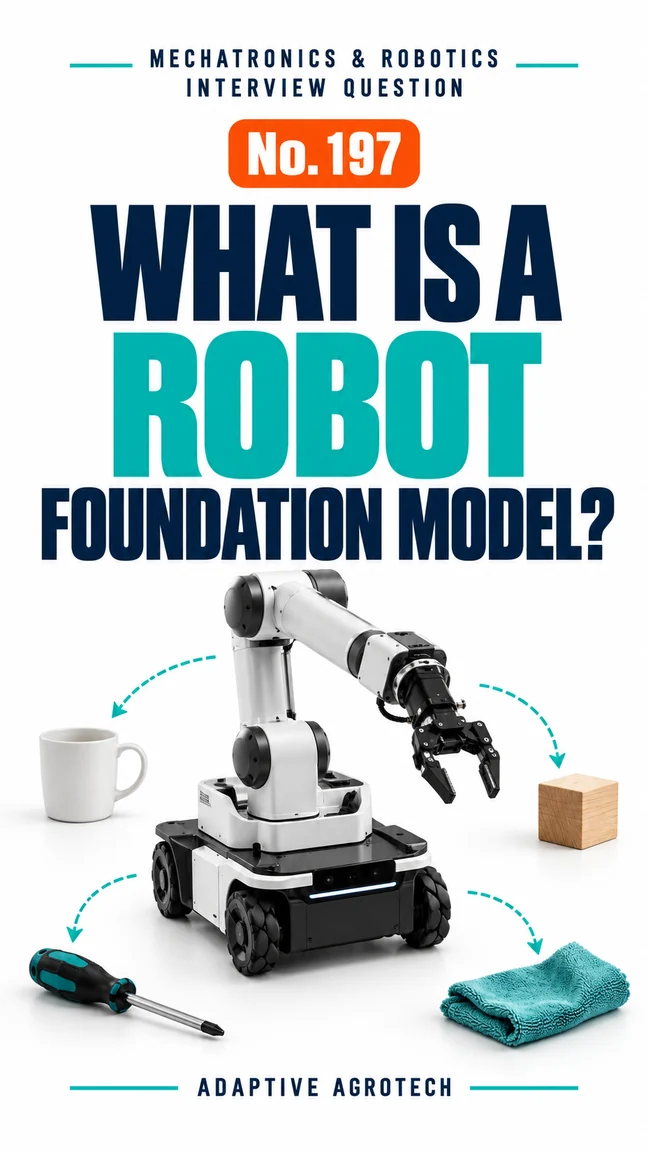
What Is a Robot Foundation Model?

A robot foundation model is a model trained on broad data so it can support multiple robot tasks. Instead of building every skill from scratch, engineers adapt a shared starting point to a particular robot and job.

Watch & explore
Computer visionNo. 210

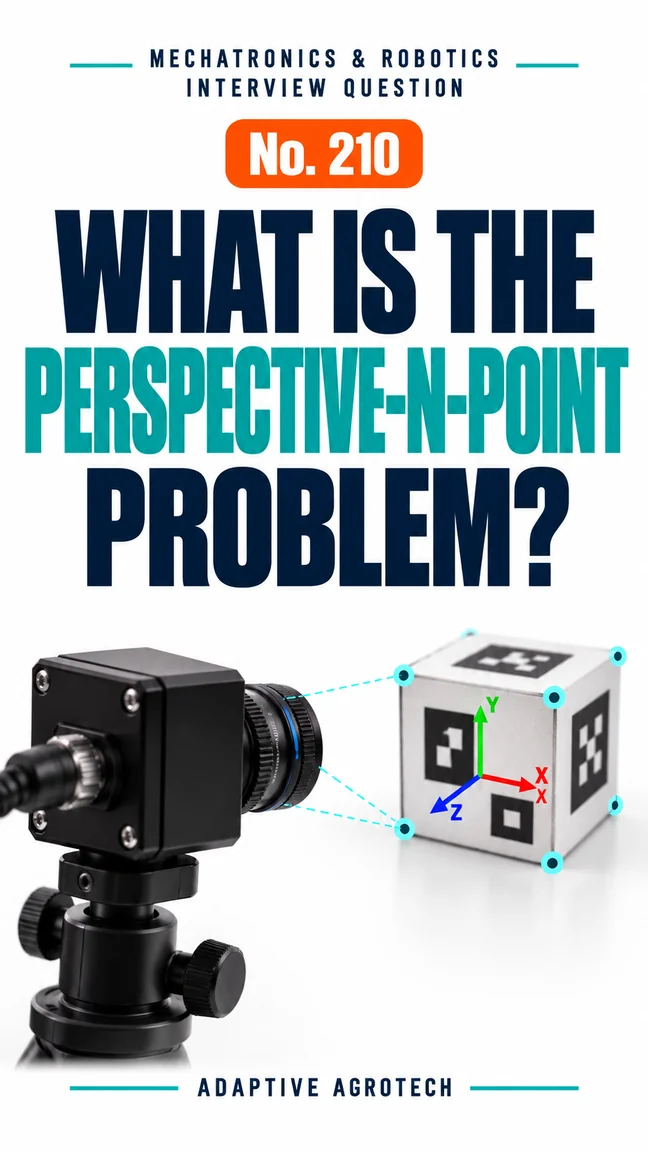
What Is the Perspective-n-Point Problem?

Perspective n point estimates a camera relative pose from known three dimensional points and their corresponding two dimensional image locations. The camera intrinsics are also inputs. The unknowns are the rotation and translation relating the coordinate frames.

Watch & explore
Computer visionNo. 211

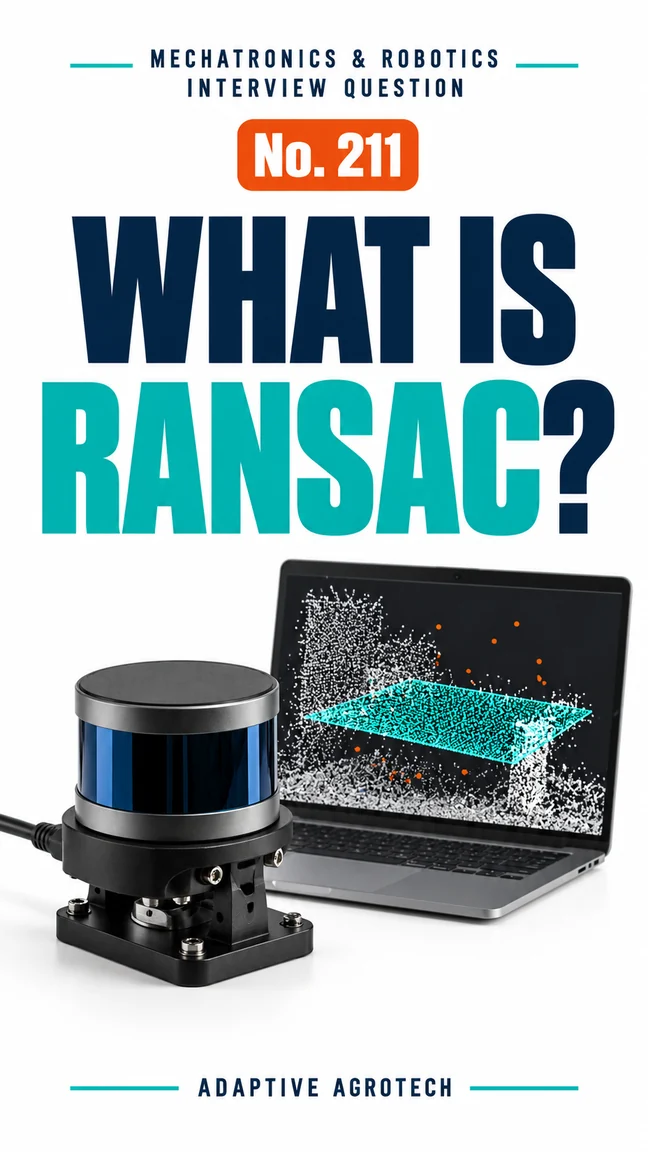
What Is RANSAC, and Why Do Robots Use It?

RANSAC means random sample consensus. It repeatedly fits a candidate model to small random subsets, then counts measurements that agree within a chosen tolerance. It seeks a model supported by many inliers despite incorrect measurements in the data.

Watch & explore
Computer visionNo. 213

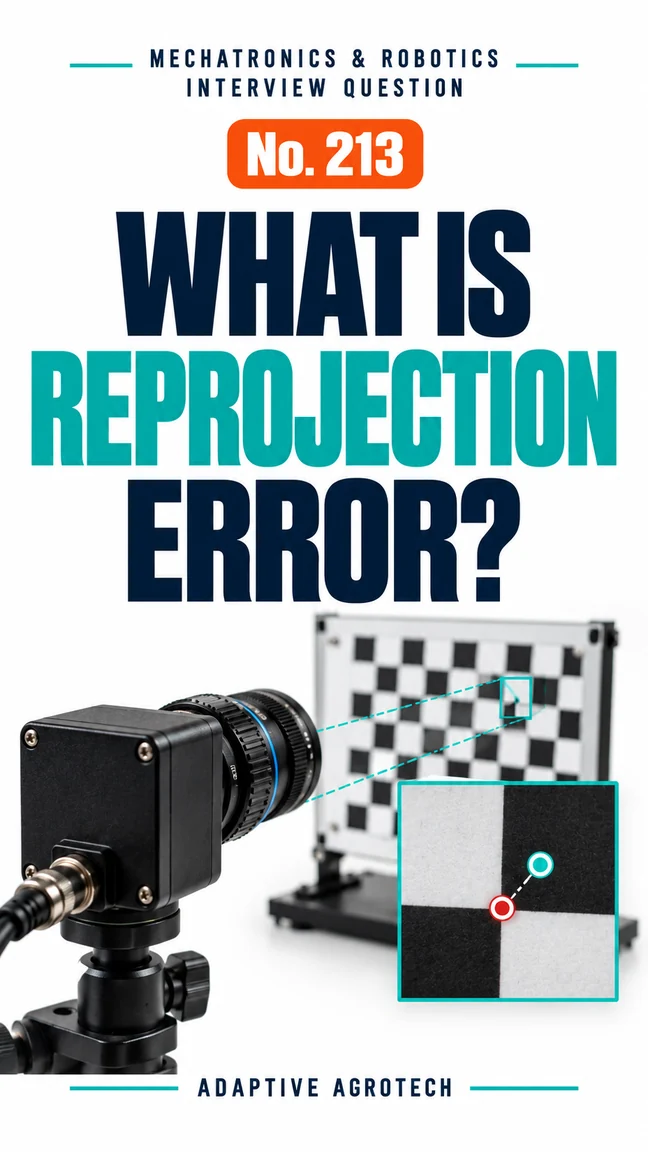
What Is Reprojection Error?

Reprojection error measures the difference between an observed image point and the pixel predicted by a camera model and estimated geometry. It is an image space residual, usually reported in pixels, rather than a direct distance error in meters.

Watch & explore
Computer visionNo. 214

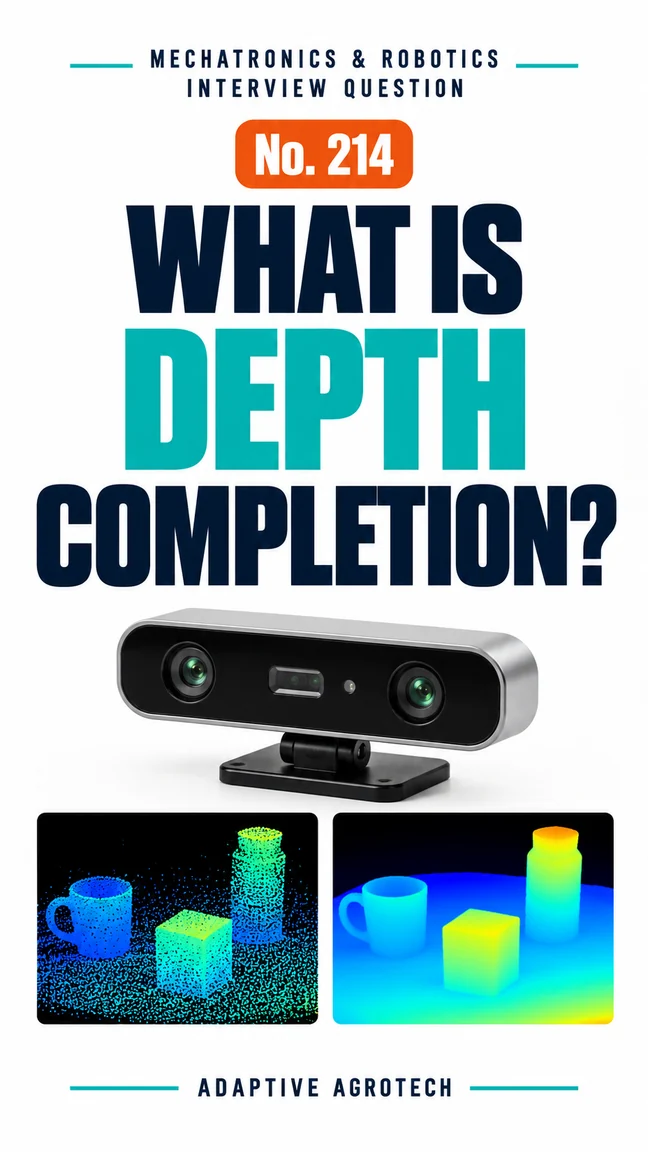
What Is Depth Completion in Robot Vision?

Depth completion predicts a dense depth map from incomplete depth measurements, often using an RGB image as additional input. Some pixels have measured ranges, while other pixels receive estimates based on surrounding evidence and learned visual patterns.

Watch & explore