Skip to content
Adaptive AgroTech NetworkUniversity of Southern Denmark · SDU Drone Center
Robotics · Mechatronics · Intelligent systems

Short videos.
Lasting understanding.

Explore one engineering idea at a time. Watch a short lesson, read the key concepts and test your understanding before your next interview, project or class.

307 topics found

Video · Key ideas · Check your understanding

Sensors & perceptionNo. 073

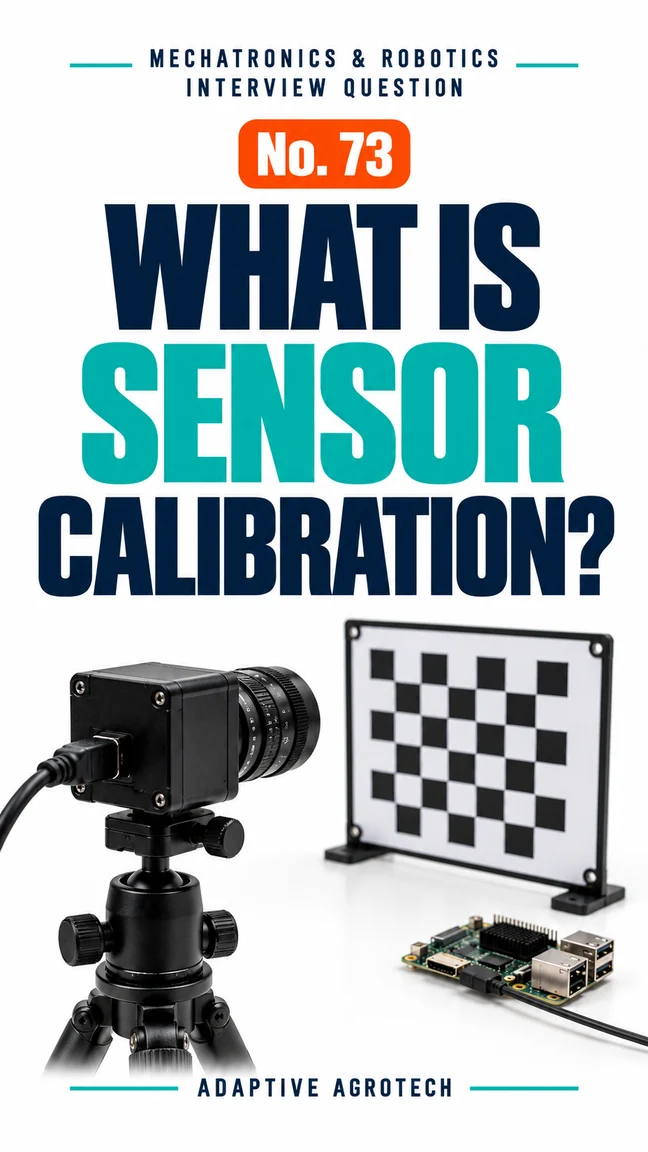
What is Sensor Calibration?

Sensor calibration estimates the parameters connecting readings to physical geometry. Known references constrain offsets, scales, distortion, and inter-sensor transforms, while independent validation and stable mounting determine whether the result remains useful.

Watch & explore
Localization & estimationNo. 075

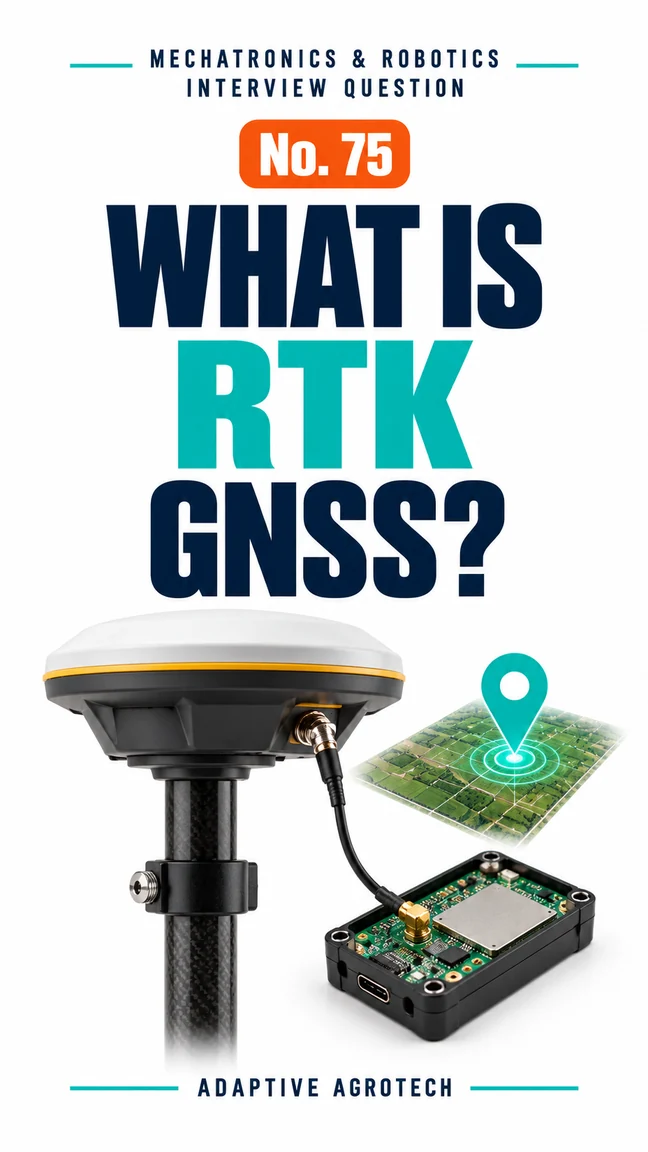
What is RTK GNSS?

RTK GNSS combines carrier-phase measurements with reference corrections for precise positioning. Resolving whole-cycle ambiguity supports centimetre-level fixed solutions under good conditions, while integrity checks remain necessary during actual robot motion.

Watch & explore
Localization & estimationNo. 076

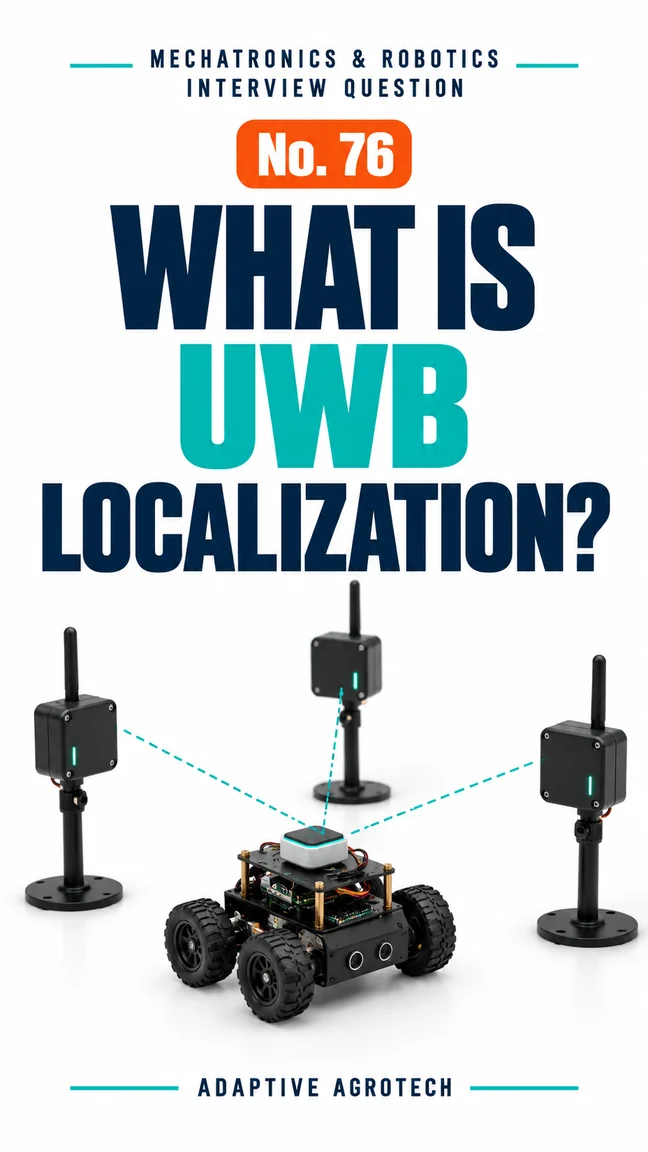
What is UWB Localization?

UWB ranging estimates distances from radio travel time to surveyed anchors. Several ranges constrain tag position, while anchor geometry and blocked direct paths affect reliability and motivate motion fusion and inconsistent-reading rejection.

Watch & explore
Motion planningNo. 077

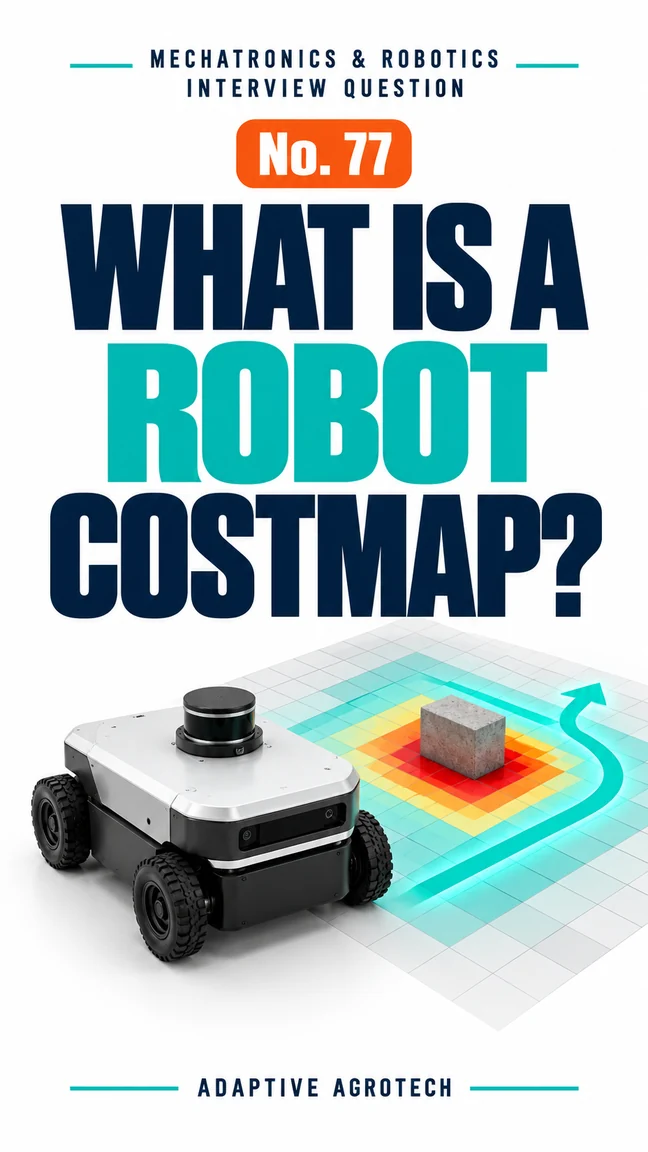
What is a Robot Costmap?

A costmap assigns travel costs that guide route choice and clearance. Obstacle inflation discourages paths near walls, while footprint geometry and fresh updates prevent point-based routes from hiding physical collisions.

Watch & explore
Motion planningNo. 078

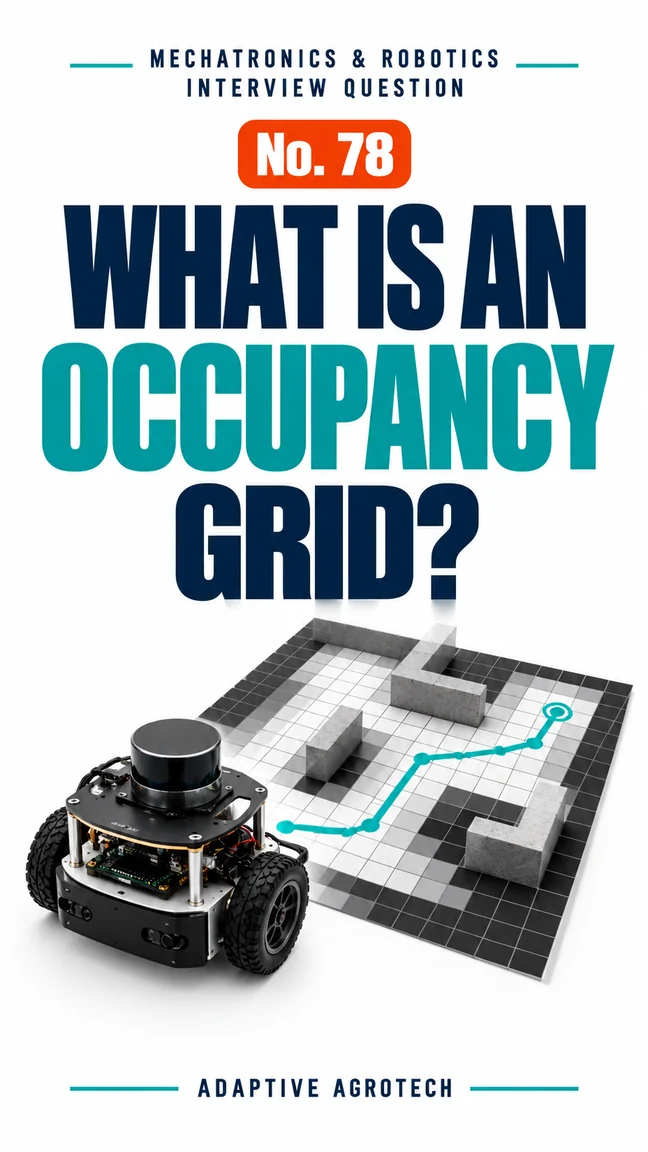
What is an Occupancy Grid?

An occupancy grid divides space into cells that express obstacle belief. Laser evidence updates free and occupied regions, while unknown cells require an explicit navigation policy instead of being treated as clear.

Watch & explore
Motion planningNo. 079

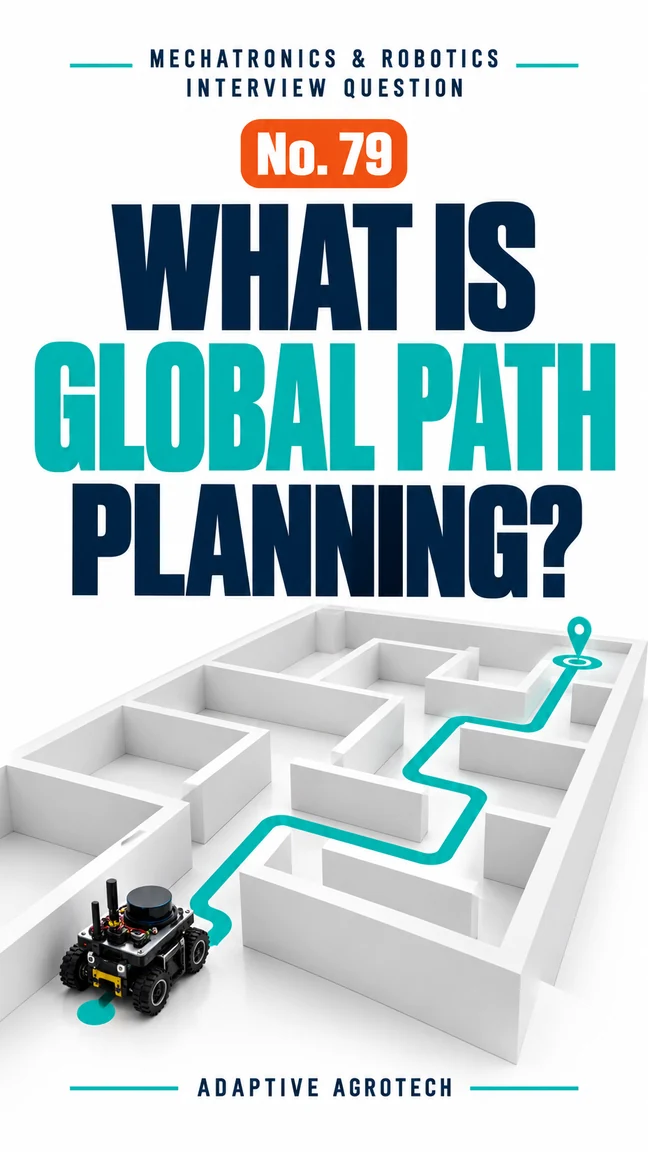
What is Global Path Planning?

Global planning uses a map and costs to connect the robot with a distant goal. The selected graph defines the preferred route, which still requires local motion control and replanning when conditions change.

Watch & explore
Motion planningNo. 080

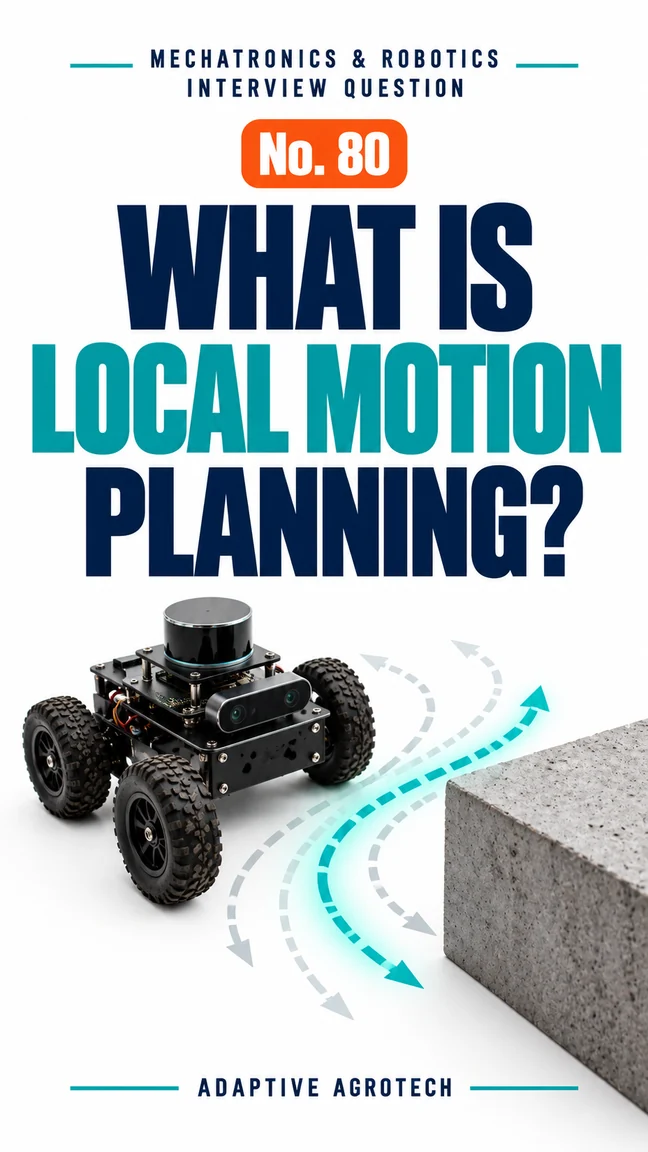
What is Local Motion Planning?

Local planning chooses feasible near-term motion using recent sensing, route guidance, and robot limits. Repeated updates handle nearby changes, while short-horizon traps and unavailable safe motion require global guidance and stopping.

Watch & explore
Motion planningNo. 081

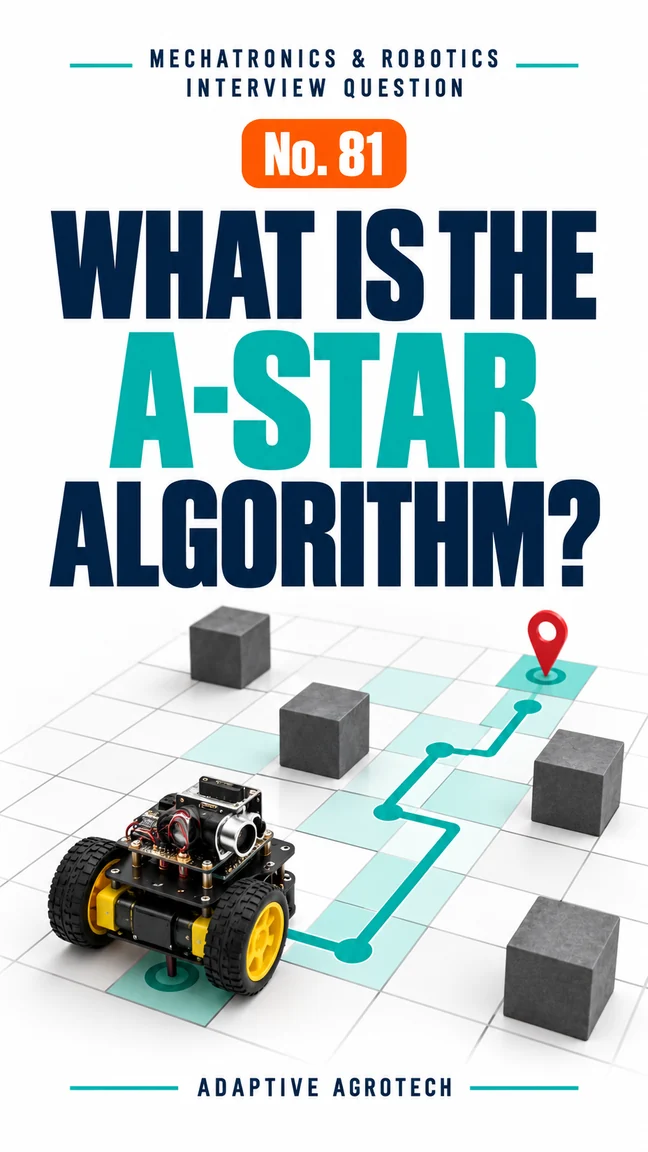
What is the A-Star Algorithm?

A* searches a graph by combining the cost already accumulated with an estimate of the remaining cost. Its heuristic focuses exploration, while optimality depends on the graph, edge costs, and heuristic properties.

Watch & explore
Motion planningNo. 082

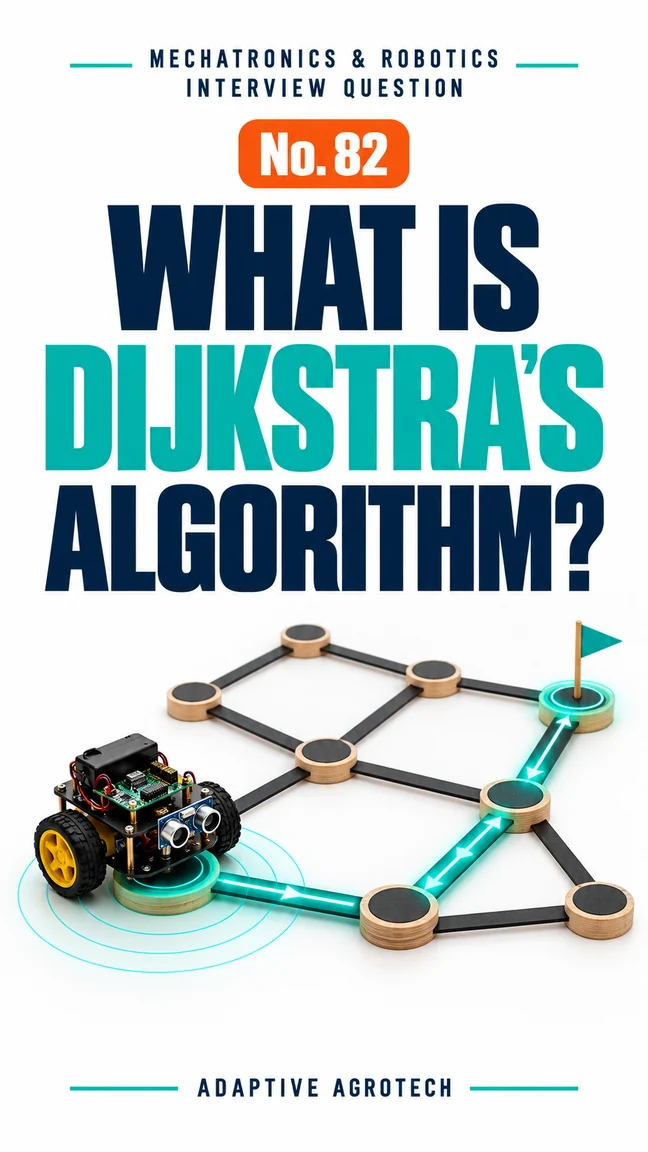
What is Dijkstra’s Algorithm?

Dijkstra’s algorithm finds least cost graph paths by expanding the smallest known cost from the start. It updates cheaper connections and reconstructs routes through parent links, without using a goal heuristic.

Watch & explore
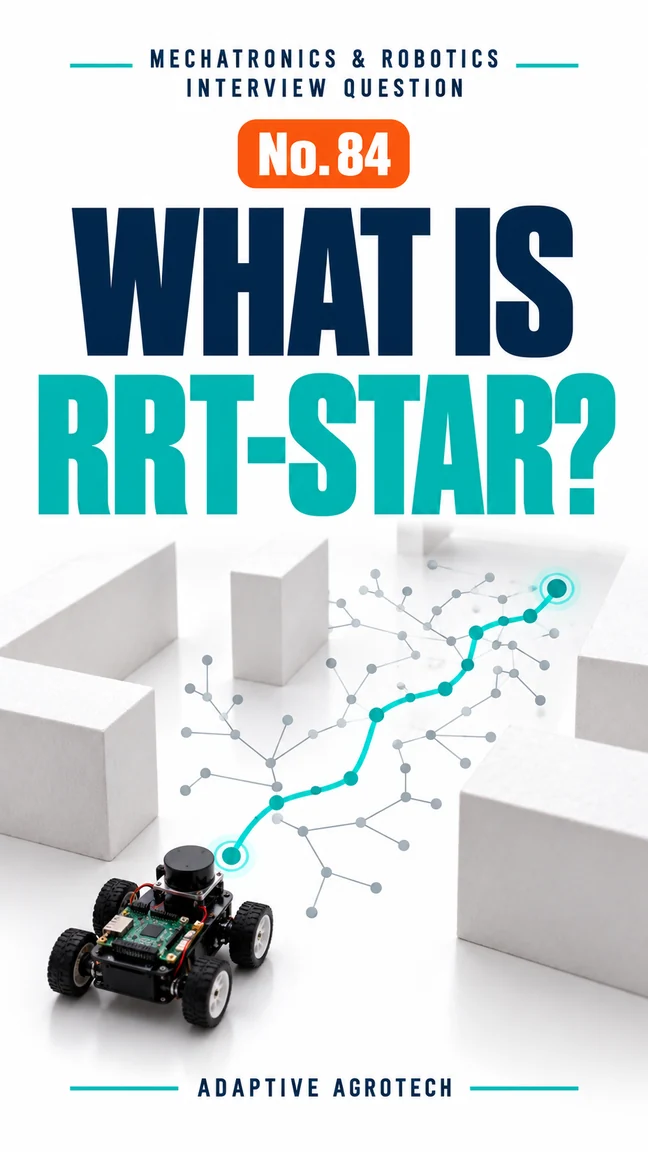
Motion planningNo. 084

What is RRT-Star?

RRT* improves a sampled search tree by choosing lower cost parents and rewiring nearby connections. Continued search can reduce path cost, while asymptotic optimality does not guarantee an exact optimum in a short run.

Watch & explore
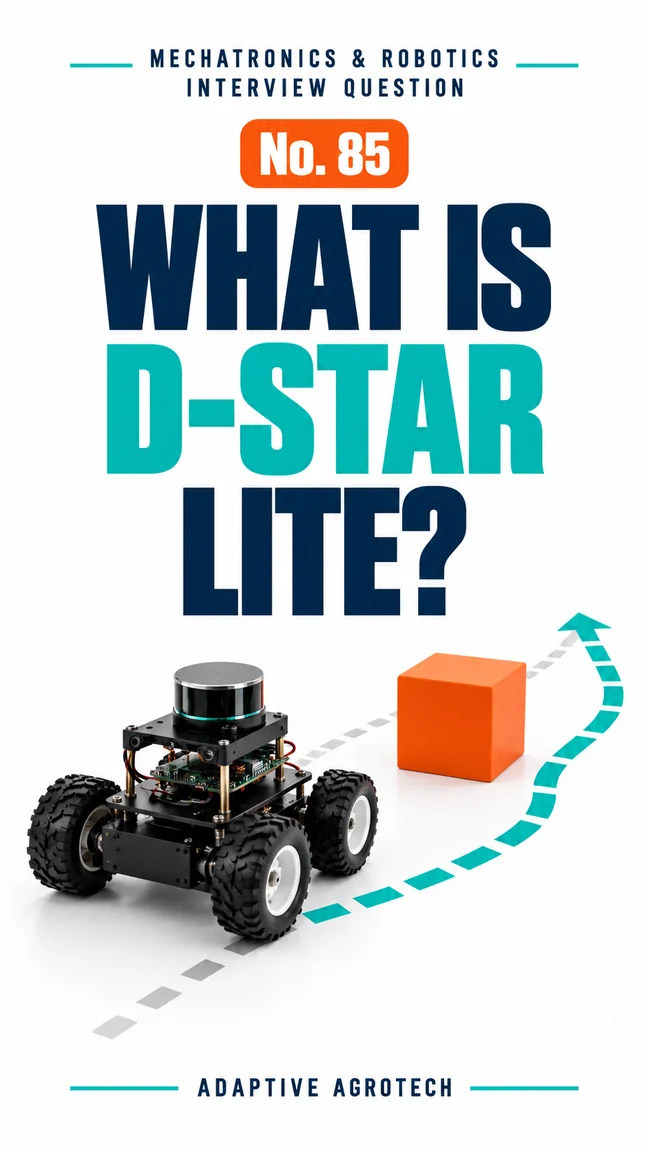
Motion planningNo. 085

What is D-Star Lite?

D* Lite replans on a graph by reusing earlier search information when travel costs change. It repairs affected values and updates the route, while still relying on current sensing and appropriate motion control.

Watch & explore
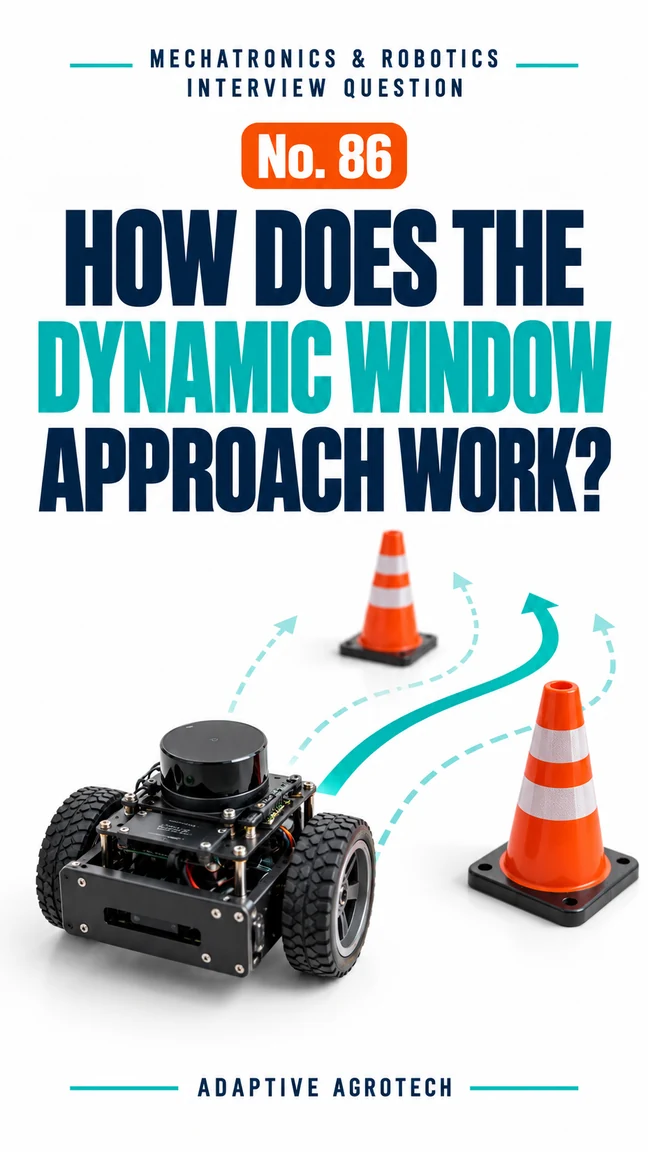
Motion planningNo. 086

What is the Dynamic Window Approach?

The dynamic window approach selects a reachable speed and turn rate by predicting short trajectories. It rejects commands that cannot stop before obstacles, then scores remaining candidates for progress and clearance.

Watch & explore
Motion planningNo. 087

What is an Artificial Potential Field?

Artificial potential fields combine attraction toward a goal with repulsion from nearby obstacles. Following the resulting descent direction gives reactive motion, but opposing effects can cancel at a local minimum before the goal.

Watch & explore
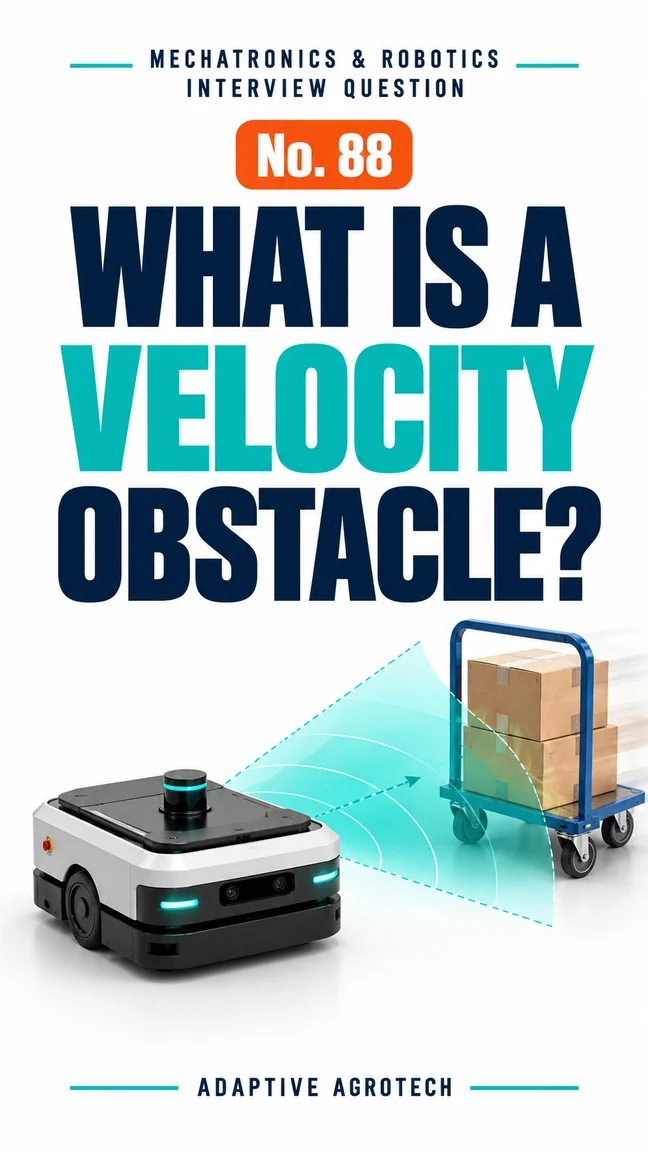
Motion planningNo. 088

What is a Velocity Obstacle?

A velocity obstacle identifies robot velocities that predict collision with a moving object. Relative geometry and assumed motion define the forbidden set; selected alternatives must also be reachable and updated as motion changes.

Watch & explore
Motion planningNo. 089

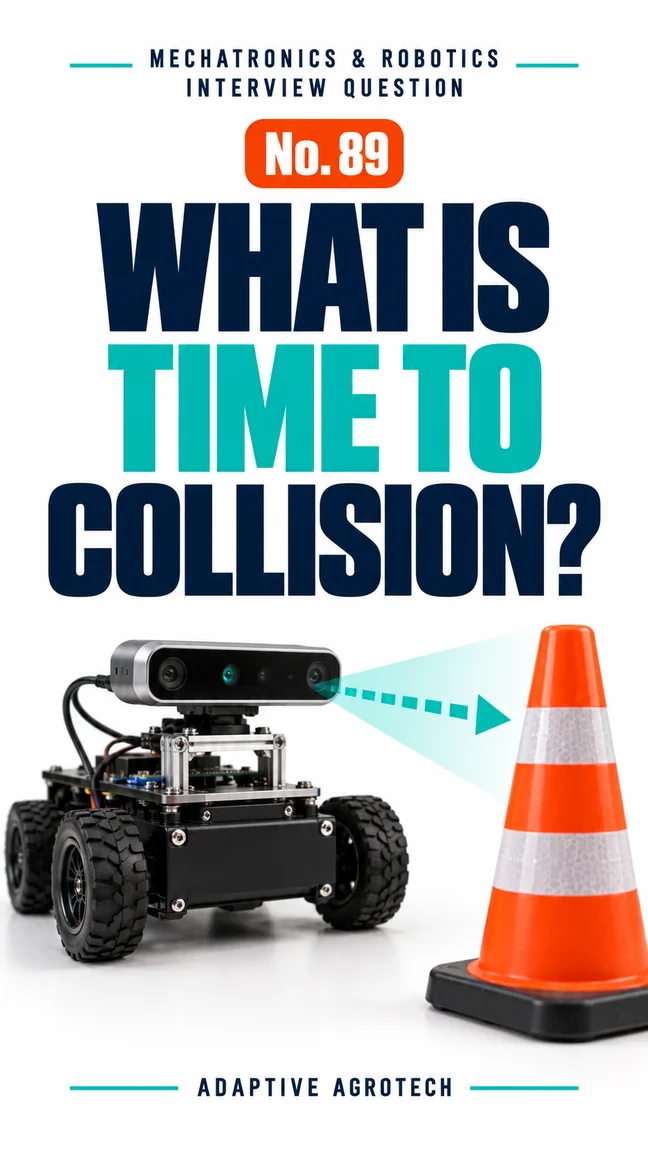
What is Time to Collision?

Time to collision predicts the time remaining before contact under an assumed motion model. Straight closing motion permits clearance divided by closing speed, while crossing trajectories require geometry and uncertainty to be considered.

Watch & explore
Control systemsNo. 090

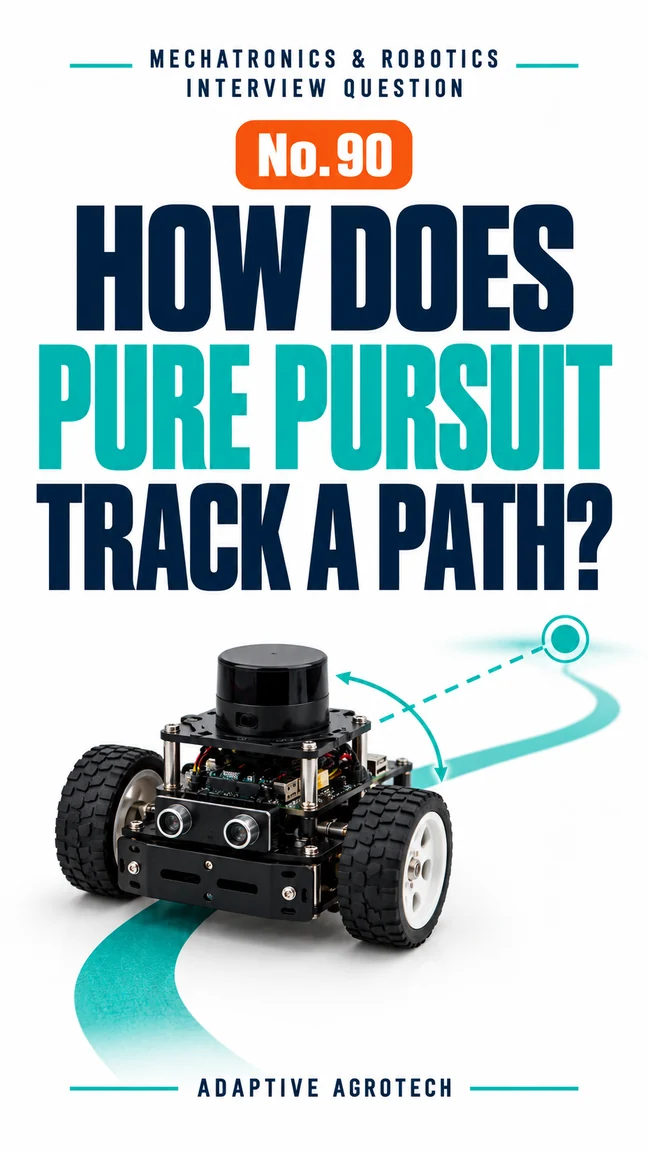
What is Pure Pursuit Path Tracking?

Pure pursuit tracks a path by steering along a tangent circular arc toward a point ahead. Look ahead distance controls responsiveness and corner cutting, while the tracker still needs separate collision checks.

Watch & explore
Control systemsNo. 091

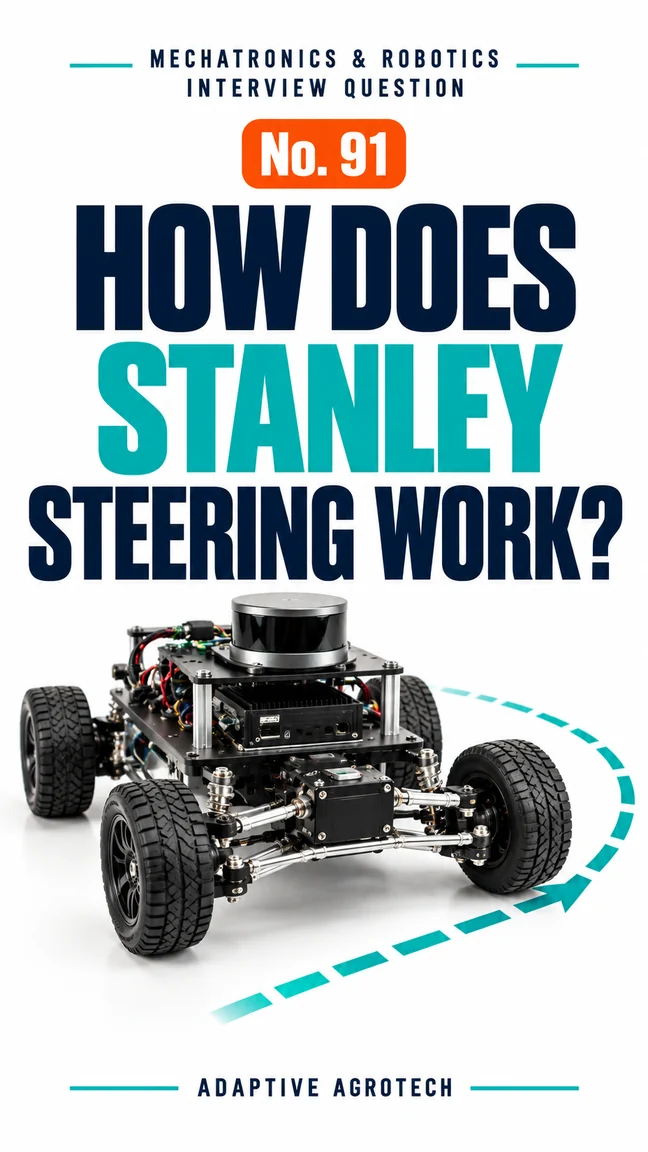
What is the Stanley Steering Controller?

The Stanley controller combines heading error with front axle cross track error to steer a car like robot. Speed scales the lateral correction, and practical implementations must handle low speed behavior and steering limitations.

Watch & explore
Motion planningNo. 092

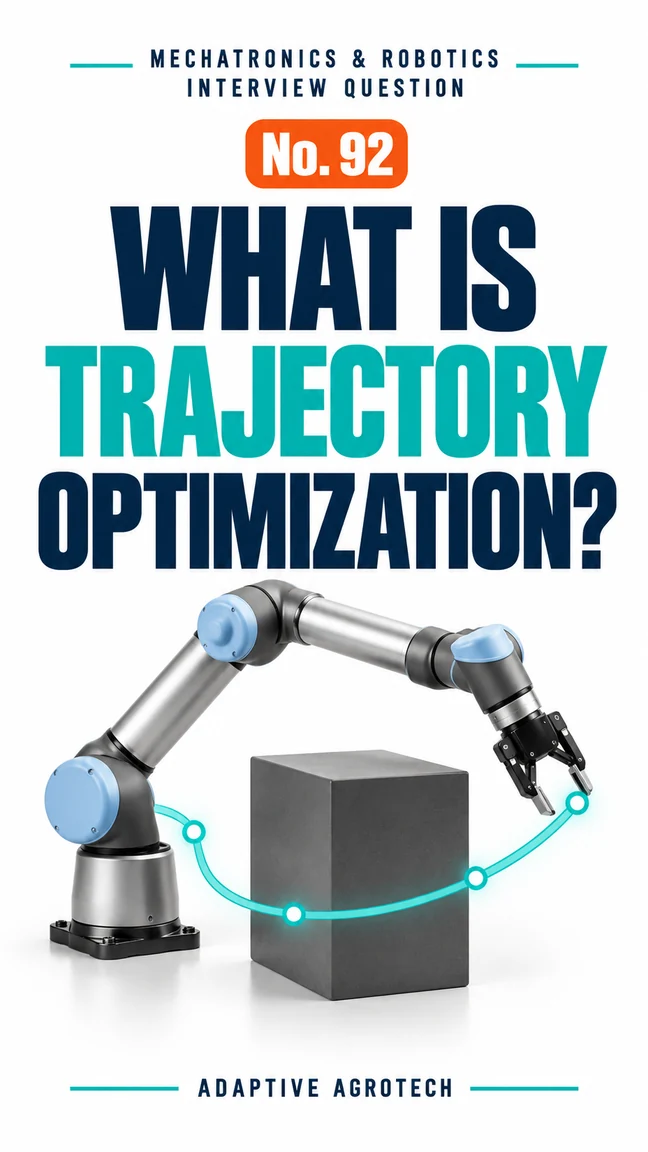
What is Trajectory Optimization?

Trajectory optimization adjusts robot states and commands to improve a chosen objective while satisfying constraints. Solver results depend on initialization, and a locally optimal sampled trajectory still needs continuous motion clearance checks.

Watch & explore
Robot kinematicsNo. 093

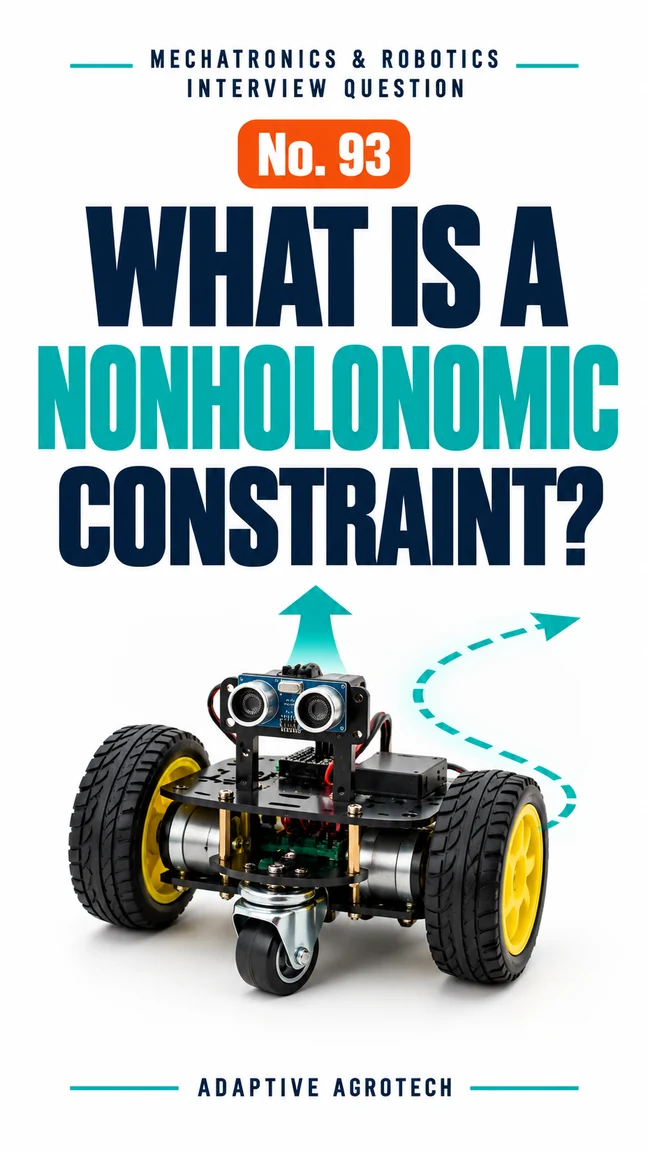
What is a Nonholonomic Constraint?

A nonholonomic constraint limits instantaneous velocities without reducing all positions reachable over time. Rolling wheels illustrate this distinction: a car cannot slide sideways immediately, yet sequences of arcs can change its lateral position.

Watch & explore
Robot kinematicsNo. 094

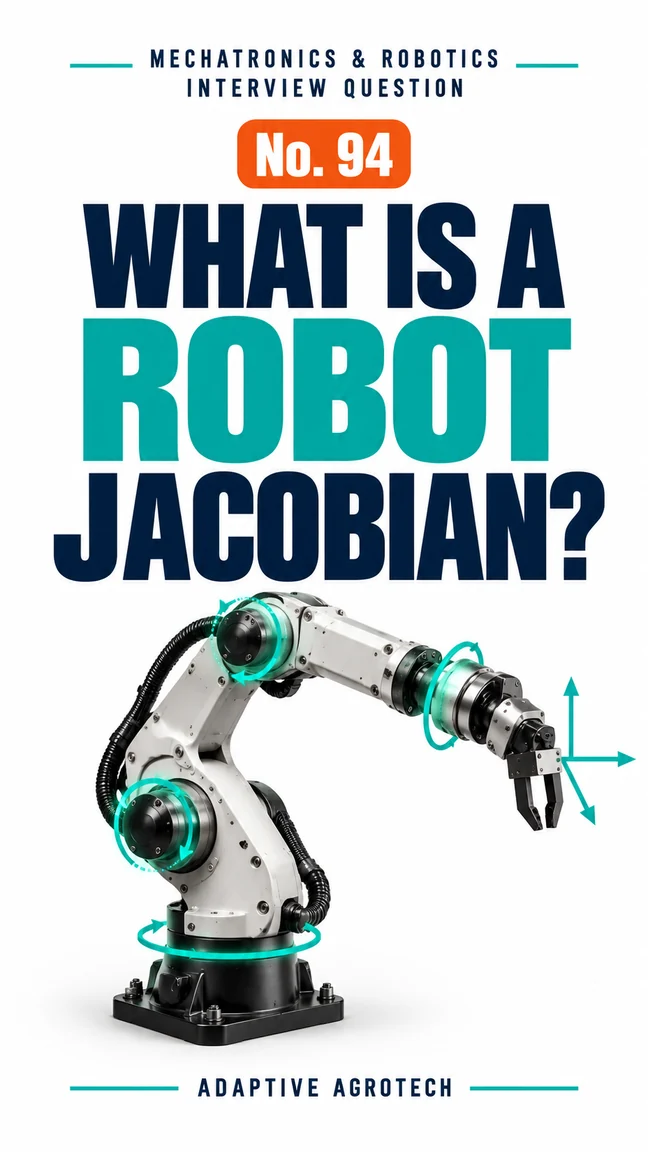
What is a Robot Jacobian?

The robot Jacobian maps joint rates to instantaneous tool velocity at a particular configuration. Its columns describe individual joint contributions, making it useful for local motion and force calculations rather than complete path planning.

Watch & explore
Robot kinematicsNo. 095

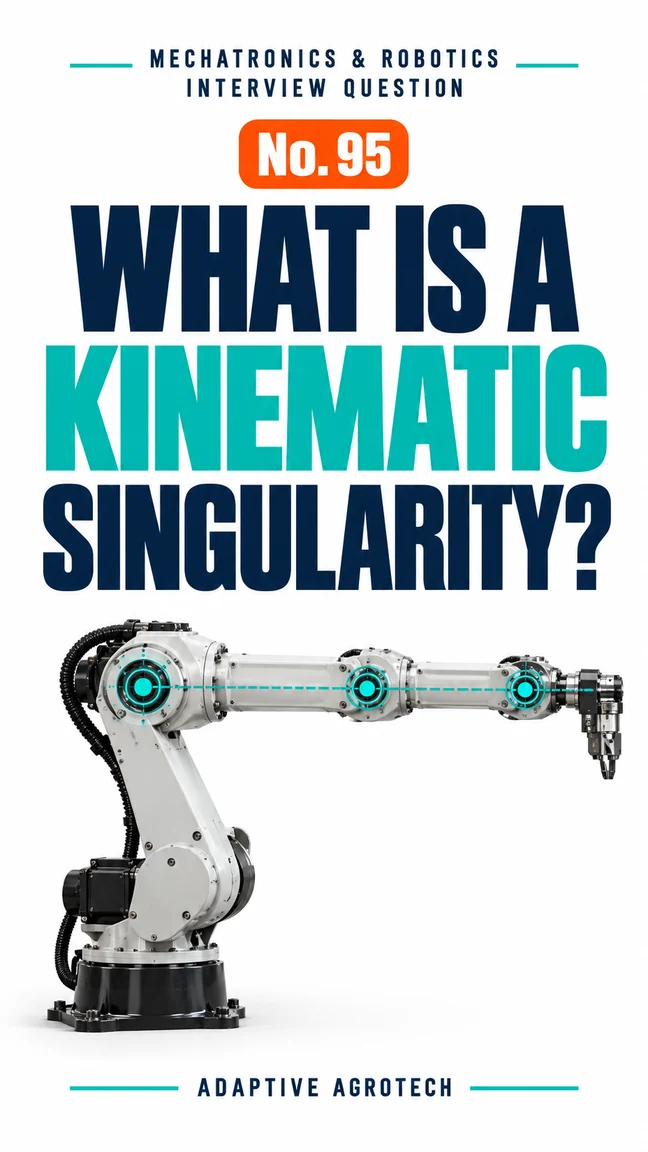
What is a Kinematic Singularity?

A kinematic singularity occurs where the robot Jacobian loses rank and an instantaneous tool motion direction disappears. Near such poses, inverse velocity commands can grow large even when a target position remains reachable.

Watch & explore
Robot kinematicsNo. 096

What is Inverse Kinematics?

Inverse kinematics finds joint values for a desired tool pose. A target can have several solutions or none, so solution choice must respect joint limits and the complete arm motion must be checked.

Watch & explore