Skip to content
Adaptive AgroTech NetworkUniversity of Southern Denmark · SDU Drone Center
Robotics · Mechatronics · Intelligent systems

Short videos.
Lasting understanding.

Explore one engineering idea at a time. Watch a short lesson, read the key concepts and test your understanding before your next interview, project or class.

58 topics found

Video · Key ideas · Check your understanding

AI & machine learningNo. 182

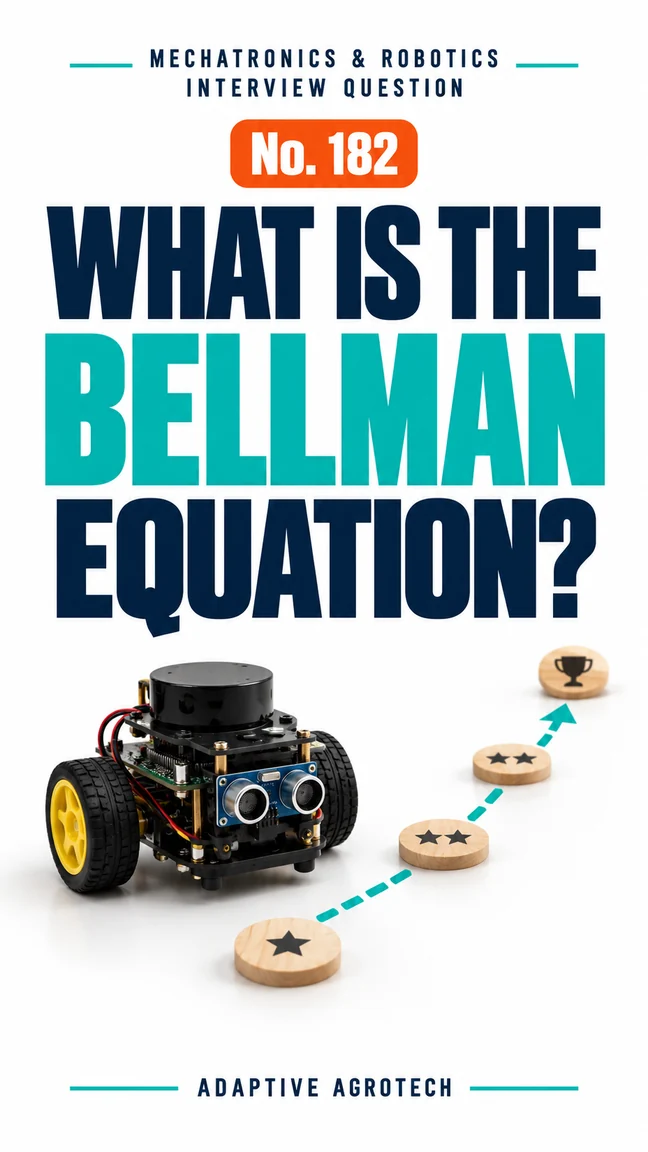
What Is the Bellman Equation?

The Bellman expectation equation relates a state’s value to expected immediate reward plus discounted next state value. The expectation averages actions from the policy and transitions from the environment.

Watch & explore
AI & machine learningNo. 184

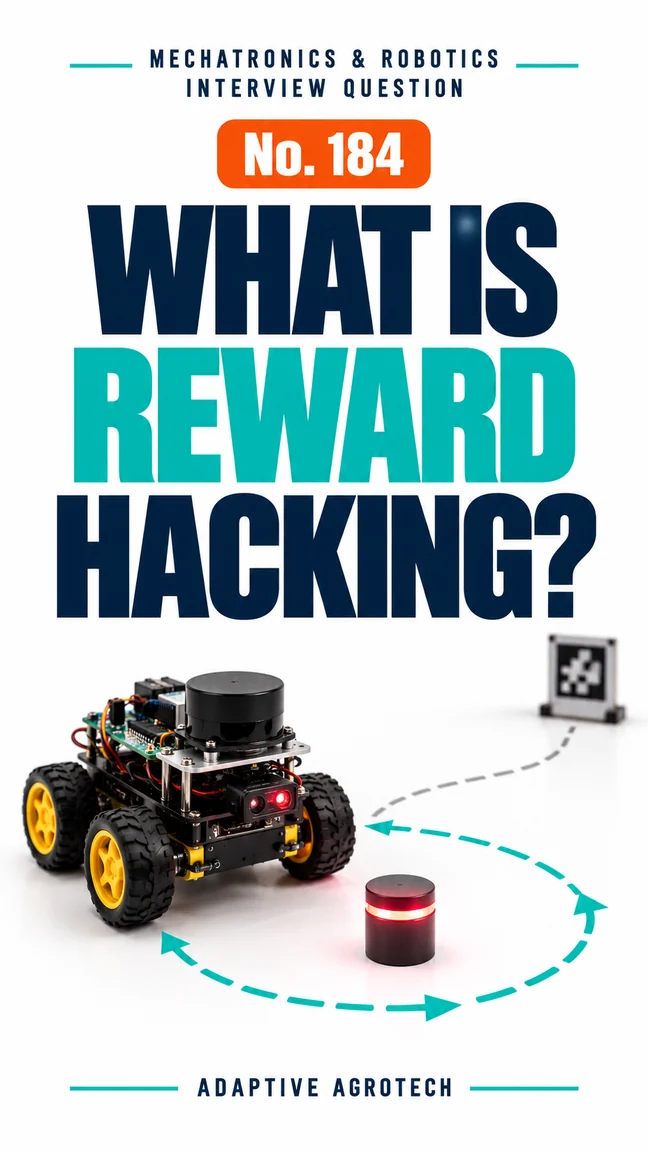
What Is Reward Hacking?

Reward hacking happens when a learning agent earns high measured reward without achieving the intended outcome. The robot optimizes the reward you implemented, which may differ from the task you had in mind.

Watch & explore
AI & machine learningNo. 187

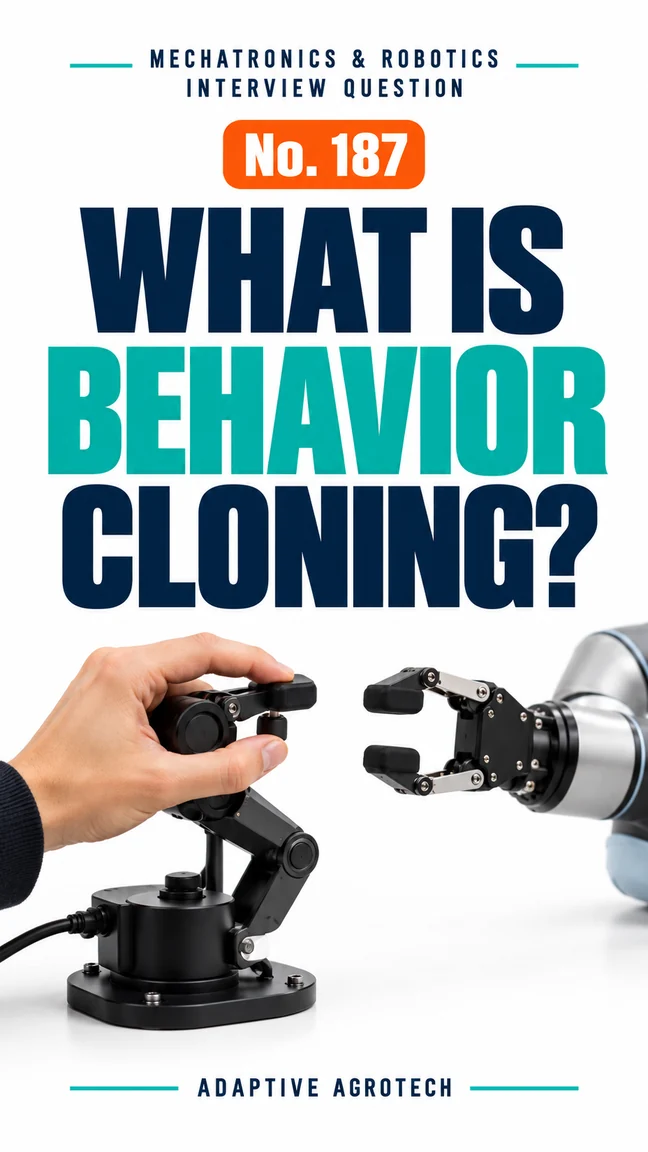
What Is Behavior Cloning?

Behavior cloning trains a policy to reproduce expert actions from paired observations and commands. It uses supervised learning, such as minimizing prediction error for continuous actions recorded while a person operates the robot.

Watch & explore
AI & machine learningNo. 189

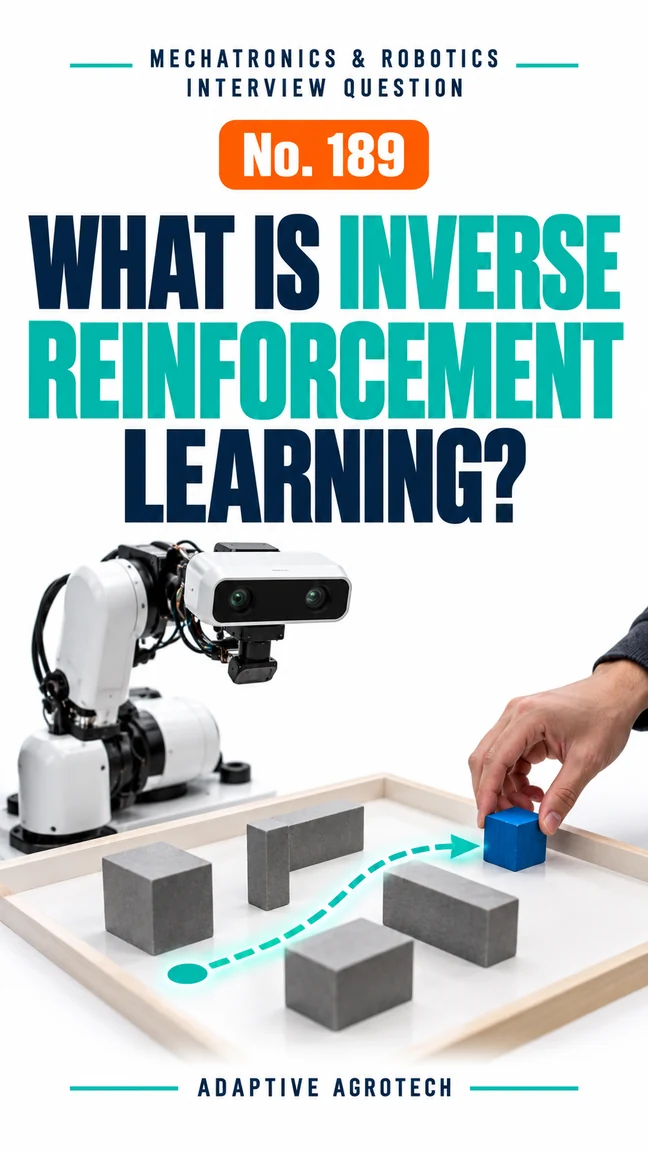
What Is Inverse Reinforcement Learning?

Inverse reinforcement learning infers a reward model that can explain demonstrated behavior. Ordinary reinforcement learning starts with a reward and seeks a policy. The inverse problem starts with behavior and reasons about its objective.

Watch & explore
AI & machine learningNo. 190

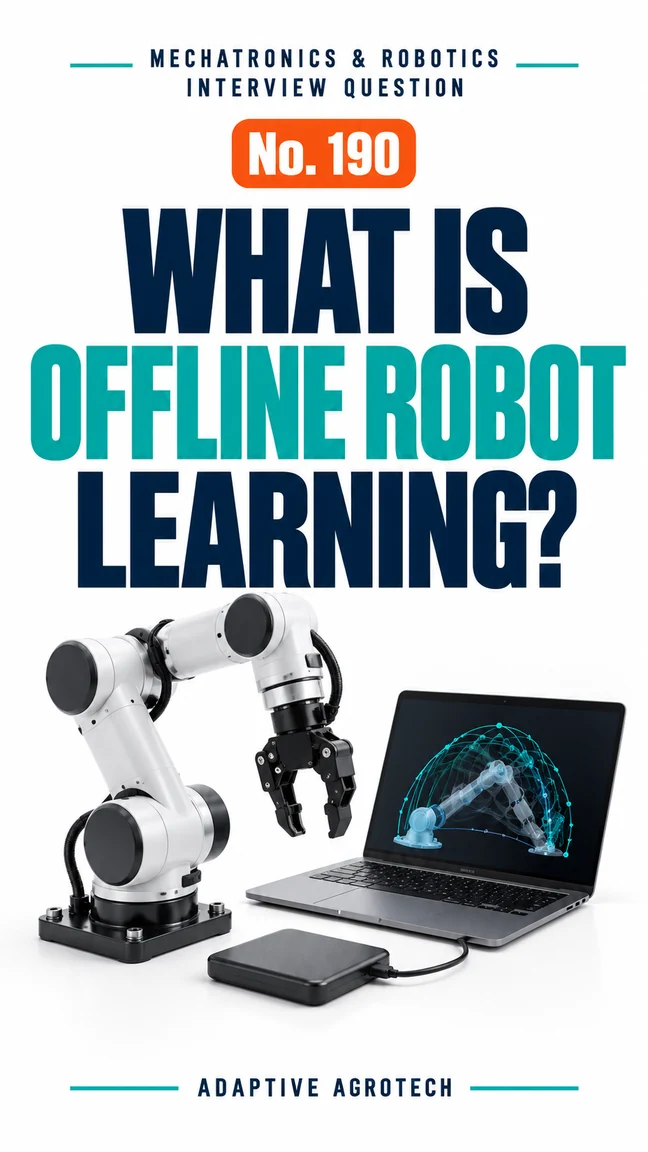
What Is Offline Reinforcement Learning?

Offline reinforcement learning trains from a fixed dataset of previously collected transitions. During this training stage, the algorithm does not collect new experience by interacting with the environment. It still uses a reward based learning objective.

Watch & explore
AI & machine learningNo. 192

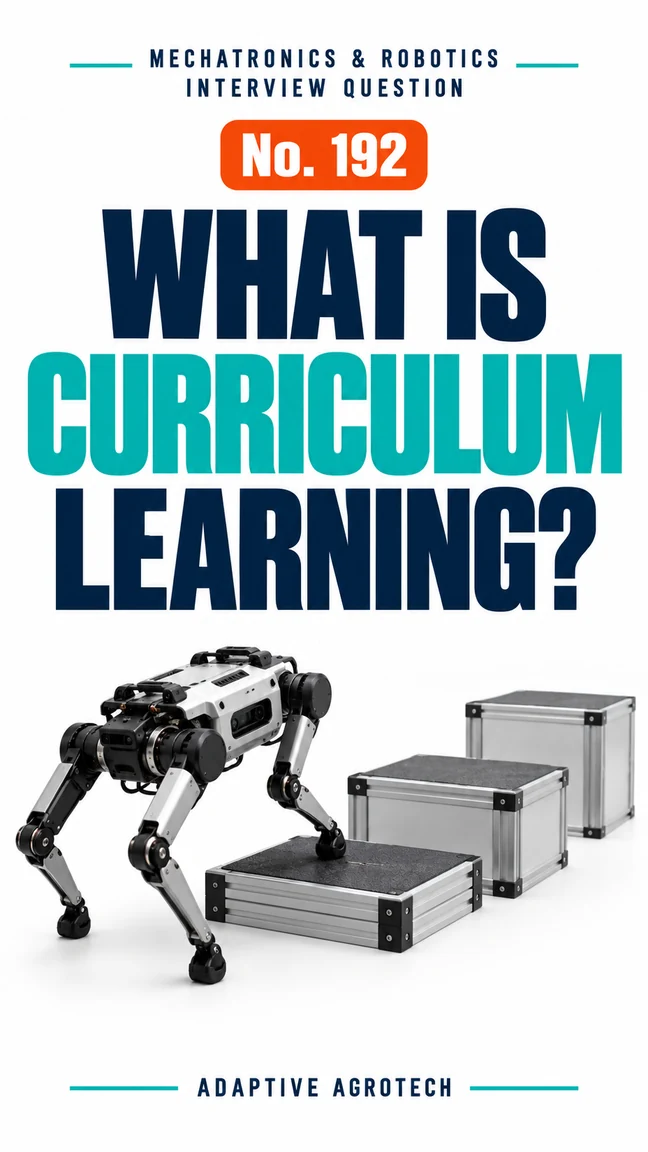
What Is Curriculum Learning in Robotics?

Curriculum learning changes the training tasks or their difficulty as learning progresses. A robot can first solve accessible cases, then encounter harder conditions once its current policy produces useful behavior more consistently.

Watch & explore
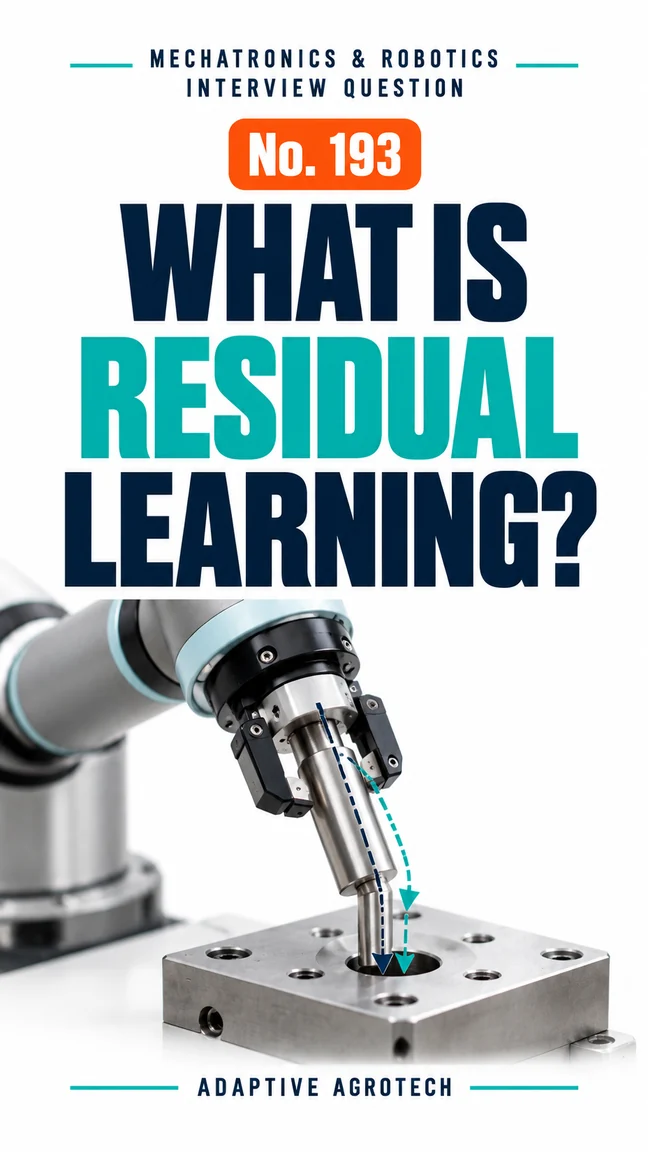
AI & machine learningNo. 193

What Is Residual Learning for Robot Control?

Residual learning combines a conventional controller with a learned correction. The controller handles a known part of the task. A learned residual adjusts its command to address remaining errors or interactions that the model captures poorly.

Watch & explore
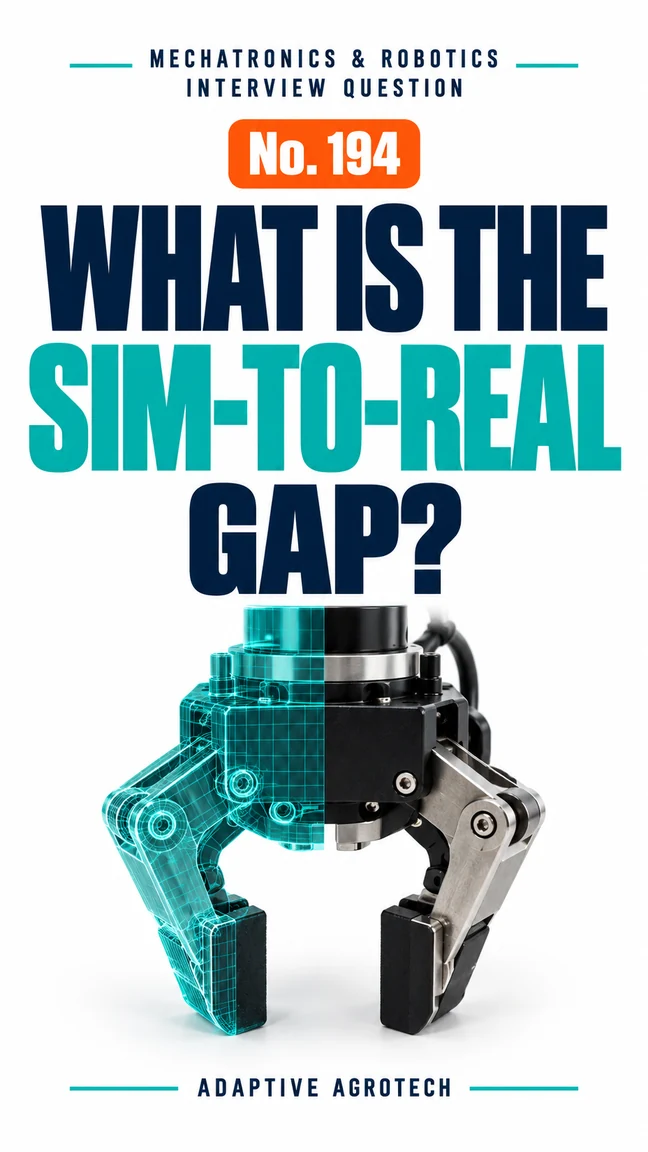
AI & machine learningNo. 194

What Is the Sim-to-Real Gap?

The sim to real gap is the mismatch between simulated training conditions and the physical robot. Differences in contact, friction, sensing, actuator response, and timing can change the consequences of the very same command.

Watch & explore
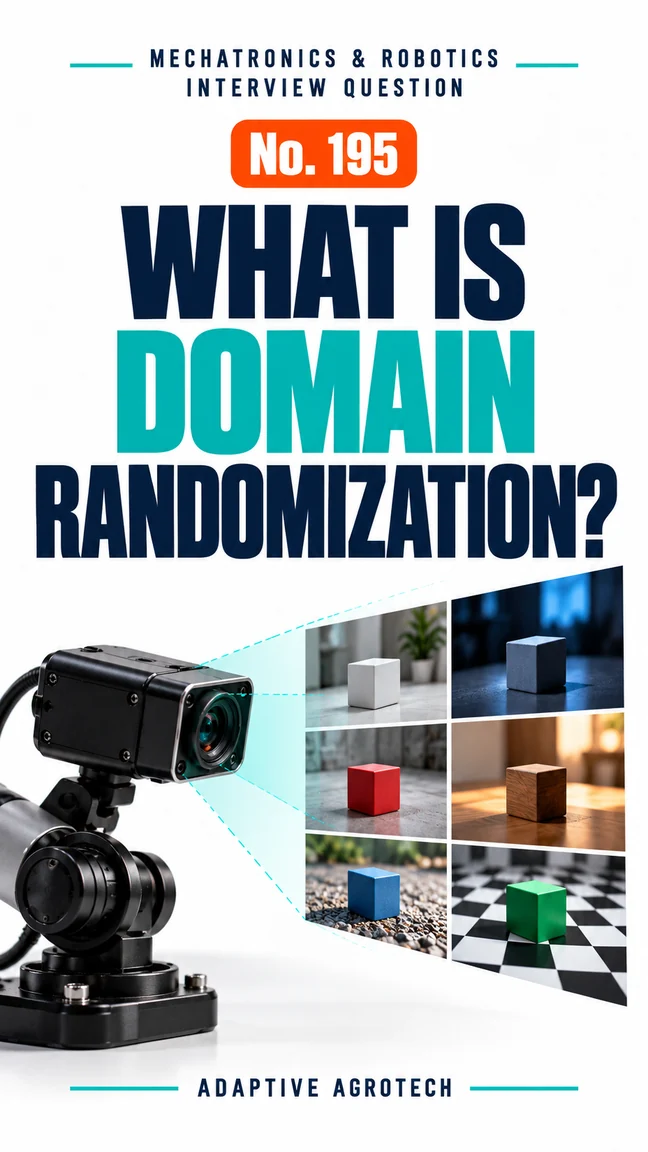
AI & machine learningNo. 195

What Is Domain Randomization?

Domain randomization varies selected simulation conditions during training. Instead of learning from one exact world, a robot policy or perception model encounters a distribution of appearances or dynamics intended to encourage more robust behavior.

Watch & explore
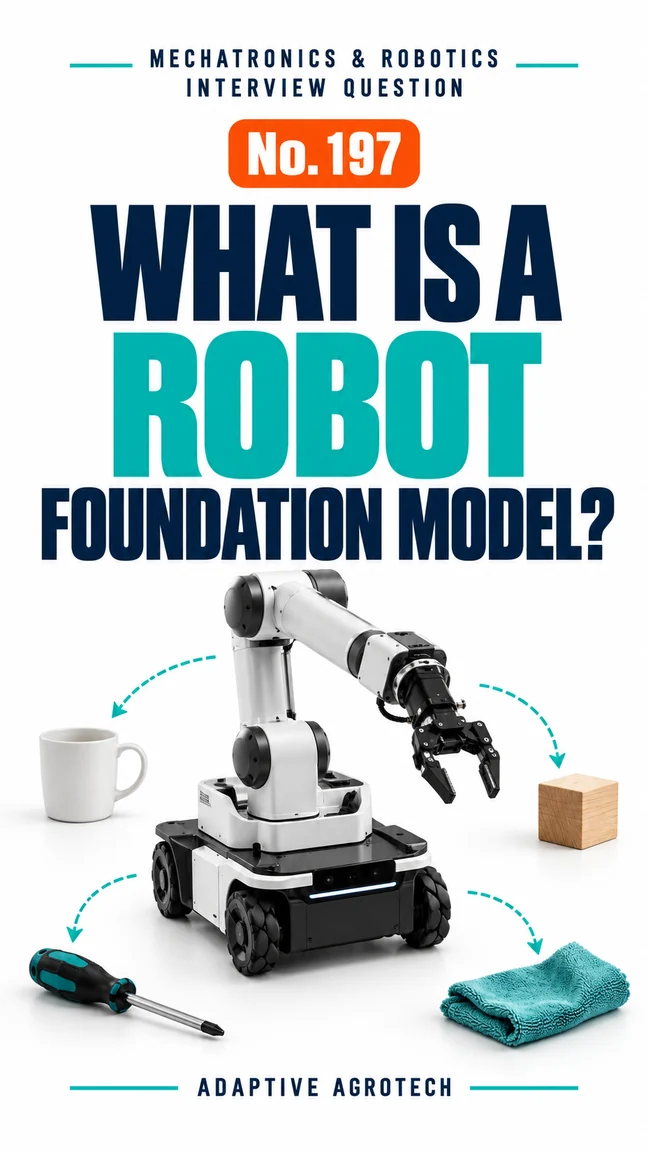
AI & machine learningNo. 197

What Is a Robot Foundation Model?

A robot foundation model is a model trained on broad data so it can support multiple robot tasks. Instead of building every skill from scratch, engineers adapt a shared starting point to a particular robot and job.

Watch & explore
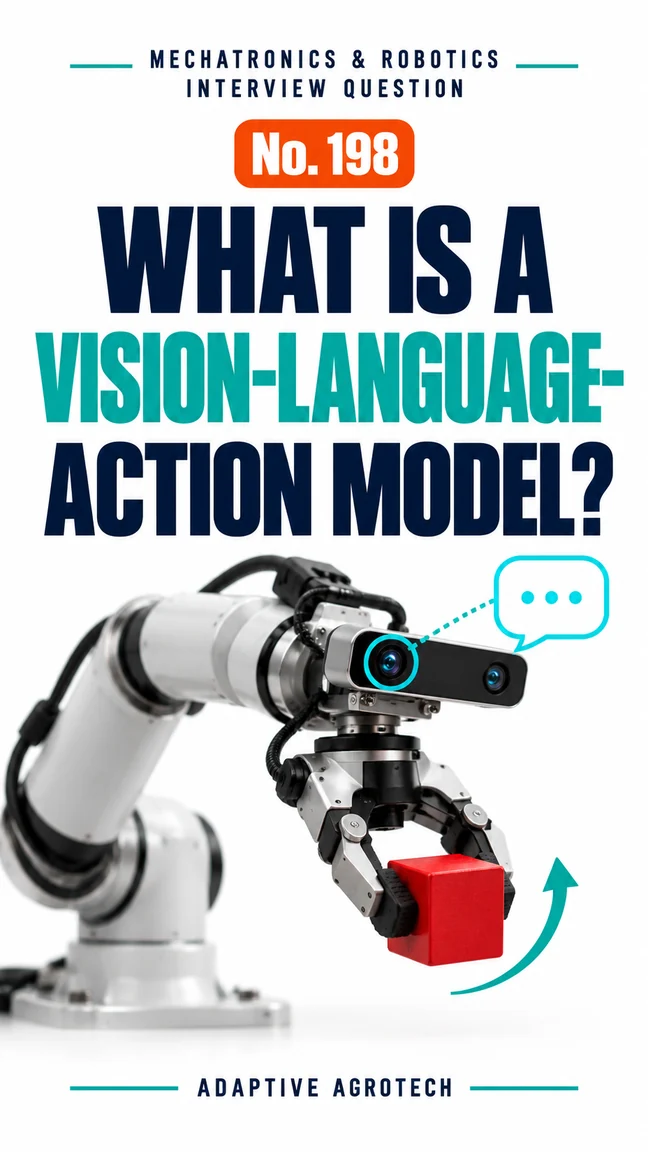
AI & machine learningNo. 198

What Is a Vision-Language-Action Model?

A vision language action model connects visual observations and language instructions to robot actions. It may also use joint positions or other robot state. Its output describes movements, rather than only a written answer.

Watch & explore
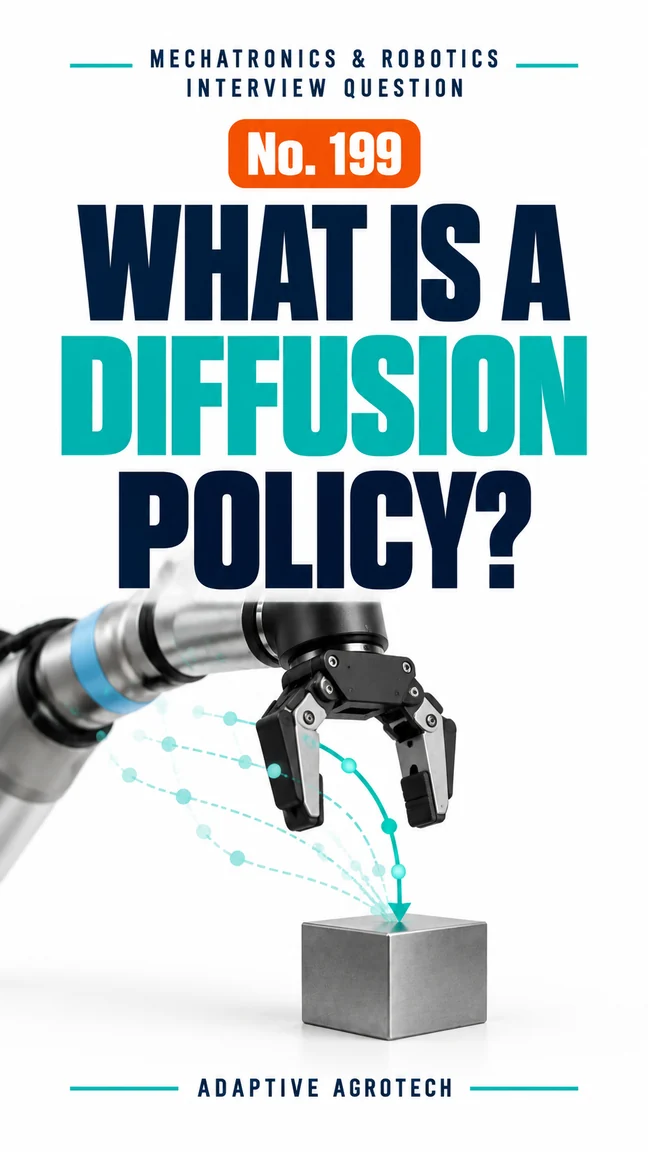
AI & machine learningNo. 199

What Is a Diffusion Policy?

A diffusion policy learns to generate robot action sequences by gradually removing noise. During inference, observations condition this process, so an initially noisy sequence becomes a candidate movement consistent with the learned demonstrations.

Watch & explore