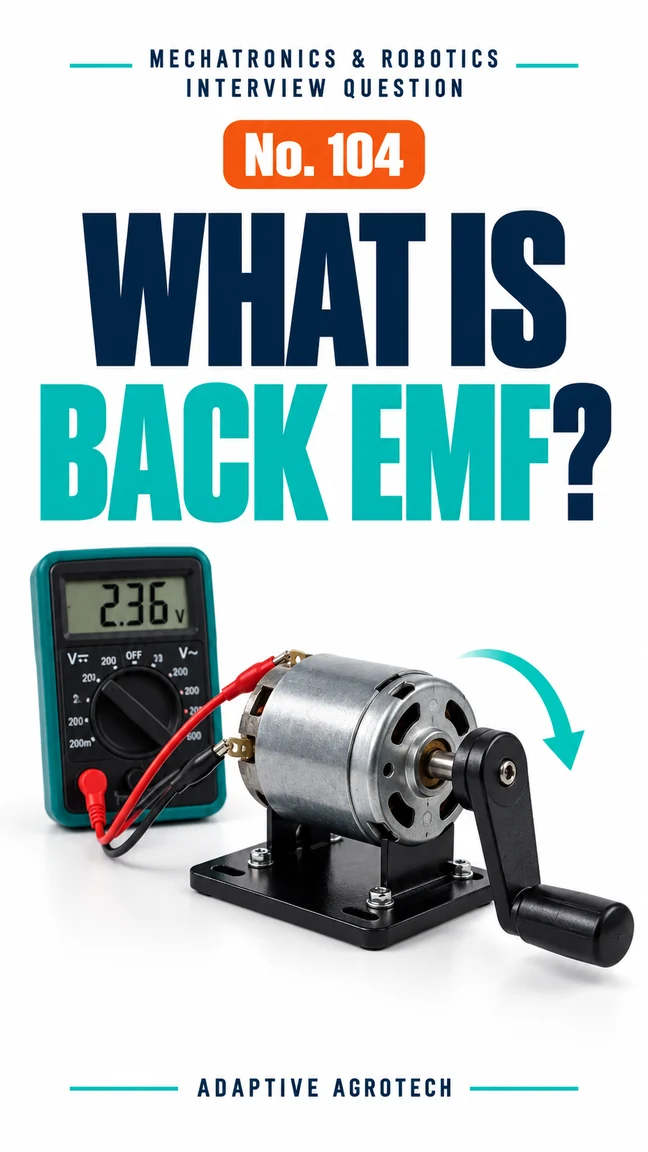
What is Back EMF?
Back EMF is the voltage generated by a spinning motor that opposes its drive voltage. In a simple steady model it reduces winding current, explaining why a slowing or jammed wheel can draw more current.
Watch & exploreExplore one engineering idea at a time. Watch a short lesson, read the key concepts and test your understanding before your next interview, project or class.
Video · Key ideas · Check your understanding
Back EMF is the voltage generated by a spinning motor that opposes its drive voltage. In a simple steady model it reduces winding current, explaining why a slowing or jammed wheel can draw more current.
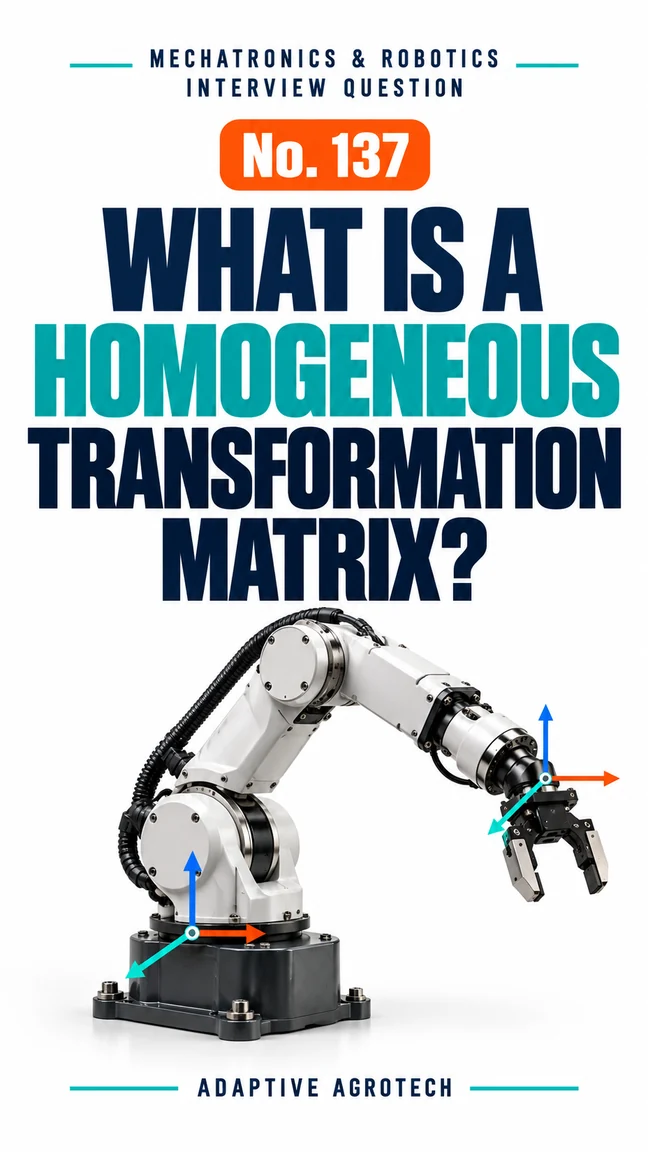
Watch & exploreA homogeneous transformation combines rigid orientation and translation in one four by four matrix. It converts coordinates and composes frame relationships, with multiplication order and clear source and destination frame labels determining meaning.
Watch & exploreGimbal lock is an Euler coordinate singularity where rotation axes become dependent. For ZYX angles it occurs at pitch ±90°, affecting reported angles and rate mappings while leaving the rigid body’s physical rotation ability intact.
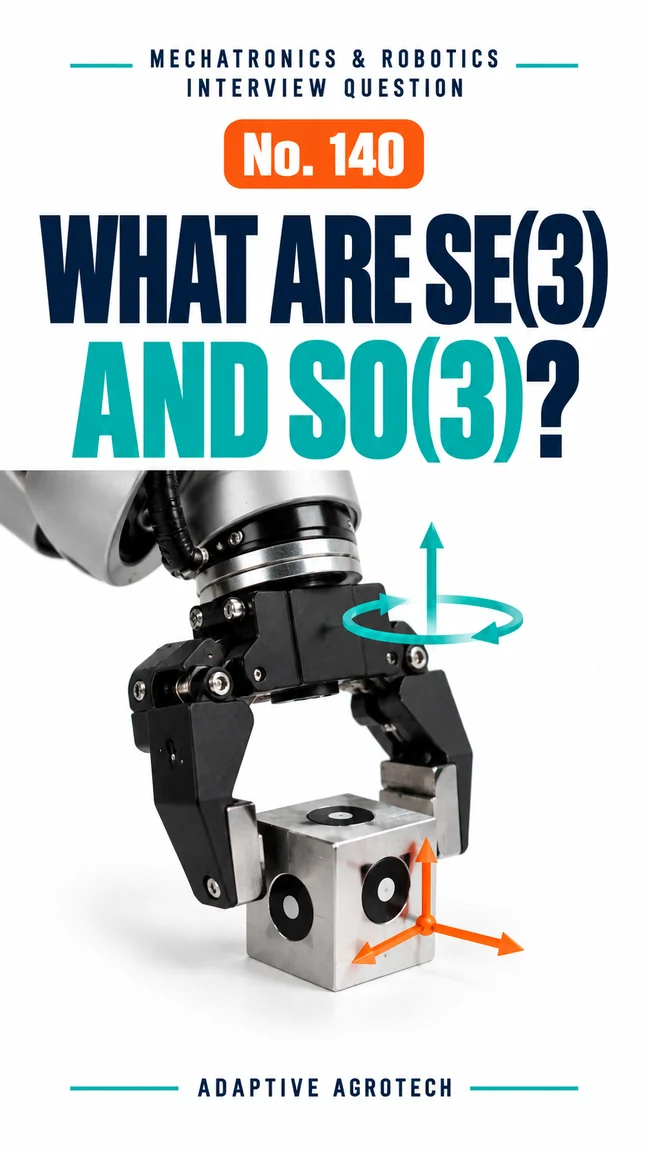
Watch & exploreSO(3) contains valid three dimensional rotations, while SE(3) contains rigid poses with rotation and translation. Their stored matrices obey constraints, excluding scaling, shear, and reflections despite containing more entries than independent degrees of freedom.
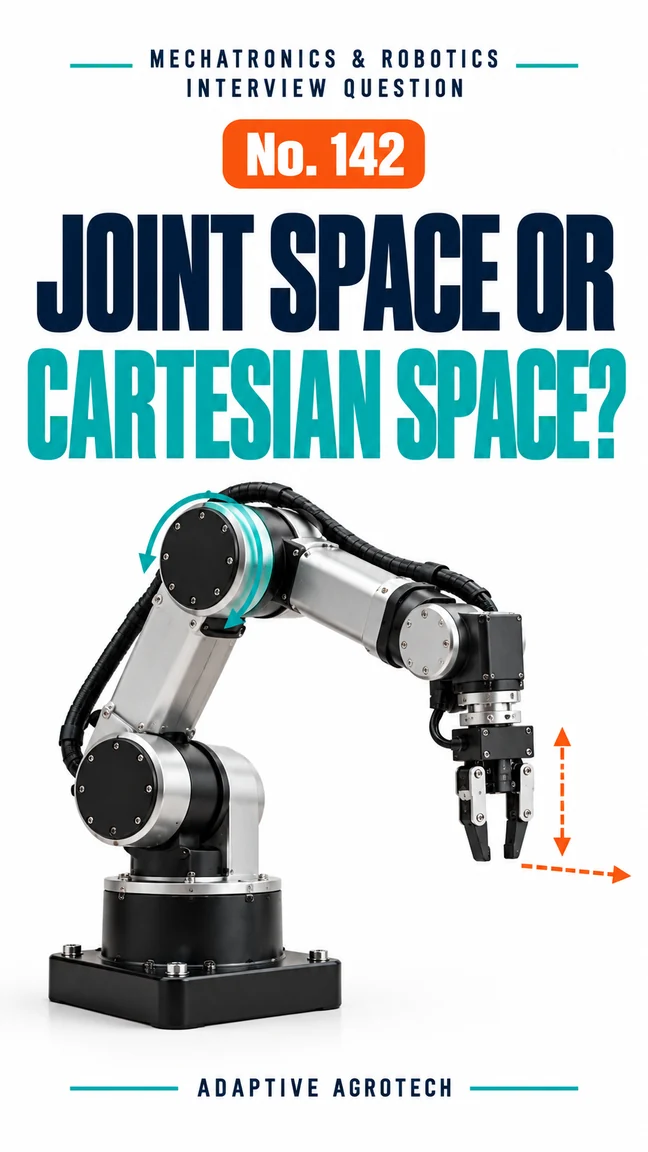
Watch & exploreJoint space describes the robot through joint coordinates, while Cartesian space describes tool pose relative to a frame. Their paths differ geometrically, so a straight interpolation in one space need not be straight in the other.
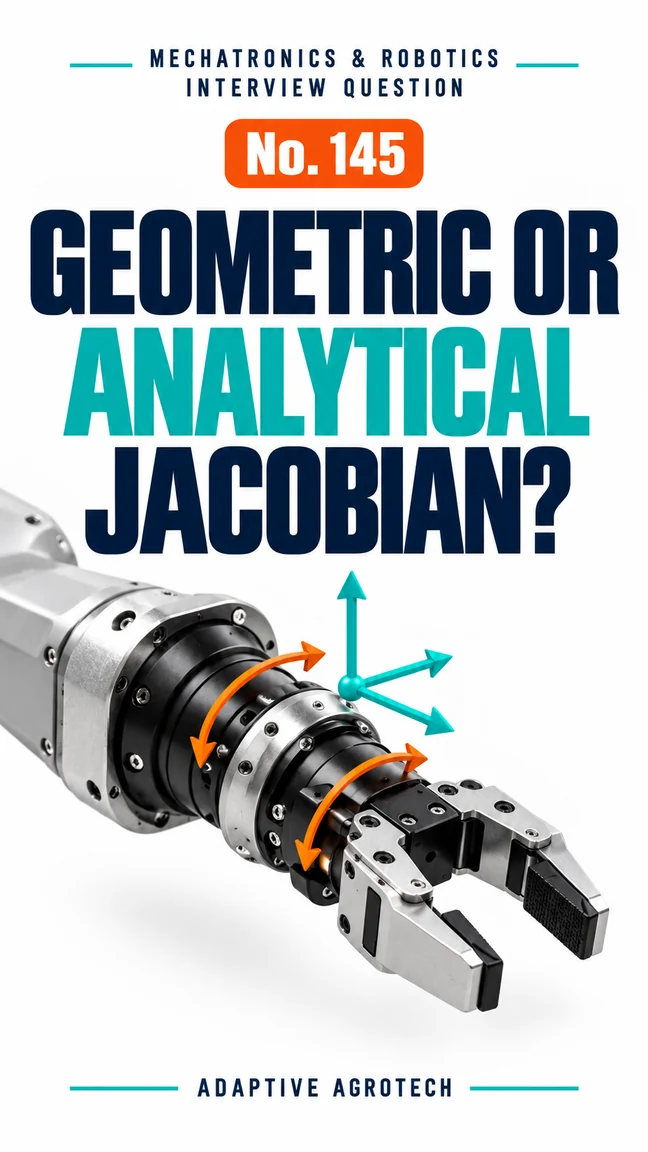
Watch & exploreA geometric Jacobian gives physical linear and angular velocity, while an analytical Jacobian gives rates of selected pose coordinates. Their orientation rows differ because Euler angle rates generally are not angular velocity.
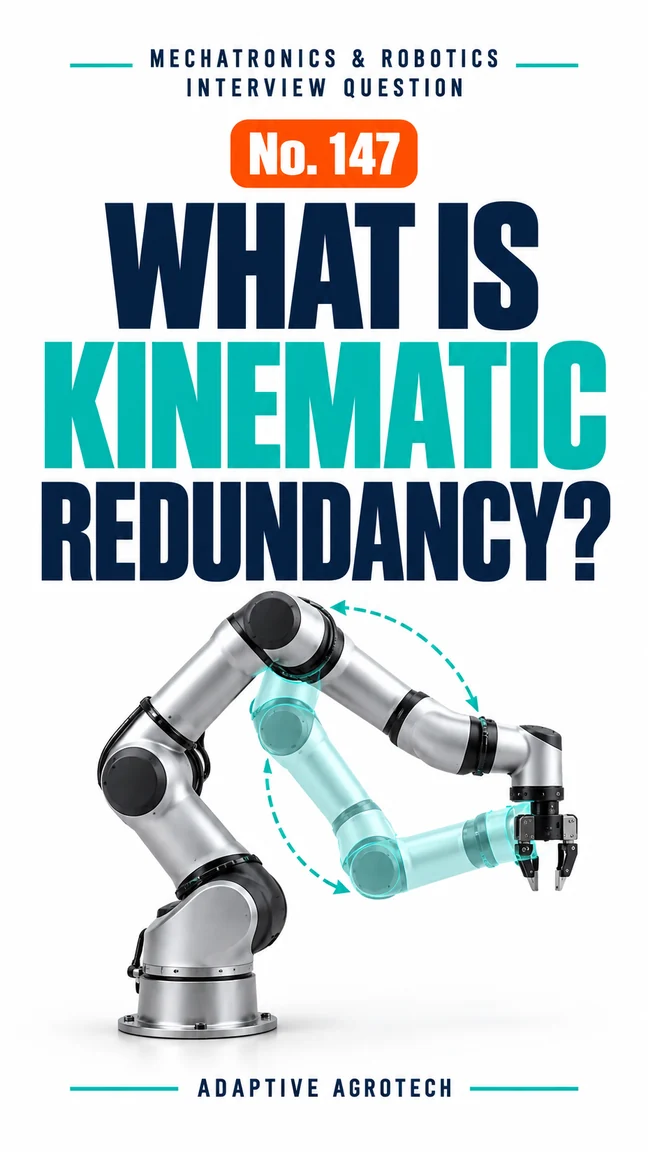
Watch & exploreKinematic redundancy means more independent joint motion is available than a specified task requires. It permits posture choices, but depends on task definition and Jacobian rank rather than joint count alone.
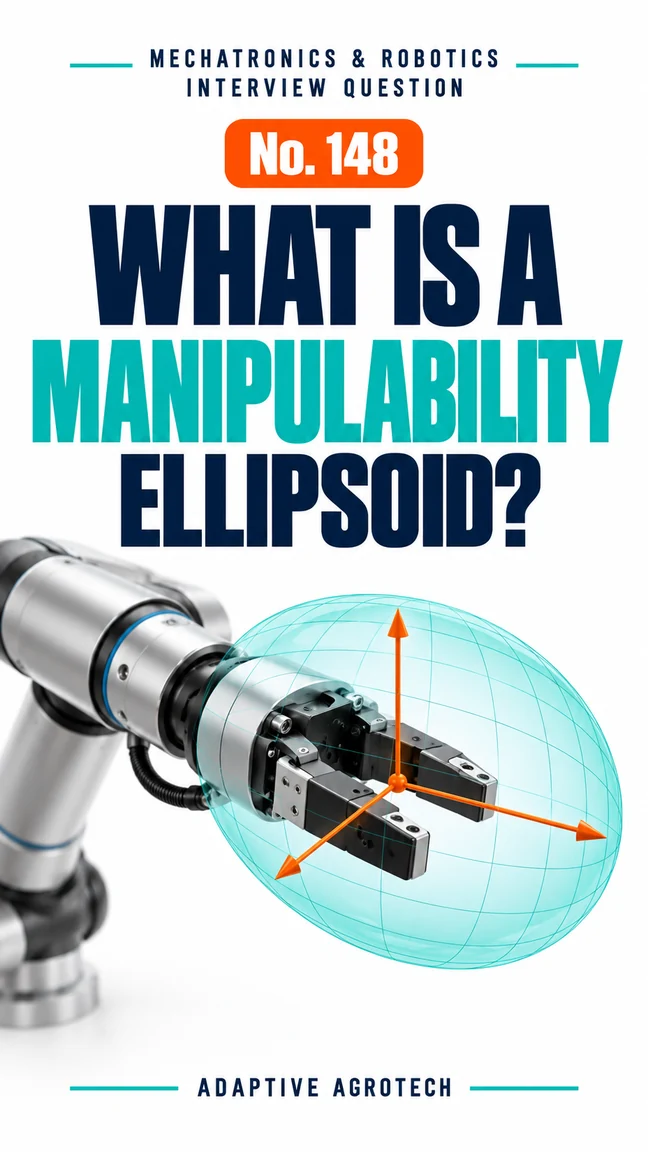
Watch & exploreA manipulability ellipsoid shows how a unit joint velocity sphere maps to tool velocities through the Jacobian. Its axes expose easier and lost local directions, with meaning dependent on coordinates, units, and the velocity metric.
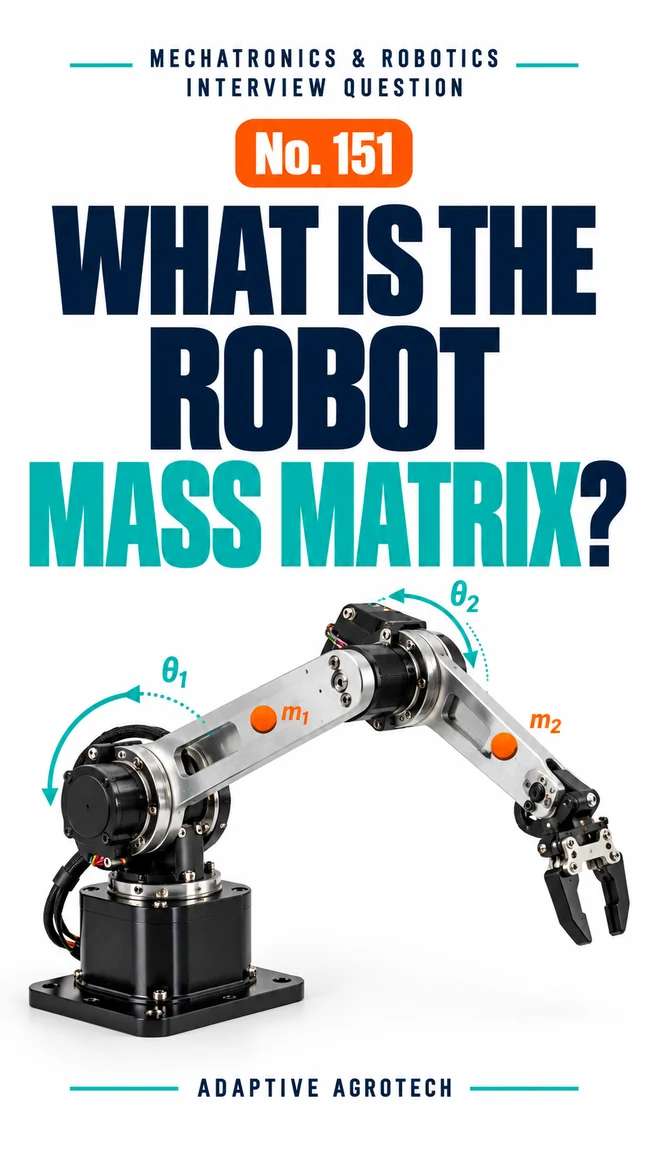
Watch & exploreThe robot mass matrix expresses configuration dependent inertia and coupling between joint accelerations and effort. It also defines kinetic energy, and a physically valid matrix in independent rigid robot coordinates is symmetric and positive definite.
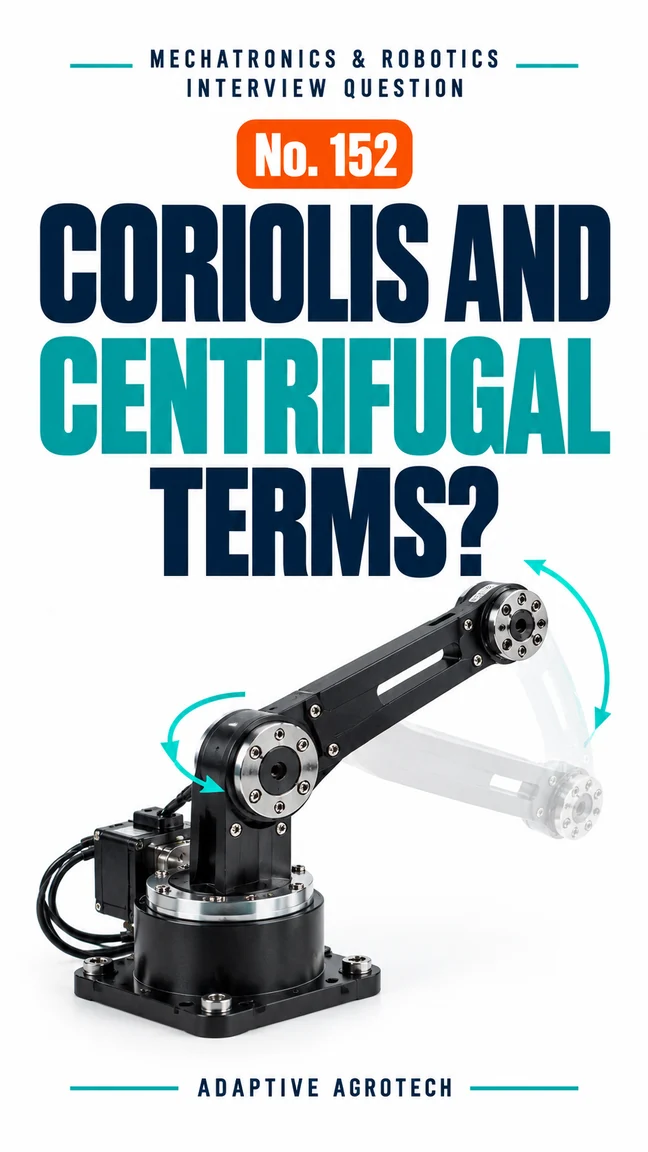
Watch & exploreCoriolis and centrifugal terms represent velocity dependent loads from coupled robot motion. They involve products and squares of joint speeds, scale quadratically in the ideal model, and remain distinct from gravity and friction.
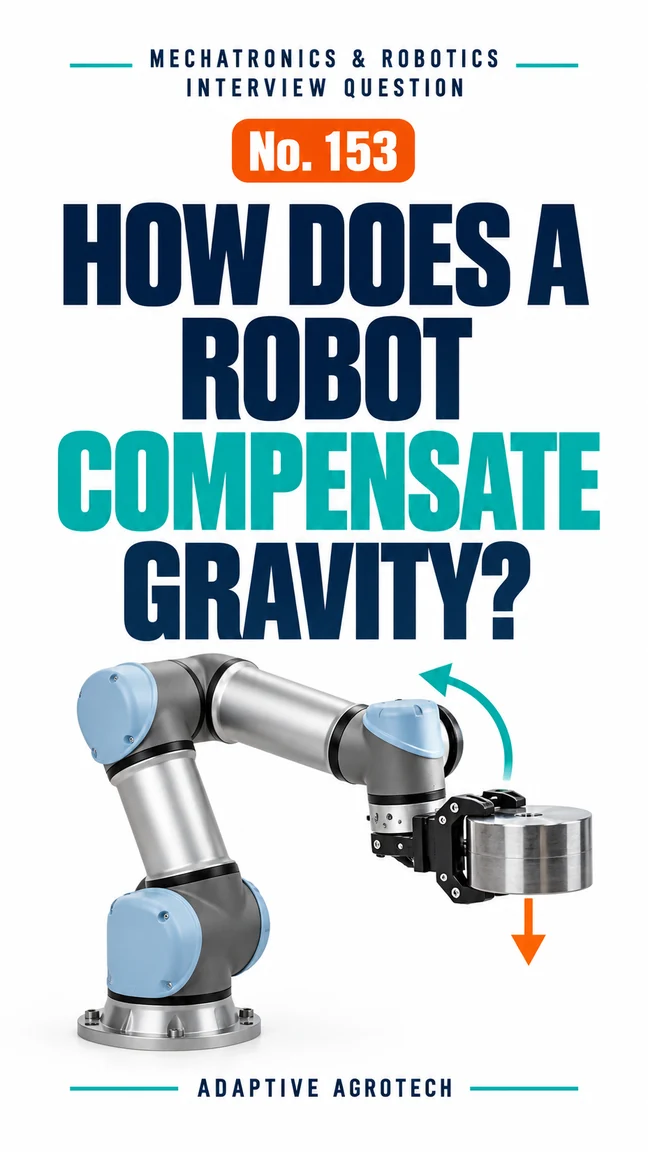
Watch & exploreGravity compensation commands torque to counter predicted gravitational loads. It depends on posture and mass distribution, can ease holding or guided movement, and leaves residual effects when payload estimates or other dynamics are inaccurate.
Watch & exploreHand–eye calibration estimates a fixed rigid relationship between camera and robot frames. Eye-in-hand observations across diverse robot poses constrain that transform, while synchronized measurements and validation on unused poses determine practical calibration quality.
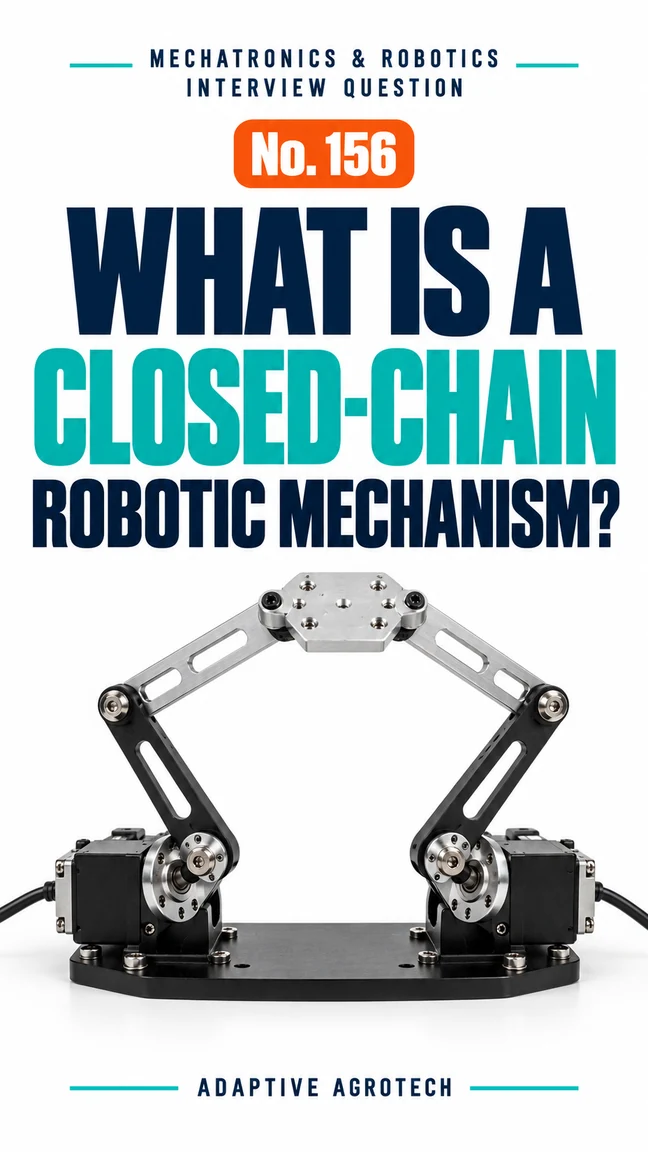
Watch & exploreA closed-chain mechanism contains a loop of linked joints, creating closure constraints between coordinates. Its joints cannot all be commanded independently, and valid motion must account for assembly modes and singular configurations.
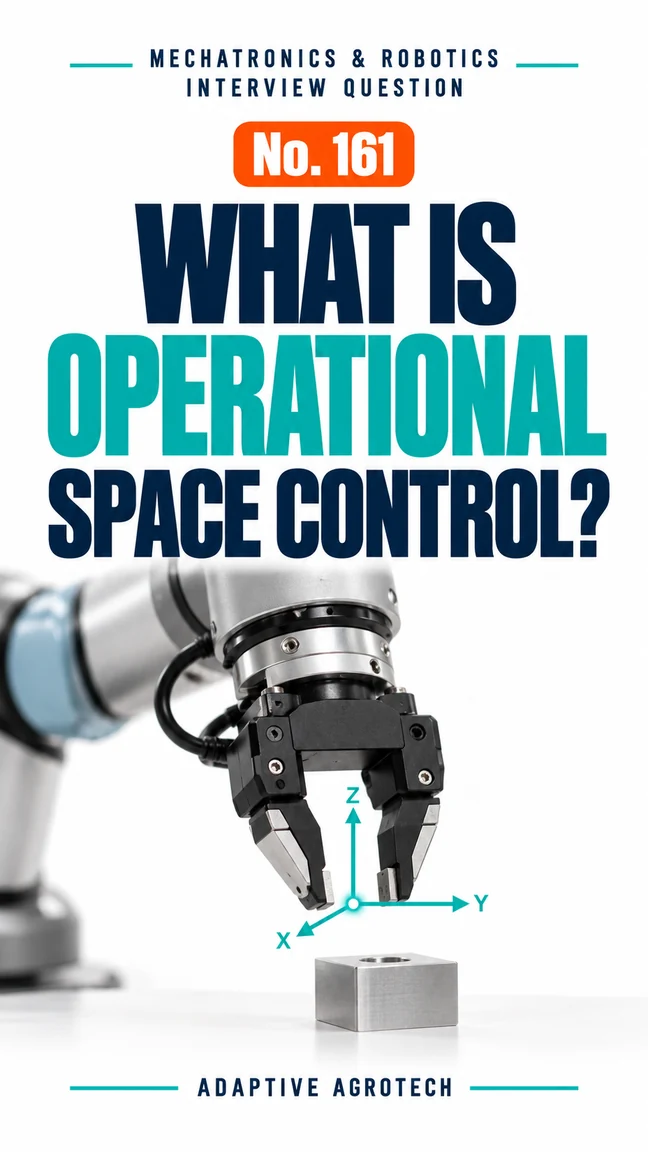
Watch & exploreOperational space control describes robot dynamics in task coordinates, such as tool position. Instead of choosing joint motions independently, the controller computes the end effector force needed for a desired task acceleration.
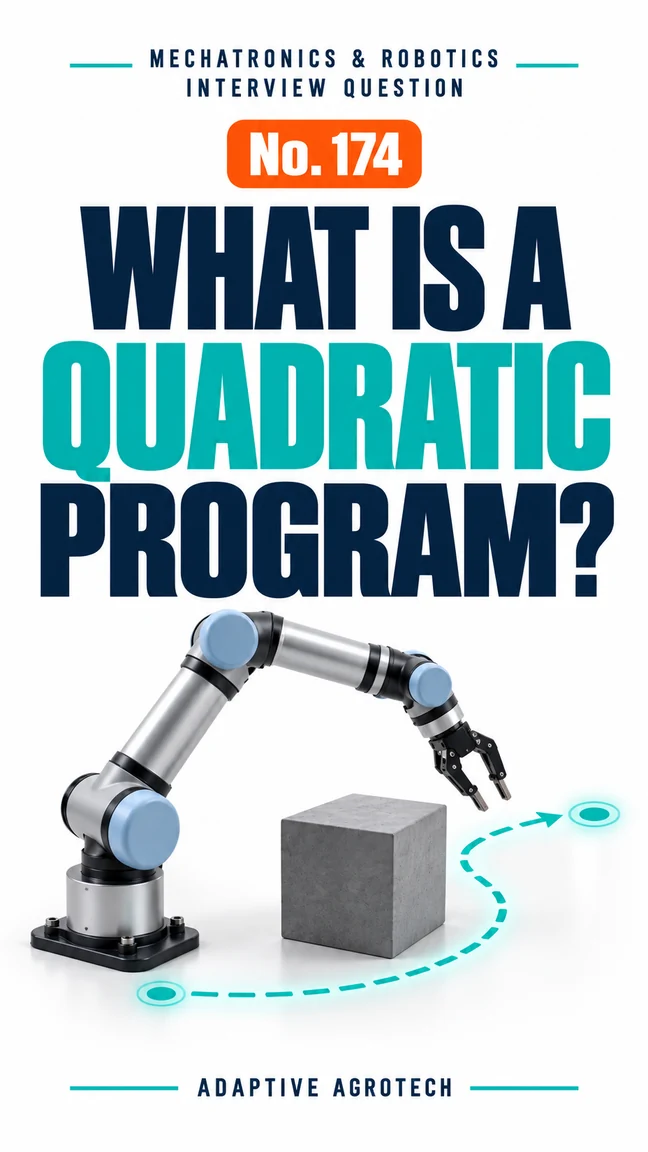
Watch & exploreA quadratic program minimizes a quadratic objective subject to linear constraints. In a convex quadratic program, the cost matrix is positive semidefinite. This structure lets a controller balance tracking against limits in a systematic calculation.
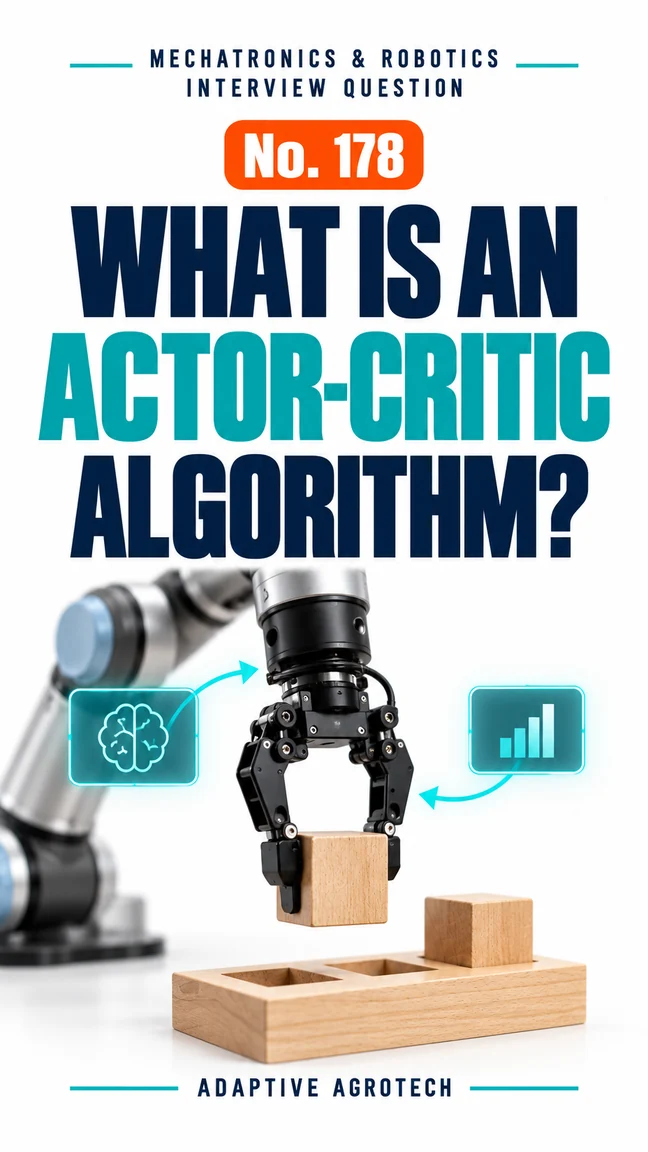
Watch & exploreAn actor critic algorithm learns a policy and a value estimate together. The actor selects actions. The critic evaluates expected return and provides a learning signal that helps improve the actor.
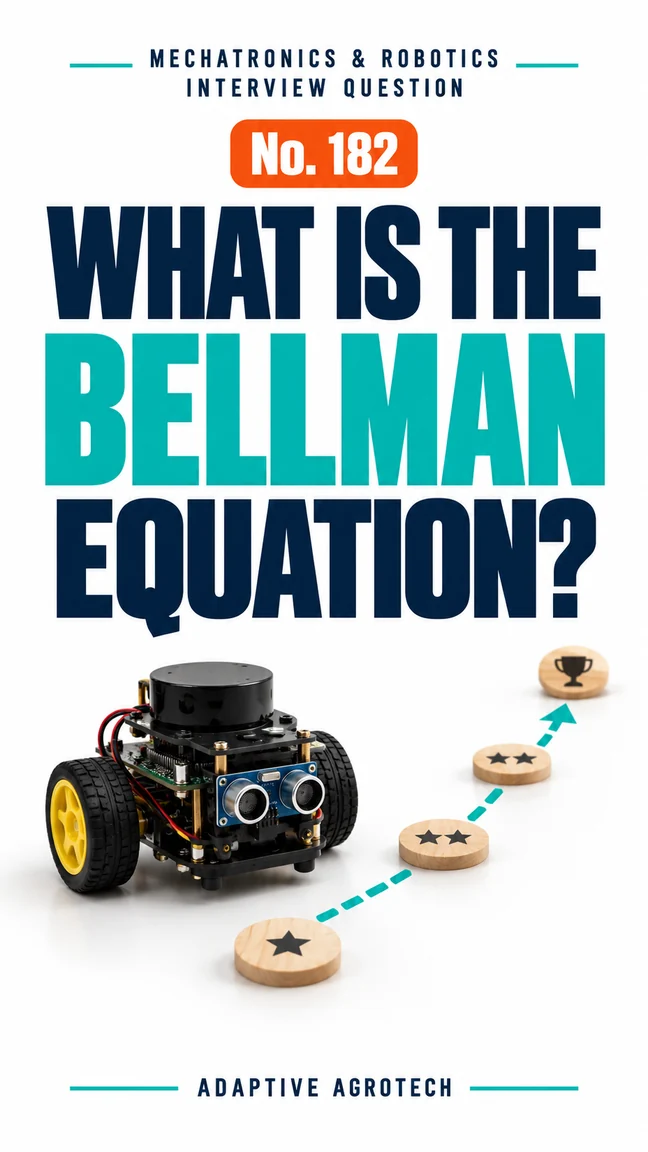
Watch & exploreThe Bellman expectation equation relates a state’s value to expected immediate reward plus discounted next state value. The expectation averages actions from the policy and transitions from the environment.
Watch & exploreExploitation chooses an action expected to perform well using current information. Exploration tries actions that could reveal better choices. A learning robot needs to balance immediate performance against useful information for future decisions.
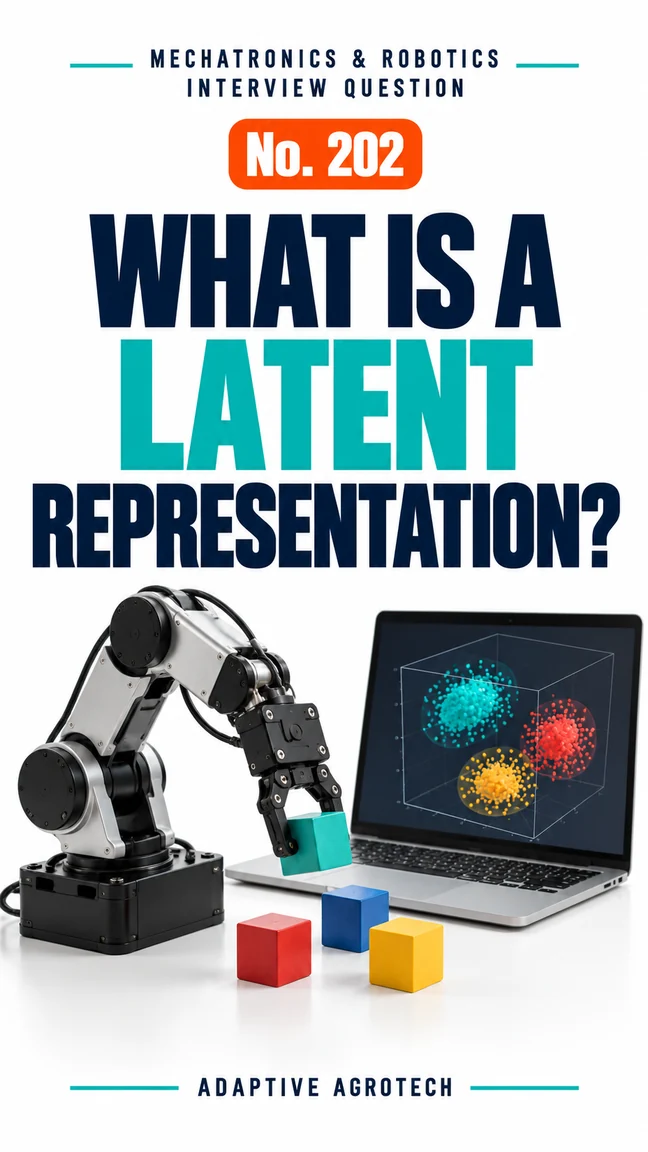
Watch & exploreA latent representation is an internal set of learned features. An encoder can turn a large camera image into a compact vector. A robot policy then uses that vector to choose an action or predict a useful state.
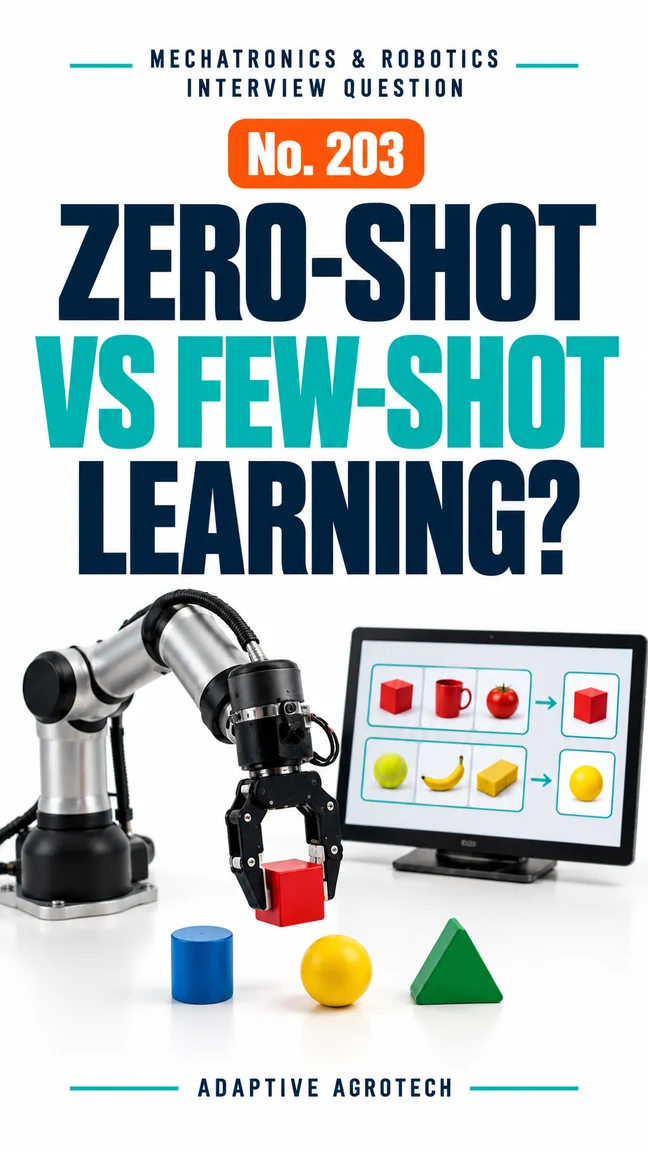
Watch & exploreZero shot learning uses a trained model on a new task without task specific training examples. Few shot learning provides a small number of examples for that task. Both approaches still rely on substantial prior training or structure.
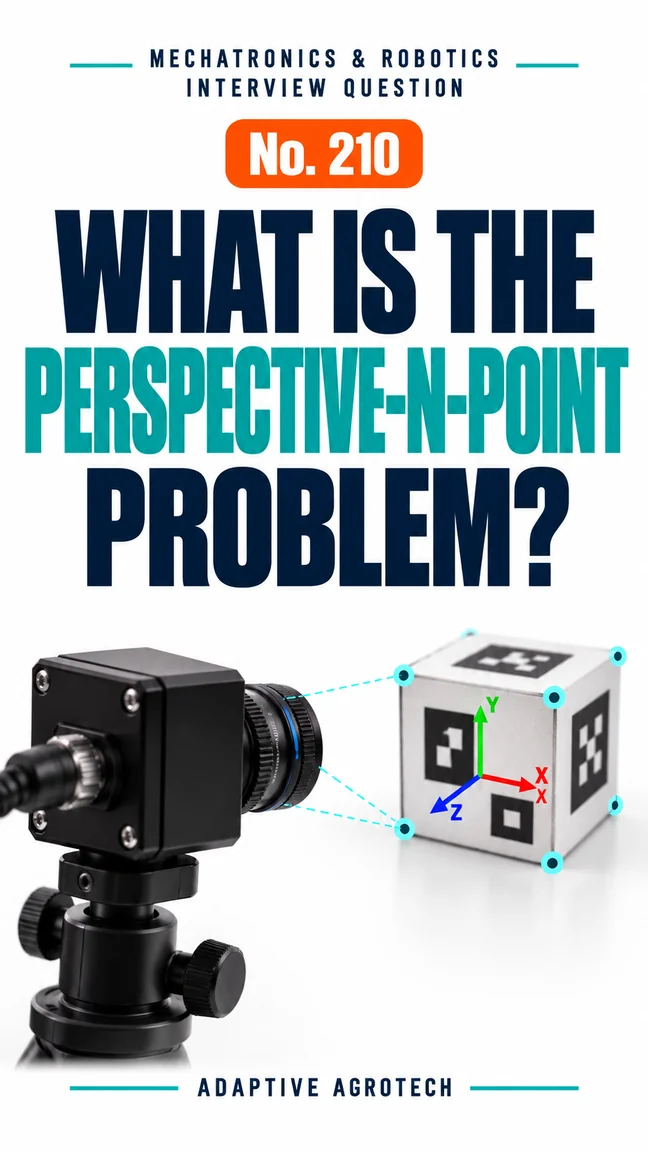
Watch & explorePerspective n point estimates a camera relative pose from known three dimensional points and their corresponding two dimensional image locations. The camera intrinsics are also inputs. The unknowns are the rotation and translation relating the coordinate frames.
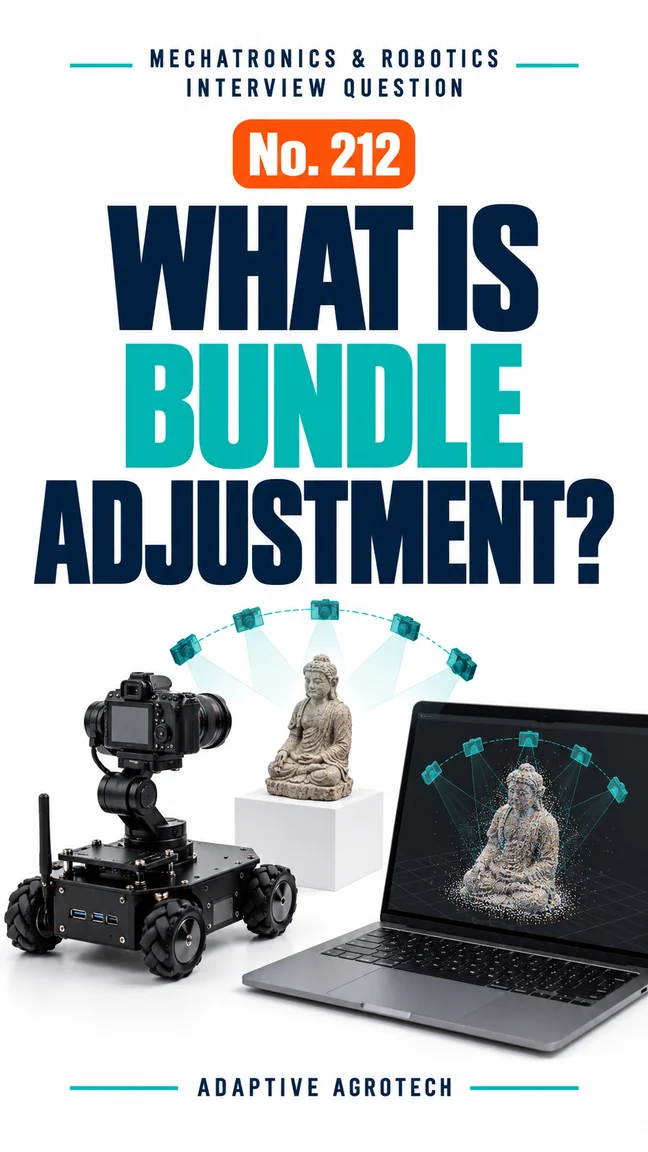
Watch & exploreBundle adjustment jointly refines camera poses and three dimensional scene points using their image observations. It minimizes a reprojection objective across views. This couples the estimated camera motion with the geometry of the reconstructed scene.
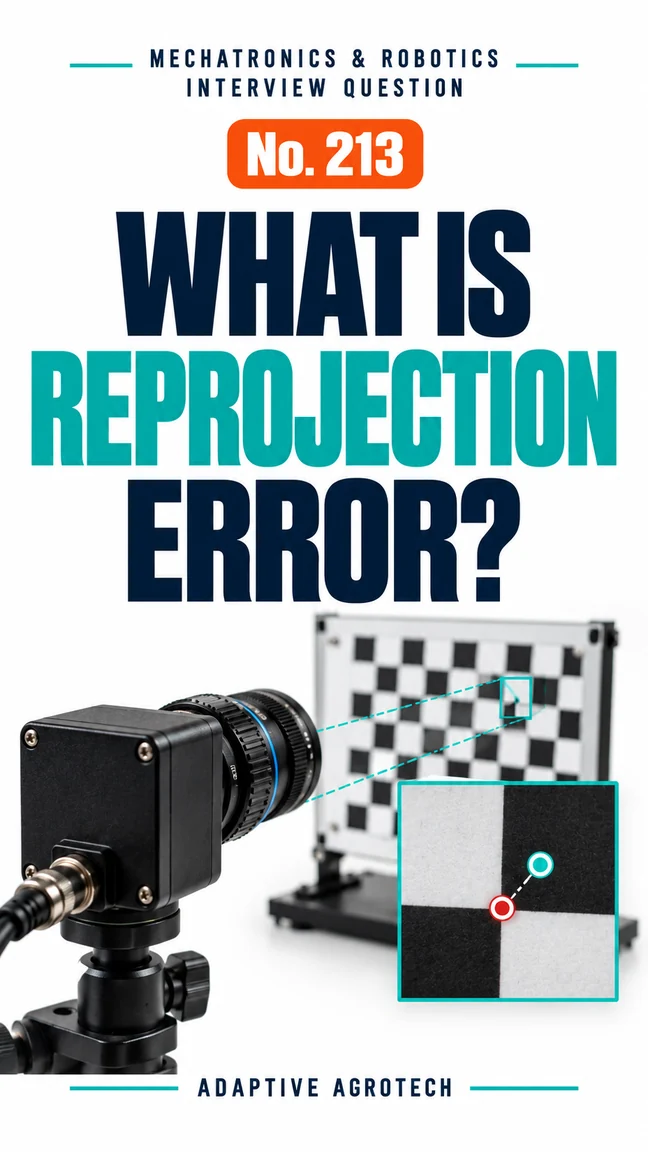
Watch & exploreReprojection error measures the difference between an observed image point and the pixel predicted by a camera model and estimated geometry. It is an image space residual, usually reported in pixels, rather than a direct distance error in meters.
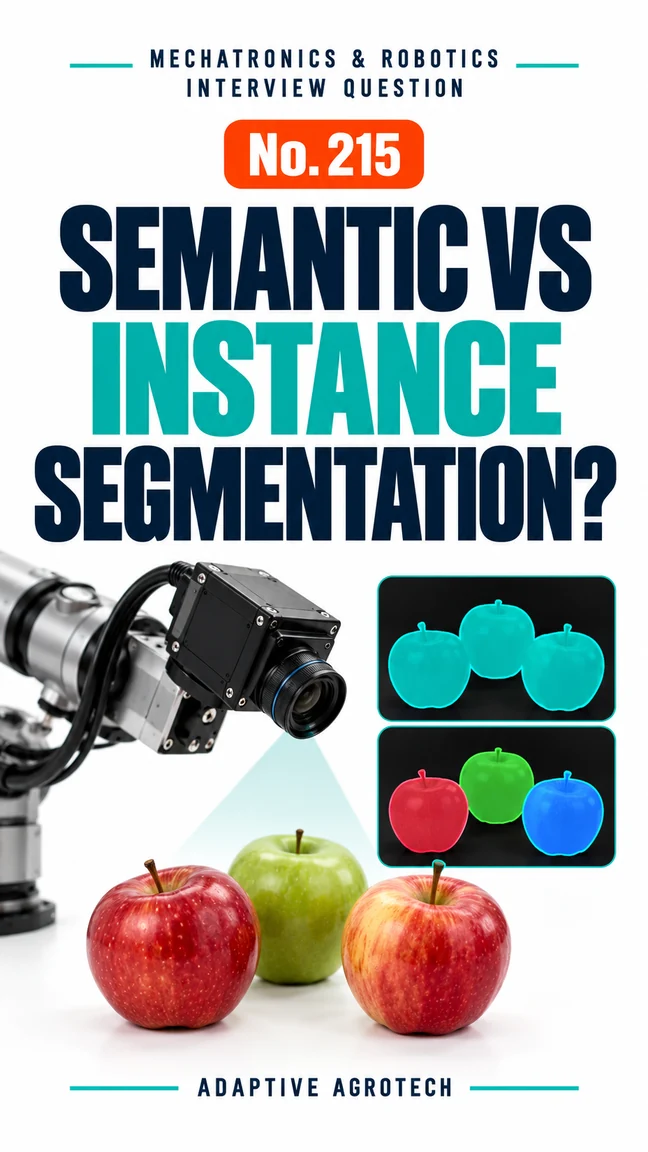
Watch & exploreSemantic segmentation assigns a class label to each image pixel. Instance segmentation also distinguishes separate objects of the same class. Two cups can share the semantic label cup while receiving different instance identities in the same image.
Watch & explore