Skip to content
Adaptive AgroTech NetworkUniversity of Southern Denmark · SDU Drone Center
Robotics · Mechatronics · Intelligent systems

Short videos.
Lasting understanding.

Explore one engineering idea at a time. Watch a short lesson, read the key concepts and test your understanding before your next interview, project or class.

222 topics found

Video · Key ideas · Check your understanding

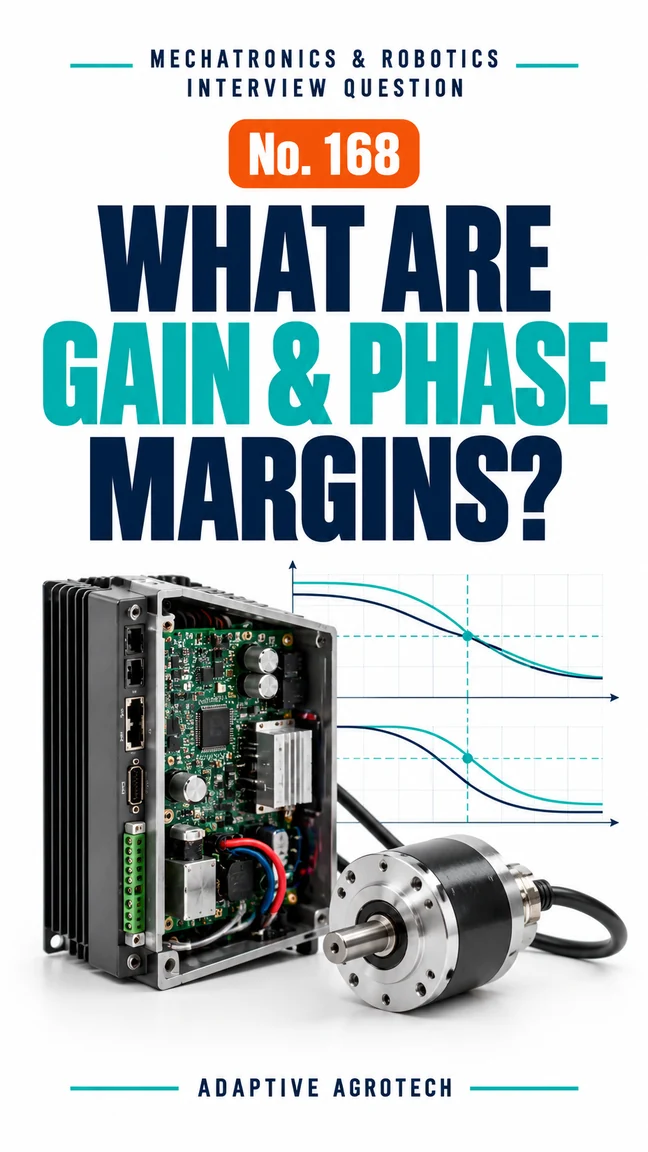
Control systemsNo. 168

What Are Gain Margin and Phase Margin?

Gain and phase margins describe how a loop can change before reaching a stability boundary. For standard negative feedback, phase margin is measured at unity loop gain. Gain margin uses the minus one hundred eighty degree phase crossover.

Watch & explore
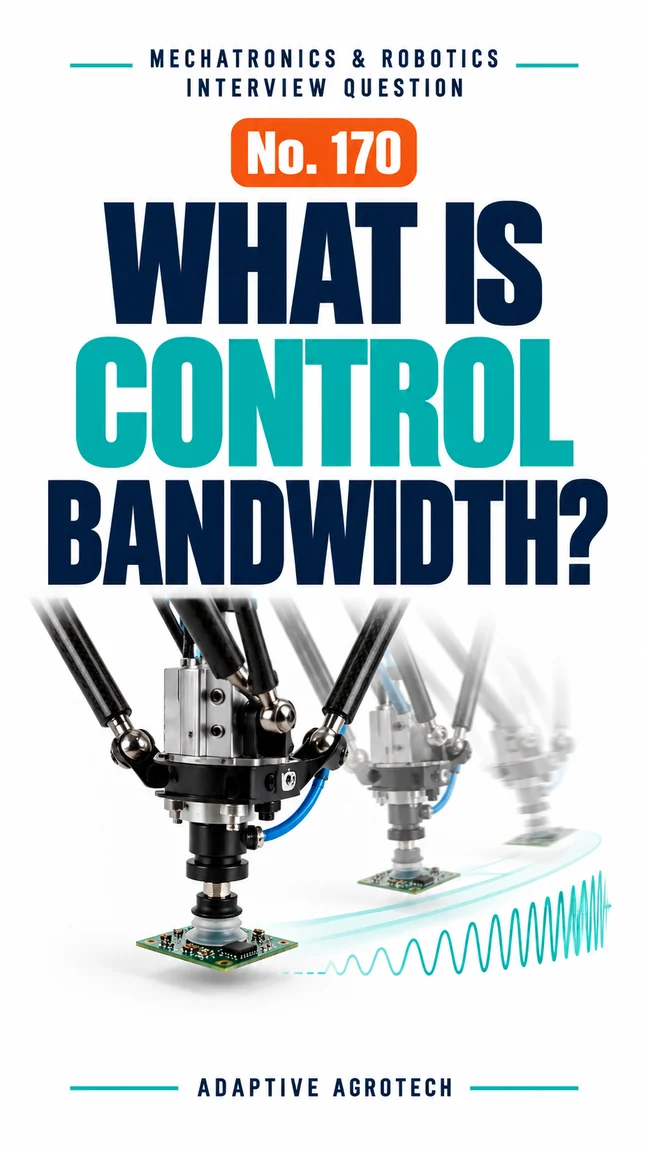
Control systemsNo. 170

What Is Control Bandwidth?

Control bandwidth describes the frequency range over which a closed loop responds effectively. For a common low pass tracking response, bandwidth is the first frequency where magnitude falls three decibels below its low frequency value.

Watch & explore
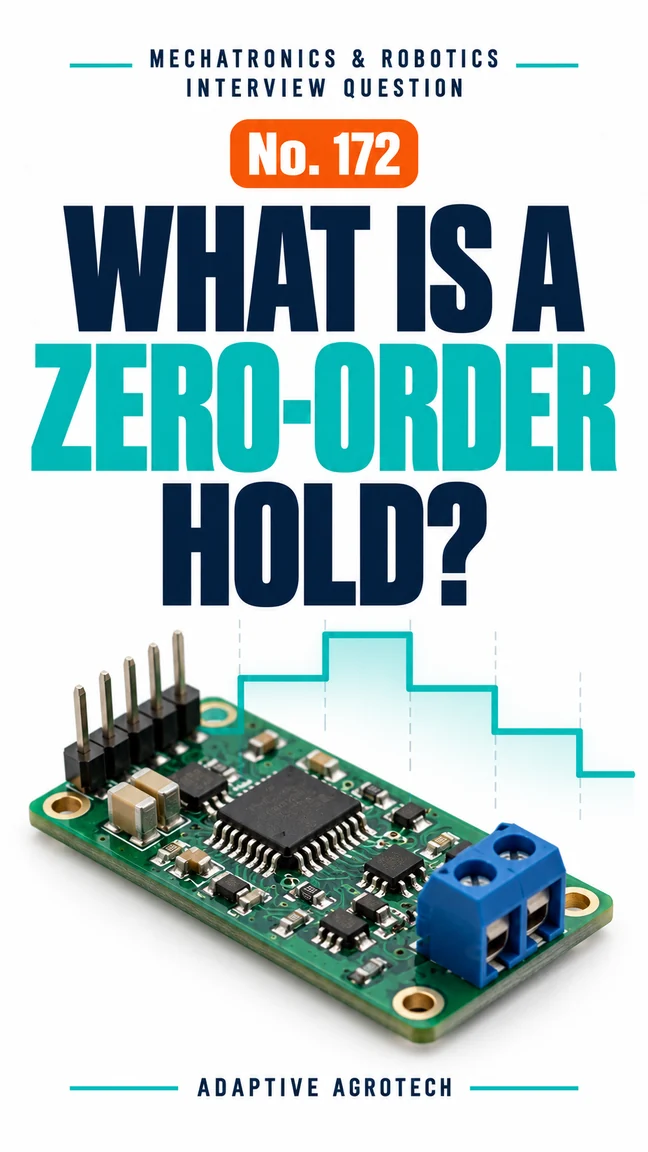
Control systemsNo. 172

What Is a Zero-Order Hold?

A zero order hold keeps each sampled command constant until the next update. Its output is a staircase. It does not draw a straight line between samples or predict the next command.

Watch & explore
Embedded electronicsNo. 175

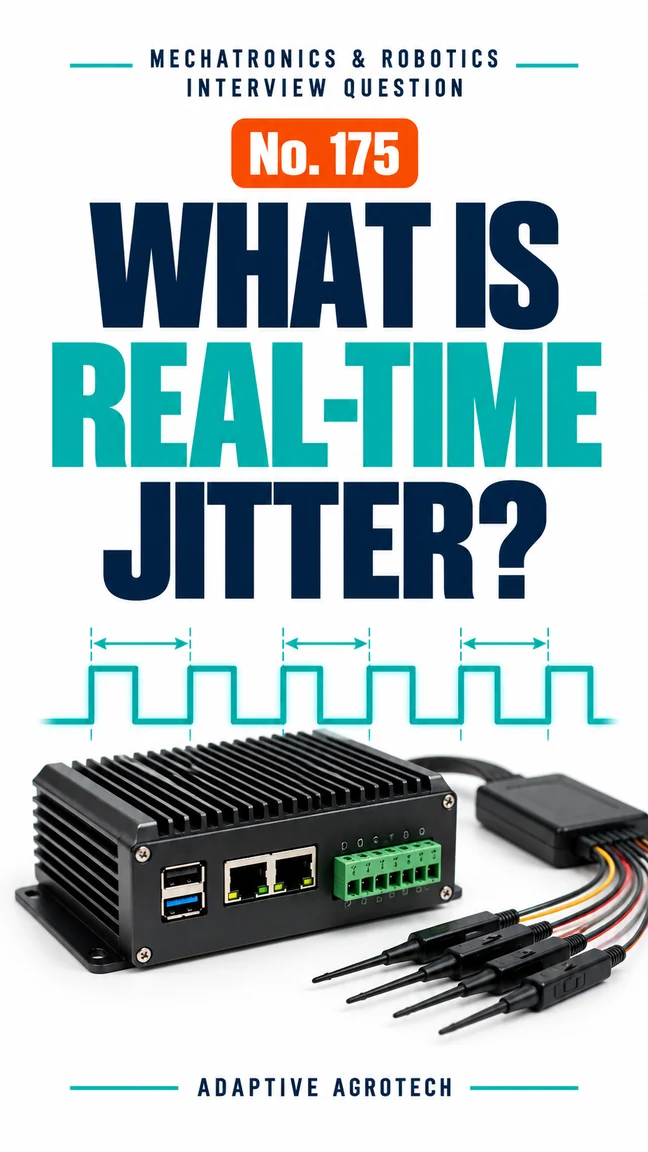
What Is Real-Time Jitter?

Real time jitter is variation in when a periodic task starts, finishes, or releases its output. A loop planned every millisecond can have irregular intervals even when its average frequency looks correct. Specify the event you measure.

Watch & explore
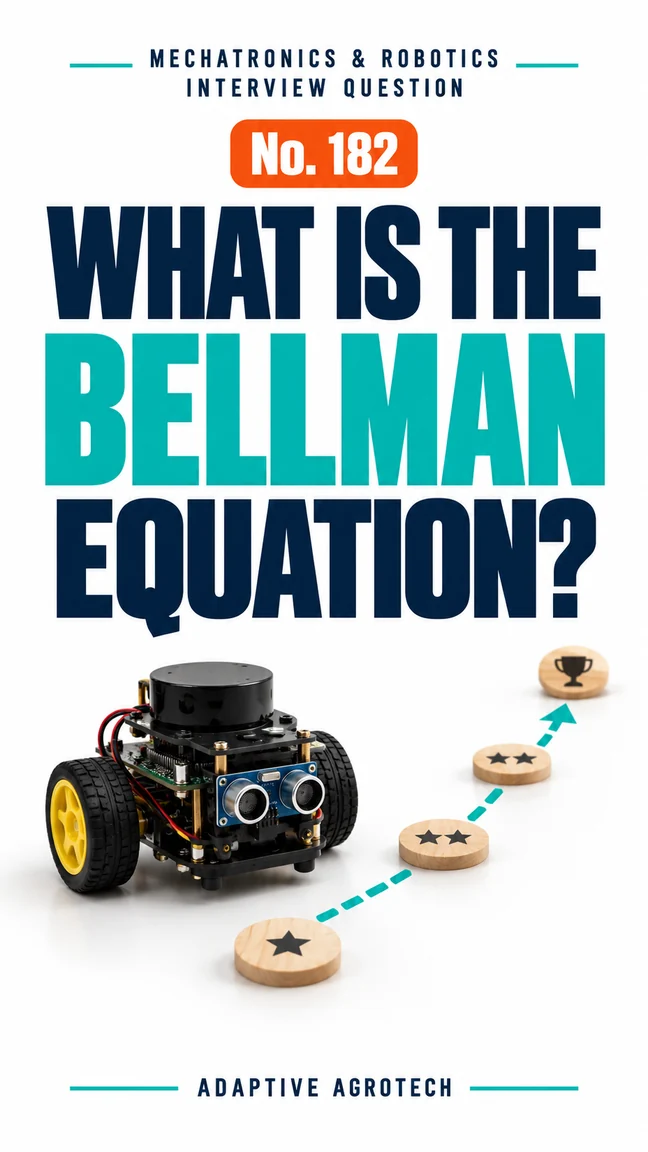
AI & machine learningNo. 182

What Is the Bellman Equation?

The Bellman expectation equation relates a state’s value to expected immediate reward plus discounted next state value. The expectation averages actions from the policy and transitions from the environment.

Watch & explore
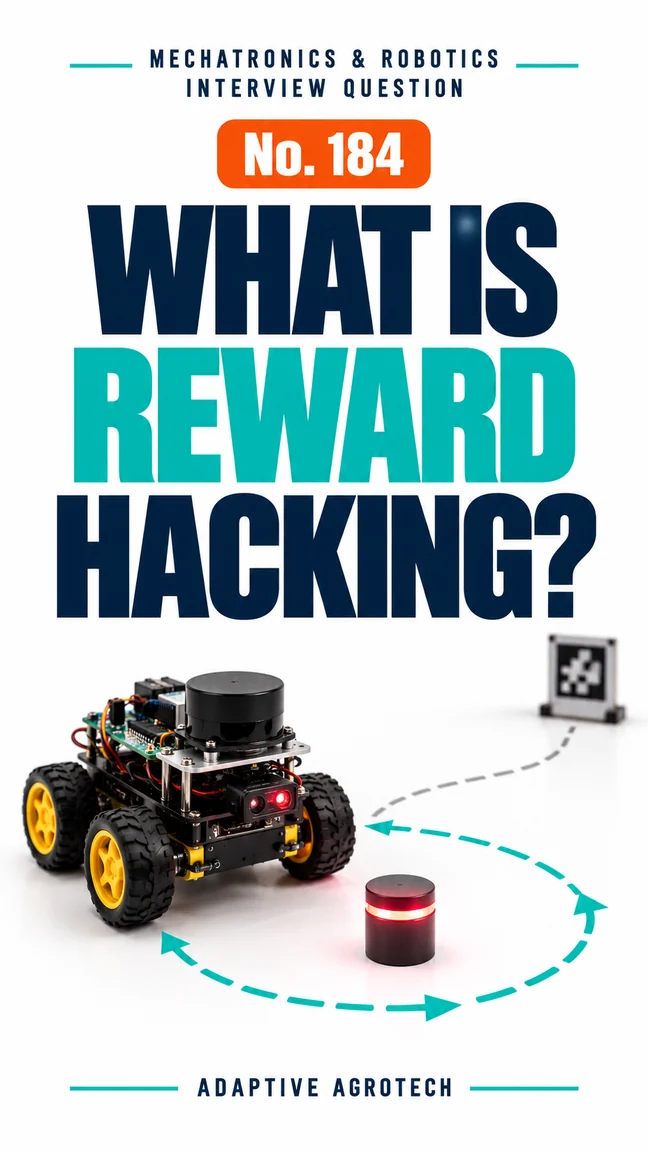
AI & machine learningNo. 184

What Is Reward Hacking?

Reward hacking happens when a learning agent earns high measured reward without achieving the intended outcome. The robot optimizes the reward you implemented, which may differ from the task you had in mind.

Watch & explore
AI & machine learningNo. 187

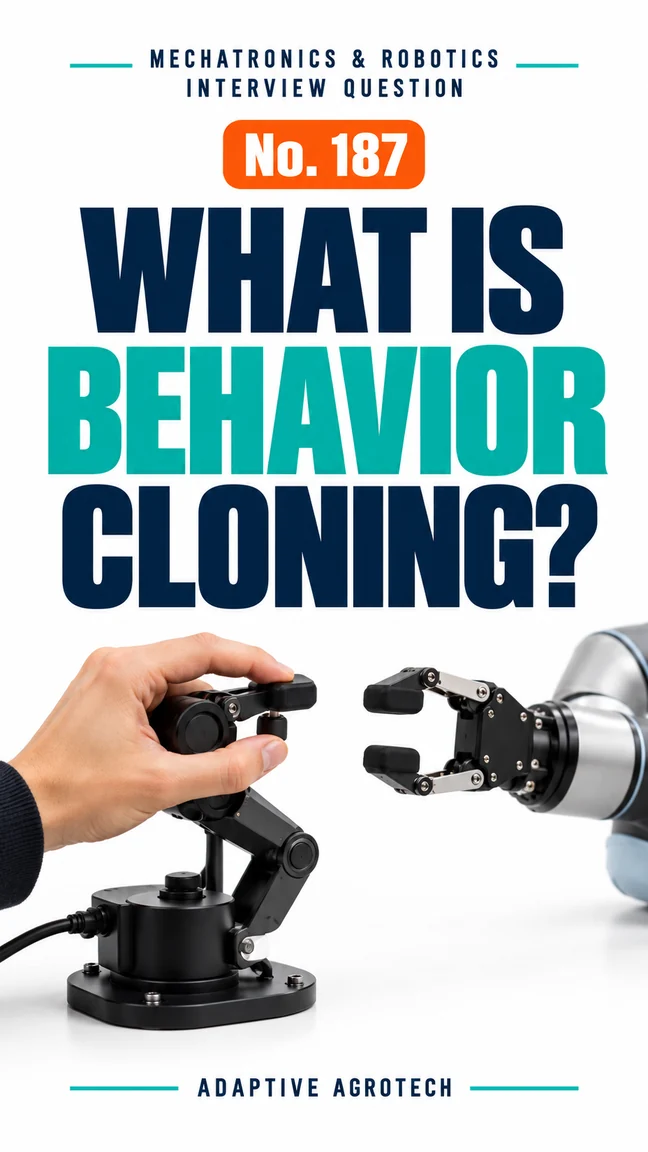
What Is Behavior Cloning?

Behavior cloning trains a policy to reproduce expert actions from paired observations and commands. It uses supervised learning, such as minimizing prediction error for continuous actions recorded while a person operates the robot.

Watch & explore
AI & machine learningNo. 189

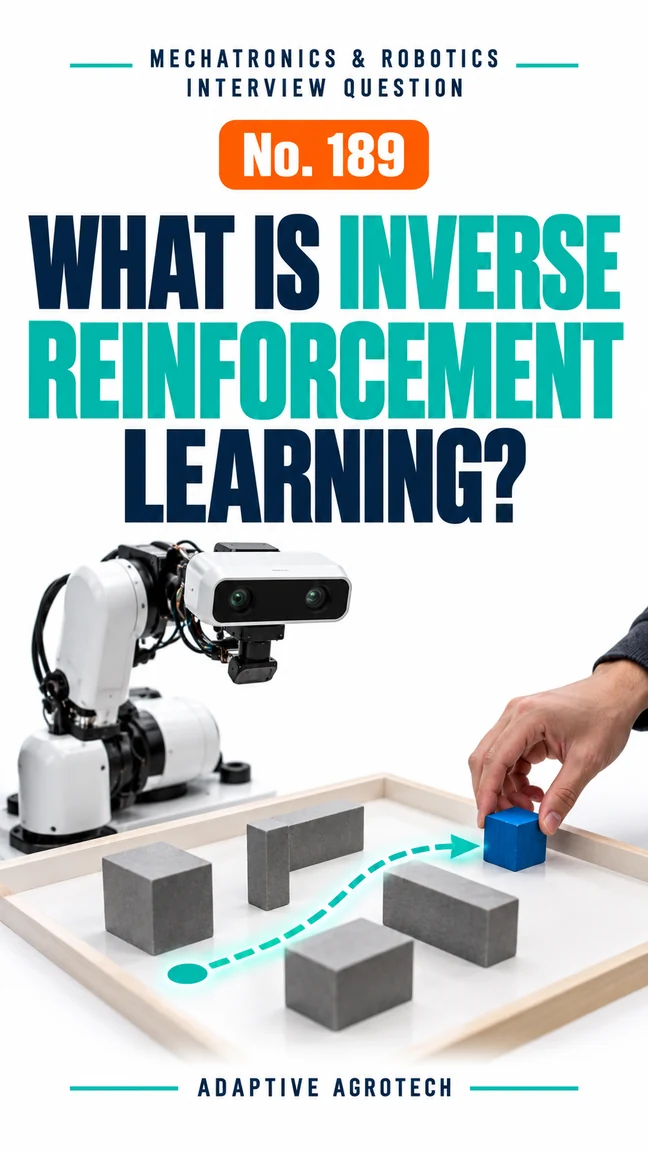
What Is Inverse Reinforcement Learning?

Inverse reinforcement learning infers a reward model that can explain demonstrated behavior. Ordinary reinforcement learning starts with a reward and seeks a policy. The inverse problem starts with behavior and reasons about its objective.

Watch & explore
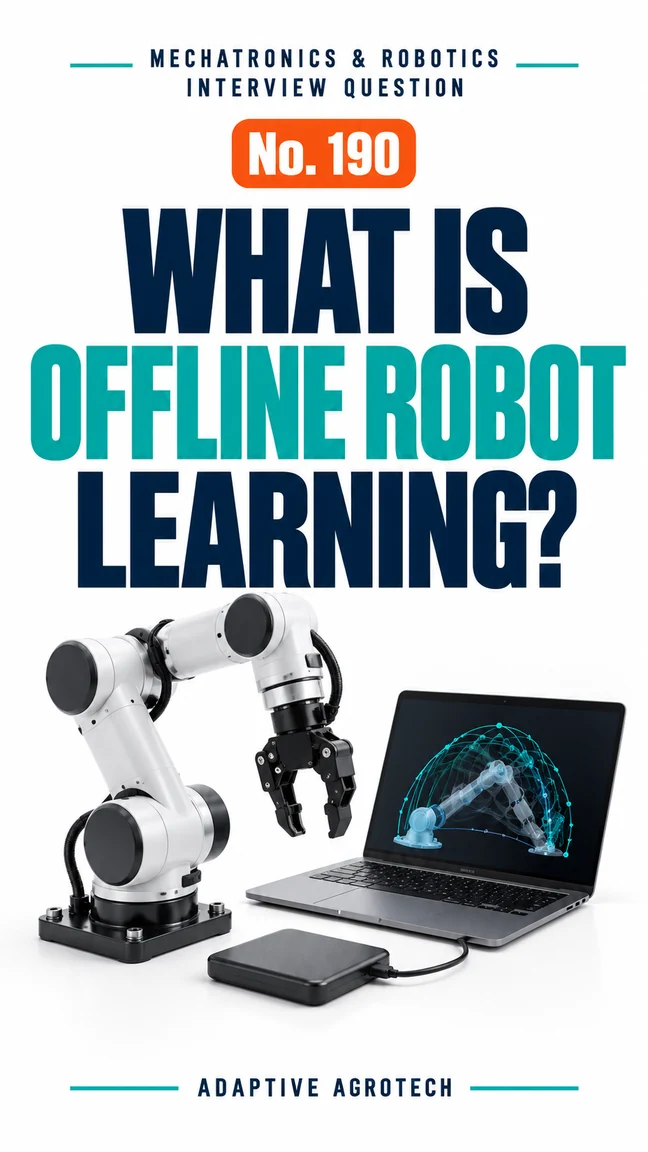
AI & machine learningNo. 190

What Is Offline Reinforcement Learning?

Offline reinforcement learning trains from a fixed dataset of previously collected transitions. During this training stage, the algorithm does not collect new experience by interacting with the environment. It still uses a reward based learning objective.

Watch & explore
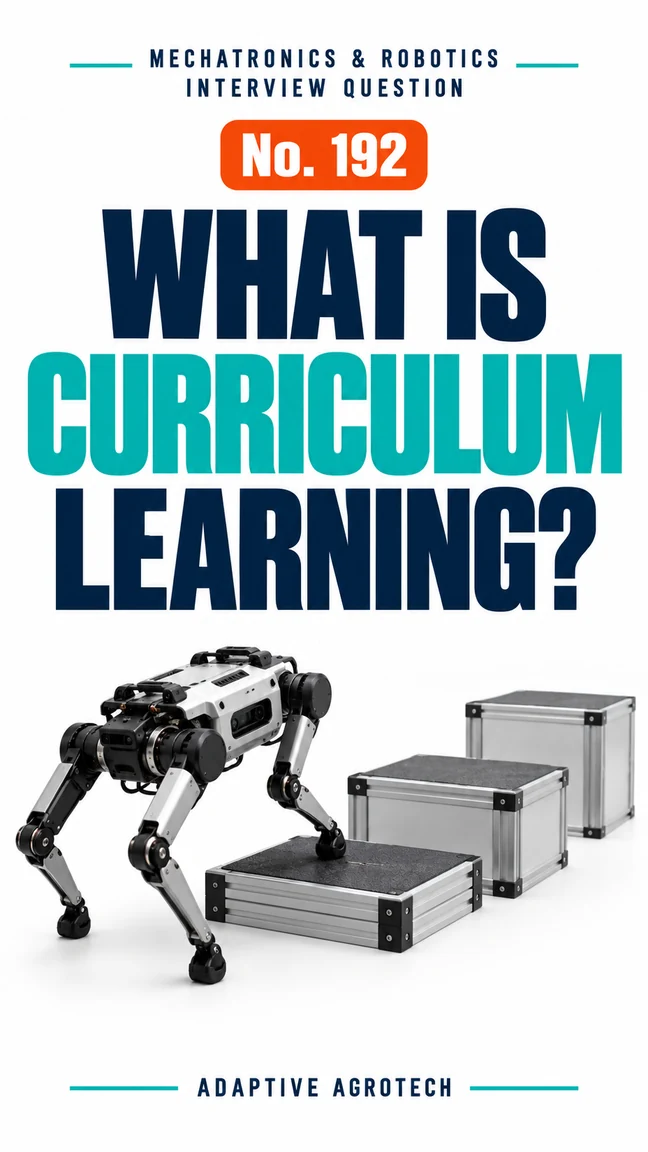
AI & machine learningNo. 192

What Is Curriculum Learning in Robotics?

Curriculum learning changes the training tasks or their difficulty as learning progresses. A robot can first solve accessible cases, then encounter harder conditions once its current policy produces useful behavior more consistently.

Watch & explore
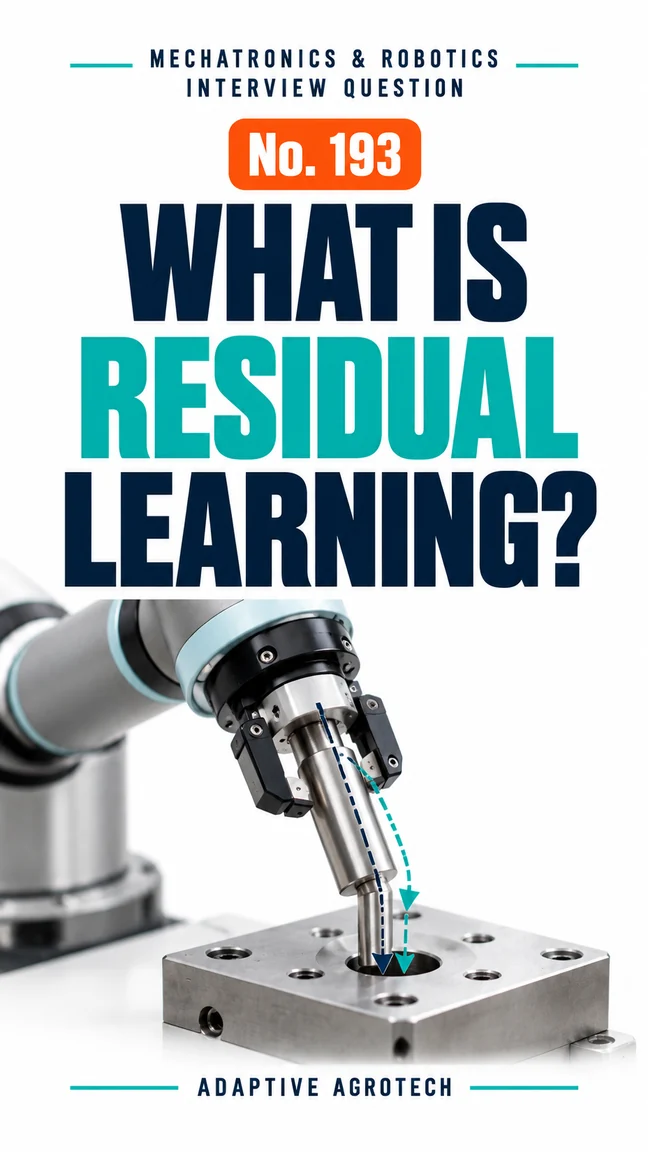
AI & machine learningNo. 193

What Is Residual Learning for Robot Control?

Residual learning combines a conventional controller with a learned correction. The controller handles a known part of the task. A learned residual adjusts its command to address remaining errors or interactions that the model captures poorly.

Watch & explore
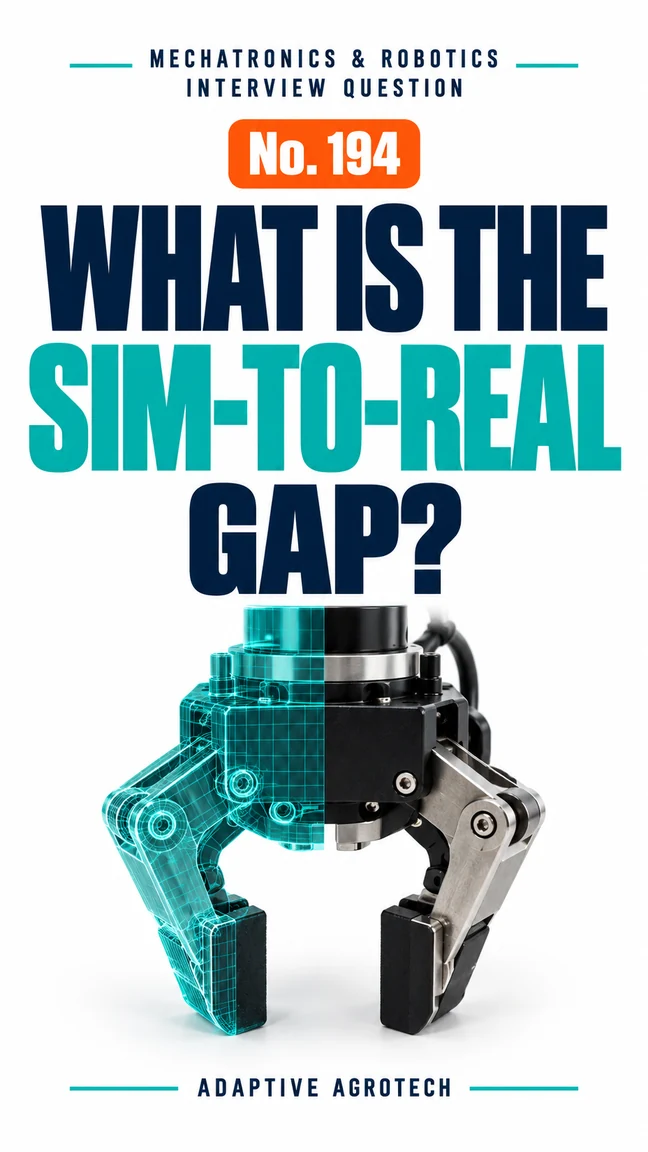
AI & machine learningNo. 194

What Is the Sim-to-Real Gap?

The sim to real gap is the mismatch between simulated training conditions and the physical robot. Differences in contact, friction, sensing, actuator response, and timing can change the consequences of the very same command.

Watch & explore