Skip to content
Adaptive AgroTech NetworkUniversity of Southern Denmark · SDU Drone Center
Robotics · Mechatronics · Intelligent systems

Short videos.
Lasting understanding.

Explore one engineering idea at a time. Watch a short lesson, read the key concepts and test your understanding before your next interview, project or class.

307 topics found

Video · Key ideas · Check your understanding

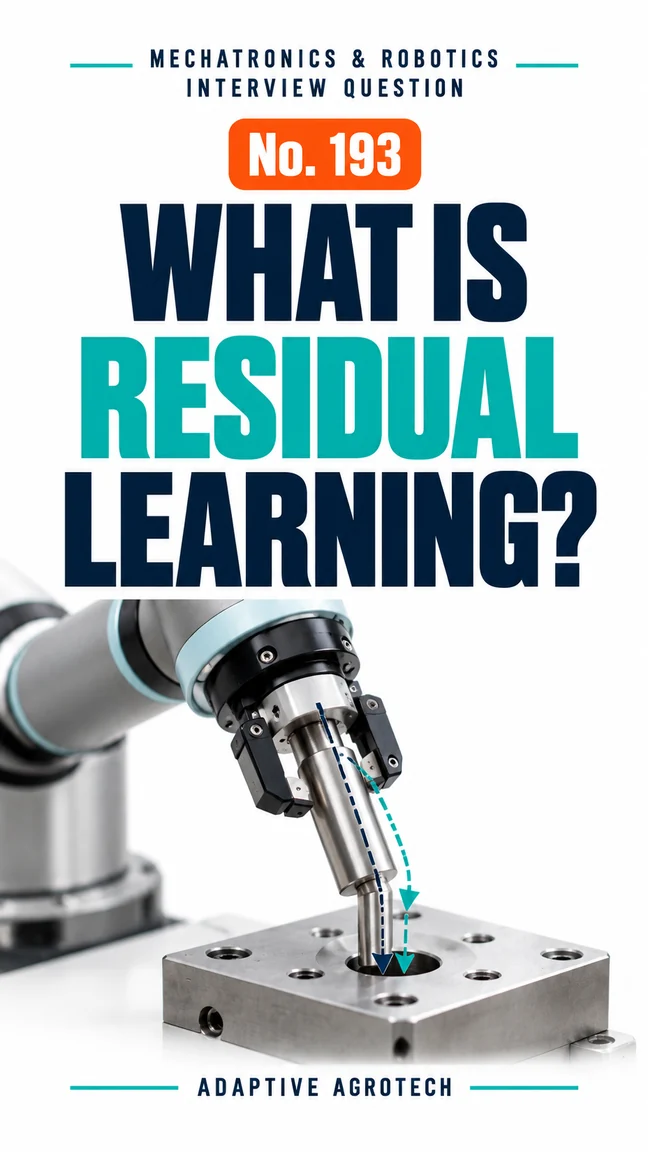
AI & machine learningNo. 193

What Is Residual Learning for Robot Control?

Residual learning combines a conventional controller with a learned correction. The controller handles a known part of the task. A learned residual adjusts its command to address remaining errors or interactions that the model captures poorly.

Watch & explore
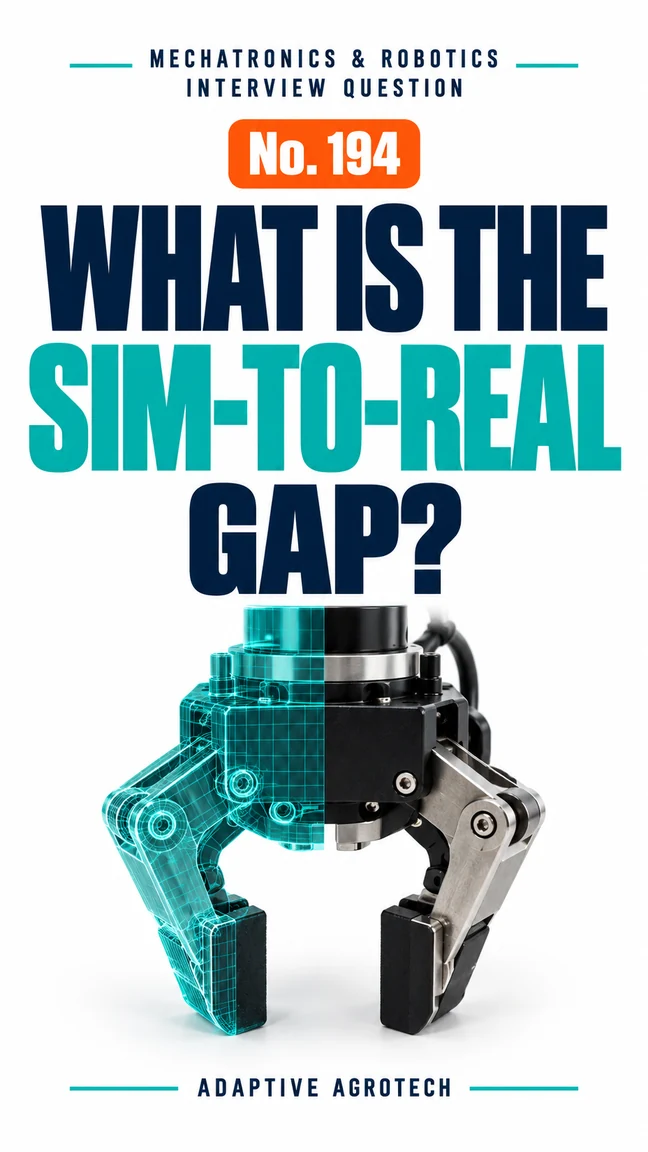
AI & machine learningNo. 194

What Is the Sim-to-Real Gap?

The sim to real gap is the mismatch between simulated training conditions and the physical robot. Differences in contact, friction, sensing, actuator response, and timing can change the consequences of the very same command.

Watch & explore
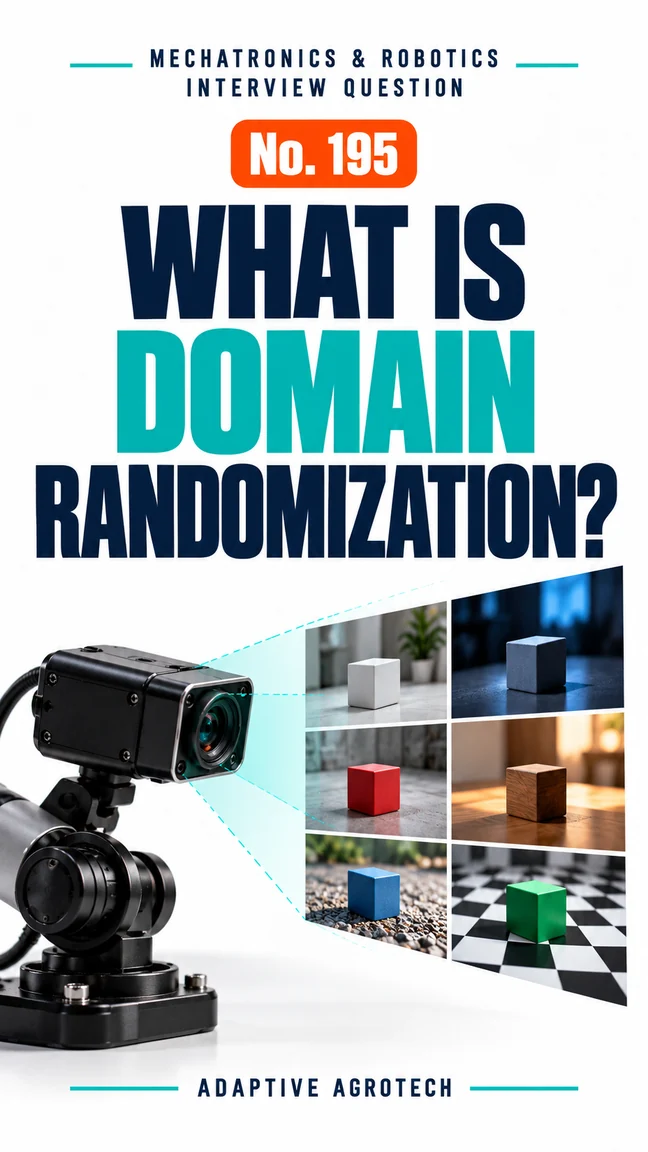
AI & machine learningNo. 195

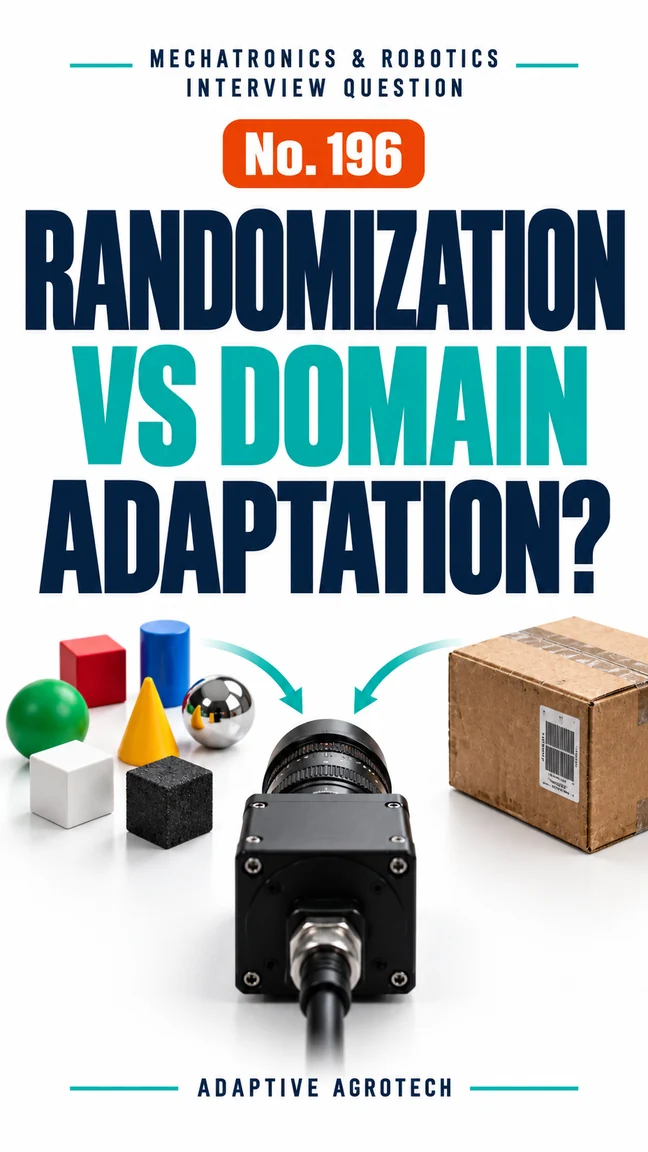
What Is Domain Randomization?

Domain randomization varies selected simulation conditions during training. Instead of learning from one exact world, a robot policy or perception model encounters a distribution of appearances or dynamics intended to encourage more robust behavior.

Watch & explore
AI & machine learningNo. 197

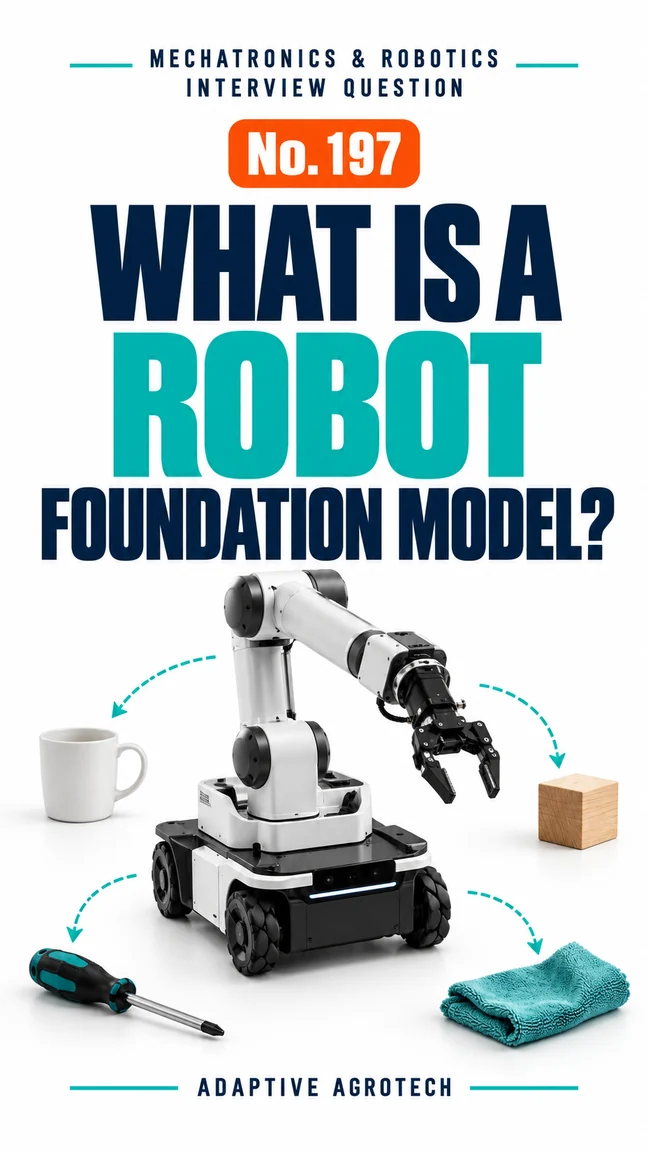
What Is a Robot Foundation Model?

A robot foundation model is a model trained on broad data so it can support multiple robot tasks. Instead of building every skill from scratch, engineers adapt a shared starting point to a particular robot and job.

Watch & explore
AI & machine learningNo. 198

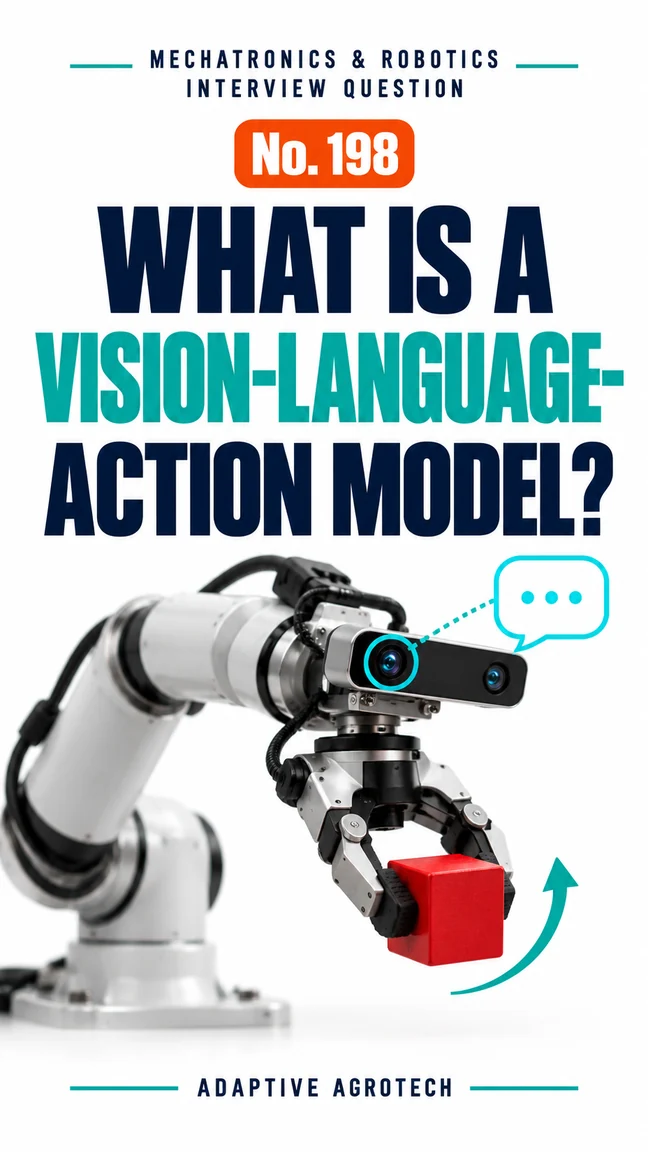
What Is a Vision-Language-Action Model?

A vision language action model connects visual observations and language instructions to robot actions. It may also use joint positions or other robot state. Its output describes movements, rather than only a written answer.

Watch & explore
AI & machine learningNo. 199

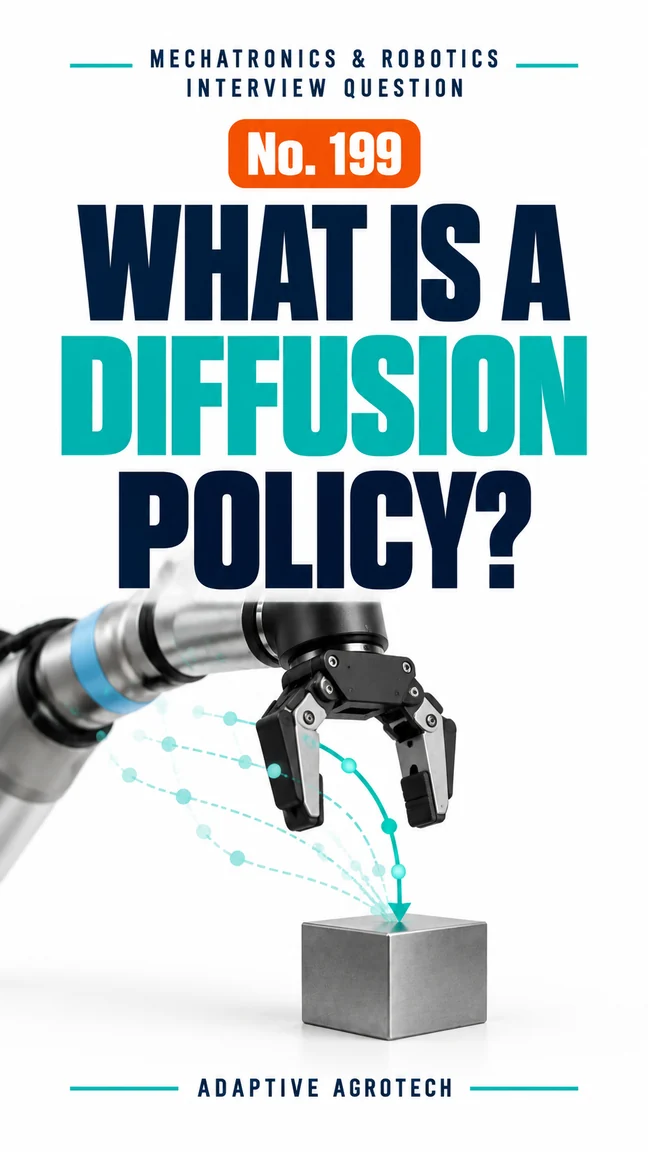
What Is a Diffusion Policy?

A diffusion policy learns to generate robot action sequences by gradually removing noise. During inference, observations condition this process, so an initially noisy sequence becomes a candidate movement consistent with the learned demonstrations.

Watch & explore
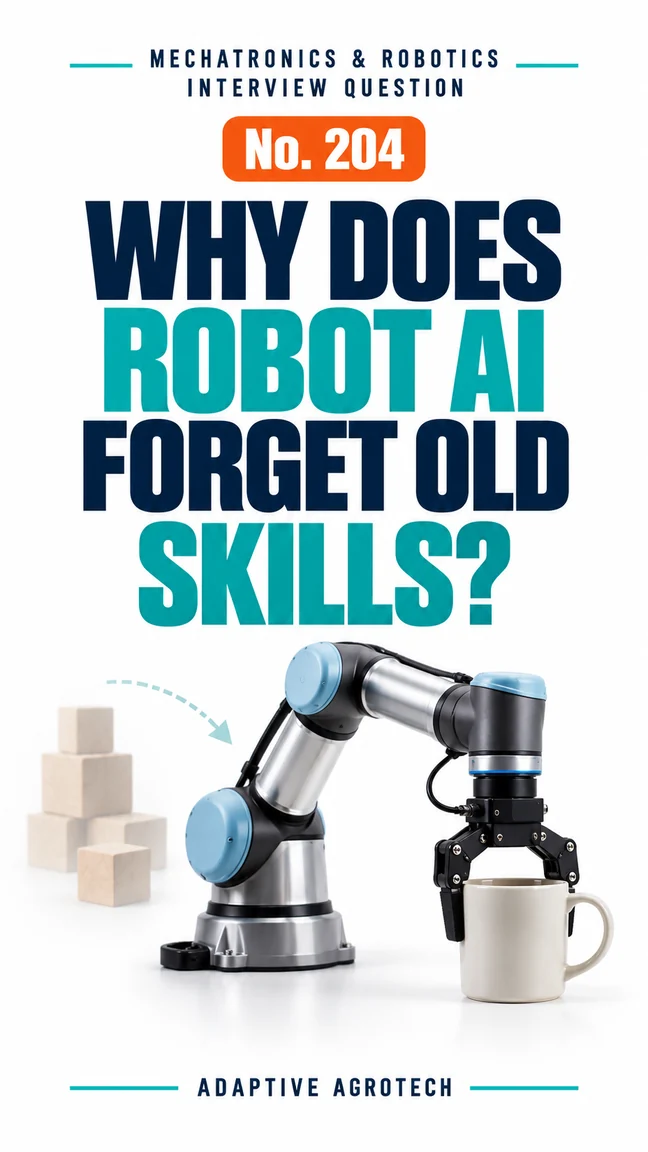
AI & machine learningNo. 204

What Is Catastrophic Forgetting?

Catastrophic forgetting happens when learning a new task sharply reduces performance on previously learned tasks. Shared network parameters change to fit the new data, and those changes can interfere with behaviors the robot already mastered.

Watch & explore
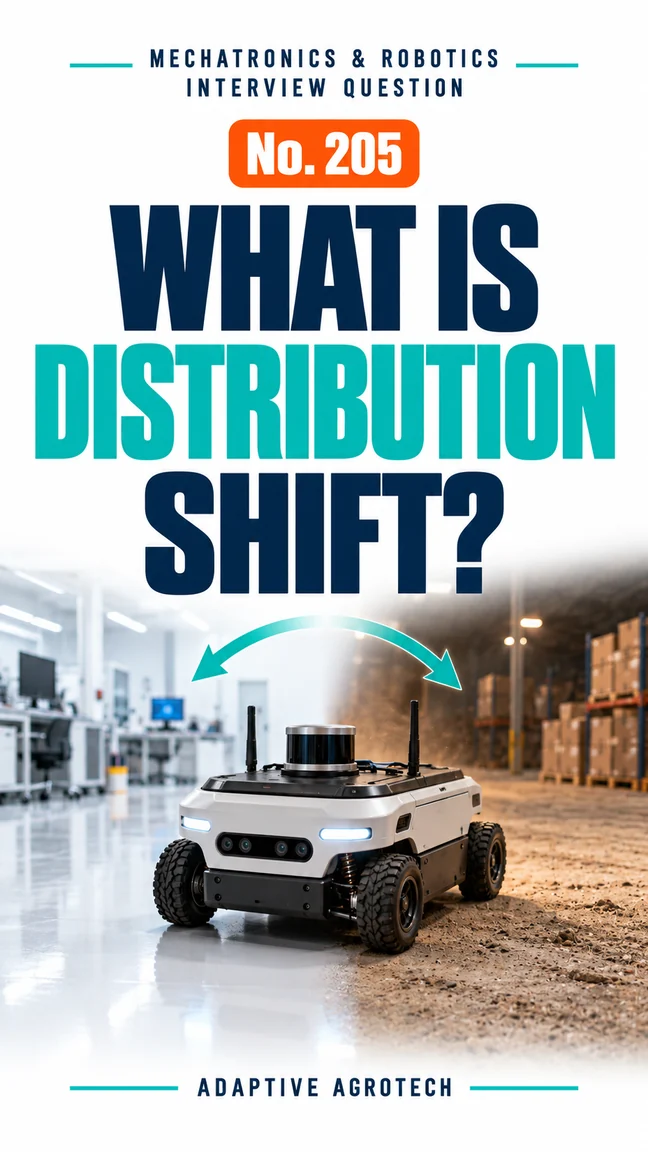
AI & machine learningNo. 205

What Is Distribution Shift in Robot AI?

Distribution shift means the data encountered during deployment differ statistically from the training data. A robot vision model trained in one workspace may face new lighting, backgrounds, object appearances, or camera positions after installation.

Watch & explore
Computer visionNo. 208

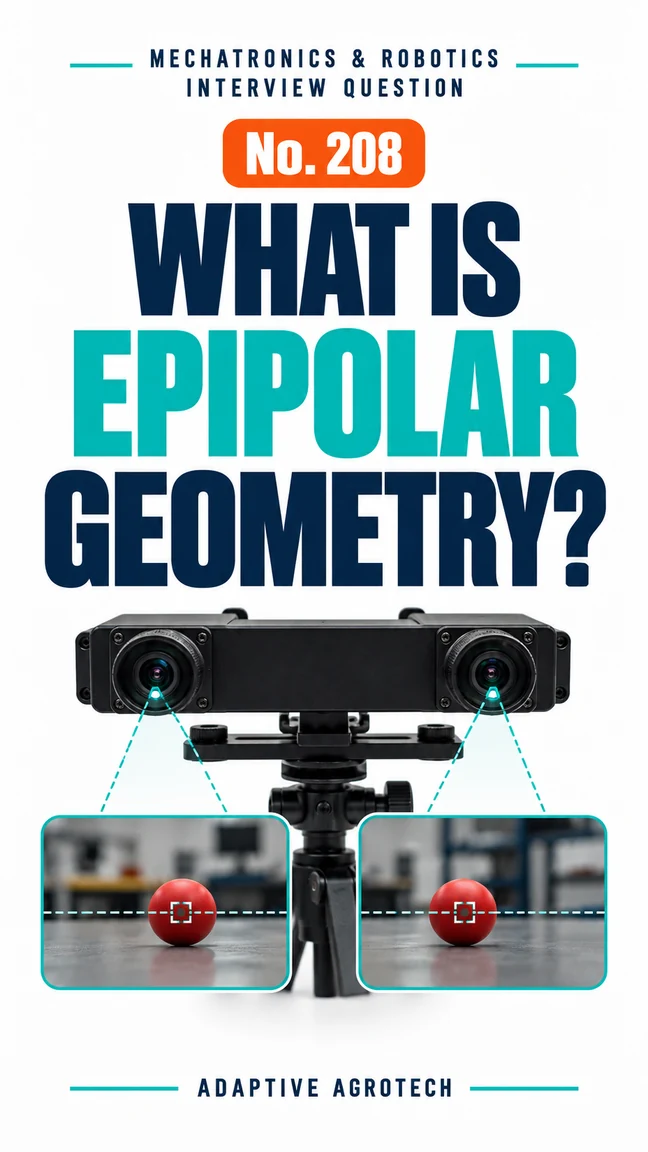
What Is Epipolar Geometry?

Epipolar geometry relates two views of the same three dimensional scene. Given a point in one image, its matching point in the other image lies on an epipolar line, when the camera geometry and correspondence assumptions hold.

Watch & explore
Computer visionNo. 209

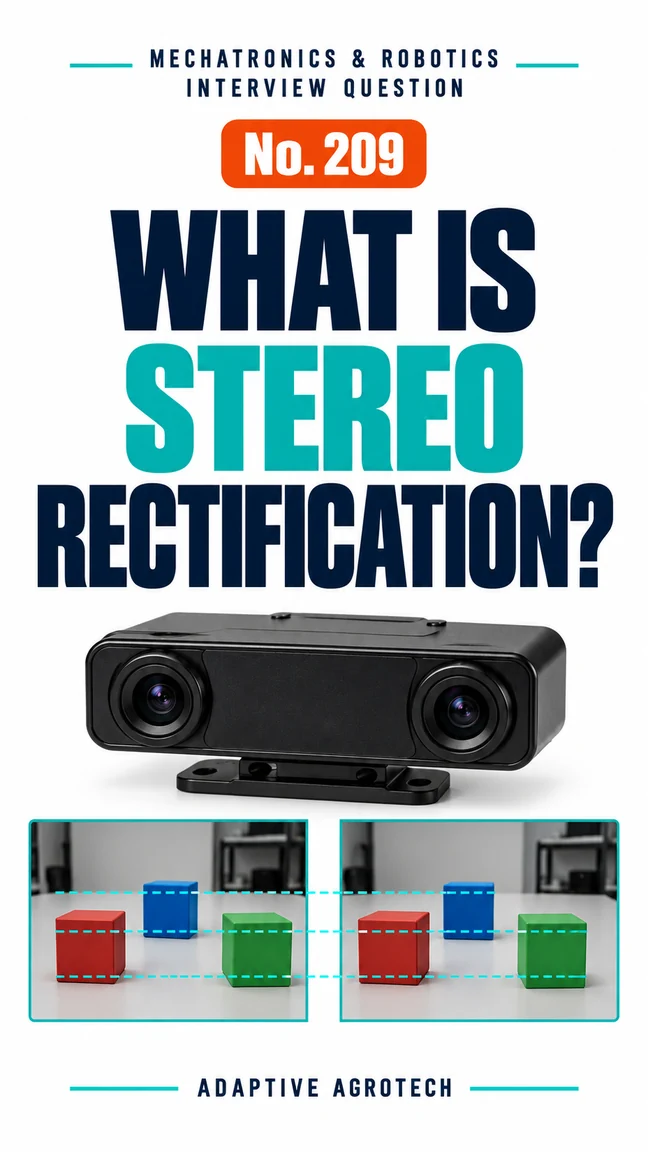
What Is Stereo Rectification?

Stereo rectification warps a stereo image pair so corresponding epipolar lines become aligned. For a common horizontal stereo arrangement, matching points appear on the same image row. The rectified camera models describe this new geometry.

Watch & explore
Computer visionNo. 210

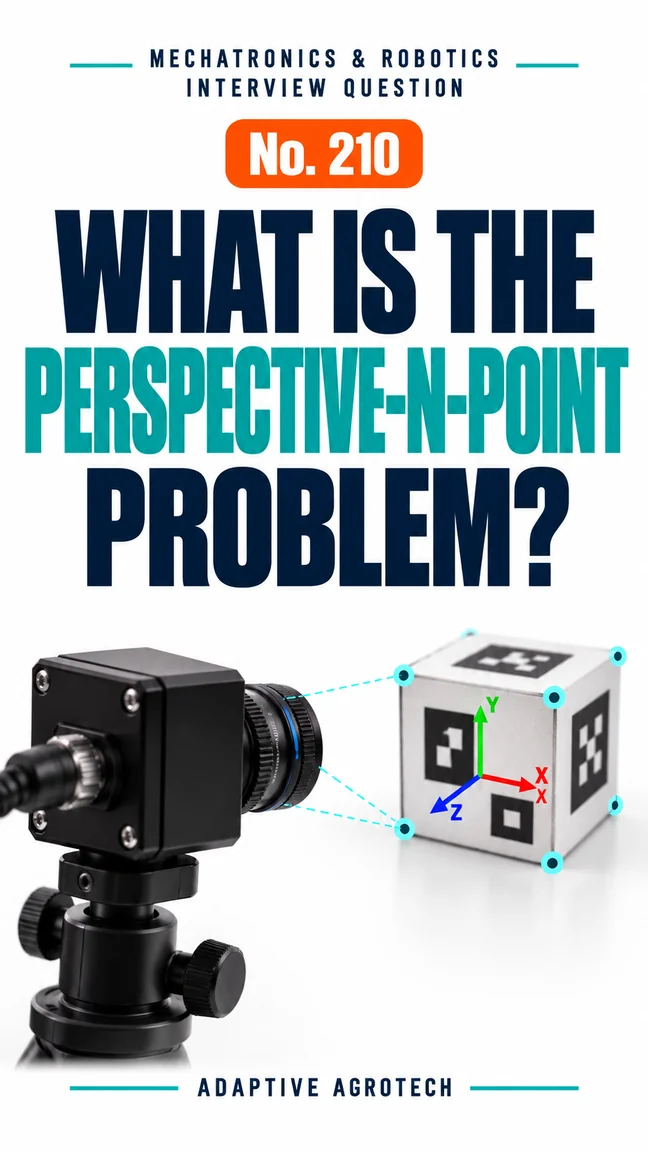
What Is the Perspective-n-Point Problem?

Perspective n point estimates a camera relative pose from known three dimensional points and their corresponding two dimensional image locations. The camera intrinsics are also inputs. The unknowns are the rotation and translation relating the coordinate frames.

Watch & explore
Computer visionNo. 211

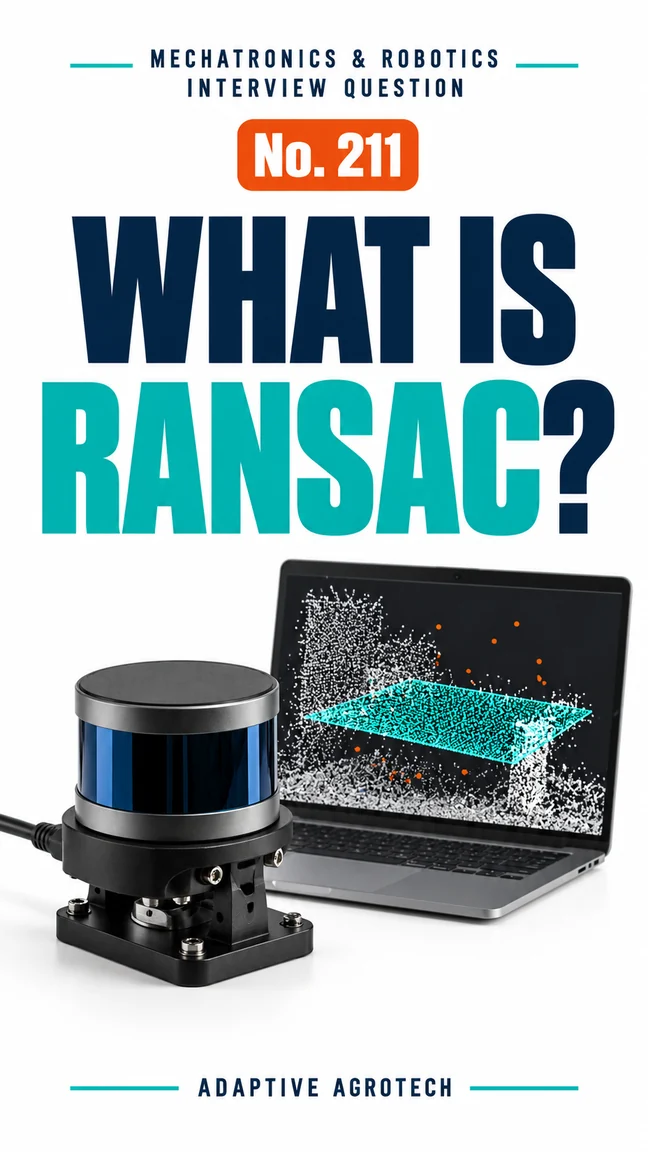
What Is RANSAC, and Why Do Robots Use It?

RANSAC means random sample consensus. It repeatedly fits a candidate model to small random subsets, then counts measurements that agree within a chosen tolerance. It seeks a model supported by many inliers despite incorrect measurements in the data.

Watch & explore
Computer visionNo. 212

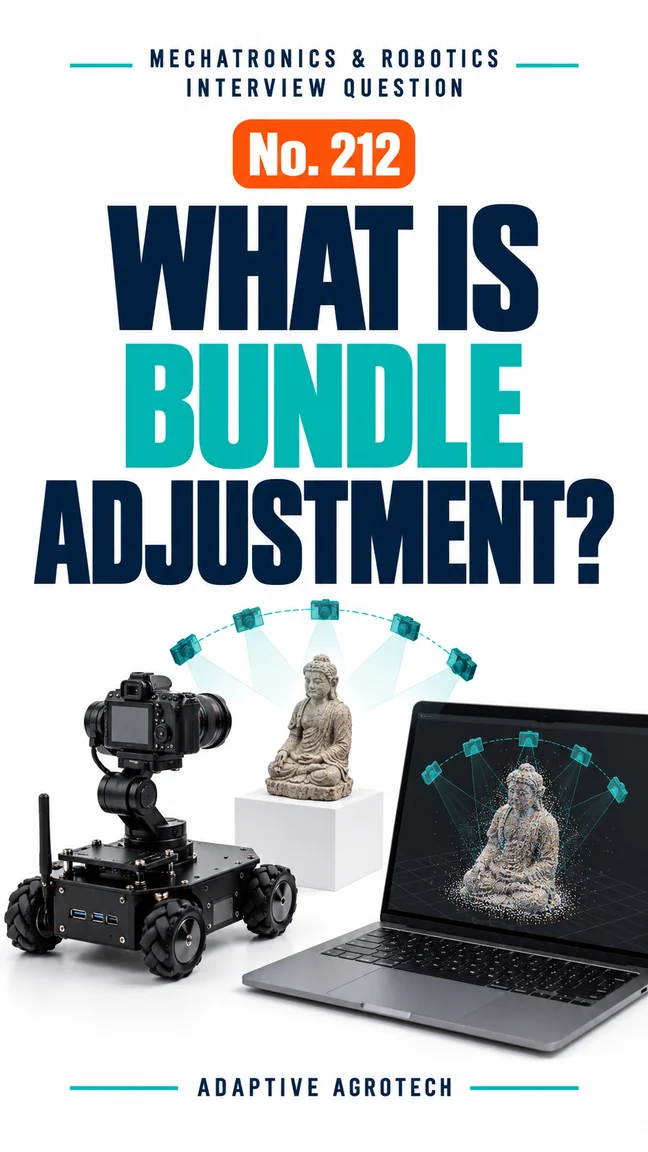
What Is Bundle Adjustment?

Bundle adjustment jointly refines camera poses and three dimensional scene points using their image observations. It minimizes a reprojection objective across views. This couples the estimated camera motion with the geometry of the reconstructed scene.

Watch & explore
Computer visionNo. 213

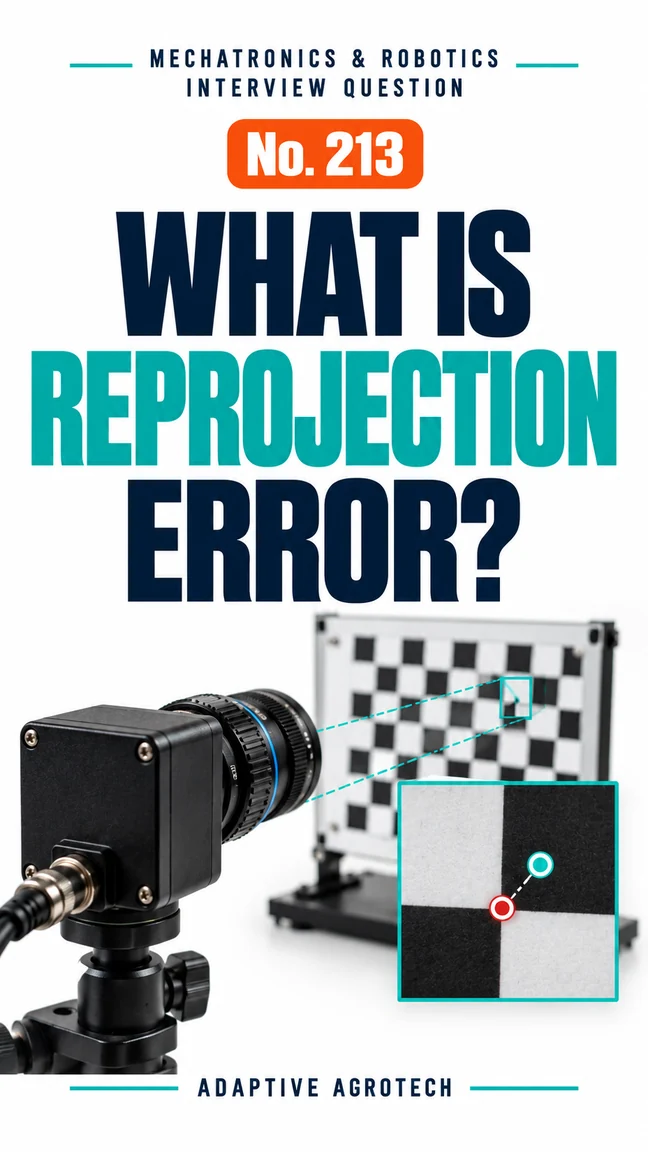
What Is Reprojection Error?

Reprojection error measures the difference between an observed image point and the pixel predicted by a camera model and estimated geometry. It is an image space residual, usually reported in pixels, rather than a direct distance error in meters.

Watch & explore
Computer visionNo. 214

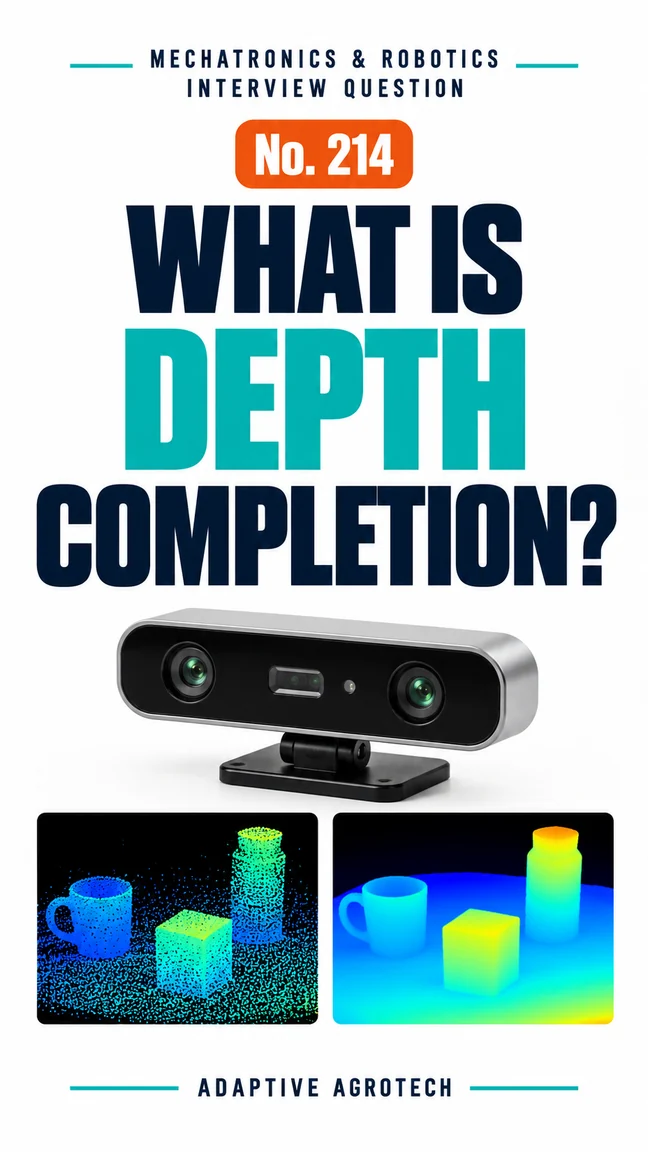
What Is Depth Completion in Robot Vision?

Depth completion predicts a dense depth map from incomplete depth measurements, often using an RGB image as additional input. Some pixels have measured ranges, while other pixels receive estimates based on surrounding evidence and learned visual patterns.

Watch & explore