Skip to content
Adaptive AgroTech NetworkUniversity of Southern Denmark · SDU Drone Center
Robotics · Mechatronics · Intelligent systems

Short videos.
Lasting understanding.

Explore one engineering idea at a time. Watch a short lesson, read the key concepts and test your understanding before your next interview, project or class.

155 topics found

Video · Key ideas · Check your understanding

Sensors & perceptionNo. 073

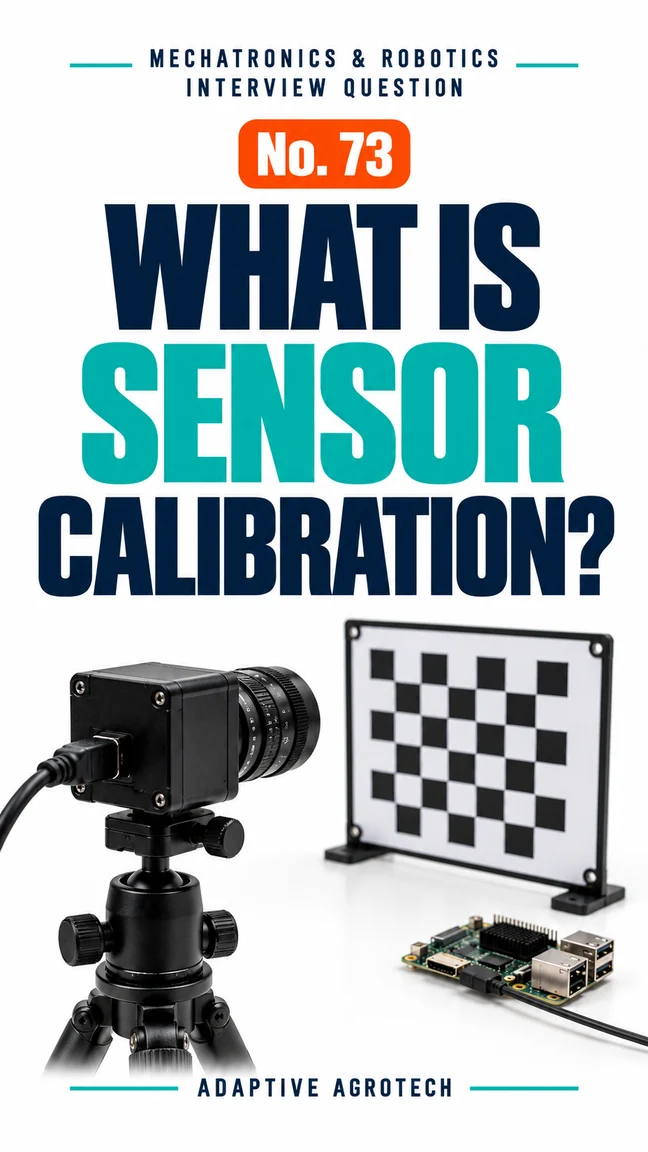
What is Sensor Calibration?

Sensor calibration estimates the parameters connecting readings to physical geometry. Known references constrain offsets, scales, distortion, and inter-sensor transforms, while independent validation and stable mounting determine whether the result remains useful.

Watch & explore
Localization & estimationNo. 076

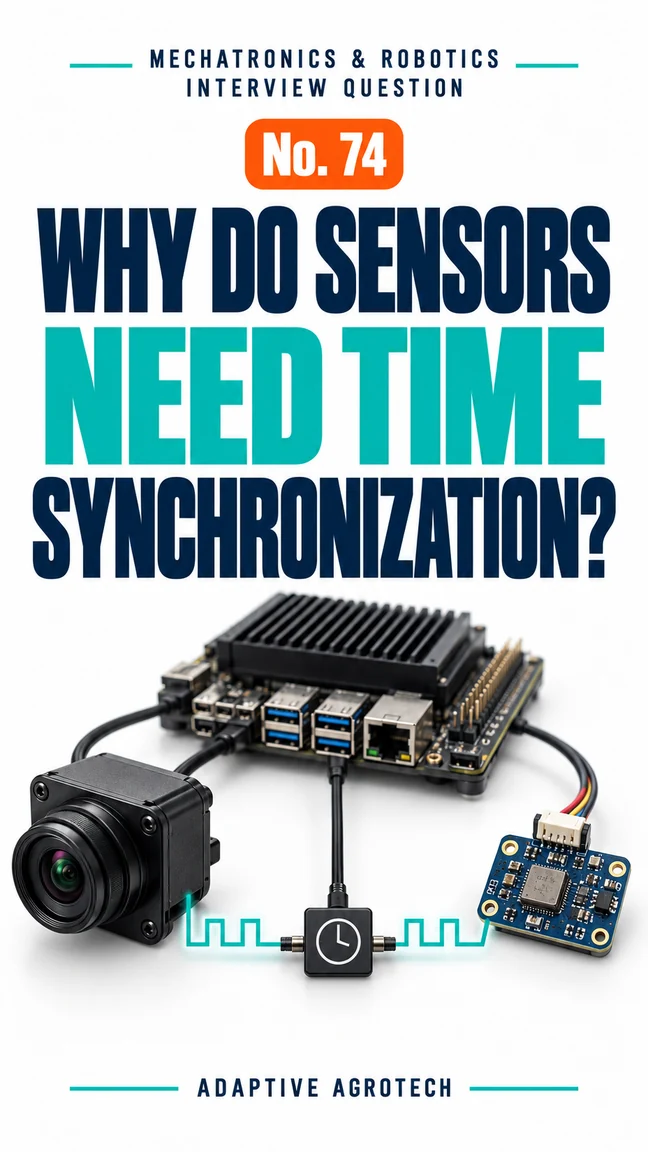
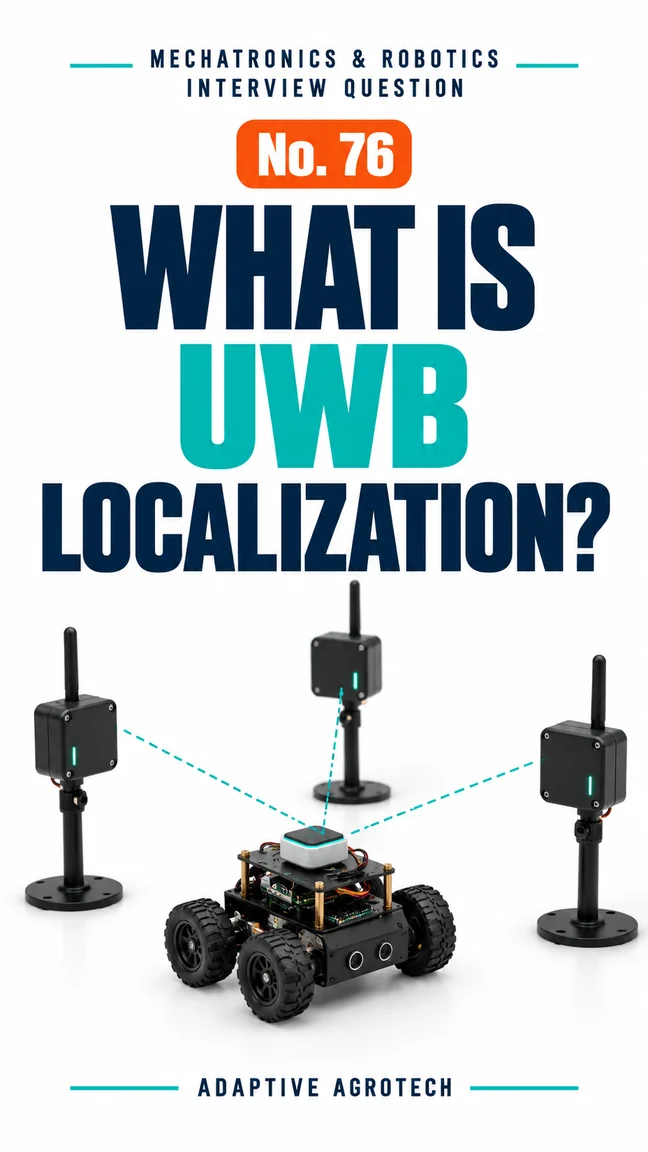
What is UWB Localization?

UWB ranging estimates distances from radio travel time to surveyed anchors. Several ranges constrain tag position, while anchor geometry and blocked direct paths affect reliability and motivate motion fusion and inconsistent-reading rejection.

Watch & explore
Motion planningNo. 078

What is an Occupancy Grid?

An occupancy grid divides space into cells that express obstacle belief. Laser evidence updates free and occupied regions, while unknown cells require an explicit navigation policy instead of being treated as clear.

Watch & explore
Motion planningNo. 079

What is Global Path Planning?

Global planning uses a map and costs to connect the robot with a distant goal. The selected graph defines the preferred route, which still requires local motion control and replanning when conditions change.

Watch & explore
Motion planningNo. 080

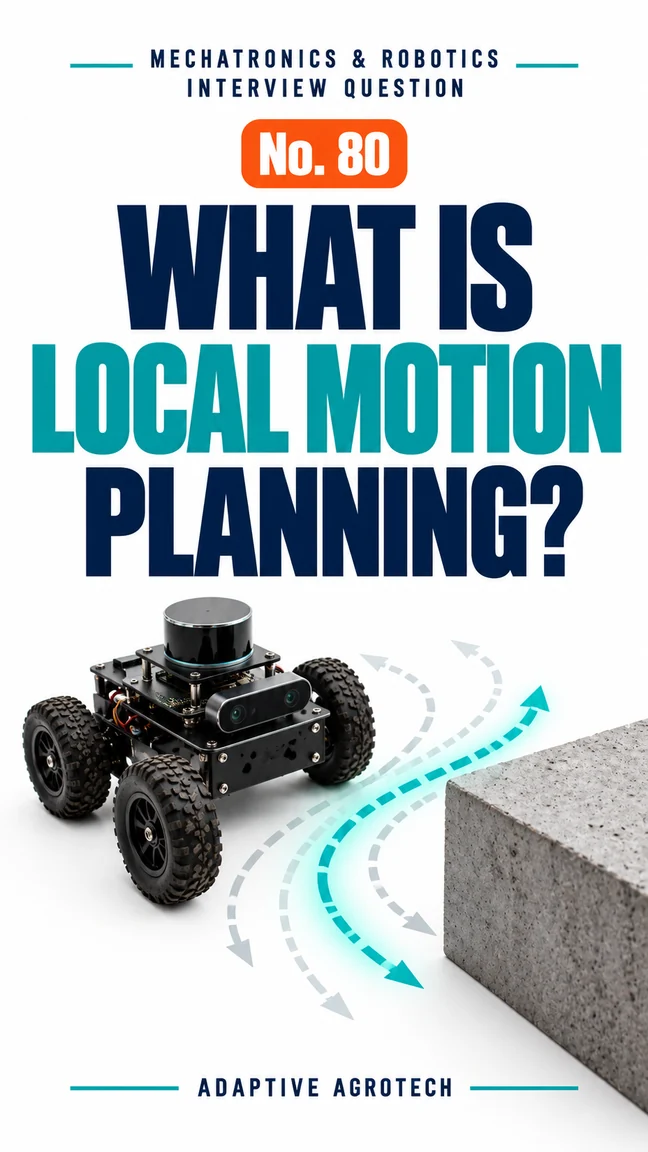
What is Local Motion Planning?

Local planning chooses feasible near-term motion using recent sensing, route guidance, and robot limits. Repeated updates handle nearby changes, while short-horizon traps and unavailable safe motion require global guidance and stopping.

Watch & explore
Motion planningNo. 082

What is Dijkstra’s Algorithm?

Dijkstra’s algorithm finds least cost graph paths by expanding the smallest known cost from the start. It updates cheaper connections and reconstructs routes through parent links, without using a goal heuristic.

Watch & explore
Motion planningNo. 084

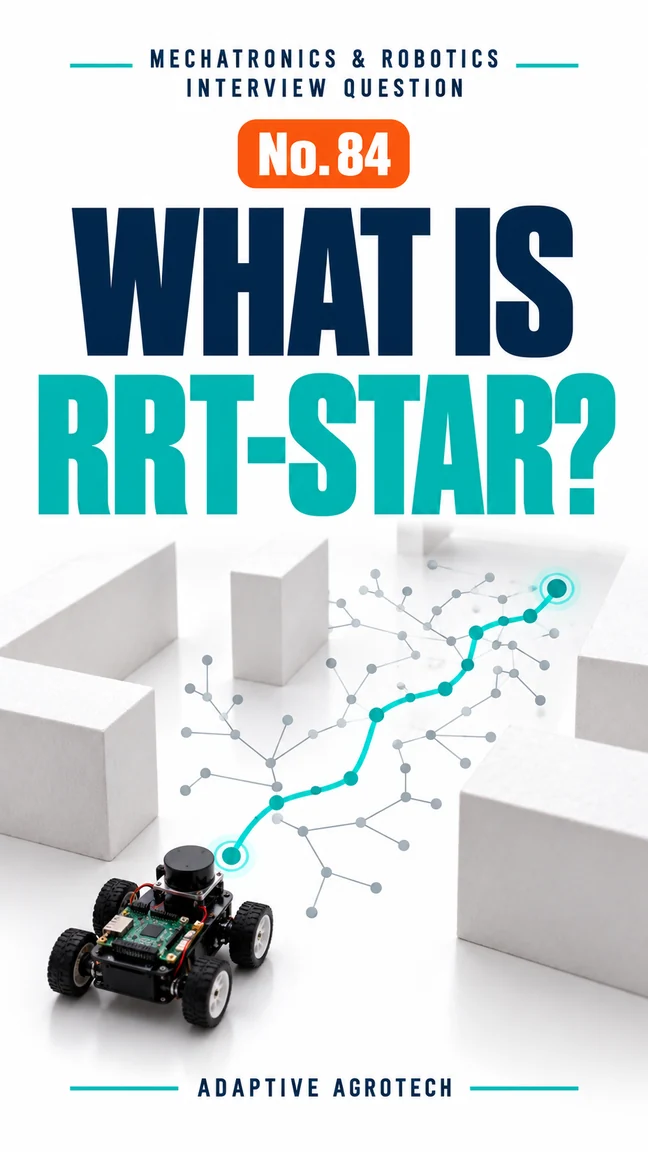
What is RRT-Star?

RRT* improves a sampled search tree by choosing lower cost parents and rewiring nearby connections. Continued search can reduce path cost, while asymptotic optimality does not guarantee an exact optimum in a short run.

Watch & explore
Motion planningNo. 089

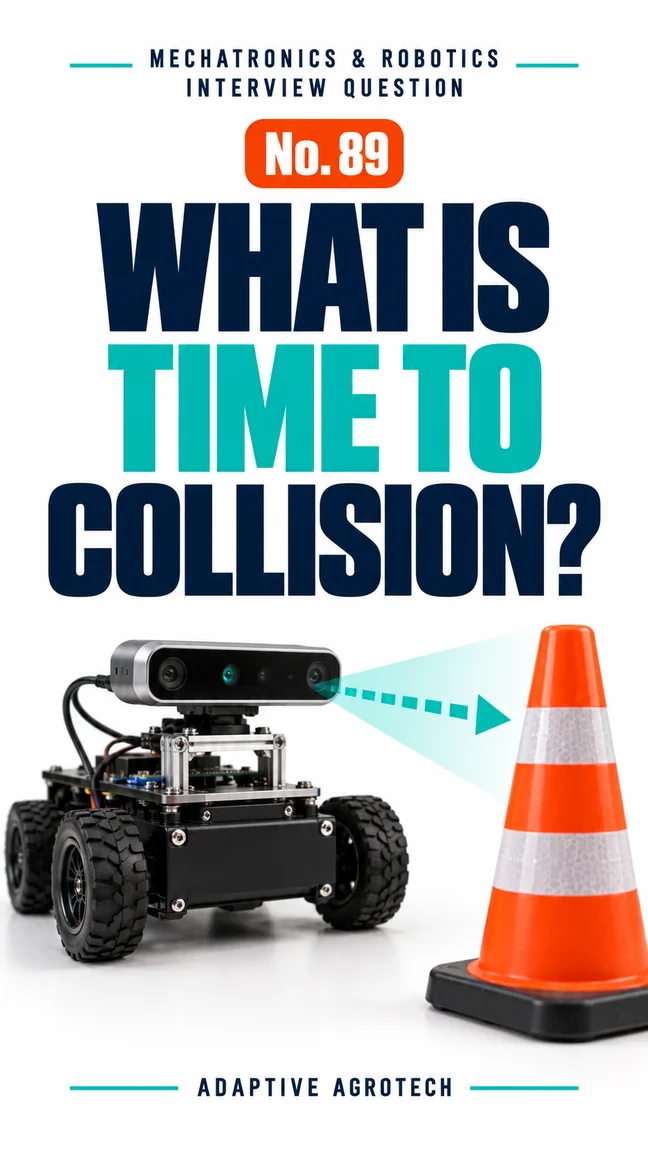
What is Time to Collision?

Time to collision predicts the time remaining before contact under an assumed motion model. Straight closing motion permits clearance divided by closing speed, while crossing trajectories require geometry and uncertainty to be considered.

Watch & explore
Control systemsNo. 090

What is Pure Pursuit Path Tracking?

Pure pursuit tracks a path by steering along a tangent circular arc toward a point ahead. Look ahead distance controls responsiveness and corner cutting, while the tracker still needs separate collision checks.

Watch & explore
Motion planningNo. 092

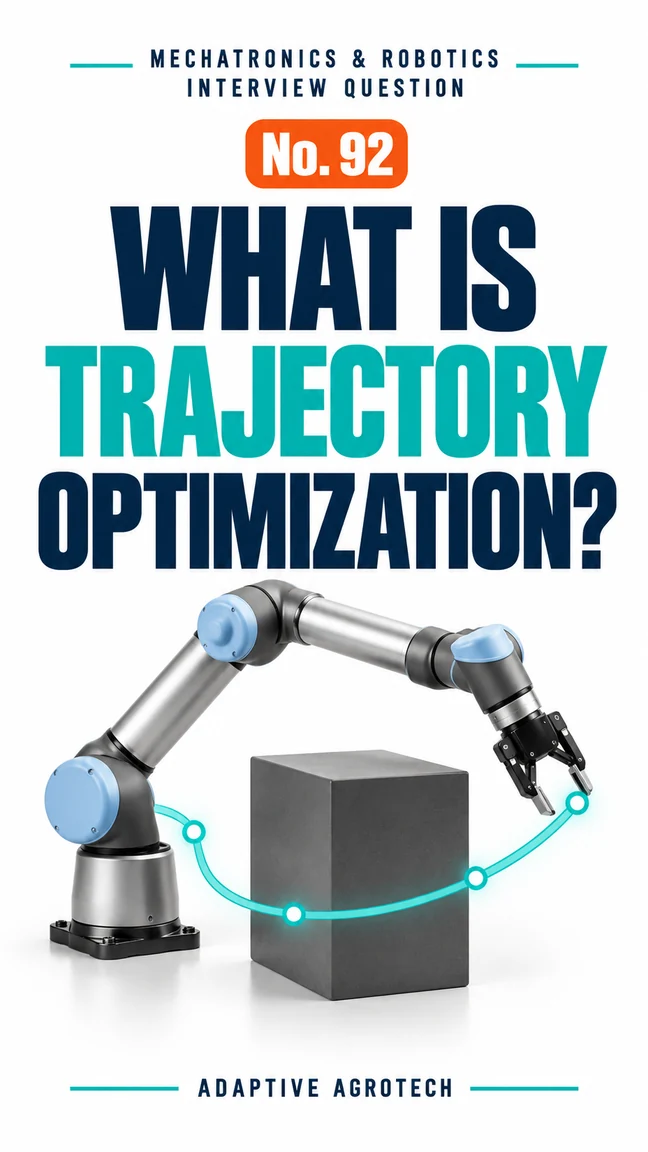
What is Trajectory Optimization?

Trajectory optimization adjusts robot states and commands to improve a chosen objective while satisfying constraints. Solver results depend on initialization, and a locally optimal sampled trajectory still needs continuous motion clearance checks.

Watch & explore
Robot kinematicsNo. 093

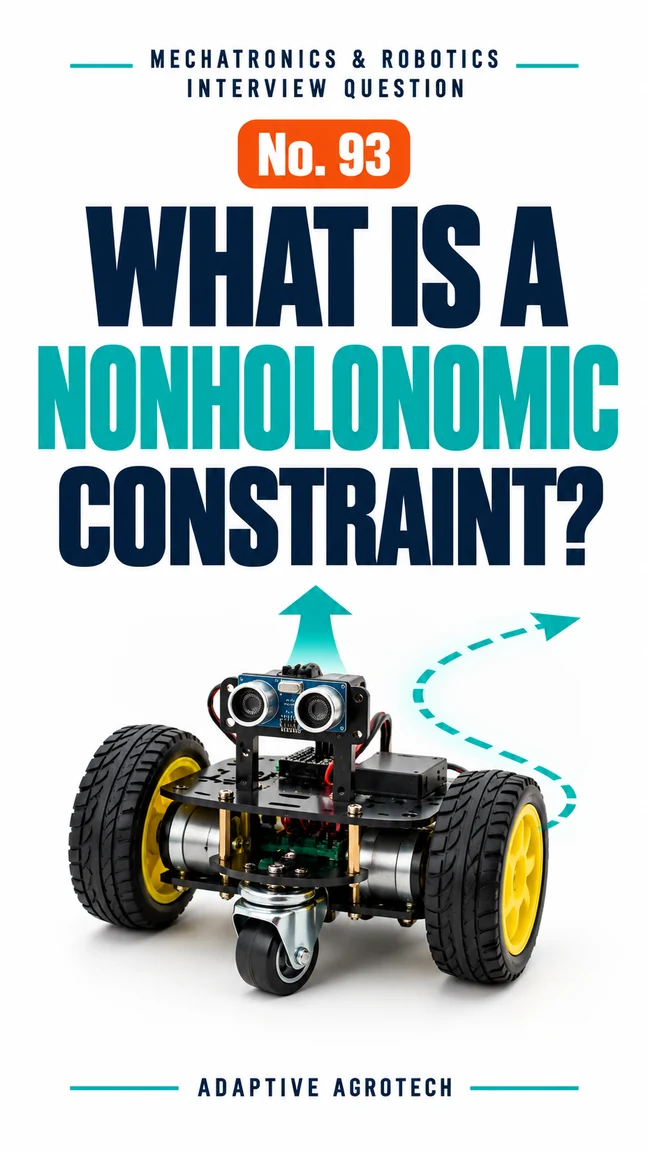
What is a Nonholonomic Constraint?

A nonholonomic constraint limits instantaneous velocities without reducing all positions reachable over time. Rolling wheels illustrate this distinction: a car cannot slide sideways immediately, yet sequences of arcs can change its lateral position.

Watch & explore
Robot kinematicsNo. 094

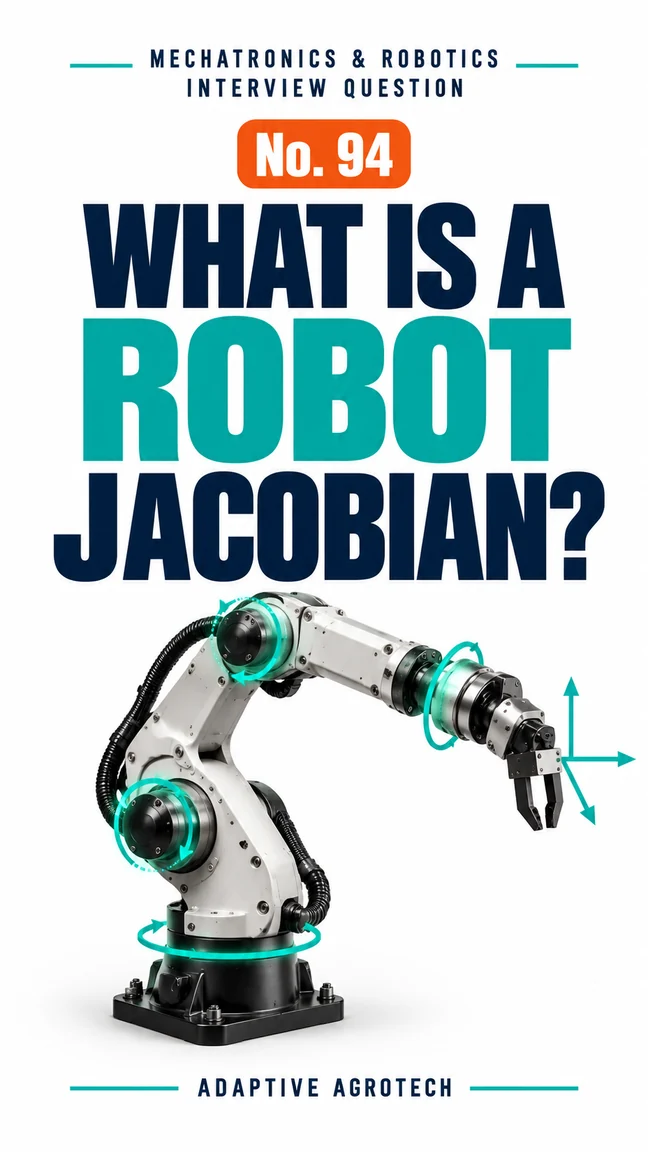
What is a Robot Jacobian?

The robot Jacobian maps joint rates to instantaneous tool velocity at a particular configuration. Its columns describe individual joint contributions, making it useful for local motion and force calculations rather than complete path planning.

Watch & explore
Robot kinematicsNo. 095

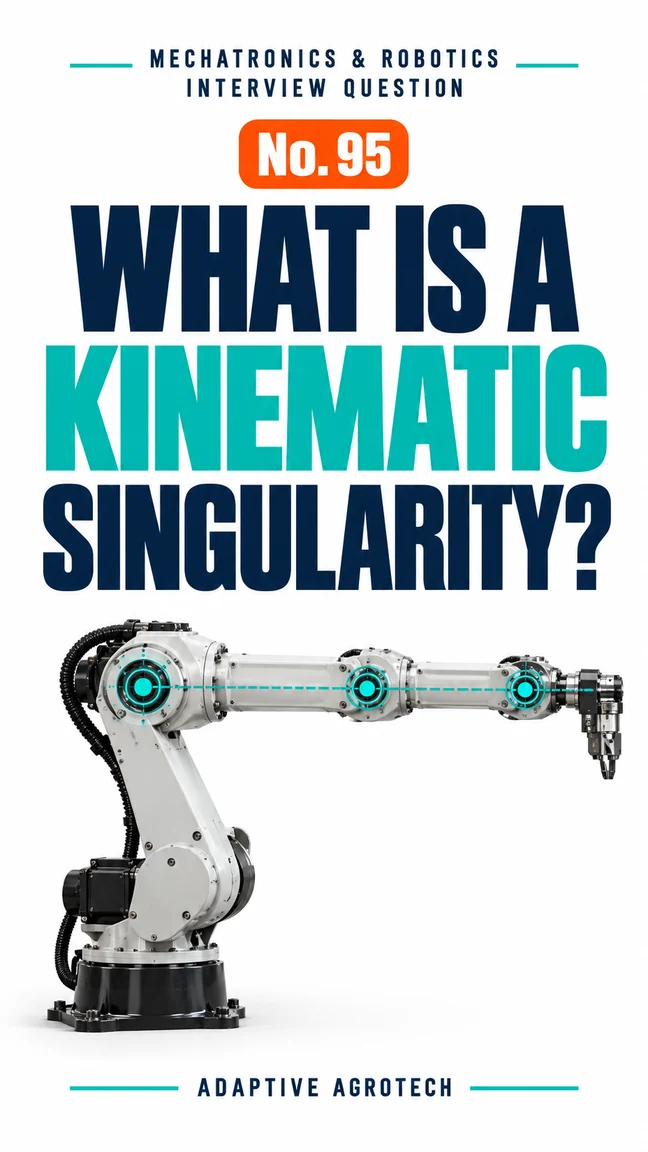
What is a Kinematic Singularity?

A kinematic singularity occurs where the robot Jacobian loses rank and an instantaneous tool motion direction disappears. Near such poses, inverse velocity commands can grow large even when a target position remains reachable.

Watch & explore
Embedded electronicsNo. 097

What is a Pull-Up Resistor?

A pull-up resistor defines a digital input’s idle high state while allowing a switch to pull it low. Its resistance must balance leakage, signal rise time, current, and voltage limits.

Watch & explore
Embedded electronicsNo. 101

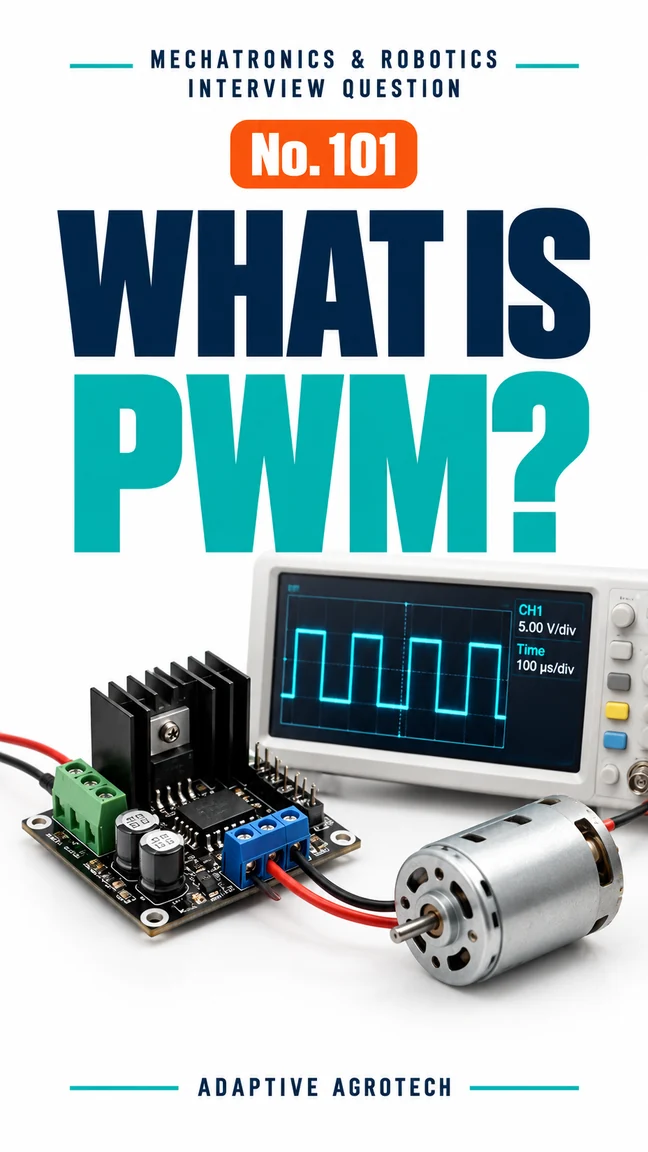
What is PWM?

Pulse width modulation controls a switching signal’s on time within each period. Duty cycle affects average drive voltage, but actual motor speed also depends on current dynamics, load, and feedback control.

Watch & explore
Embedded electronicsNo. 102

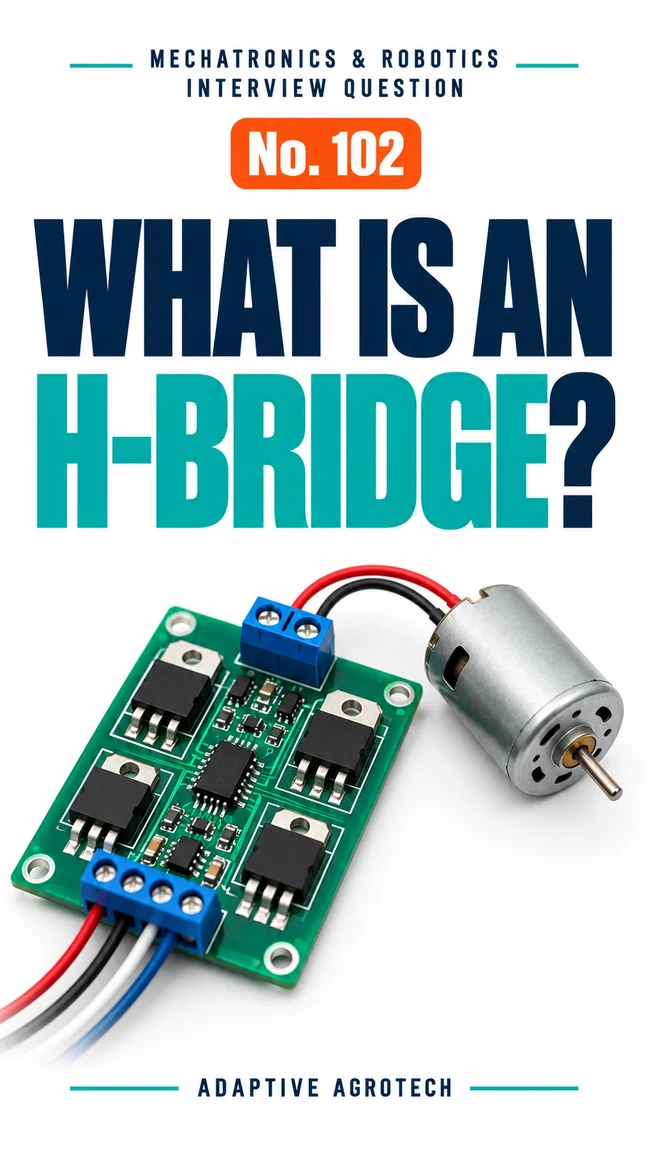
What is an H-Bridge?

An H-bridge reverses motor current using four switches arranged around the motor. Diagonal pairs set direction, while timing, current limits, and recirculation paths prevent damaging supply shorts and manage winding current.

Watch & explore
Embedded electronicsNo. 103

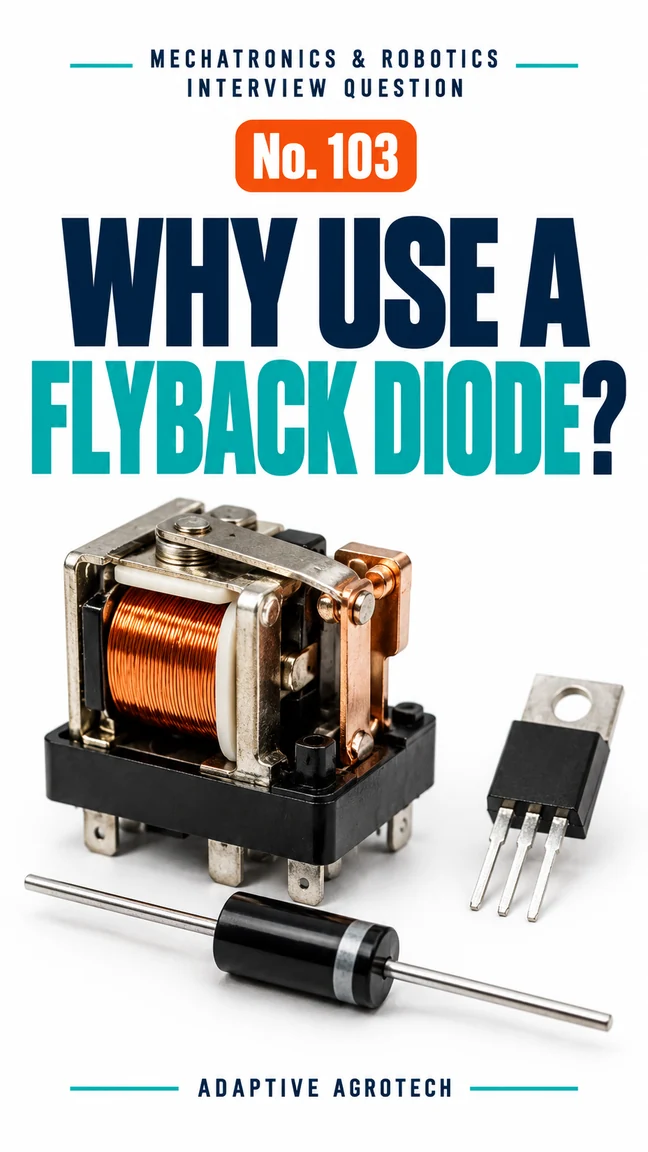
What is a Flyback Diode?

A flyback diode provides a path for inductive coil current after switch-off, limiting the resulting voltage spike. A simple relay connection slows release and should not be copied directly into a bidirectional motor bridge.

Watch & explore
Embedded electronicsNo. 104

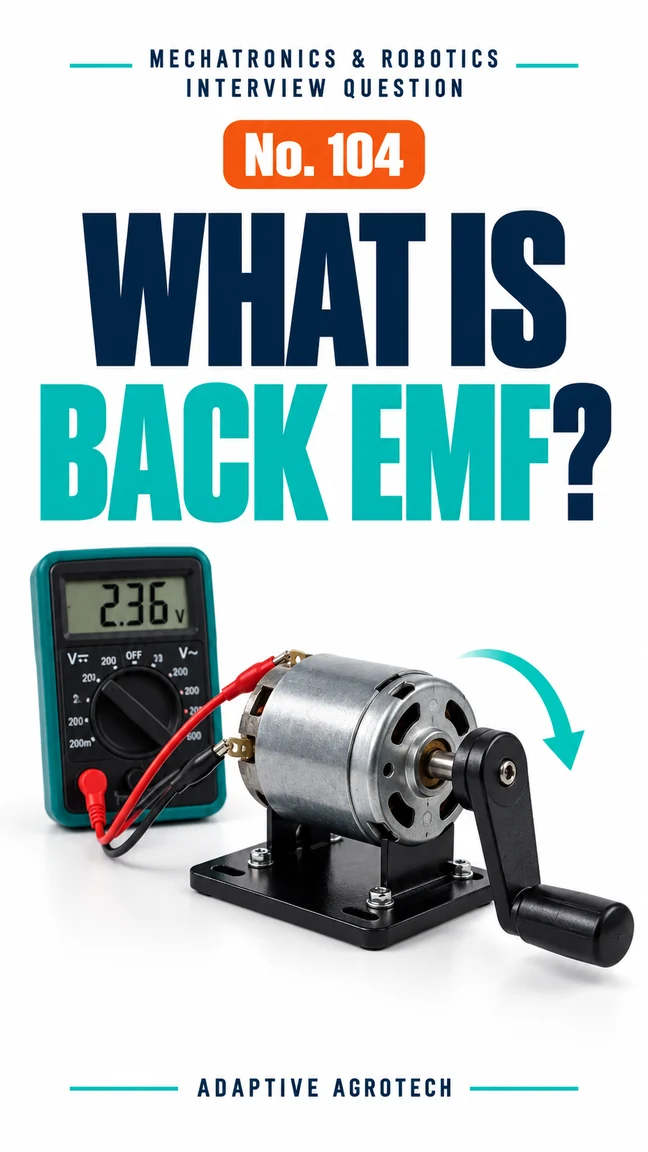
What is Back EMF?

Back EMF is the voltage generated by a spinning motor that opposes its drive voltage. In a simple steady model it reduces winding current, explaining why a slowing or jammed wheel can draw more current.

Watch & explore
Embedded electronicsNo. 105

What is Motor Stall Current?

Motor stall current is measured with the shaft stopped at a stated voltage, where rotational back EMF is absent. It can greatly exceed a safe continuous current and requires stall detection and drive protection.

Watch & explore
Sensors & perceptionNo. 107

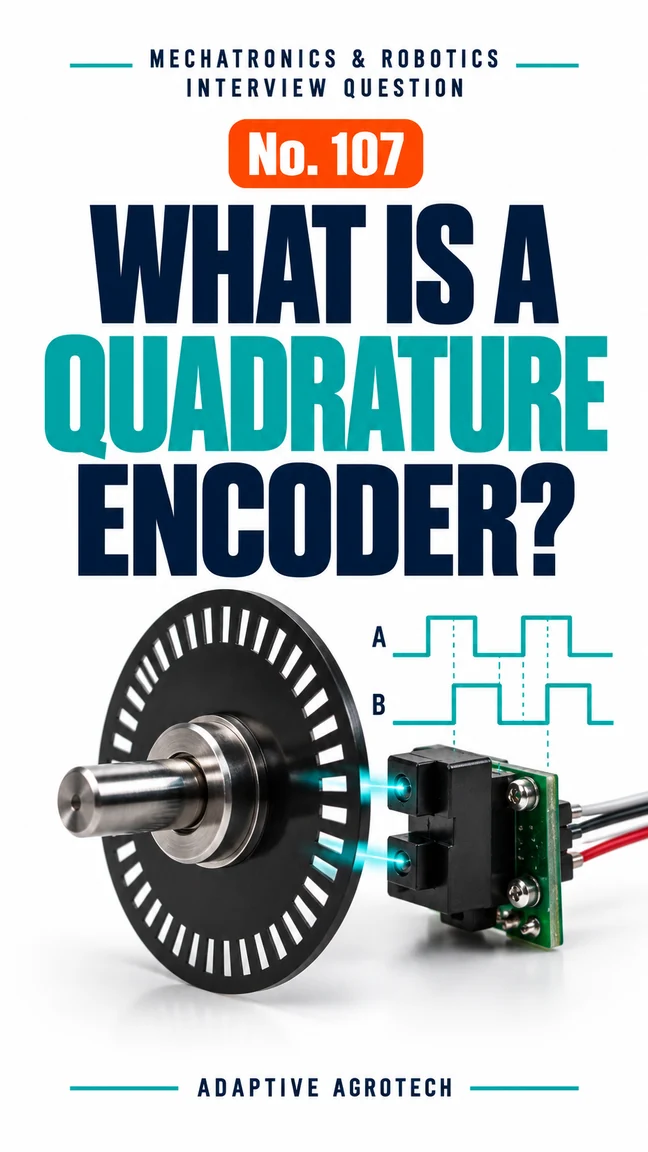
What is a Quadrature Encoder?

A quadrature encoder supplies two signals separated by a quarter cycle, revealing rotation direction and rate. Four-edge decoding improves count resolution, but converting counts into robot travel still depends on mechanics and wheel slip.

Watch & explore
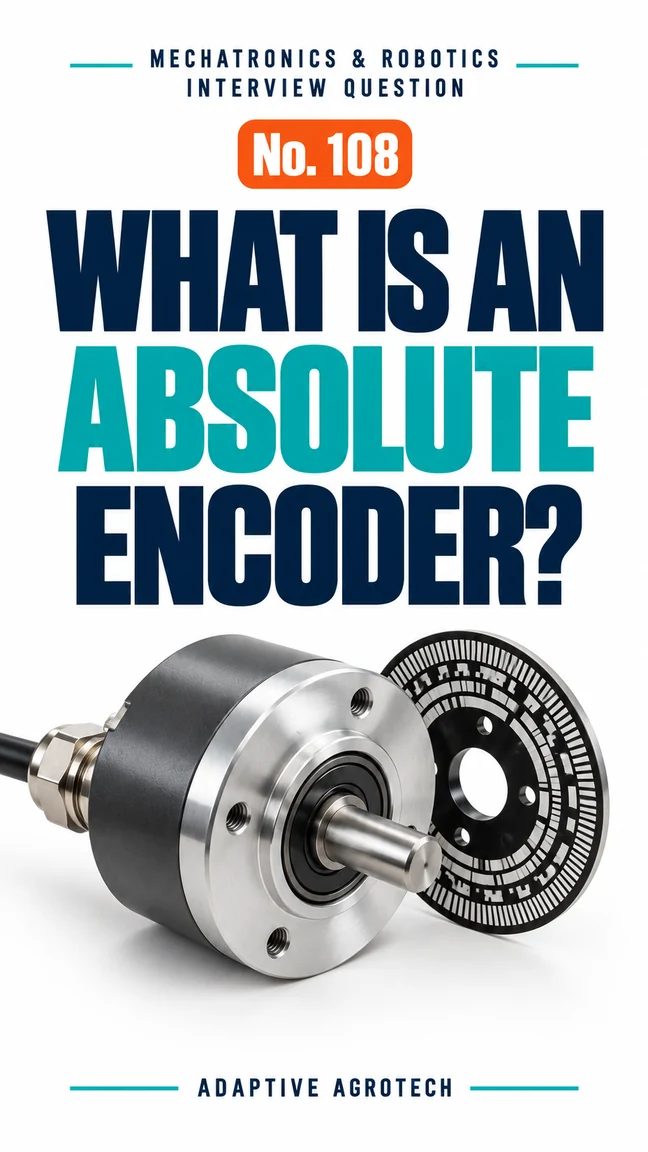
Sensors & perceptionNo. 108

What is an Absolute Encoder?

An absolute encoder reports a position code that can identify shaft angle at startup. Single-turn and multi-turn devices differ, and useful joint measurements still require mounting, calibration, and an understanding of accuracy.

Watch & explore