Skip to content
Adaptive AgroTech NetworkUniversity of Southern Denmark · SDU Drone Center
Robotics · Mechatronics · Intelligent systems

Short videos.
Lasting understanding.

Explore one engineering idea at a time. Watch a short lesson, read the key concepts and test your understanding before your next interview, project or class.

196 topics found

Video · Key ideas · Check your understanding

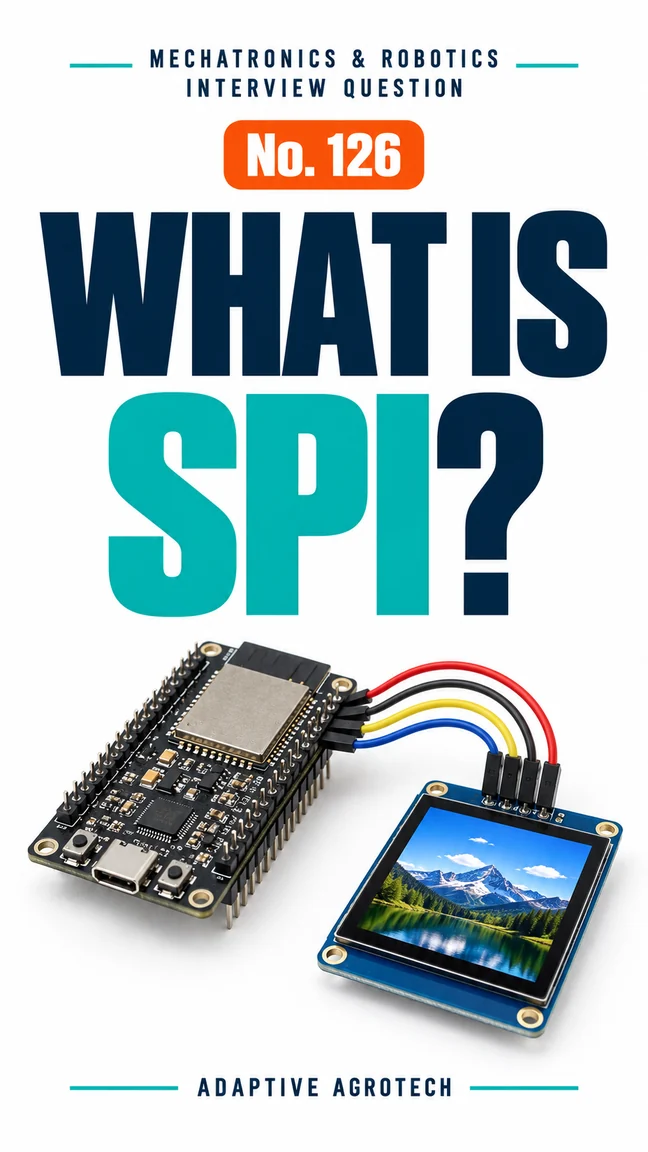
Communication & networksNo. 126

What is SPI?

SPI is a clocked interchip interface with controller supplied clock, target selection, and separate data directions. Correct transfers require matching clock polarity, phase, select timing, and each target device’s timing specification.

Watch & explore

Communication & networksNo. 128

What is TCP?

TCP offers reliable ordered bytes through acknowledgements and retransmission. Applications must define their own message boundaries and timeouts, and retransmission can delay later data despite the transport’s reliability guarantees.

Watch & explore
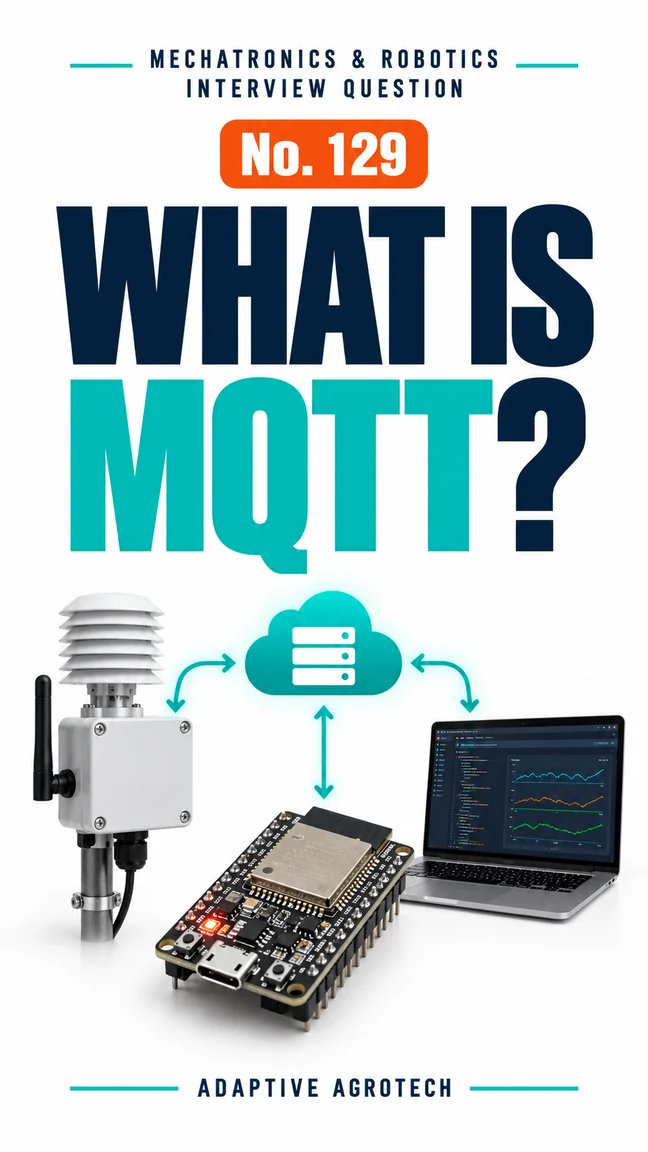
Communication & networksNo. 129

What is MQTT?

MQTT routes published topic messages through a broker to interested subscribers. It suits robot telemetry and dashboards, with deployment choices for access security and delivery policy rather than assuming brokered data provides independent safety.

Watch & explore
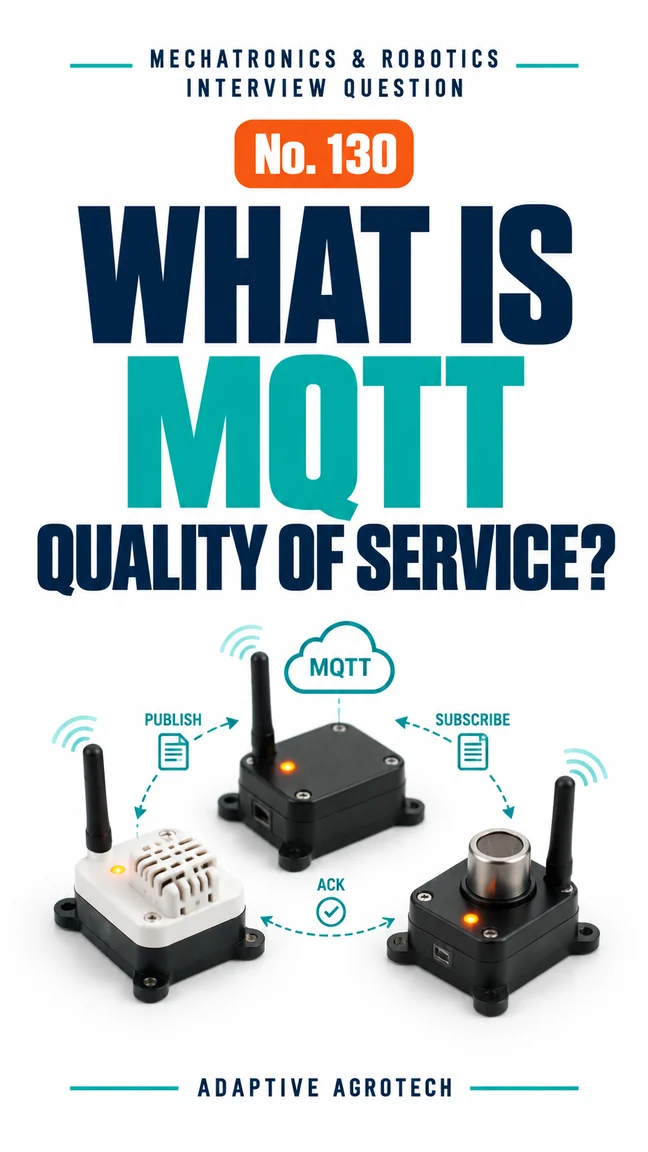
Communication & networksNo. 130

What is MQTT Quality of Service?

MQTT QoS defines delivery levels with different acknowledgement costs: at most once, possible duplicate delivery, or exactly once within a protocol exchange. These guarantees do not establish how many times an actuator physically executes.

Watch & explore
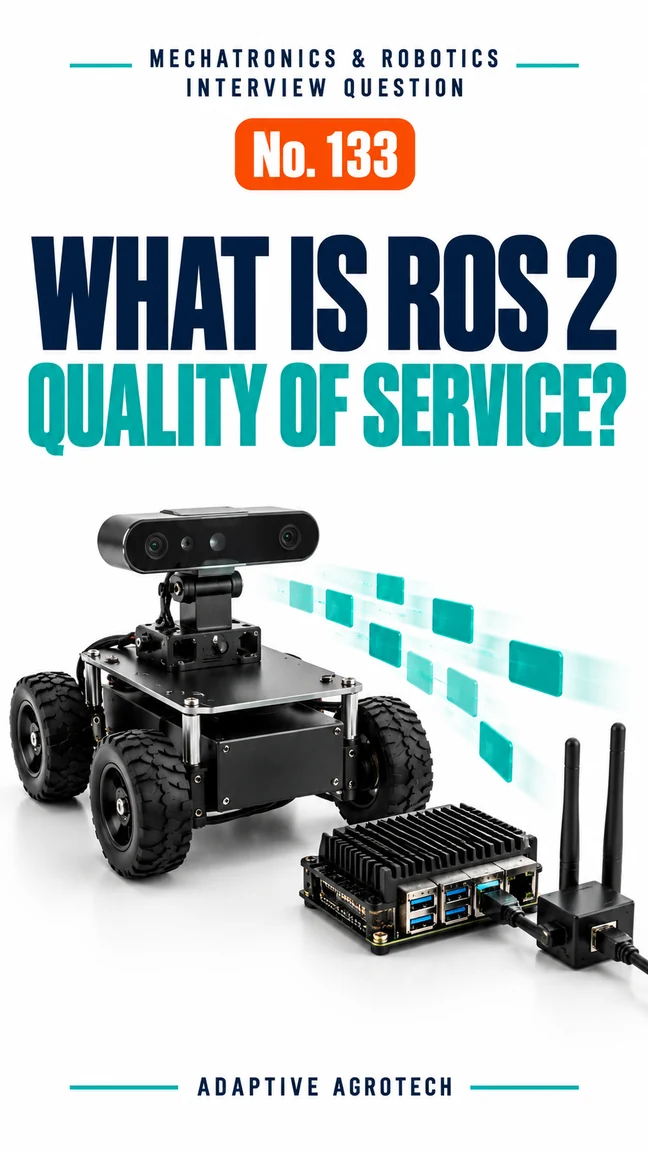
Communication & networksNo. 133

What is ROS 2 Quality of Service?

ROS 2 QoS policies govern reliability, retained history, durability, and timing. Publisher and subscriber policies must be compatible, and timely fresh data can matter more than retrying every old sample.

Watch & explore
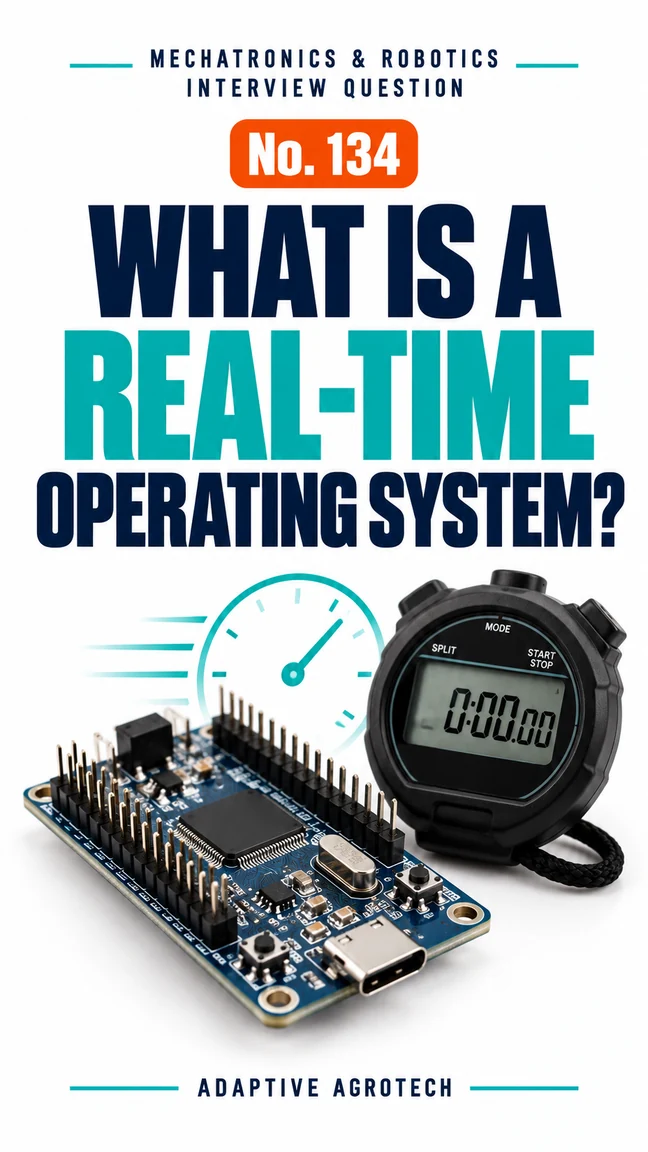
Embedded electronicsNo. 134

What is a Real-Time Operating System?

An RTOS schedules software around timing requirements, where a late result can be incorrect for the task. Priorities and sleeping tasks help, but complete deadlines still require execution and blocking analysis under load.

Watch & explore
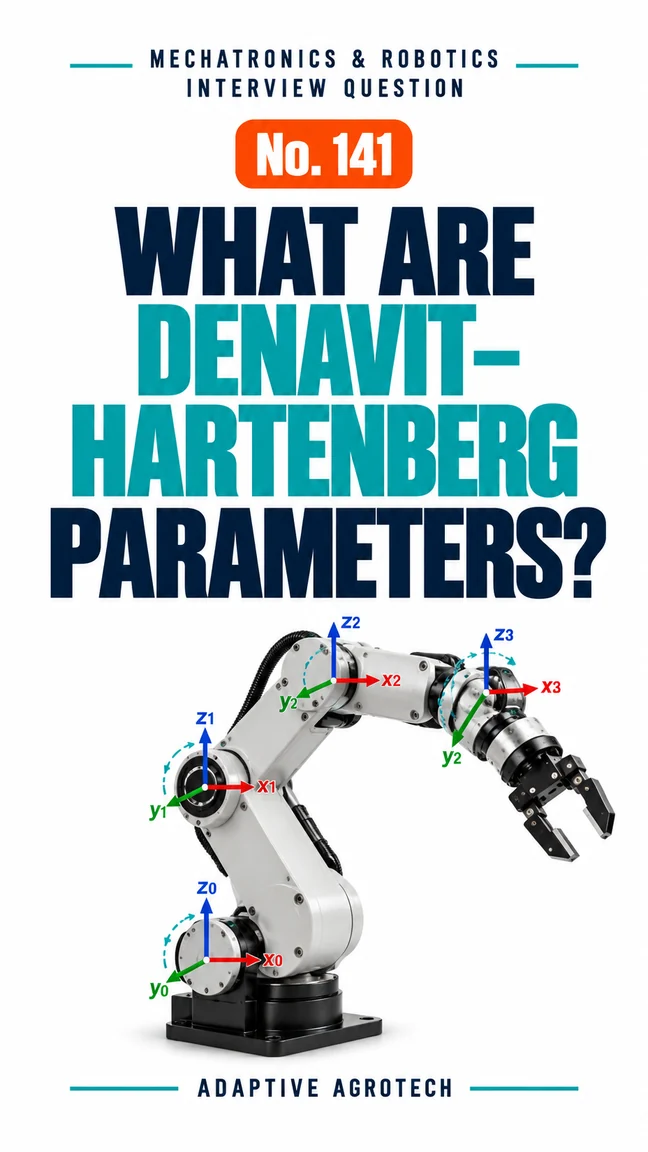
Robot kinematicsNo. 141

What Are Denavit–Hartenberg Parameters?

Denavit–Hartenberg parameters describe neighboring frames of a serial robot through four geometric quantities. Consistent frame conventions let their transforms produce forward kinematics, while mixing standard and modified DH rules corrupts the geometry.

Watch & explore
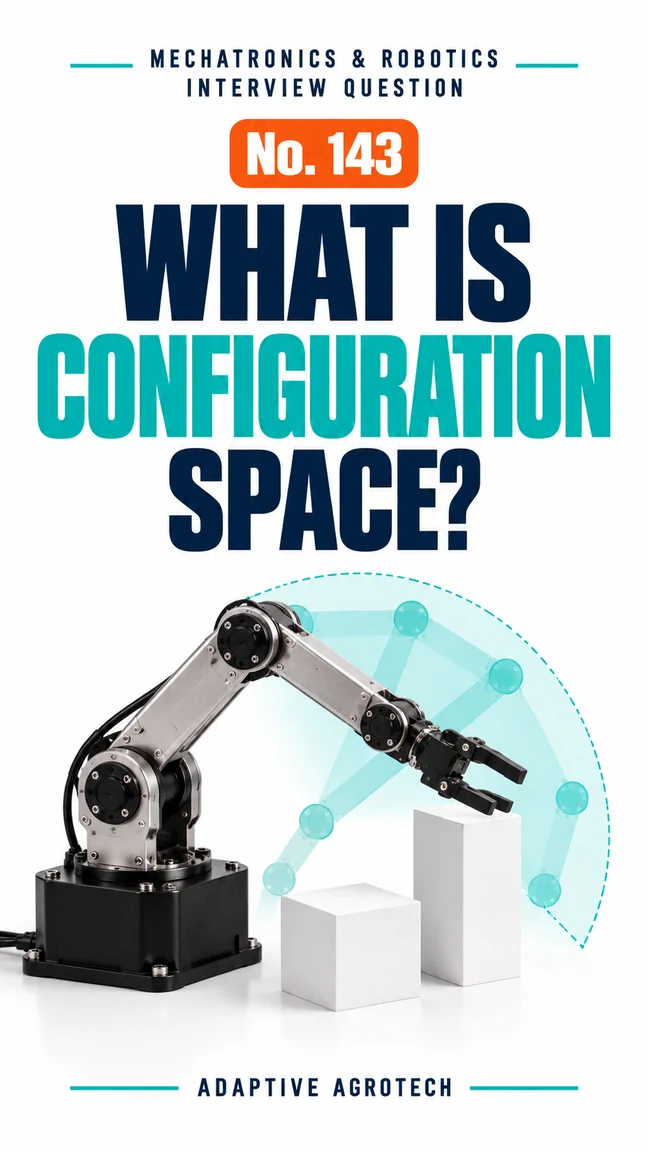
Motion planningNo. 143

What Is Configuration Space in Robotics?

Configuration space represents the entire robot as a point whose coordinates locate its moving parts. Workspace obstacles become forbidden configuration regions, with joint limits and angular wrapping shaping the available planning space.

Watch & explore
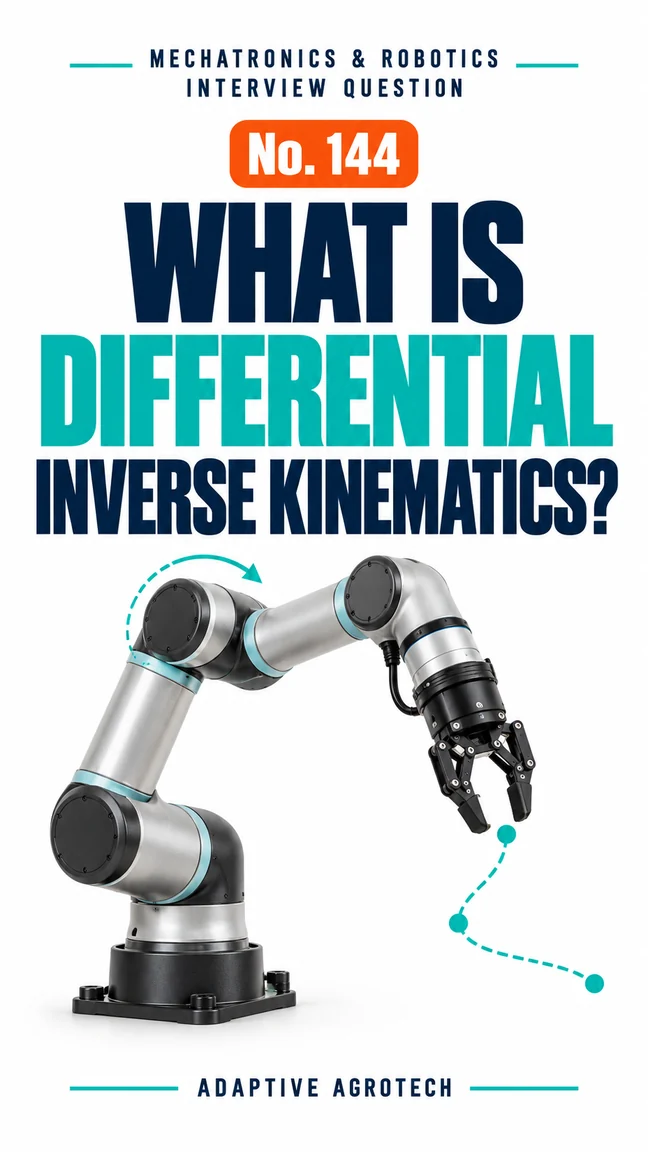
Robot kinematicsNo. 144

What Is Differential Inverse Kinematics?

Differential inverse kinematics solves locally for joint speeds that produce a desired tool velocity. The Jacobian must update as motion progresses, and damping near singularities trades tracking accuracy for less extreme joint commands.

Watch & explore
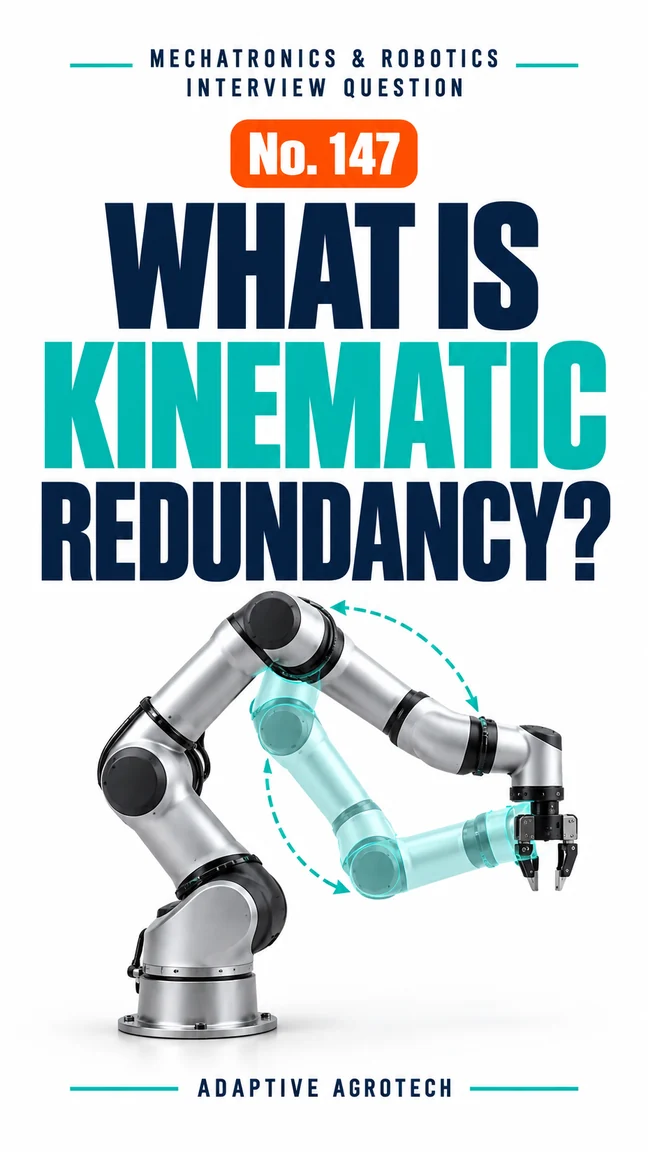
Robot kinematicsNo. 147

What Is Kinematic Redundancy?

Kinematic redundancy means more independent joint motion is available than a specified task requires. It permits posture choices, but depends on task definition and Jacobian rank rather than joint count alone.

Watch & explore
Robot kinematicsNo. 148

What Is a Manipulability Ellipsoid?

A manipulability ellipsoid shows how a unit joint velocity sphere maps to tool velocities through the Jacobian. Its axes expose easier and lost local directions, with meaning dependent on coordinates, units, and the velocity metric.

Watch & explore
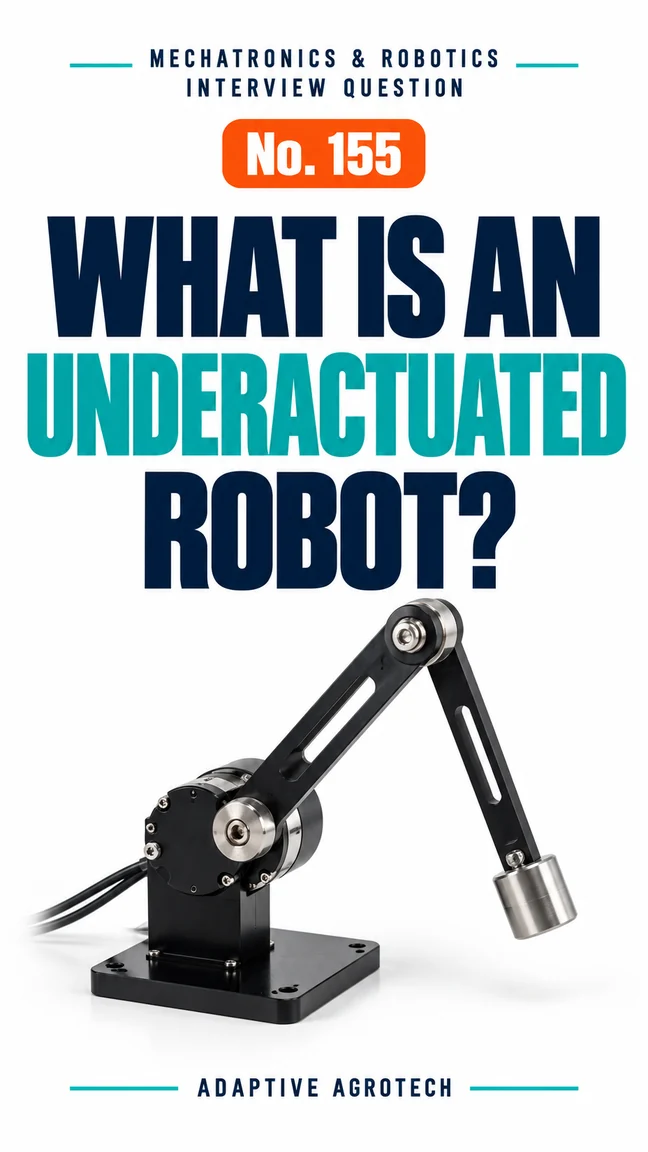
Robot kinematicsNo. 155

What Is an Underactuated Robot?

An underactuated robot has fewer independent control inputs than configuration coordinates. Indirect control can exploit coupled dynamics, but it cannot independently request every acceleration, and contact can change the effective constraints and actuation.

Watch & explore
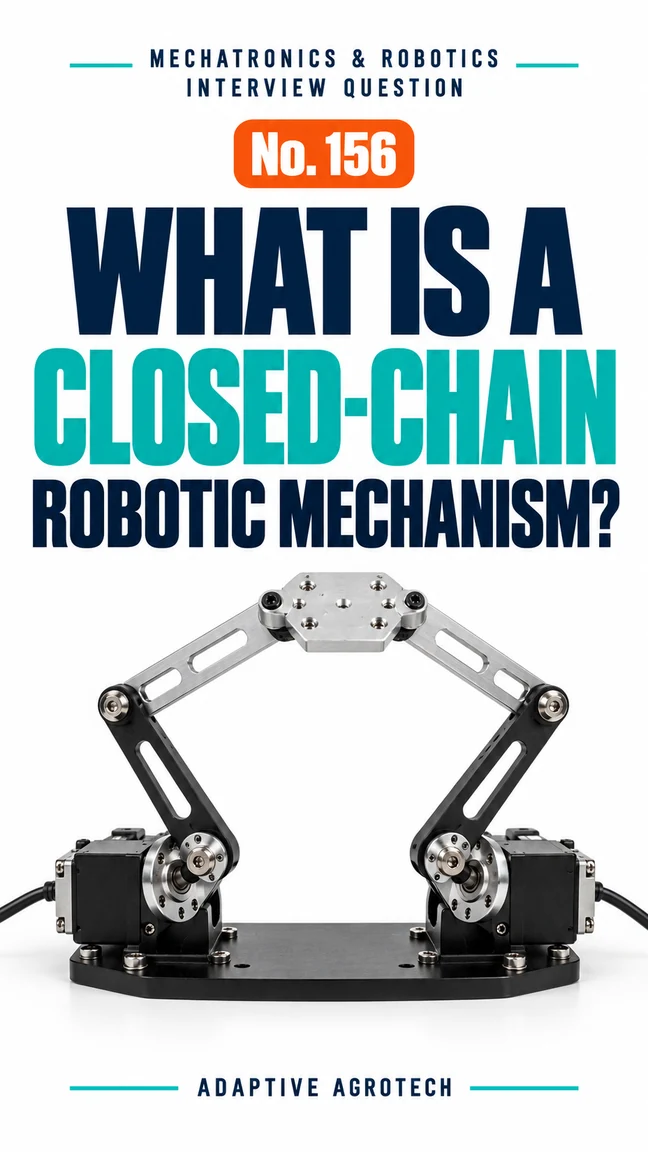
Robot kinematicsNo. 156

What Is a Closed-Chain Robotic Mechanism?

A closed-chain mechanism contains a loop of linked joints, creating closure constraints between coordinates. Its joints cannot all be commanded independently, and valid motion must account for assembly modes and singular configurations.

Watch & explore
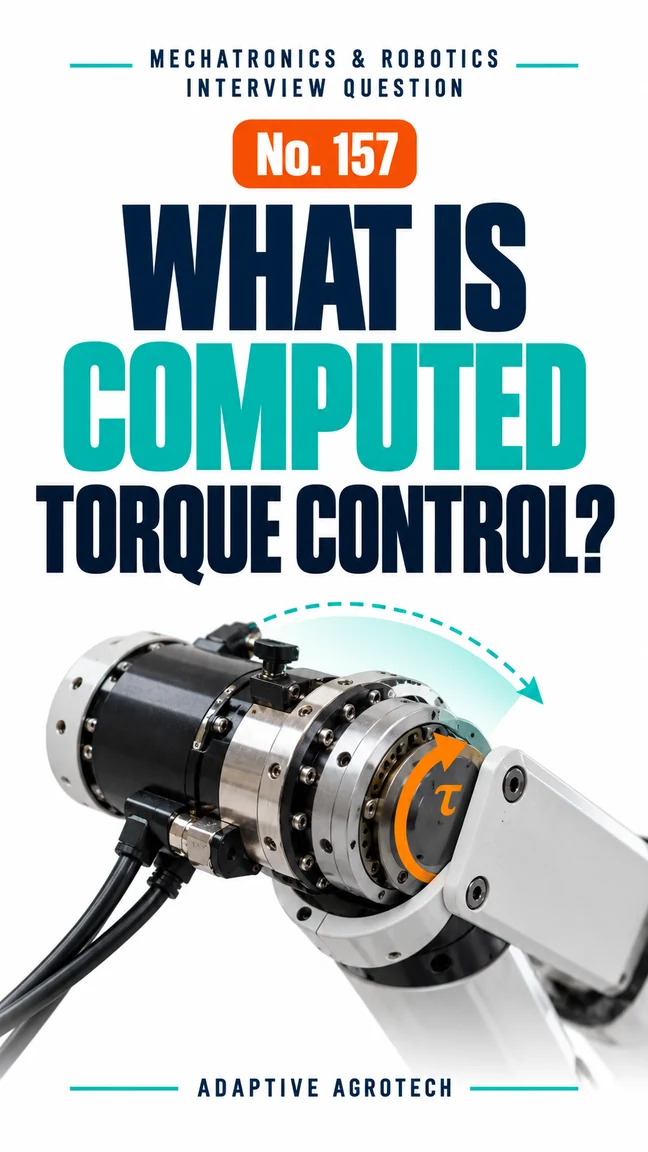
Control systemsNo. 157

What Is Computed Torque Control?

Computed torque control combines a robot dynamics model with tracking feedback to request joint torque. Ideal model cancellation can simplify error dynamics, while real payload errors, friction, and saturation limit the result.

Watch & explore
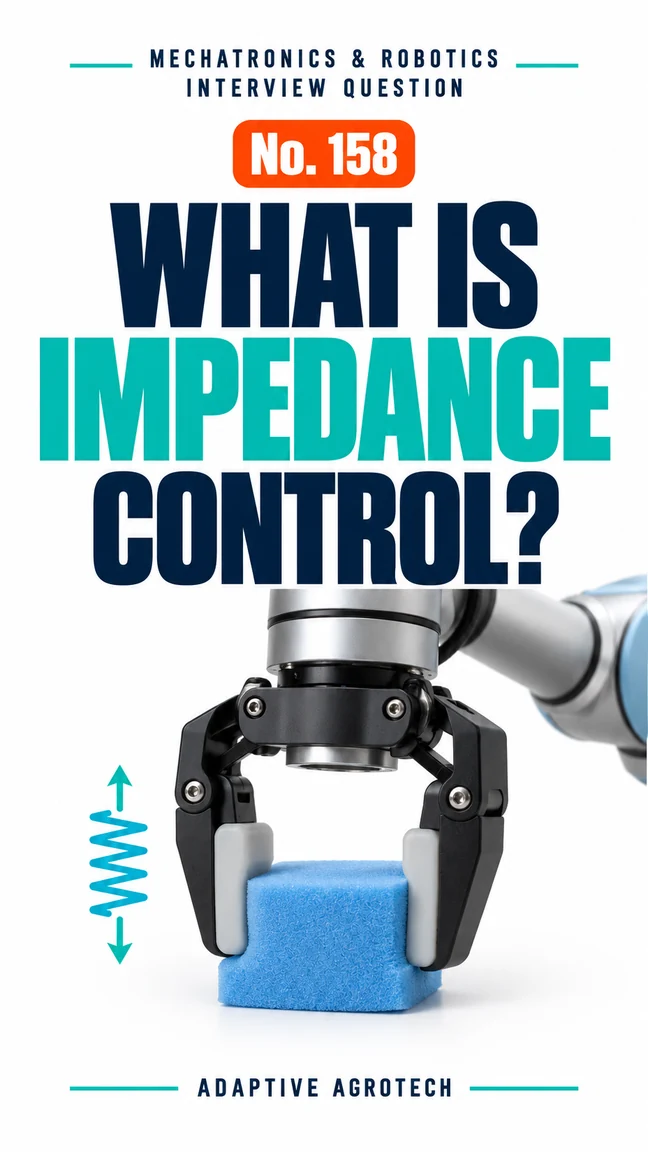
Control systemsNo. 158

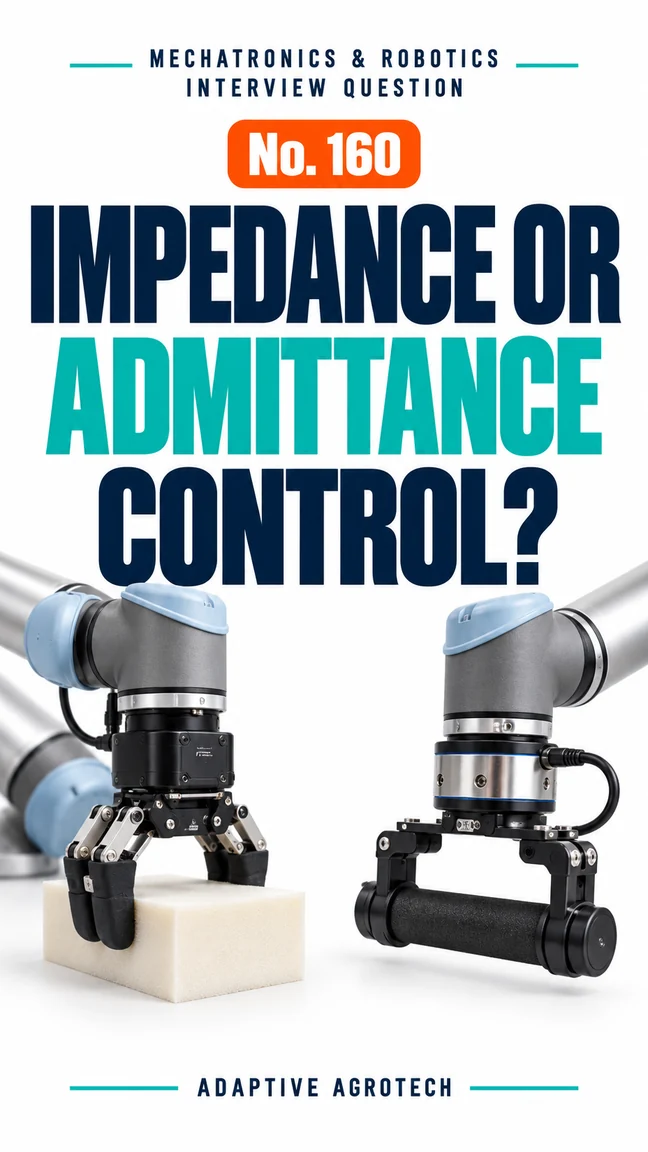
What Is Impedance Control?

Impedance control shapes interaction by relating motion error to commanded force or torque. Virtual stiffness and damping create compliant behavior, but stability depends on the complete actuator, sensing, delay, and environment dynamics.

Watch & explore
Control systemsNo. 161

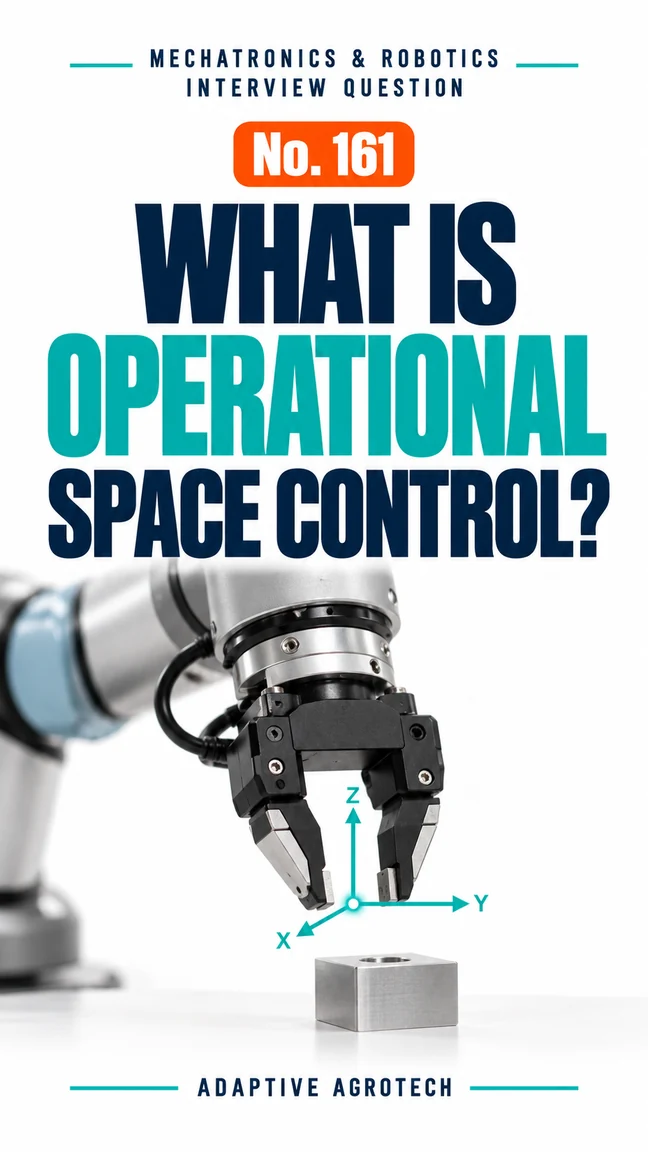
What Is Operational Space Control?

Operational space control describes robot dynamics in task coordinates, such as tool position. Instead of choosing joint motions independently, the controller computes the end effector force needed for a desired task acceleration.

Watch & explore
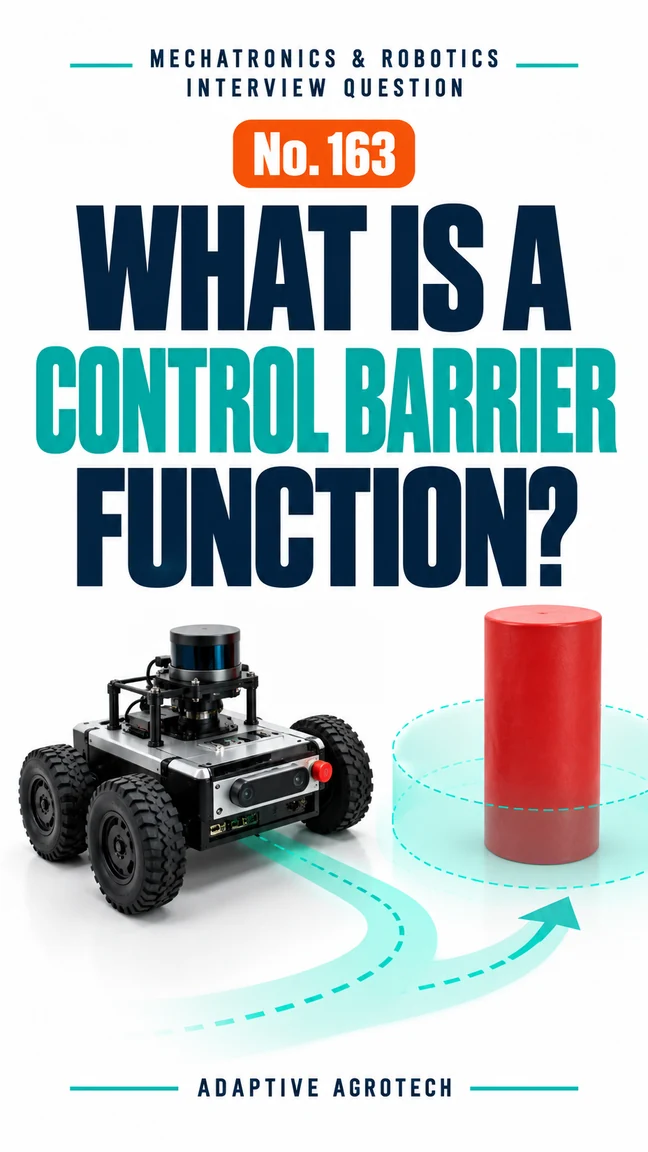
Control systemsNo. 163

What Is a Control Barrier Function?

A control barrier function encodes an allowed region of state space. Its derivative condition restricts the control input so the state can remain inside. This differs from merely adding an obstacle penalty to a cost.

Watch & explore
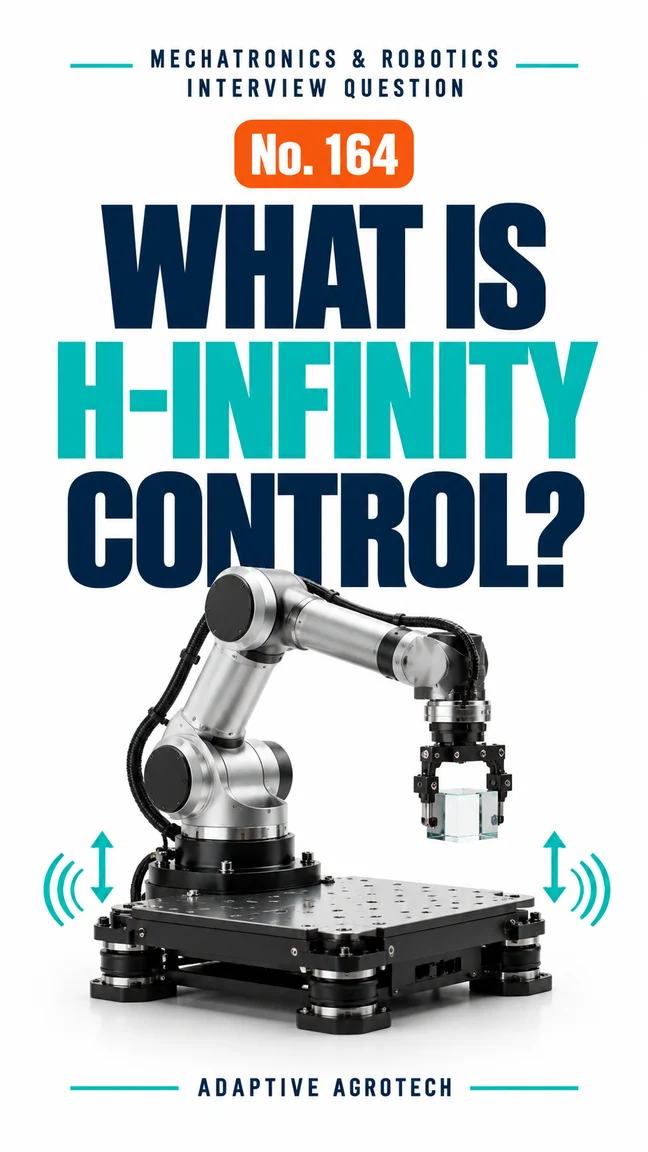
Control systemsNo. 164

What Is H-Infinity Control?

H infinity control limits the worst case amplification from disturbances to selected outputs. For a stable linear system, its H infinity norm measures the largest gain across frequency and input directions.

Watch & explore
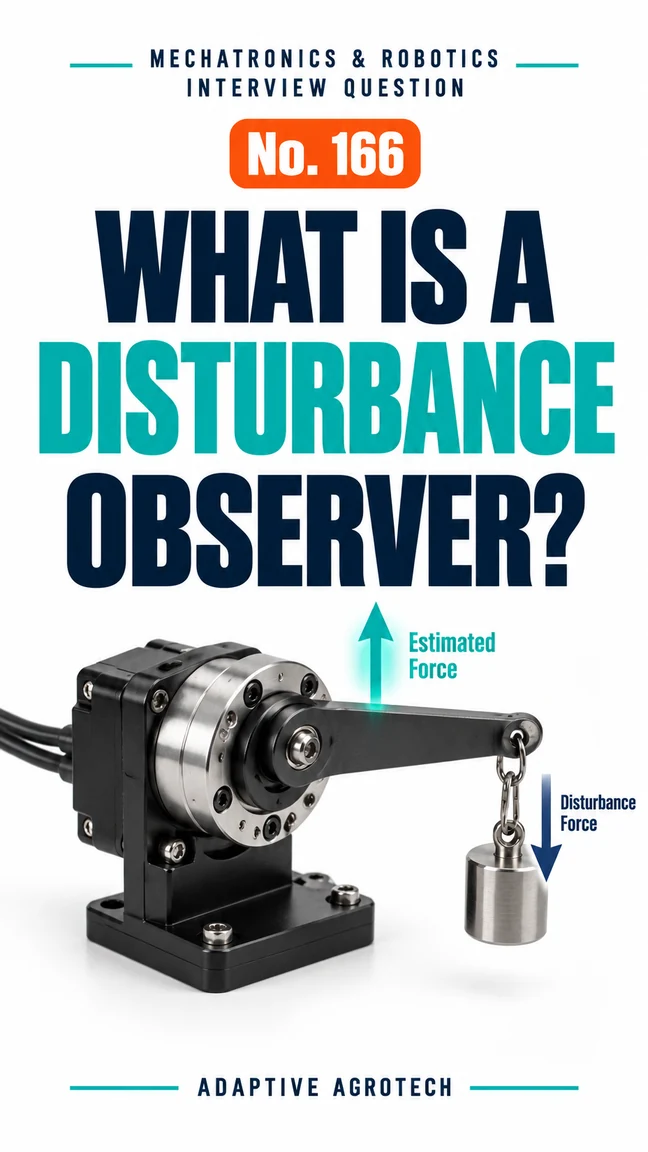
Control systemsNo. 166

What Is a Disturbance Observer?

A disturbance observer estimates an unknown influence from the robot input, measured output, and a nominal model. The estimate can include external loads and some model mismatch, depending on its structure and assumptions.

Watch & explore