Skip to content
Adaptive AgroTech NetworkUniversity of Southern Denmark · SDU Drone Center
Robotics · Mechatronics · Intelligent systems

Short videos.
Lasting understanding.

Explore one engineering idea at a time. Watch a short lesson, read the key concepts and test your understanding before your next interview, project or class.

222 topics found

Video · Key ideas · Check your understanding

Motion planningNo. 084

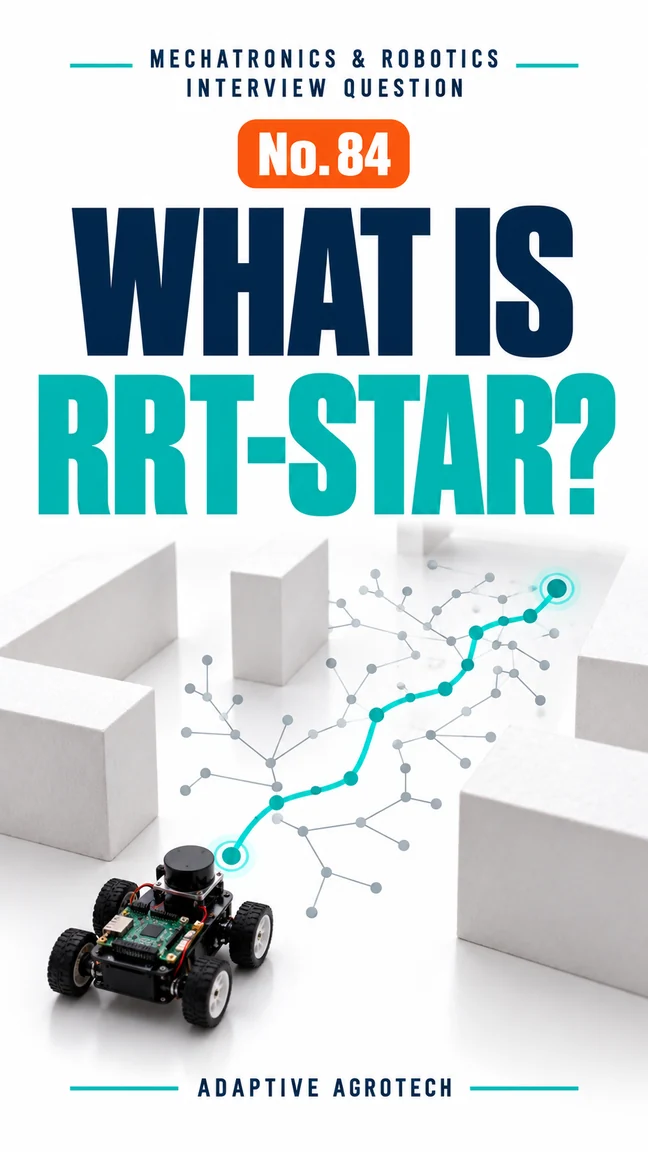
What is RRT-Star?

RRT* improves a sampled search tree by choosing lower cost parents and rewiring nearby connections. Continued search can reduce path cost, while asymptotic optimality does not guarantee an exact optimum in a short run.

Watch & explore

Motion planningNo. 085

What is D-Star Lite?

D* Lite replans on a graph by reusing earlier search information when travel costs change. It repairs affected values and updates the route, while still relying on current sensing and appropriate motion control.

Watch & explore
Motion planningNo. 086

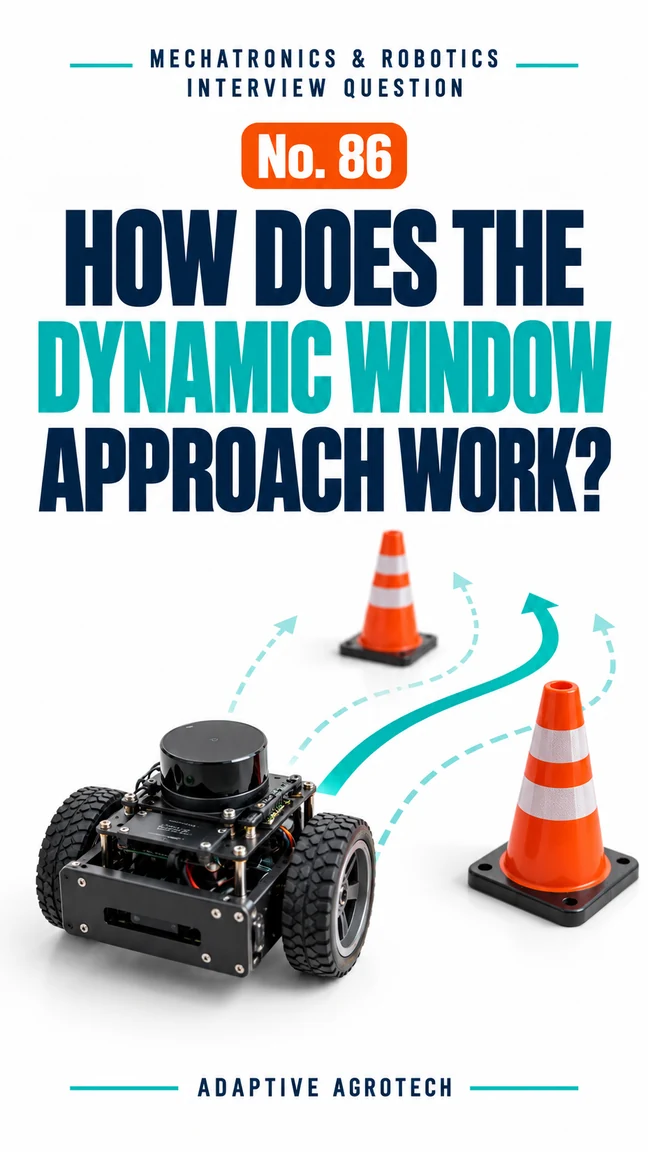
What is the Dynamic Window Approach?

The dynamic window approach selects a reachable speed and turn rate by predicting short trajectories. It rejects commands that cannot stop before obstacles, then scores remaining candidates for progress and clearance.

Watch & explore
Motion planningNo. 087

What is an Artificial Potential Field?

Artificial potential fields combine attraction toward a goal with repulsion from nearby obstacles. Following the resulting descent direction gives reactive motion, but opposing effects can cancel at a local minimum before the goal.

Watch & explore
Motion planningNo. 088

What is a Velocity Obstacle?

A velocity obstacle identifies robot velocities that predict collision with a moving object. Relative geometry and assumed motion define the forbidden set; selected alternatives must also be reachable and updated as motion changes.

Watch & explore
Motion planningNo. 089

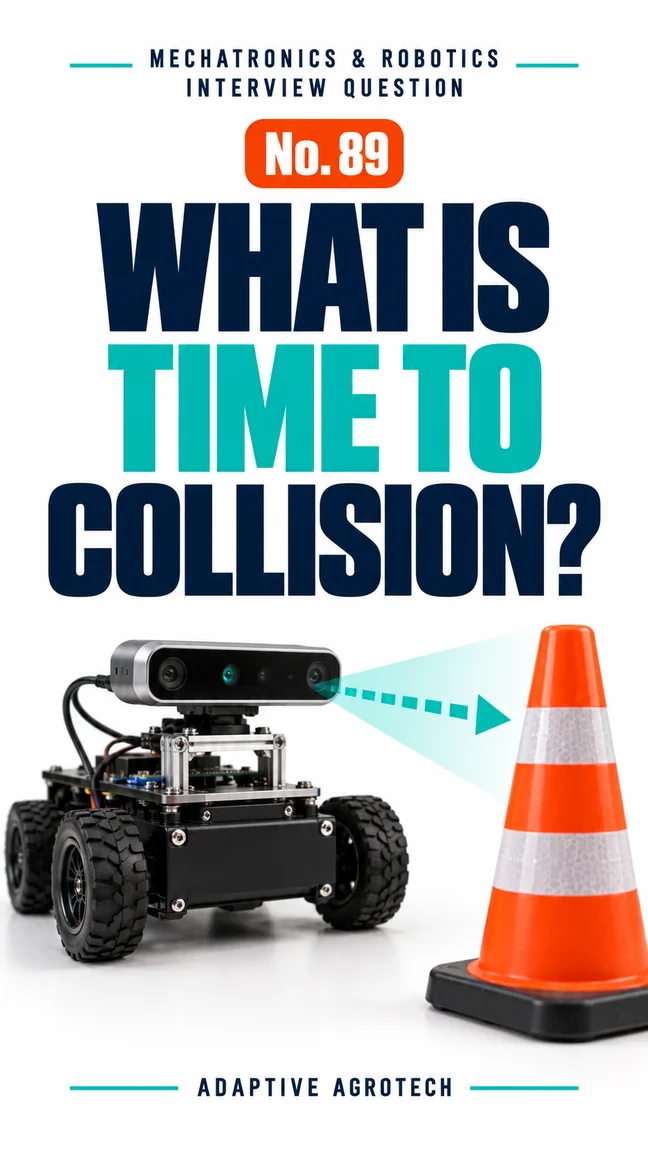
What is Time to Collision?

Time to collision predicts the time remaining before contact under an assumed motion model. Straight closing motion permits clearance divided by closing speed, while crossing trajectories require geometry and uncertainty to be considered.

Watch & explore
Control systemsNo. 090

What is Pure Pursuit Path Tracking?

Pure pursuit tracks a path by steering along a tangent circular arc toward a point ahead. Look ahead distance controls responsiveness and corner cutting, while the tracker still needs separate collision checks.

Watch & explore
Control systemsNo. 091

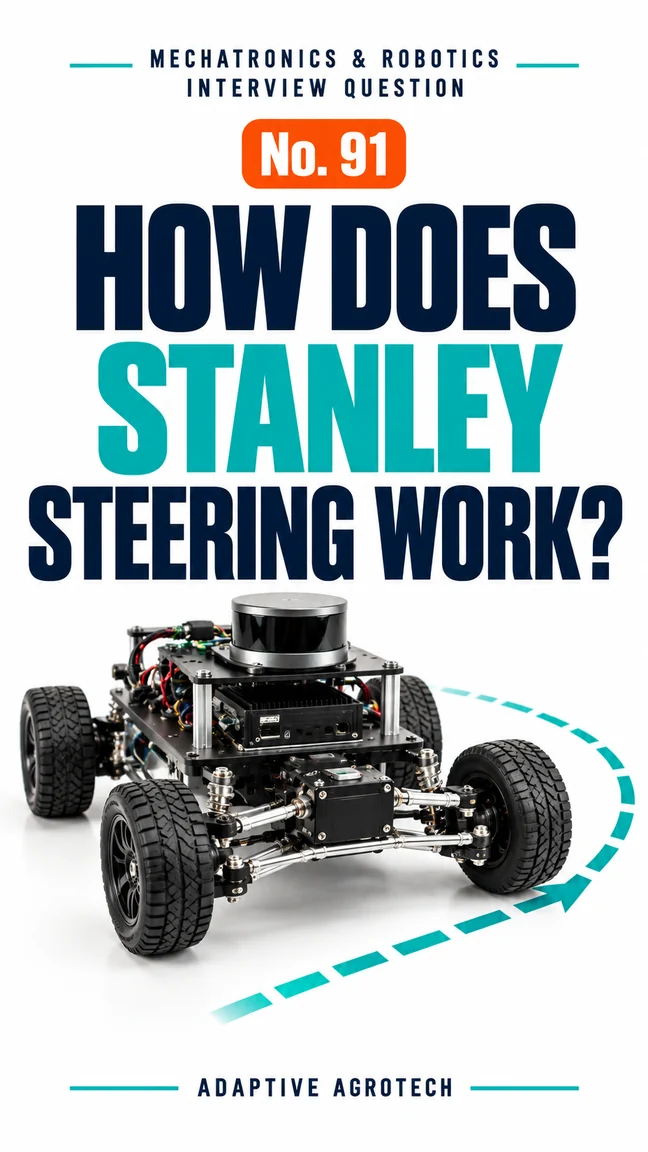
What is the Stanley Steering Controller?

The Stanley controller combines heading error with front axle cross track error to steer a car like robot. Speed scales the lateral correction, and practical implementations must handle low speed behavior and steering limitations.

Watch & explore
Motion planningNo. 092

What is Trajectory Optimization?

Trajectory optimization adjusts robot states and commands to improve a chosen objective while satisfying constraints. Solver results depend on initialization, and a locally optimal sampled trajectory still needs continuous motion clearance checks.

Watch & explore
Robot kinematicsNo. 093

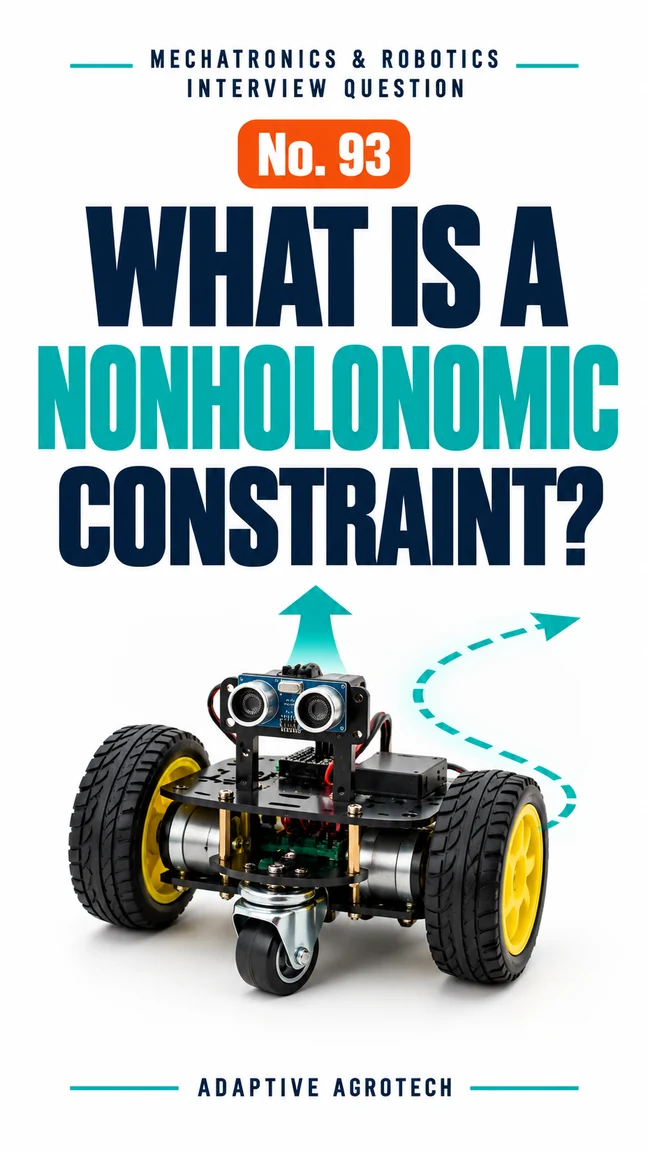
What is a Nonholonomic Constraint?

A nonholonomic constraint limits instantaneous velocities without reducing all positions reachable over time. Rolling wheels illustrate this distinction: a car cannot slide sideways immediately, yet sequences of arcs can change its lateral position.

Watch & explore
Robot kinematicsNo. 094

What is a Robot Jacobian?

The robot Jacobian maps joint rates to instantaneous tool velocity at a particular configuration. Its columns describe individual joint contributions, making it useful for local motion and force calculations rather than complete path planning.

Watch & explore
Robot kinematicsNo. 095

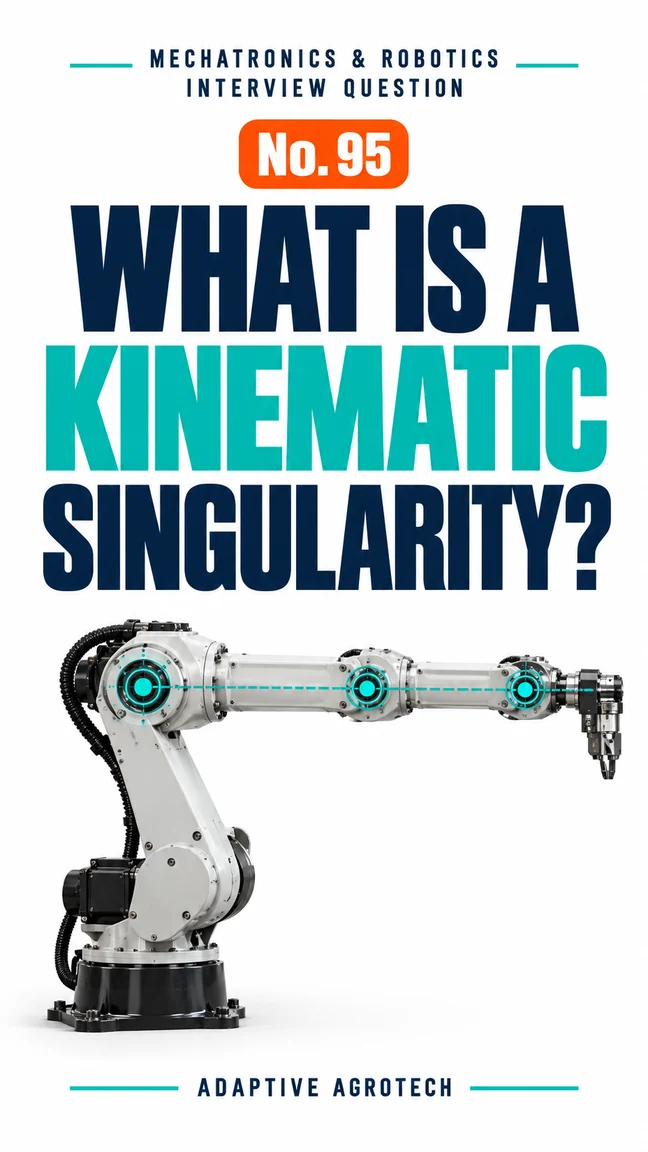
What is a Kinematic Singularity?

A kinematic singularity occurs where the robot Jacobian loses rank and an instantaneous tool motion direction disappears. Near such poses, inverse velocity commands can grow large even when a target position remains reachable.

Watch & explore
Robot kinematicsNo. 096

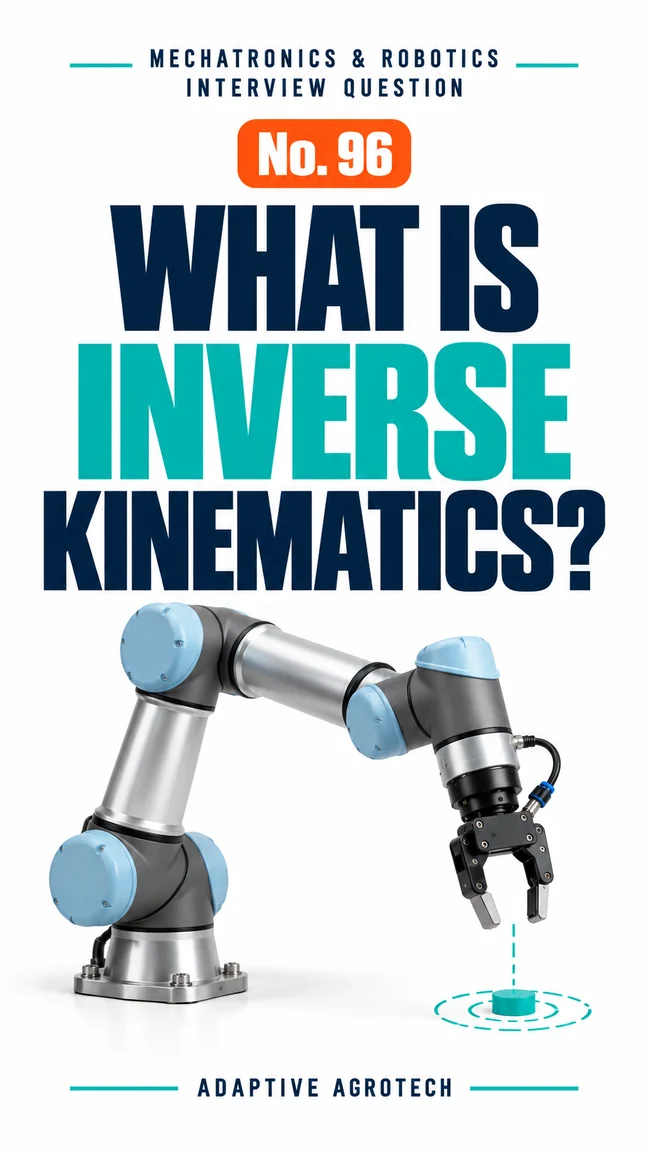
What is Inverse Kinematics?

Inverse kinematics finds joint values for a desired tool pose. A target can have several solutions or none, so solution choice must respect joint limits and the complete arm motion must be checked.

Watch & explore
Embedded electronicsNo. 097

What is a Pull-Up Resistor?

A pull-up resistor defines a digital input’s idle high state while allowing a switch to pull it low. Its resistance must balance leakage, signal rise time, current, and voltage limits.

Watch & explore
Embedded electronicsNo. 098

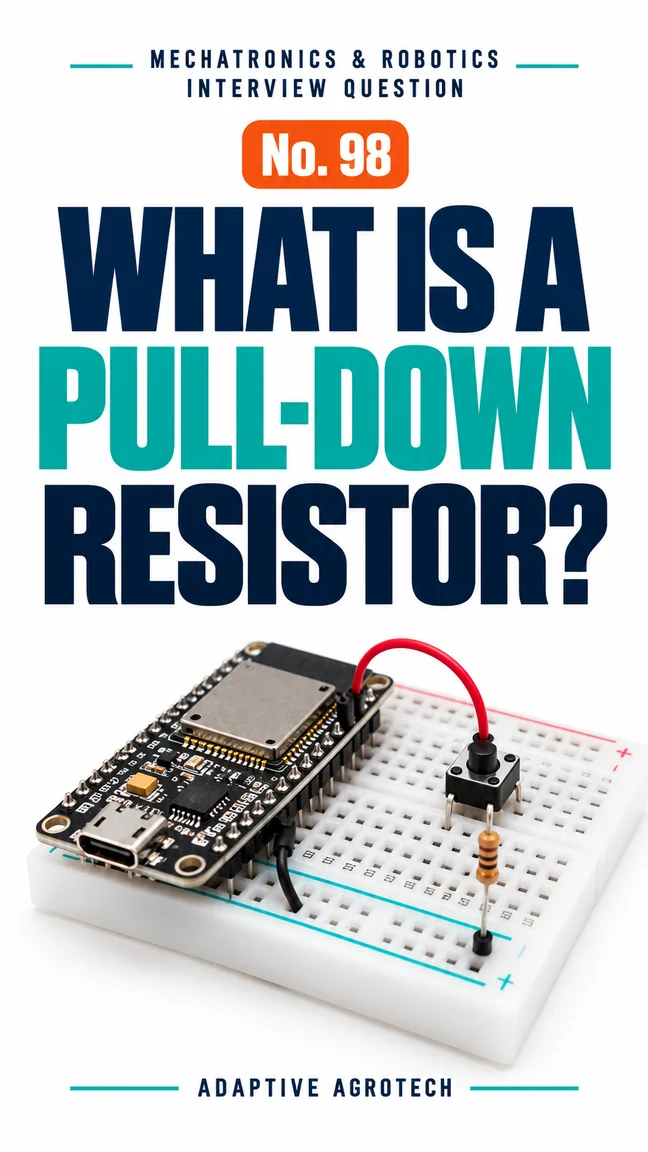
What is a Pull-Down Resistor?

A pull-down resistor holds an undriven digital input low and limits current when a switch drives it high. Reliable selection depends on input leakage, logic thresholds, and the circuit’s susceptibility to noise.

Watch & explore
Embedded electronicsNo. 099

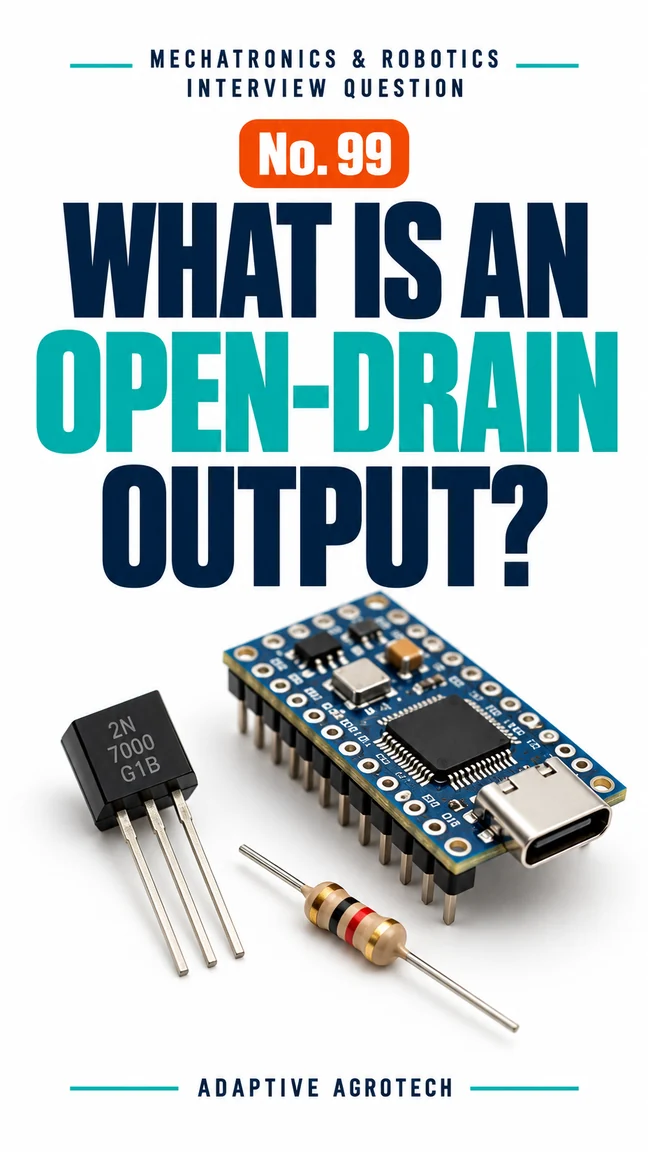
What is an Open-Drain Output?

An open-drain output either pulls a line low or releases it; an external pull-up supplies the high state. Compatible outputs can share a line, subject to voltage, sink current, and rise time limits.

Watch & explore
Embedded electronicsNo. 100

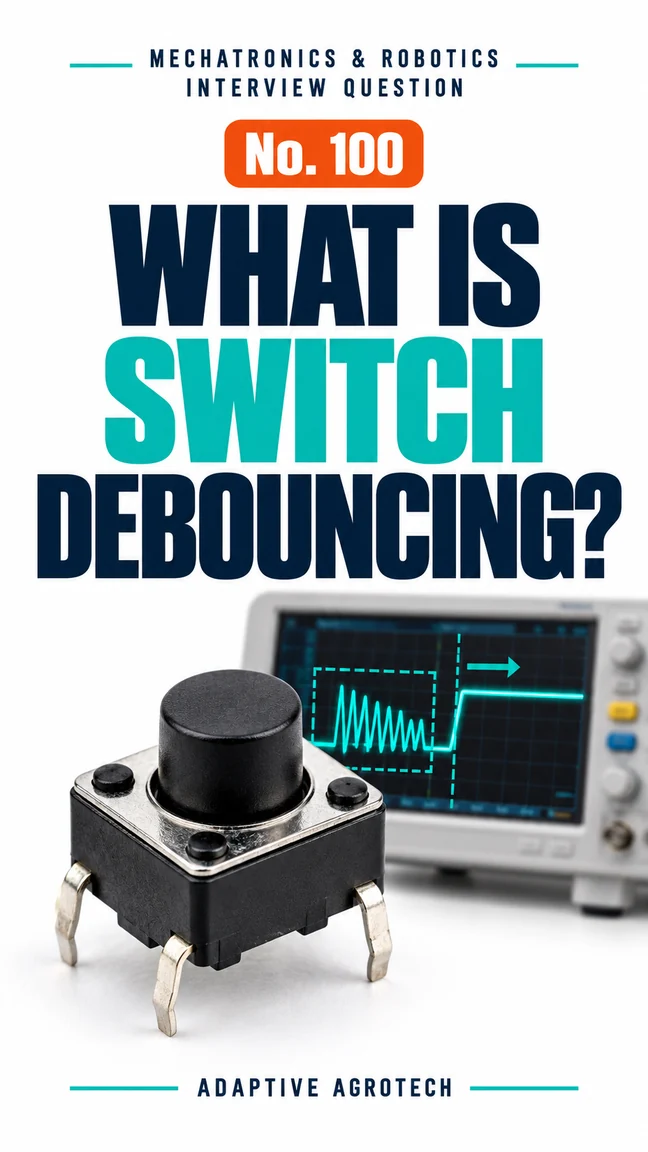
What is Switch Debouncing?

Switch debouncing prevents mechanical contact bounce from becoming multiple digital events. A stable state test or suitable hardware rejects brief transitions, while the chosen delay must preserve valid short presses.

Watch & explore
Embedded electronicsNo. 101

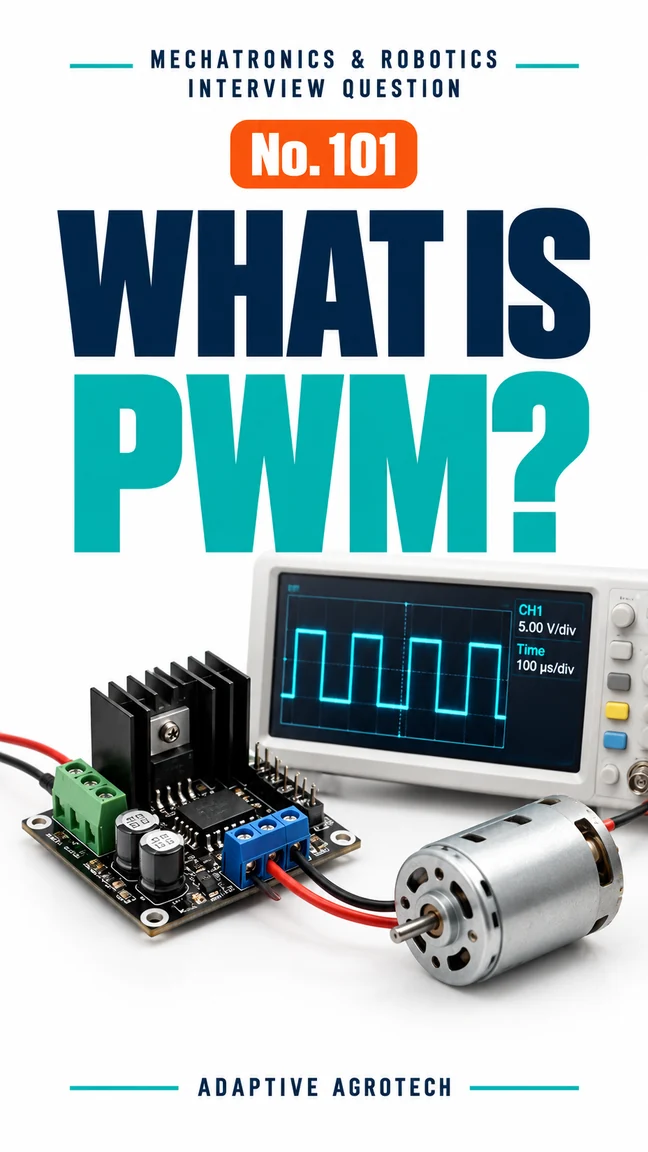
What is PWM?

Pulse width modulation controls a switching signal’s on time within each period. Duty cycle affects average drive voltage, but actual motor speed also depends on current dynamics, load, and feedback control.

Watch & explore
Embedded electronicsNo. 102

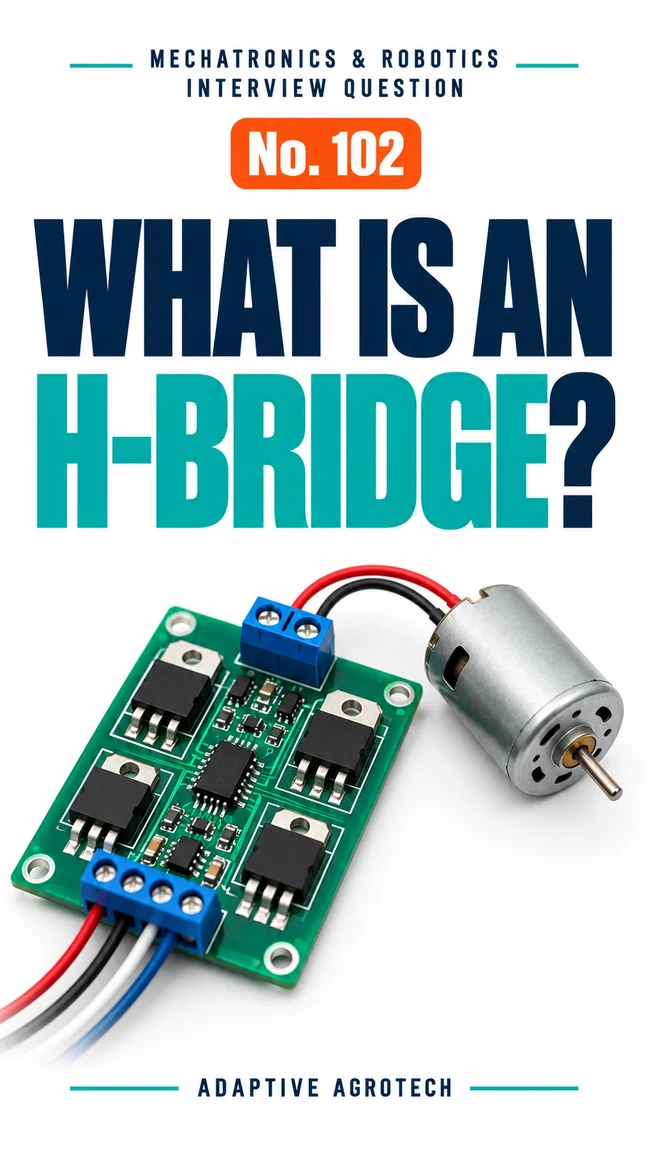
What is an H-Bridge?

An H-bridge reverses motor current using four switches arranged around the motor. Diagonal pairs set direction, while timing, current limits, and recirculation paths prevent damaging supply shorts and manage winding current.

Watch & explore
Embedded electronicsNo. 103

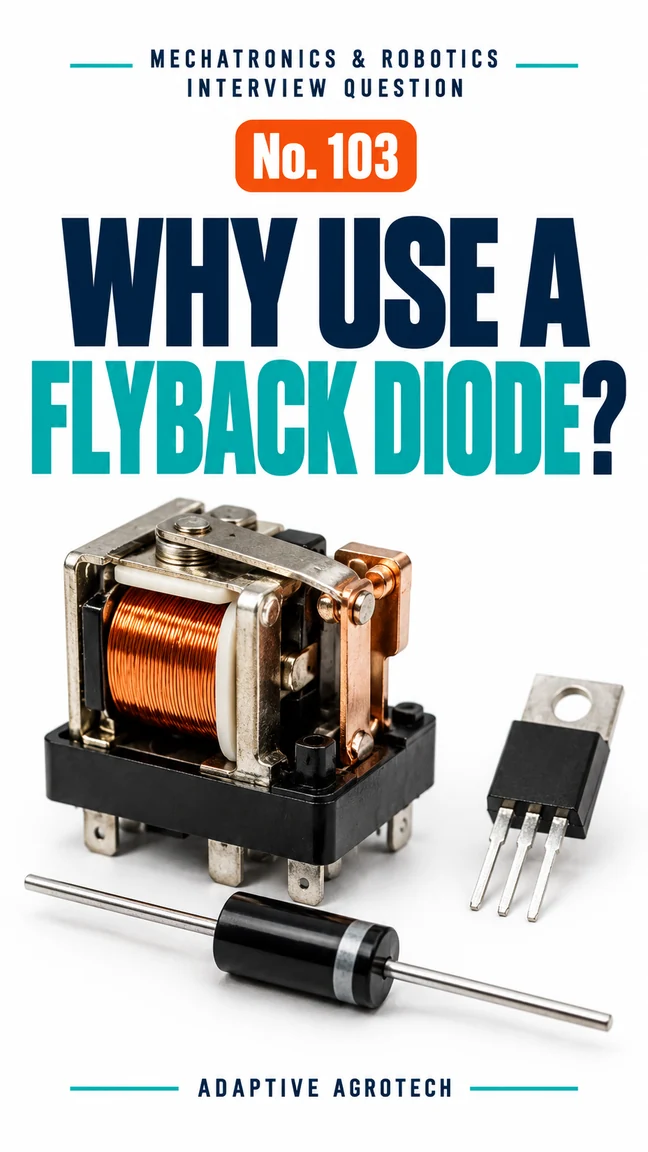
What is a Flyback Diode?

A flyback diode provides a path for inductive coil current after switch-off, limiting the resulting voltage spike. A simple relay connection slows release and should not be copied directly into a bidirectional motor bridge.

Watch & explore
Embedded electronicsNo. 104

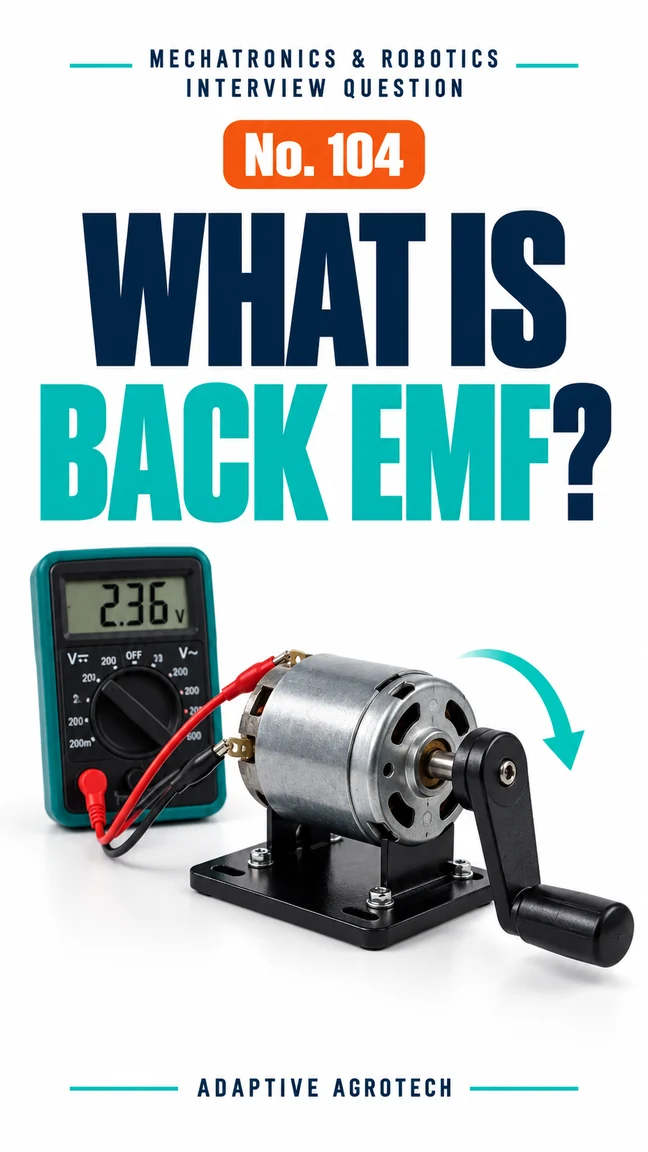
What is Back EMF?

Back EMF is the voltage generated by a spinning motor that opposes its drive voltage. In a simple steady model it reduces winding current, explaining why a slowing or jammed wheel can draw more current.

Watch & explore
Embedded electronicsNo. 105

What is Motor Stall Current?

Motor stall current is measured with the shaft stopped at a stated voltage, where rotational back EMF is absent. It can greatly exceed a safe continuous current and requires stall detection and drive protection.

Watch & explore
Sensors & perceptionNo. 107

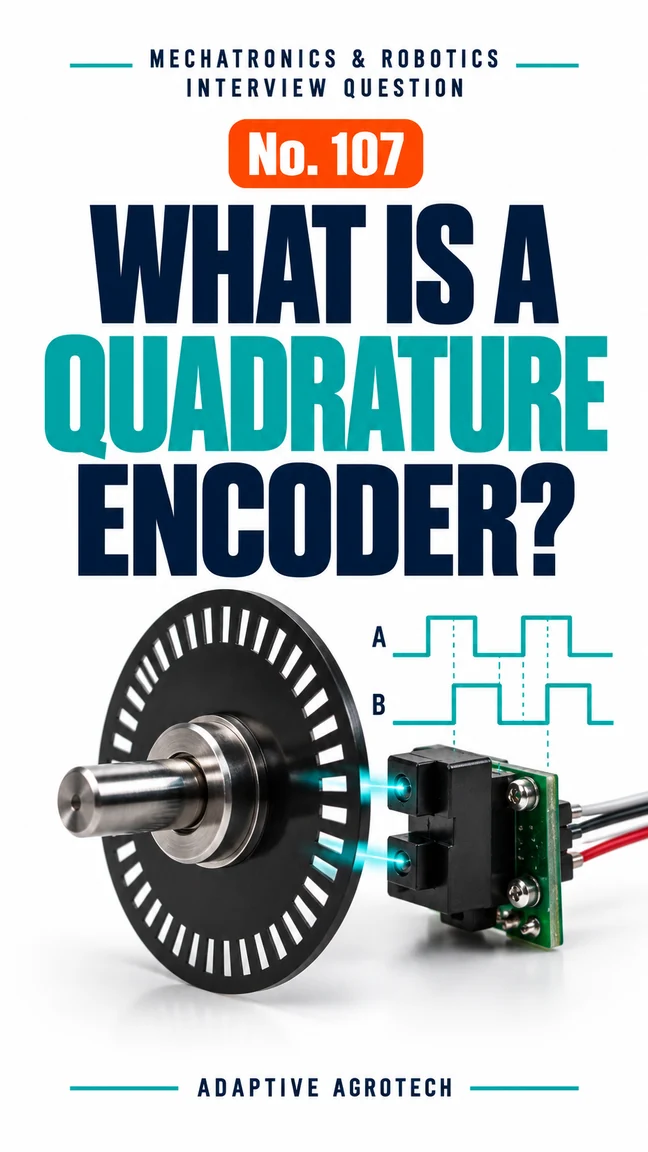
What is a Quadrature Encoder?

A quadrature encoder supplies two signals separated by a quarter cycle, revealing rotation direction and rate. Four-edge decoding improves count resolution, but converting counts into robot travel still depends on mechanics and wheel slip.

Watch & explore
Sensors & perceptionNo. 108

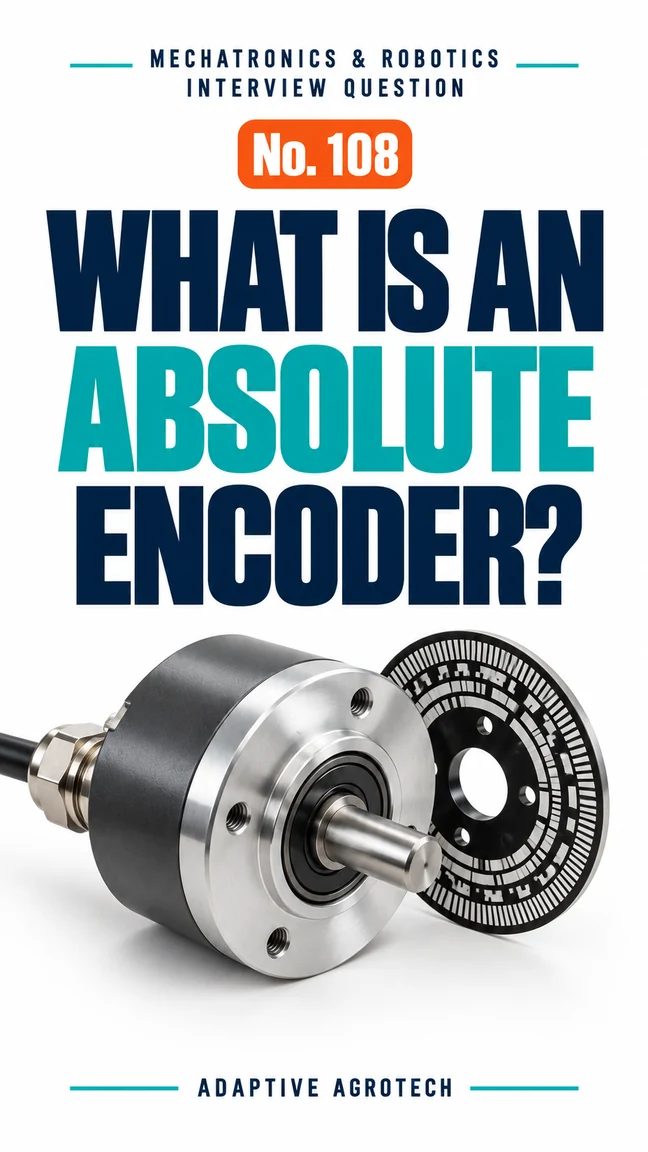
What is an Absolute Encoder?

An absolute encoder reports a position code that can identify shaft angle at startup. Single-turn and multi-turn devices differ, and useful joint measurements still require mounting, calibration, and an understanding of accuracy.

Watch & explore