Skip to content
Adaptive AgroTech NetworkUniversity of Southern Denmark · SDU Drone Center
Robotics · Mechatronics · Intelligent systems

Short videos.
Lasting understanding.

Explore one engineering idea at a time. Watch a short lesson, read the key concepts and test your understanding before your next interview, project or class.

155 topics found

Video · Key ideas · Check your understanding

Control systemsNo. 172

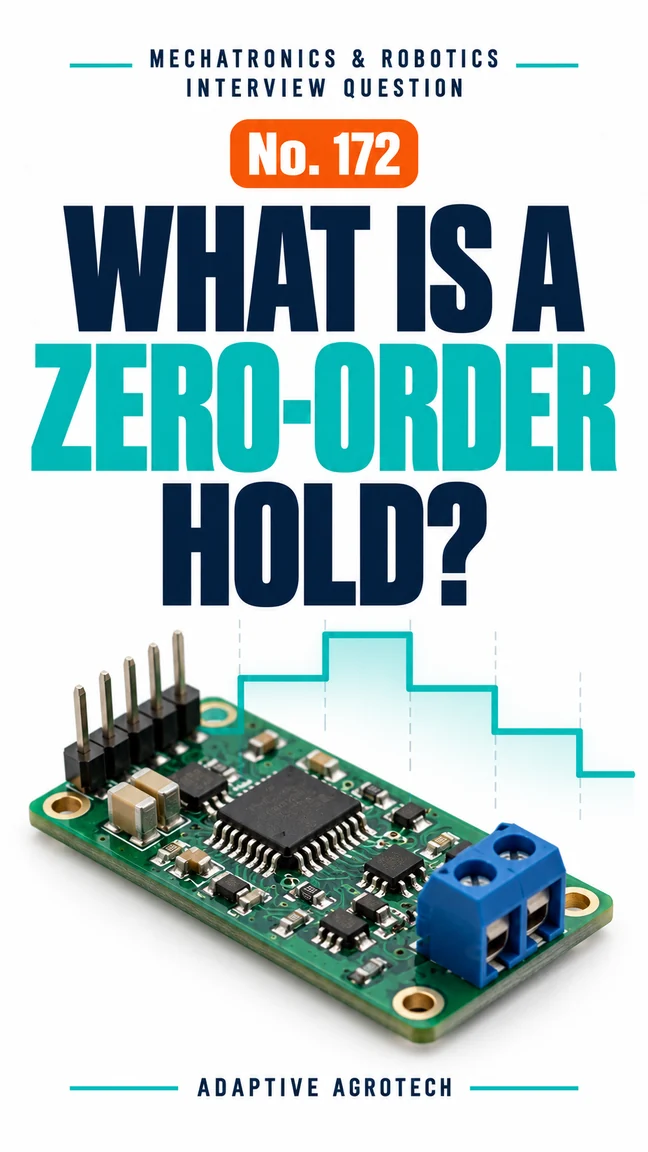
What Is a Zero-Order Hold?

A zero order hold keeps each sampled command constant until the next update. Its output is a staircase. It does not draw a straight line between samples or predict the next command.

Watch & explore
Embedded electronicsNo. 175

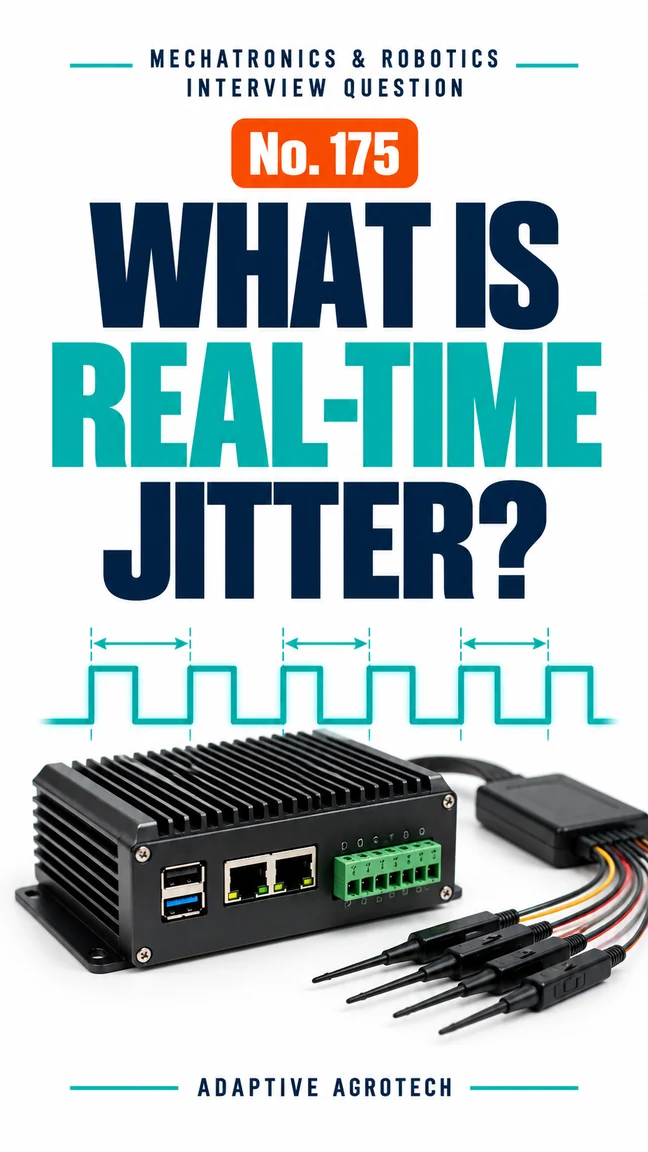
What Is Real-Time Jitter?

Real time jitter is variation in when a periodic task starts, finishes, or releases its output. A loop planned every millisecond can have irregular intervals even when its average frequency looks correct. Specify the event you measure.

Watch & explore
AI & machine learningNo. 182

What Is the Bellman Equation?

The Bellman expectation equation relates a state’s value to expected immediate reward plus discounted next state value. The expectation averages actions from the policy and transitions from the environment.

Watch & explore
AI & machine learningNo. 192

What Is Curriculum Learning in Robotics?

Curriculum learning changes the training tasks or their difficulty as learning progresses. A robot can first solve accessible cases, then encounter harder conditions once its current policy produces useful behavior more consistently.

Watch & explore
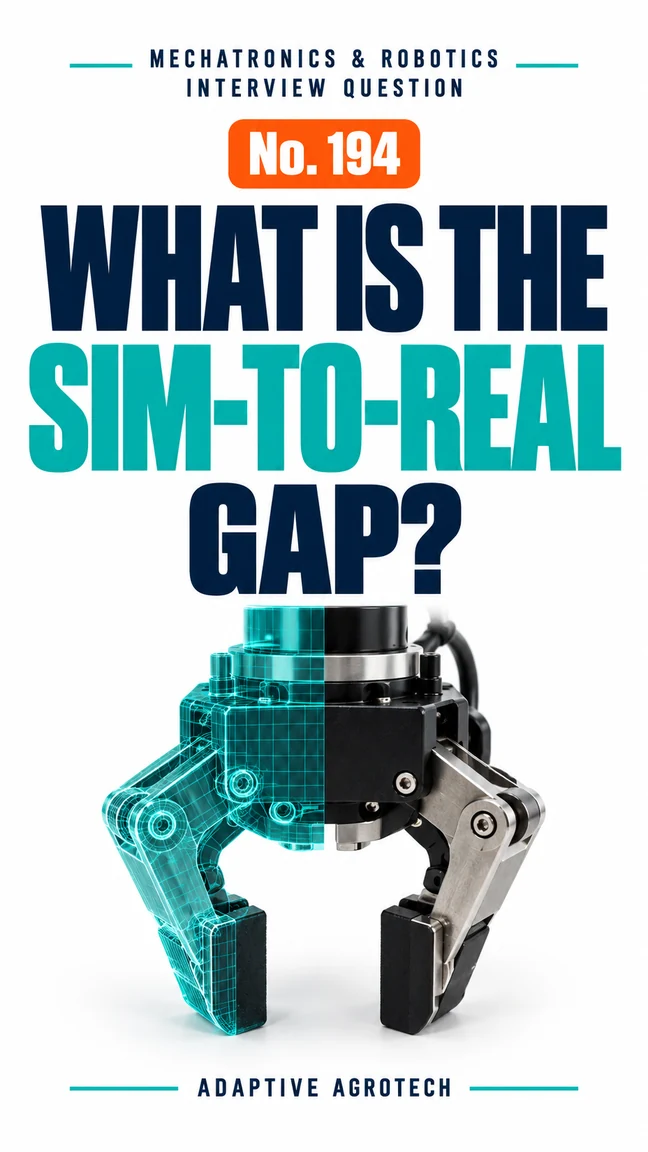
AI & machine learningNo. 194

What Is the Sim-to-Real Gap?

The sim to real gap is the mismatch between simulated training conditions and the physical robot. Differences in contact, friction, sensing, actuator response, and timing can change the consequences of the very same command.

Watch & explore
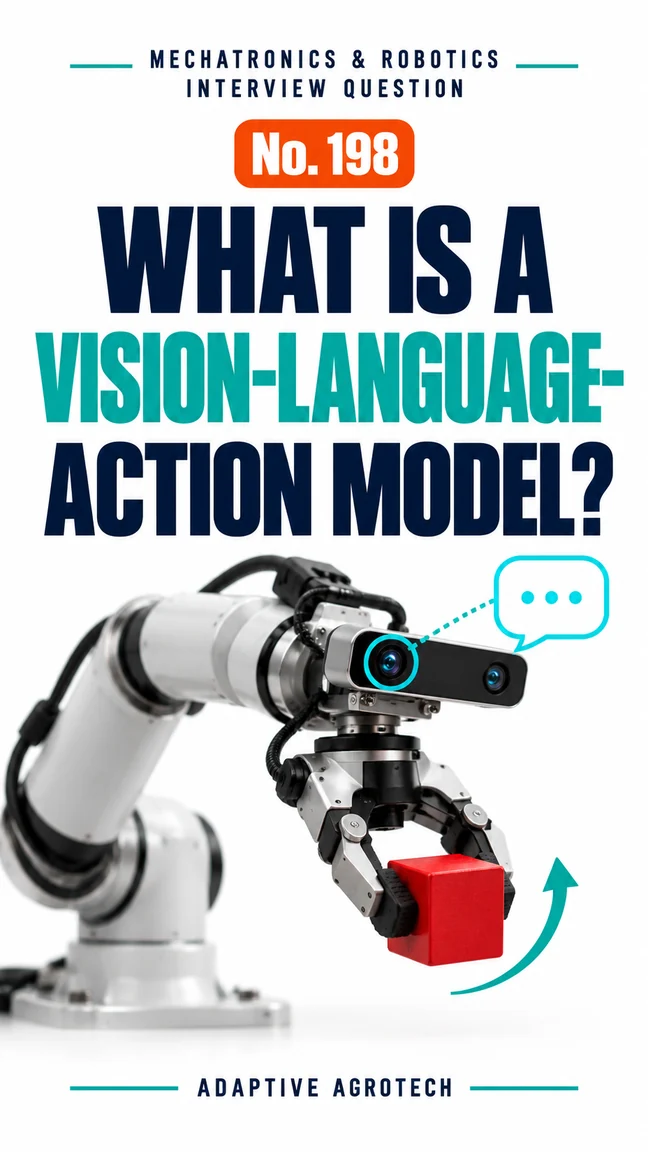
AI & machine learningNo. 198

What Is a Vision-Language-Action Model?

A vision language action model connects visual observations and language instructions to robot actions. It may also use joint positions or other robot state. Its output describes movements, rather than only a written answer.

Watch & explore
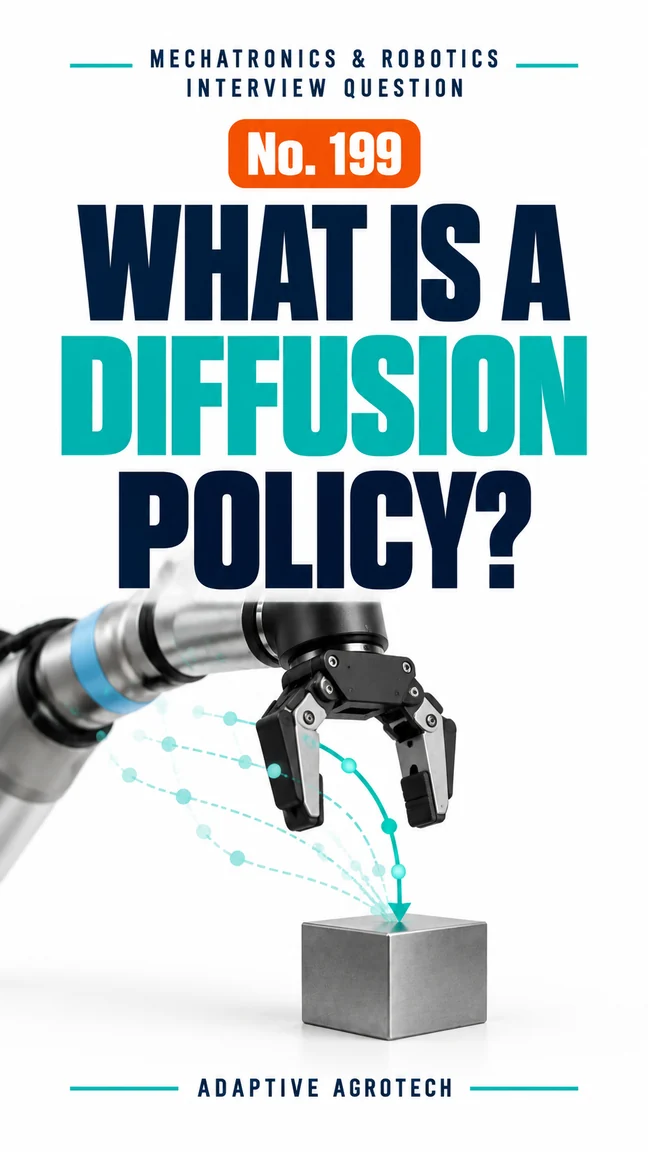
AI & machine learningNo. 199

What Is a Diffusion Policy?

A diffusion policy learns to generate robot action sequences by gradually removing noise. During inference, observations condition this process, so an initially noisy sequence becomes a candidate movement consistent with the learned demonstrations.

Watch & explore
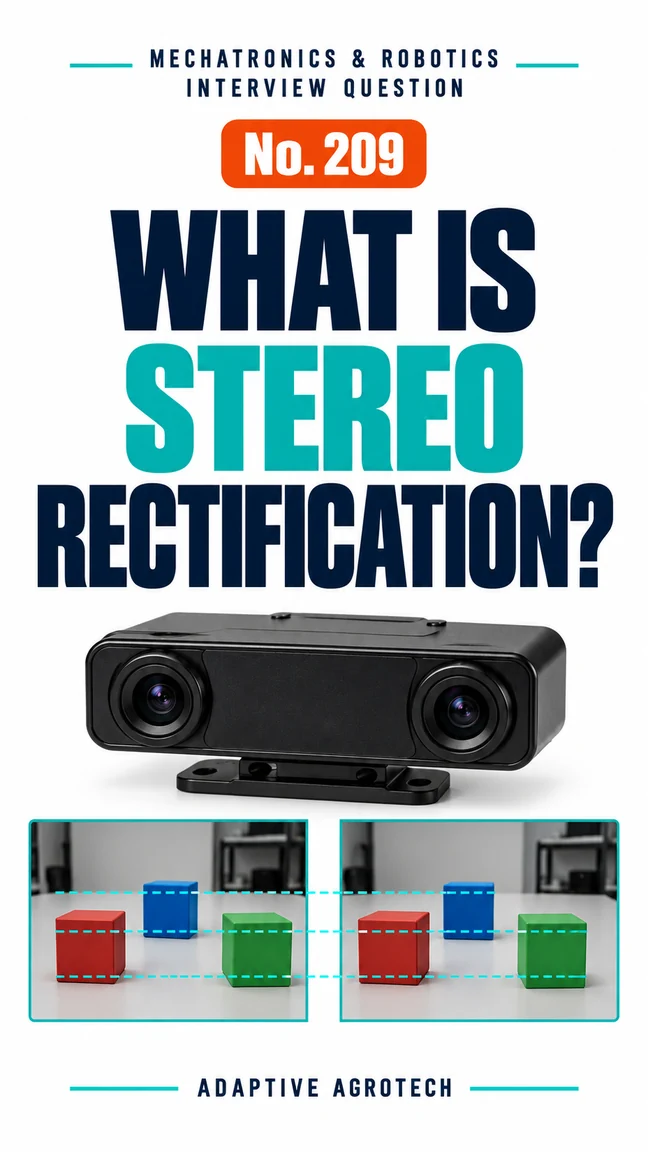
Computer visionNo. 209

What Is Stereo Rectification?

Stereo rectification warps a stereo image pair so corresponding epipolar lines become aligned. For a common horizontal stereo arrangement, matching points appear on the same image row. The rectified camera models describe this new geometry.

Watch & explore
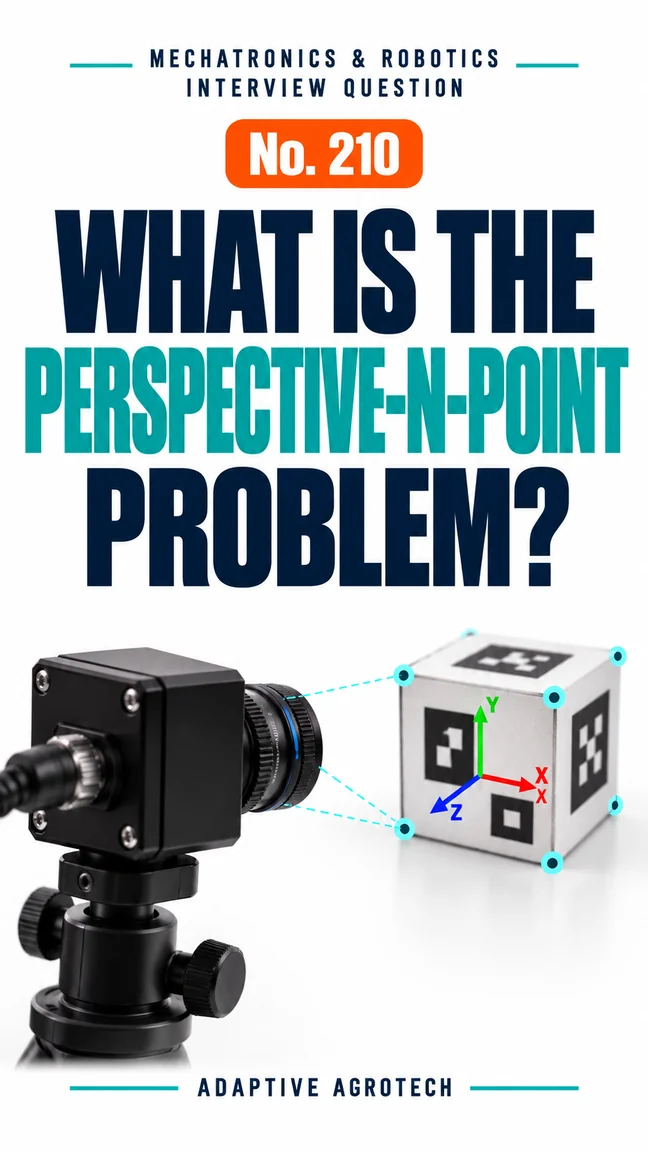
Computer visionNo. 210

What Is the Perspective-n-Point Problem?

Perspective n point estimates a camera relative pose from known three dimensional points and their corresponding two dimensional image locations. The camera intrinsics are also inputs. The unknowns are the rotation and translation relating the coordinate frames.

Watch & explore
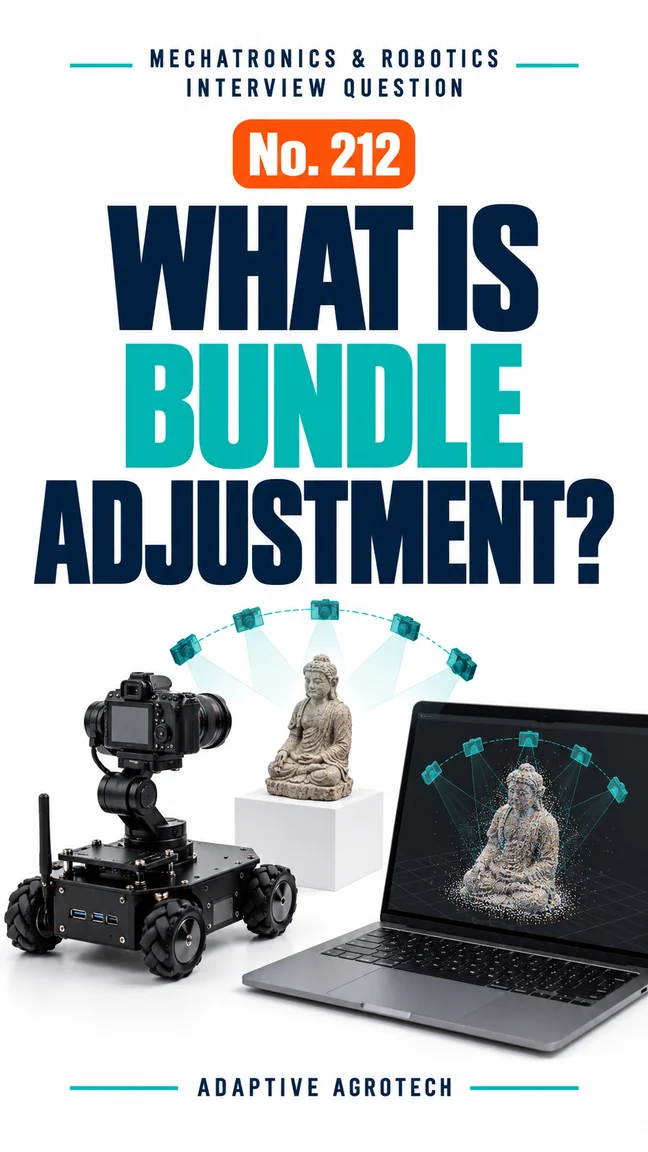
Computer visionNo. 212

What Is Bundle Adjustment?

Bundle adjustment jointly refines camera poses and three dimensional scene points using their image observations. It minimizes a reprojection objective across views. This couples the estimated camera motion with the geometry of the reconstructed scene.

Watch & explore
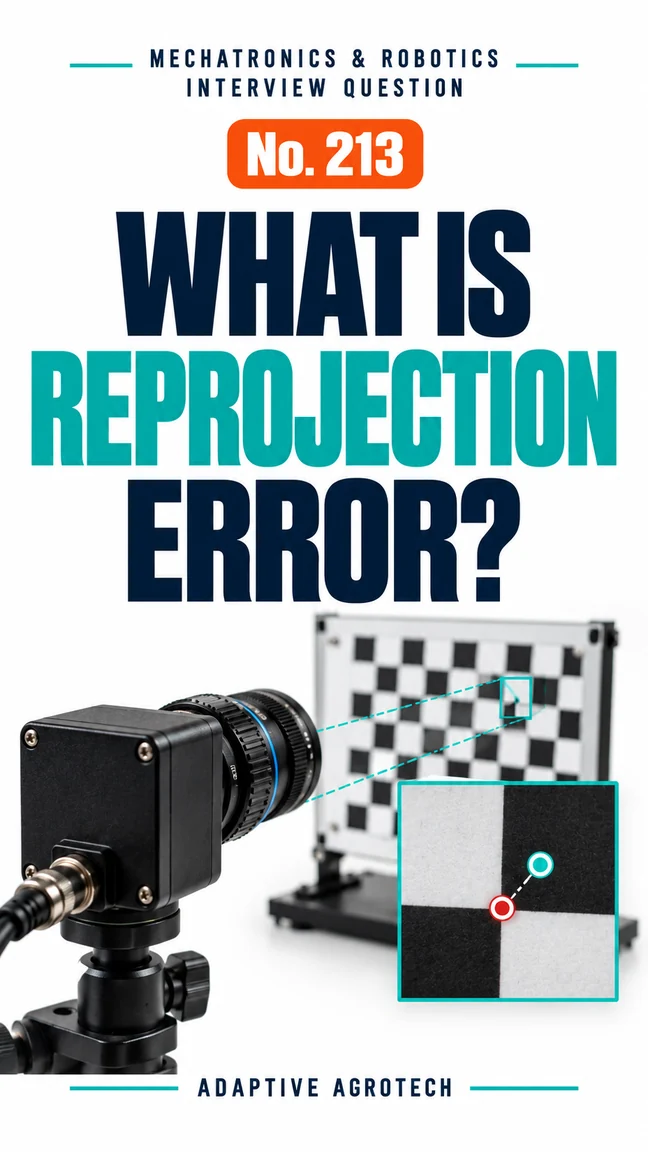
Computer visionNo. 213

What Is Reprojection Error?

Reprojection error measures the difference between an observed image point and the pixel predicted by a camera model and estimated geometry. It is an image space residual, usually reported in pixels, rather than a direct distance error in meters.

Watch & explore