Skip to content
Adaptive AgroTech NetworkUniversity of Southern Denmark · SDU Drone Center
Robotics · Mechatronics · Intelligent systems

Short videos.
Lasting understanding.

Explore one engineering idea at a time. Watch a short lesson, read the key concepts and test your understanding before your next interview, project or class.

24 topics found

Video · Key ideas · Check your understanding

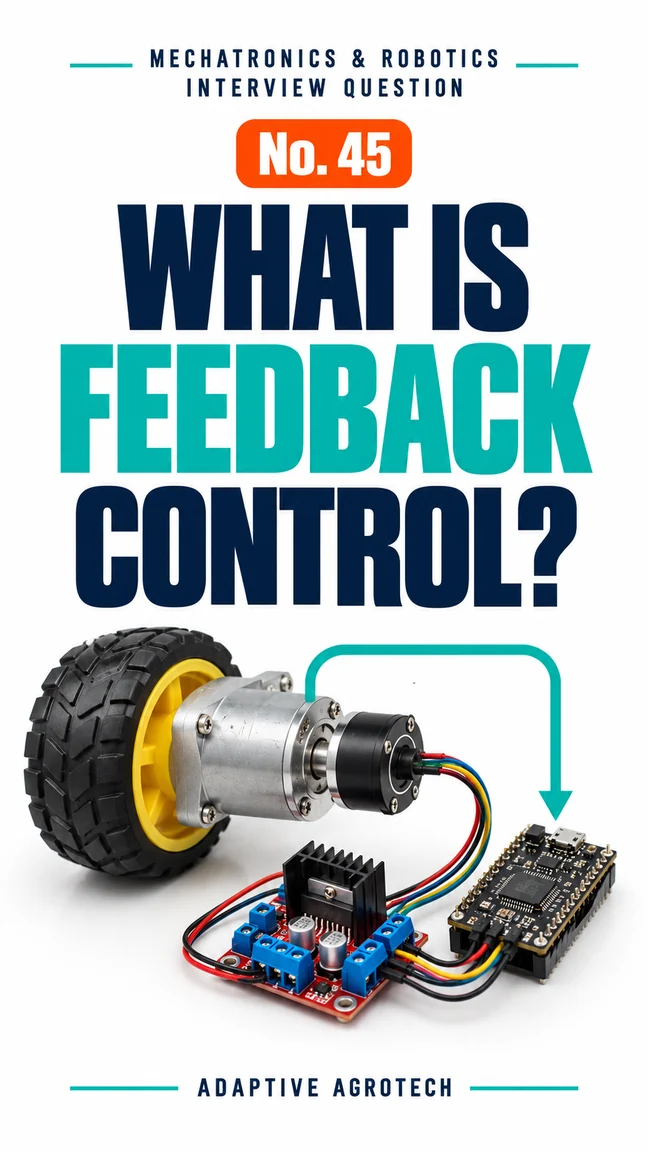
Control systemsNo. 045

What is Feedback Control?

Feedback compares measured robot behavior with a target and changes the next command to reduce error. It can reject changing loads, while excessive gain, sensor noise, or timing delay can instead produce oscillation.

Watch & explore
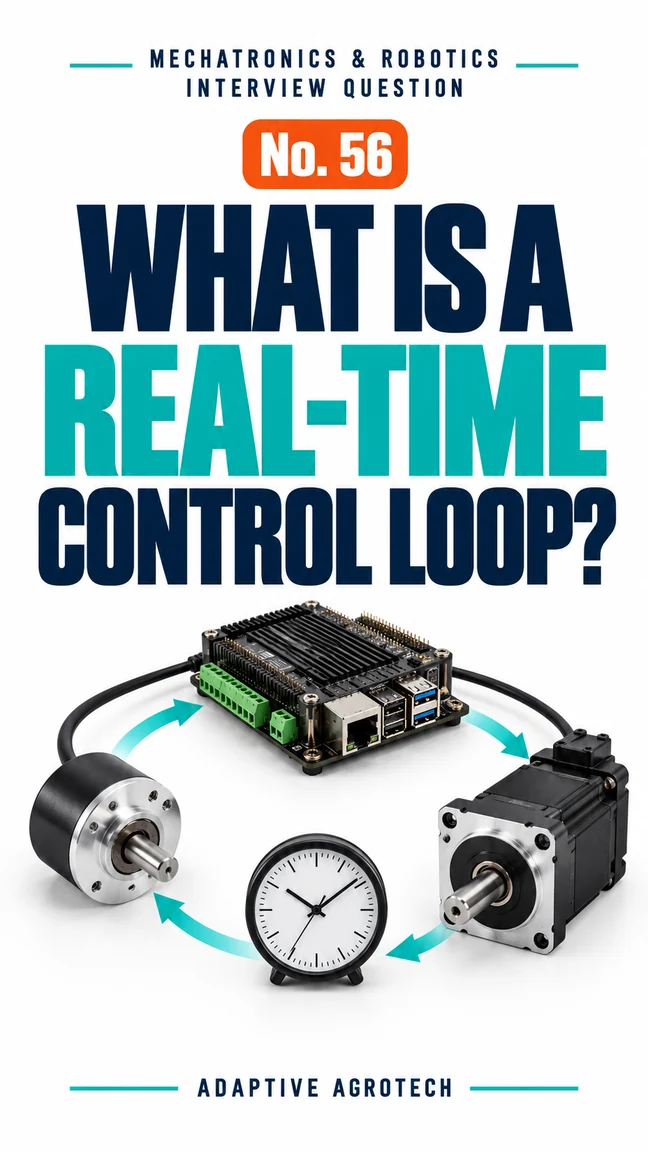
Embedded electronicsNo. 056

What is a Real-Time Control Loop?

Real-time control requires completion before a defined deadline rather than merely good average speed. Sensor acquisition, computation, and output share the timing budget, and worst-case delay and jitter determine whether the chain meets it.

Watch & explore
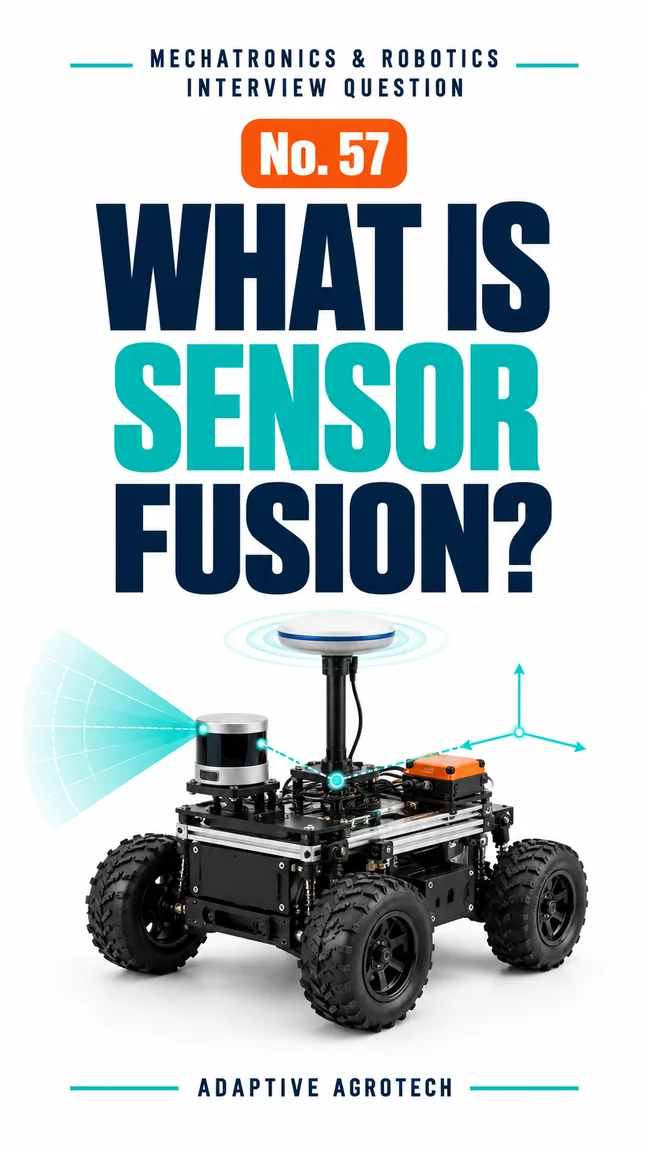
Localization & estimationNo. 057

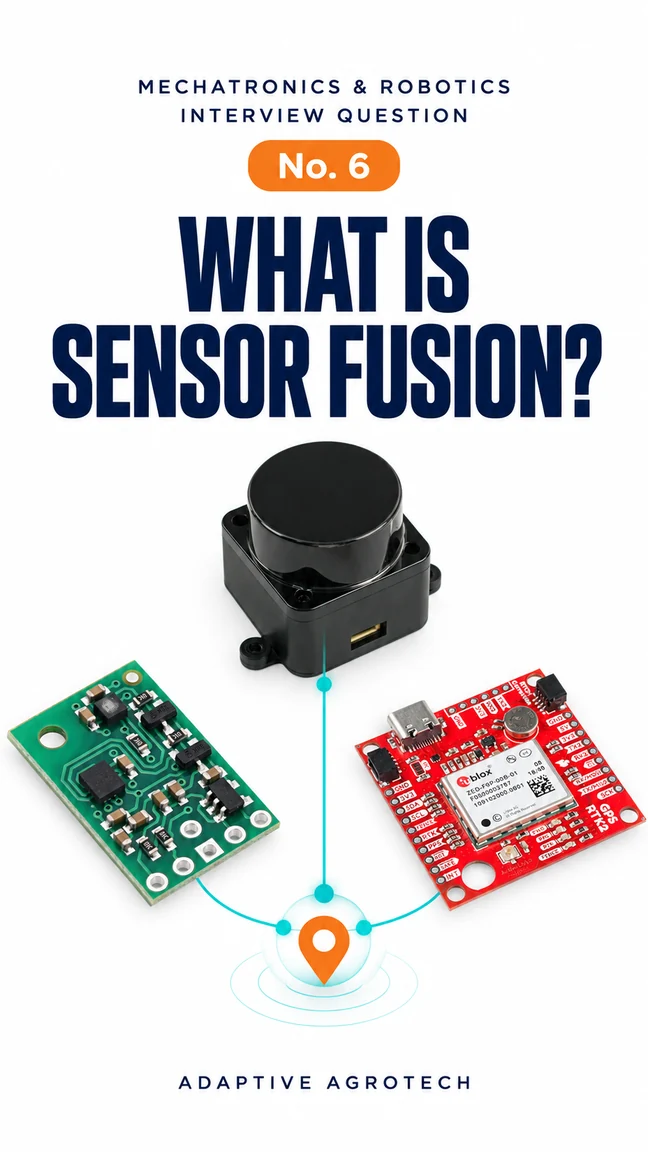
What is Sensor Fusion?

Sensor fusion estimates one shared state from complementary measurements. Fast wheel and gyro updates bridge position fixes, while sound timing, frames, uncertainty, and correlation handling prevent misleading confidence in the fused result.

Watch & explore
Localization & estimationNo. 065

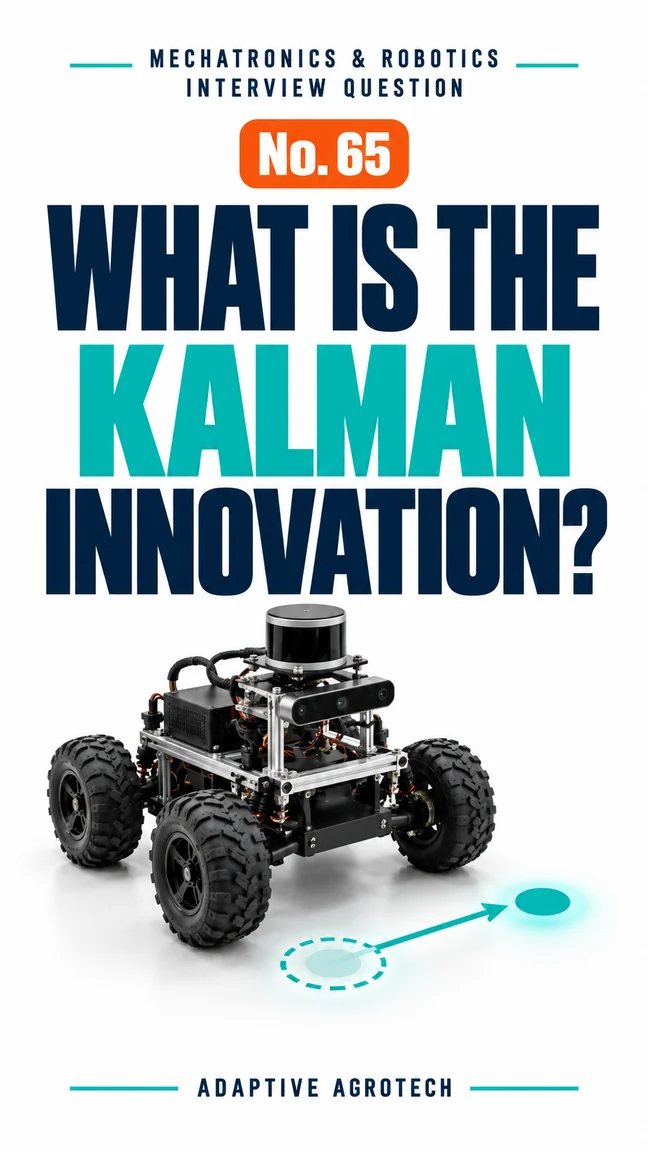
What is the Kalman Innovation?

Kalman innovation is the difference between an actual reading and its prediction. Interpreting it against expected uncertainty helps reveal timing, calibration, and model problems that smooth output alone can conceal.

Watch & explore
Embedded electronicsNo. 100

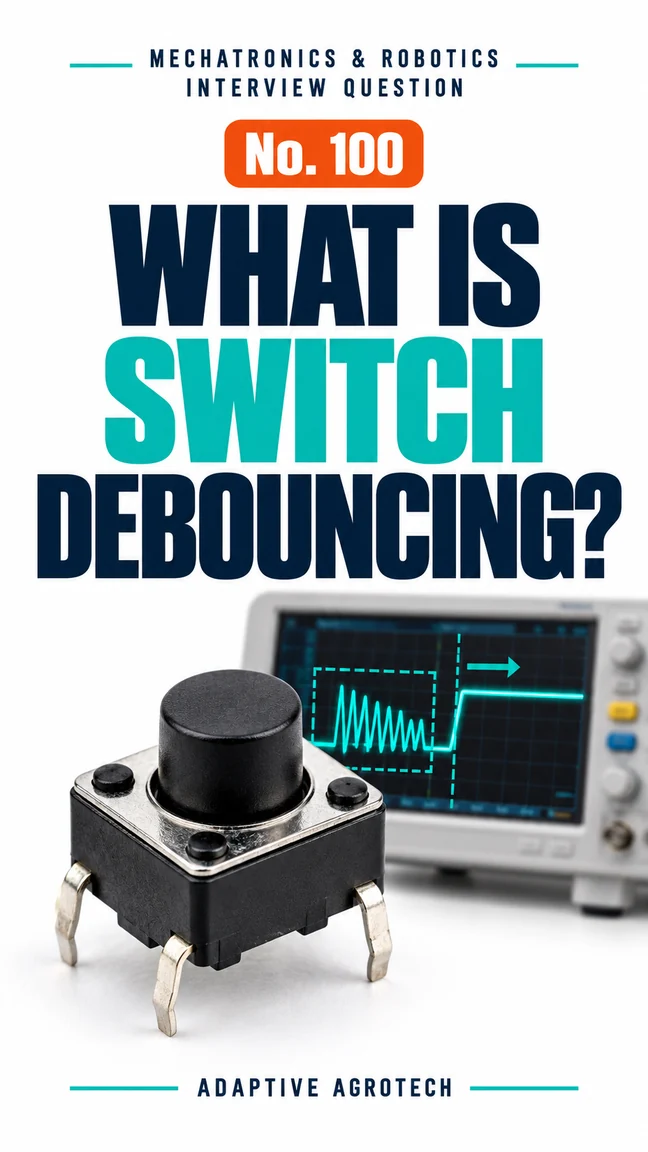
What is Switch Debouncing?

Switch debouncing prevents mechanical contact bounce from becoming multiple digital events. A stable state test or suitable hardware rejects brief transitions, while the chosen delay must preserve valid short presses.

Watch & explore
Embedded electronicsNo. 102

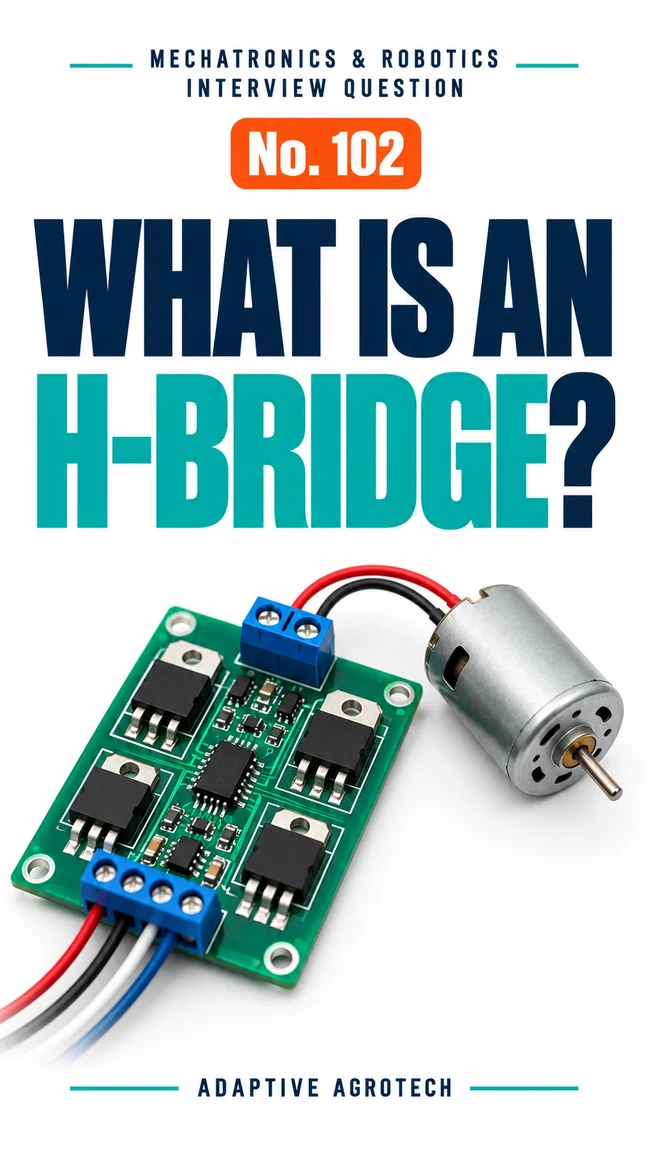
What is an H-Bridge?

An H-bridge reverses motor current using four switches arranged around the motor. Diagonal pairs set direction, while timing, current limits, and recirculation paths prevent damaging supply shorts and manage winding current.

Watch & explore
Sensors & perceptionNo. 113

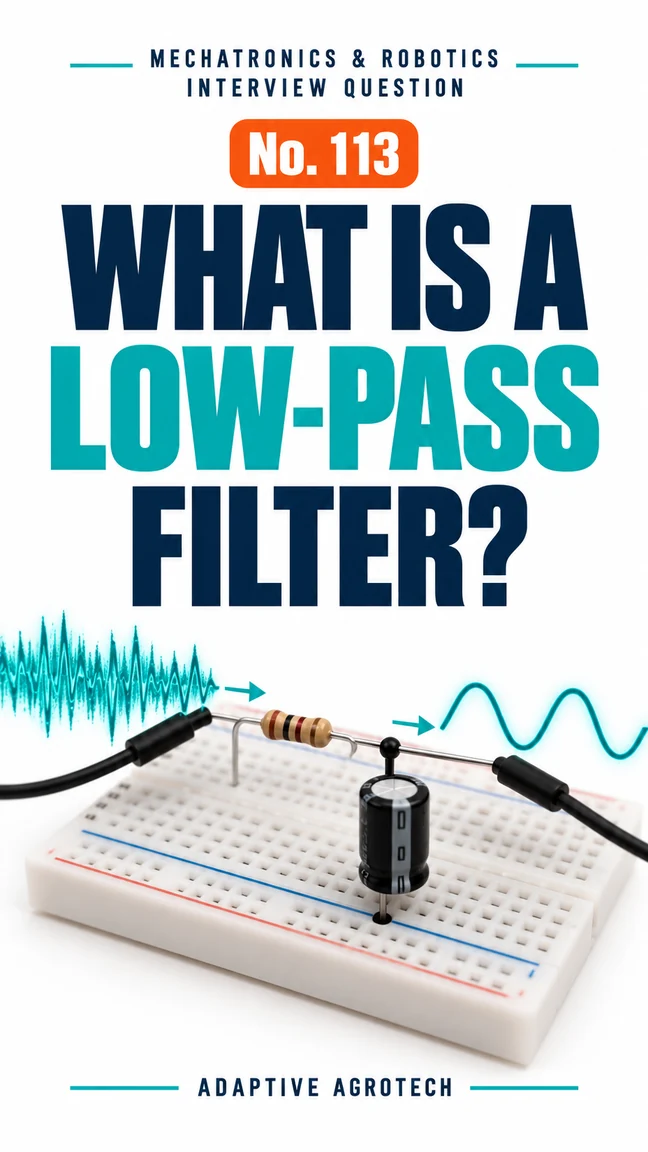
What is a Low-Pass Filter?

A low-pass filter attenuates rapid changes while preserving slower signals, which can smooth robot measurements. Its cutoff sets a bandwidth tradeoff, and the resulting delay can conceal events the controller needs.

Watch & explore
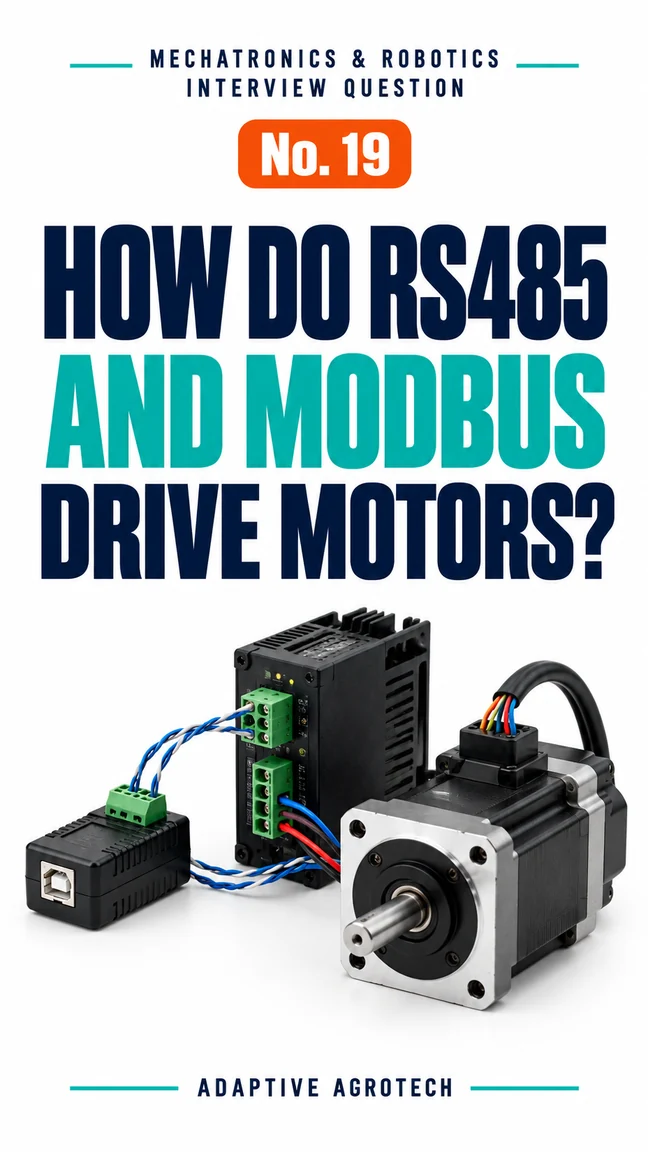
Communication & networksNo. 122

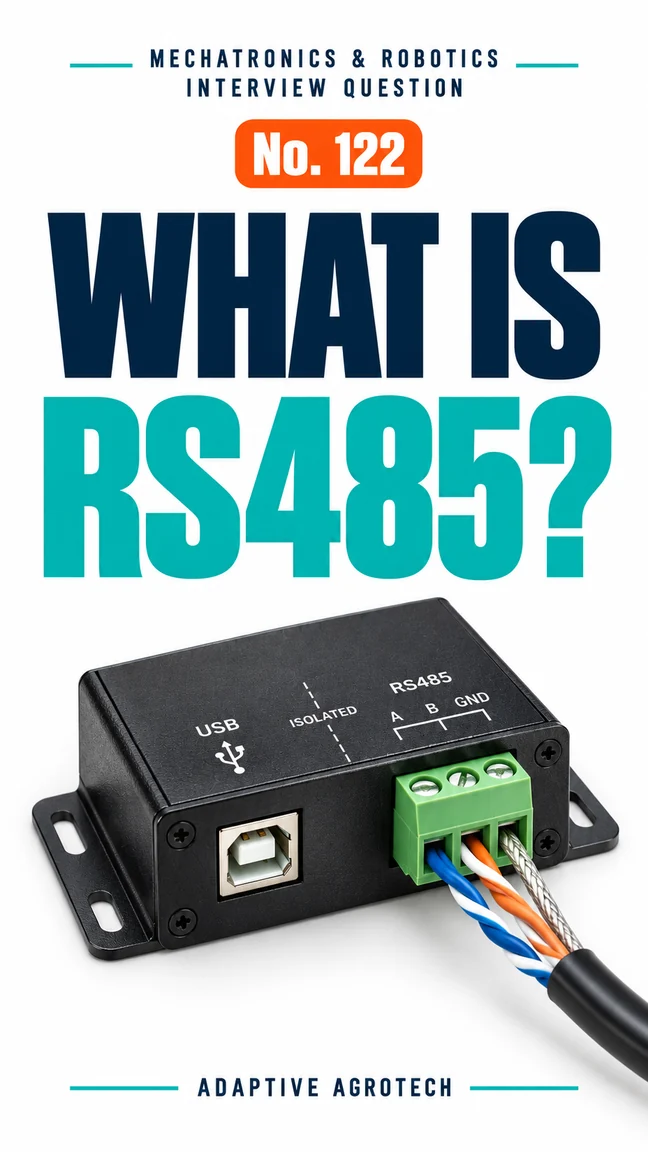
What is RS485?

RS485 specifies a differential electrical interface for serial communication. Multiple devices can share a half duplex pair with one active transmitter, while message structure, addressing, and timing come from a separate protocol.

Watch & explore
Communication & networksNo. 123

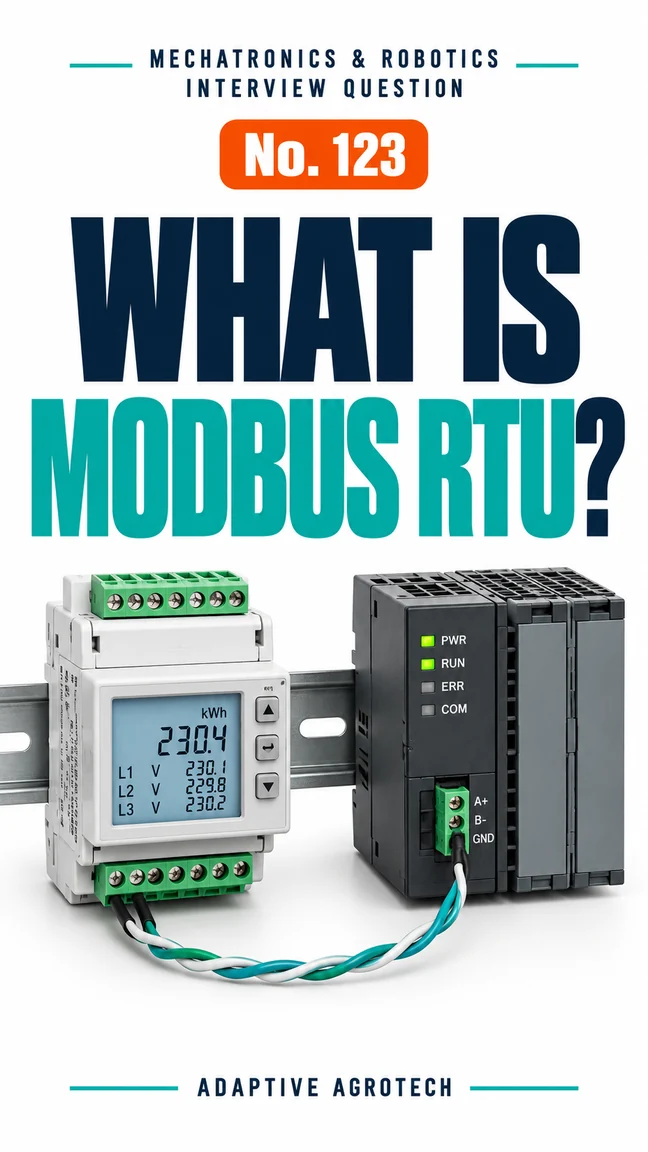
What is Modbus RTU?

Modbus RTU exchanges device data through addressed serial requests and checked frames. Timing helps delimit messages, while device-specific register maps determine units and interpretation; a successful write reply alone does not confirm motion.

Watch & explore
Communication & networksNo. 126

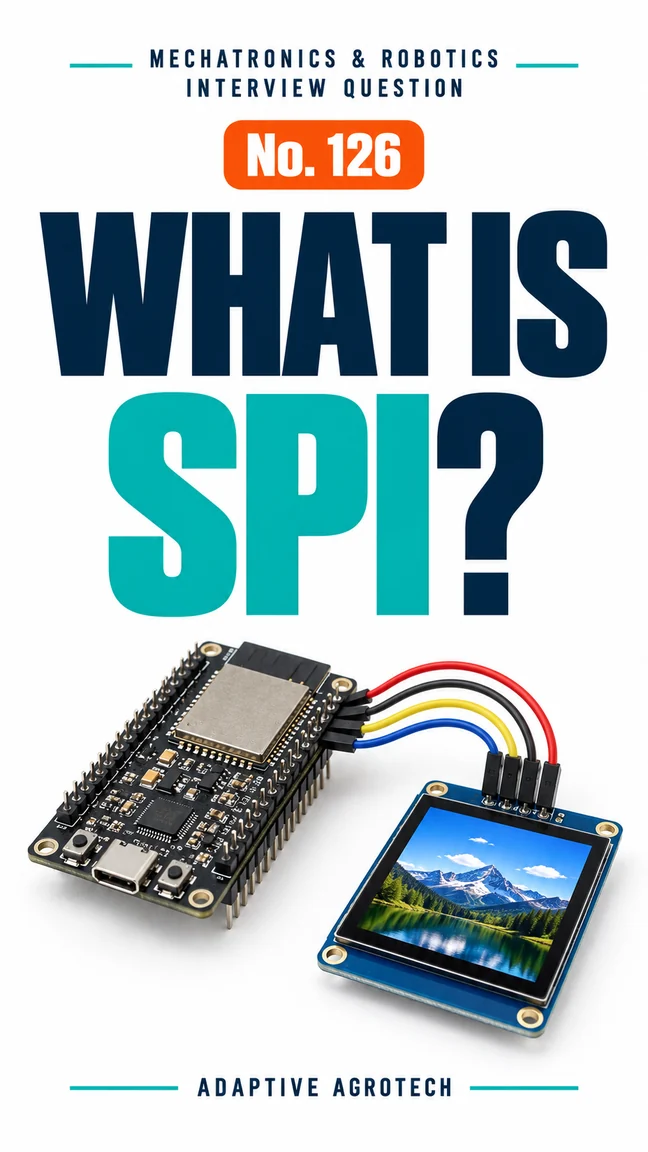
What is SPI?

SPI is a clocked interchip interface with controller supplied clock, target selection, and separate data directions. Correct transfers require matching clock polarity, phase, select timing, and each target device’s timing specification.

Watch & explore
Communication & networksNo. 131

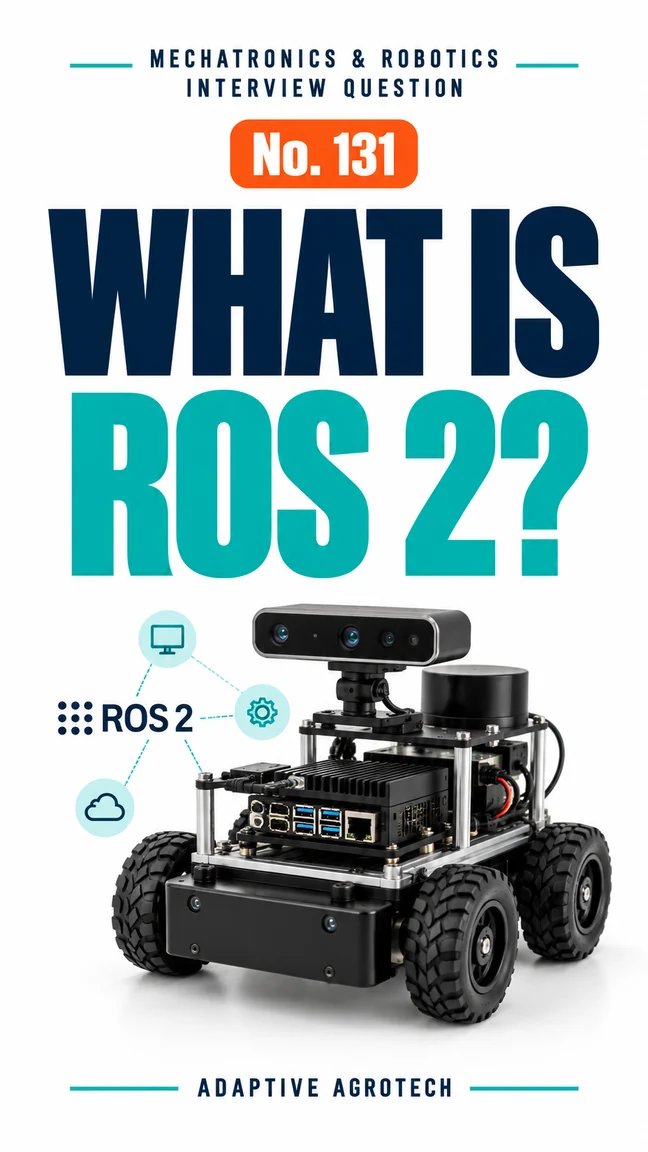
What is ROS 2?

ROS 2 organizes robot software into cooperating nodes with typed interfaces. Topics serve streams, services serve requests, and actions support longer tasks, while timing, motion behavior, and calibration still require engineering validation.

Watch & explore
Communication & networksNo. 133

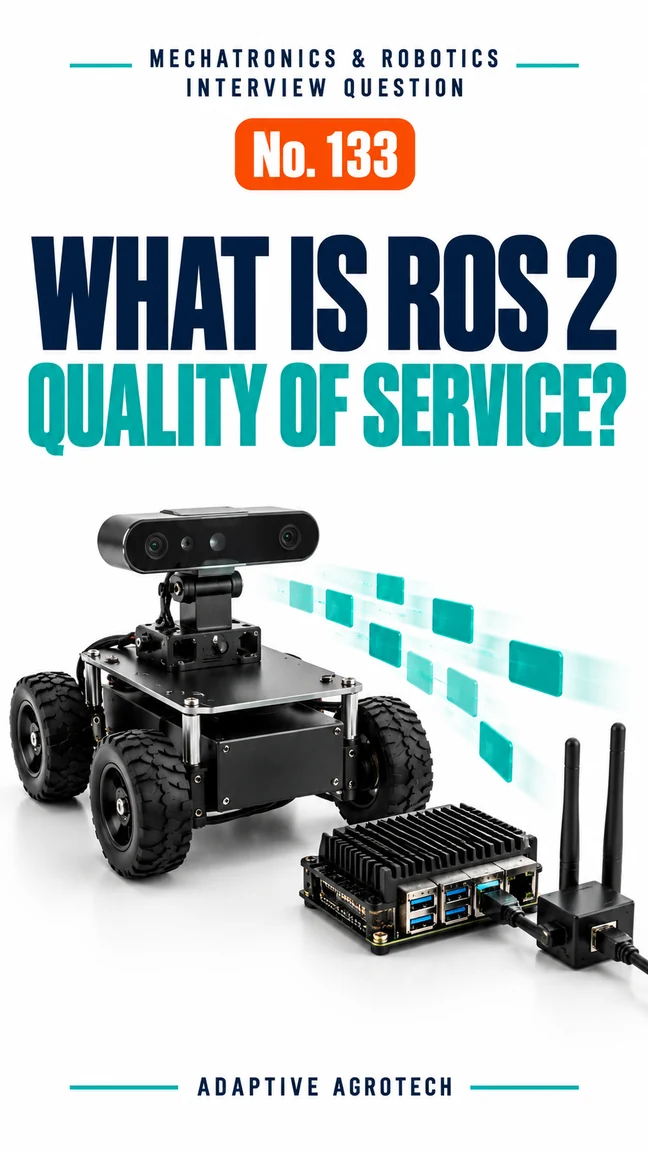
What is ROS 2 Quality of Service?

ROS 2 QoS policies govern reliability, retained history, durability, and timing. Publisher and subscriber policies must be compatible, and timely fresh data can matter more than retrying every old sample.

Watch & explore
Embedded electronicsNo. 134

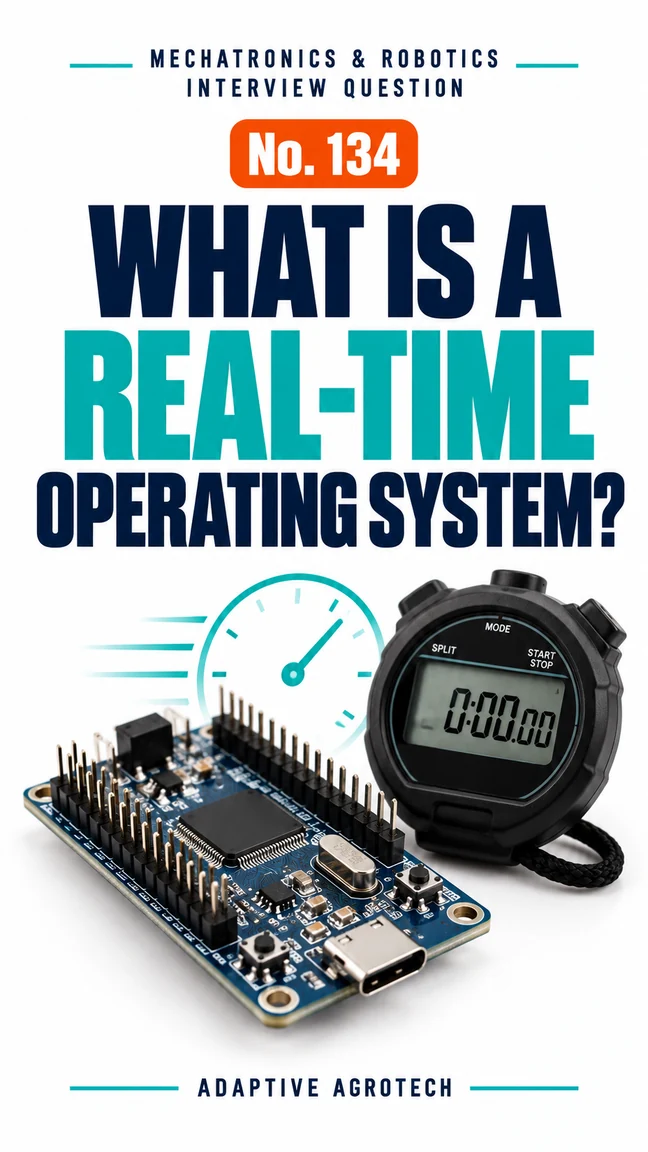
What is a Real-Time Operating System?

An RTOS schedules software around timing requirements, where a late result can be incorrect for the task. Priorities and sleeping tasks help, but complete deadlines still require execution and blocking analysis under load.

Watch & explore
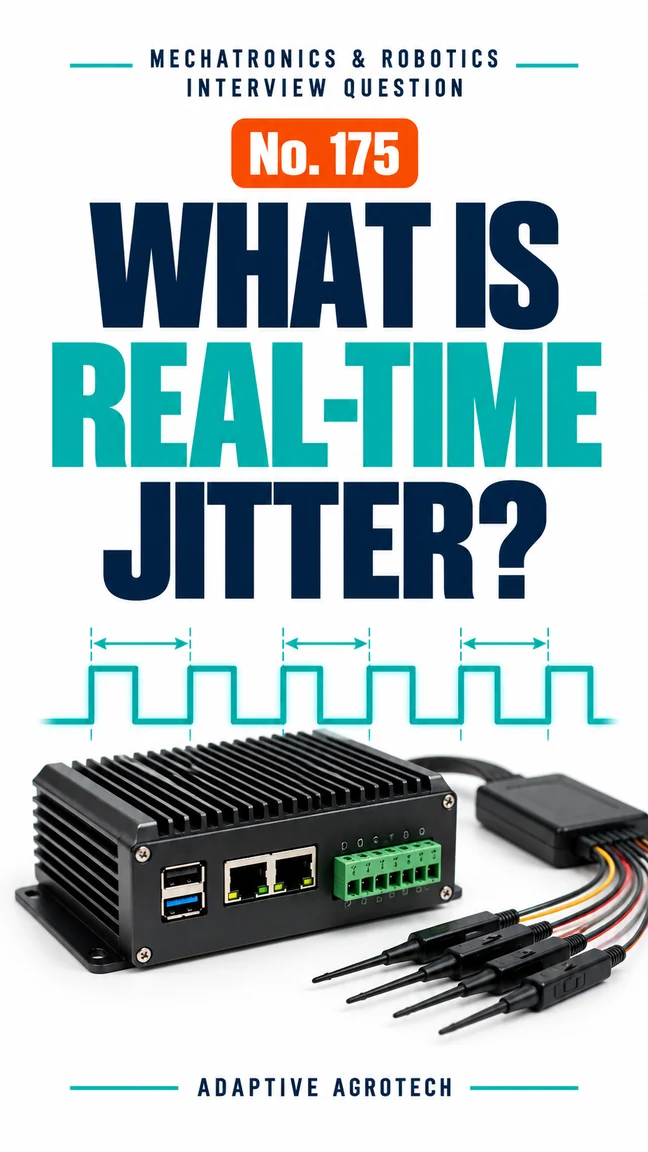
Embedded electronicsNo. 175

What Is Real-Time Jitter?

Real time jitter is variation in when a periodic task starts, finishes, or releases its output. A loop planned every millisecond can have irregular intervals even when its average frequency looks correct. Specify the event you measure.

Watch & explore
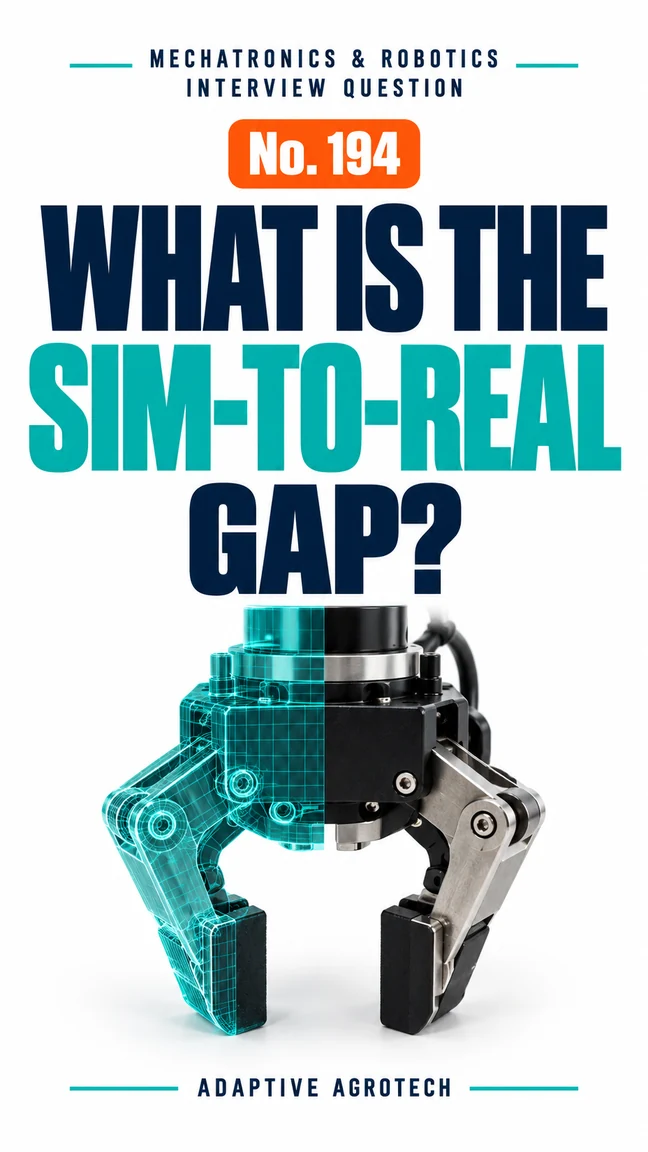
AI & machine learningNo. 194

What Is the Sim-to-Real Gap?

The sim to real gap is the mismatch between simulated training conditions and the physical robot. Differences in contact, friction, sensing, actuator response, and timing can change the consequences of the very same command.

Watch & explore
Embedded electronicsNo. 236

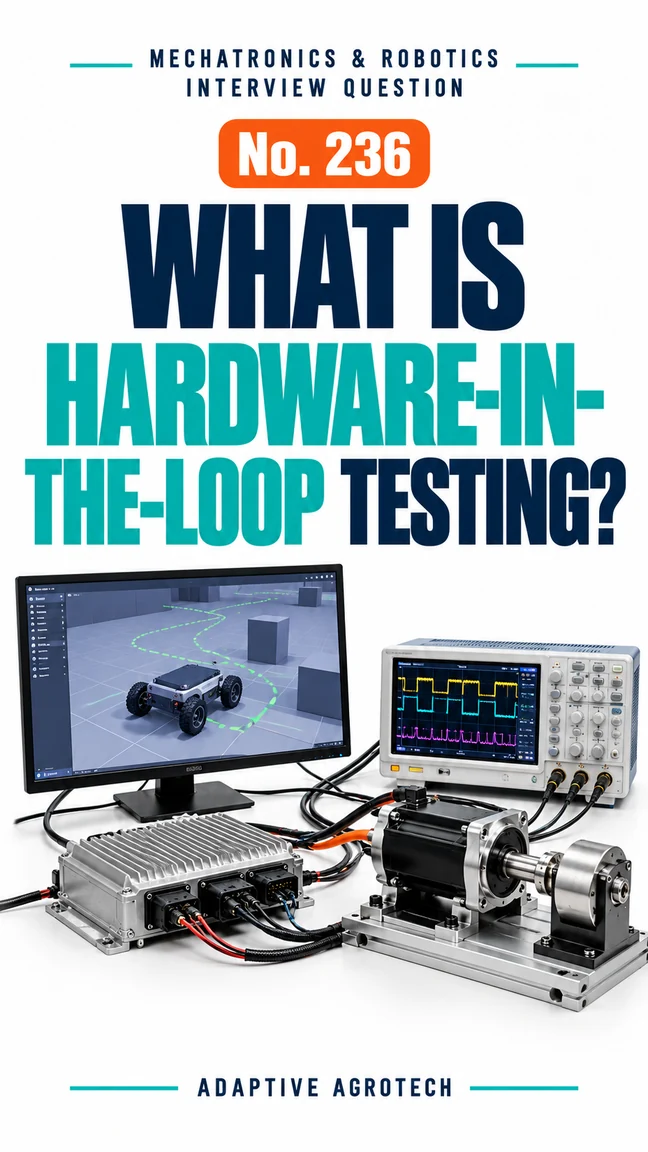
What Is Hardware-in-the-Loop Testing?

Hardware in the loop testing connects real controller hardware to a plant model running in real time. The simulator supplies sensor signals and receives actuator commands, closing the loop around the actual controller.

Watch & explore