Skip to content
Adaptive AgroTech NetworkUniversity of Southern Denmark · SDU Drone Center
Robotics · Mechatronics · Intelligent systems

Short videos.
Lasting understanding.

Explore one engineering idea at a time. Watch a short lesson, read the key concepts and test your understanding before your next interview, project or class.

30 topics found

Video · Key ideas · Check your understanding

Communication & networksNo. 020

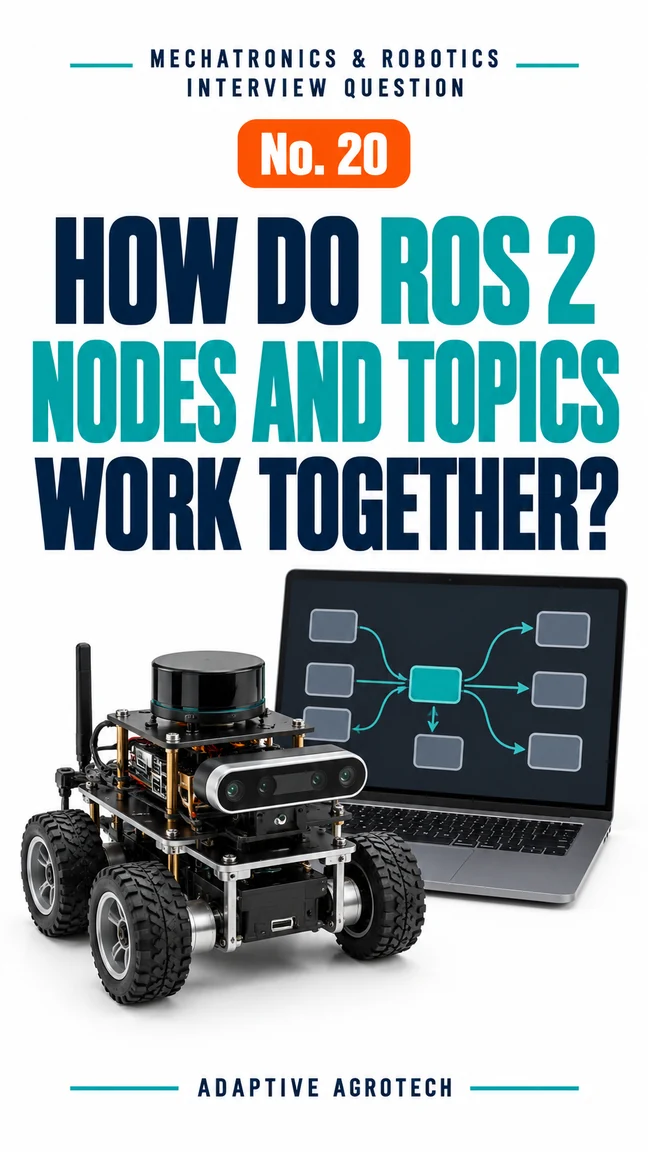
How ROS 2 Nodes and Topics Work Together

ROS 2 nodes exchange typed streams through topics, allowing one publisher to serve multiple subscribers. Hardware interfaces turn velocity messages into motor communication, and discovery and delivery settings determine whether messages arrive.

Watch & explore
Control systemsNo. 024

How a Robot Finds and Docks at Its Charger

Automatic docking combines navigation, close-range pose sensing, slow alignment, and electrical confirmation. Successful motion alone is insufficient: charging feedback, timeouts, and bounded recovery attempts determine whether docking actually succeeded.

Watch & explore
Control systemsNo. 038

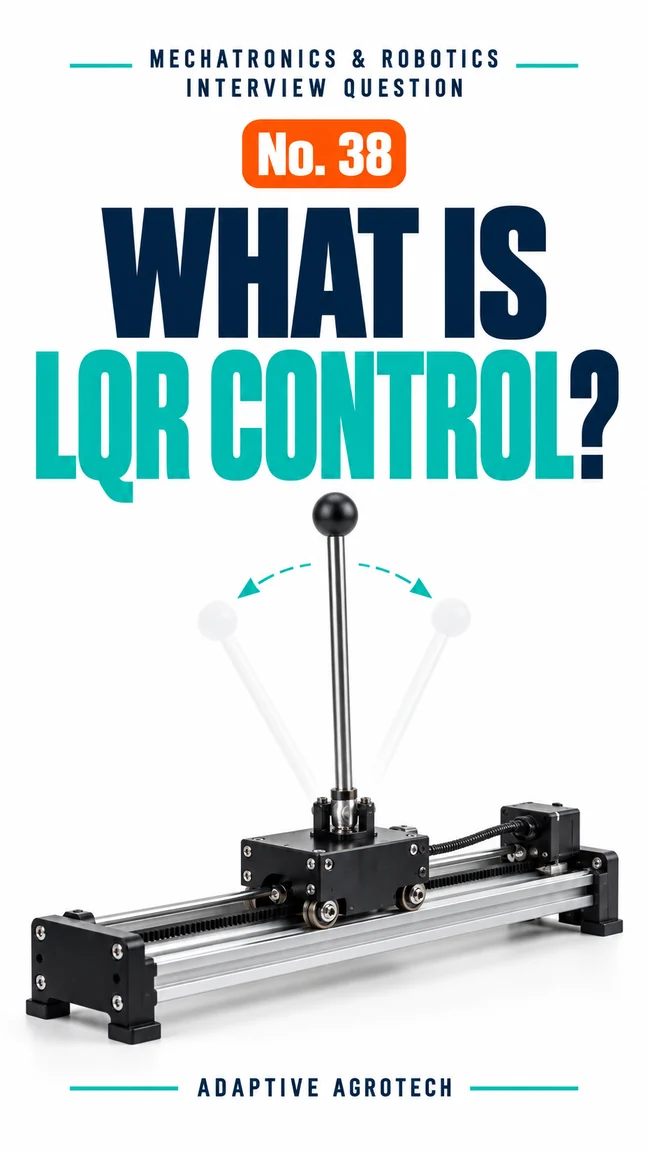
What is LQR?

LQR chooses state-feedback gains that balance state error against control effort in a linear model. Cost weights shape behavior, while the basic regulator does not impose hard actuator constraints or eliminate model error.

Watch & explore
Control systemsNo. 039

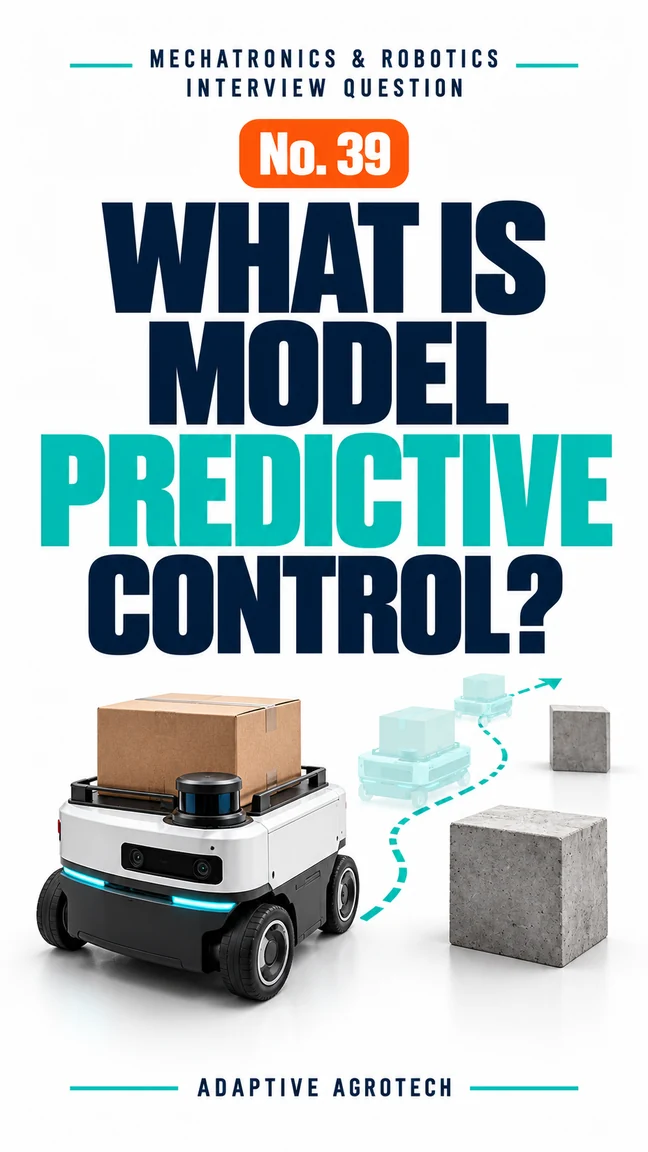
What is Model Predictive Control?

MPC optimizes a sequence of predicted control moves under included constraints, then applies the first move and repeats. New measurements refresh the plan, but prediction errors and solver deadlines limit practical performance.

Watch & explore
Control systemsNo. 043

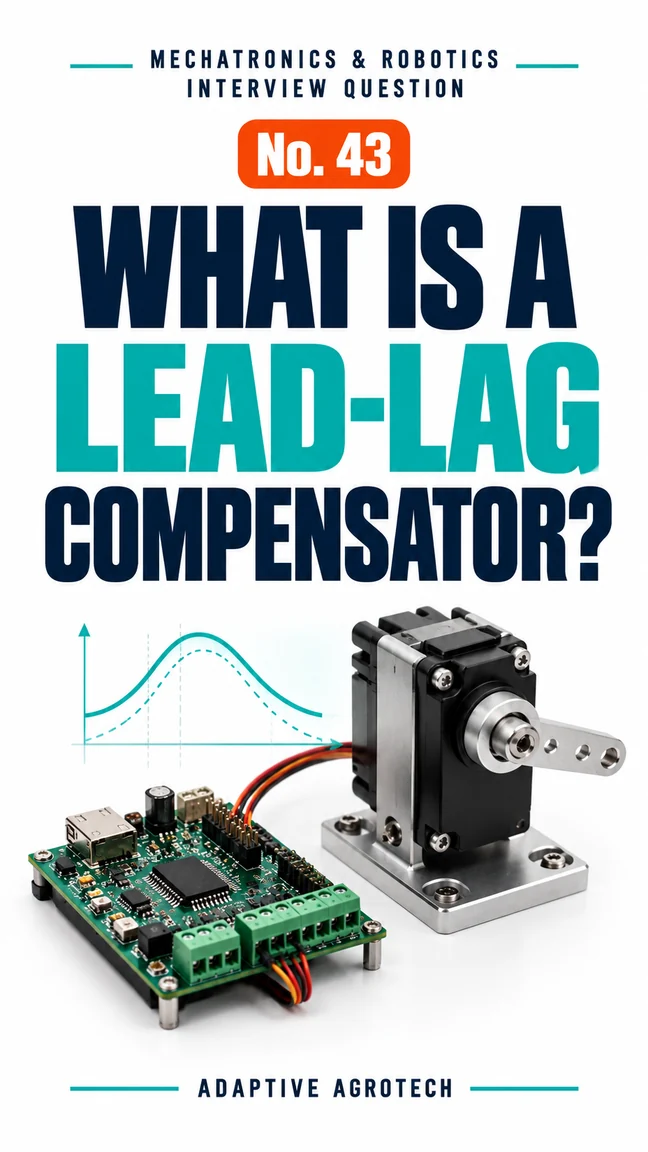
What is a Lead-Lag Compensator?

A lead-lag compensator shapes a servo's frequency response through coordinated filters. Lead adds phase and lag improves relative low-frequency gain, with combined stability margins and noise sensitivity determining the final design.

Watch & explore
Control systemsNo. 044

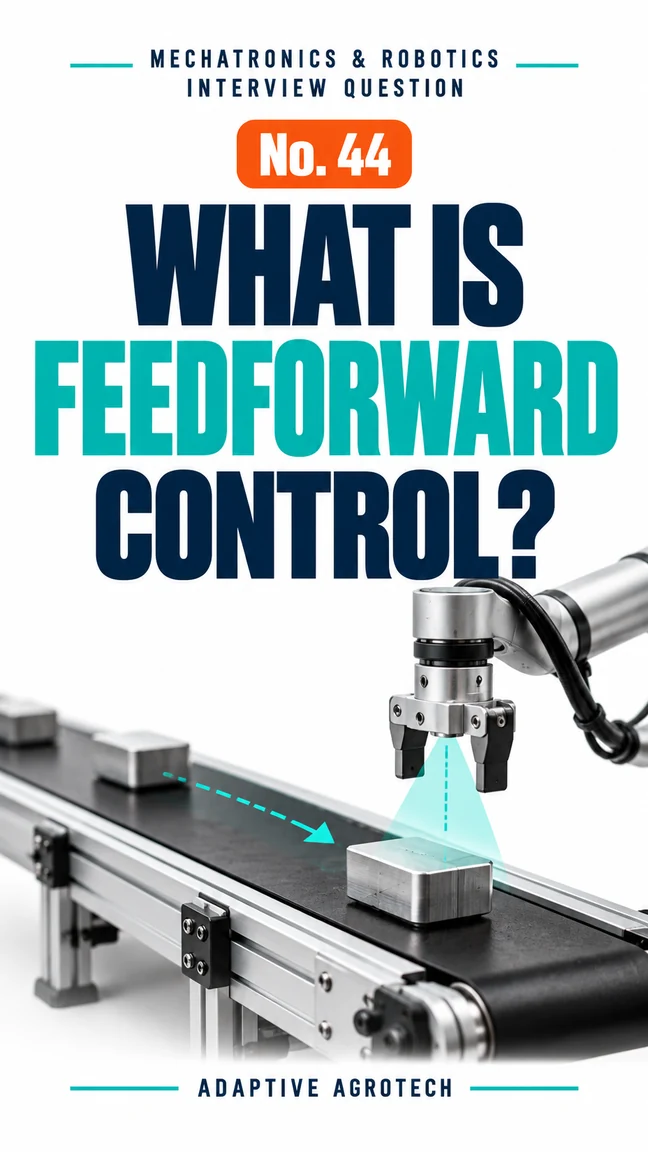
What is Feedforward Control?

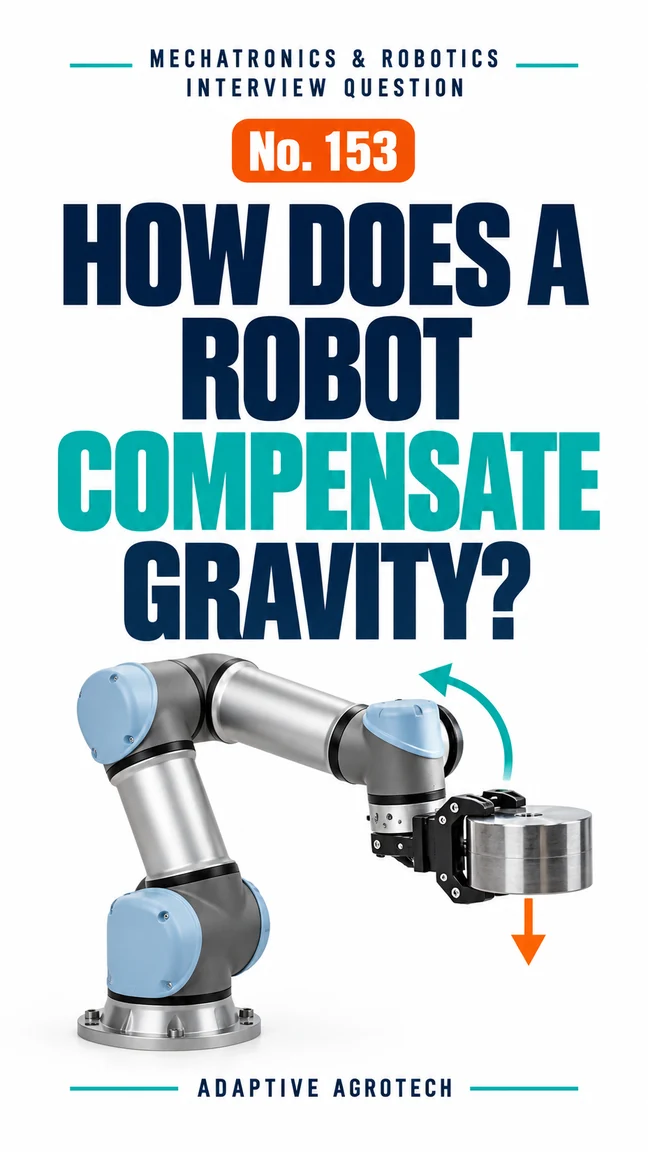
Feedforward predicts required control effort from desired motion or measured disturbances. Gravity compensation and model-based wheel commands reduce feedback's workload, while model mismatch and motor limits still require feedback correction.

Watch & explore
Control systemsNo. 045

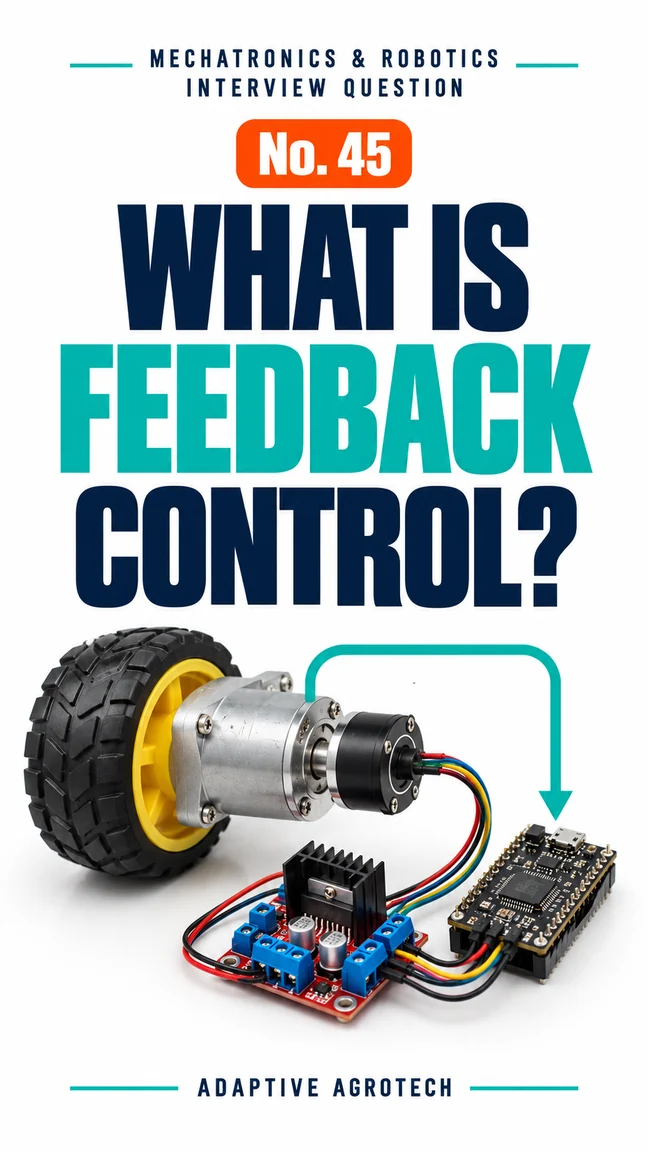
What is Feedback Control?

Feedback compares measured robot behavior with a target and changes the next command to reduce error. It can reject changing loads, while excessive gain, sensor noise, or timing delay can instead produce oscillation.

Watch & explore
Sensors & perceptionNo. 063

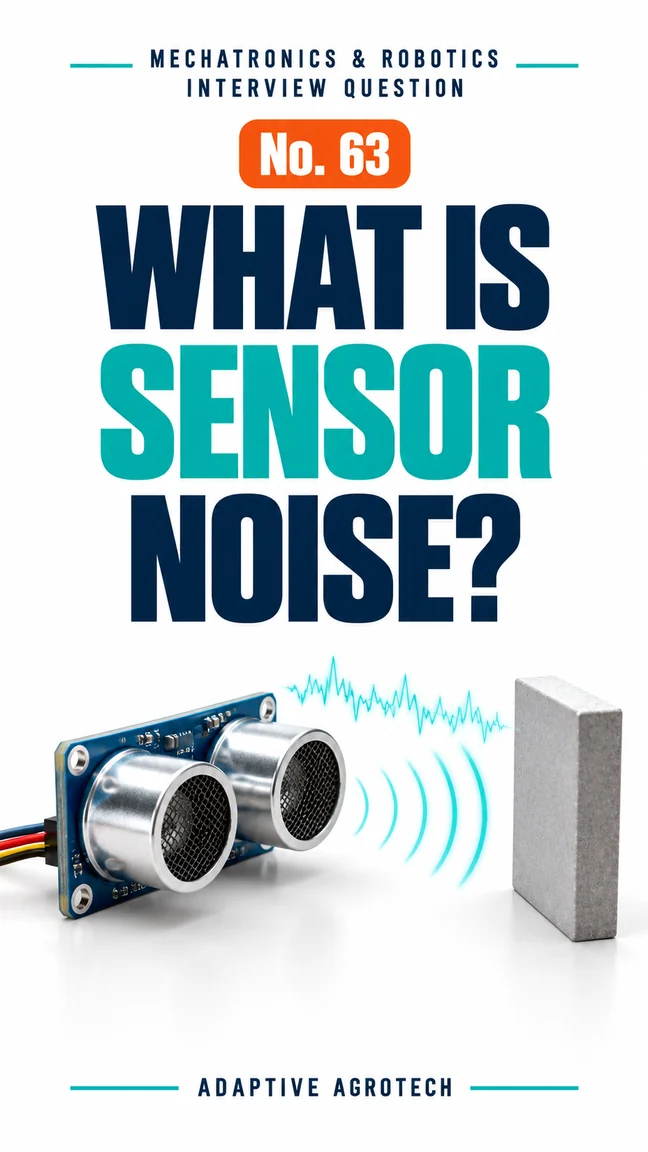
What is Sensor Noise?

Sensor noise causes random measurement variation around the signal. Averaging can smooth readings but delays change detection, so representative logging and frequency analysis help preserve the motion information a controller needs.

Watch & explore
Embedded electronicsNo. 101

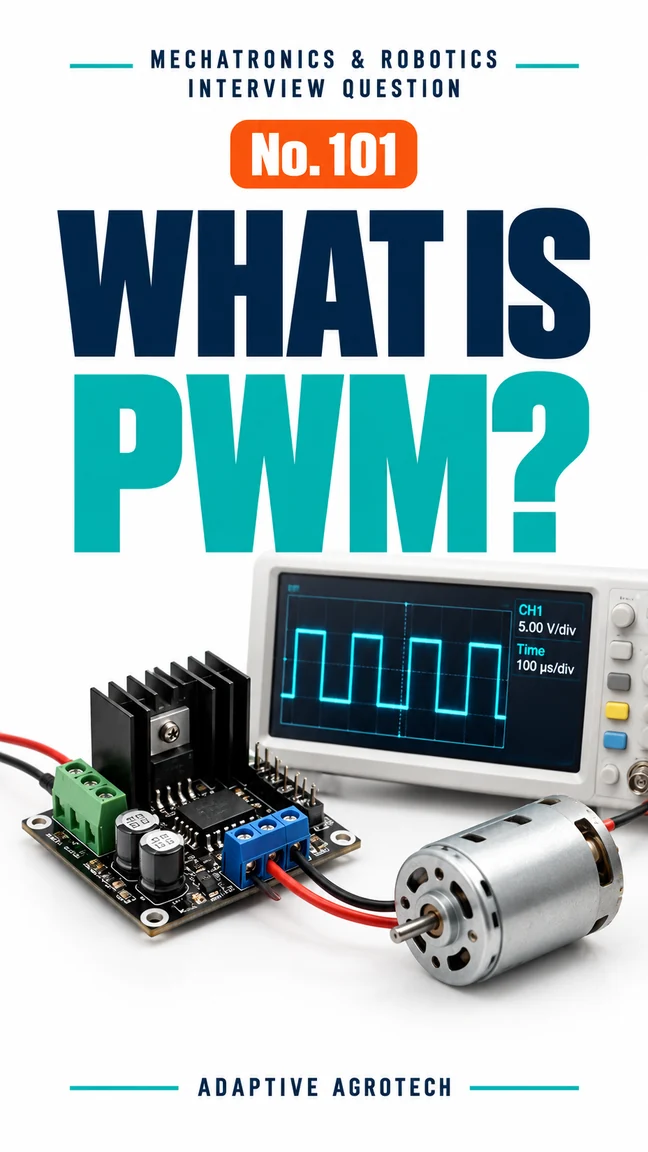
What is PWM?

Pulse width modulation controls a switching signal’s on time within each period. Duty cycle affects average drive voltage, but actual motor speed also depends on current dynamics, load, and feedback control.

Watch & explore
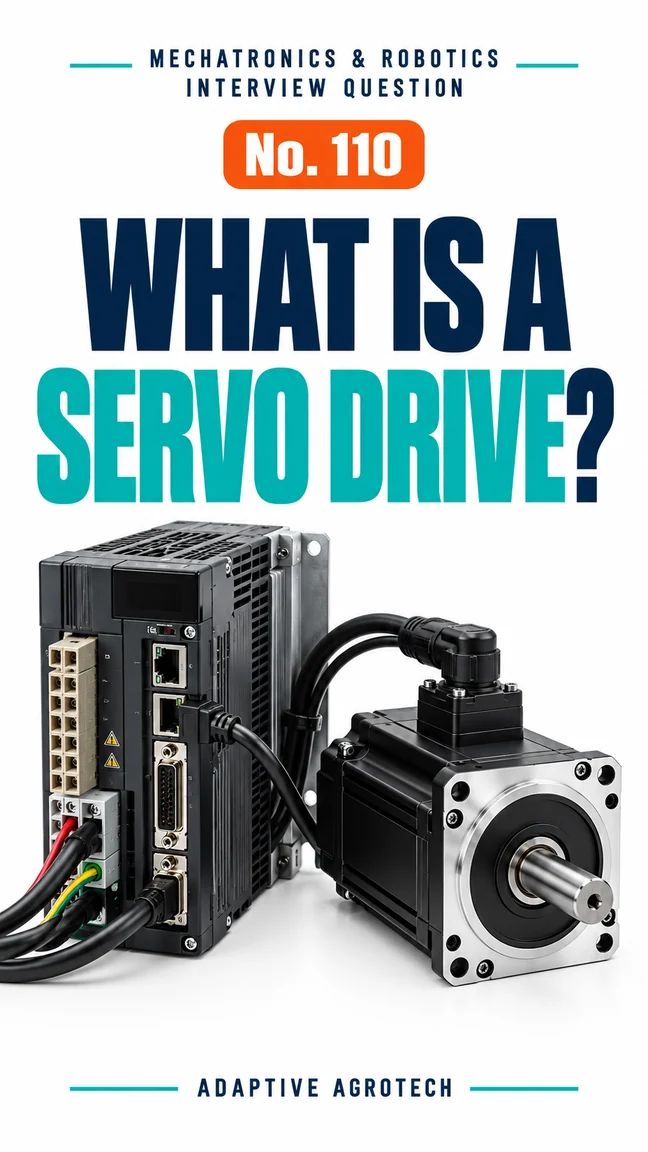
Control systemsNo. 110

What is a Servo Drive?

A servo drive controls motor power using feedback to follow a motion or torque command. Common nested current, speed, and position loops must be tuned around the real mechanics and operating limits.

Watch & explore
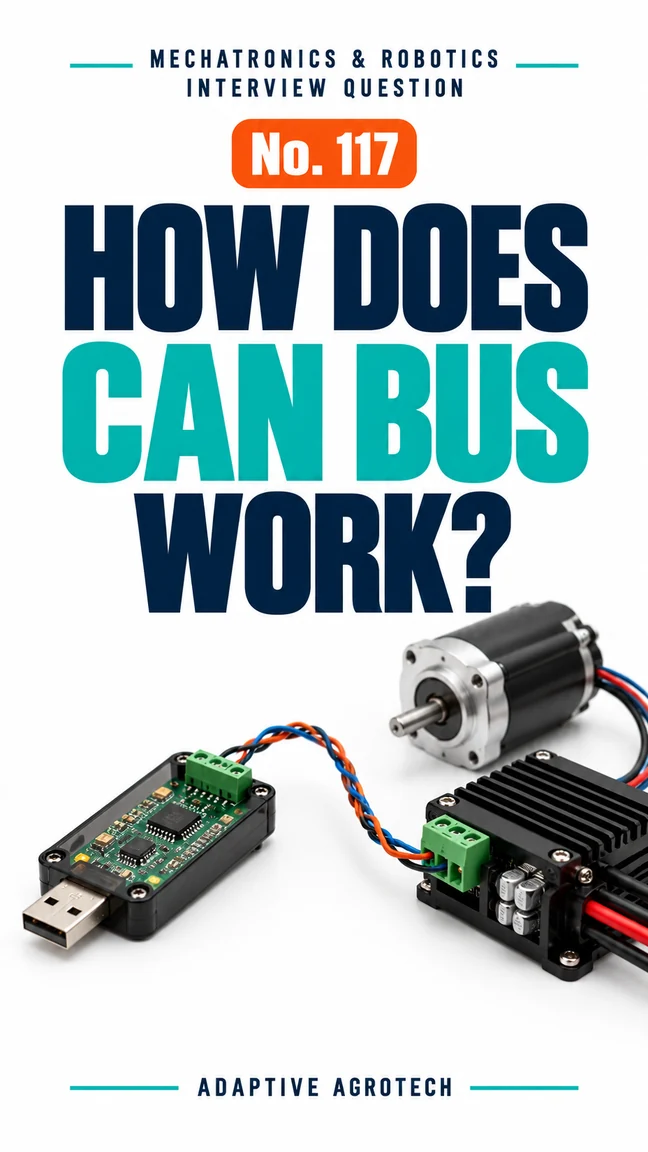
Communication & networksNo. 117

What is CAN Bus?

CAN links multiple electronic control units through a shared message bus. Frame identifiers support priority and data selection, while delivery checks still need application feedback and stale-command supervision to confirm robot behavior.

Watch & explore
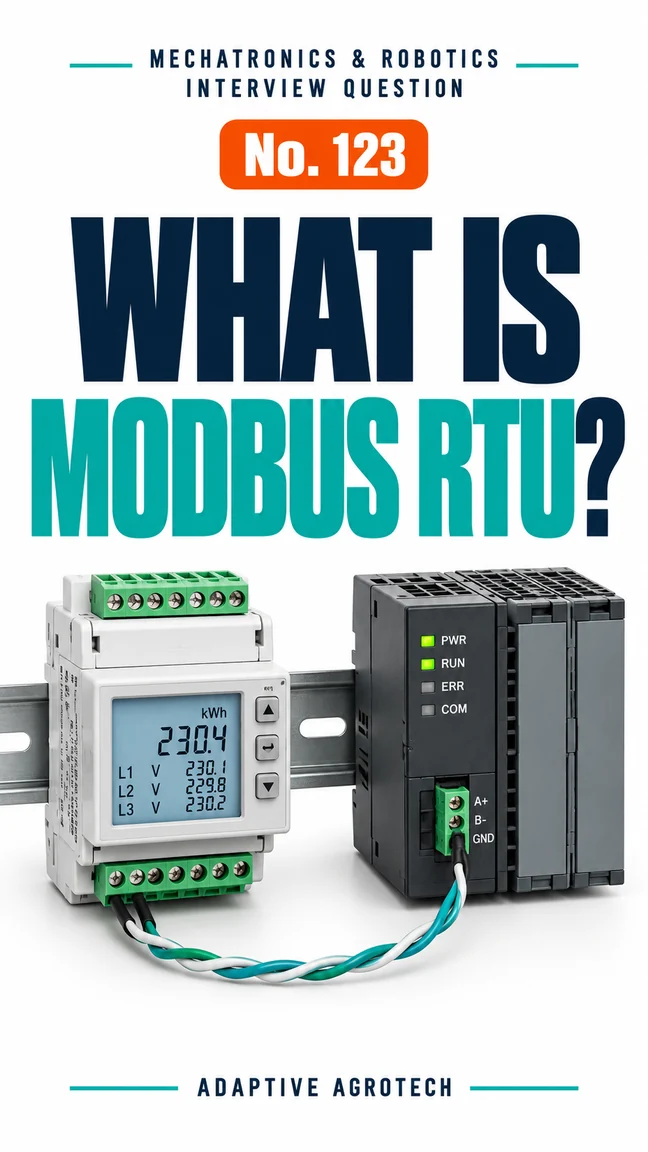
Communication & networksNo. 123

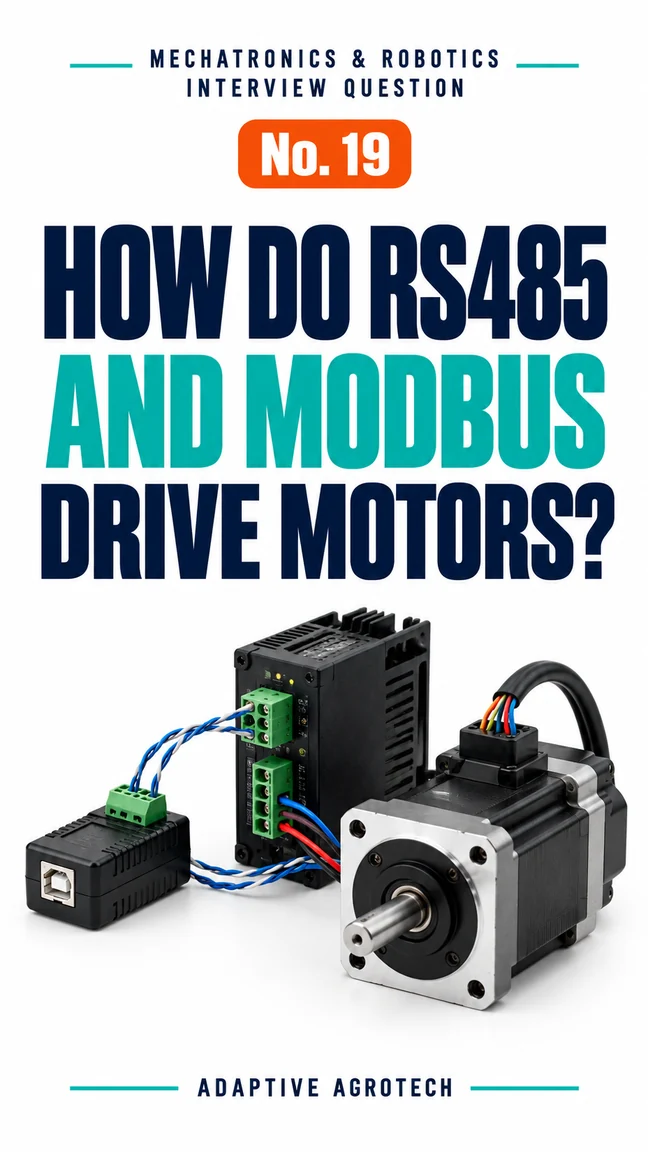
What is Modbus RTU?

Modbus RTU exchanges device data through addressed serial requests and checked frames. Timing helps delimit messages, while device-specific register maps determine units and interpretation; a successful write reply alone does not confirm motion.

Watch & explore
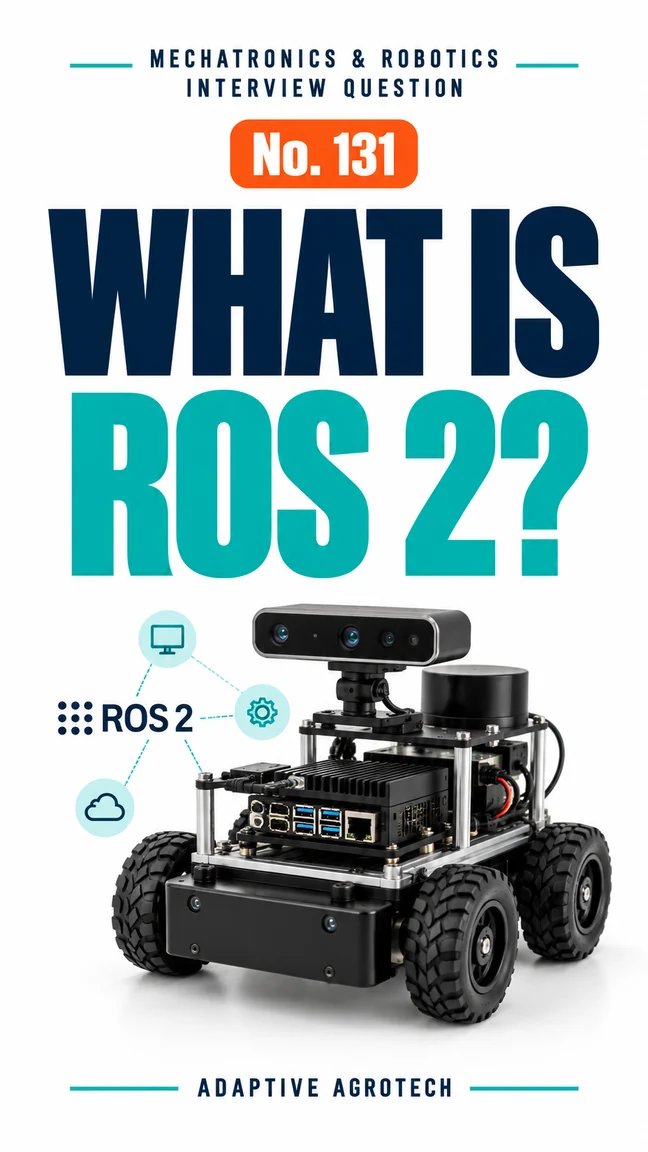
Communication & networksNo. 131

What is ROS 2?

ROS 2 organizes robot software into cooperating nodes with typed interfaces. Topics serve streams, services serve requests, and actions support longer tasks, while timing, motion behavior, and calibration still require engineering validation.

Watch & explore
Robot kinematicsNo. 155

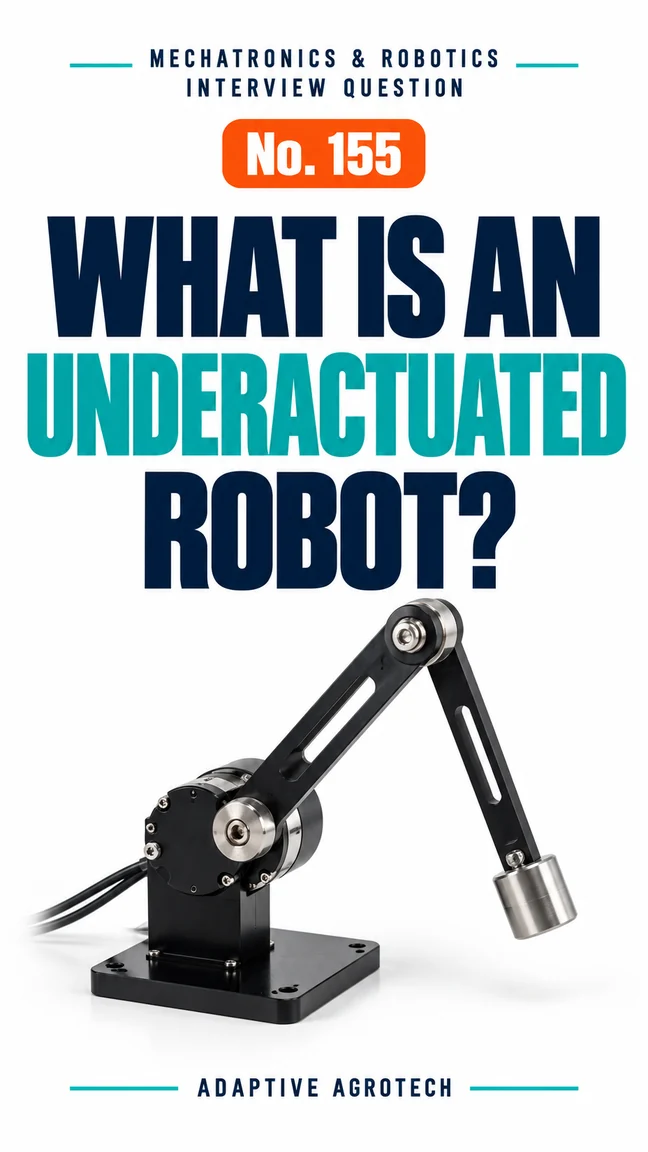
What Is an Underactuated Robot?

An underactuated robot has fewer independent control inputs than configuration coordinates. Indirect control can exploit coupled dynamics, but it cannot independently request every acceleration, and contact can change the effective constraints and actuation.

Watch & explore
Control systemsNo. 157

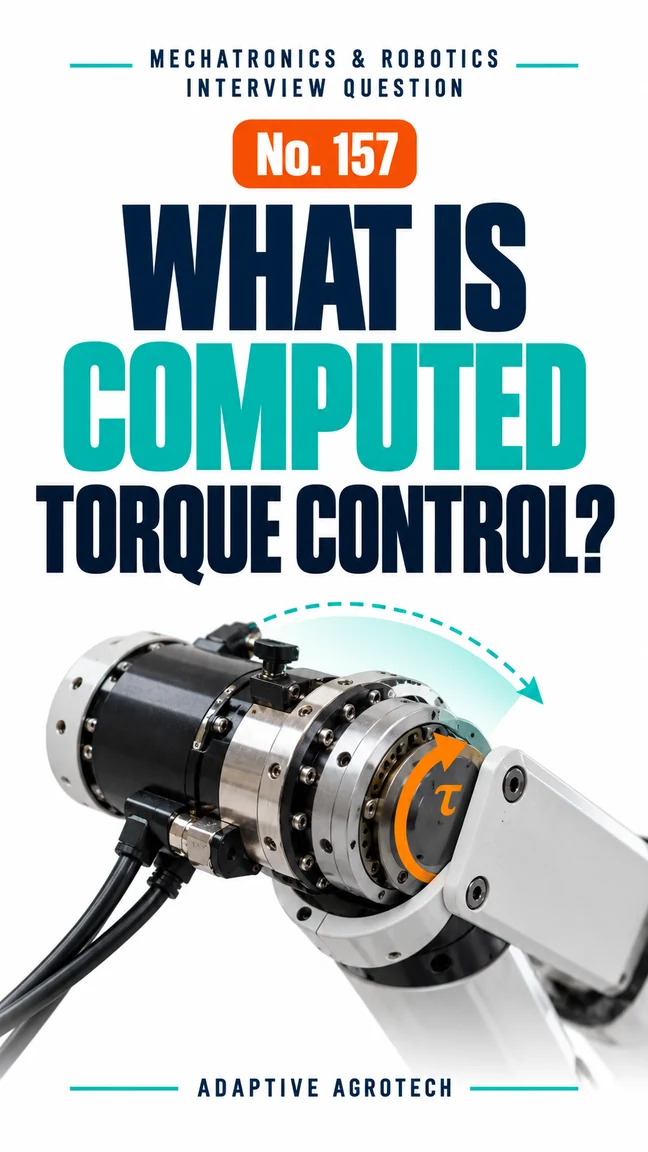
What Is Computed Torque Control?

Computed torque control combines a robot dynamics model with tracking feedback to request joint torque. Ideal model cancellation can simplify error dynamics, while real payload errors, friction, and saturation limit the result.

Watch & explore
Control systemsNo. 162

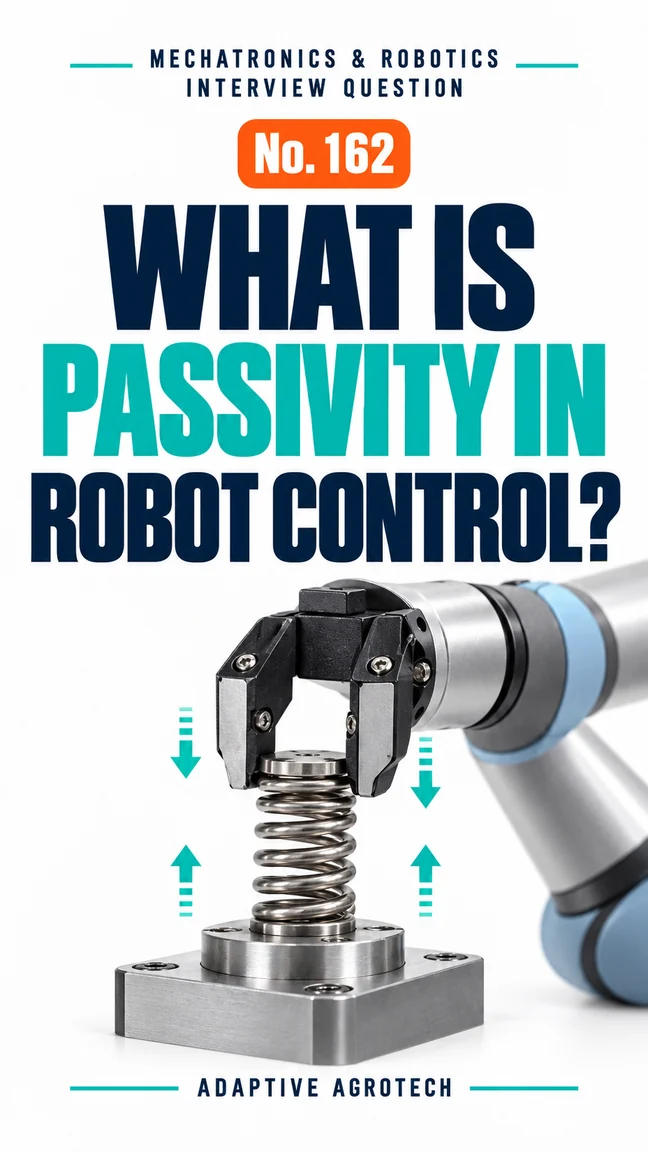
What Is Passivity in Robot Control?

Passivity is an input–output energy property. A passive system cannot supply more energy than it initially stores plus the energy it receives. For mechanical interaction, force and velocity form a power pair at the contact.

Watch & explore
Control systemsNo. 168

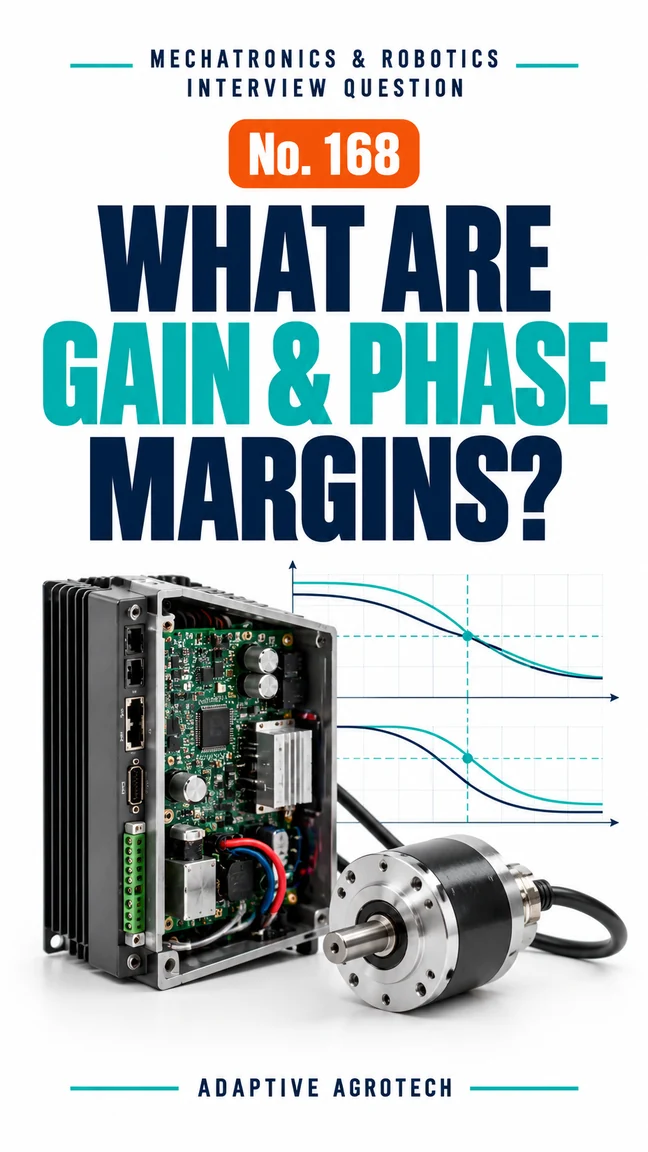
What Are Gain Margin and Phase Margin?

Gain and phase margins describe how a loop can change before reaching a stability boundary. For standard negative feedback, phase margin is measured at unity loop gain. Gain margin uses the minus one hundred eighty degree phase crossover.

Watch & explore