Skip to content
Adaptive AgroTech NetworkUniversity of Southern Denmark · SDU Drone Center
Robotics · Mechatronics · Intelligent systems

Short videos.
Lasting understanding.

Explore one engineering idea at a time. Watch a short lesson, read the key concepts and test your understanding before your next interview, project or class.

42 topics found

Video · Key ideas · Check your understanding

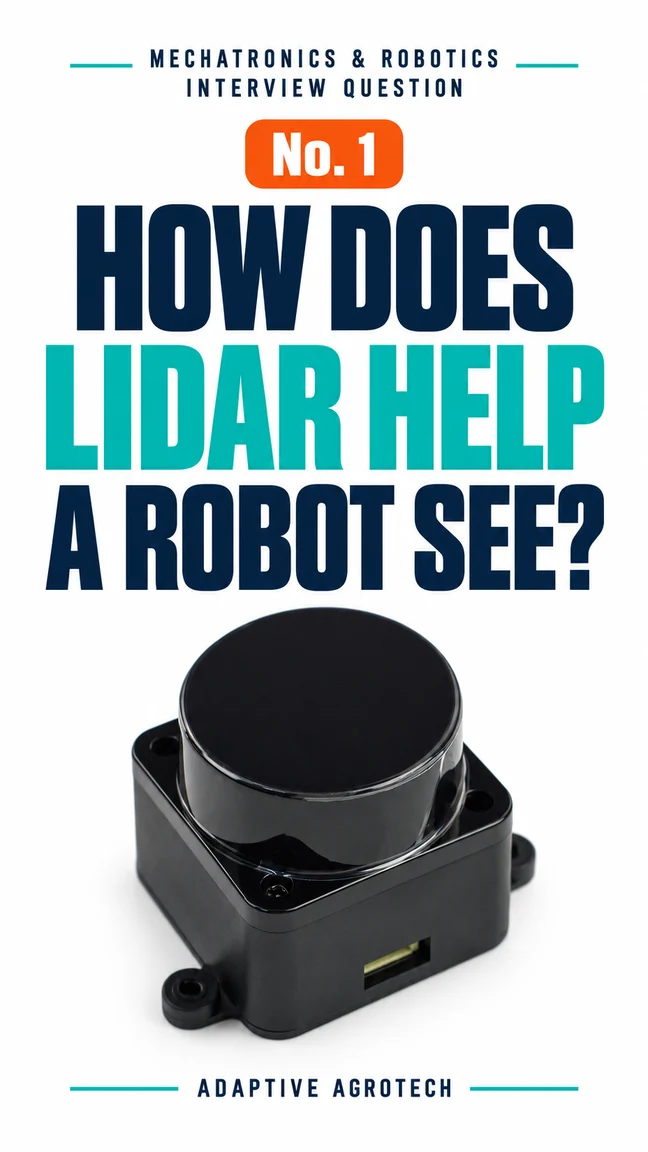
Sensors & perceptionNo. 001

How LiDAR Helps a Robot See

Scanning LiDAR pairs range with angle to detect surrounding surfaces. Time-of-flight measurements support obstacle detection and mapping, while a two-dimensional scan can miss objects outside its measurement plane.

Watch & explore
Sensors & perceptionNo. 004

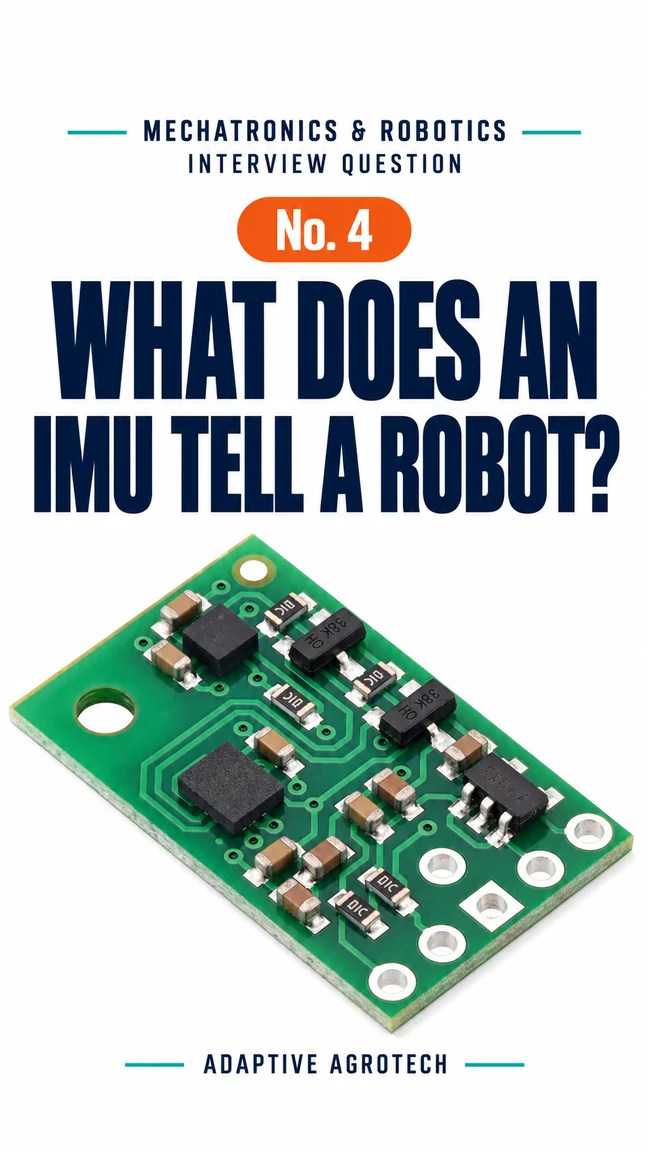
What Does an IMU Tell a Robot?

A six-axis IMU combines acceleration and angular-rate measurements. Gravity can constrain tilt, while gyro integration estimates turning; sensor bias still causes drift and prevents an IMU alone from guaranteeing absolute heading.

Watch & explore
Robot kinematicsNo. 014

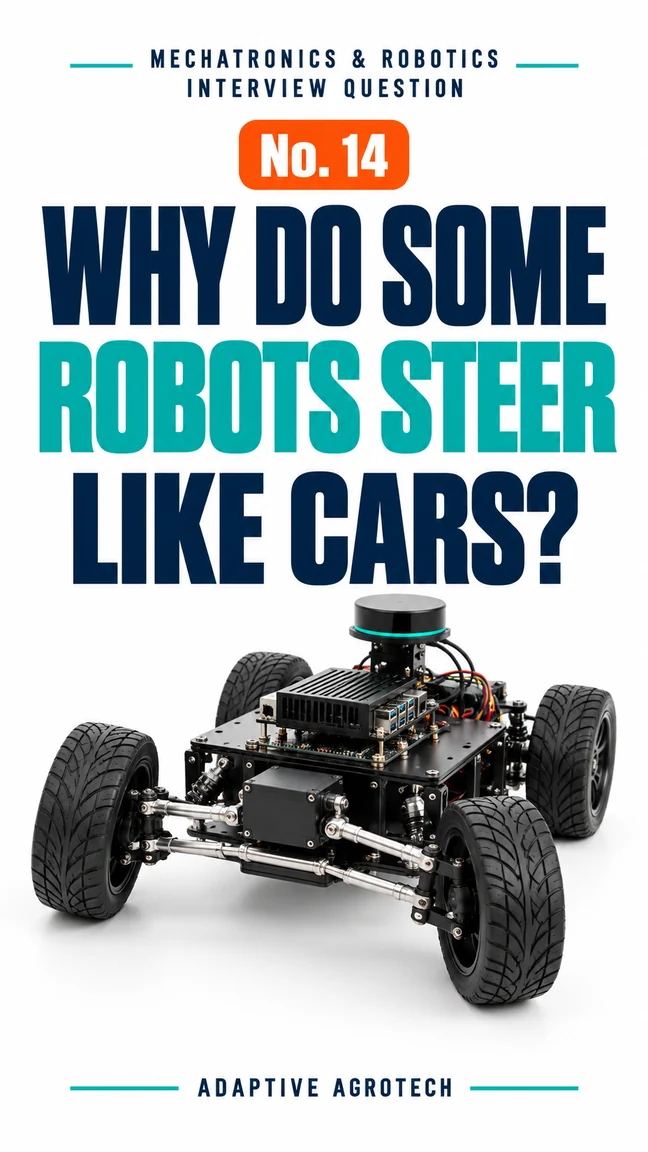
Why Some Robots Steer Like Cars

Car-like steering follows curved rolling paths. Ackermann geometry turns the inside wheel more sharply, while wheelbase and steering limits determine turning radius and constrain the manoeuvres a planner can request.

Watch & explore
Robot kinematicsNo. 021

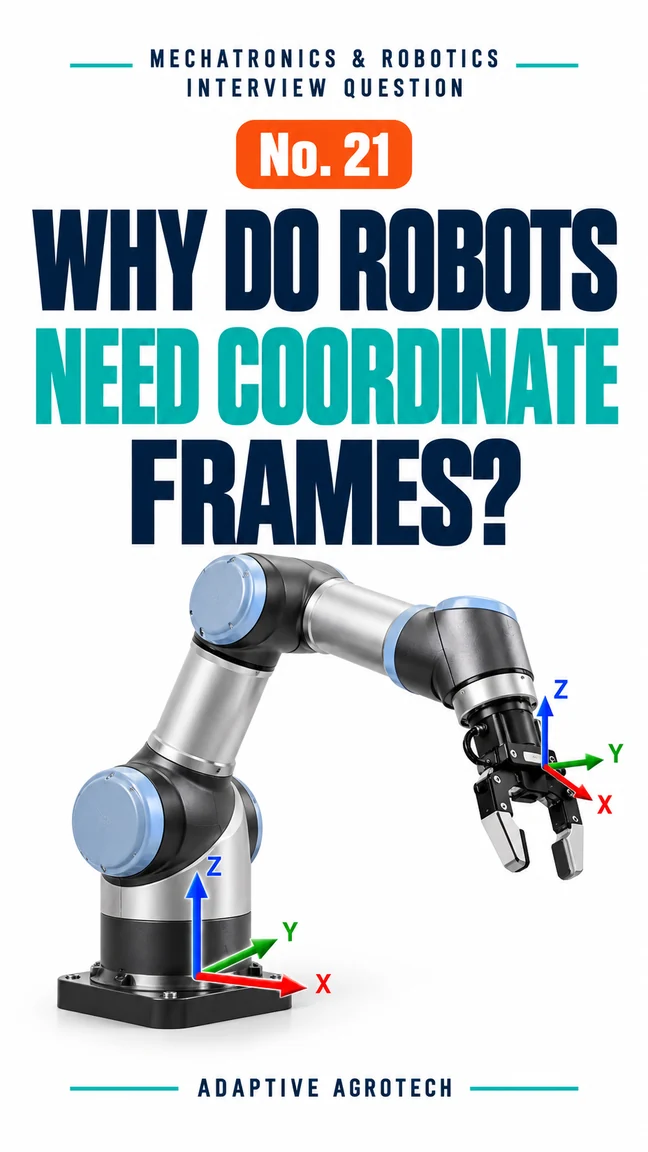
Why a Robot Needs Coordinate Frames

Coordinate frames describe the same physical point from different origins and axes. Rigid transforms connect sensor, robot, and map coordinates, and correct composition requires consistent directions, conventions, and measurement timestamps.

Watch & explore
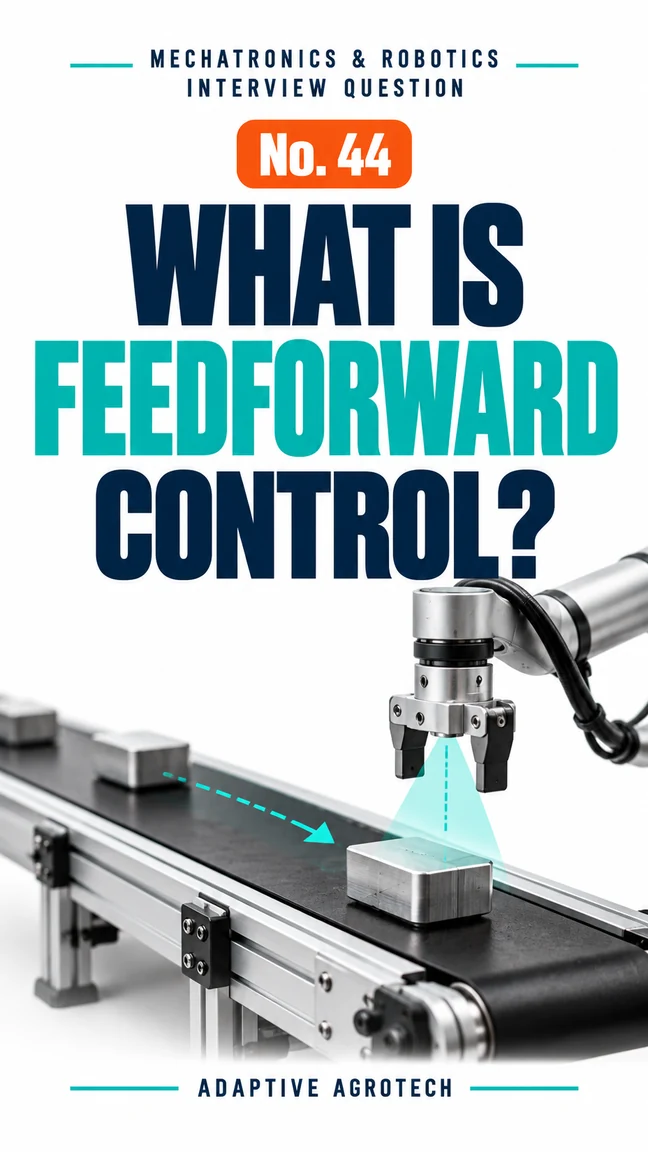
Control systemsNo. 044

What is Feedforward Control?

Feedforward predicts required control effort from desired motion or measured disturbances. Gravity compensation and model-based wheel commands reduce feedback's workload, while model mismatch and motor limits still require feedback correction.

Watch & explore
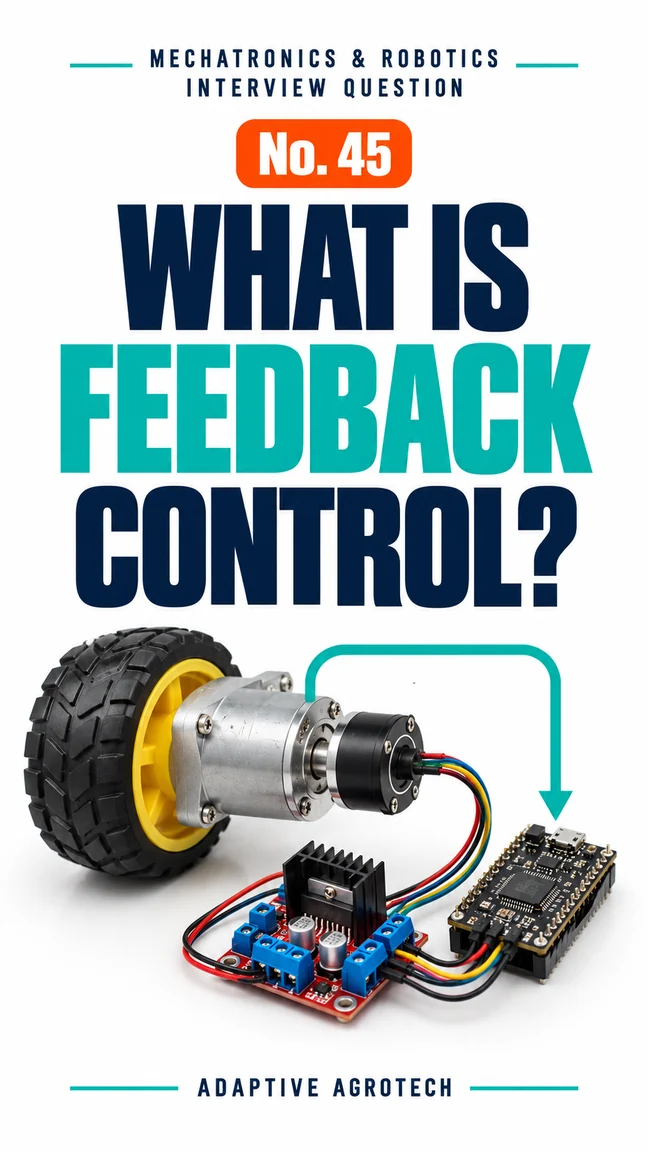
Control systemsNo. 045

What is Feedback Control?

Feedback compares measured robot behavior with a target and changes the next command to reduce error. It can reject changing loads, while excessive gain, sensor noise, or timing delay can instead produce oscillation.

Watch & explore
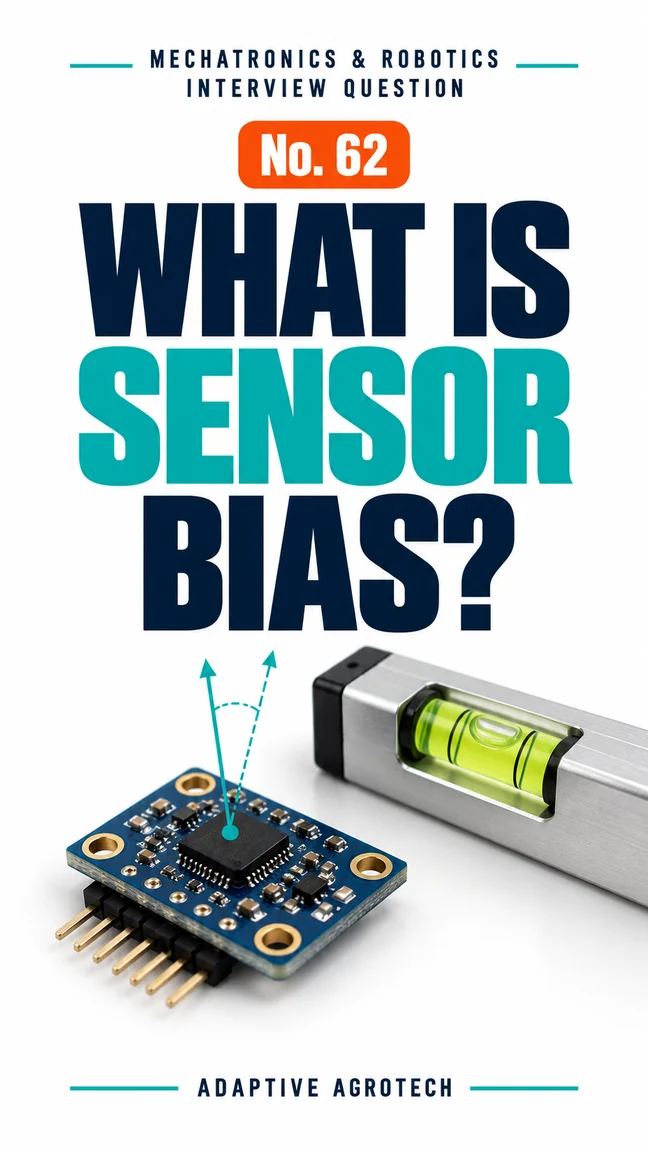
Sensors & perceptionNo. 062

What is Sensor Bias?

Sensor bias is a systematic measurement offset that can accumulate through integration. Gyro bias illustrates the resulting heading drift, while changing temperature and time limit the lasting value of one calibration.

Watch & explore
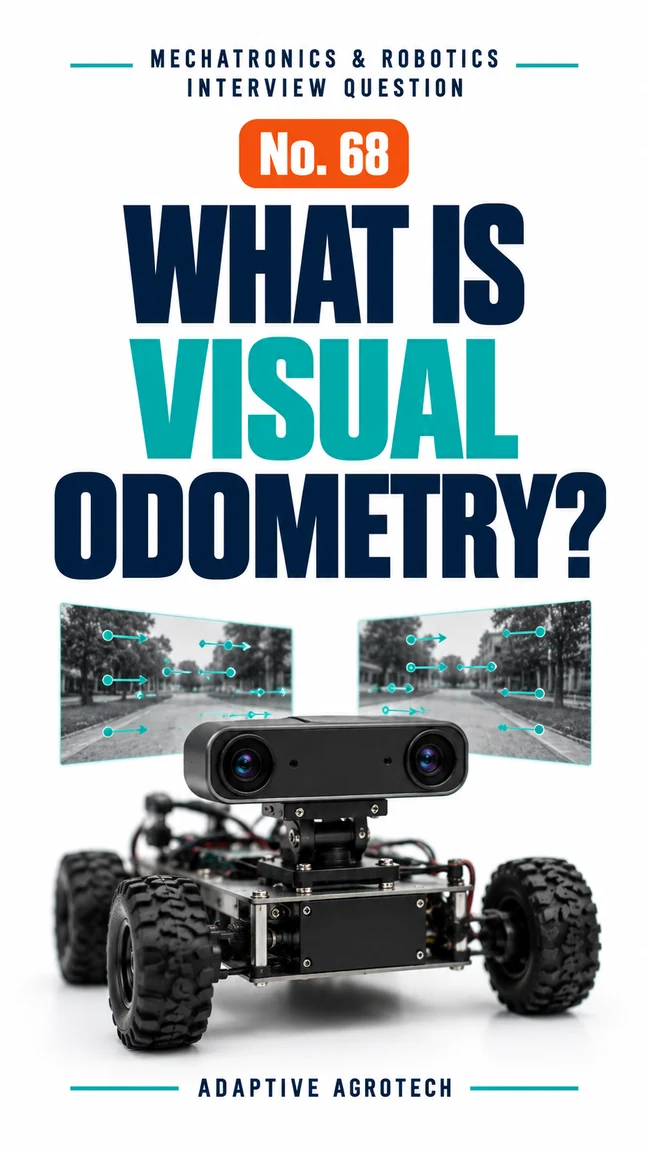
Computer visionNo. 068

What is Visual Odometry?

Visual odometry estimates relative camera motion from image sequences. Feature or brightness changes constrain geometry, stereo provides metric depth, and monocular scale ambiguity and tracking failures limit its long-term position estimate.

Watch & explore
Localization & estimationNo. 072

What is ICP Point-Cloud Registration?

ICP iteratively aligns overlapping point clouds through correspondences and rigid transforms. Repeated refinement estimates motion, while sufficient overlap and good initialization are essential because convergence can occur at an incorrect local solution.

Watch & explore
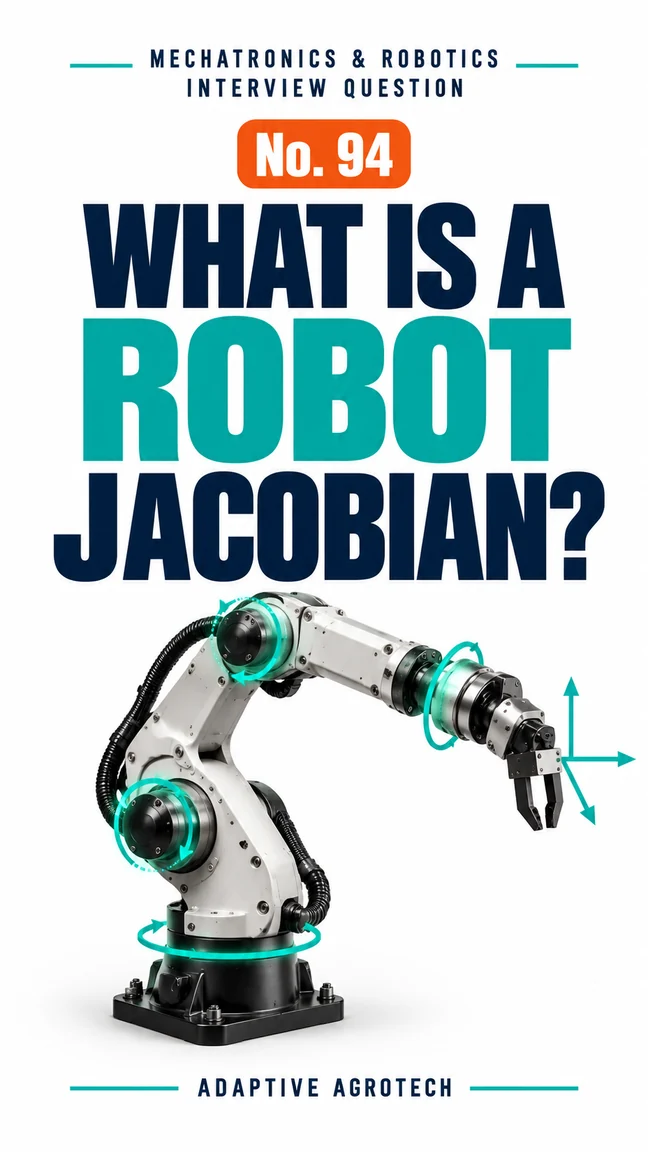
Robot kinematicsNo. 094

What is a Robot Jacobian?

The robot Jacobian maps joint rates to instantaneous tool velocity at a particular configuration. Its columns describe individual joint contributions, making it useful for local motion and force calculations rather than complete path planning.

Watch & explore
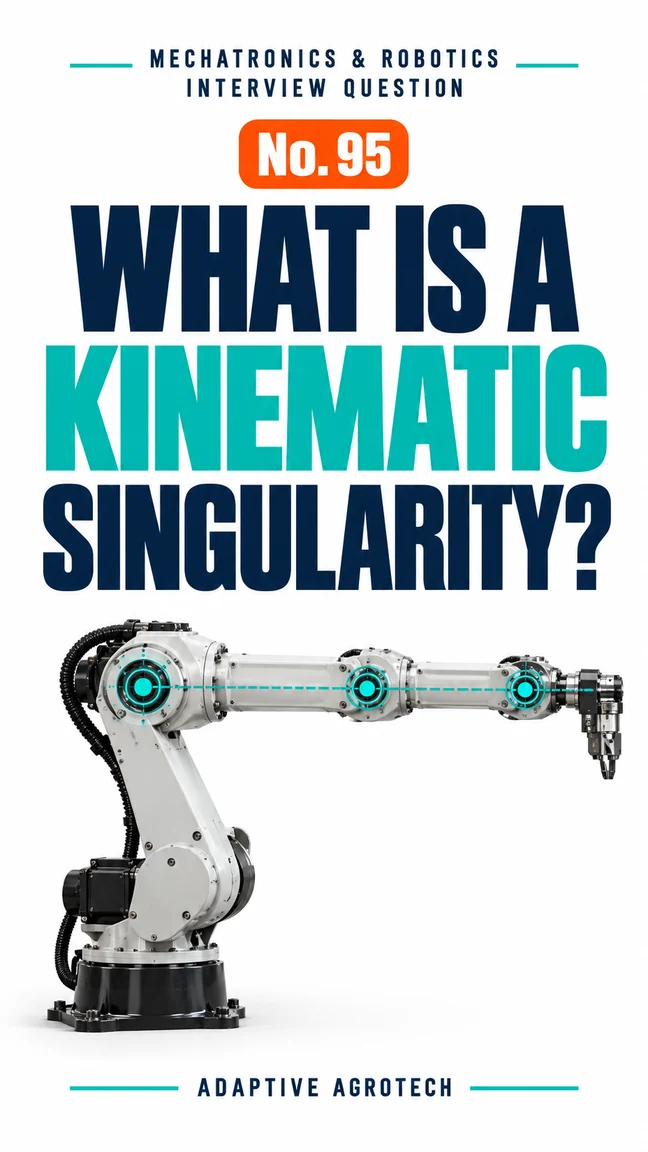
Robot kinematicsNo. 095

What is a Kinematic Singularity?

A kinematic singularity occurs where the robot Jacobian loses rank and an instantaneous tool motion direction disappears. Near such poses, inverse velocity commands can grow large even when a target position remains reachable.

Watch & explore
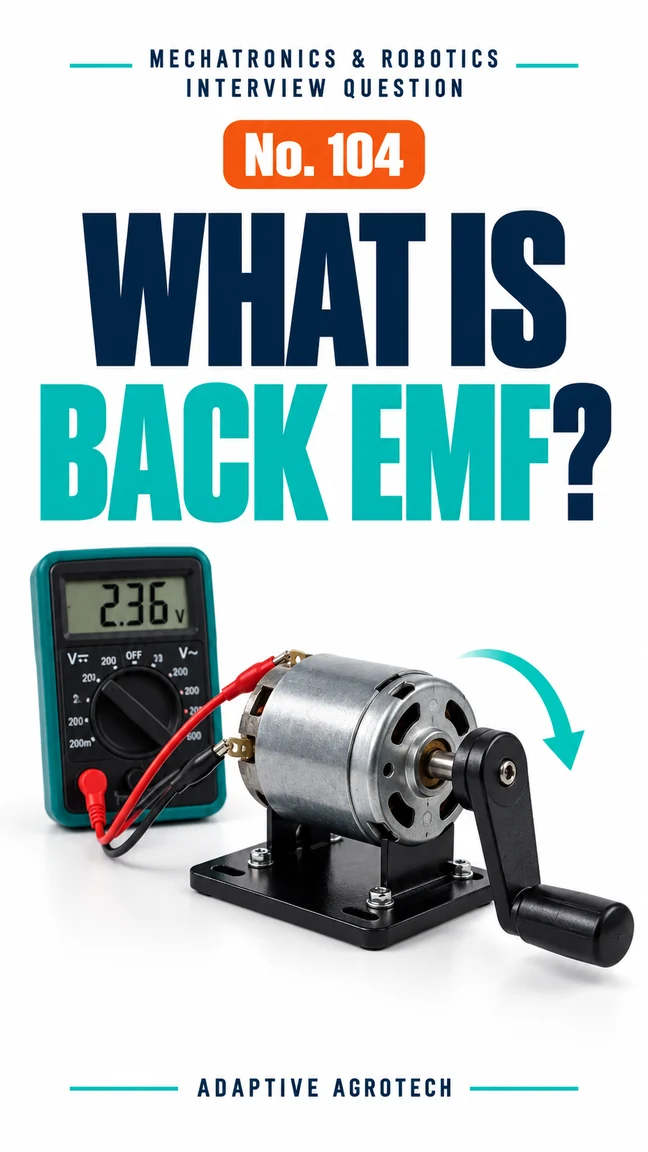
Embedded electronicsNo. 104

What is Back EMF?

Back EMF is the voltage generated by a spinning motor that opposes its drive voltage. In a simple steady model it reduces winding current, explaining why a slowing or jammed wheel can draw more current.

Watch & explore
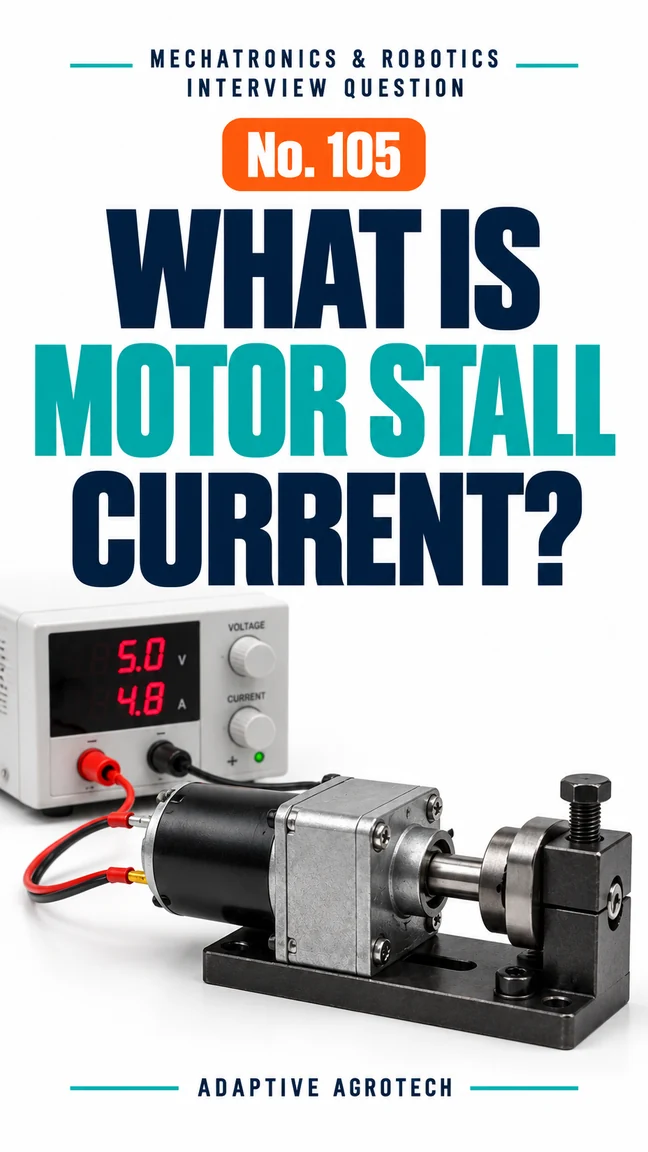
Embedded electronicsNo. 105

What is Motor Stall Current?

Motor stall current is measured with the shaft stopped at a stated voltage, where rotational back EMF is absent. It can greatly exceed a safe continuous current and requires stall detection and drive protection.

Watch & explore
Sensors & perceptionNo. 107

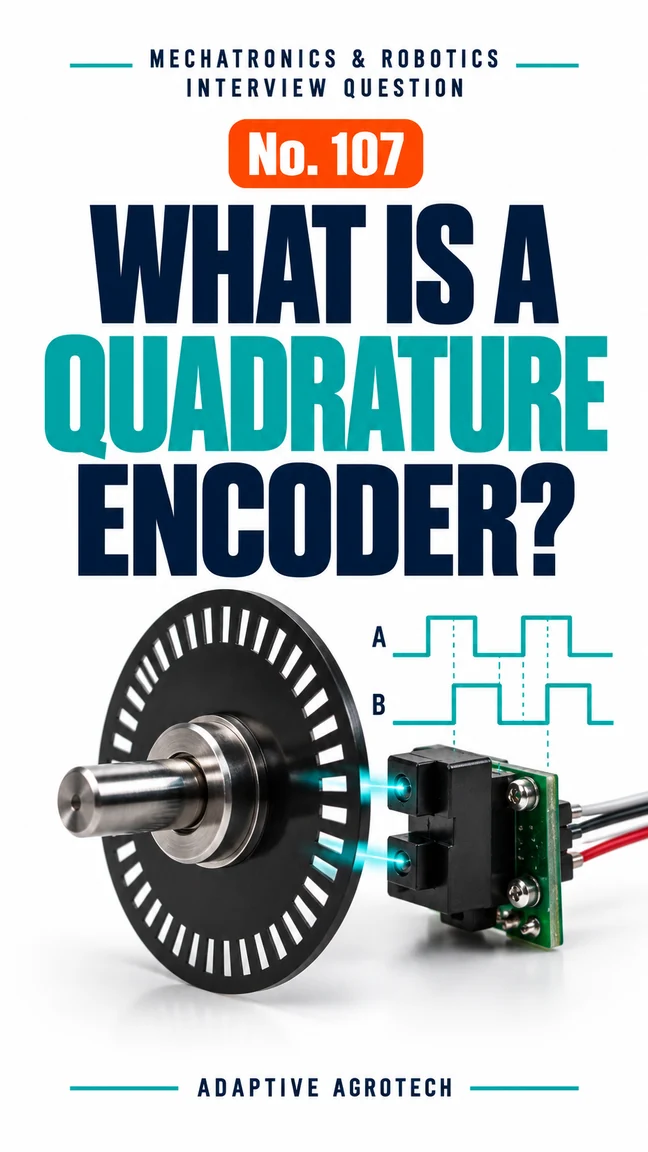
What is a Quadrature Encoder?

A quadrature encoder supplies two signals separated by a quarter cycle, revealing rotation direction and rate. Four-edge decoding improves count resolution, but converting counts into robot travel still depends on mechanics and wheel slip.

Watch & explore