Skip to content
Adaptive AgroTech NetworkUniversity of Southern Denmark · SDU Drone Center
Robotics · Mechatronics · Intelligent systems

Short videos.
Lasting understanding.

Explore one engineering idea at a time. Watch a short lesson, read the key concepts and test your understanding before your next interview, project or class.

155 topics found

Video · Key ideas · Check your understanding

Robot kinematicsNo. 141

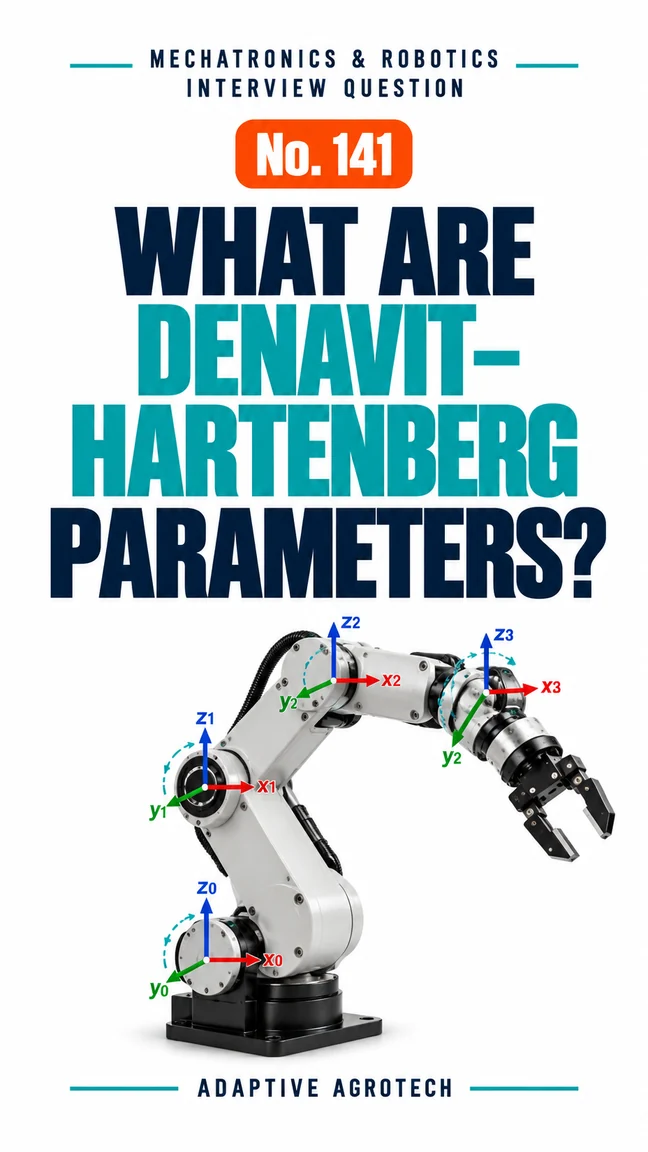
What Are Denavit–Hartenberg Parameters?

Denavit–Hartenberg parameters describe neighboring frames of a serial robot through four geometric quantities. Consistent frame conventions let their transforms produce forward kinematics, while mixing standard and modified DH rules corrupts the geometry.

Watch & explore
Robot kinematicsNo. 144

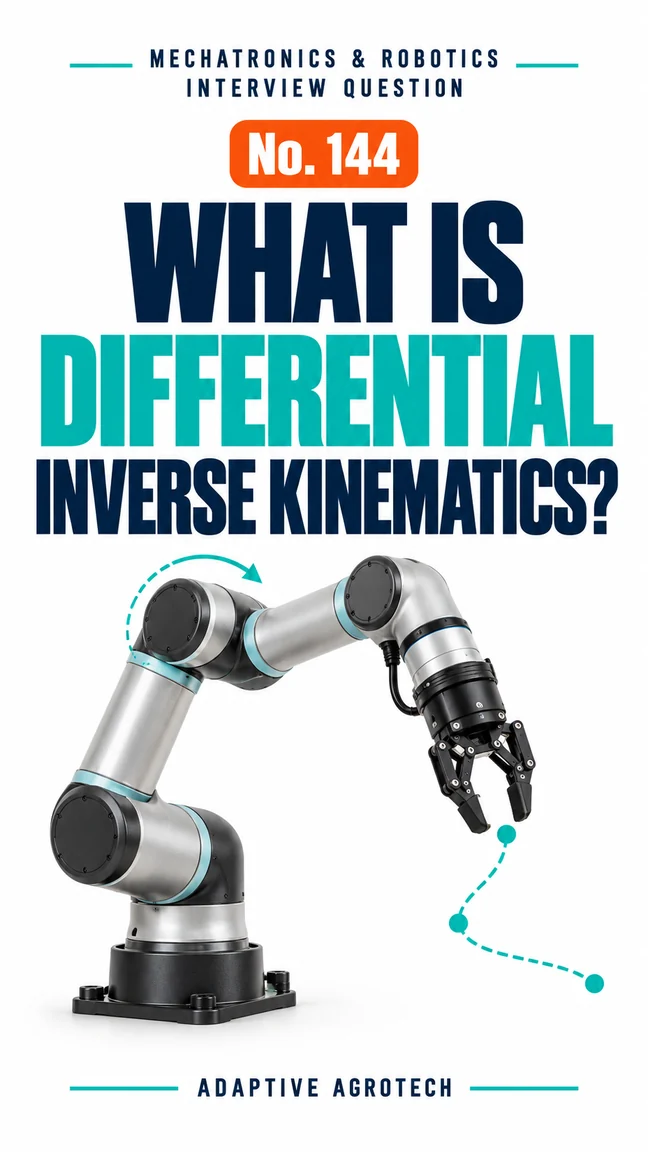
What Is Differential Inverse Kinematics?

Differential inverse kinematics solves locally for joint speeds that produce a desired tool velocity. The Jacobian must update as motion progresses, and damping near singularities trades tracking accuracy for less extreme joint commands.

Watch & explore
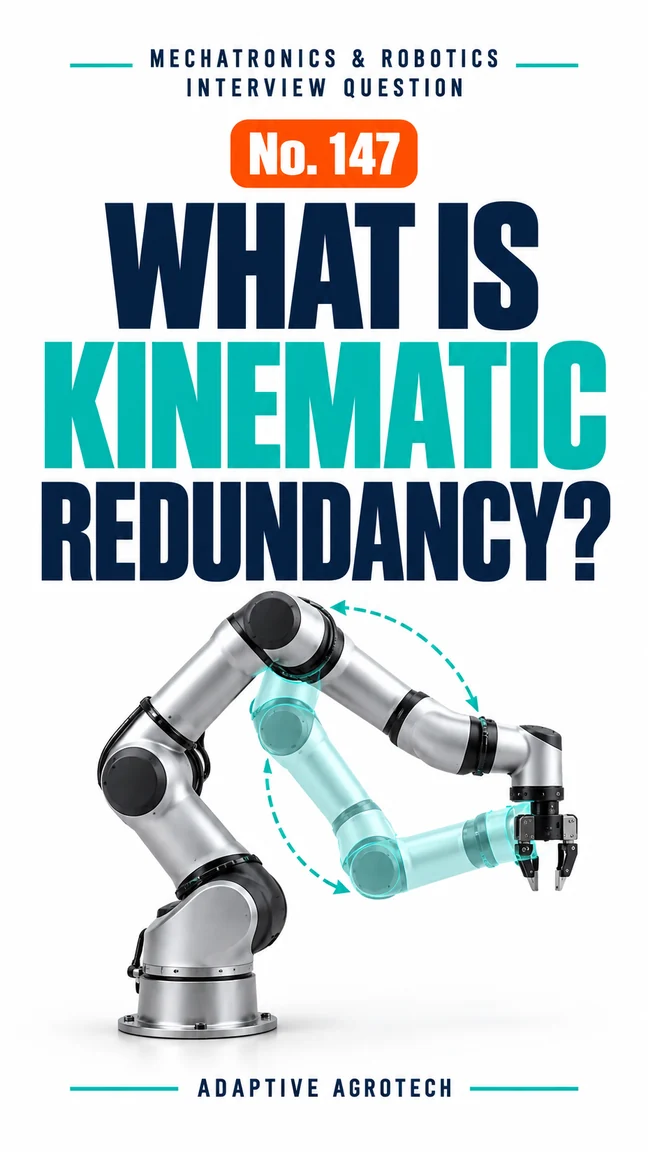
Robot kinematicsNo. 147

What Is Kinematic Redundancy?

Kinematic redundancy means more independent joint motion is available than a specified task requires. It permits posture choices, but depends on task definition and Jacobian rank rather than joint count alone.

Watch & explore
Robot kinematicsNo. 151

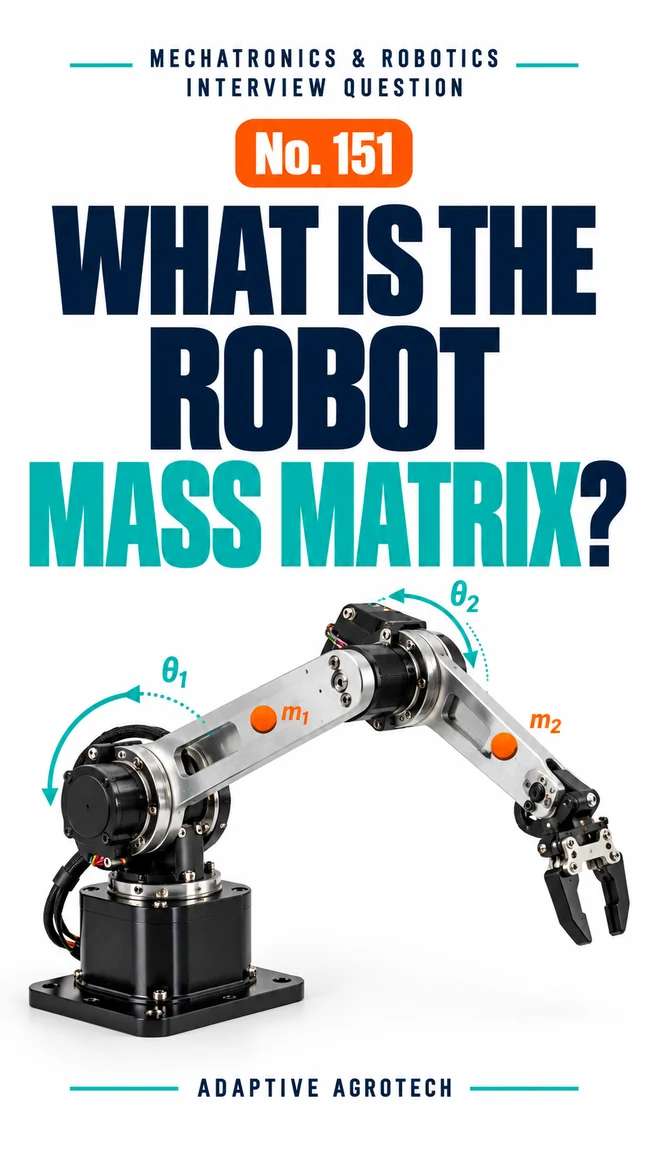
What Is the Robot Mass Matrix?

The robot mass matrix expresses configuration dependent inertia and coupling between joint accelerations and effort. It also defines kinetic energy, and a physically valid matrix in independent rigid robot coordinates is symmetric and positive definite.

Watch & explore
Robot kinematicsNo. 154

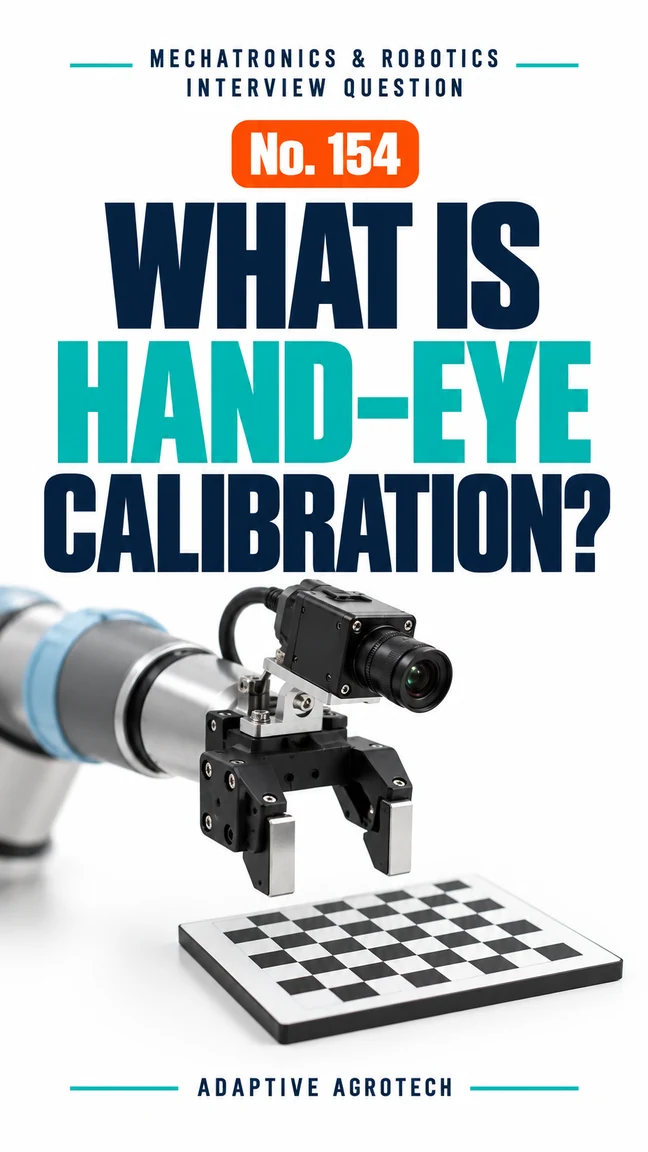
What Is Hand–Eye Calibration?

Hand–eye calibration estimates a fixed rigid relationship between camera and robot frames. Eye-in-hand observations across diverse robot poses constrain that transform, while synchronized measurements and validation on unused poses determine practical calibration quality.

Watch & explore
Robot kinematicsNo. 155

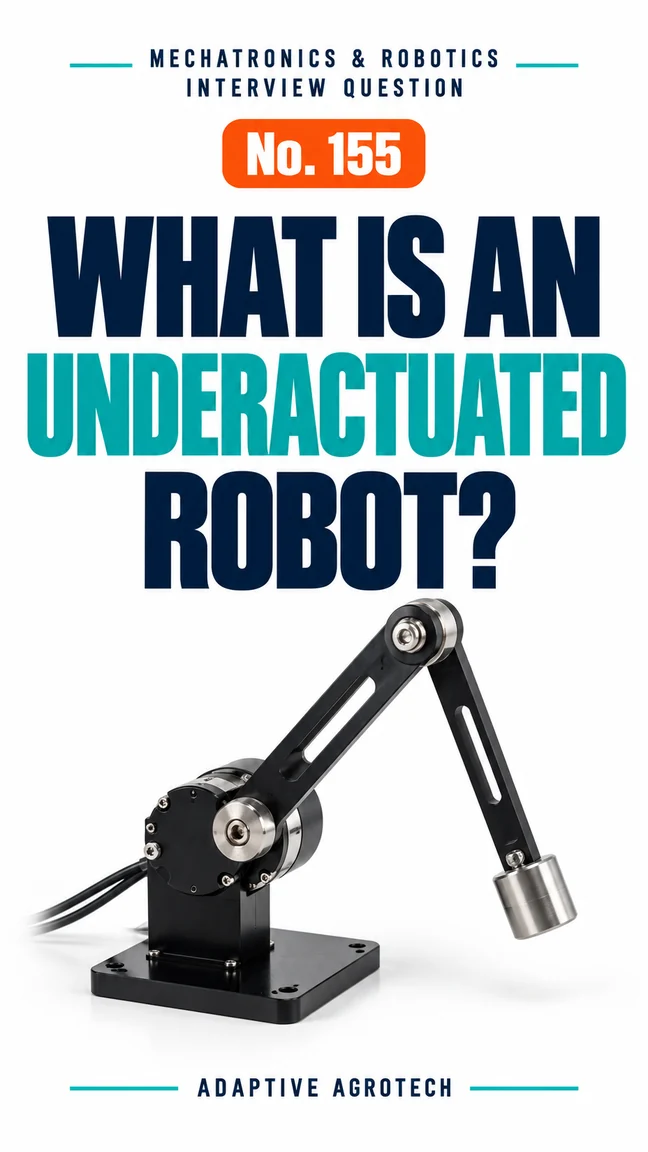
What Is an Underactuated Robot?

An underactuated robot has fewer independent control inputs than configuration coordinates. Indirect control can exploit coupled dynamics, but it cannot independently request every acceleration, and contact can change the effective constraints and actuation.

Watch & explore
Control systemsNo. 157

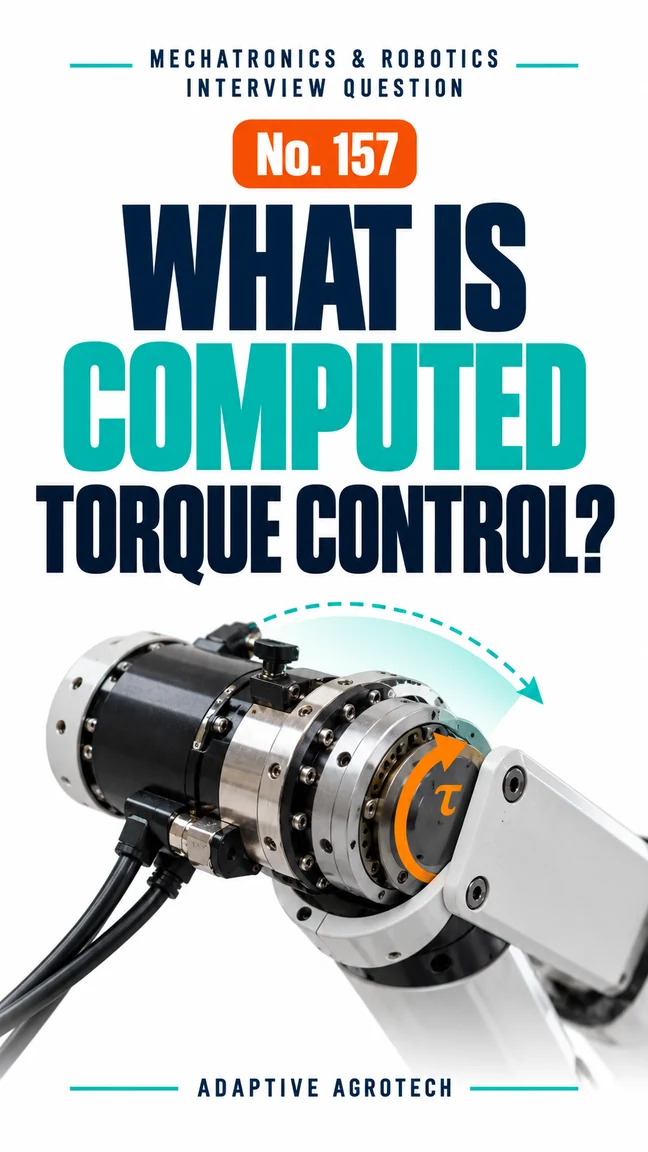
What Is Computed Torque Control?

Computed torque control combines a robot dynamics model with tracking feedback to request joint torque. Ideal model cancellation can simplify error dynamics, while real payload errors, friction, and saturation limit the result.

Watch & explore
Control systemsNo. 158

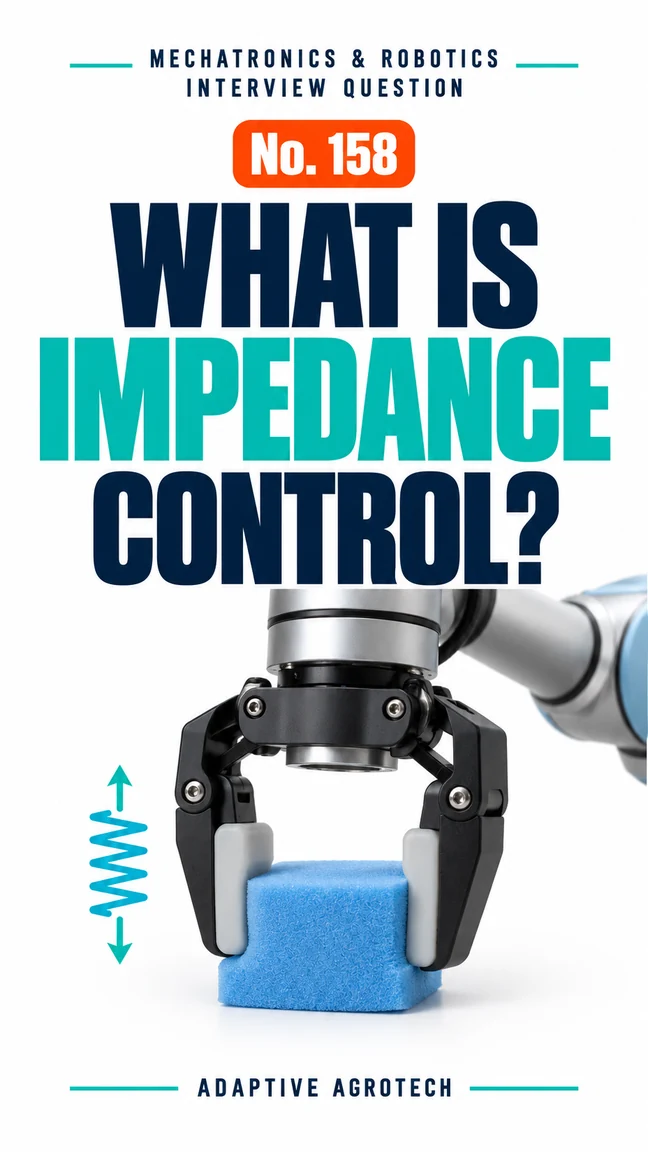
What Is Impedance Control?

Impedance control shapes interaction by relating motion error to commanded force or torque. Virtual stiffness and damping create compliant behavior, but stability depends on the complete actuator, sensing, delay, and environment dynamics.

Watch & explore
Control systemsNo. 161

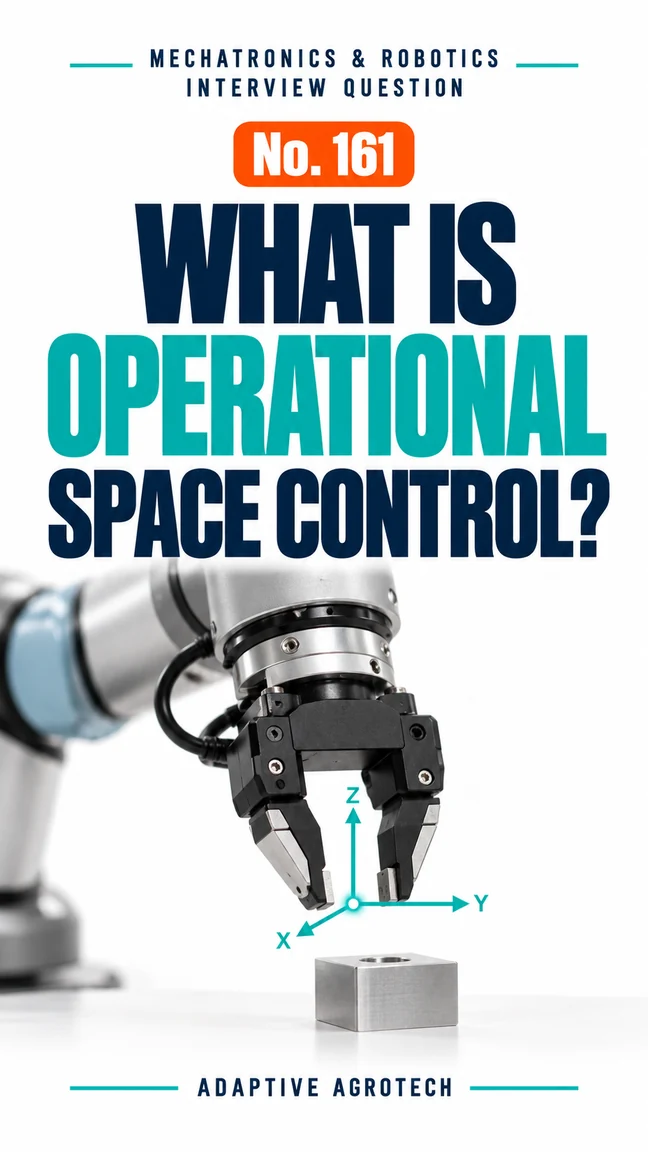
What Is Operational Space Control?

Operational space control describes robot dynamics in task coordinates, such as tool position. Instead of choosing joint motions independently, the controller computes the end effector force needed for a desired task acceleration.

Watch & explore
Control systemsNo. 162

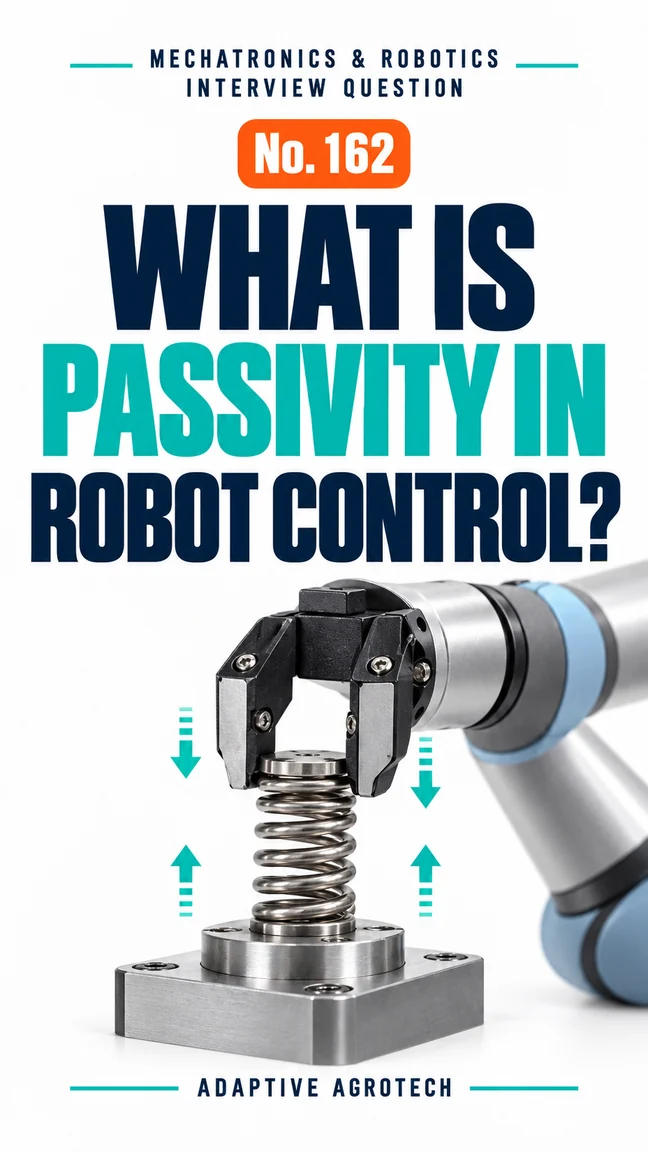
What Is Passivity in Robot Control?

Passivity is an input–output energy property. A passive system cannot supply more energy than it initially stores plus the energy it receives. For mechanical interaction, force and velocity form a power pair at the contact.

Watch & explore
Control systemsNo. 163

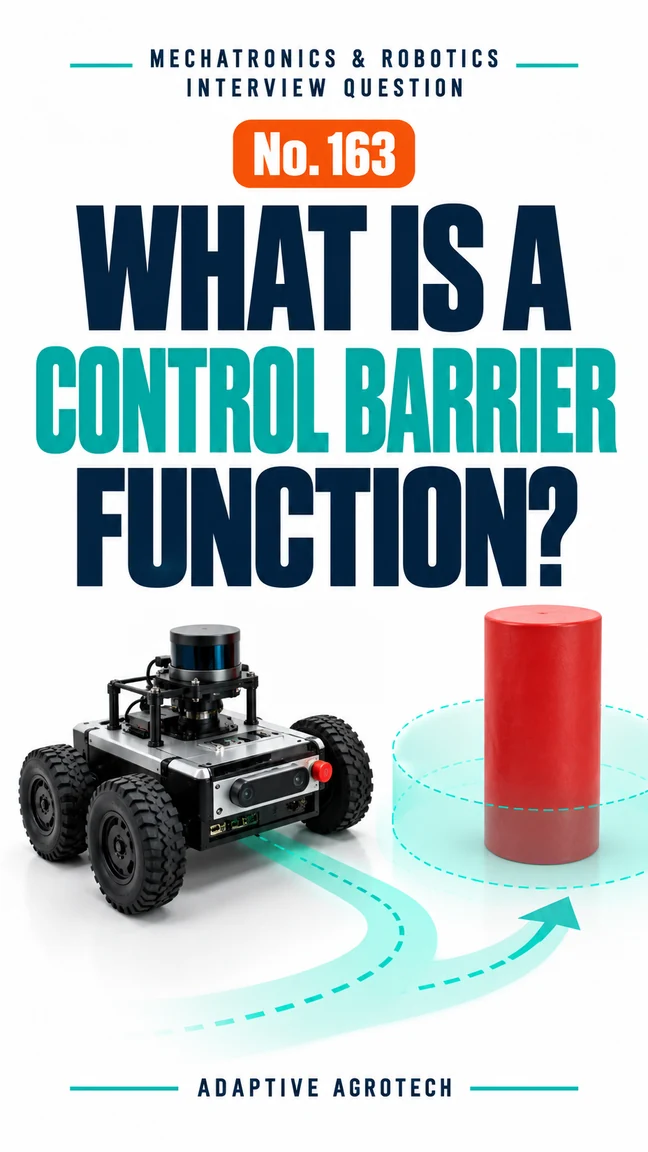
What Is a Control Barrier Function?

A control barrier function encodes an allowed region of state space. Its derivative condition restricts the control input so the state can remain inside. This differs from merely adding an obstacle penalty to a cost.

Watch & explore
Control systemsNo. 164

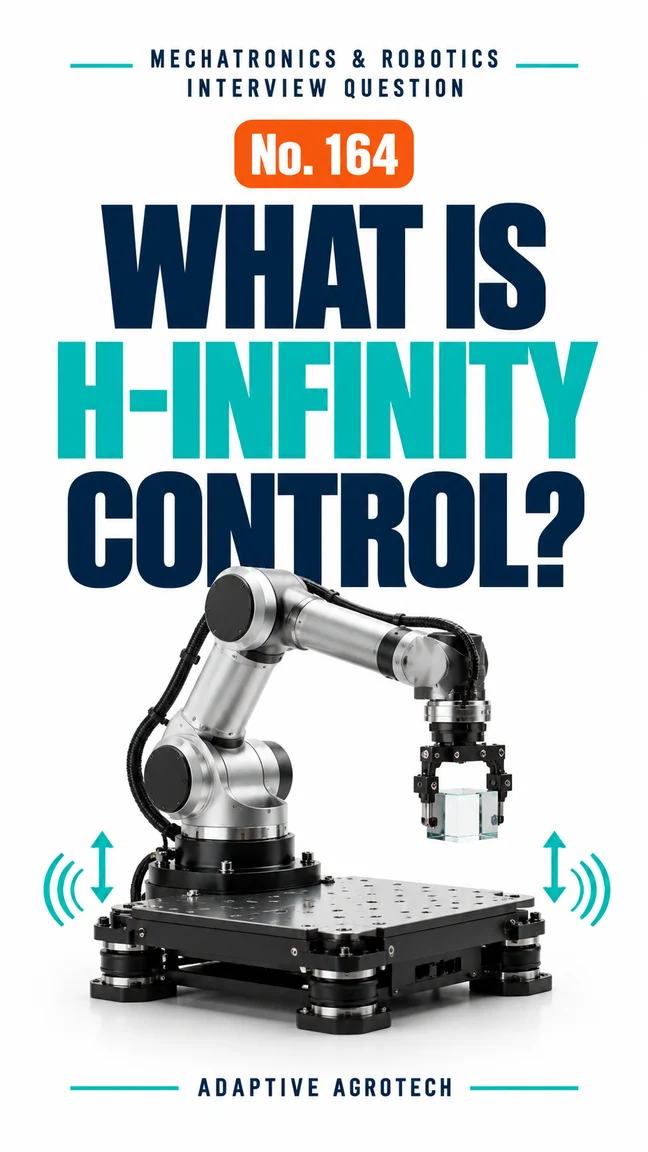
What Is H-Infinity Control?

H infinity control limits the worst case amplification from disturbances to selected outputs. For a stable linear system, its H infinity norm measures the largest gain across frequency and input directions.

Watch & explore
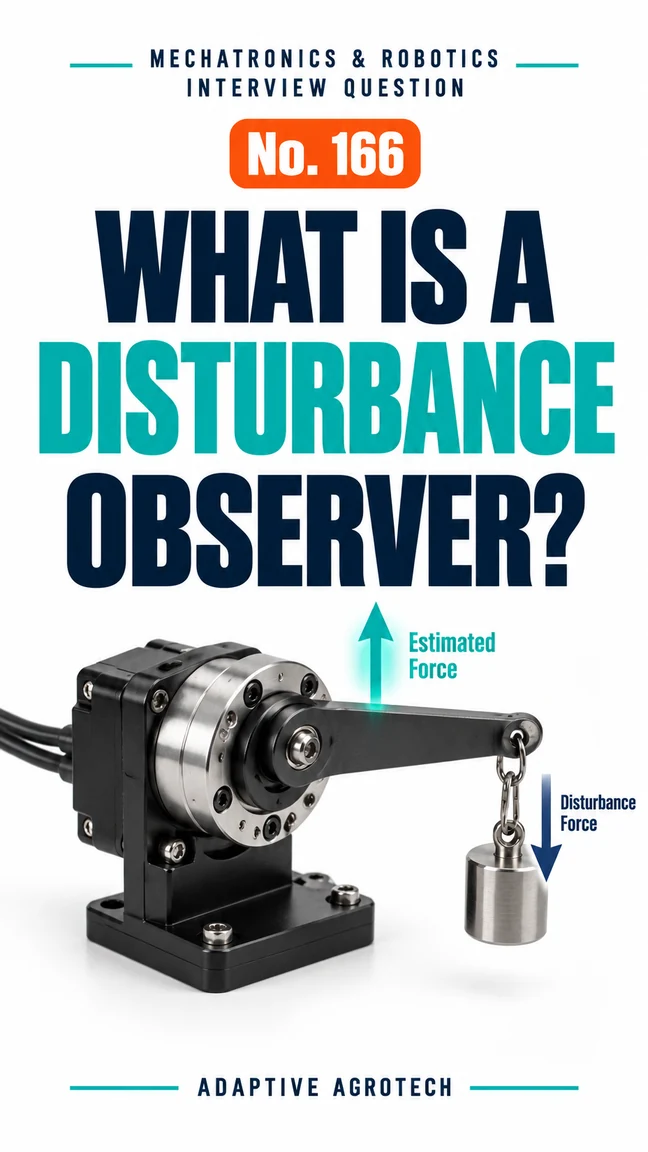
Control systemsNo. 166

What Is a Disturbance Observer?

A disturbance observer estimates an unknown influence from the robot input, measured output, and a nominal model. The estimate can include external loads and some model mismatch, depending on its structure and assumptions.

Watch & explore
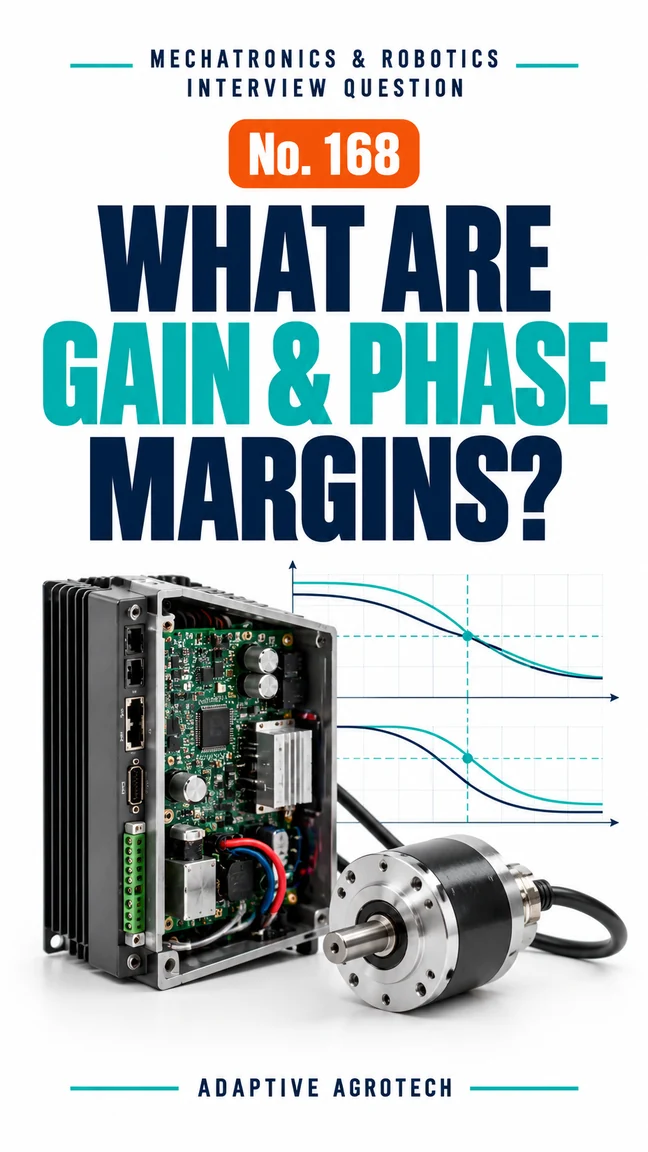
Control systemsNo. 168

What Are Gain Margin and Phase Margin?

Gain and phase margins describe how a loop can change before reaching a stability boundary. For standard negative feedback, phase margin is measured at unity loop gain. Gain margin uses the minus one hundred eighty degree phase crossover.

Watch & explore
Control systemsNo. 170

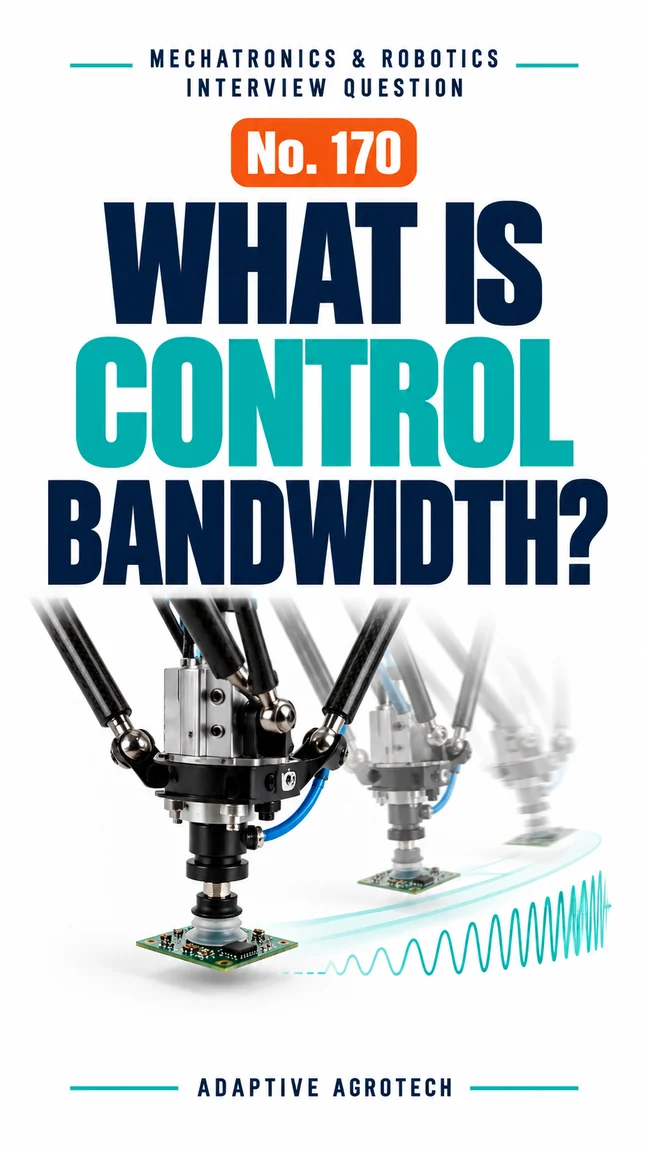
What Is Control Bandwidth?

Control bandwidth describes the frequency range over which a closed loop responds effectively. For a common low pass tracking response, bandwidth is the first frequency where magnitude falls three decibels below its low frequency value.

Watch & explore