Skip to content
Adaptive AgroTech NetworkUniversity of Southern Denmark · SDU Drone Center
Robotics · Mechatronics · Intelligent systems

Short videos.
Lasting understanding.

Explore one engineering idea at a time. Watch a short lesson, read the key concepts and test your understanding before your next interview, project or class.

29 topics found

Video · Key ideas · Check your understanding

Control systemsNo. 037

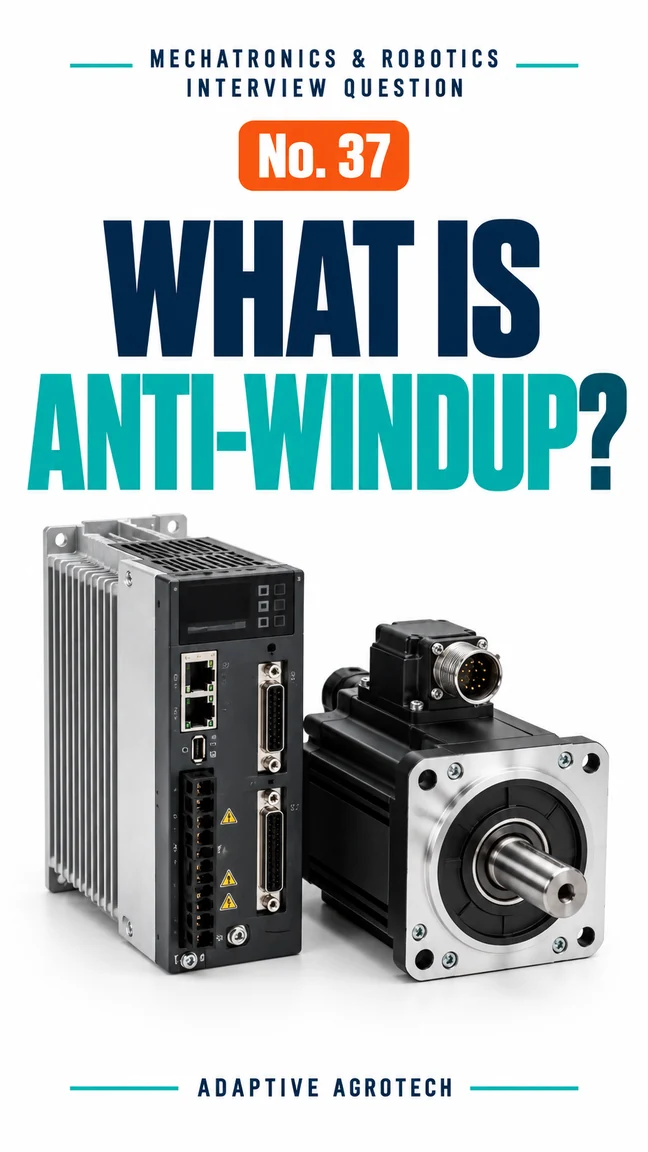
What is Anti-Windup?

Anti-windup prevents hidden integral buildup when actuator limits block the requested response. Conditional integration stops accumulation that drives further into saturation while allowing the integral state to unwind toward recovery.

Watch & explore
Control systemsNo. 040

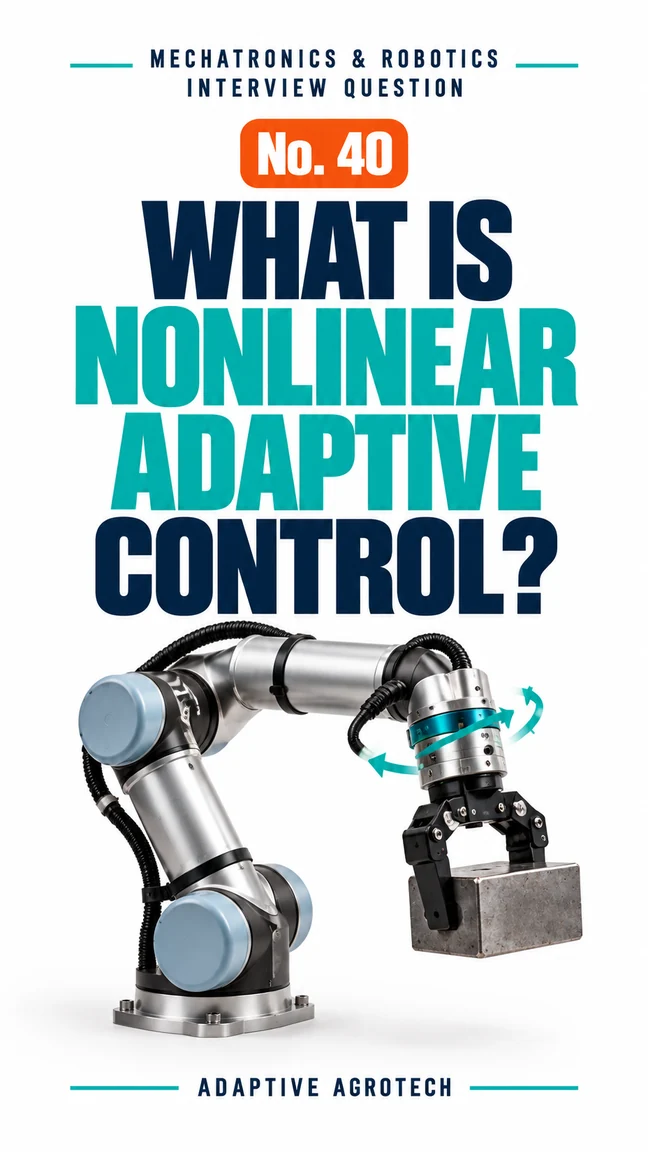
What is Nonlinear Adaptive Control?

Nonlinear adaptive control combines a nonlinear law with parameter updates. Tracking error can adjust estimated payload or friction, but successful tracking does not alone establish convergence to the true physical parameters.

Watch & explore
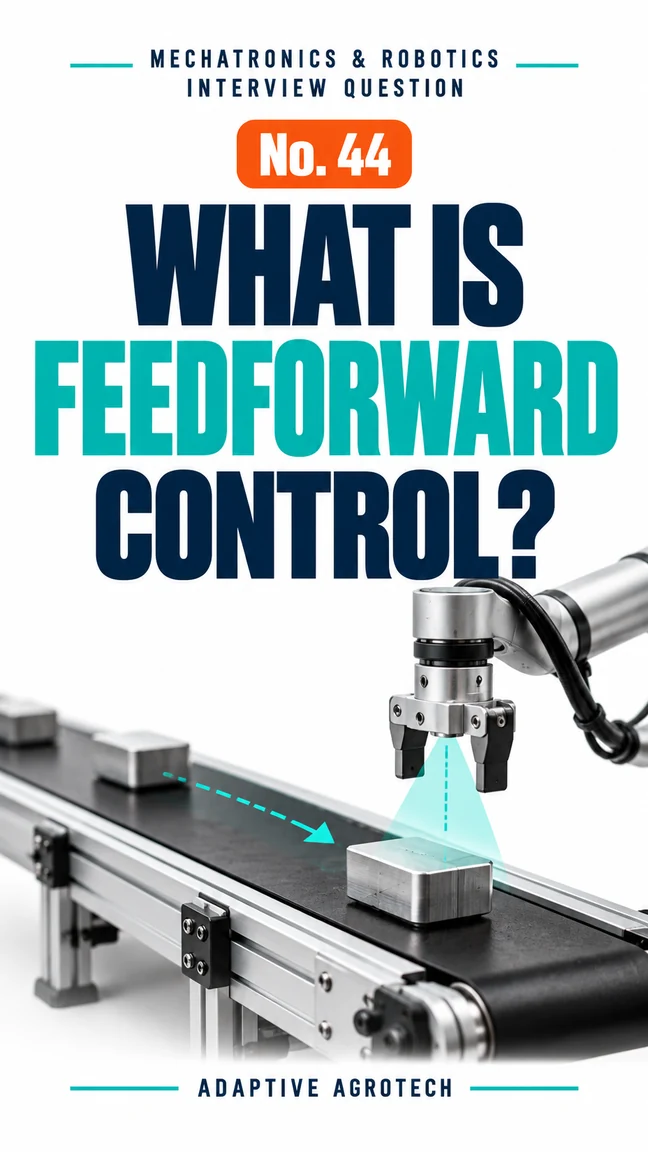
Control systemsNo. 044

What is Feedforward Control?

Feedforward predicts required control effort from desired motion or measured disturbances. Gravity compensation and model-based wheel commands reduce feedback's workload, while model mismatch and motor limits still require feedback correction.

Watch & explore
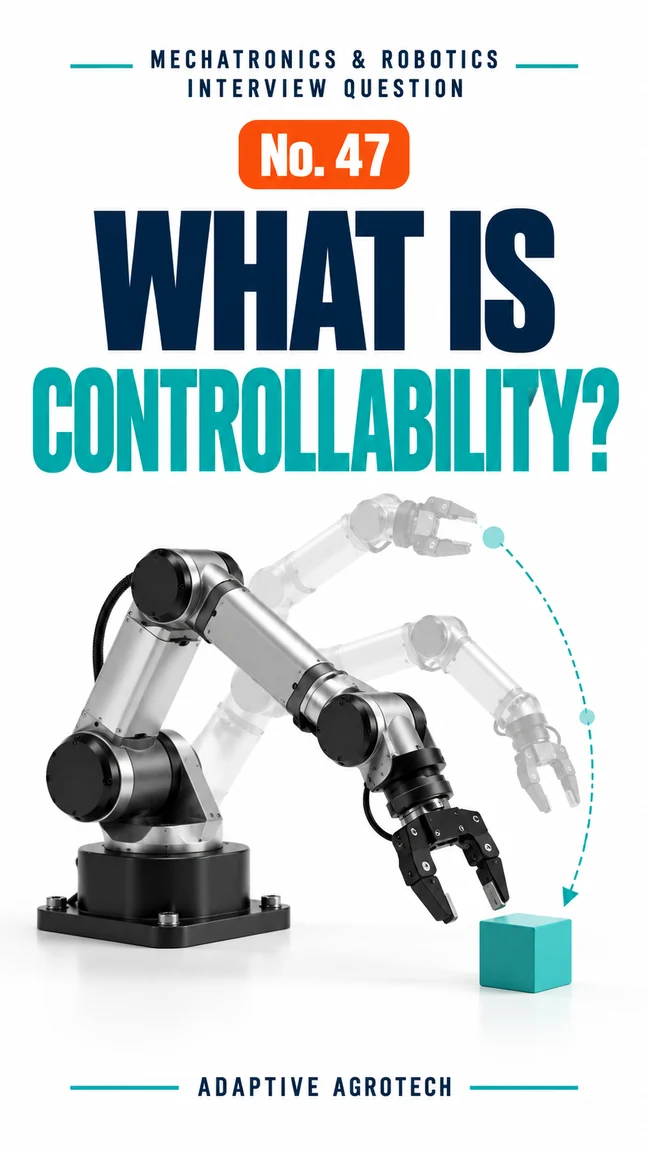
Control systemsNo. 047

What is Controllability?

Controllability asks whether modeled inputs can move a system between arbitrary states in finite time. A full-rank linear test addresses mathematical actuation, while physical torque limits can still restrict real reachability.

Watch & explore
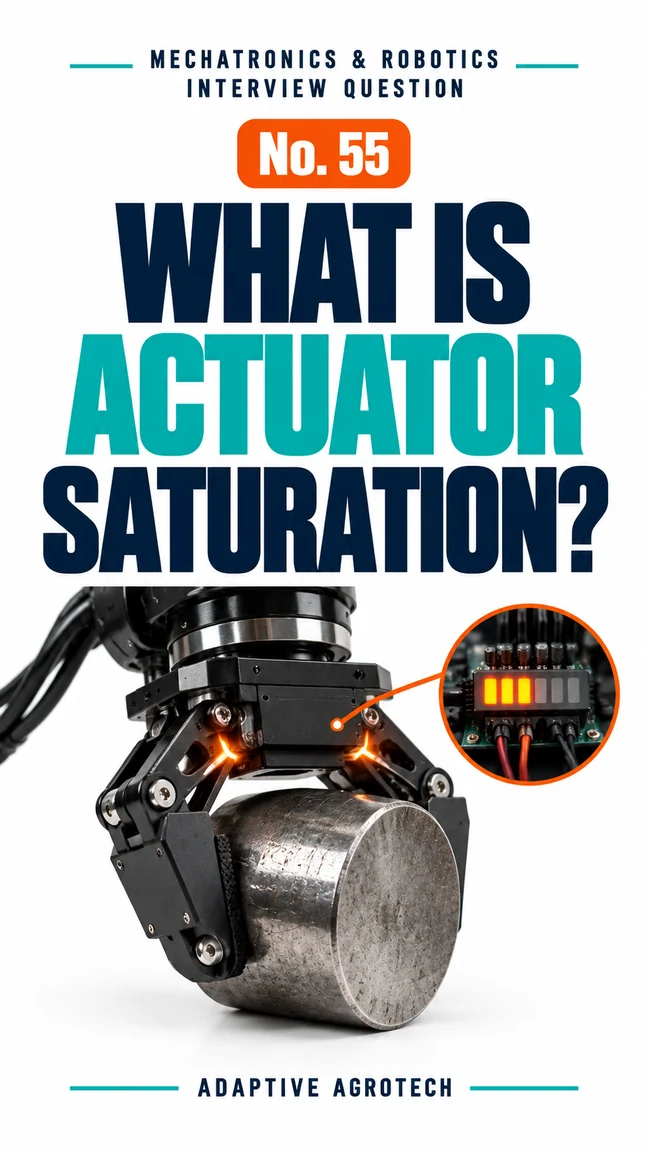
Control systemsNo. 055

What is Actuator Saturation?

Actuator saturation clips commands at physical voltage, current, or effort limits. The delivered motion then differs from an unlimited model, potentially causing slow tracking or integral windup and requiring realistic limits in control design.

Watch & explore
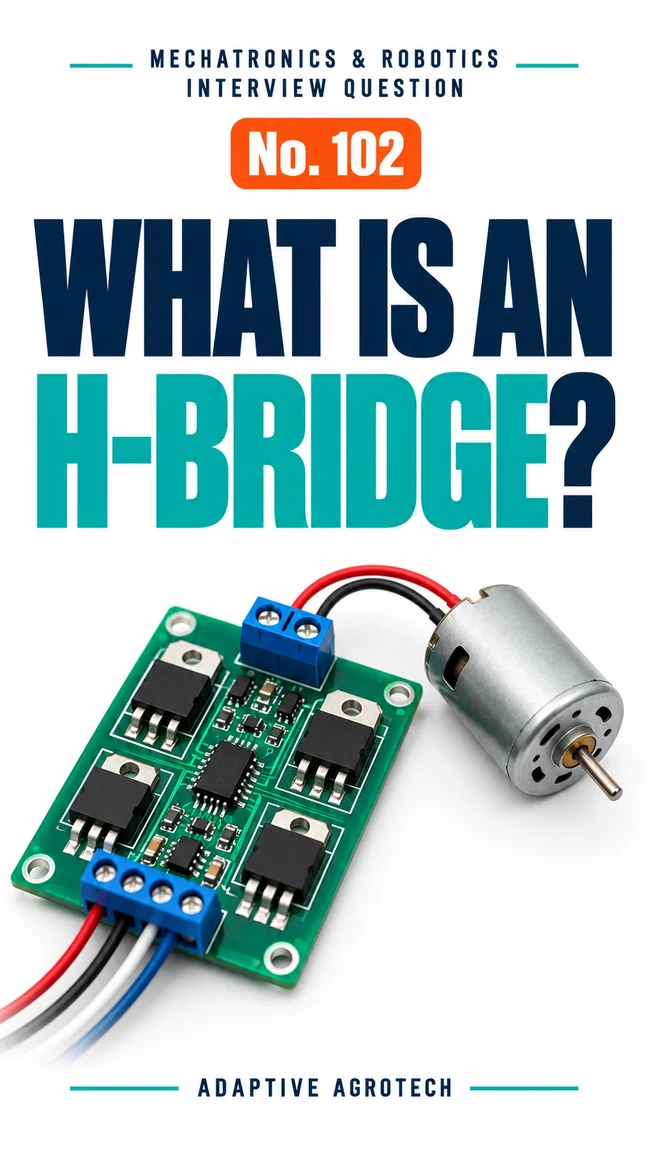
Embedded electronicsNo. 102

What is an H-Bridge?

An H-bridge reverses motor current using four switches arranged around the motor. Diagonal pairs set direction, while timing, current limits, and recirculation paths prevent damaging supply shorts and manage winding current.

Watch & explore
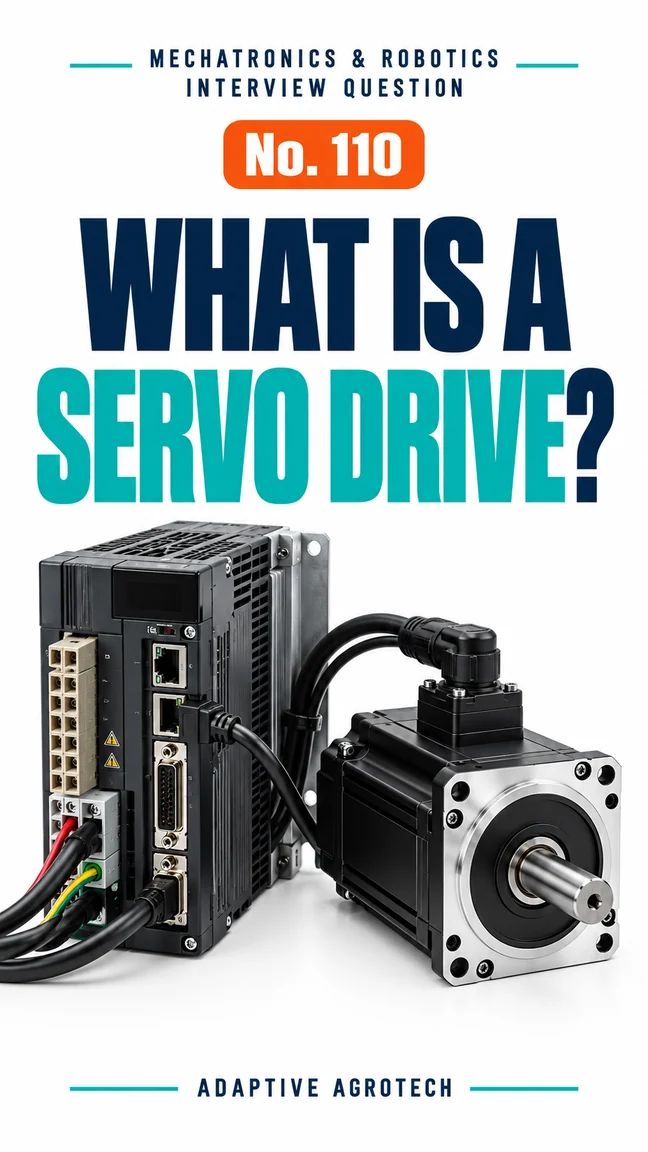
Control systemsNo. 110

What is a Servo Drive?

A servo drive controls motor power using feedback to follow a motion or torque command. Common nested current, speed, and position loops must be tuned around the real mechanics and operating limits.

Watch & explore
Robot kinematicsNo. 151

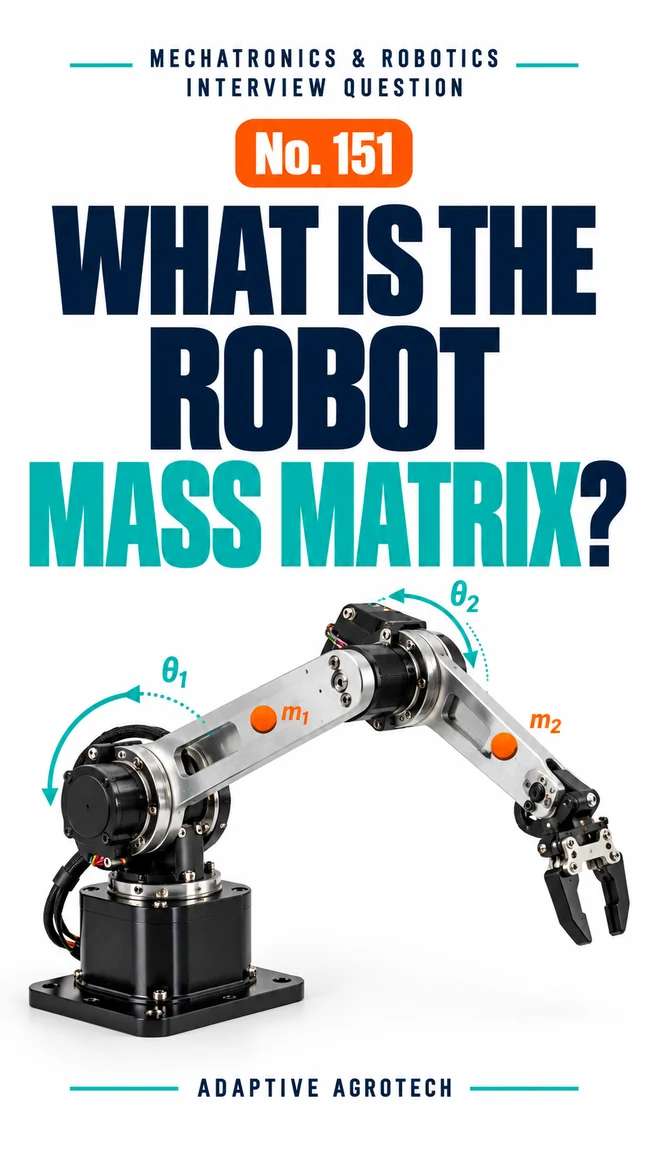
What Is the Robot Mass Matrix?

The robot mass matrix expresses configuration dependent inertia and coupling between joint accelerations and effort. It also defines kinetic energy, and a physically valid matrix in independent rigid robot coordinates is symmetric and positive definite.

Watch & explore
Control systemsNo. 157

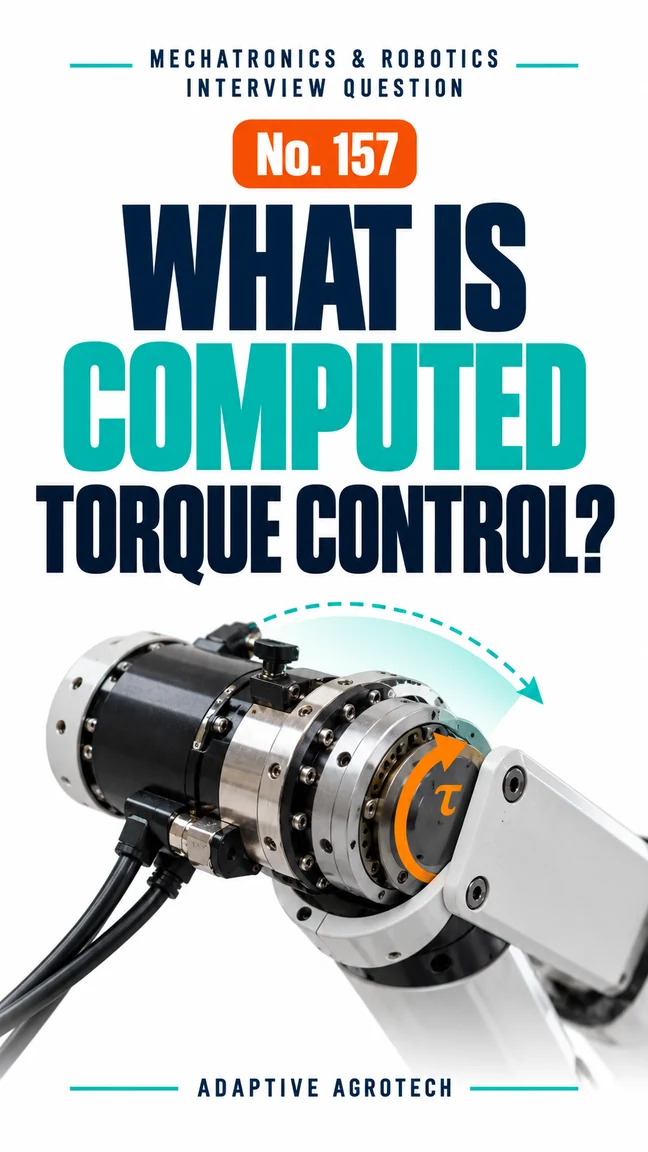
What Is Computed Torque Control?

Computed torque control combines a robot dynamics model with tracking feedback to request joint torque. Ideal model cancellation can simplify error dynamics, while real payload errors, friction, and saturation limit the result.

Watch & explore
Control systemsNo. 158

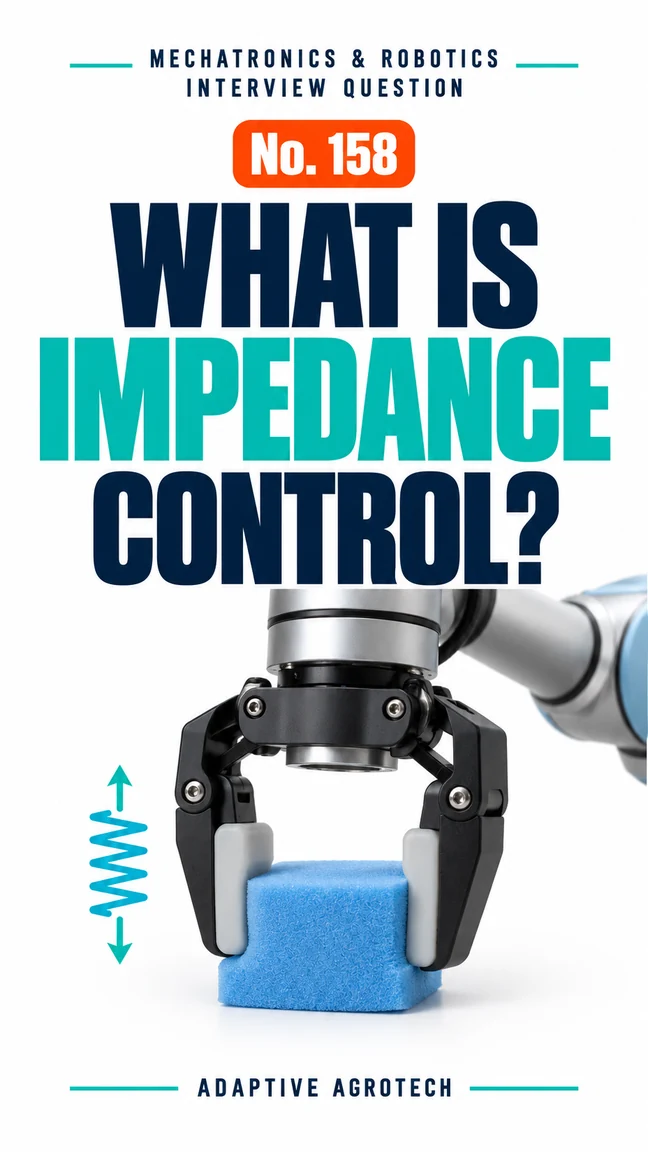
What Is Impedance Control?

Impedance control shapes interaction by relating motion error to commanded force or torque. Virtual stiffness and damping create compliant behavior, but stability depends on the complete actuator, sensing, delay, and environment dynamics.

Watch & explore
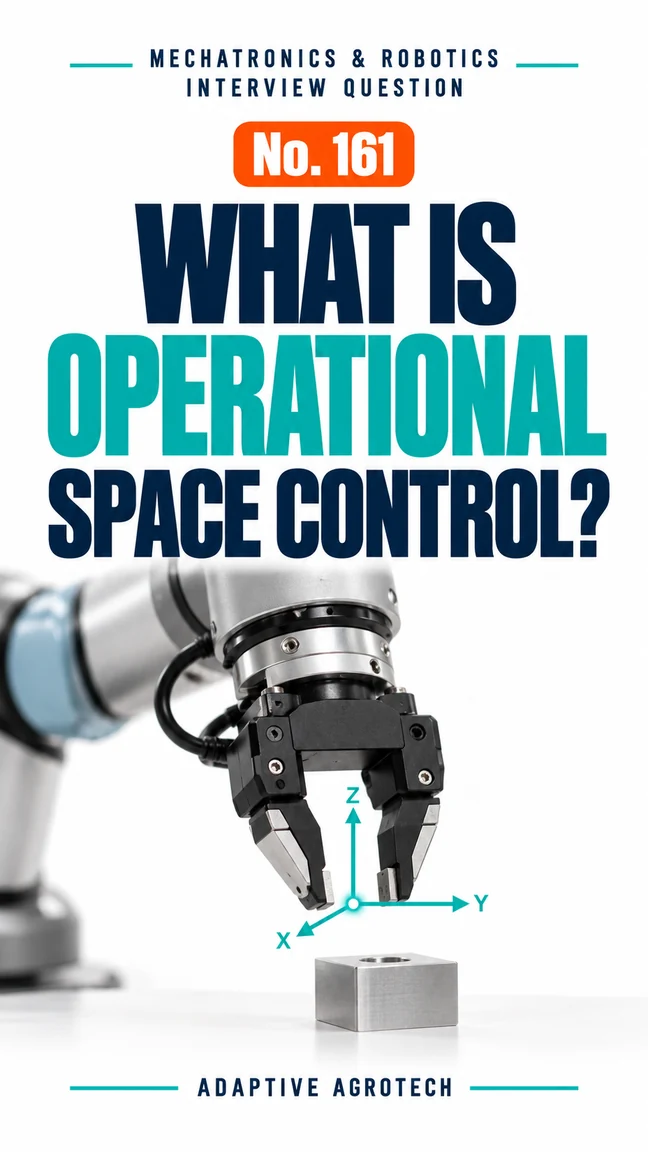
Control systemsNo. 161

What Is Operational Space Control?

Operational space control describes robot dynamics in task coordinates, such as tool position. Instead of choosing joint motions independently, the controller computes the end effector force needed for a desired task acceleration.

Watch & explore
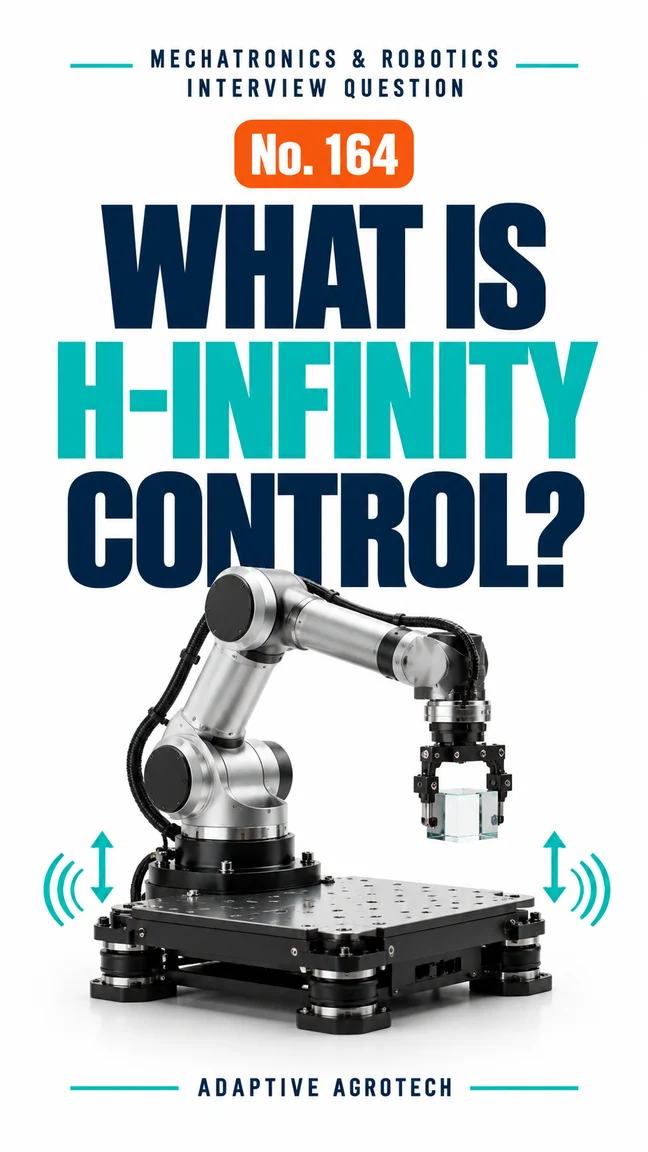
Control systemsNo. 164

What Is H-Infinity Control?

H infinity control limits the worst case amplification from disturbances to selected outputs. For a stable linear system, its H infinity norm measures the largest gain across frequency and input directions.

Watch & explore
Control systemsNo. 170

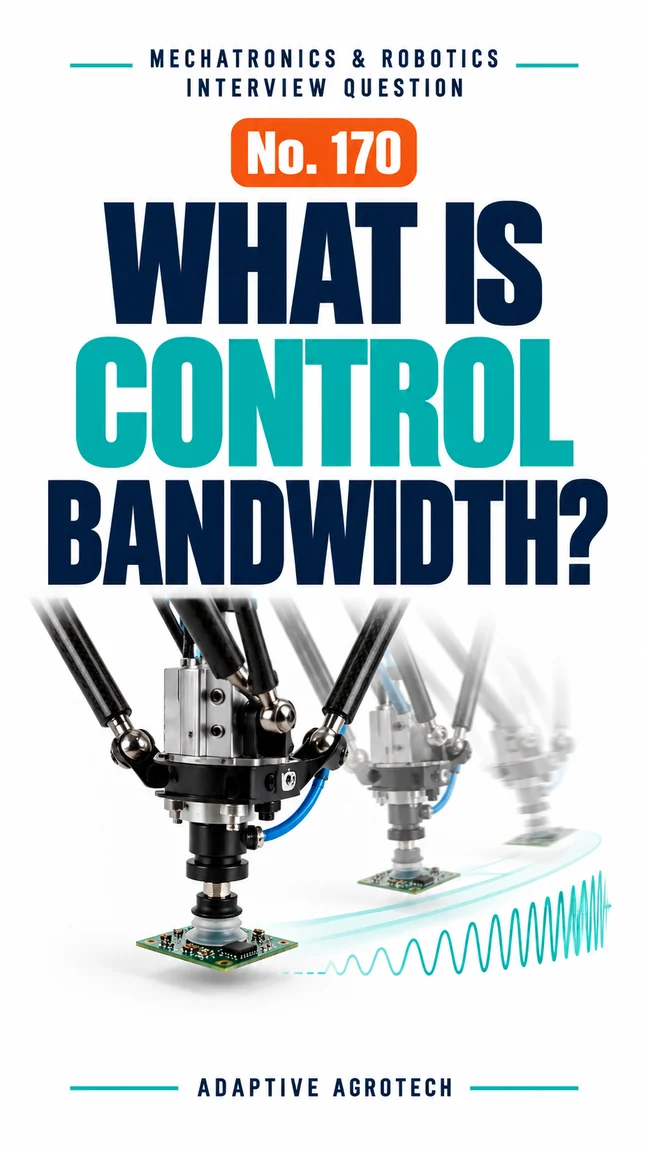
What Is Control Bandwidth?

Control bandwidth describes the frequency range over which a closed loop responds effectively. For a common low pass tracking response, bandwidth is the first frequency where magnitude falls three decibels below its low frequency value.

Watch & explore
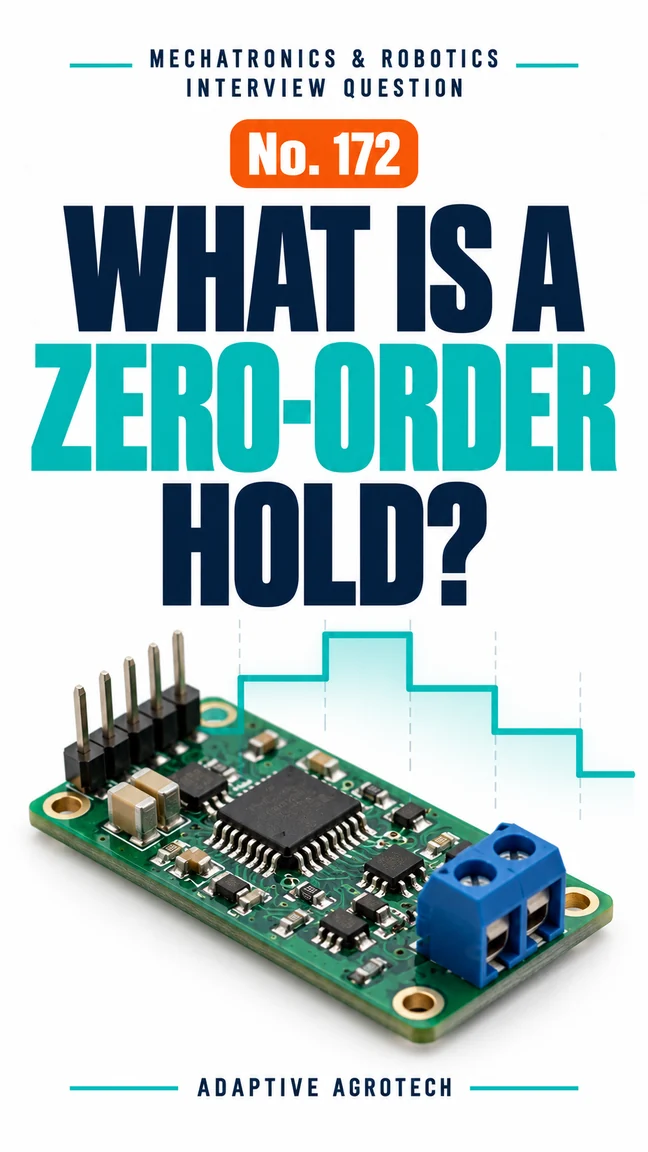
Control systemsNo. 172

What Is a Zero-Order Hold?

A zero order hold keeps each sampled command constant until the next update. Its output is a staircase. It does not draw a straight line between samples or predict the next command.

Watch & explore